Beyond Compliance: Addressing The Risks of ATEX Self-Certification in Non-Electrical Ex Equipment
Published 22 Oct 2025
Special thanks to Scott Harding for the kind permission to republish.
When it comes to explosive atmospheres, compliance alone isn’t enough — safety must lead the way.
In a powerful new article for the EIC, Scott Harding, Sales Director at Woodcock & Wilson, highlights why relying on self-certification under ATEX 2014/34/EU for non-electrical equipment — like industrial fans — can be dangerously misleading.
Too often, the ATEX mark is mistaken for proof of independent testing. For non-electrical equipment, that’s frequently not the case. The consequences? Variable standards, lack of accountability, and elevated risk to operators and facilities.
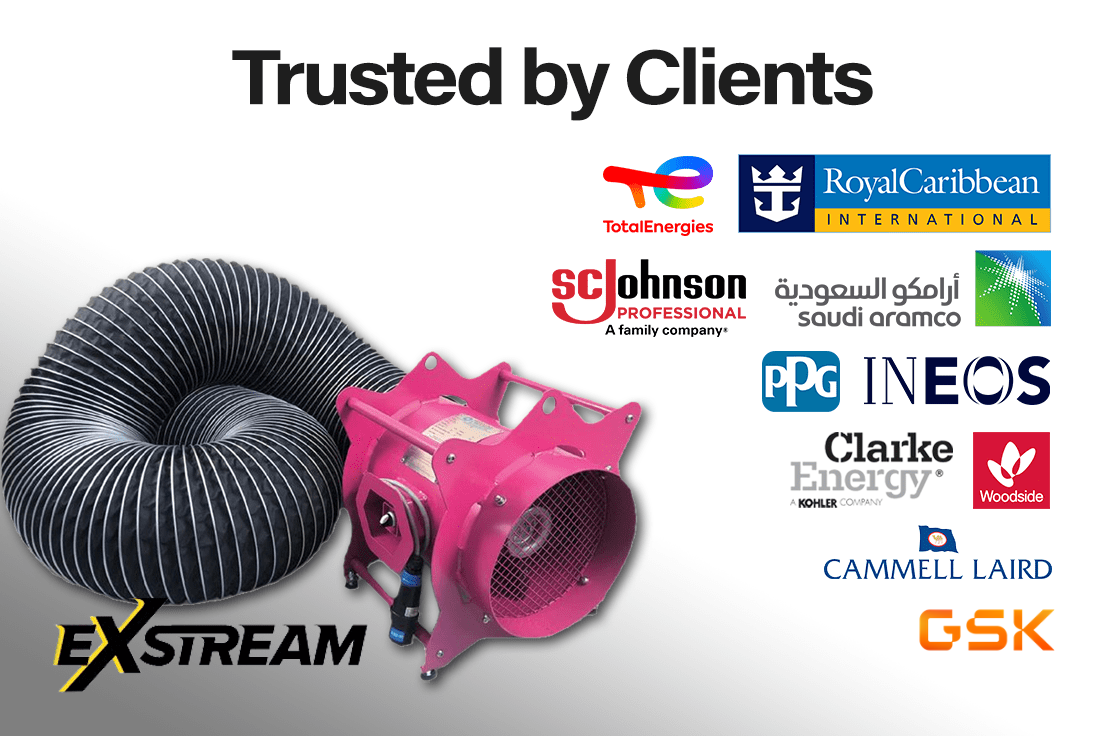
At Thorne & Derrick, we distribute Woodcock & Wilson’s ATEX portable fan the EXstream — all fully IECEx certified, independently verified, and unit-by-unit tested to meet the highest levels of safety and performance.
Terry McDonald, Business Development Manager at Thorne & Derrick, is committed to raising awareness around this critical safety issue. Terry works closely with engineers, end-users, and decision-makers to highlight the dangers of counterfeit and self-certified Ex equipment.
“People working in the industry don’t realise the problem exists. They believe the certificates and information they are being given by fraudulent organisations to be true. Everyone working in the industry needs to take this seriously and understand that the consequences will be fatal. It is only a matter of time before an explosion occurs as a direct result of fake equipment.”
In this article, you’ll learn:
- The real risks of ATEX self-certification
- Why IECEx is setting a new benchmark for safety
- The critical importance of third-party validation in Ex environments
Ensuring Safety in Explosive Atmospheres
Ensuring safety in explosive atmospheres (Ex) is critical. While electrical equipment is closely scrutinized, non-electrical equipment — like fans, gearboxes, and bearings — can generate ignition sources and is often overlooked.
The reliance on self-certification in ATEX 2014/34/EU poses significant risks to end-users, whereas IECEx offers robust independent verification.
- Lack of independent validation: no guarantee of safety without third-party testing
- Inconsistent compliance: different interpretations of ATEX requirements
- Over-reliance on documentation: manufacturer Declarations of Conformity may not be reliable
- Risk to end-users: false sense of security with self-certified ATEX equipment
IECEx vs ATEX: Regulatory Comparison
Certification Process
ATEX: Self-certification allowed for Category 2 & 3 non-electrical equipment; only Category 1 requires third-party verification
IECEx: Independent certification required for all equipment
Testing & Compliance Verification
ATEX: Manufacturer declaration with minimal oversight
IECEx: Accredited ExCB performs full testing and issues Certificates of Conformity
Transparency & Traceability
ATEX: No public database
IECEx: Global online database for verification
International Recognition
ATEX: EU only
IECEx: International recognition (Australia, US, Asia, Middle East)
COmparison table
| Feature | ATEX | IECEx |
|---|---|---|
| Scope | EU only | Global recognition |
| Third-party Testing | Only Category 1 | Required for all equipment |
| Self-Certification | Allowed for Categories 2 & 3 non-electrical | Not allowed |
| Online Certificate Access | No central database | Public online database |
| Covers Services | No | Yes – repair & overhaul |
The Blue Guide to EU Products: Where it Falls Short
The Blue Guide serves as a reference for European regulatory frameworks, including ATEX, but has shortcomings:
- Emphasis on Manufacturer Responsibility: Over-reliance on internal assessments.
- Failure to Address Self-Certification Risks: Does not highlight dangers for non-electrical equipment.
- Limited Discussion on Non-Electrical Equipment: Ignition sources often underrepresented.
- Lack of Alignment with IECEx Best Practices: Misses globally accepted safety standards.
Woodcock & Wilson: Exceeding Safety Standards
IECEx non-electrical certification ensures each fan meets the highest safety standards. Commitment includes:
- Independent third-party testing
- Unit verification for every product
- Enhanced materials and engineering
End-users should verify certification details, understand ATEX limitations, and demand higher standards for safety.
FAQ: Industrial Fans & ATEX
What makes fans suitable for hazardous areas?
IECEx and ATEX-certified fans prevent ignition risks from mechanical or electrical components.
How can I ensure my equipment is independently verified?
Verify IECEx certificates online or request unit-specific testing documentation.
Does Thorne & Derrick supply portable ATEX fans?
Yes — the EXstream portable fan is fully IECEx certified and unit-tested.
Safety & Compliance in Explosive Atmospheres
Don’t compromise safety. Insist on IECEx-certified solutions for non-electrical equipment like industrial fans.