CompEx Awareness in Swansea | Closing the Hazardous Area Knowledge Gap
Published 14 Oct 2026
CompEx Ex Awareness in Swansea: Closing the Hazardous Area Knowledge Gap
Hazardous area awareness matters across an organisation. People in procurement, commercial, marketing and project support roles can influence the equipment and services supplied to potentially explosive atmospheres, even when they never install or maintain that equipment themselves.
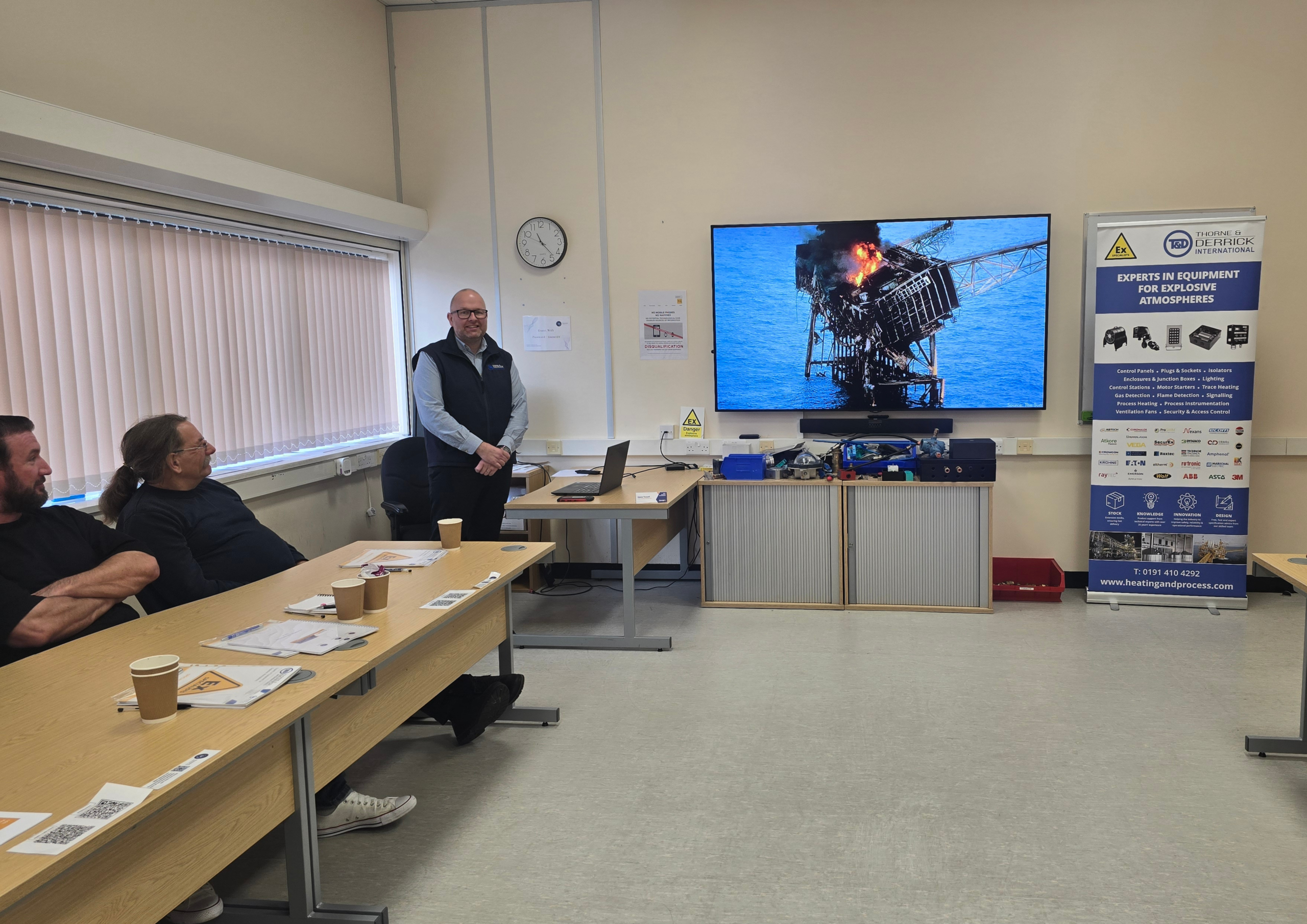
Helping these teams understand the risks was the purpose of Thorne & Derrick’s latest fully funded CompEx Ex Awareness (Ex A) training initiative, held in Swansea on Monday 12 October 2026.
Delivered by C&P and sponsored by Eltherm and Pepperl+Fuchs, the course brought together people from COMAH upper-tier and lower-tier establishments and contractors of different sizes. The focus was on building awareness that delegates could take back into their workplaces and use when supporting colleagues, purchasing equipment or contributing to hazardous area projects.
Quick Navigation
Your Engineers Are CompEx Trained — What About the Teams Supporting Them?
Businesses operating hazardous areas invest in training for engineers, electricians and maintenance personnel. Yet the decisions that influence safety often begin elsewhere: when a supplier is selected, an alternative product is proposed or an equipment requirement is passed between departments.
At Thorne & Derrick, we believe there is a knowledge gap for people who support hazardous area operations without working in technical or hands-on roles. These colleagues may be expected to handle product information or purchasing decisions without having had an introduction to the risks behind them.
For example, a buyer may be asked to compare two products described as suitable for hazardous areas. Knowing that an “ATEX” description alone does not establish suitability for every application can help them recognise the need for technical advice before approving a substitution.
The same principle extends across the wider business:
- Procurement teams select suppliers and purchase equipment destined for hazardous areas.
- Commercial and sales teams communicate requirements, prepare quotations and discuss alternatives.
- Project coordinators and administrators handle information between customers, contractors and engineering teams.
- Marketing teams describe products and communicate claims about certification and intended use.
- Managers and operations teams influence purchasing priorities, project planning and working procedures.
These responsibilities do not require everyone to become a hazardous area engineer. They do make it valuable for people to understand why equipment restrictions exist, why details matter and when a question needs to be referred to a competent specialist.
How CompEx Ex Awareness Helps Bridge the Gap
CompEx Ex Awareness (Ex A) provides an introduction to safe working practices in and around potentially explosive atmospheres. It is relevant to people entering or supporting hazardous area operations, including those without an electrical or engineering background.
For the Swansea initiative, this made the course a practical way to extend learning beyond the technical workforce. Its value lies in giving people a foundation from which to understand site precautions, recognise the importance of appropriate equipment and engage more confidently with specialist colleagues.
A procurement employee does not need to make the final engineering assessment to contribute to safer purchasing. Recognising that a proposed alternative needs checking, or that documentation does not appear to match the product, can be enough to prompt an important conversation.
Awareness training supports specialist competence; it does not replace it. Completing Ex A does not qualify someone to carry out hazardous area installation, inspection, maintenance or design. It helps the wider workforce understand why those activities require appropriate knowledge, experience and competence.
Twenty Funded Places and More Than 150 Applications
Following our previous CompEx Ex Awareness course, Thorne & Derrick doubled the funded places available from 10 to 20. More than 150 people applied for this latest opportunity, and 20 applicants were granted a place.
Successful applicants included people from COMAH upper-tier and lower-tier establishments, larger industrial contractors and smaller specialist businesses. This range of organisations reflected the purpose of the initiative: to make hazardous area awareness accessible to people whose decisions can affect safety across the supply chain.
Swansea Initiative Summary:
- Date: Monday 12 October 2026
- Location: Swansea
- Course: CompEx Ex Awareness (Ex A), delivered by C&P
- Funded Places: 20 places granted
- Applications: More than 150
- Sponsors: Eltherm and Pepperl+Fuchs
- Course Outcome: C&P confirmed a 100% pass rate
Bringing together people with different responsibilities also provided an opportunity to share experiences and consider how decisions made in one role affect colleagues elsewhere in a business.
C&P subsequently confirmed a 100% pass rate for the Awareness course. We thank the training team for delivering the course, welcoming the delegates and supporting the initiative.
The original Swansea course announcement explains the background to the campaign.
Industry Support from Eltherm and Pepperl+Fuchs
The support of Eltherm and Pepperl+Fuchs helped make the funded training opportunity possible. Both manufacturers work within industrial and hazardous area sectors where appropriate equipment selection and technical understanding are important.
Eltherm
Eltherm specialises in electrical heat tracing, with solutions for frost protection and temperature maintenance, including applications in hazardous areas. Its sponsorship supported access to training for people whose work contributes to the specification, purchase and use of industrial equipment.
Pepperl+Fuchs
Pepperl+Fuchs supplies industrial automation and explosion protection technology, including intrinsic safety solutions for hazardous area applications. We thank the company for supporting this initiative and helping extend awareness training to a wider industry audience.

Putting Hazardous Area Awareness into Context
At the end of the course, Terry McDonald delivered his presentation on Fake ATEX equipment and misleading certification. Terry has been presenting on this subject for several years and remains passionate about helping businesses recognise the risks.
The presentation reinforced why awareness matters beyond engineering departments. People involved in purchasing, quotations and project support may encounter questionable product claims or documentation before equipment reaches site. Understanding when to ask questions and seek specialist advice can help prevent concerns from being overlooked.
Read more about Terry’s wider work on Fake ATEX products and certificates.
Taking the Learning Back into the Workplace
The wider opportunity is what happens after the course. We hope delegates will share what they have learned with colleagues, ask more informed questions and help strengthen communication between technical and non-technical teams.
For COMAH operators and contractors supporting hazardous area work, this raises a useful question: do the people supporting your trained engineers understand the risks behind the equipment and services they help procure?
A buyer who understands why substitutions need approval, a marketing colleague who checks a certification claim, or a project coordinator who raises an inconsistency can each contribute to better decisions. Awareness gives people a reason to pause and involve the right specialist.
Thorne & Derrick hopes to continue the initiative with further CompEx Ex Awareness courses and supporting presentations. We thank C&P, Eltherm, Pepperl+Fuchs and everyone who applied or attended for helping support this opportunity to learn.
CompEx Awareness Training Frequently Asked Questions
Who is CompEx Ex Awareness suitable for?
Ex A is relevant to people working in, entering or supporting potentially explosive environments, including non-technical personnel. For this initiative, the focus included procurement, commercial, marketing and project support roles within operators and contractors.
Does Ex A qualify someone to install or inspect hazardous area equipment?
No. Ex A provides introductory awareness. Specialist installation, inspection, maintenance and design work require competence appropriate to the activity, supported by relevant training, knowledge and experience.
Why should non-technical teams understand hazardous area risks?
Their work can influence supplier selection, purchasing, product descriptions and the information passed to engineering teams. Awareness helps them recognise when a decision or claim needs specialist review.
Does Your Organisation Have a Hazardous Area Awareness Gap?
If your organisation operates COMAH facilities, supports hazardous area projects or supplies equipment for potentially explosive atmospheres, consider whether the wider team would benefit from introductory awareness training.
Speak to Thorne & Derrick about hazardous area equipment requirements, specification guidance and your interest in future awareness initiatives.