Published 27 Jul 2026
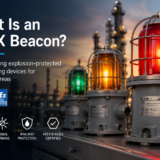
An ATEX beacon is a visual signalling device designed and certified for use where flammable gas, vapour, mist or combustible dust could create a potentially explosive atmosphere. Depending on its design, the beacon may produce a steady, flashing, strobe, blinking or rotating visual signal. It can communicate an emergency...
Read More
Published 14 Jul 2026
Electrical Heat Tracing Design & Cable Output Quick Navigation Trace Heating Heat Loss Calculation Overview Why Is a Heat Loss Calculation Required? Information Required for the Calculation Required Maintain Temperature Minimum Ambient Temperature Temperature Difference Pipe Diameter & Material Insulation Material & Thickness Indoor, Outdoor & Weather Conditions Valves,...
Read More
Published 12 Jun 2026
Ex d and Ex e are two common explosion protection methods used for electrical equipment in hazardous areas. Ex d refers to flameproof protection, where an enclosure is designed to contain an internal explosion and prevent flame transmission to the surrounding atmosphere. Ex e refers to increased safety protection,...
Read More
Published 12 Jun 2026
Intrinsic safety is an explosion protection technique used in hazardous areas to prevent electrical equipment and circuits from releasing enough energy to ignite a flammable gas, vapour, mist or dust atmosphere. In Ex markings, intrinsic safety is shown as Ex i, with common protection levels including Ex ia, Ex...
Read More
Published 12 Jun 2026
Equipment Protection Levels, often shortened to EPLs, are used in hazardous area equipment markings to show the level of ignition protection provided by equipment used in explosive atmospheres. Common EPL markings include Ga, Gb, Gc, Da, Db and Dc. In simple terms, EPLs help show whether equipment is suitable...
Read More