Thorne & Derrick Blog
Thorne & Derrick are leaders in the development and distribution of Product Innovations that deliver significant improvements to clients plant, people and operational safety in the explosive atmosphere industries.
Your proactive problem solvers experienced in succession planning for the replacement of obsolete, non-conformant and legacy equipment in hazardous areas.
Your first-choice provider of innovative and competitive solutions to ensure ATEX & IECEx Compliance for Hazardous Area Electrical, HVAC & Process Instrumentation Equipment to your UK and international projects.
Control Panels | Plugs | Isolators | Enclosures & Junction Boxes | Lighting | Control Stations | Motor Starters | Heat Trace | Gas Detection | Flame Detection | Process Instrumentation | Process Heating | Ventilation Fans | Security Access Control

Competitive Prices | Extensive Stocks | Technical Support | Express Delivery

You are currently filtering by: Blog
Published 13 Oct 2026
An ATEX explosion proof fan is a ventilation fan designed and certified for use in hazardous areas where flammable gases, vapours, mists or combustible dusts could create a potentially explosive atmosphere. These fans are more accurately described as ATEX fans, Ex fans, hazardous area fans or explosion-protected ventilation fans....
Read More
Published 13 Oct 2026
Two Different Electrical Heat Tracing Duties Explained Quick Navigation Duty Comparison Overview The Key Difference Frost vs Process Comparison Table Frost Protection Design Process Temperature Maintenance Design Maintain Temperature & Heat Loss Cable Technology Selection Control & Monitoring Insulation & Weatherproofing Typical Applications Consequences of Failure Winterisation Programmes Combined...
Read More
Published 29 Sep 2026
The Cable, Controls, Connections and Insulation That Form a Complete System Quick Navigation System Components Overview Heating Cable Power Connections End Seals, Splices & Tees Junction Boxes & Cable Entries Temperature Sensors Thermostats & Controllers Temperature Limiters Distribution & Circuit Protection Monitoring & Alarms Fixing & Mechanical Accessories Insulation,...
Read More
Published 08 Sep 2026
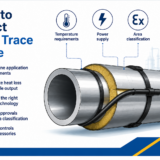
A Step-by-Step Electrical Heat Tracing Cable Selection Guide Quick Navigation Heat Trace Cable Selection Overview 1. Define the Heating Duty 2. Calculate Heat Loss 3. Confirm Temperature Limits 4. Record Pipe & Equipment Details 5. Choose the Cable Technology 6. Confirm Cable Output 7. Check Electrical Design 8. Assess...
Read More
Published 07 Sep 2026
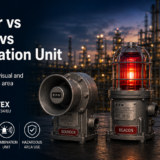
Sounders, beacons and combination units communicate alarms and equipment conditions in different ways. A sounder produces an audible warning, a beacon provides a visual signal, and a combination unit brings both warning methods together within one assembly. The correct choice depends on who must receive the warning, the surrounding...
Read More