Storm Goretti: How Europe’s Severe Winter Weather Threatens Hazardous Area Operations – And Why Immediate Action Is Critical
Published 08 Jan 2026
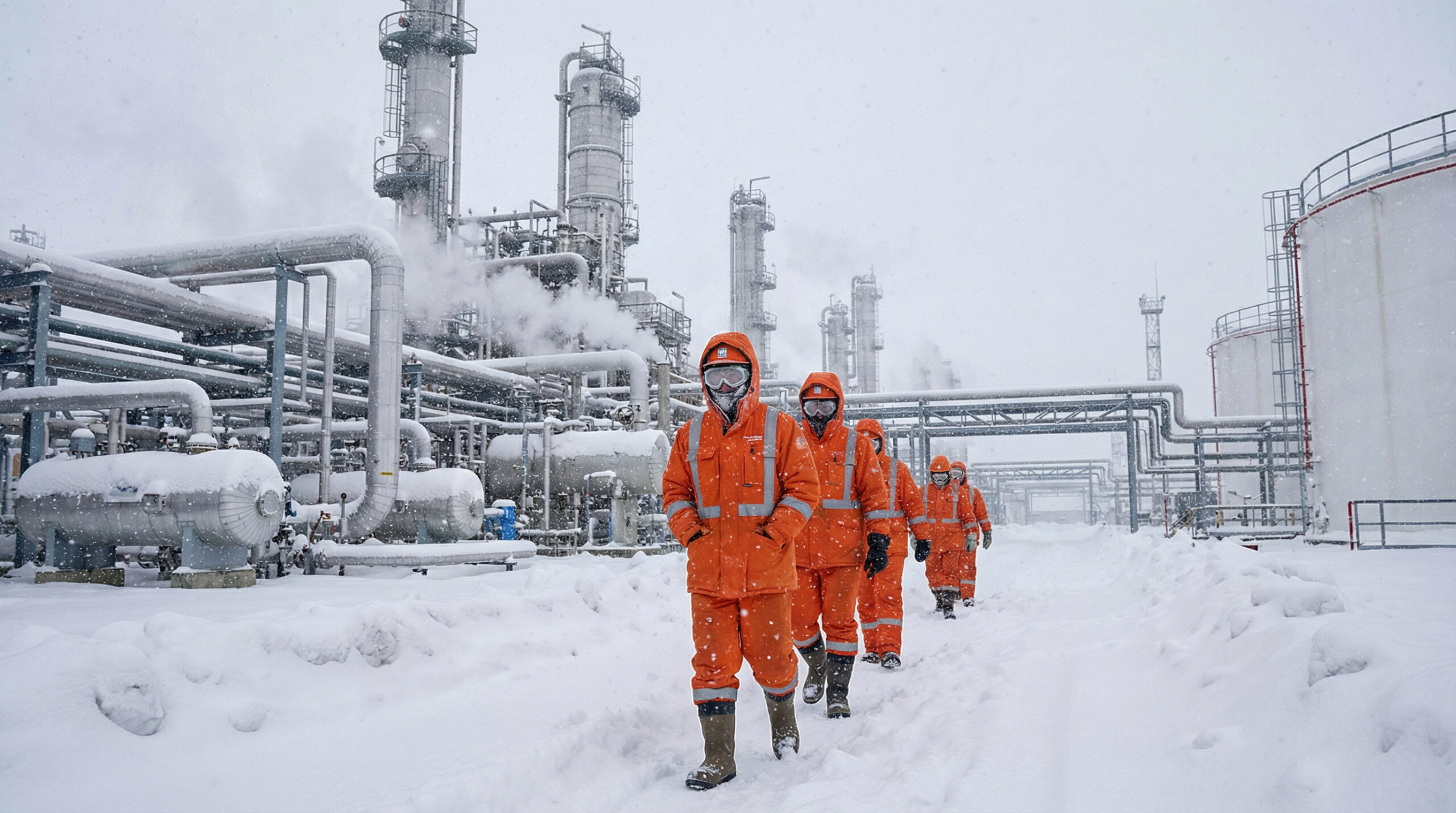
Storm Goretti is already impacting Europe, bringing a combination of freezing temperatures, snow, ice and strong winds across key industrial regions. While transport disruption and power outages dominate headlines, the most serious risks are being felt quietly across hazardous area industrial sites where temperature control is fundamental to safe operation.
For industries such as oil & gas, petrochemical processing, offshore production, terminals, tank farms and chemical manufacturing, Storm Goretti is not simply a weather event. It is a direct threat to flow assurance, safety compliance, asset integrity and production continuity.
This article explores what Storm Goretti means for hazardous area operations, the specific technical issues sites will face, and how ATEX-certified heating and temperature maintenance solutions can prevent forced shutdowns, damage and lost revenue.
What Is Storm Goretti?
Storm Goretti is a powerful winter storm system that developed over the North Atlantic before intensifying as it moved into Western Europe. Meteorological agencies have issued widespread warnings for sub-zero temperatures, heavy snowfall, freezing rain and strong winds, with conditions expected to deteriorate rapidly in some regions.
What makes Storm Goretti particularly disruptive is not just the snowfall or wind, but the speed at which temperatures are dropping. Sudden cold snaps place significant thermal stress on industrial systems that rely on controlled heat input to remain operational.
For hazardous area sites, these conditions create a perfect storm for freezing, solidification, instrumentation failure and emergency shutdowns.
Why Cold Weather Is a Major Industrial Risk
In hazardous environments, temperature is not simply a comfort issue – it is a critical process variable. Many fluids, chemicals and gases behave very differently as temperatures fall:
- Hydrocarbons become more viscous or gel
- Chemicals crystallise or solidify
- Condensation freezes inside lines and instruments
- Elastomers and seals lose flexibility
Without active temperature maintenance, these changes can lead to blocked pipelines, seized valves, damaged pumps and false instrument readings – all of which can trigger safety trips or forced shutdowns.
Impact on Hazardous Area Industries
Oil & Gas – Onshore, Offshore & Terminals
Oil & gas assets are especially exposed during extreme cold. Storm Goretti increases the risk of:
- Pipeline and valve freeze-ups
- Reduced flow rates and pressure instability
- Heat exchanger efficiency loss due to icing
- Instrument air and impulse line freezing
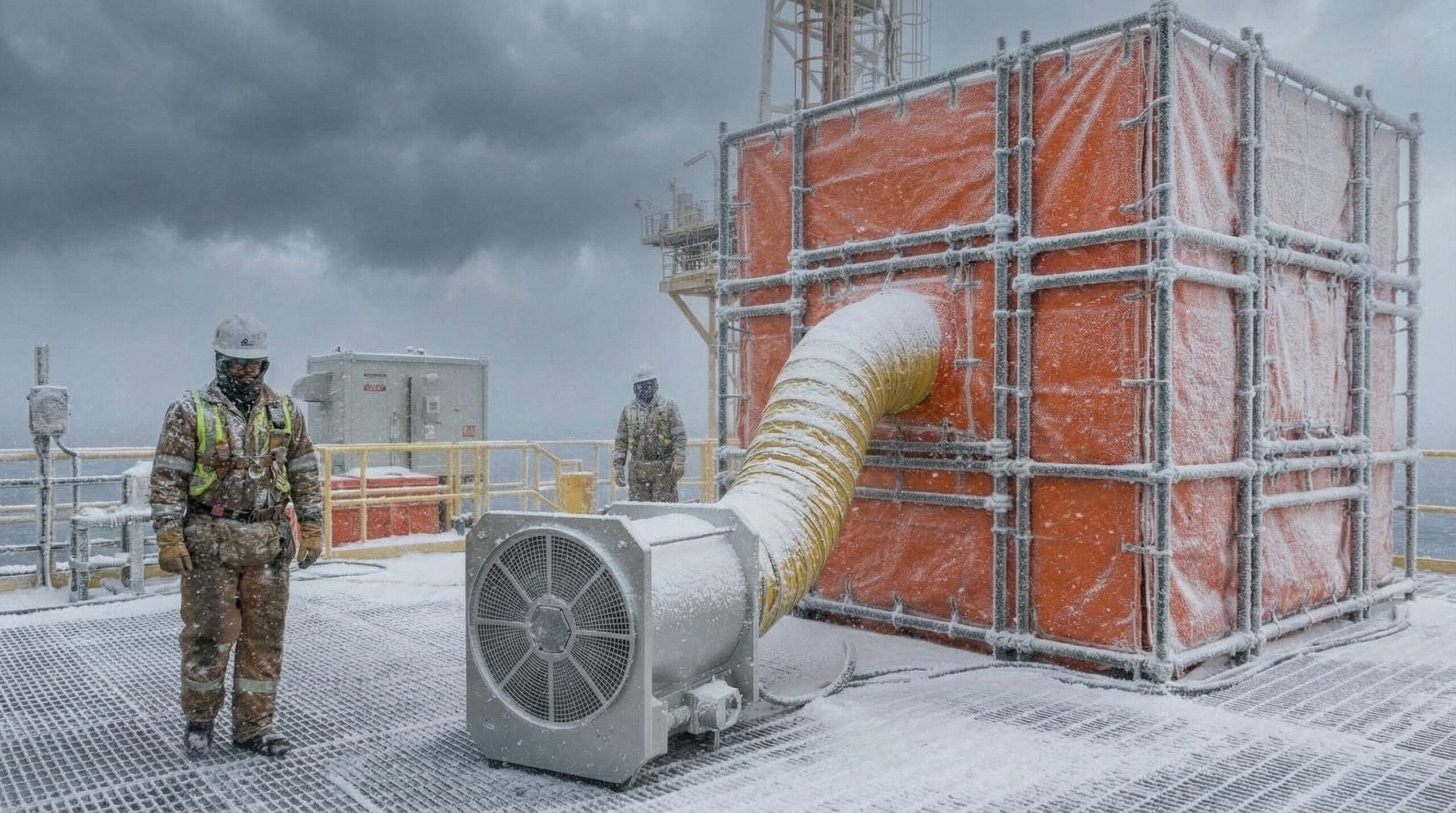
On offshore platforms and remote assets, access restrictions caused by weather make rapid intervention difficult, increasing reliance on permanently installed trace heating and hazardous area heaters.
Petrochemical & Chemical Processing
Many chemical processes operate within tight temperature windows. Cold ingress during storms can cause:
- Feedstock temperature dropping below reaction limits
- Increased viscosity leading to pump overload
- Batch quality issues or scrapped product
- Extended restart times after shutdown
Tank Farms, Drum Storage & Loading Operations
Bulk storage and transfer operations face increased challenges as temperatures fall:
- Drums and IBCs stored outdoors cool rapidly
- Loading arms and hoses freeze between transfers
- Mobile operations become difficult or unsafe
Common Failure Modes During Extreme Cold Events
- Frozen pipework and valves requiring controlled thawing
- Unplanned production shutdowns due to process trips
- ATEX compliance risks if uncertified heaters are introduced in emergencies
- Asset damage caused by thermal shock or ice expansion
- Extended restart timelines once materials solidify
Crucially, many sites only discover these vulnerabilities after temperatures have dropped. By that point, options are limited and downtime is already unavoidable.
Heating & Temperature Control Solutions for Storm Conditions
At Thorne & Derrick, we specialise in engineered heating solutions for hazardous areas, designed to maintain safe operating temperatures during extreme winter weather events such as Storm Goretti.
Typical mitigation strategies include:
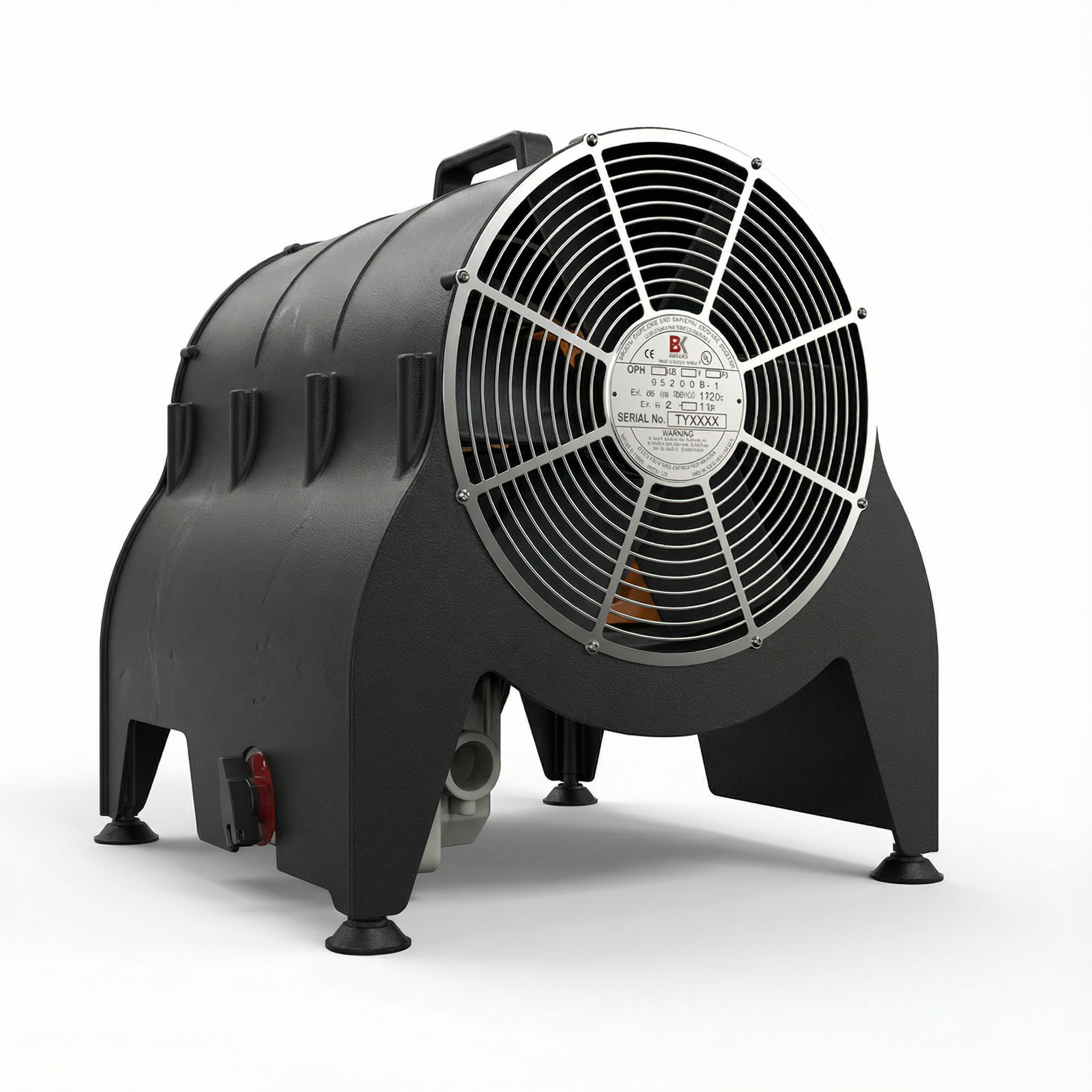
- ATEX & IECEx certified air heaters for plant rooms, enclosures and temporary work areas
- Electrical trace heating for pipelines, valves, manifolds and tanks
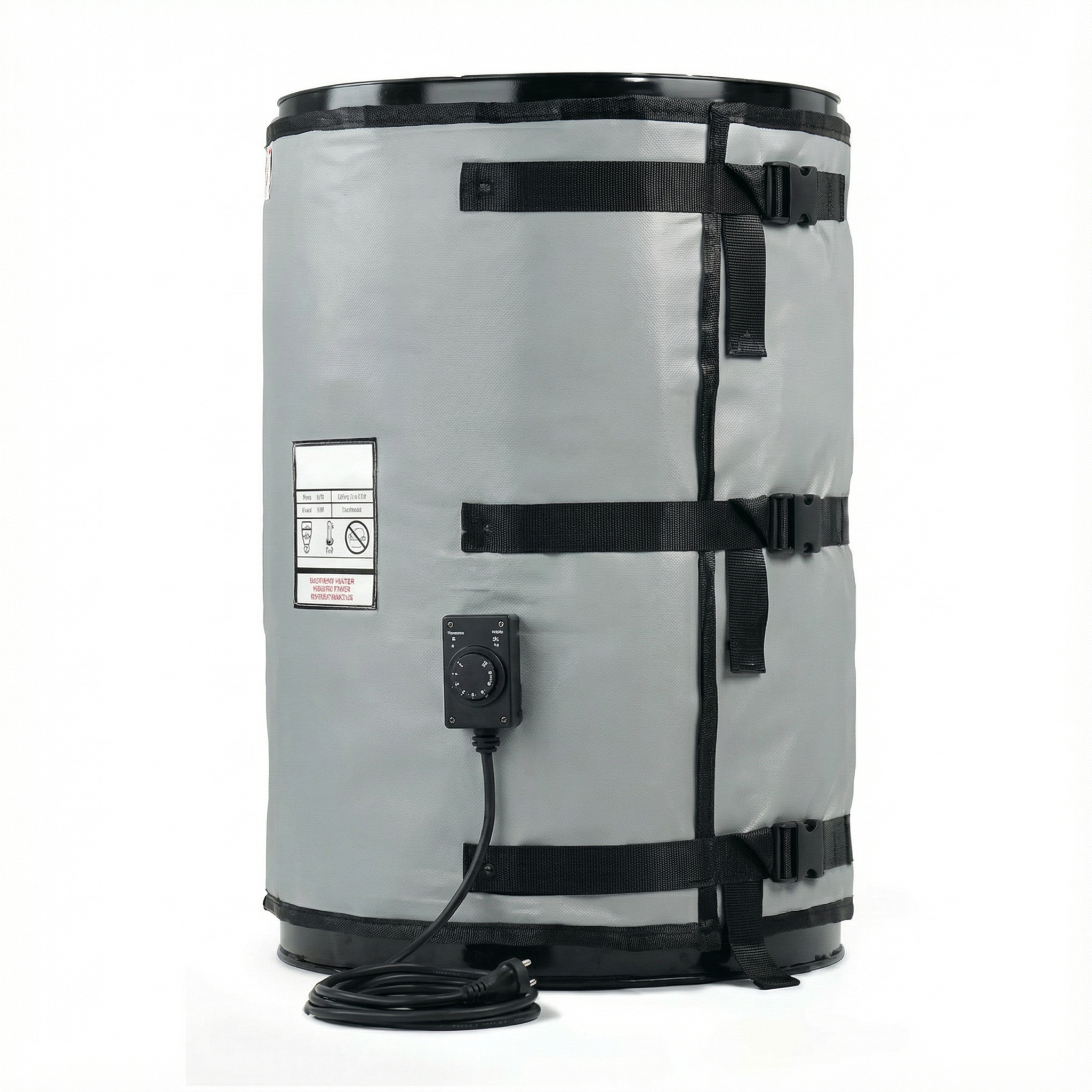
- Drum and IBC heaters to maintain product viscosity and prevent solidification
- Heated hoses for safe, flexible transfer of temperature-sensitive fluids
All equipment is selected to meet the required zone classification, temperature class (T-class), ingress protection and duty cycle.
Product Highlight: Hazardous Area Solutions for Extreme Weather
Thorne & Derrick International, based in the UK, are the leading stockists and suppliers of EXHEAT, Heatfast, Eltherm, Winkler & more – providing technical advice, quotations and fast worldwide delivery for both UK & export projects.
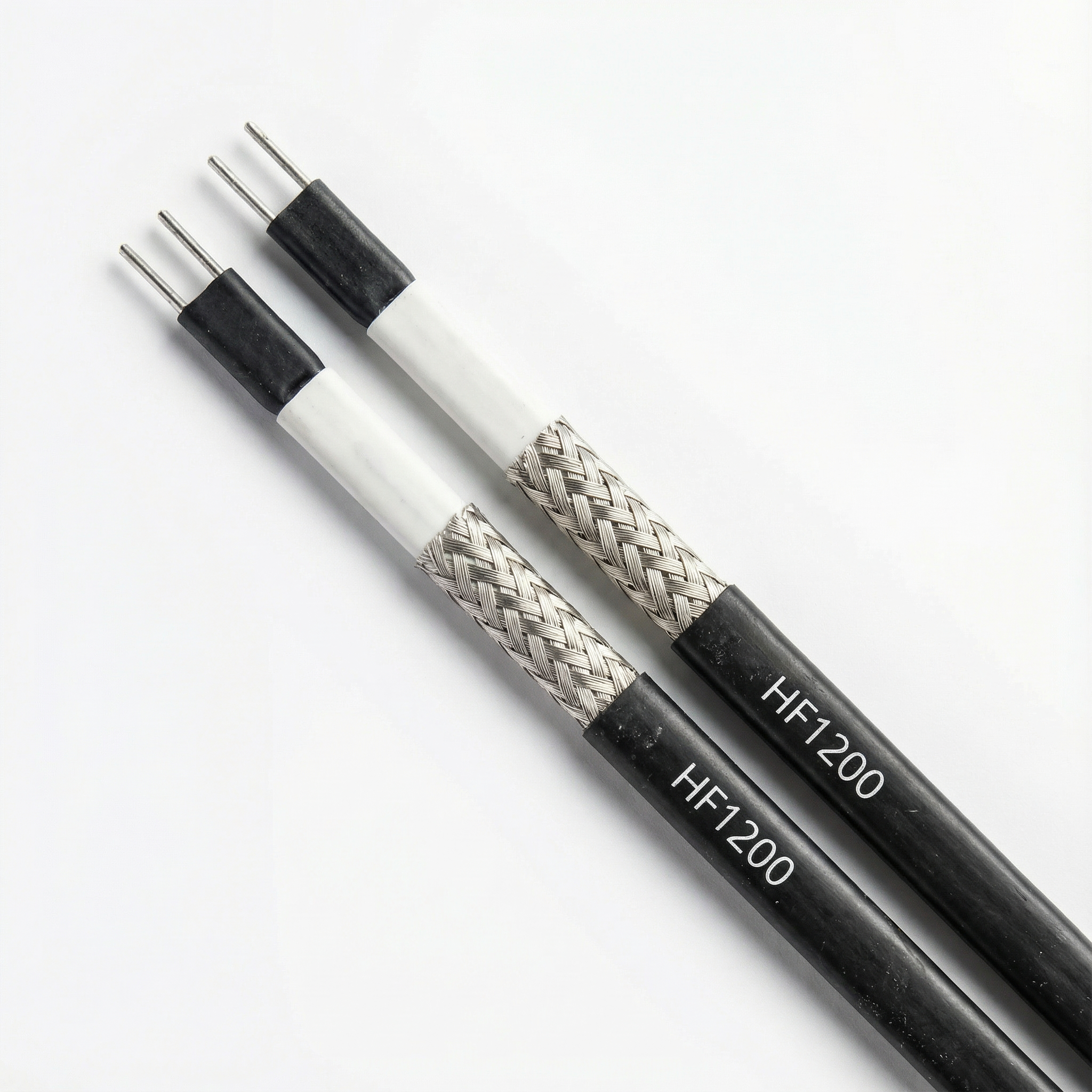
Hazardous Area Heater Safety Checklist
- ATEX / IECEx certification verified
- Correct temperature class (T3 / T4)
- No exposed ignition sources
- Anti-static, corrosion-resistant construction
- Ingress protection suitable for offshore use
- Thermal cut-out and over-temperature protection
Why Industrial-Grade ATEX Heating Matters
| Feature | Certified ATEX Heater | Non-Certified Alternative |
|---|---|---|
| Hazardous Area Approval | ✔ Zone-rated | ✖ Not permitted |
| Temperature Control | ✔ T-Class compliant | ✖ Uncontrolled |
| Continuous Operation | ✔ Designed for duty | ✖ Short-term only |
Urgent Actions: What Sites Should Do Now
Storm Goretti is not a future risk – it is a current one. Sites that delay preparation risk being forced into shutdowns rather than making controlled decisions.
- Audit existing trace heating and space heating systems
- Identify unprotected or marginal assets
- Deploy certified hazardous area heaters before access becomes restricted
Need urgent hazardous area heating support?
Thorne & Derrick supply ATEX-certified heating solutions for storm response, winterisation and critical temperature maintenance.