ATEX & IECEx | Approval of Electrical Equipment Used in Hazardous Areas & Explosive Atmospheres
Published 09 Jun 2020

TÜV SÜD provides safety, testing and certification services for equipment used in hazardous areas and potentially explosive atmospheres.
Originally published in June 2015. This article is being reviewed and updated to reflect current certification requirements.
ATEX vs IECEx: Certification for Hazardous Areas and Explosive Atmospheres
Equipment used in potentially explosive atmospheres must meet the applicable safety requirements for its intended environment. Two important frameworks for assessing equipment used in hazardous areas are the European Union’s ATEX legislation and the international IECEx certification scheme.
Although both frameworks address explosion protection, they serve different purposes. ATEX establishes legal requirements for relevant equipment placed on the EU market, while IECEx provides an international equipment certification scheme based on applicable standards.
Understanding the differences helps manufacturers, distributors, engineers and plant operators select appropriate equipment and assess the documentation required for a project.
This guide explains:
- What makes an environment potentially explosive.
- Why electrical and mechanical equipment can create ignition risks.
- How ATEX and IECEx certification work.
- How equipment categories relate to hazardous area zones.
- Where the two frameworks apply.
- What manufacturers and equipment users should consider when specifying certified products.
For an introduction to area classification, see our guide to hazardous area zones.
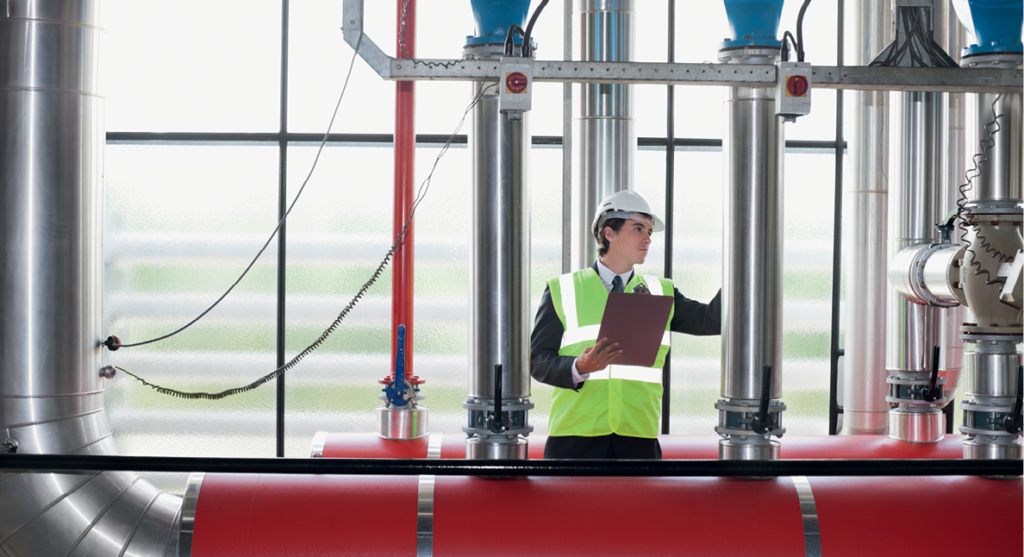
ATEX and IECEx certification for equipment used in potentially explosive atmospheres.
ATEX vs IECEx: What Is the Difference?
ATEX and IECEx both support the safe use of equipment in explosive atmospheres, but they are not interchangeable approvals.
- ATEX: EU legislation establishes the requirements that relevant equipment and protective systems must meet when placed on the EU market for use in potentially explosive atmospheres.
- IECEx: An international certification system assesses equipment against applicable international standards through approved testing and certification bodies.
The correct route depends on the destination market, the equipment type, its intended application and the requirements of the project or local regulator. A product’s certification and marking should always be checked against its intended use.
1. What Is a Potentially Explosive Atmosphere?
A potentially explosive atmosphere can form when flammable gas, vapour, mist or combustible dust mixes with air in conditions that could allow combustion to spread.
These conditions can occur in many industrial environments, including:
- Oil and gas processing facilities and refineries.
- Chemical and petrochemical plants.
- Pharmaceutical and manufacturing facilities.
- Grain handling and agricultural processing sites.
- Energy, utilities and industrial process facilities.
- Other workplaces where flammable substances or combustible dusts may be present.
Site operators assess the likelihood and duration of an explosive atmosphere to determine the appropriate hazardous area classification. Equipment must then suit the identified zone, the substances present and the operating conditions.
Explore our range of ATEX hazardous area lighting for applications where lighting equipment must meet the requirements of a classified area.
2. Why Can Electrical and Mechanical Equipment Create Ignition Risks?
Equipment can introduce an ignition source through its normal operation, a fault or unsuitable installation. In an explosive atmosphere, a potential ignition source can create a serious fire or explosion risk.
Common examples include:
Electrical sparks and faults
Switching operations, electrical faults or damaged connections can produce sparks. Equipment intended for hazardous areas must use suitable protection methods to control the risk of ignition.
Hot surfaces and high operating temperatures
Equipment surfaces can become hot enough to ignite certain gases, vapours or dusts. Engineers must consider the substances present, their ignition characteristics and the equipment’s maximum surface temperature.
Electrostatic discharge
Static electricity can accumulate during certain processes and discharge as a spark. Appropriate equipment selection, installation and operational controls help manage this risk.
Friction and mechanical sparks
Moving parts, contact between materials and mechanical faults can generate heat or sparks. Mechanical equipment also requires an assessment of its potential ignition sources where relevant.
Correct equipment selection forms part of a wider explosion protection strategy. Area classification, installation, inspection, maintenance and operating procedures also contribute to workplace safety.
Explosion protection requires appropriate equipment, assessment and safety measures.
3. What Is the ATEX Directive?
ATEX refers to the European framework for equipment and protective systems intended for use in potentially explosive atmospheres. The name comes from the French term ATmosphères EXplosibles.
Two EU directives have distinct roles:
- Directive 2014/34/EU (equipment directive): covers relevant equipment and protective systems intended for use in potentially explosive atmospheres.
- Directive 1999/92/EC (workplace directive): sets minimum requirements for protecting workers who may be exposed to risks from explosive atmospheres.
The equipment directive addresses product conformity, while the workplace directive focuses on workplace risk management and worker protection. They should not be treated as the same requirement.
How does ATEX conformity work?
Manufacturers must determine which requirements and conformity assessment procedures apply to their equipment. These depend on the product type, its intended use and its equipment group and category.
The process may involve:
- Identifying the applicable essential health and safety requirements.
- Applying relevant harmonised standards where appropriate.
- Completing the required conformity assessment procedure.
- Involving an EU Notified Body where the applicable procedure requires it.
- Preparing the necessary technical documentation and instructions.
- Drawing up the applicable EU Declaration of Conformity and applying the required marking.
Not every product follows the same assessment route. Requirements depend on its classification and the relevant provisions of the directive, so manufacturers should confirm the procedure that applies to each product.
For further information, consult the UK Health and Safety Executive’s ATEX guidance and the relevant EU legislation.
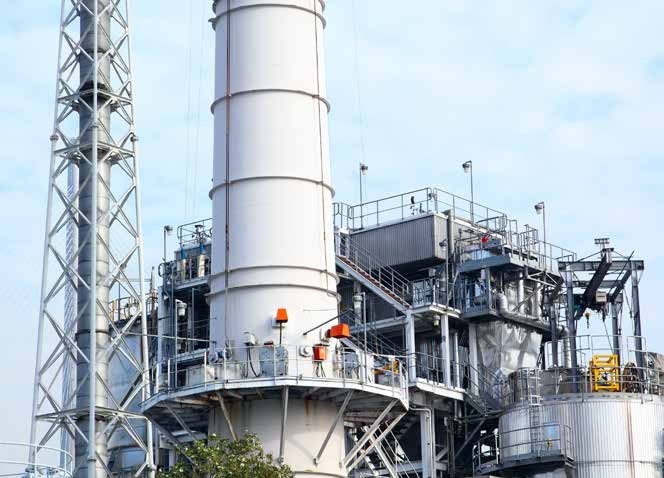
ATEX legislation establishes requirements for relevant equipment used in potentially explosive atmospheres.
4. What Is the IECEx Certified Equipment Scheme?
The IECEx System provides an international framework for conformity assessment relating to equipment used in explosive atmospheres. Its Certified Equipment Scheme uses independent assessment against applicable international standards.
The scheme can help manufacturers demonstrate that specified equipment meets the standards listed on its certificate. It also includes assessment of the manufacturer’s quality system and ongoing surveillance, where required by the applicable certification route.
How does IECEx equipment certification work?
The IECEx Certified Equipment Scheme uses approved Ex Testing Laboratories and Ex Certification Bodies to assess equipment within their authorised scopes.
The certification process can include:
- Testing and assessment of the equipment against applicable standards.
- Preparation of the relevant test reports and certification documentation.
- Assessment of the manufacturer’s production quality arrangements.
- Ongoing surveillance where required by the certification scheme.
Users can consult the official IECEx Certified Equipment Scheme overview to understand the process and check relevant certification information.
Other IECEx schemes
The IECEx System also covers activities beyond product certification, including service facilities and personnel competence. Check which scheme a certificate refers to before relying on it as evidence of product approval.

IECEx is associated with the International Electrotechnical Commission’s conformity assessment system for equipment used in explosive atmospheres.
5. ATEX Equipment Categories and Hazardous Area Zones
Hazardous area classification helps determine which equipment is suitable for an installation. ATEX equipment categories and hazardous area zones are related, but they are not identical classification systems.
For areas containing gas, vapour or mist, the commonly used zone designations are:
- Zone 0: an explosive gas atmosphere is present continuously, for long periods or frequently.
- Zone 1: an explosive gas atmosphere is likely to occur occasionally during normal operation.
- Zone 2: an explosive gas atmosphere is not likely to occur during normal operation, and if it does occur, it will persist for a short period.
For areas containing combustible dust, the corresponding designations are Zones 20, 21 and 22. Their definitions relate to the frequency and duration of an explosive dust atmosphere.
ATEX equipment categories indicate the required level of protection for the relevant equipment group and application. The appropriate category must be determined using the applicable requirements rather than assuming that a category number is interchangeable with a zone number.
Before selecting a product, check its certificate, marking, equipment group and category, protection concept, gas or dust suitability, temperature limits and any special conditions of use.
Browse our information on hazardous area zones to learn more about area classification.

ATEX marking helps users identify equipment intended for use in potentially explosive atmospheres.
6. What Technical Standards Apply to ATEX and IECEx?
The technical requirements depend on the equipment, its protection method and its intended operating environment.
ATEX standards and conformity assessment
ATEX sets essential health and safety requirements. Relevant harmonised European standards can help manufacturers demonstrate conformity with those requirements when applied appropriately.
Manufacturers should check the current standards and applicable conformity assessment procedure for the specific product. The presence of a standard or certificate does not automatically establish suitability for every hazardous area.
IECEx standards and certification
The IECEx Certified Equipment Scheme assesses equipment against applicable international standards, including relevant standards in the IEC 60079 series for explosive atmospheres.
The standards that apply depend on the equipment and protection concept. Certification scope should be checked against the specific product, including any limitations or conditions stated on its certificate.
Because standards and regulatory requirements can change, manufacturers and equipment users should consult current official documentation rather than rely solely on an older technical article.
7. Where Do ATEX and IECEx Apply?
ATEX
Directive 2014/34/EU establishes requirements for relevant equipment placed on the EU market for use in potentially explosive atmospheres. The precise legal obligations depend on the product, its intended use and the applicable legislation.
Businesses supplying equipment to the UK should also check the current UK requirements and applicable conformity assessment and marking rules. Requirements can differ from those that apply to products placed on the EU market.
IECEx
IECEx provides an internationally recognised certification framework, and its certificates can support equipment acceptance in markets that recognise the scheme. However, IECEx certification does not automatically replace every country’s legal or regulatory requirements.
Before supplying equipment internationally, manufacturers and distributors should confirm the requirements of the destination market, the relevant local authority and the project specification.
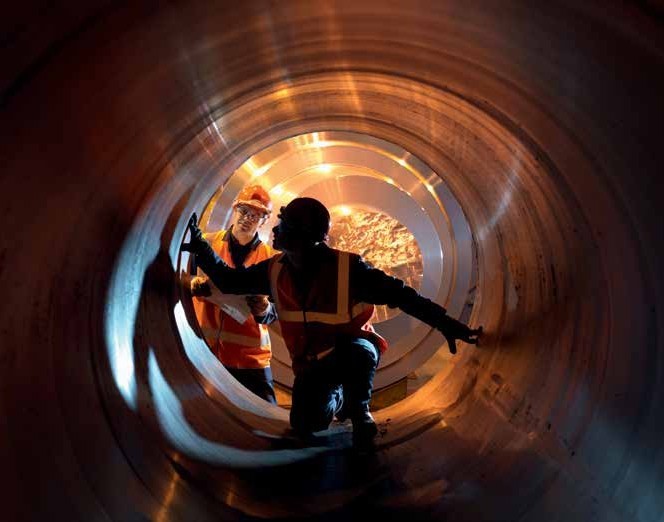
ATEX and IECEx provide different routes for demonstrating conformity and supporting equipment acceptance.
8. Should Manufacturers Obtain Both ATEX and IECEx Certification?
The answer depends on the markets a manufacturer intends to serve and the requirements of its customers and projects.
ATEX conformity may be required for relevant equipment placed on the EU market, while IECEx certification can help demonstrate compliance with applicable international standards in markets that recognise the scheme.
Manufacturers should consider the following factors before choosing a certification strategy:
- Destination markets: identify the legislation and certification requirements in each country where the equipment will be supplied.
- Equipment type: confirm which standards and conformity assessment procedures apply.
- Customer and project specifications: check whether the end user or project requires particular certificates or markings.
- Existing test data: ask the relevant certification body whether existing reports can support another assessment.
- Product documentation: ensure certificates, declarations, instructions and product markings match the equipment supplied.
- Ongoing compliance: account for any applicable quality assurance, surveillance and certification maintenance requirements.
Existing test data may support another conformity assessment, but acceptance is not automatic. Manufacturers should confirm the requirements with the relevant Notified Body or IECEx Certification Body before planning a certification route.
There is no single certification strategy that suits every manufacturer. A qualified conformity assessment body can help determine the applicable requirements for a particular product and market.

Conclusion: Choosing Equipment for Explosive Atmospheres
ATEX and IECEx play important roles in demonstrating the conformity of equipment intended for use in potentially explosive atmospheres. However, they serve different purposes, and the requirements for a particular product depend on its design, intended application and destination market.
Before installing equipment in a hazardous area, confirm that its documentation, certification, marking and technical characteristics match the area’s classification and operating conditions. Equipment selection should form part of a wider approach to explosion protection, safe installation and ongoing maintenance.
For current regulatory information, consult the relevant authorities and certification bodies. You can also explore the hazardous area equipment categories supplied by Thorne & Derrick below.
About TÜV SÜD
TÜV SÜD provides testing, inspection and certification services across a range of industries. Its work includes technical assessment and certification activities relevant to equipment used in potentially explosive atmospheres.
For current information about its services, capabilities and certification scope, consult TÜV SÜD directly.
Further Reading: Hazardous Area Safety and Equipment
- Security in hazardous areas: improving security in explosive atmospheres
- Dynaco ATEX doors for hazardous area applications
- Specifying compliant ATEX doors for hazardous areas
Hazardous Area Electrical Equipment from Thorne & Derrick
Thorne & Derrick supplies electrical, HVAC and process instrumentation equipment for hazardous area applications. Our product range supports projects across industries where equipment selection, certification and technical suitability are essential.
Explore relevant product categories:
- Hazardous area control panels
- ATEX hazardous area plugs
- Hazardous area isolators
- ATEX enclosures and junction boxes
- Hazardous area lighting
- Hazardous area control stations
- Explosion-proof motor starters
- Heat tracing cables
- Gas detection equipment
- Flame detection equipment
- Process instrumentation
- Electrical process heating
- ATEX ventilation fans
- Hazardous area access control

Competitive prices | Extensive stocks | Technical support | Express delivery
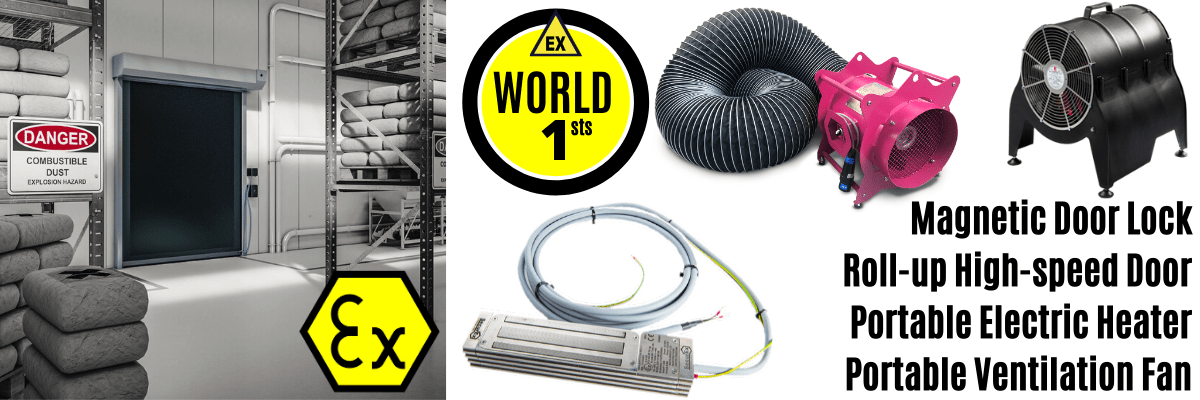
Further information:
Hazardous area maglocks |
ATEX doors |
EXHEAT MFH heaters |
ATEX fans

Servicing explosive atmosphere industries since 1985.
Further Reading
-
 TUV SUD Brochure | Certification Of Electrical Equipment Used in Hazardous Areas & Explosive Atmospheres
Size: 3.42 MB