Published 17 Aug 2026
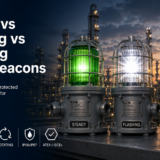
Steady, flashing, strobe and rotating beacons communicate different types of warning and status information. Although each produces a visible signal, the way that signal attracts attention and conveys meaning can vary considerably. A steady beacon provides continuous illumination. A flashing beacon switches between illuminated and non-illuminated states. A strobe...
Read More
Published 11 Aug 2026
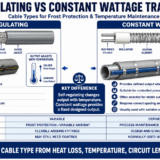
Choosing Between Two Common Electrical Heat Tracing Technologies Quick Navigation Comparison Overview The Key Difference How Self-Regulating Cable Works How Constant Wattage Cable Works Cable Comparison Table Output & Temperature Control Installation & Circuit Design Typical Applications Energy Use & Maintenance Hazardous-Area Selection Which Cable Should Be Selected? Information...
Read More
Published 10 Aug 2026
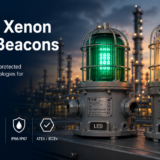
LED and xenon are two of the principal light-source technologies used in hazardous area visual signalling. Both can provide an effective warning, but they produce different signal patterns and are selected using different performance criteria. An LED ATEX beacon can provide continuous or electronically controlled signalling, depending on the...
Read More
Published 03 Aug 2026
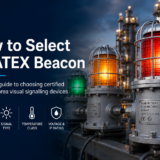
Selecting an ATEX beacon involves more than choosing a lens colour or deciding between an LED and xenon light source. The product must be suitable for the complete hazardous area classification, environmental conditions, electrical system and required visual signal. The selection process should begin with the hazardous area documentation....
Read More
Published 28 Jul 2026
Electrical Heat Tracing Inspection, Testing & Troubleshooting Quick Navigation Testing, Maintenance & Fault Finding Overview Why Preventive Maintenance Matters When Should Trace Heating Be Tested? Safety & Preparation Visual Inspection Electrical Testing Controllers, Sensors & Limiters Insulation & Weatherproofing Common Trace Heating Faults Fault-Finding Process Preventive Maintenance Schedule Testing...
Read More