ASCO Solenoid Valves & Sour Gas Environments
Published 01 Mar 2017

ASCO Numatics FASTSHIP and SAMEDAY services offer access to selected ASCO solenoid valves and valve operators from stock. Confirm current availability and delivery times with Thorne & Derrick.
By Chris Dodds | Estimated reading time: 9 minutes
ASCO Solenoid Valves for Sour Gas Applications
Material selection plays a critical role in the safety and reliability of equipment used in sour gas environments. This article explains the risks associated with hydrogen sulphide (H₂S), including hydrogen embrittlement and sulphide stress cracking, and explores how engineers can select suitable ASCO solenoid valves for oil and gas applications.

Sour gas can expose valves and other process equipment to corrosive conditions, particularly when hydrogen sulphide and water are present. Engineers must consider material compatibility, operating conditions and applicable industry standards when specifying equipment for these environments.
This article covers:
- How solenoid valves operate.
- What sour gas is and why hydrogen sulphide presents a hazard.
- The risks of hydrogen embrittlement and sulphide stress cracking.
- The role of NACE MR0175/ISO 15156 in material selection.
- The ASCO 327 Series case study described in the original article.
What Is a Solenoid Valve?
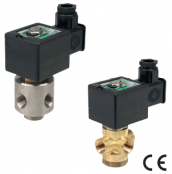
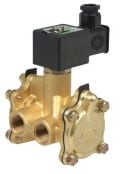
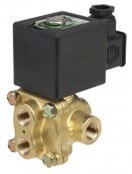
A solenoid valve controls the flow of a fluid, such as air, water, oil or gas. It typically combines an electrically operated solenoid with a valve body containing the internal components that regulate flow.
When an electrical current energises the coil, it creates a magnetic field that moves the valve’s internal mechanism. Depending on the valve design, this movement opens or closes the flow path.

ASCO Solenoid Valves
What Is Sour Gas?
Sour gas is natural gas that contains hydrogen sulphide (H₂S). Hydrogen sulphide is highly toxic and can cause serious corrosion-related damage to equipment under suitable environmental conditions.
Different standards and industry contexts use different criteria to define sour service. Engineers should therefore refer to the applicable specification and standard rather than rely on a single universal concentration threshold.
When hydrogen sulphide and water are present, susceptible materials may experience forms of damage such as hydrogen-induced cracking and sulphide stress cracking. These mechanisms can compromise the integrity of equipment used in oil and gas production.

Sour gas environments can cause several forms of material damage, including hydrogen-induced cracking and sulphide stress cracking.
Hydrogen Embrittlement and Sulphide Stress Cracking
What Is Hydrogen Embrittlement?
Hydrogen embrittlement occurs when hydrogen enters a susceptible metal and reduces its resistance to cracking. Depending on the material and conditions, this process can reduce ductility and fracture resistance, increasing the risk of failure.
Hydrogen can enter metals through several mechanisms, including certain manufacturing processes and exposure to corrosive environments. The resulting damage depends on factors such as the material’s composition, strength, stress level and exposure conditions.
One challenge is that hydrogen-related damage may develop without obvious external warning signs. Cracks can remain difficult to detect until they cause a significant loss of material integrity.
In onshore and offshore oil and gas facilities, a failure involving pressurised or hazardous process equipment can have serious consequences. Material selection and appropriate inspection therefore play an important role in managing risk.

Hydrogen-related damage can contribute to brittle fracture in susceptible materials, creating significant safety and reliability risks.
Video: Tesoro Anacortes Refinery Explosion
The following animation relates to the 2010 Tesoro Anacortes refinery incident, in which a heat exchanger failure caused an explosion and fire that killed seven workers. Investigators identified high-temperature hydrogen attack as the cause of the failure.
High-temperature hydrogen attack is a different damage mechanism from hydrogen embrittlement. However, the incident illustrates the serious consequences that material degradation can have in industrial facilities.
Hydrogen can also enter metals during certain manufacturing and surface-treatment processes, including electroplating, pickling and other treatments, if the process conditions allow it. In oil and gas applications, engineers must also consider the interaction between materials and the chemicals present in the operating environment.
What Is Sulphide Stress Cracking?
Sulphide stress cracking is a form of environmentally assisted cracking associated with susceptible materials exposed to hydrogen sulphide in the presence of tensile stress and suitable environmental conditions.
Hydrogen generated by corrosion can enter susceptible metals and contribute to cracking. The likelihood of failure depends on several factors, including material properties, hardness, stress and the conditions of exposure.
For oil and gas applications involving sour service, engineers must select materials that meet the requirements of the relevant service conditions and applicable standards.
NACE MR0175 / ISO 15156 and Sour Service Material Selection

NACE International developed industry guidance and standards for corrosion control. NACE MR0175, now associated with ISO 15156, addresses the selection and qualification of metallic materials for equipment used in H₂S-containing environments in oil and gas production.
The standard helps engineers assess whether materials are suitable for the intended sour service conditions. It supports material selection and qualification, but it does not replace the other design codes, regulations and requirements applicable to an installation.
When specifying a solenoid valve for sour service, engineers should check:
- Material compatibility: Confirm that wetted and other relevant components meet the requirements for the service environment.
- Operating conditions: Consider H₂S exposure, temperature, pressure, stress and other relevant environmental factors.
- Manufacturer documentation: Request evidence of material compliance and suitability for the intended application.
- Equipment certification: Check any separate hazardous-area and functional-safety requirements.
For further information, consult the applicable edition of ISO 15156: Materials for use in H₂S-containing environments in oil and gas production and the relevant project specifications.
ASCO Solenoid Valves: Sour Gas Case Study

ASCO 327 Series Solenoid Valve
Why Sour Service Matters for Solenoid Valves
Solenoid valves perform several functions in oil and gas facilities, including actuator piloting, compressor unloading, redundant control systems and utilities control.
Offshore upstream installations can combine corrosive process conditions with potentially explosive atmospheres. Engineers may therefore need to specify valves that address both material compatibility and the hazardous-area requirements of the installation.
The original ASCO case study describes the development of a direct-acting solenoid valve intended for sour gas applications. The design objectives included:
- Corrosion-resistant materials for upstream offshore conditions.
- Material suitability for H₂S service, including relevant internal components.
- Reliable operation with low electrical power consumption.
- Suitable hazardous-area protection options for the intended installation.
ASCO WSCR327 Solenoid Valves
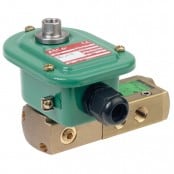
The original article identifies the ASCO WSCR327 as a solution developed for sour gas service. It describes a design using corrosion-resistant materials intended to meet NACE MR0175/ISO 15156 requirements.
The article also states that the design considers components that may encounter sour gas during installation and routine maintenance. Confirm the exact material specification and compliance documentation for the particular valve and configuration before selecting it for service.

ASCO Numatics
The original product information describes the valve as a 3/2 direct-operated design available in ¼-inch and ½-inch sizes, with flow rates of up to 1.8 m³/h. These figures are model-specific claims from the original article and should be checked against current manufacturer documentation.
The article also describes a non-breathing design intended to limit the passage of contaminated ambient air through the valve. The valve is associated with the ASCO 327 Series solenoid valve range and uses a balanced poppet design.

The original article also identifies low-power solenoid operator options and describes potential configurations for hazardous-area and functional-safety applications. Confirm the exact protection method, certification and SIL capability of the complete valve assembly before using it in a safety-related system.
ASCO 327 Series: Offshore and NACE Design
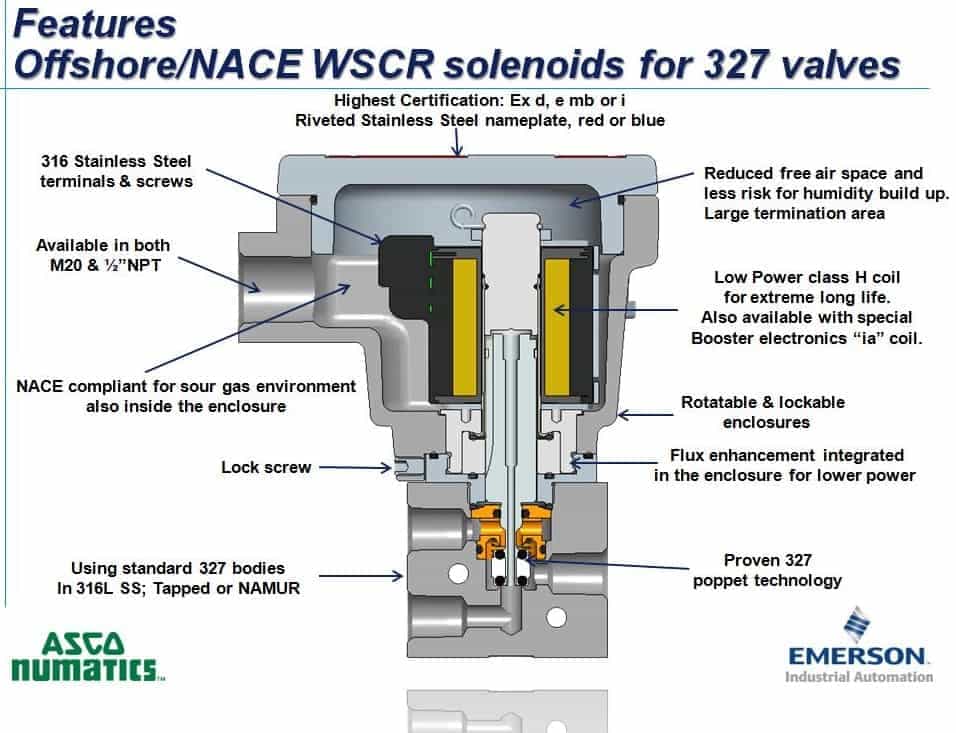
The original article reports that ASCO WSCR solenoid valves underwent testing at a sour gas concentration of 50 ppm, both externally and inside the solenoid housing. Consult the manufacturer’s test reports to confirm the test conditions, scope and applicability to the valve configuration you intend to use.
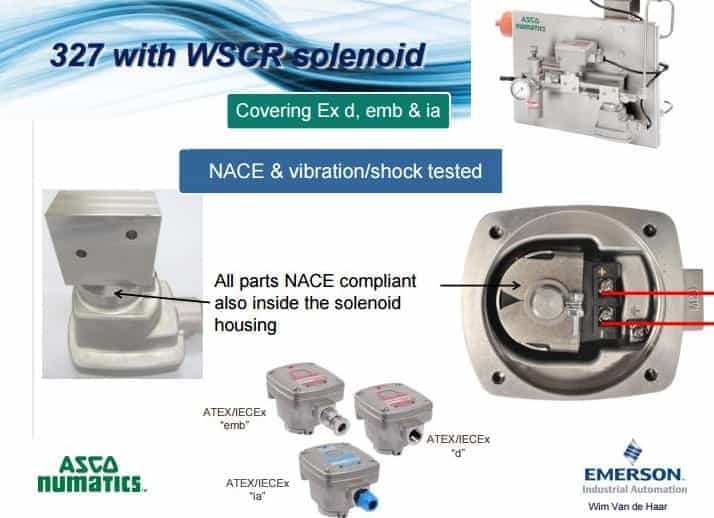
Key Features Described in the Original ASCO 327 Article
- Corrosion-resistant construction intended for sour service, including relevant solenoid internals.
- Direct operation without the need for a pilot stage.
- Different solenoid protection options described in the original article, subject to model and certification.
- Compact construction for industrial installations.
- Low-power operator options, with the original article citing values from 0.5 W to 1.8 W depending on configuration.
- Functional-safety options described by the original article, subject to the exact certification and configuration.
These features are not necessarily available on every valve variant. Check current ASCO datasheets and certification records before specifying a product.
ASCO Solenoid Valves from Thorne & Derrick
Thorne & Derrick is an authorised distributor of ASCO Numatics products. We work with customers to identify solenoid valves for industrial fluid-control requirements, including applications in the oil and gas sector.
When selecting a valve for sour gas service, provide the operating conditions, process fluid details, material requirements and any hazardous-area or functional-safety specifications. This information helps the technical sales team identify suitable options for further verification.
Explore ASCO solenoid valves or view the ASCO 327 Series solenoid valve range.
Further Reading About ASCO Valves
- ATEX Solenoid Valves – ASCO Valves for International Hazardous-Area Installations
- ASCO Valves – Selecting and Ordering the Correct Valve
- Browse Industrial Solenoid Valves
Connect with Process and Hazardous-Area Professionals
Join the Process & Hazardous Area Industries LinkedIn group to discover industry news, projects and technical discussions covering heat tracing, gas detection, fluid control and flow measurement.


Thorne & Derrick
Electrical and process instrumentation equipment for hazardous areas
Thorne & Derrick supplies hazardous-area and explosion-protection equipment to the onshore and offshore oil, gas, petrochemical and process industries. We support infrastructure projects and maintenance, repair and operations (MRO) requirements, including planned and unplanned plant shutdowns.
Working with customers and suppliers, we can help assess equipment requirements and plan the replacement of legacy products to meet applicable installation specifications and hazardous-area classifications.
Explore Our Product Categories
- Hazardous-Area Control Panels
- ATEX Plugs and Sockets
- Hazardous-Area Isolators
- ATEX Enclosures and Junction Boxes
- Hazardous-Area Lighting
- ATEX Control Stations
- Explosion-Proof Motor Starters
- Heat-Tracing Cables and Systems
- Gas Detection Equipment
- Electrical Heating for Hazardous Areas
Process Instrumentation Products
- Ashcroft Pressure Gauges
- ASCO Valves
- Katronic Flow Meters
- KROHNE Flow Meters
- VEGA Level Sensors
- Rotronic Temperature and Humidity Sensors
- SIKA Digital Pressure Gauges