By Chris Dodds | Estimated reading time: 4 minutes
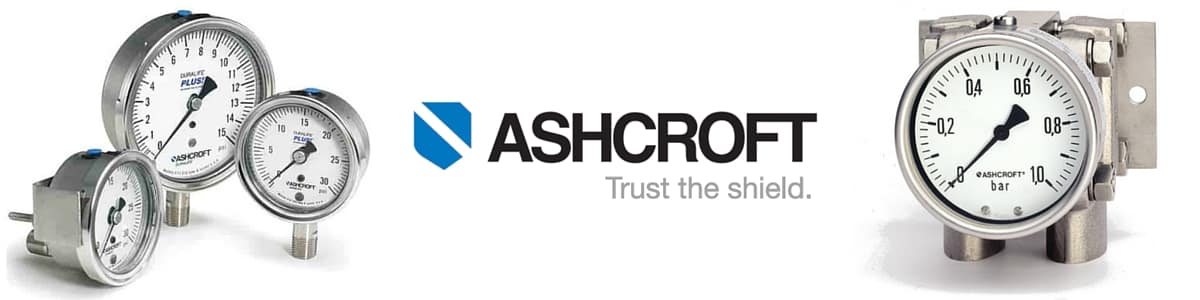
Choosing the correct mechanical Ashcroft pressure gauge involves more than selecting a pressure range. You also need to consider accuracy, dial size, materials, process media, connections, mounting position and operating conditions.
Use the seven steps below to help identify a suitable gauge for your application. Before specifying a product, also assess the installation environment, ambient conditions and whether the gauge will operate in a hazardous area.
Step 1 – Choose the Required Pressure Gauge Accuracy
Manufacturers typically express mechanical pressure gauge accuracy as a percentage of the full-scale range. The accuracy you need depends on the application, measurement requirements and applicable industry standards.
- Test and calibration applications: May require higher-accuracy gauges.
- Critical process measurements: Choose accuracy appropriate to the process and measurement tolerance.
- General industrial applications: Select an accuracy class that provides sufficient measurement resolution without unnecessary cost.
The original guide lists example accuracy figures ranging from 0.10% to 2.0% of full scale. Treat these as historical guidance rather than universal requirements, and confirm the available accuracy classes for the specific gauge.
For further guidance, consult the applicable edition of ASME B40.100 and the manufacturer’s datasheet.
Step 2 – Select the Right Dial Size
The dial must be large enough for operators to read the pressure clearly from the normal viewing position. Space constraints, viewing distance and the required measurement resolution all influence the dial size.
Consider the following when choosing a dial:
- Readability: Make sure operators can read the scale easily.
- Installation space: Check the available clearance around the gauge.
- Scale resolution: Confirm that the graduations allow operators to interpret the measurement accurately.
- Required accuracy: Check which dial sizes and accuracy classes the selected model supports.
Do not assume that a larger dial automatically guarantees greater accuracy. Confirm the specifications for the exact gauge model.
Step 3 – Choose the Case Style and Material
Environmental conditions can affect a pressure gauge’s readability, durability and service life. Assess the installation before choosing the case design and material.
Consider whether the gauge will encounter:
- High or low ambient temperatures
- Humidity, condensation or direct water exposure
- Corrosive chemicals or salt-laden air
- Dust and airborne particles
- Vibration or pressure pulsation
- Frequent washdown or demanding cleaning procedures
Depending on the application, a weather-resistant or hermetically sealed case, a liquid-filled gauge or a corrosion-resistant case material may be appropriate. Check the manufacturer’s specifications for temperature limits, ingress protection and suitability for the installation environment.
Step 4 – Check Process Media and Wetted Materials
The gauge’s wetted parts must be compatible with the fluid or gas being measured. These parts commonly include the pressure-sensing element and the process connection.
Incompatible materials can corrode, degrade or fail, potentially causing leaks, inaccurate readings or safety risks.
Before choosing a gauge, confirm:
- Media compatibility: Check compatibility with the process fluid or gas.
- Wetted materials: Verify the pressure-sensing element, connection and seals.
- Operating conditions: Consider concentration, temperature and other conditions that may affect material compatibility.
- Safety requirements: Identify any application-specific requirements for hazardous, corrosive or high-pressure service.
Review the product datasheet and seek technical advice if the media or operating conditions could affect the gauge materials.
Step 5 – Select the Correct Pressure Connection
Pressure gauges are available with different connection standards, sizes and thread types. The connection must match the process fitting and provide a suitable, reliable seal.
Depending on the gauge and application, connection options may include:
- NPT
- BSP
- DIN or other specified connection standards
- JIS
- SAE
Check the exact thread standard, connection size and sealing arrangement before ordering. Do not assume that connections with similar dimensions are interchangeable.
Also consider the operating pressure, gauge weight, installation space, vibration and access for maintenance.
Step 6 – Decide on the Connection Location and Mounting Style
The connection position affects how the gauge fits into the installation and how easily operators can read it. Choose a mounting arrangement that suits the pipework, panel or equipment layout.
Common configurations include:
- Lower connection: For direct stem mounting or suitable surface-mount arrangements.
- Back connection: Often used for panel-mounted gauges.
- Surface mounting: For suitable wall or equipment installations.
- Panel mounting: May use a U-clamp or front flange, depending on the gauge design.
Confirm the mounting arrangement available for the chosen model, along with the required panel cut-out, clearance and connection orientation.
Step 7 – Choose the Correct Pressure Range
Select a pressure range that covers the expected operating pressure while allowing enough room for normal fluctuations and potential surges.
The original guide cites ASME guidance recommending normal operating pressure within approximately 25% to 75% of the full-scale range, with a lower limit for pulsating service. Treat these figures as a selection guideline and confirm the appropriate range and operating limits against the current applicable standard and gauge manufacturer’s instructions.
When selecting a range, consider:
- Normal operating pressure: Identify the typical pressure during operation.
- Maximum pressure: Account for foreseeable pressure peaks and transients.
- Pressure pulsation: Consider whether a liquid-filled gauge, dampening device or other suitable solution is needed.
- Overpressure limits: Check the manufacturer’s permitted limits and the application’s safety requirements.
Choosing an unsuitable pressure range can reduce readability and may expose the gauge to conditions outside its intended operating limits.
Pressure Gauge Selection Checklist
Before ordering an Ashcroft pressure gauge, make sure you have confirmed the following:
- Required accuracy
- Dial size and readability
- Case style and material
- Process media and wetted-material compatibility
- Connection type, thread and size
- Connection location and mounting style
- Normal pressure, maximum pressure and pulsation
- Ambient and process temperature limits
- Environmental and hazardous-area requirements, where applicable
Get Help Selecting an Ashcroft Pressure Gauge
Correct gauge selection supports reliable pressure measurement, equipment performance and safe operation. Always check the manufacturer’s technical documentation against your actual process conditions before specifying or installing a gauge.
Explore the Ashcroft pressure gauge range or browse our industrial pressure gauges.
If you need help with product selection, contact Thorne & Derrick with your required pressure range, process media, connection details, operating temperature and installation requirements.
Important safety note: Incorrect pressure gauge selection or installation can result in equipment failure, injury or property damage. Treat this guide as general selection guidance, not a substitute for the manufacturer’s instructions, relevant standards or a competent engineering assessment.
…
More Reading
Connect with Process and Hazardous-Area Professionals
Join the Process & Hazardous Area Industries LinkedIn group for industry news, technical resources, projects and updates covering heat tracing, gas detection, fluid control and flow measurement.

About Thorne & Derrick

Thorne & Derrick International supplies electrical, mechanical, process and instrumentation equipment to UK and international customers. Since 1985, we have supported utilities, power, renewable energy, construction, rail, manufacturing, food and beverage, mining, oil, gas and petrochemical industries.
Our product range includes equipment from established manufacturers for industrial and hazardous-area applications. Contact our team for product availability, technical information and application support.
Explore our Ashcroft pressure gauges and other process instrumentation products.