ATEX Beacons for Zone 1 & Zone 2 Hazardous Areas
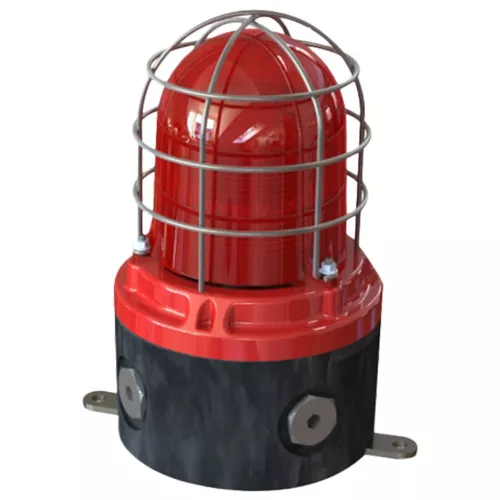
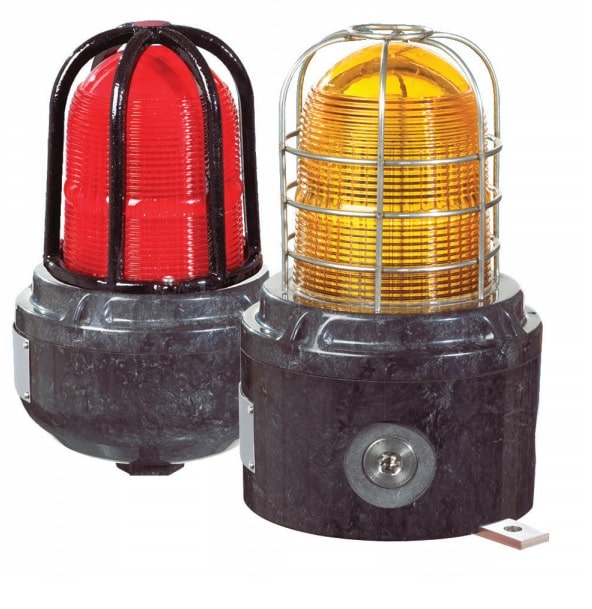
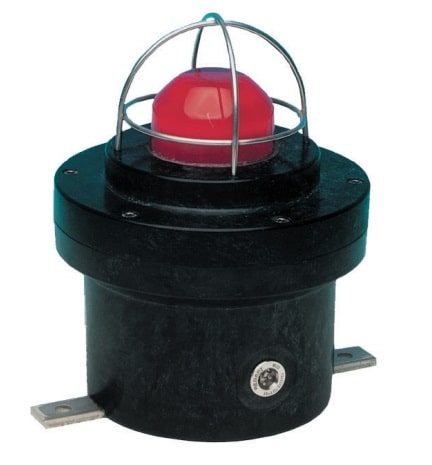

ATEX & IECEx Hazardous Area Beacon Range


Certification, hazardous area suitability and protection concept vary by product and configuration.
Thorne & Derrick is a specialist distributor of ATEX beacons and hazardous area visual signalling devices for potentially explosive and harsh industrial environments.
The range includes LED, xenon, steady-state, flashing and rotating beacons, with certified options for Zone 1, Zone 2, Zone 21 and Zone 22 applications. These visual signalling devices can support alarm, warning, evacuation and equipment-status indication across onshore, offshore and industrial installations.
Selection of an ATEX beacon should take account of the hazardous area classification, gas or dust environment, complete equipment certification, temperature class, operating voltage, signal type, lens colour and installation conditions.
SEE ATEX BEACON SELECTION GUIDANCE
 GO TO ATEX BEACON COMPARISON
Need Help Selecting an ATEX Beacon?
Thorne & Derrick can provide technical support to help identify suitable hazardous area beacons for new installations, replacement projects and integration with fire, gas or process alarm systems. Send us the hazardous area zone, gas or dust classification, required voltage, preferred signal type, lens colour and ambient operating conditions for technical support and quotations.
What Is an ATEX Beacon?
An ATEX beacon is a visual signalling device designed and certified for use in potentially explosive atmospheres. Depending on the product and its operating mode, it may provide a steady, flashing, strobe or rotating warning signal.
Hazardous area beacons can be used to communicate an alarm, warning, evacuation instruction, process condition or equipment status. They may operate as individual devices or as part of a wider fire, gas, process control or emergency warning system.
Suitability should be confirmed against the complete equipment certification rather than the term “ATEX” alone. The correct beacon depends on the classified zone, gas or dust group, equipment category, protection concept, temperature class, ambient temperature and environmental conditions. For a more detailed explanation of hazardous area visual signalling, read our guide: What Is an ATEX Beacon?
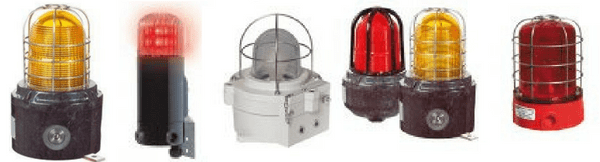
Compare ATEX Beacons
The following table provides a quick comparison of selected products within the range. Exact certification, temperature classification, voltage, ingress protection and ordering options should be confirmed on the individual product page and against the current manufacturer documentation.
Zone 1 and Zone 2 Beacons
Zone 1 is an area where an explosive atmosphere consisting of flammable gas, vapour or mist is likely to occur occasionally during normal operation.
Zone 2 is an area where an explosive atmosphere is not likely to occur during normal operation but, if it does occur, will normally remain for only a short period.
The selected visual signalling device must carry certification appropriate to the classified installation area. A standard industrial beacon should not be assumed suitable simply because the installation is classified as Zone 2.
Gas and combustible-dust atmospheres use different zone classifications and equipment markings. Applications involving dust may require equipment certified for Zone 21 or Zone 22 rather than gas Zone 1 or Zone 2.
Read the H&P technical guide to hazardous area zones and explosive atmosphere classification
Types of Hazardous Area Beacons
LED Beacons
LED beacons can provide steady, flashing, blinking or electronically rotating visual signals, depending on the selected model. Depending on the selected model and certification, LED beacons can support long-duration operation, defined warning patterns and clear plant-status indication.
Xenon Beacons
Xenon beacons produce a high-intensity flashing signal and are commonly specified according to their flash energy, expressed in joules. Available products differ in output, flash rate, operating voltage, enclosure material and hazardous area certification.
Steady-State Beacons
Steady beacons provide continuous visual indication and may be used to communicate equipment status, process conditions or persistent warning states. Available light sources can include filament, fluorescent and LED technologies.
Rotating and Electronically Rotating Beacons
Rotating beacons provide a moving visual warning signal. Selection should consider the required visibility, operating environment, mounting position, electrical supply and complete hazardous area certification.
How to Select an ATEX Beacon
The following information should be established before specifying an ATEX or IECEx hazardous area beacon:
1. Hazardous area zone: establish whether the installation is within Zone 1, Zone 2, Zone 21 or Zone 22.
2. Hazardous atmosphere: identify whether the risk relates to gas, vapour, mist or combustible dust.
3. Equipment group and category: confirm the required classification for the installation.
4. Gas or dust group: check the group stated within the hazardous area specification.
5. Protection concept: establish whether the application requires flameproof, increased-safety, intrinsically safe or another certified design.
6. Temperature classification: confirm the permitted equipment temperature class or maximum surface temperature.
7. Ambient temperature: establish the minimum and maximum operating temperatures at the installation location.
8. Signal type: select LED, xenon, steady, flashing, strobe or rotating operation.
9. Visual output: consider the required visibility, flash energy, light intensity and viewing distance.
10. Operating voltage: confirm the available AC or DC electrical supply.
11. Lens colour: select a colour consistent with the site alarm philosophy and intended warning condition.
12. Housing material: consider corrosion, UV exposure, impact and the wider environmental conditions.
13. Ingress protection: establish the required protection against dust and water ingress.
14. Installation environment: identify whether the unit will be installed indoors, outdoors, offshore, onshore or in a marine environment.
15. Regional approvals: confirm whether ATEX, UKEX, IECEx or additional international certification is required.
The complete certification, product marking and manufacturer documentation should always be checked against the project hazardous area specification.
ATEX Beacon Selection Support
Provide the hazardous area classification, voltage, required signal type, lens colour and installation conditions for product selection support.
ATEX Beacon Applications
Hazardous area visual signalling devices can be used across applications including:
✔ Oil and gas production and processing facilities
✔ Offshore platforms and marine installations
✔ Refineries and petrochemical plants
✔ Chemical processing and storage facilities
✔ Pharmaceutical manufacturing
✔ Fuel storage and distribution
✔ Power generation
✔ Water and wastewater treatment
✔ Food, grain and combustible-dust processing
✔ Fire and gas detection systems
✔ Process control and equipment-status indication
✔ Emergency, evacuation and hazard-warning systems
Product suitability must be confirmed for the specific hazardous atmosphere, environmental conditions and signalling system.
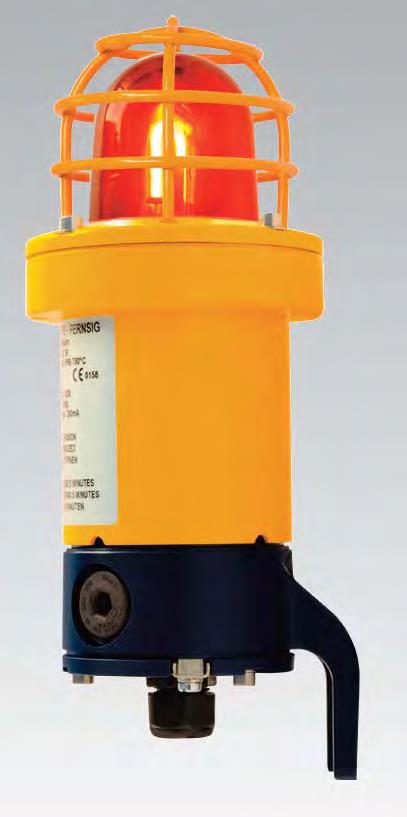
Visual Warning in Noisy Industrial Environments
Visual beacons may be installed alongside audible sounders where machinery, process noise, distance or the use of hearing protection could make an audible alarm more difficult to detect.
Different lens colours and operating patterns can also be used to distinguish between alarm conditions, equipment states or process events. The meaning assigned to each colour and signal should be defined by the site alarm philosophy and applicable project requirements.
Where both audible and visual warning are required, a pre-assembled sounder and beacon unit may provide a suitable alternative to installing separate devices.
ATEX Beacon FAQs
What is an ATEX beacon?
An ATEX beacon is a visual signalling device selected and certified for use in a potentially explosive atmosphere. Depending on the model, it may provide a steady, flashing, strobe or rotating warning signal.
What is the difference between a Zone 1 and Zone 2 beacon?
The difference relates primarily to the classified installation area and the likelihood of an explosive atmosphere occurring. The beacon must carry certification appropriate to the specified zone, atmosphere and application.
Are all ATEX beacons explosion proof?
No. “Explosion proof” is often used as a broad search term, but ATEX equipment can use different explosion-protection concepts. The complete product marking and certification should be reviewed to establish the protection method and suitability.
Can the same beacon be used in gas and dust hazardous areas?
Only where the beacon carries the required certification for both applications. Gas zones and combustible-dust zones use different classifications, markings and temperature requirements.
What is the difference between an LED and xenon ATEX beacon?
An LED beacon uses light-emitting diodes and may offer several electronically controlled operating modes. A xenon beacon uses a xenon tube to produce a high-intensity flash and is commonly specified by its flash energy in joules.
Are all hazardous area beacons suitable for outdoor installation?
No. Outdoor suitability depends on the product’s ingress protection, housing material, corrosion resistance, ambient temperature range and complete certification.
What information is needed to specify a hazardous area beacon?
The main information includes the hazardous area zone, gas or dust group, temperature class, ambient temperature, operating voltage, required signal mode, lens colour, mounting arrangement and environmental exposure.
Can an ATEX beacon be connected to a fire or gas detection system?
Many visual signalling devices can be integrated into wider alarm and control systems. Compatibility must be confirmed against the system voltage, current requirements, control method, installation design and relevant certification.
What do different beacon lens colours mean?
Lens colours may be assigned to different alarms, warnings or equipment states. The intended meaning should be defined within the site alarm philosophy rather than assumed from the beacon colour alone.
Request an ATEX Beacon Quotation
Contact Thorne & Derrick with the hazardous area classification, required voltage, signal type, lens colour, ambient conditions and any preferred product or manufacturer reference.