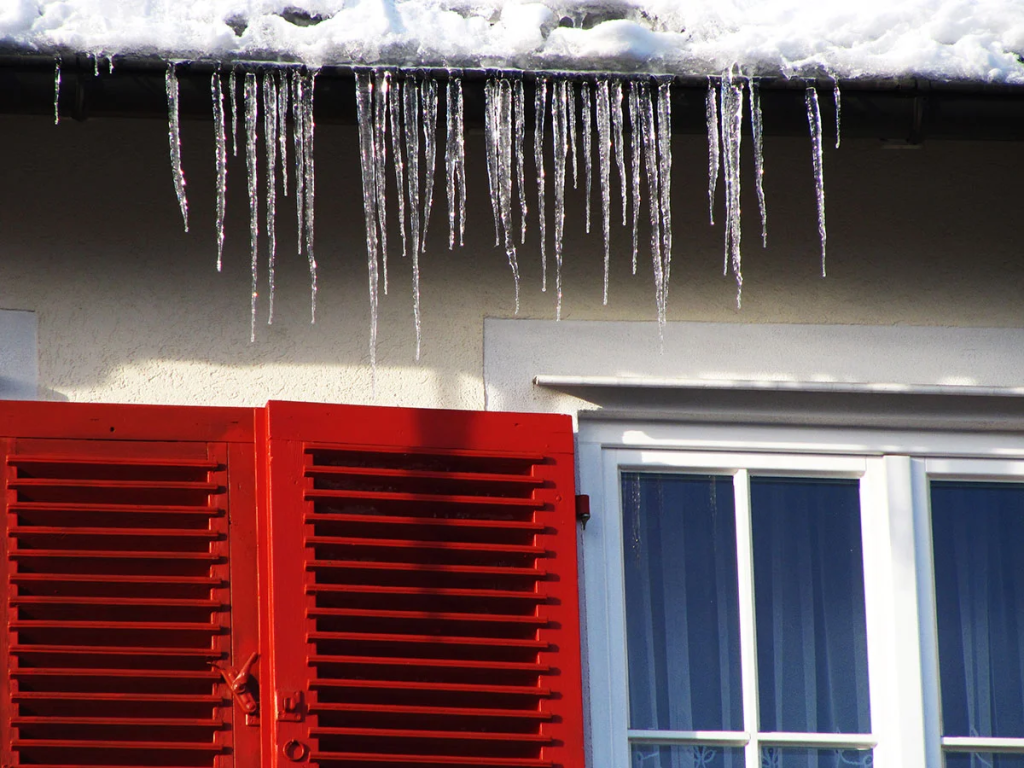
Roof and gutter de-icing trace heating cables prevent ice dam formation on roofs ensuring safe free flowing of melt water through gutters and downspouts to ground level. The heating cables prevent ice dams from forming on inclined roofs, in gutters and in downspouts. Please note roof de-icing cables should not be used as a general snow-melting system to clear roofs from ice and snow build-up in winter.
▶ Thorne & Derrick together with Eltherm can provide expert technical support and design services for roof and gutter trace heating systems – the length of the roofline does not determine length of heating cables required. Roof design, roof size, gutter and downspout locations and number of sides of a typical, peaked roof to be protected from snow and ice needed to be considered. Please contact us today to discuss your specific application in more detail.
Using heat tracing cable maintains a flow path for the water and prevents gutters overflowing and water seeping back into the building. Melt water which cannot freely drain away will form pools which in turn can penetrate seams and joints in gutters and flat roofs causing serious damage to the internal building fabric and contents.
A leaking gutter or roof can cause extensive structural damage within buildings. Heat tracing cables create a flow path for the water allowing it to drain away correctly.
In some cases, the load bearing weight of any snow accumulation is the primary concern as the additional weight can negatively affect the structural integrity of the building.
frost protection for rOOFS, gutters, downspouts, and box gutters
Gutters with heating cables can prevent roof avalanches, which is crucial for public buildings.
These include:
Office buildings
Hospitals
Company buildings
Supply centres
Supermarkets
The heating cables are installed over unheated roof sections, usually the roof area above the overhang ensuring water flowing onto the unheated roof area will be able to flow safely to the ground. Melt water which cannot adequately drain away from the roof will form pools which in turn can penetrate seams and joints in gutters and flat roofs.
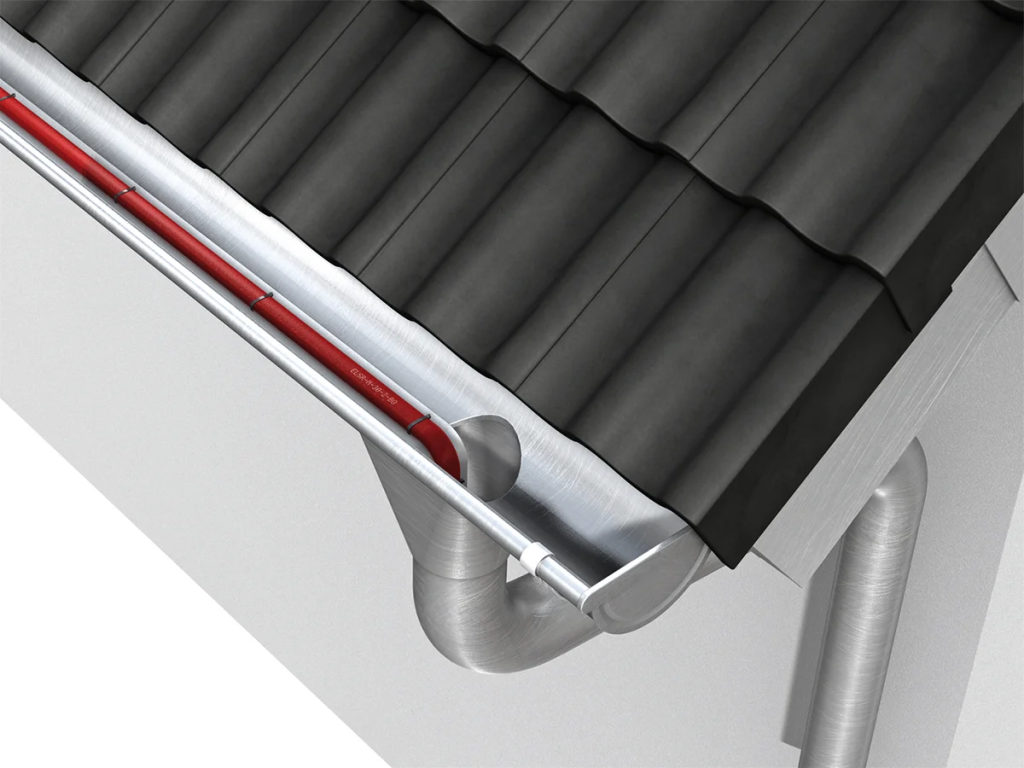
Installing heating cable in roof valleys, gutters and downspouts as per the image below establishes ice-free flow pathways for water to drain completely from the eaves and gutter. With a maximum temperature of 65 °C, there is no risk to plastic pipes, gutters and conduits.
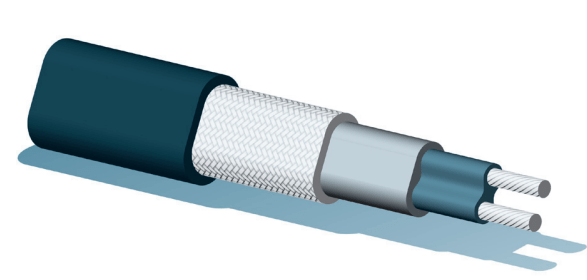
Self-Regulating heating cable
In the worst-case scenario, if drainage is impeded in the downspout, it can burst, resulting in significant damage. To safeguard gutters, box gutters, downspouts, or sloping roofs from ice-related harm and ensure maximum safety, an Eltherm gutter heating presents an ideal solution.
Low Maintenance, Maximum Flexibility
Self-regulating heating cables are known for their reliability and minimal maintenance requirements, whilst also offering a long service life. Specifically designed for gutter heating, we utilise low-temperature heating cables like ELSR-LS or ELSR-N.
These self-regulating heating cables offer the flexibility to be operated with or without a temperature controller. While they automatically regulate their temperature, they cannot be set to a specific temperature. If a constant temperature is required, a temperature controller must be used.
Easy installation
What Do I Have To Take Into Account?
When it comes to installing heating cables on your roof and gutter systems, attention to detail is key to ensuring optimal performance and safety, Using these tips:
Prepare the Gutter: Before installing the heating cable, thoroughly clean the gutter to remove any debris and ensure there are no sharp edges that could potentially damage the cable
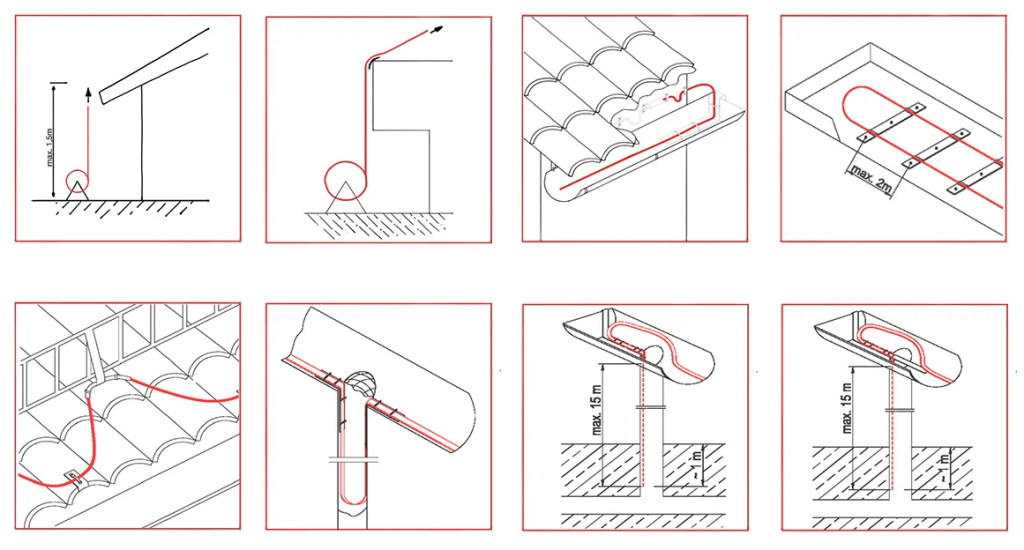
Mind the height: When unwinding the heating cable , be cautious of the maximum height limit, typically around 15 meters. Exceeding this limit could affect the efficiency of the heating system
Use edge protectors: To prevent damage to the heating cable, especially when pulling it over the edge of the gutter, consider using edge protectors for added safety
Secure Connections: Place the connection point outside the gutter to ensure it is properly protected against various loads, including compressive, tensile, and shear forces, to prevent damage to the cable
Install Flat: Lay the heating cable flat along the gutter surface for an even distribution of heat. Installation profiles can be helpful in ensuring a smooth and secure fit
Consider Snow Guards: If you’re installing heating cables for snow guards, take extra care to avoid sharp kinks near fixation points by using appropriate installation profiles
Utilise Dirt Grilles: For downspouts equipped with a heating cable loop, consider using dirt grilles to enhance the effectiveness of the heating system and prevent blockages
Installation Guide for Roof and Gutter Trace Heating
By following these steps, you can ensure that your gutter heating system operates efficiently, providing protection against ice buildup and potential damage during the winter months.
THORNE & DERRICK & ELTHERM
Thorne & Derrick, the UK’s leading Specialist Distributor of Electrical Process & Trace Heating Solutions, last year announced they had entered into a Strategic Partnership with Eltherm UK Ltd, the subsidiary of the Eltherm Group, a world-class manufacturer of Heat Tracing Cables & Systemsfor the commercial, industrial and hazardous area industries.
THE ELECTRICAL HEATING PACKAGE
Thorne & Derrick provide a complete portfolio of Electric Process & Trace Heating Solutions for Industrial, Hazardous Area & Explosive Atmospheres,
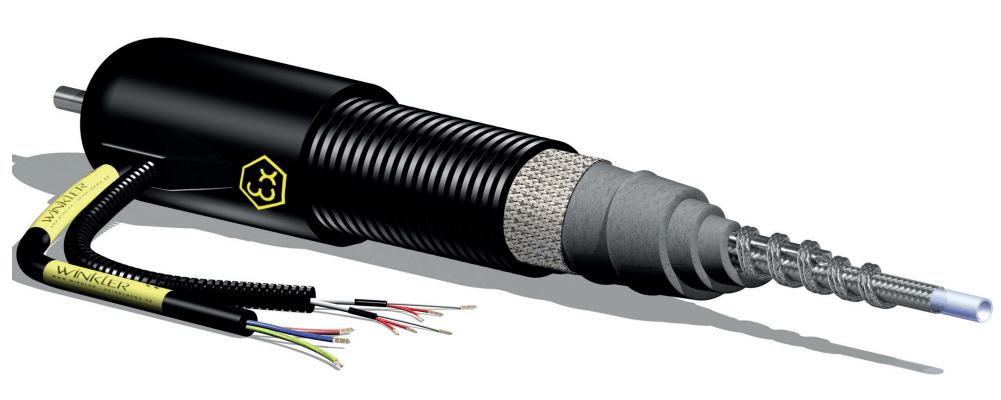
Electrical resistance trace heaters are used for heating fittings, conduits and tanks. Resistance trace heating are understood as meaning, according to the standard DIN EN 60079-30-1, the use of electrical trace heaters, trace heater pads or trace heater panels and auxiliary components applied from outside, in order to increase or maintain the temperature of the contents of pipe networks, tanks and associated equipment.
A trace heating cableproduces and transmits heat based on Ohm’s law. The field of application ranges from frost protection to the prevention of condensation in gas analysis and to the heating of media for production and processing.
Ohm’s Law states that electric current is proportional to voltage and inversely proportional to resistance.
This is where electrical resistance heaters are more suitable than the previously frequently used vapour- operated trace heaters as they work extremely economically and more accurately in terms of temperature. Electrical resistance trace heatingmanufactured by Eltherm and distributed by Thorne & Derrick are often the basis for a optimum process sequence and have become indispensable in many areas and applications in todays industry.
Self-Limiting Heating Cable
Outcome of using Electrical Resistance Heating
When electrical resistance heaters are used in hazardous area apart from the technical component, the basic requirements and safety specifications of the corresponding Ex standards must also be observed.
However not every resistance heater is suitable or admissible for use in hazardous areas, but each one must always be carefully selected and considered from two sides during planning and construction. On the other hand a basic feature of the product is suitability application in the process compared to the inclusion of type specific properties on the heater- when operated in accordance with its intended use and during malfunction.
If the application requires a higher heating power, making a stabilised application no longer possible, due to the resulting higher operating temperature and without an additional temperature limiting device. The critical limiting temperature will be exceeded in normal operation as well as in case of error or becoming a source of danger in the hazardous area.
These requirements and safety relevant protective measures must be taken into account when planning to use ATEX trace heating for operation according to its intended use in hazardous areas.
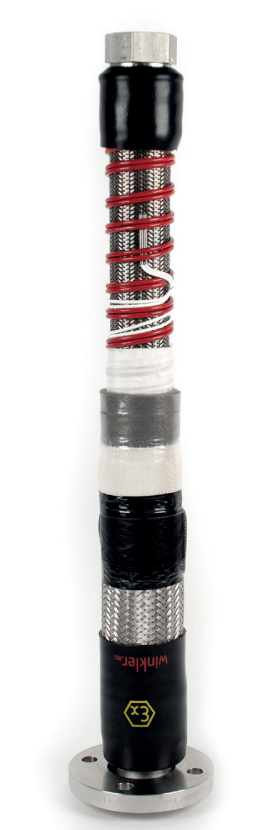
System-certified analyser heated hose
Temperature Monitoring of the Resistance Heating
The trace heating system is designed so the sheath temperature of the trace heater meets with the standard conditions and is limited to the temperature classification (T1-T6) or ignition temperature.
This should also require certain safety margins from the maximum operating temperature, which is minus 5K at the temperatures below or equal to 200°C and minus 10Kelvin at temperatures above 200°C.
These requirements can be satisfied either by means of a stabilised design or by using a temperature monitoring system at the resistance heater.
Helps to maintain temperatures of the contents of pipe networks using the heating systems
Helps to combat against frost and condensation of gas
Work extremely economically and accurately in terms of temperature
EXPERTS IN EQUIPMENT FOR EXPLOSIVE ATMOSPHERES
Thorne & Derrick are leaders in the development and distribution of ATEX & IECEx Product Innovations that deliver significant improvements to clients plant, people and operational safety in the explosive atmosphere industries.
Your proactive problem solvers experienced in succession planning for the replacement of obsolete, non-conformant and legacy equipment in hazardous areas.
Your first-choice provider of innovative and competitive solutions to ensure ATEX & IECEx Compliance for Hazardous Area Electrical, HVAC & Process Instrumentation Equipmentto UK and international projects.
Press Release Date: 02.04.2020 uploaded by Chris Dodds (T&D Sales + Marketing Manager) World’s First Fully Certified ATEX Doors Thorne & Derrick International, the Experts in Equipment for Explosive Atmospheres, today announce the signing of a Commercial Distribution Agreement...
Press Release Date: 04.07.2019 uploaded by Chris Dodds (T&D Sales + Marketing Manager) Category: Stockist Distributor Agreement Announcement Thorne & Derrick International announce that they have signed a Preferred Distributor Agreement with Raytec, the world leading manufacturer of LED...