Eltherm Heat Tracing Cables – Frost Protection For Pipework Can Be Used in Hazardous & Non-Hazardous Areas
By Chris Dodds : estimated reading time 5 minutes
➡ Please note that this blog article was originally written in 2017 and was correct at the time of publish
Winter wreaks havoc and inflicts damage to process plant equipment, pipework and vessels every year if an adequate preventative maintenance plan is not in place – it is not unreasonable to expect freezing temperatures, wind chills and seasonally cold weather from October to March in the UK.
Add on the strength of the wind and it will feel bitter for many of us today, so you will need that extra layer ❄️ pic.twitter.com/C0nqGf8yVw
What often catches plant managers and operations out however, is not simply that exposed areas of pipework can freeze if not suitably trace heated and insulated using heat tracing cables, but actually that the more extreme weather has a physical effect on products within process equipment.
For instance, drum heaters can be deployed to provide viscosity maintenance to prevent drum contents from freezing, provide heat-up and high temperature process heating.
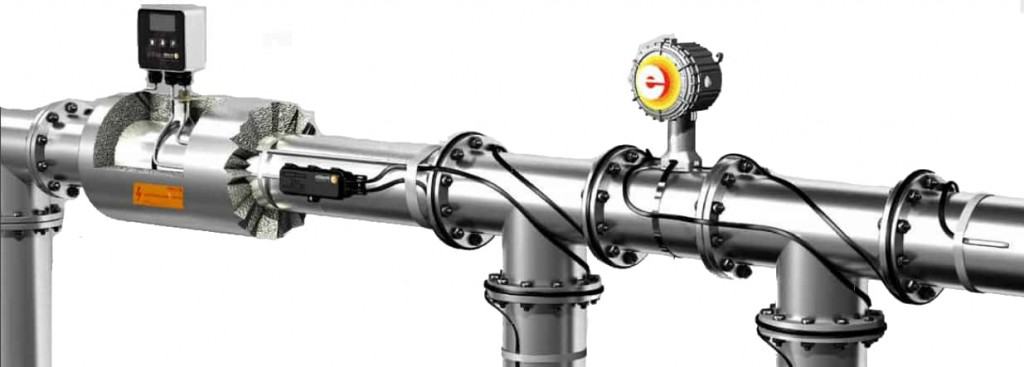
Heat Tracing Cables For Pipework Protection
Against Freezing Temperatures
For many products, colder temperatures will also mean higher viscosities and whilst a well specified trace heating solution would normally cater for this and regulate working temperatures thermostatically, it is often overlooked that extreme cold snaps can actually mean that the watts per metre of heating power installed maybe insufficient to maintain a higher temperature (perhaps of 30°C or more) against an extremely sharp fall in ambient temperatures, unless this is considered up-front.
During the winter of 2010, temperatures of -17°C were recorded in parts of the UK.
Whilst a conventional frost protection set-up can prevent water pipes from freezing, process lines operating at higher temperatures can become blocked causing overworking to pumps and resulting in the product under process not being manufactured to sub-standard with an under-powered system.
To counter this, the process temperature should always be stated upfront and used in heat-loss calculations and not simply the frost protection level of +5°. This may sound an obvious statement, but often heat tracing installations are sub-contracted to third parties to resolve, with the ensuing ‘Chinese Whispers’ scenario resulting in a defacto frost protection solution being arrived at.
Heat Tracing Cable
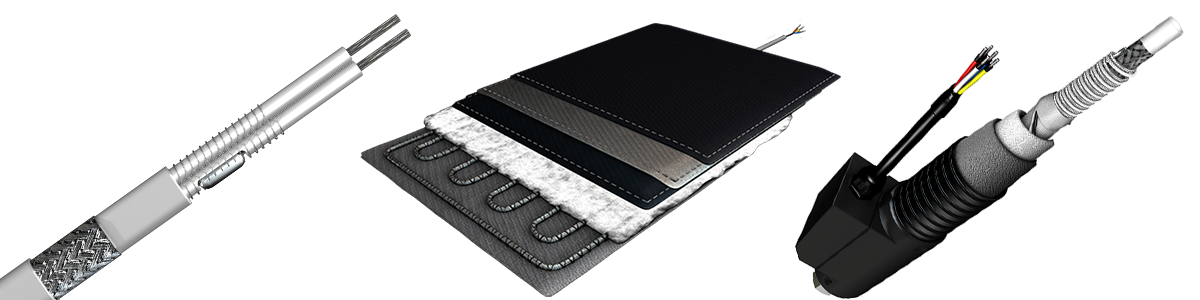
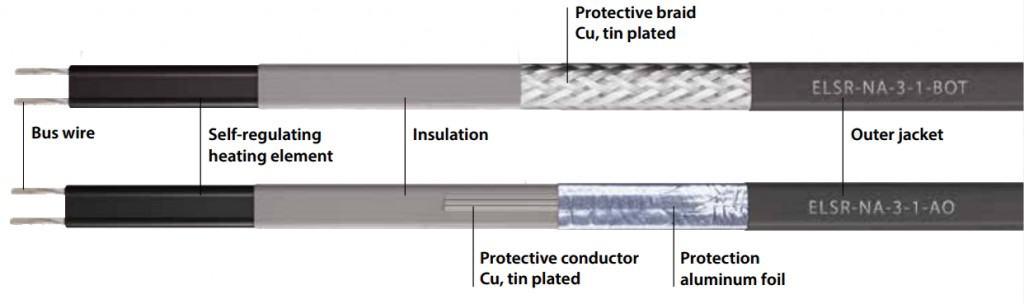
Eltherm Self-Regulating Key Features
Self-regulating heat tracing cable with adaptable output
A wide range of temperature applications
Demand orientated output grading
High chemical resistance for hazardous area heating
No temperature limitation required
Simple to lay and install and can be cut to length
Connection with plug-in connectors
Self regulating heat tracing cables have become the cornerstone of Winterisation systems in recent years and if specified correctly will provide an effective and energy efficient solution to frost protection as well as process temperature maintenance applications in industrial and hazardous area heating requirements – it is crucial to understand that the heating cable power output decreases as the ambient temperature rises, this is the “intelligent cable” concept of self-regulating cables.
The self regulating characteristic will mean that the power output at the intended temperature is somewhat less. It’s vital that the manufacturers trace heating cable datasheets are referred to and that the output for the trace heater cable is selected based upon the target maintain temperature and not the ambient temperature.
Another misconception is that self regulating heat tracing cables will automatically maintain a sensible frost protection level. It may well materialise this way under certain circumstances but a correctly set thermostatic line sensing controller is important to prevent water and other products in pipes from overheating.
Even a 10 watts per metre heat tracing cable if incorrectly specified can spell trouble on small pipes. For plastic pipework, we would always recommend remaining below 20W/m, whether thermostatically controlled or not. Simply put, when the trace heating cable is energised, depending on the level of the thermal insulation and the current temperature of the pipe contents, it’s not impossible to weaken pipes made from lower melt temperature plastics, for example PVC pipes.
Conversely, plastic pipes do not transfer the heat from a trace cable efficiently therefore heating cables should be over-wrapped with aluminium foil tape to improve heat dissipation to the pipework.
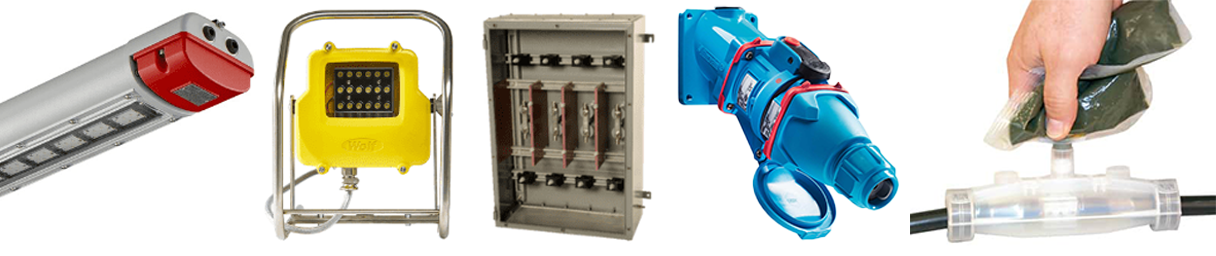
Specialist Distributors of Electrical Heating, Lighting, Power & Process Instrumentation Equipmentto deliver significant safety and reliability improvements in the Industrial, Explosive Atmosphere & Energy sectors.
Your proactive problem solvers experienced in succession planning for the replacement of obsolete, non-conformant and legacy equipment in hazardous areas with ATEX & IECEx Certification & DSEAR Regulatory Compliance.
T&D specialise in providing specialist heating for industrial and hazardous areas including Eltherm’s heat tracing cables and heated hoses.
Today T&D present a guest blog from Eltherm’s Commercial Manager Daniel Court on the benefits of using heated hoses.
Handling of pressurised liquids, gasses and viscous substances at elevated process temperatures is a very common requirement throughout the manufacturing and process sectors, but all too often in a scheme design, the linkage between a trace heated pipework system and the point of dispensing of the heated product is an aspect which is not considered during the design process, or is left for addressing once the rest of the system is built and in place. The solution to this issue is a speciality of Eltherm.
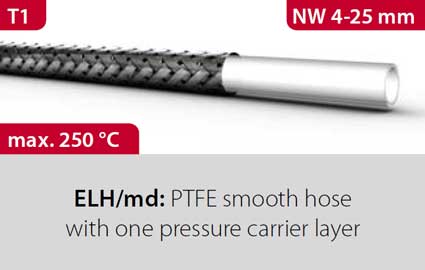
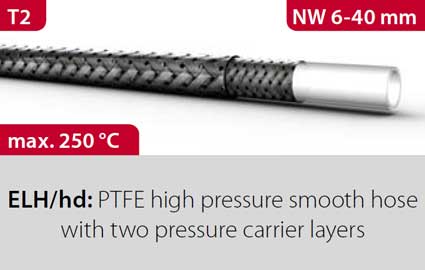
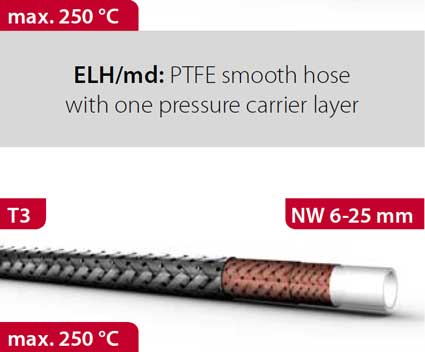
Eltherm pressure hoses can maintain stationary or flowing product at temperatures up to 250°C in a PTFE hose and with pressures up to 500 bar; depending upon the diameter of the hose and the required temperature. With a stainless steel carrier hose, temperatures of 500°C are in fact possible.
Flexibility is often a crucial aspect of such applications, whether simply to enable the hose to be fitted around other stationary items, or to allow vigorous and regular movement, for example when used with robotic applications.
For this reason, Eltherm apply a braided pressure relief construction tiered from one to three layers, ensuring that enough protection is provided for any given application, but also providing for a flexible and dependable means of scaling up the pressure withstand characteristics of the hose against a given specification.
This approach ensures that Eltherm hoses maintain strict design control from low pressure to high pressure applications, with all key parameters including thermal conductivity, durability and flexibility being optimised accordingly.
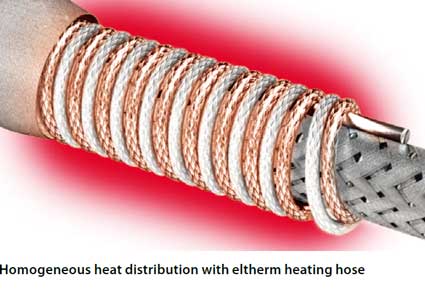
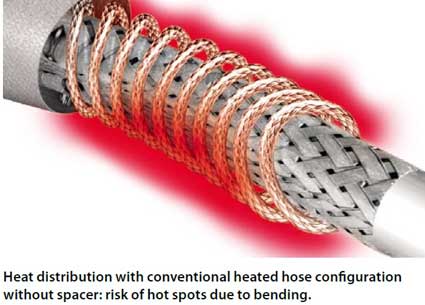
A further step taken is to spiral a spacer cord in a bifilar pattern along with the heating cable, ensuring that the heating cable can’t bunch up when the cable is flexed. This has two key benefits.
Firstly, the heating cable remains in place even while the heated hose is flexed, allowing for a uniform bend radius and reducing the risk of heating cable breakage.
Secondly, it avoids hot-spots occurring. Heated hoses may need to employ considerable heating power in order to maintain a given target temperature.
If the heating cables bunch together, this will result in an uneven heat distribution and worst still, if the heating cable spirals touch each other, this could result in the overheating or failure of the cable. The spacer cord eliminates this issue.
A range of thermal insulations are then applied over the traced hose, depending upon the specifics of the application.
Highly flexible fleece layers can be used indoors where a moisture free work environment can be assumed. Closed cell foam is an option for outdoor applications, or where the hose may come into contact with liquids.
The outer sheath or casing of the heated hose is also considered on an application specific basis.
A range of heated hose solutions are applied as standard, from nylon braiding, through to corrugated plastic (including anti-static options) and finally to stainless steel options. Cable exit and entry is also fully flexible and can be specified to fulfil even the most arduous of connectivity requirements.
Handling materials at elevated pressures and temperatures is an involved subject, but the provision of a highly engineered and tailored solution, presented in a plug-and-play format need not be.
With the fundamentals of the system requirements being understood upfront, Eltherm can produce an effective heated hose solution to almost any industrial application.
Specialist Distributors of Electrical Heating, Lighting, Power & Process Instrumentation Equipmentto deliver significant safety and reliability improvements in the Industrial, Explosive Atmosphere & Energy sectors.
Your proactive problem solvers experienced in succession planning for the replacement of obsolete, non-conformant and legacy equipment in hazardous areas with ATEX & IECEx Certification & DSEAR Regulatory Compliance.
Heated Gas Sample Lines Using Eltherm Flexible Hose. Analytic heated hoses ensure the transport of liquid and gaseous media without the loss of temperature in industrial and hazardous area hose applications
By Chris Dodds : estimated reading time 8 minutes
The following Guest Blog by Daniel Court from Eltherm UK discusses the application of heated hose technology to the transportation of gases for analytic applications and their wider use for the transfer of fluids and vapours by high pressure heated hose.
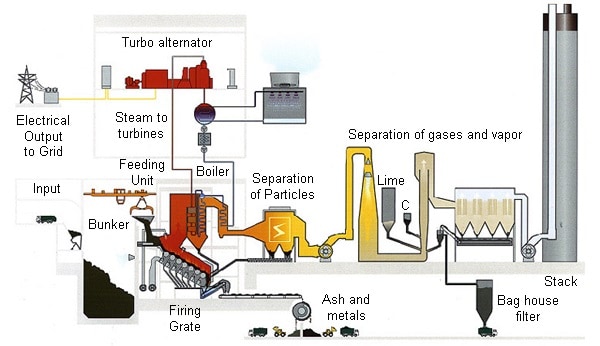
Throughout industry there exists the requirement to analyse gas emissions, whether it be from the chimney stack of a plant where fumes are generated (for example from incineration, power generation or chemical process), or in the automotive sector where rigorous testing of a new engine exhaust is required to ensure compliance against ever increasing environmental requirements.
Heated Hose: Industrial & Hazardous Area Hoses
Often, the gas must be sampled at temperature, despite there being some distance between the point of exhaust and the physical location of the gas testing equipment.
Heated Hoses – Application Areas
Gas Analysis
Bitumen
Chemical & Petrochemical Industry
Mechanical Engineering
Automotive Industry
Food & Beverage Industry
Utilities – Water, Gas & Electricity
Manufacturing Processes
Eltherm Heated Hoses for the flexible transportation of liquid and gas in both manufacturing, industrial and hazardous area locations.
For all these applications, Eltherm have a wealth of experience in the design and manufacture of ELHa flexible heated hoses with working temperatures up to 450° Celsius.
Moreover, a heated hose can be used to heat up, to prevent heat loss and to transport media, e.g. grease, oils, wax, resins, bitumen, varnish, water, carbon dioxide, foam plastics, casting compounds, glue, foodstuff etc. It is particularly important to keep these materials in a fluid state or to grant for specific treatment properties in a determined range of temperatures. For these applications the heated hose is mostly laid on the mobile machine components (robots) and equipment.
Analytical heated hoses can be produced in a range of different styles and inner diameters and to cater for temperatures up to 450°C.
A common question asked is, “what is the maximum length a heated hose can be produced too”?
Theoretically, it is equivalent to the maximum circuit length of the heat tracing cable utilised, which often with analytical hoses is of the self-regulating type. Several self-regulating heating cables can be used at lengths in excess of 170 metres, however handling a heated hose of this length would be impractical. Certainly fitting it on a single drum for shipment is likely to be an unrealistic proposition.
For this reason, the maximum hose length should be a subject discussed on a project by project basis – call us to discuss your heating application.
Eltherm Heated Hose Design : optimum heating cable output on the carrier hose is achieved by using Eltherm standard hoses which are configured to include bifilar heating cables and special spacers. Creating spatial density in the hose that carries the heating cable ensures perfectly homogeneous heat distribution throughout the hose achieving optimum element loading. The additional glass-fibre spacer prevents hot spots in moving applications with greater bending strain, as contact between the heating cables is avoided.
Eltherm ELHAa Analytic Heated Hoses
Industrial & Hazardous Area Gas Heating & Transfer
Eltherm ELHa analytic heated hoses are specified to provide reliable transfer of gases from the point of withdrawal to an analytic measuring device e.g. chimney, connection to a heated exhaust sample probe. Analytic heated hoses provide official and precise measurement of emission levels using heating cables optimised to maintain constant gas temperatures, prevent the formation of condensation or lowering the deviation of dew point.
Temperatures can be maintained across 5 to 450 Degrees Celsius in both industrial and hazardous area classified zones.
Eltherm Heated Hose Application Examples
Coal, Oil & Gas Heating Units
Exhaust Supervision In Power Supply Stations
Trash Burning Stations
Process Gases In Refineries, Petro-Chemical & Chemical Industry
Air Condition Monitoring
Motor Exhaust Measurement
Freeze Protection In Water Analysis
Analytic Heated Hoses – Eltherm ELHA, Hose Construction
1. Inner Liners
2. Sensor – temperature sensor is mounted between inner line and heating cable for temperature control. Eltherm PT-100 sensors can be integrated to customer specific temperature sensors including thermocouple type K / J, PT-1000).
3a. – Heating Cable – Eltherm ELKM-AE resistance heating cables insulated with flourpolymer jacket can maintain process heating temperatures up to 250 Degrees celsius.
3b. – Spacer – made of braided glass-fibre provides reliable protection for heating cables against damage and hot spots caused by cable bending strain.
4. Insulation – cable insulation depends on the maximum operating temperature and selection of hose outer jacket. General rule : special thermal fleece materials and foam hoses are used (up to 100 Degrees celsius) and elastomer foam hose (up to 250 Degrees celsius).
5. Outer Jacket – hose jacket is determined by the heating application, bending radius and ambient temperatures. The outer jacket provides heated hoses with reliable protection from humidity, weather, external environmental impact and mechanical strain.
6. End Caps -end caps are used to seal off heated hoses at both ends.
7. Connecting Fitting
8. Connecting Cables – the connecting cable is led out separately (sensor cable and tracer cable). Connection cables up to 1.5m as standard.
With the inclusion of a thermocouple or PT100 sensor in the heated hose, it is possible to very accurately regulate the temperature of the hose, regardless of its length and ensure that the gas sample neither heats nor cools as it travels from the source (for example chimney) to the test apparatus.
It’s worth noting that heated hoses are in effect a modular trace heating system and that the considerations when designing a hose solution do not differ from that of a conventional trace heating scheme, with the exception of the handling considerations as detailed above.
Key considerations include: target maintenance temperature, minimum ambient temperature, maximum temperature of the gas in flow (ie with respect to selecting suitably robust construction materials), supply voltage and ATEX hazardous area classification.
As one of the world’s leading manufacturers of this type of heated hose, Eltherm are also able to offer highly customised variants, providing solutions for a practically unlimited range of applications. Designs can be produced to cater for special connectors and fittings, multiple carrier hoses, auxiliary wiring, custom wire harnesses and so on.
In addition, the hoses can also have a range of outer coverings applied, ranging from nylon braiding through to a stainless steel heavy duty braid. Utilising the compact Eltherm ELTC-mini controller, it is also now possible to have electronic temperature control built in to the hose itself.
Eltherm heated hoses for analytic gas applications are ATEX certified for transporting gases and liquids in potentially explosive atmospheres including hazardous area Zones 1 and 2 (gas) and Zones 21 and 22 (dust).
Customised hazardous area heated hoses can be manufactured with process temperature ranges from +5 Degrees celsius frost protection (temperature class T6) to +200 Degrees celsius (temperature class T3). Typical applications include : process control, control systems, ventilation and air-conditioning monitoring, emission monitoring and. condensation prevention.
Stringent European and UK legislation imposes statutory limits on gaseous emissions to the atmosphere from industrial plant. Power generators must comply with the Large Combustion Plant Directive – LCPD (Directive 2001/80/EC download below), while incinerators of waste materials must comply with the Waste Incineration Directive – WID (Directive 2000/76/EC download below).
Operators of power plant of greater than 50 MW capacity are required to measure SOx and NOx emissions continuously. Operators of waste incinerators – which can range from small biomass plants of less than 5MW to large-scale municipal waste incinerators greater than 200MW – are required to measure the same gases and also typically CO, HCl, NH3, TOC and sometimes HF gas.
The LCPD and WID directives place obligations on plant owners to ensure that CEMS are available for not less than 97 per cent of the time. Furthermore, owners of plant operating under WID are obliged to stop their processes – and therefore suffer a loss of revenue – if their CEMS fail for more than 4 hours. ISO and EN standards define the performance, reliability and maintenance requirements of the gas analysers in CEMS. These requirements are regulated in the UK by the Environment Agency (EA).
Waste Incineration Plant. Image London Waste
BS EN 15267-1 (Air Quality – Certification Of Automated Measuring Systems) performance standard covers a range of emission levels for waste incineration, solvent-using processes and large combustion plant (including gas turbines). The general CEM requirements and performance standards to be met by CEMs for each characteristic are presented in Section 5 of the UK Environment Agency’s Performance Standards and Test Procedures for Continuous Emission Monitoring Systems (download below).
This includes following gas emissions :
Sulphur dioxide (SO2)
Oxides of nitrogen (principally NO and NO2, but also N2O)
Carbon monoxide (CO) and carbon dioxide (CO2)
Hydrogen chloride (HCl)
Hydrogen fluoride (HF)
Methane (CH4)
Sulphur hexafluoride (SF6)
Hydrofluorocarbons (HFCs)
Perfluorocarbons (PFCs)
Mercury (Hg)
Formaldehyde
Benzene
Volatile Organic Compounds, expressed as total organic carbon (TOC)
Should you require any assistance with the selection, specification and purchase of analytic heated hose please to do not hesitate to contact T&D technical sales.
ABOUT US
Stockists
Thorne & Derrick Internationalare your single-source supplier of Electrical, Mechanical, Process & Instrumentation Equipmentfor use in industrial, hazardous area zones and explosive atmospheres.
T&D provide an outstanding service to UK and international customers – we are highly customer responsive and absolutely committed to providing a world-class service.
Electrical Heating Products
Thorne & Derrick International supply heated hoses, trace heating and heating cables for mechanical services and pipework to ensure optimum temperature maintenance is achieved and production losses are eliminated for industrial and process industries. We can design and supply electrical heat tracing systems for both process temperature maintenance and pipework frost protection in commercial, industrial and hazardous area applications – call us.
From stock we supply an extensive range of Electric Process Heating and Control Systems with IECEx, ATEX and CSA certification.
Press Release Date: 02.04.2020 uploaded by Chris Dodds (T&D Sales + Marketing Manager) World’s First Fully Certified ATEX Doors Thorne & Derrick International, the Experts in Equipment for Explosive Atmospheres, today announce the signing of a Commercial Distribution Agreement...
Press Release Date: 04.07.2019 uploaded by Chris Dodds (T&D Sales + Marketing Manager) Category: Stockist Distributor Agreement Announcement Thorne & Derrick International announce that they have signed a Preferred Distributor Agreement with Raytec, the world leading manufacturer of LED...