VISION is our monthly round-up of industry news, projects, videos, technical tips, training information, webinars and career opportunities from Thorne & Derrick. Take a moment to Follow Us on LinkedIn to receive future VISION.
In The News
UK’s North Sea emissions down more than 20% since 2018
The UK’s North Sea oil and gas industry is on track to meet early emissions reduction targets after posting cuts of more than a fifth between 2018-21, according to new analysis. The latest Emissions Monitoring Report from the North Sea Transition Authority (NSTA) shows that greenhouse gas emissions were cut by an estimated 14.6% to 14.3 million tonnes of CO2e last year, adding up to an overall reduction of 21.5% since 2018.
The UK needs secure and stable energy supplies, produced as cleanly as possible
Industry makes encouraging progress on emissions reductions
NSTA committed to holding sector to account on targets
Platform electrification vital to surpassing goals
Emissions are a by-product of extracting oil and gas, but industry is working hard to reduce them by investing in more energy-efficient equipment and technologies which minimise flaring.
This action, backed by the NSTA’s robust regulation, a reduction in offshore activity amid the Covid-19 pandemic and the permanent shutdown of several platforms with high emissions contributed to the decreases recorded in recent years.
The large number of platform maintenance shutdowns, timed to coincide with temporary pipeline closures, contributed to a substantial fall in production and associated emissions last year.
Encouragingly, NSTA projections indicate the sector is on track to meet interim emissions reduction targets – of 10% by 2025 and 25% by 2027 – which were agreed in the North Sea Transition Deal (NSTD) between the sector and UK government in 2021.
However, bold measures will be needed to hit the 2030 goal of halving emissions. Upgrading platforms to run on clean electricity, instead of gas or diesel, is essential – the NSTD will not be delivered without it, the NSTA said. At least two electrification projects should be commissioned by 2027, the authority added.
The NSTA will continue driving further reductions by robustly managing performance, including through the annual stewardship survey, monitoring and benchmarking, tier reviews and publishing new and updated guidance.
INDUSTRY EVENTs
Tank Storage 2022
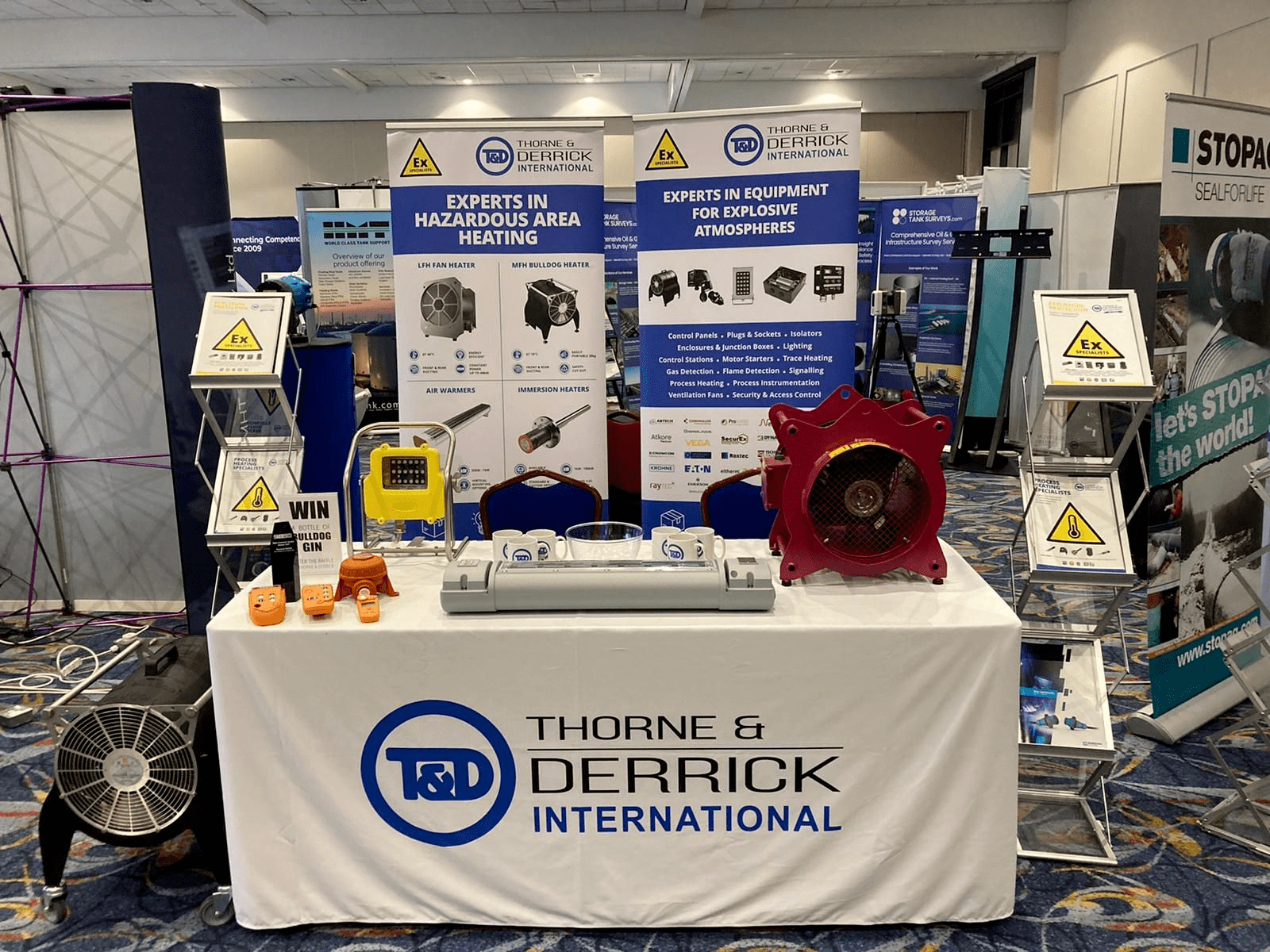
Thorne & Derrick exhibited at Tank Storage 2022 for the first time this month! The event was well attended and we really enjoyed meeting with clients to discuss future projects.
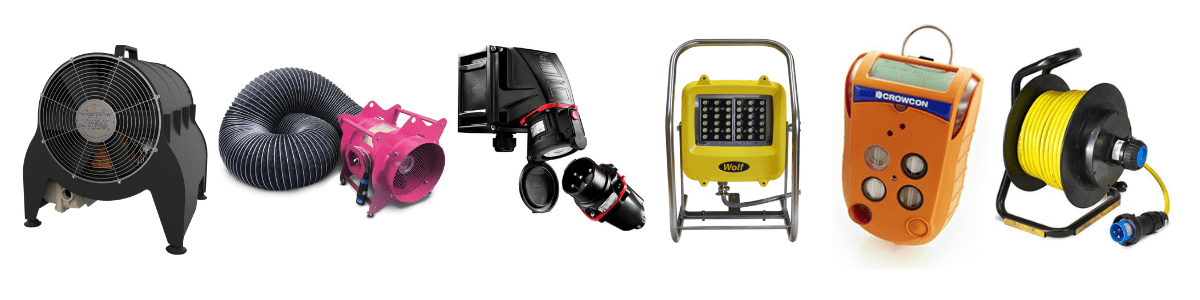
T&D’s Terry McDonald & Laura McCabe showcased a variety of products and solutions to enable the smooth operation of bulk liquid storage; including a range of specialised equipment such as lighting, power, heat,ventilation & portable gas detection – providing protection for workers in a range of different applications.
Thorne & Derrick are now servicing further portable requirements, including the supply of heat light and ventilation products.
Special thanks to Andy and Miles from Wolf for meeting with us for dinner and celebrating another successful year of partnership.
Terry returned happy as his favourite drink was available on tap at the hotel; although he was stuck with the worst room again!
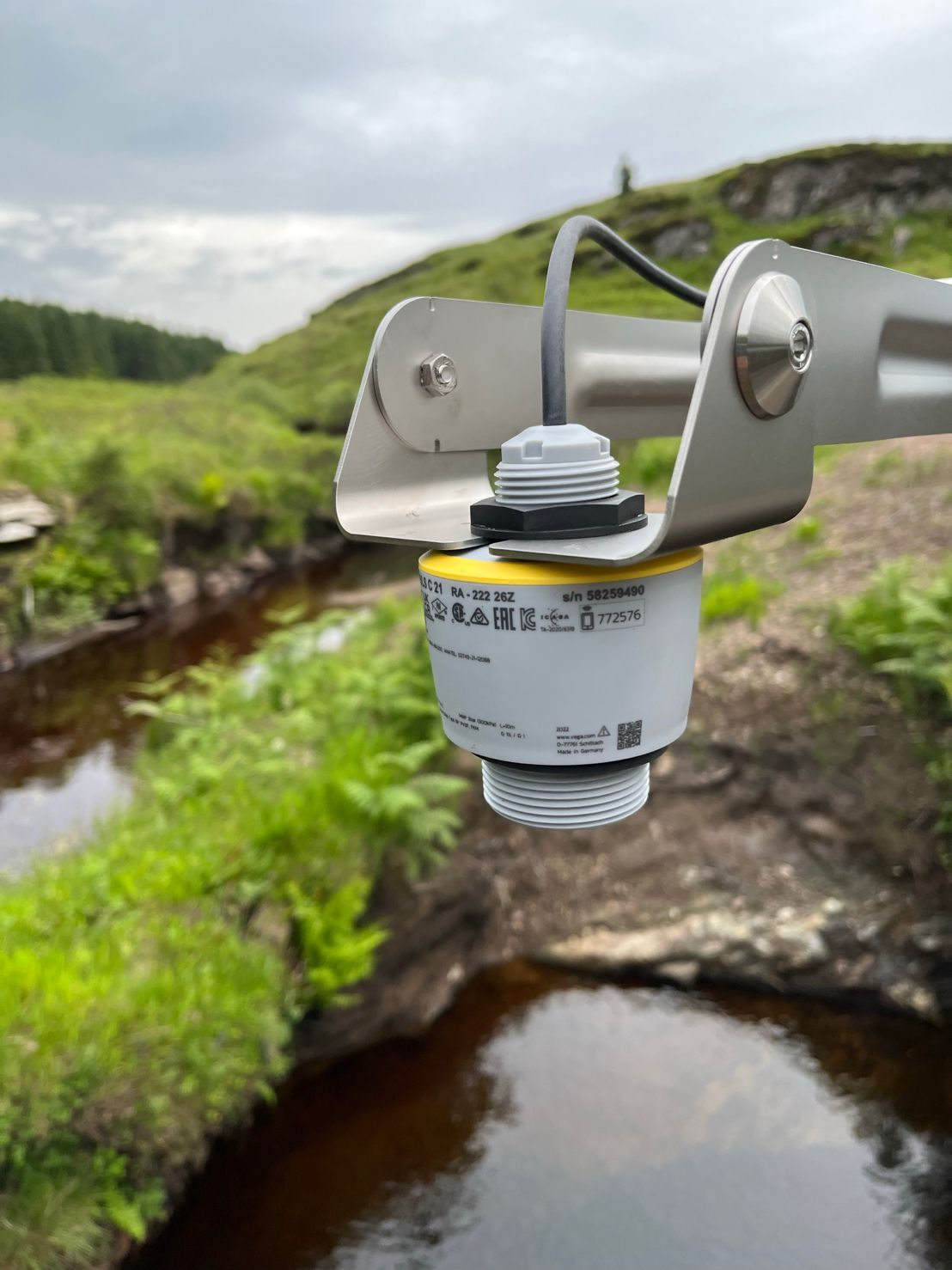
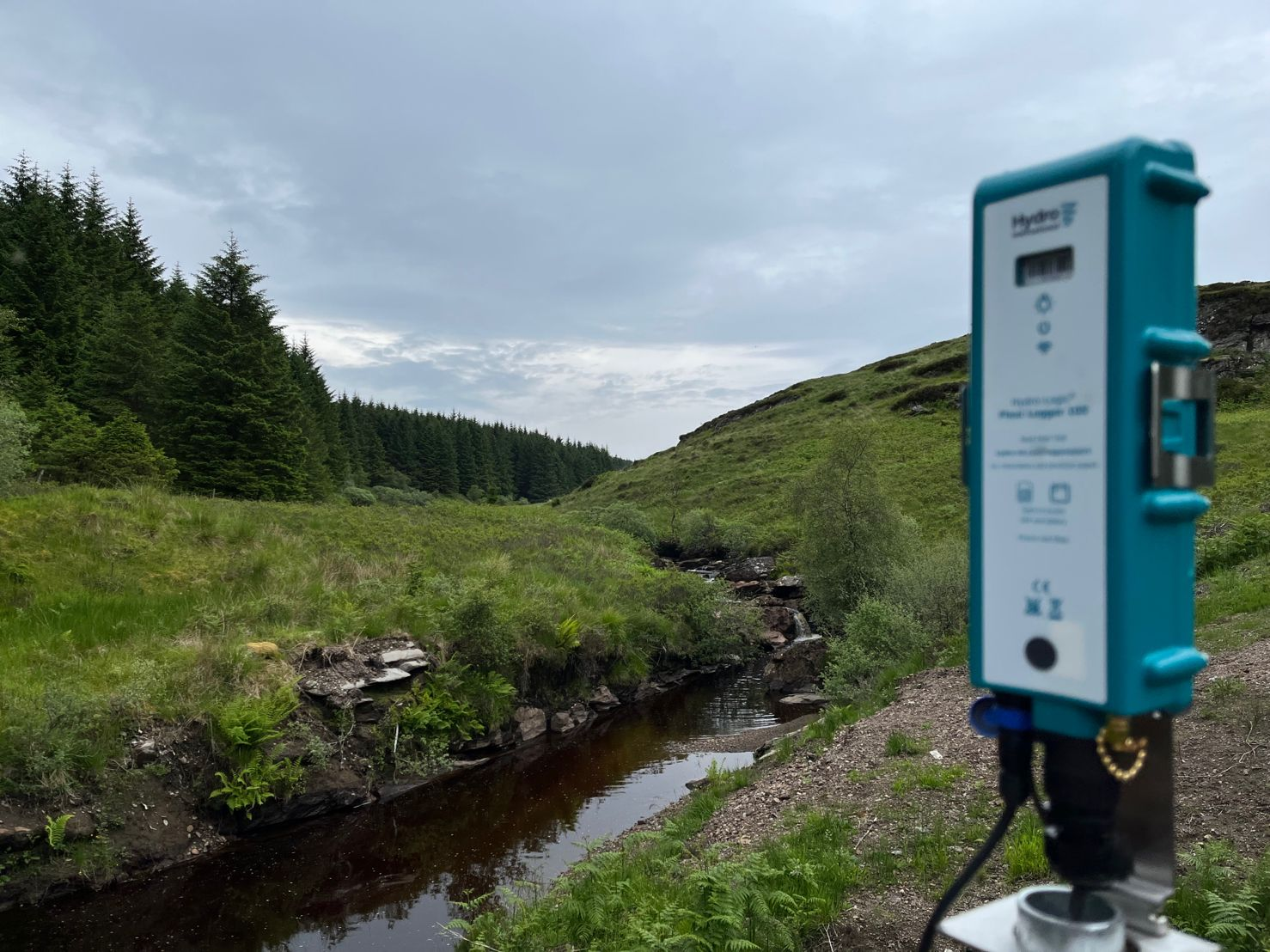
Another series of beautiful photos from Peter Horne, National Field Manager at Hydro-Logic Services, of a VEGA installation with a fantastic view. We look forward to seeing more pictures with a view like this!
VEGAPULS radar level sensors manufactured by VEGA, providing non-contact level measurement of liquids and bulk solids.
PROJECTS & NEWS
WHY GAS DETECTION IS CRUCIAL IN ANAEROBIC DIGESTION
Thorne & Derrick are thrilled to release a NEW WHITEPAPER developed in partnership with Crowcon.
Anaerobic digestion consists of a series of processes that use microorganisms to decompose organic or biodegradable waste. It is applied intentionally as a method of waste disposal, sewage treatment and to produce biogas fuels.
The process of anaerobic digestion is growing in popularity as it is viewed as an environmentally friendly way to deal with waste and also produces an organic fuel source.
As you would expect with the production of biogas, there are a number of dangers associated with anaerobic digestion that need to be addressed. The application of robust safety measures and risk mitigation are necessary for any business or organisation involved in anaerobic digestion.
Written by Crowcon in conjunction with Thorne & Derrick, this whitepaper, takes a closer look at the hazards that arise during anaerobic digestion, including those posed by dangerous gases, and how the risks can be carefully controlled and reduced.
ILLUMINATING YOUR WORKSPACES
Thorne & Derrick have been assisting an electrical distribution company with compliant lighting for their application. The project involved the outfitting of a freezer which was set to reach up to -35°C . Due to the hazardous classification of this particular area, Zone 2 compliant hazardous area lighting was required.
T&D were also approached for a large quantity of both emergency and standard light fittings to illuminate a large ammonia plant during the darker nights. Performing our lighting design service in partnership with Raytec, we identified the required light fittings to deliver the most efficient solution.
An Ammonia Plant
Does your plant have a lighting requirement this Winter? Using the latest software, Thorne & Derrick can provide a FREE LIGHTING DESIGN SERVICE for the specification and supply of ATEX & IECEx Certified light fittings to provide safe and reliable lighting in explosive atmospheres and hazardous area locations.
Prevent Your Drum & IBC Containers From Freezing This Winter
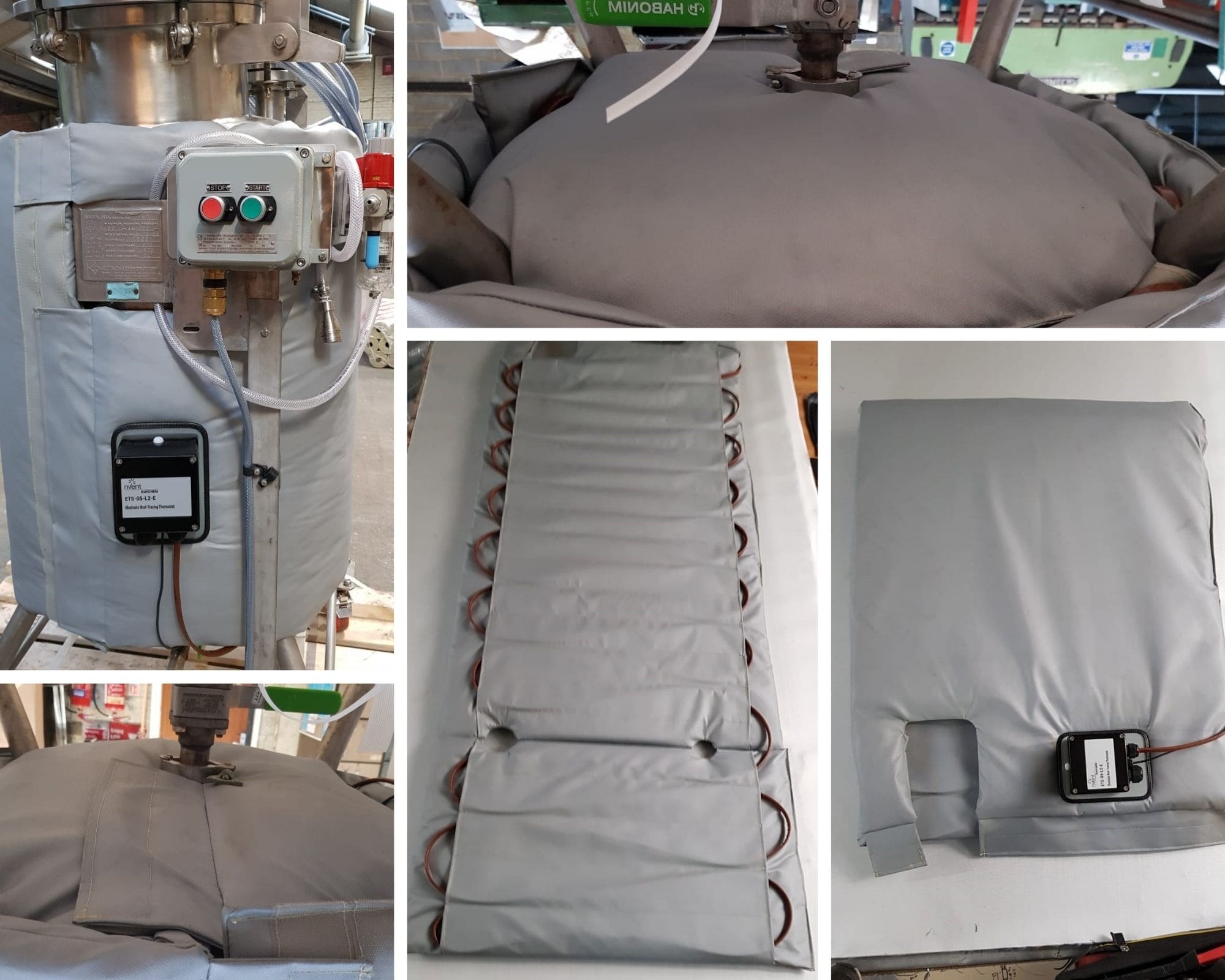
With winter now fast approaching, Thorne & Derrick have been assiting with heating requirements to prevent the contents of drums and IBCs freezing during the colder months. We supply a wide range of electrical heating jackets from stock to heat up drums and IBC containers from 25L-1000L, with bespoke options for non-standard containers.
Electrical Heating Jackets Customised for Hazardous Area Vessel Heating
Our heating jacket technology can be adapted to suit non-standard containers and bespoke applications – suitable for both harsh industrial and hazardous areas.
Thorne & Derrick can also supply Radar Level Sensors to deliver highly accurate non-contact measurement of liquids stored in containers.
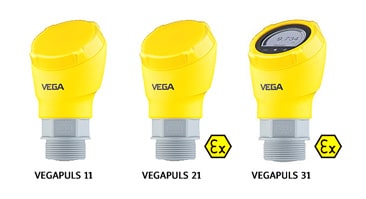
We recently delivered a measurement solution to a client who was using IBC’s filled with a methanol mix, and therefore required a product suitable for use in hazardous areas. T&D specified the VEGAPULS 21radar level sensor manufactured by VEGA which is ex approved and is certified to the current ATEX & IEC standards.
VEGA radar level sensors deliver non-intrusive measurement, which refers to the use of devices or measurement procedures that induce minimal impact on the person involved. The VEGAPULS 21 is also maintenance-free due to non-contact 80 GHz radar technology, which is able to give exact measurement results independent of medium properties and process conditions.
LEt’s Celebrate!
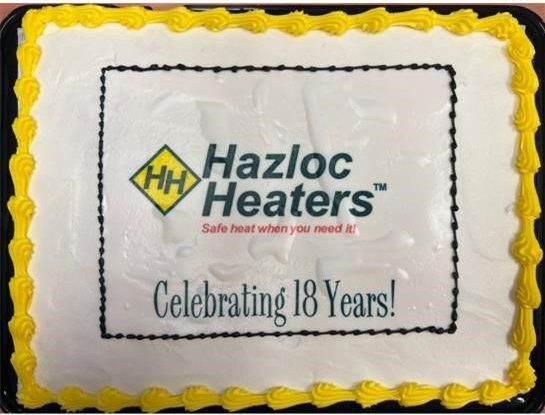
Hazloc Heaters are pleased to announce that they are celebrating their 18th Birthday!
“We would like to thank all our Employees, Representatives, Distributors and Suppliers for their hard work and dedication to bring Hazloc Heaters to the forefront as a leading manufacturer of Industrial Heating equipment.
Also thank you to our customers for your ongoing commitment and loyalty. We are happy to serve you.”
Terminology Explained
Every industry has its own language, terms and acronyms. Below is a selection of the common terms in use in the Explosion industry today and how they are employed in current directives.
This month we focus on Dust Extraction and the risks involved.
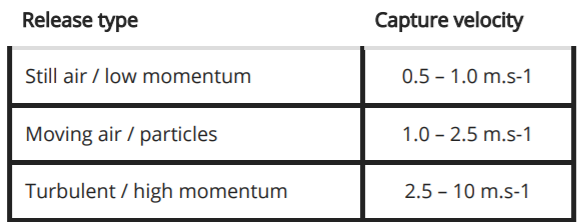
Dust extraction is important to limit fugitive emissions and it should be routinely monitored to ensure satisfactory performance. In addition, the level of ventilation should ensure that the dust-air concentration does not routinely exceed 25 % of the lower explosive limit LEL or minimum explosible concentration MEC). The ‘capture velocity’ is also important and this depends on the level of air movement in the region of interest.
Dusts, which are not removed by mechanical extraction ventilation, settle out, at a rate depending on properties such as particle size, into layers or accumulations and account has to be taken of the fact that dilute or small continuous sources of release (in time) may produce a potentially hazardous dust layer.
Principally, three risks are presented by dust layers:
Risk 1: A primary explosion within a building may raise dust layers into clouds, and cause secondary explosions more damaging than the primary event. Dust layers should always be controlled to reduce this risk.
Risk 2: Dust layers may be ignited by the heat flux from equipment on which the layer rests. The risk is of fire, rather than explosion, and this may be a slow process.
Risk 3: A dust layer may be raised into a cloud, ignite on a hot surface and cause an explosion. In practice, dust cloud ignition temperatures are often much higher than layer ignition temperatures. For example, Paper fines have a layer ignition temperature of 210 – 275 °C, but a cloud ignition temperature of > 450°C.
These risks depend on the properties of the dust and the thickness of layers, which is influenced by the nature of the housekeeping. The likelihood of a layer catching re should be controlled by the correct selection of equipment and effective housekeeping.
VISION! BY,
EXPERTS IN EQUIPMENT FOR EXPLOSIVE ATMOSPHERES
LEADERS IN ATEX INNOVATION TO THE HAZARDOUS AREA INDUSTRIES
Thorne & Derrick are leaders in the development and distribution of Product Innovations that deliver significant improvements to clients plant, people and operational safety in the explosive atmosphere industries.
Your proactive problem solvers experienced in succession planning for the replacement of obsolete, non-conformant and legacy equipment in hazardous areas.
Your first-choice provider of innovative and competitive solutions to ensure ATEX & IECEx Compliance for Hazardous Area Electrical, HVAC & Process Instrumentation Equipment to UK and international projects.
Raytec is a world leader in LED lighting for hazardous area environments. Thorne & Derrick stock and supply the SPARTAN range of globally certified hazardous area lighting, delivering class-leading performance and reliability.
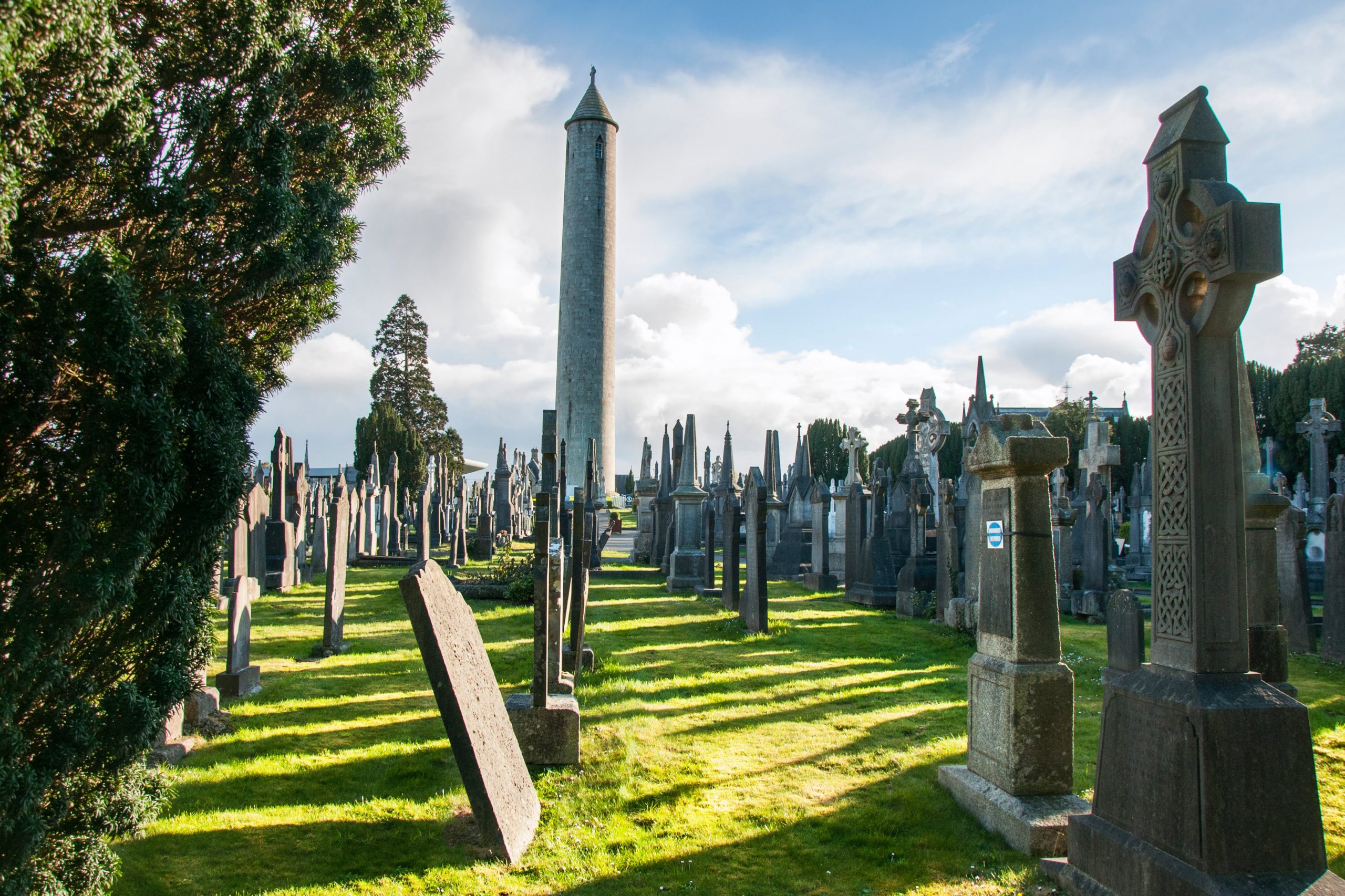
When you think of hazardous areas, there might be a few different applications or industries which come to mind; offshore drilling rigs, onshore refineries, pharmaceutical or petrochemical. Cemeteries though, are probably not one of the first applications which jump to mind!
A recent project however saw Raytec’s Zone 2 SPARTAN luminaires installed in a cemetery in Dublin, Ireland, which is also a popular tourist destination. The cemetery is home to the tallest round tower in Ireland and attracts thousands of tourists every year; with multiple exhibits, six landing platforms and a viewing area at the top, it provides the perfect setting to look out across Dublin.
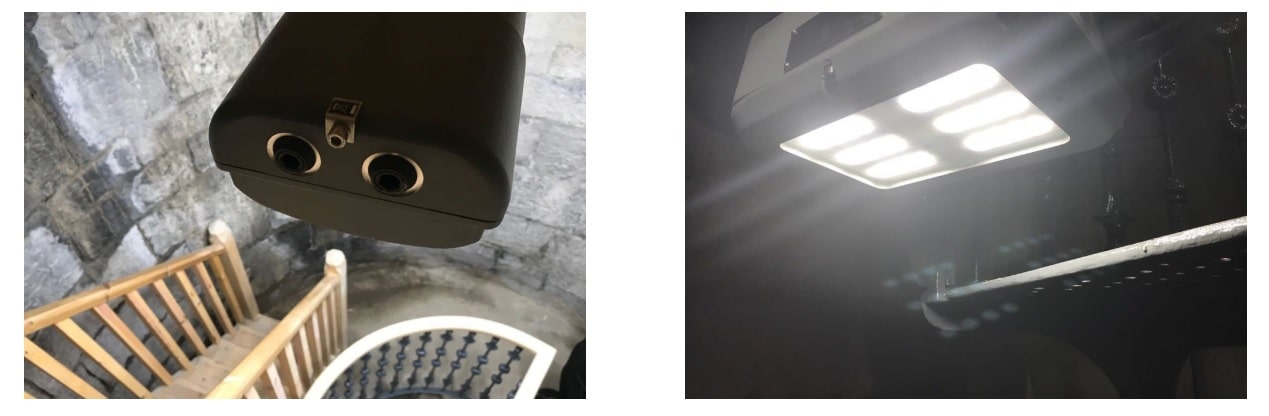
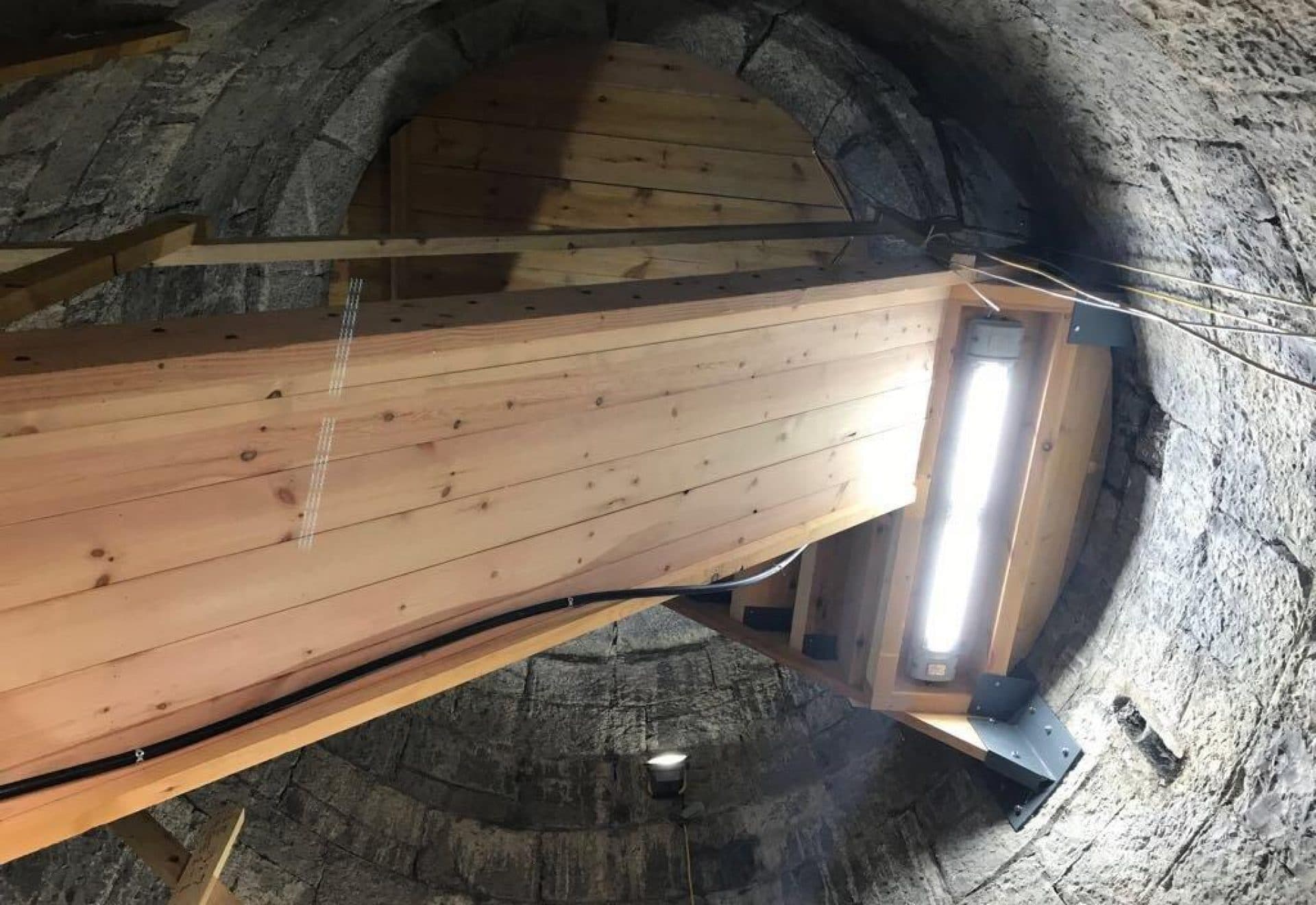
SPARTAN Bulkhead in the stairwell of the cemetery
SPARTAN ATEX Lighting
INSTALLATION & CHALLENGES
As a popular tourist destination, ensuring safety of those who enter the tower was paramount. New lighting was required to illuminate the towers 198 step staircase, crypt and emergency exit routes in the event the tower had to be evacuated.
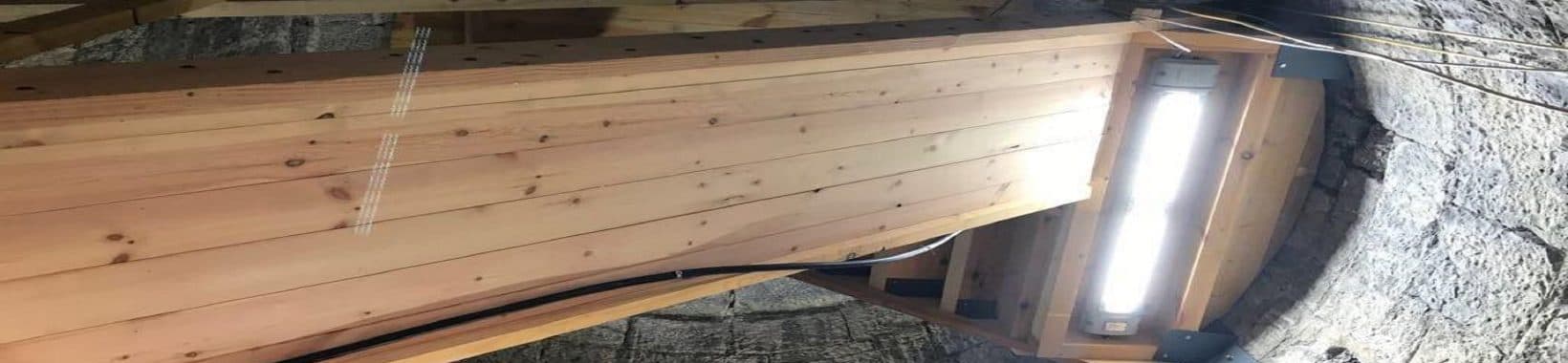
Due to the way the tower had been originally constructed, as well as the recent addition of a wooden staircase, the client decided to use Zone 2 hazardous equipment inside the tower area due to concerns that standard lighting may present a fire risk.
O’Connell Tower at Glasnevin Cemetery in Dublin
REDUCING RUNNING COSTS
As well as ensuring the luminaires on-site complied to the new safety requirements, one of the main motivations behind upgrading the existing lighting was to reduce ongoing costs. For years the tower relied on incandescent lighting which provided poor light levels and required frequent maintenance due to a restricted life span of around 2 years.
Raytec’s SPARTAN range of bespoke LED luminaire provided the perfect solution. Unlike many LED luminaires, all Raytec fittings use a housing specifically designed for LEDs to ensure they run cool and provide long life with minimum levels of maintenance. In fact, SPARTAN’s thermal management technology ensures the luminaires have a lifetime of up to 100,000 hours with no need for re-lamping.
SPARTAN Linear Illuminates Dublin Cemetery
EMERGENCY PERFORMANCE
With many tourist visitors and a severe lack of natural light inside the tower, emergency lighting was an important part of the project to bring safety levels up to an adequate level. In the event of an emergency, or if mains power was lost, emergency lighting was required to illuminate the general area and to display exit routes, so visitors could safely exit the tower.
With 25% light output on emergency as standard, Raytec’s SPARTAN Linear luminaires exceeded the required level of light achieved on emergency compared to other luminaires which the Museum considered. This meant sufficient light could be generated from the installation without the need for additional dedicated emergency lighting which would have increased costs.
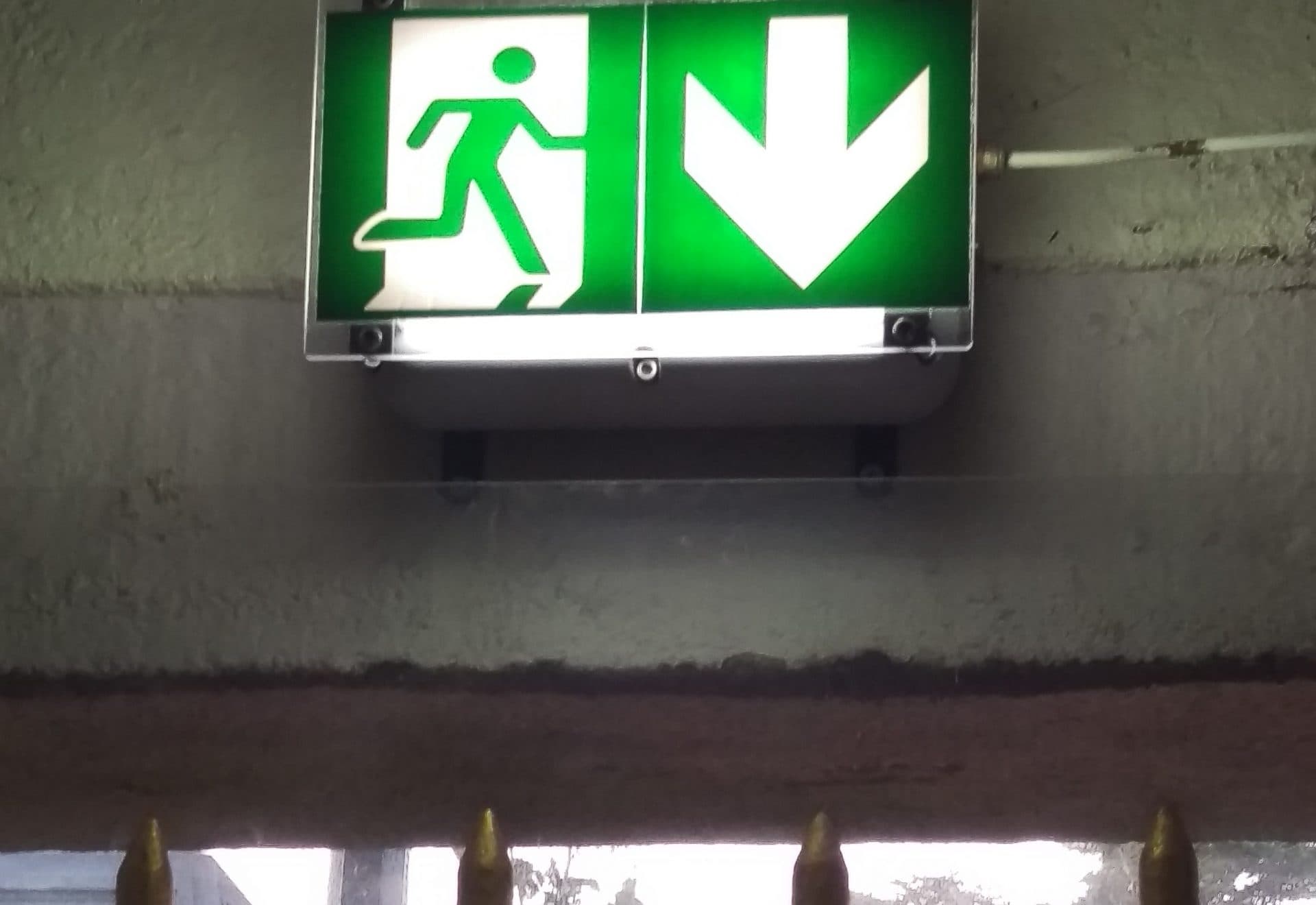
Meanwhile for the exit routes, the SPARTAN Bulkhead provided the ideal solution; available with a dedicated exit sign kit accessory which could be tailored to the requirements of the site during installation.
SPARTAN Bulkhead available with an emergency exit sign kit which comes with a number of configurations to suit different installations
INDEPENDENT CERTIFICATION
As the lowest level of protection in hazardous areas, Zone 2 luminaires can legally be self-certified by the manufacturer. However, with the tower being access by members of the public, the Museum’s health and safety team were insistent on a luminaire which had been certified by an independent test house.
All Raytec Zone 2 luminaires are independently tested and certified to ensure they comply to the latest standards, including op-is protection.
Spartan UKCA
INTEGRATION INTO THE TOWER
Built in 1854, the original design of the tower gave no consideration to the installation of light fittings. This meant integrating luminaires into the tower, without damaging the towers masonry, or impeding the view to the bottom, was a challenge.
Thanks to the effective thermal management of all Raytec products, the Linear luminaires could be integrated into the wooden staircase without fear of overheating. This alleviated one of the main concerns surrounding this project, which was not attaching any lights to the towers masonry and to give visitors an unrestricted internal view.
The mounting location of the luminaires also provided space for the installation of an emergency stretcher winch which would enable rescue teams to get casualties down from the tower safely in the event of an incident.
➡ Thorne & Derrick and Raytec’s completely free lighting design service provides you with the 3D visual representation of the final lighting solution, with detailed lux levels and a true indication of lighting performance.
➡ Are you working on a project requiring hazardous area lighting? Contact Thorne & Derrick today to discuss your requirements. Using the latest software, we can provide a FREE LIGHTING DESIGN SERVICE for the specification and supply of ATEX & IECEx light fittings to provide safe and reliable lighting in hazardous areas and industrial locations.
Hazardous Area Lighting for Pharmaceutical Manufacturing
Hazardous Area Lighting
Raytec is a world leader in LED lighting for hazardous area environments. Thorne & Derrick stock and supply the SPARTAN range of globally certified hazardous area lighting, delivering class-leading performance and reliability.
In this Application Focus Raytec look at Ex lighting requirements within pharmaceutical manufacturing and identify some of the key factors to consider when specifying luminaires for these environments.
Why Hazardous Area Lighting is Needed
Pharmaceutical Manufacturing
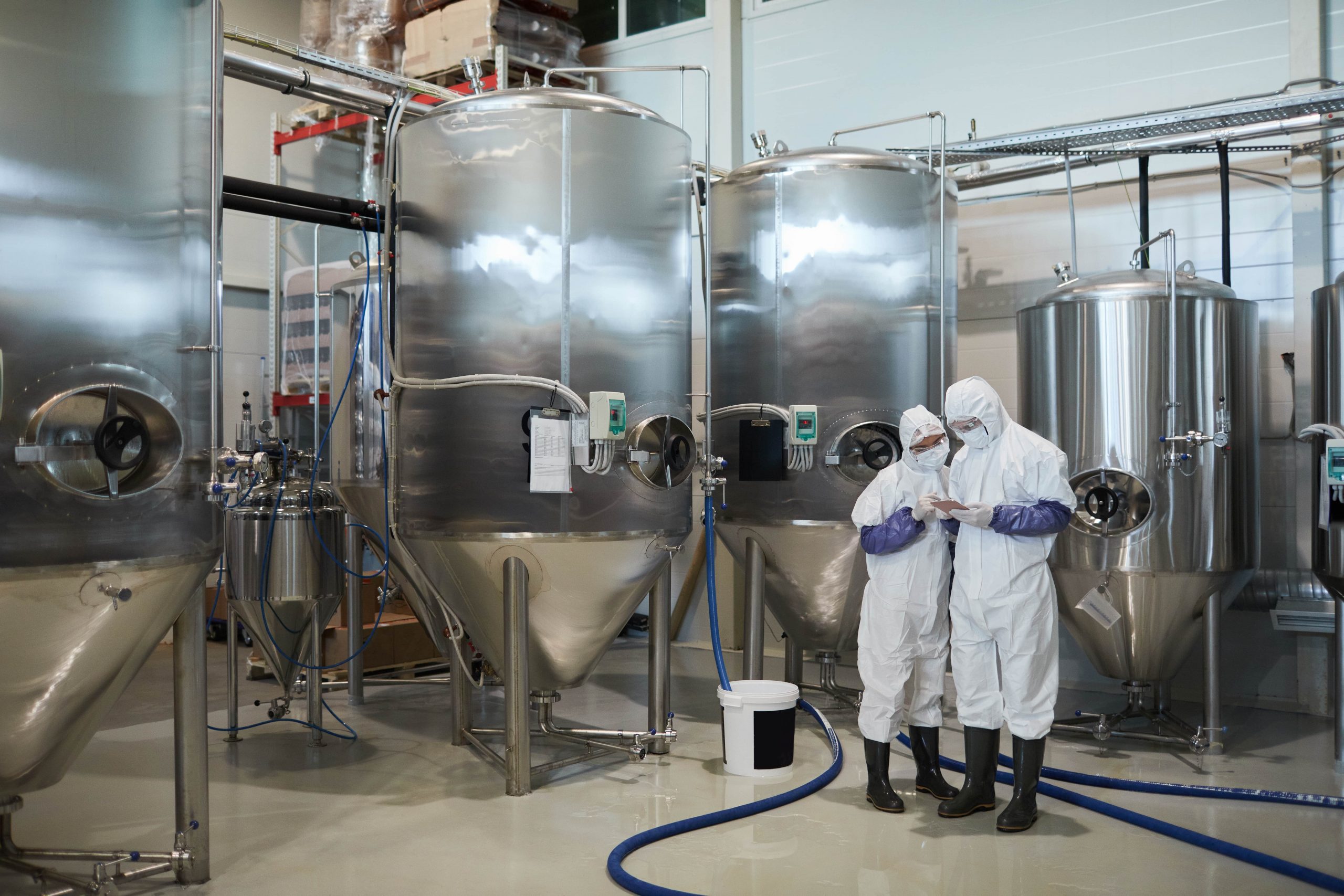
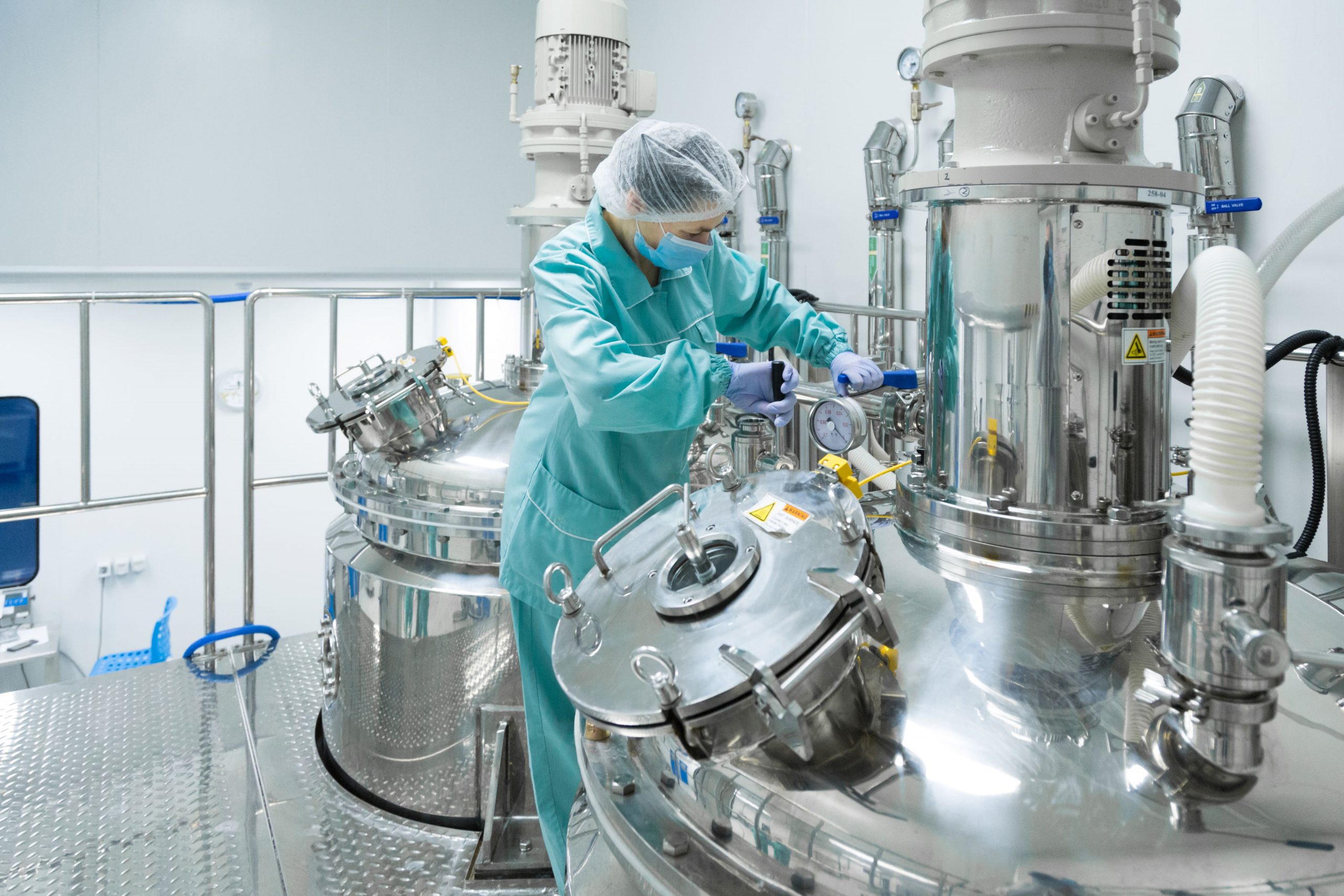
Pharmaceutical manufacturing may not be one of the first industries which comes to mind when thinking about typical uses for hazardous area equipment, but in reality, large parts of modern pharmaceutical facilities are classified as zoned hazardous areas. This is due to;
Raw solvents, chemicals and gases which are used during the manufacturing process
Powders, dusts and gases produced as a by-product of manufacturing
Storage of materials and gases on-site for use in manufacturing
This means Ex lighting is often required for many areas, including internal manufacturing areas, clean rooms, internal and external access as well as storage areas throughout the site.
Pharmaceutical manufacturing facilities are often huge sites, stretching over many thousands of square feet, and may have thousands of luminaires installed across the site; a large proportion of them needing to be Ex rated.
Specifying Lighting for Pharmaceutical Manufacturing
Firstly, selecting a luminaire which uses LED technology (rather than conventional lighting, such as high-pressure sodium or fluorescent), should be considered essential when specifying for pharmaceutical manufacturing.
Progression of Lighting Candle, Tungsten, Fluorescent & LED
➡ At Thorne & Derrick, we understand that harsh industrial or hazardous environments demand reliable & correctly certified equipment. That is why we are constantly striving to improve your operational performance by protecting you, your plant and your equipment. This includes upgrading a plant’s legacy lighting system or designing a new facility, you can count on us to specify the correct LED hazardous area lighting solution for your application.
Choosing LED
Consistent Light Quality and Longer Life
Many pharmaceutical sites still use conventional lighting technology. Fluorescent linear luminaires are particularly common. With a shorter lifespan in comparison to LED (fluorescent tubes must be swapped out every 25,000 – 36,000 hours) the task of re-lamping is an ongoing challenging, due to;
Availability of manpower to carry out maintenance – with a vast number of fittings installed on some sites, the maintenance team may be unable to keep up with the rate in which fluorescent tubes need to be replaced
Availability of spare parts – fluorescent tubes may also be difficult to get hold and can be on lead times of several weeks
Limitations such as these can result in large numbers of luminaires on-site being non-operational, creating dark areas which can be detrimental to the safety and efficiency of working conditions.
In contrast, an LED luminaire can offer a lifetime of 100,000+ hours (providing it uses effective thermal management), without the need to re-lamp. In pharmaceutical manufacturing, opting for an LED luminaire can therefore free up the maintenance team and eradicate the problem of dark areas around the site.
With LED’s capable of providing improved CRI (Colour Rendering Index) and higher colour temperatures than conventional lighting, choosing an LED luminaire allows light quality and working conditions to be drastically improved.
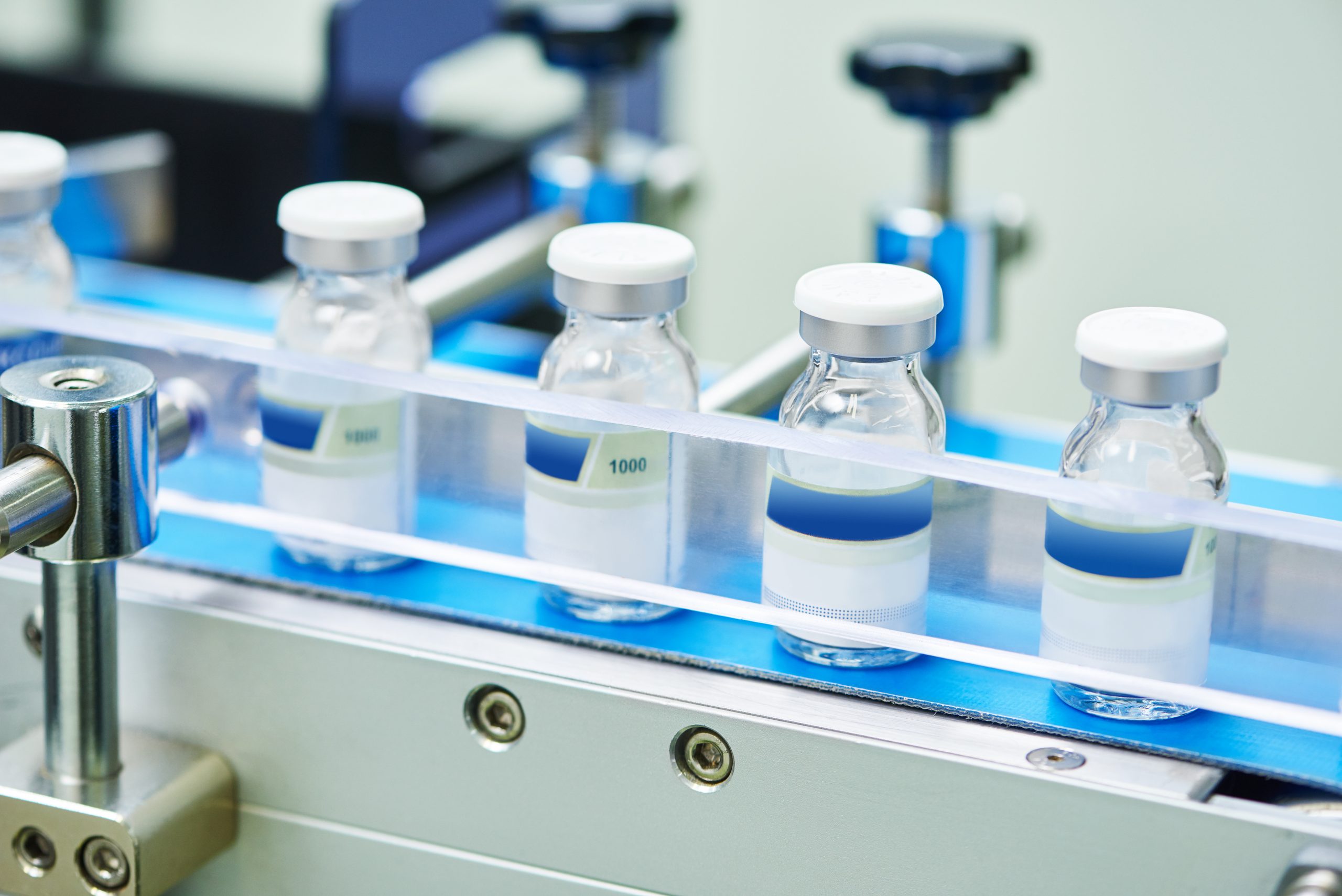
Pharmaceutical Industry | Glass bottles production line
Energy Costs
Reducing running costs is often high on the priority list for pharmaceutical plants of all sizes but is especially relevant to larger sites (where there is a higher number of luminaires installed). LEDs are far more efficient than conventional technology. This is most obvious when swapping out luminaires such as a 400W SON floodlight (which will use up to 440W of power). This can be replaced by an equivalent SPARTAN LED floodlight which will consume around 35% less power.
A fluorescent linear may, on the surface, seem more comparable to an LED linear in terms of energy consumption. For example, a typical 4ft fluorescent will consume 72W (2x36W), while an equivalent SPARTAN WL168 Linear consumes 59W.
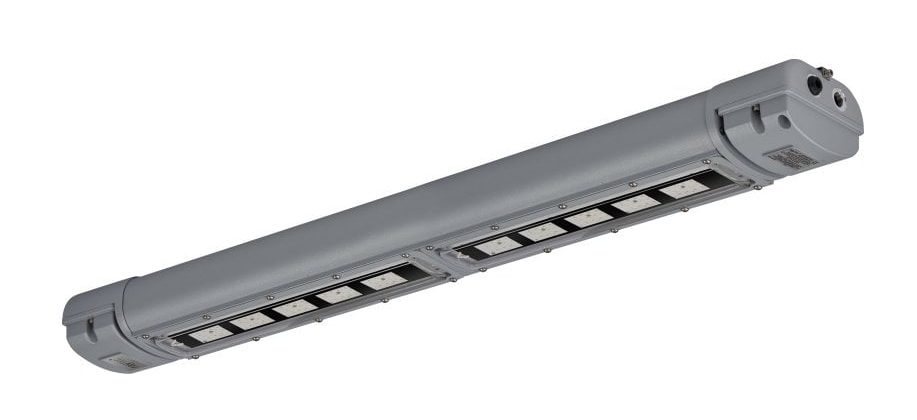
Raytec Spartan Linear WL168 Zone 1 Hazardous Area 6,130 Lumens
While this means an energy saving of around 18% is achieved, it’s also important to consider that a fluorescent is only around 68% efficient and throws out light in all directions. This means a proportion of the light is wasted.
When designing a lighting scheme, this will result in more fluorescent fittings being required, and a higher energy consumption. In order to maximise energy savings, it’s essential that pharmaceutical manufacturing sites opt for an LED solution
➡ Thorne & Derrick together with Raytec are committed to ensuring you get the most value from your LED lighting. The value in lighting is in enabling you to comfortably and safely work in harsh or hazardous environments. The challenges of bad colour, shadows, glare, and inconsistent illumination are complex.
Ease of Installation
Ease of installation is a significant element to consider when choosing a luminaire for a pharmaceutical manufacturing site; the reason for this is twofold. Firstly, due to the volume of luminaires which pharmaceutical sites use, ease and speed of installation becomes essential in being able to keep time and cost to a minimum.
Secondly, as many of the existing luminaires may use conventional technology, selecting a solution which makes the process of upgrading to LED more straightforward is also important. These luminaires can also be referred to as a ‘retrofit’ solution.
Retrofitting
If replacing existing fluorescent luminaires, our advice would always be to look for an LED luminaire which has the same dimensions, cable entries and fixing centres as the existing fluorescent. This means the same bracketry, cable and glands can be utilised, making the upgrade more straightforward for the installer, and also significantly reducing installation costs.
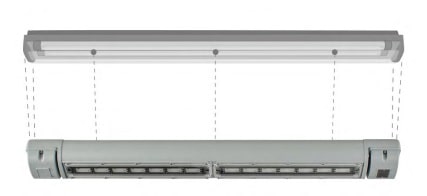
SPARTAN Linear has been designed as a direct replacement for fluorescent fittings, and is available in several different variants to retrofit traditional 2x18W, 2x36W and 2x58W fittings.
Replacing existing fluorescent luminaires
Through-wiring
Again, due to the volume of fittings on-site, a luminaire which can be through-wired is also an essential consideration when specifying lighting for a pharmaceutical project.
Through-wiring offers the ability for multiple luminaires to be installed on the same circuit, and makes installation significantly quicker compared to individually wiring each luminaire.
As well as the ability to through-wire, it’s also important to look at how the luminaire has been designed. Is there plenty of space within the end cap, or around the terminal block, to allow the luminaire to be through-wired easily?
As lighting must be installed in tricky to access spots (often due to the complexity of surrounding pipework) having a luminaire which has been designed for easy installation makes the job of the installer much easier and faster.
Top Tip for Specifying…Always check with Thorne & Derrick to see if the luminaire can be through-wired as standard.
This is exactly the approach Raytec took when designing SPARTAN Linear. SPARTAN Linear comes with throughwiring as standard and is also designed with push terminals, to make wiring more straightforward, and retention clips on the PSU modules to ensure it cannot be dropped when carrying out maintenance work at height.
Ease of Maintenance
We’ve discussed how specifying an LED luminaire can help pharmaceutical sites improve working conditions by reducing the frequency of maintenance required. However, it’s also important to consider how easily maintenance can be carried out if it is required.
Modular Design
Modular Ex luminaires, like SPARTAN, are designed to make maintenance easier and faster to carry out. Interchangeable key components can be replaced independently, allowing maintenance to be carried out on-site and light to be restored within minutes.
In contrast, some Ex LED luminaires are ‘sealed for life’, meaning any failures cannot be rectified by onsite maintenance teams (doing so would invalidate the certification). Therefore, the luminaire must often be returned to the manufacturer for any maintenance, costing the pharmaceutical site time and money.
Top Tip for Specifying…Always check if the design of the luminaire allows maintenance to be carried out on-site. If not, any failures could lead to prolonged downtime and expense as it may have to be returned to the manufacturer for repair.
Emergency Lighting
Pharmaceutical manufacturing sites are high-risk environments which rely on the use of emergency lighting to ensure the safety of everybody on-site should a power failure occur.
Duration & Output
It is important to check the emergency duration of a luminaire to ensure it provides back-up illumination for a sufficient length of time. You should also consider the percentage light output of the luminaire in emergency mode. It is common for output to drop significantly when this switching takes place.
Most SPARTAN emergency luminaires provide 25% light output for 3 hours as standard, but if required can run at up to 100% light output for shorter durations. This provides the ultimate performance and flexibility for emergency lighting in hazardous areas. Prior to installation, it is recommended to complete a lighting design scheme based on both normal and
emergency conditions. This will ensure sufficient light levels are being achieved and the correct number of luminaires have been specified.
Automated Testing
Modern emergency luminaires, such as SPARTAN Intelligent Emergency, are helping to make emergency systems more reliable. Designed to ensure optimum battery performance, they provide a self-testing function which automatically cycles the battery to ensure its health and to measure its capacity. This reduces the need to physically check the health of the luminaire, as this is relayed automatically, ultimately reducing the need for manpower and time.
For pharmaceutical facilities with a large quantity of emergency luminaires installed, this is extremely important. The ability to assess the health of the luminaire from ground level reduces manpower and means any issues can be rectified before complete loss of light.
Other Considerations
Shower Safe Luminaires
With chemicals and solvents being used as part of the manufacturing process, safety showers are often positioned around a pharmaceutical site so workers can decontaminate themselves in the event they become exposed.
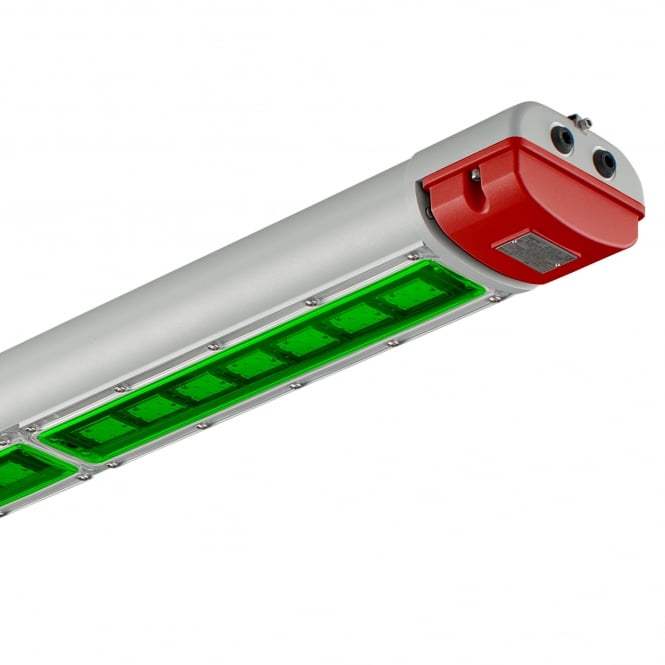
Special luminaires using green light are usually deployed in these areas so the safety showers can be located quickly and easily. Raytec offer SPARTAN Safety Shower Linear that uses green, long-life LEDs, which allow workers to quickly identify the location of safety showers in chemical and petrochemical environments.
SPARTAN Safety Shower Linear
Lighting Design
Designing a lighting scheme is an essential part of specifying lighting for pharmaceutical applications. The nature of these manufacturing facilities means pipework can surround areas where lighting would normally be installed. This is where a lighting design is beneficial, helping to overcome obstacles which the site presents, and providing the best possible solution.
For specifiers going through the initial design process with a clear brief in mind, a lighting design will provide peace of mind that the final solution will achieve the required, on-site lighting goal, with no surprises at the point of commissioning.
➡ Thorne & Derrick and Raytec’s completely free lighting design service provides you with the 3D visual representation of the final lighting solution, with detailed lux levels and a true indication of lighting performance.
The use of CAD drawers of the site can be easily integrated into our software and allows for the most accurate lighting design to be generated. Our lighting design experts can supply and specify ATEX, IECEx & UKEX light fittings to provide safe and reliable lighting in hazardous areas and industrial locations.
Thorne & Derrick International, based in the UK, are Preferred Distributors and Stockists for the Raytec SPARTAN range of ATEX lighting using LED technology for the illumination of hazardous area locations and potentially explosive atmospheres.
SPARTAN is a full range of Ex LED luminaires and lighting approved for all ATEX and IEC Ex Zone 1 and Zone 2 hazardous area environments, including UL /CSA C1D2 installations. The hazardous area lighting products are designed for the most extreme environments – Flood, Linear, Bulkhead, Bay and Crane luminaires with emergency and industrial lighting versions are also available from Thorne & Derrick International.
EXPERTS IN EQUIPMENT FOR EXPLOSIVE ATMOSPHERES
LEADERS IN ATEX INNOVATION TO THE HAZARDOUS AREA INDUSTRIES
Thorne & Derrick are leaders in the development and distribution of Product Innovationsthat deliver significant improvements to clients plant, people and operational safety in the explosive atmosphere industries.
Your proactive problem solvers experienced in succession planning for the replacement of obsolete, non-conformant and legacy equipment in hazardous areas.
Your first-choice provider of innovative and competitive solutions to ensure ATEX & IECEx Compliance for Hazardous Area Electrical, HVAC & Process Instrumentation Equipment to UK and international projects.
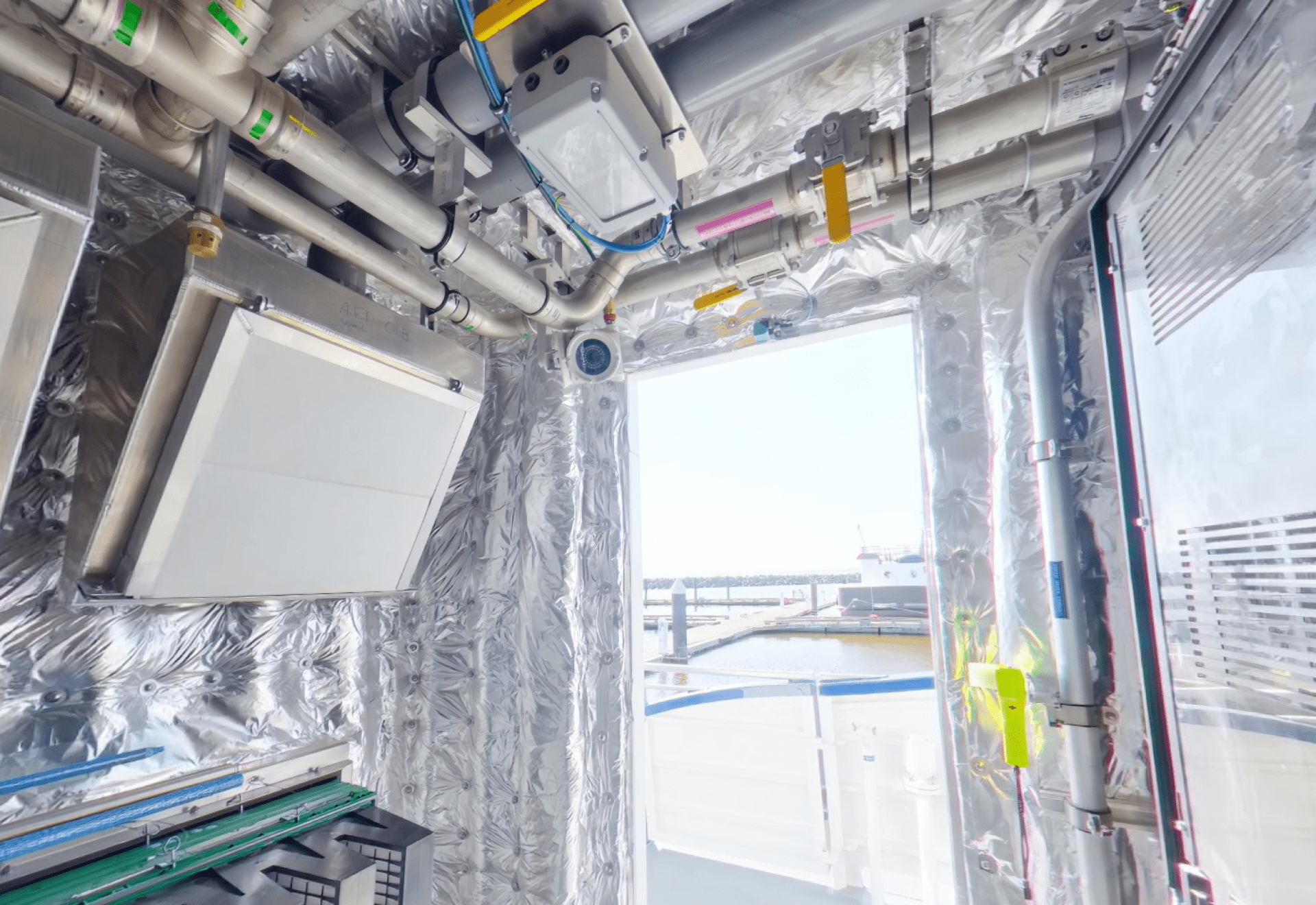
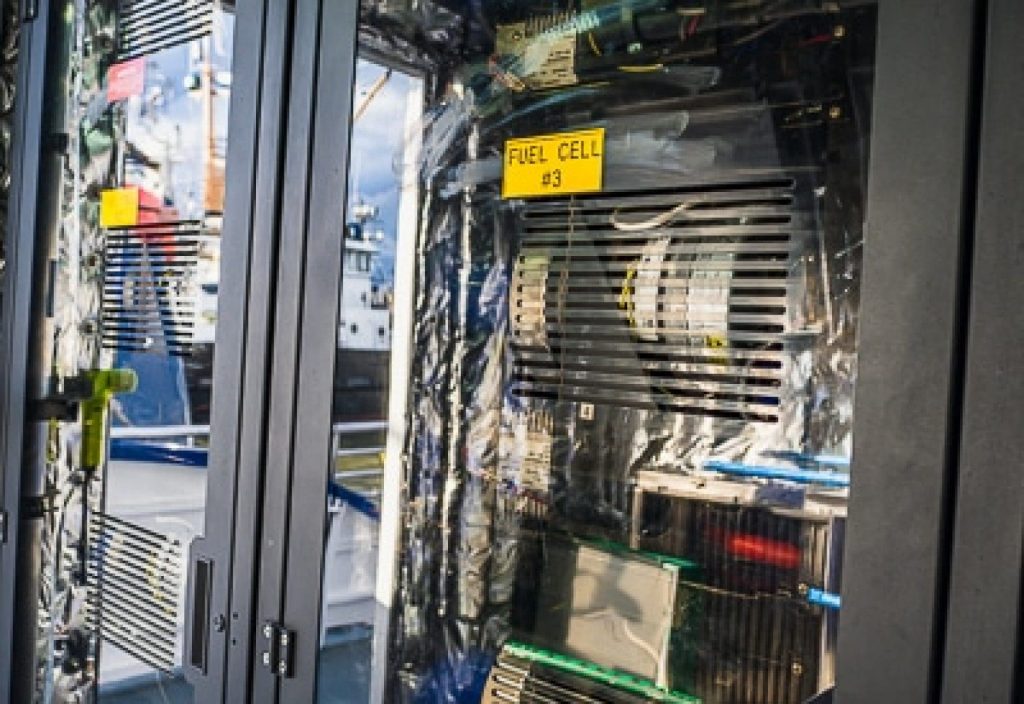
Raytec SPARTAN Hazardous Area LED luminaires have been deployed on the world’s first commercial hydrogen fuel cell passenger ferry. Operating out of the California Bay area, Sea Change is a 70-foot, zero-emission, electric-drive ferry, powered by hydrogen fuel cells. The project was undertaken by award-winning shipbuilder, All American Marine (AAM), and vessel owner SWITCH Maritime.
Working with Michael Marrington of IndEx, Hazardous Area Ex Professionals, the Raytec SPARTAN Flood and Bulkhead luminaires were selected to illuminate the deck areas and hydrogen storage room on board Sea Change.
This is the World’s First Hydrogen Powered Passenger Ferry… and we are sure to see more.
Raytec Spartan
Thorne & Derrick are the leading supplier of ATEX Lighting for safe and reliable lighting of hazardous areas and locations – this includes Lighting for hazardous areas certified by the ATEX Directive for use in Zone 1 and Zone 2 potentially explosive atmospheres in both onshore and offshore locations.
The Challenges
The US Coast Guard (USCG) stipulates that any electrical equipment used in offshore applications, including vessels such as Sea Change, must use equipment that complies with IECEx standards (IEC 60079 Series, IEC 60092 Series). The vessel’s fuel cell also meant that any equipment would need to be suitable for installation in areas where hydrogen was present.
In addition to the safety and certification requirements, as a commercial ferry, the Sea Change project also provided a unique challenge in that non-competent members of the public would be in close proximity to any equipment installed on board. This placed added importance on AAM to find a high-quality lighting solution with long-term reliability.
Raytec Spartan Supplied As The Ideal Solution
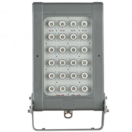
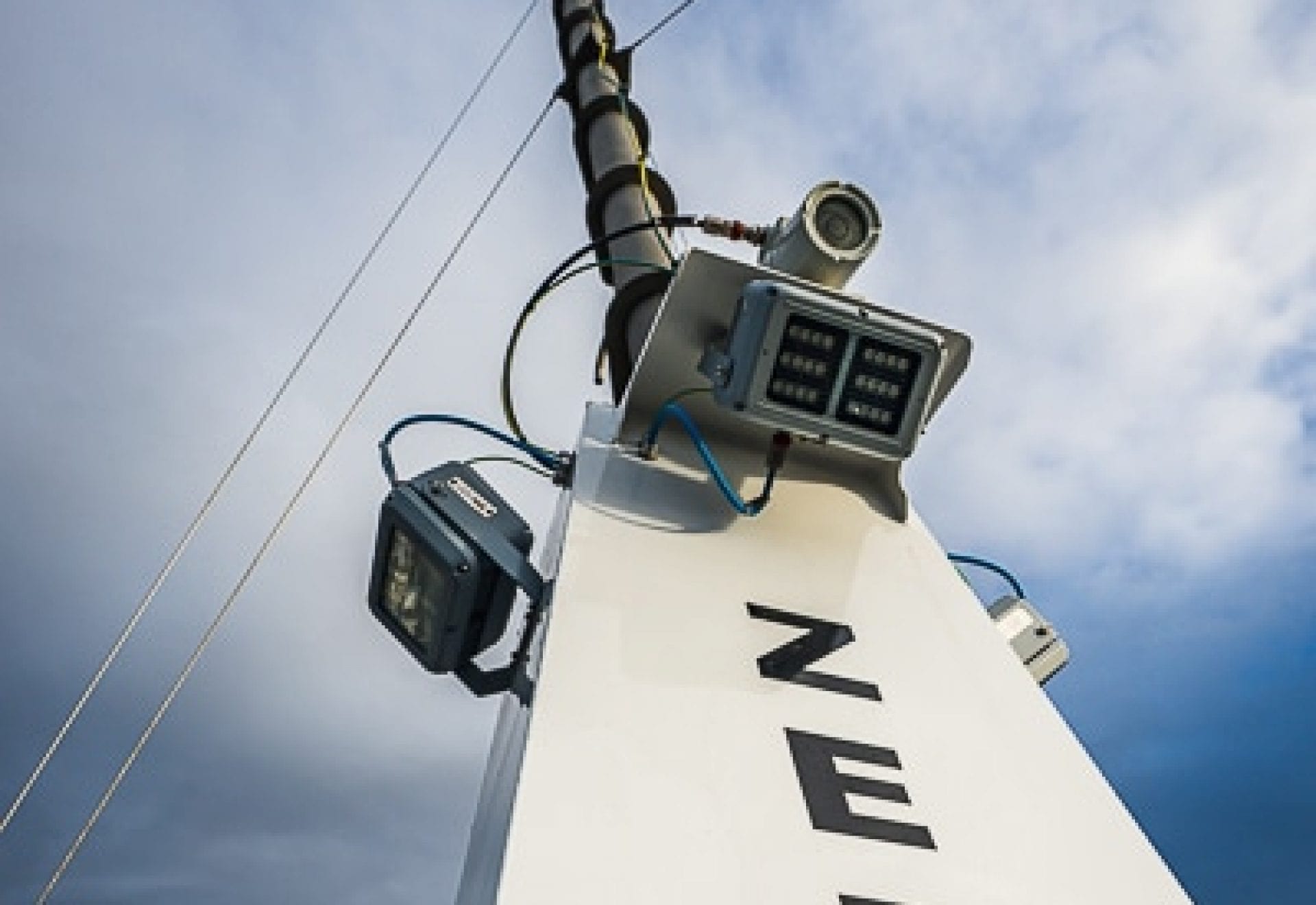
Supported by IndEx, AAM specified luminaires from Raytec’s SPARTAN hazardous area range to illuminate the deck areas and hydrogen storage room.
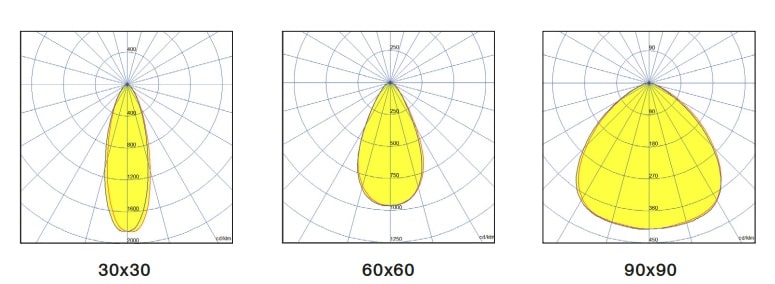
SPARTAN Flood luminaires were installed above deck. Flood luminaires with a focused optic were used to illuminate the deck itself, while a wider 120°x120° beam angle was utilized for general illumination above deck. Specifically, this would also be used for illuminating the dock during fueling operations and would ensure that all necessary safety requirements were built into the boat.
SPARTAN Bulkhead, using the same 120°x120° beam angle as the Flood luminaires above deck, was installed in the vessel’s hydrogen storage room. This would provide general illumination for routine maintenance checks and would also support remote monitoring in conjunction with an explosion-proof camera.
“The Sea Change project has been carried out to the highest levels of quality, and we’re delighted that the Raytec lighting solutions installed on board have been able to maintain that standard. The SPARTAN luminaires met all our expectations in terms of quality and compliance, but also in terms of availability and cost.Our installers also commented on the ease of installation, and we’re confident that we’ve achieved illumination which will provide the vessel with long-term reliability.”
Jeff Sokolik, Project Manager at AAM
Why Raytec?
Certification and Technical Requirements
First and foremost, Raytec’s SPARTAN luminaires were able to fulfill all the safety and technical requirements which AAM and IndEx were looking for. ATEX and IECEx certified (with Class I Division II variants also available), the luminaires met the requirements for offshore applications (as stipulated by the USCG), while a IIC Gas Group rating ensured the luminaires were compliant for applications where hydrogen is present amongst the Hydrogen Powered Passenger Ferry
SPARTAN luminaires are also available as low voltage, 24V DC variants, which met the power requirements on board Sea Change. Constructed using marine grade aluminum, and supported with ABS (American Bureau of Shipping) certification, ensured the luminaires would provide long-term reliability in their challenging marine environment.
Multiple Beam Angles
As discussed above, the SPARTAN Flood and Bulkhead luminaires installed on board utilized different beam angles tailored to each area of the boat. This ensured light was targeted only where needed, delivering an efficient, high-quality solution.
All luminaires within the SPARTAN range are available with a choice of different beam angles. The Flood and Bulkhead luminaires installed on Sea Change are available with five circular and five elliptical angles to suit a wide range of applications.
Available with a range of beam patterns to effectively light up large open areas.
Compact Design
Due to the complexity of pipework within the hydrogen storage room, AAM needed to find a luminaire which was compact and could be installed within the limited space available. SPARTAN Bulkhead fit the bill perfectly, with its compact, low profile design ideal for areas of restricted space. Furthermore, the luminaire’s side cable entries meant the luminaire could be mounted virtually flush to the wall and allow loop-in, loop-out wiring. Designed to allow access to internal components from the front of the luminaire, this also ensured ease of maintenance was not compromised.
Another benefit to AAM was the consistency in the design and appearance between the different Flood and Bulkhead luminaires. While safety and compliance were the primary concern, the aesthetics of the final solution was also a consideration given that Sea Change is used by paying members of the public.
EXPERTS IN EQUIPMENT FOR EXPLOSIVE ATMOSPHERES
LEADERS IN ATEX INNOVATION TO THE HAZARDOUS AREA INDUSTRIES
Thorne & Derrick are leaders in the development and distribution of Product Innovations that deliver significant improvements to clients plant, people and operational safety in the explosive atmosphere industries.
Your proactive problem solvers experienced in succession planning for the replacement of obsolete, non-conformant and legacy equipment in hazardous areas.
Your first-choice provider of innovative and competitive solutions to ensure ATEX & IECEx Compliance for Hazardous Area Electrical, HVAC & Process Instrumentation Equipment to UK and international projects.
➡ Are you working on a project requiring hazardous area lighting? Contact Thorne & Derrick today to discuss your requirements. Using the latest software, we can provide a FREE LIGHTING DESIGN SERVICE for the specification and supply of ATEX & IECEx light fittings to provide safe and reliable lighting in hazardous areas and industrial locations.
NDAS
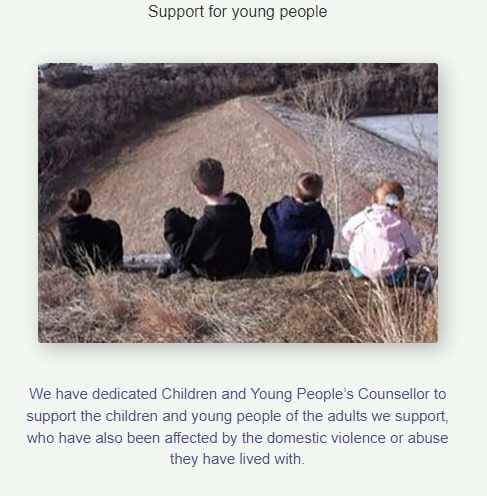
Thorne & Derrick support Northumberland Domestic Abuse Services (NDAS), an independent charitable organisation that provides support for anyone experiencing or affected by domestic violence or abuse. We have helped to upgrade their old and outdated computers and software as well as providing mobile phones, replacement office chairs and three new trolleys. The outreach team now also have eight new laptops so they can work from any location.
Domestic violence and abuse can happen to anyone, of any gender, sexual orientation, race or religion, and can happen at any stage in life. It does not just mean physical abuse, and it can involve verbal, psychological, sexual and financial control.
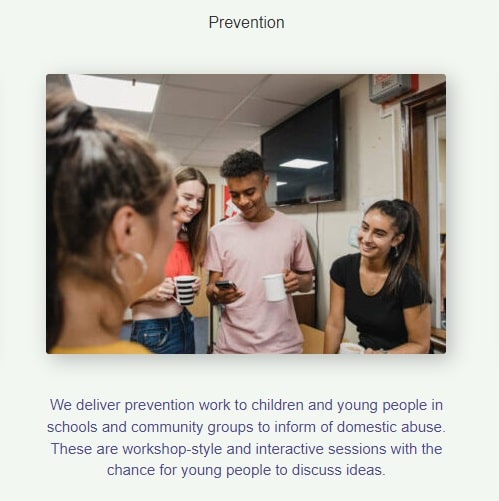
NDAS provides comprehensive support to anyone experiencing, or affected by, domestic abuse. Its primary aim is to reduce domestic abuse in Northumberland, as opposed to only supporting victims, which it does by supporting and empowering survivors, raising awareness, challenging perceptions and behaviours of domestic abuse, and preventing new, abusive relationships from being formed.
NDAS helps people to understand their situation and recognise the abuse that they are suffering, develops and implements tailored safety plans, assists with practical issues such as securing employment, and uses group training to help recovery from the psychological impacts of abuse. It works closely in partnership with local voluntary and statutory organisations to provide safe housing, refuge, and counselling
You are not alone, and NDAS have services that can help and support you, whoever you are.
NDAS can help you:
Develop a safety plan
Find a new home, or temporary refuge
Find a solicitor and explore legal options
Understand your legal rights
Find the right support for your family and children, including support from our Children and Young People’s Practitioner
Gain confidence and independence through 1-2-1 support and group courses
Build social networks through support groups and activities
Donate
Your support matters
Your donations help us to provide vital support to people who have experienced domestic violence – so that they can live in safety, and build for the future – https://www.nda.services/donate/
Easyfundraising
Did you know that whenever you buy anything online – from your weekly shop to your annual holiday – you could be raising free donations for Northumberland Domestic Abuse Services with easyfundraising?
There are over 6,000 shops and sites on board ready to make a donation – including eBay, Argos, John Lewis, ASOS, Booking.com and M&S – and it won’t cost you a penny extra to help us raise funds – DONATE HERE
Northumberland Lottery
NDAS are part of the Northumberland Lottery, which not only supports local causes in Northumberland but it also gives DOUBLE the amount of funds to good causes than the National Lottery does!
Tickets are only £1 per week, with 50% going directly to us, plus 10% going to other good causes in the area, AND the chance to win £25,000!
You can buy a ticket to support NDAS via the link below. Please also share this great lottery with your friends and family, you never know, you might be a winner!
Press Release Date: 02.04.2020 uploaded by Chris Dodds (T&D Sales + Marketing Manager) World’s First Fully Certified ATEX Doors Thorne & Derrick International, the Experts in Equipment for Explosive Atmospheres, today announce the signing of a Commercial Distribution Agreement...
Press Release Date: 04.07.2019 uploaded by Chris Dodds (T&D Sales + Marketing Manager) Category: Stockist Distributor Agreement Announcement Thorne & Derrick International announce that they have signed a Preferred Distributor Agreement with Raytec, the world leading manufacturer of LED...



















 Supported by IndEx, AAM specified luminaires from Raytec’s SPARTAN hazardous area range to illuminate the deck areas and hydrogen storage room.