Dust-like and powdered substances are either processed or a by-product of the production processes frequently found in the food and beverage industry.
Regardless of whether the dust is intentional or a waste product, a large majority of these dust-like substances are known to pose an ignition source or explosion hazard – making these workplaces hazardous areas.
Eighty percent of process dusts are combustible, and a dust layer thickness of just 1 mm in a closed room can trigger explosions or fire if the dust was to become airborne and ignite.
However, the level of risk awareness within the processing industries for dust explosion hazards is relatively low. Hence the combination of all these risk factors underlines the importance of preventing dust explosions.
COMBUSTIBLE DUSTs
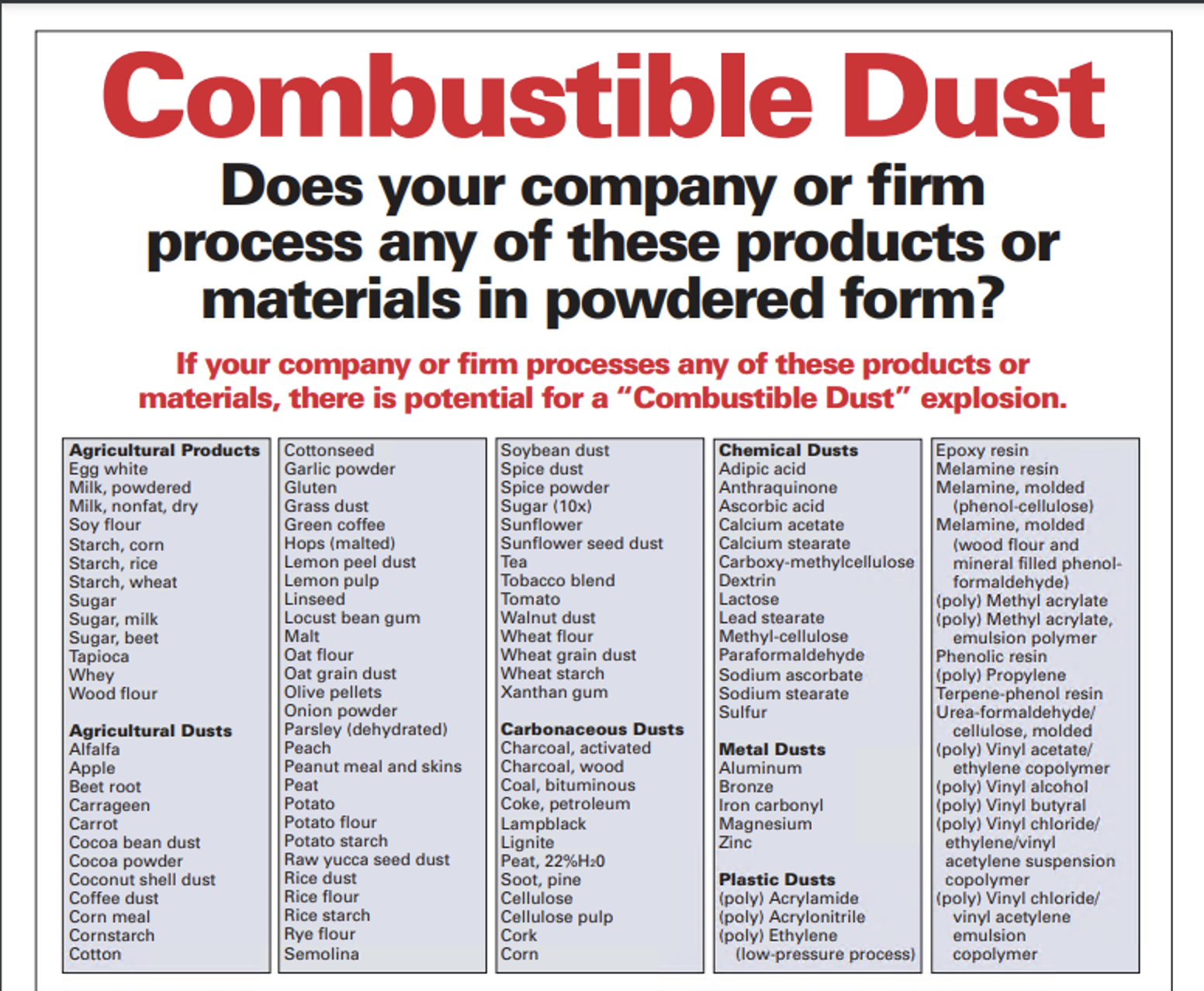
The Occupational Safety & Health Administration or OHSA asks – Does your company or firm process any of these products or materials in powdered form?
If your company processes any of these products or materials, there is potential for a “Combustible Dust” explosion.
Agricultural Dusts
Alfalfa
Apple
Beet root
Carrageen
Carrot
Cocoa bean dust
Cocoa powder
Coconut shell dust
Coffee dust
Corn meal
Cornstarch
Cotton
Cottonseed
Garlic powder
Gluten
Grass dust
Green coffee
Hops (malted)
Lemon peel dust
Lemon pulp
Linseed
Locust bean gum
Malt
Oat flour
Oat grain dust
Olive pellets
Onion powder
Parsley (dehydrated)
Peach
Peanut meal and skins
Peat
Potato
Potato flour
Potato starch
Raw yucca seed dust
Rice dust
Rice flour
Rice starch
Rye flour
Semolina
Soybean dust
Spice dust
Spice powder
Sugar (10x)
Sunflower
Sunflower seed dust
Tea
Tobacco blend
Tomato
Walnut dust
Wheat flour
Wheat grain dust
Wheat starch
Xanthan gum
Agricultural Products
Egg white
Milk, powdered
Milk, nonfat, dry
Soy flour
Starch, corn
Starch, rice
Starch, wheat
Sugar
Sugar, milk
Sugar, beet
Tapioca
Whey
Wood flour
Carbonaceous Dusts
Charcoal, activated
Charcoal, wood
Coal, bituminous
Coke, petroleum
Lampblack
Lignite
Peat, 22%H20
Soot, pine
Cellulose
Cellulose pulp
Cork
Corn
Plastic Dusts
(poly) Acrylamide
(poly) Acrylonitrile
(poly) Ethylene (low-pressure process)
Epoxy resin
Melamine resin
Melamine, moulded (phenol-cellulose)
Melamine, moulded (wood flour and mineral filled phenolformaldehyde)
The dust-containing systems (ducts and dust collectors) are designed in a manner (i.e., no leaking) that fugitive dusts are not allowed to accumulate in the work area.
The facility has a housekeeping program with regular cleaning frequencies established for floors and horizontal surfaces, such as ducts, pipes, hoods, ledges, and beams, to minimize dust accumulations within operating areas of the facility.
The working surfaces are designed in a manner to minimise dust accumulation and facilitate cleaning.
Ignition Control Measures
Electrically-powered cleaning devices such as vacuum cleaners, and electrical equipment are approved for the hazard classification for Class II locations.
The facility has an ignition control program, such as grounding and bonding and other methods, for dissipating any electrostatic charge that could be generated while transporting the dust through the ductwork.
The facility has a Hot Work permit program.
Areas where smoking is prohibited are posted with “No Smoking” signs.
Duct systems, dust collectors, and dust-producing machinery are bonded and grounded to minimise accumulation of static electrical charge.
The facility selects and uses industrial trucks that are approved for the combustible dust locations.
Prevention Measures
The facility has separator devices to remove foreign materials capable of igniting combustible dusts.
MSDSs for the chemicals which could become combustible dust under normal operations are available to employees.
Employees are trained on the explosion hazards of combustible dusts.
Protection Measures
The facility has an emergency action plan.
Dust collectors are not located inside of buildings. (Some exceptions) Rooms, buildings, or other enclosures (dust collectors) have explosion relief venting distributed over the exterior wall of buildings and enclosures.
Explosion venting is directed to a safe location away from employees.
The facility has isolation devices to prevent deflagration propagation between pieces of equipment connected by ductwork.
The dust collector systems have spark detection and explosion/deflagration suppression systems.
Emergency exit routes are maintained properly.
About OSHA
With the Occupational Safety and Health Act of 1970, Congress created the Occupational Safety and Health Administration (OSHA) to ensure safe and healthful working conditions for working men and women by setting and enforcing standards and by providing training, outreach, education and assistance.
EXPERTS IN EQUIPMENT FOR EXPLOSIVE ATMOSPHERES
Zone 1/2 Gas & Zone 21/22 Dust
Thorne & Derrick are leaders in the development and distribution of Product Innovations that deliver significant improvements to clients plant, people and operational safety in the explosive atmosphere industries.
Your proactive problem solvers experienced in succession planning for the replacement of obsolete, non-conformant and legacy equipment in hazardous areas.
Your first-choice provider of innovative and competitive solutions to ensure ATEX & IECEx Compliance for Hazardous Area Electrical, Heating, Lighting & Process Instrumentation Equipmentto UK and international projects.
Intrinsic safety is one of the safest ways to ensure that an electrical device installed in a hazardous location cannot result in a fire or an explosion. Intrinsic safety is a system concept.
Intrinsic safety might seem confusing and involves complex calculations and detailed assessments. But it is not that difficult if we understand the principles behind it. It’s important to understand what intrinsic safety is, the safety of each component in the system, and how an intrinsically safe system is achieved.
In the below intrinsic safety animation, Hazcon Inc. has simplified the concept by focusing on:
The basic principles of an intrinsically safe system;
The three components of an intrinsic safety system;
How the components connect and work together to become an intrinsically safe system (Entity Concept)
To demonstrate why it is critical that electrical equipment to be protected in a hazardous area lets look at an electrical installation in such an area without any protection. An electrical sensor is placed in a hazardous location power is fed to it from a safe area outside the hazardous location.
If a fault happens within the safe area a voltage of 250V or higher can enter the hazardous area. Furthermore if a fault happens within an electrical sensor located inside the hazardous area a high value short circuit current can flow into the hazardous location from the power supply.
In both of these fault conditions, excess temperature, arcs and sparks can ignite the explosive atmosphere present. Intrinsic safety is a highly affective protection technique bases on the principle of limiting the thermal and electric energy within the equipment and its interconnecting wiring.
Intrinsic Safety Systems
Intrinsic Safety Systems contain 3 main components:
Intrinsically Safe Field Device
Safety Barrier (Energy Limiting Device) max amount of voltage, current & power transmitted to the field device at safe levels
Intrinsically Safe Field Wiring
It is vital that the safety of each component is considered.
Director & Consulting Engineer at Hazcon Inc.; Hazardous Locations Consulting Services; IECEx, ATEX, CEC & NEC
Specializing in the design, safety and approval of electrical equipment for hazardous locations.
Mr. Nejad has over 15 years of experience as an Electrical Engineer and is a sought after professional in the hzardous area and explosion protection industry. He is fully-qualified at the advanced level of all hazardous locations protection techniques including Intrinsic Safety & Non-incendive, Explosion Proof & Flame proof, Increased Safety, Non-arcing, Purging and Pressurization, Encapsulation, Optical Radiation, and Dust-tight enclosures. Mr. Nejad’s tenure in the industry includes six years at the CSA certification agency, working closely with manufacturers (Emerson, GE, ABB, Siemens, Endress-Houser, VEGA etc.) as a technical and certification engineer for Hazardous locations equipment.
EXPERTS IN EQUIPMENT FOR EXPLOSIVE ATMOSPHERES
leaders in ATEX Innovation To The Hazardous Area Industries
Thorne & Derrick are leaders in the development and distribution of Product Innovations that deliver significant improvements to clients plant, people and operational safety in the explosive atmosphere industries.
Your proactive problem solvers experienced in succession planning for the replacement of obsolete, non-conformant and legacy equipment in hazardous areas.
Your first-choice provider of innovative and competitive solutions to ensure ATEX & IECEx Compliance for Hazardous Area Electrical, HVAC & Process Instrumentation Equipmentto UK and international projects.
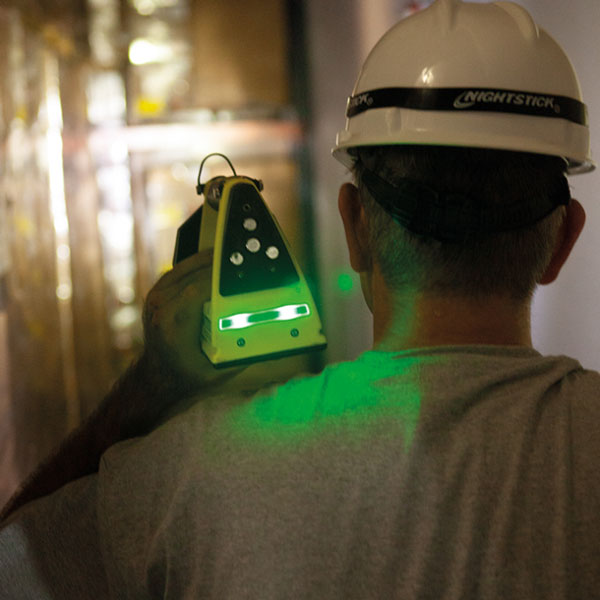
Nightstick: a global brand of professional lighting products including flashlights, headlamps and Intrinsically Safe lighting solutions
Explosive Atmosperes & Hazardous Areas
Portable LED Lighting Meeting or Exceeding Industry Standards
Special thanks to Derek Box at Nightstick for the kind permission to republish
The dangers of explosive environments are obvious in the petroleum and chemical processing industries, but many other industries can create explosive atmospheres that are not as obvious but still represent a serious danger.
Examples illustrating this are facilities that process grains, sugar, metal powders, and wood products. In 2018 grain handling facilities in Nebraska and eastern France were destroyed or seriously damaged by grain dust explosions. In 2008 an explosion wrecked a sugar refinery in Georgia, killing 14 people and injuring another 40. Five workers were fatally injured in an iron dust fire in Tennessee in 2011.
It is essential to understand the conditions that can create explosive environments and the proper equipment required to enter them safely.
The equipment you are using must meet or exceed the standards for the most explosive environment you could face under known or unknown situations. In the United States, intrinsically safe products are tested to the UL 913 5th or 8th edition standards with the UL 913 8th edition being harmonized to the EN/IEC 60079 -01/-11 standard for European Union ATEX certifications and the remaining countries IECEx certifications.
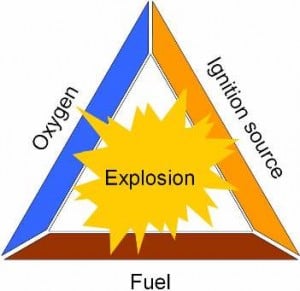
For an explosion to occur, five components must be in place: oxygen, confined space, ignition source, dispersion, and a fuel source. These elements make up the explosion pentagon. The three elements needed for a fire — fuel source, oxygen, and an ignition source — can create a flash fire within a confined space, resulting in the ingredients for an explosion.
Eliminating one of these five elements will prevent an explosion, but eliminating these hazards is not a simple process. Oxygen in confined spaces typically cannot be eliminated. Therefore, managing fuel sources and the use of properly rated equipment to prevent ignition is essential.
As an example, using the ATEX classification system, a Zone 2 environment could quickly become a Zone 1 or even a Zone 0 environment, and your equipment must be rated appropriately as you may not be aware that the environment has changed until it is too late. If you are unsure, analyse the work environment, determine the worst-case scenario, and equip your workers based on that.
The quality of your equipment is vital in explosive environments. You must ensure it is manufactured by a reputable company with documented experience in creating intrinsically safe (IS) products.
The ideal situation would be to purchase all of your IS products from a single manufacturer rather than mixing and matching products from several companies. A single source manufacturer ensures consistent quality and safety across the entire product line. Because of the knowledge, time, and expense required to engineer and produce IS products, a very limited number of companies can achieve this.
About Nightstick
Nightstick is a global brand of professional portable LED lighting products that meet or exceed industry standards. Our products are UL 913 certified for Class I DIV 1 (all gas atmosphere groups) and Class II DIV 1 (all dust atmosphere groups), many with a Zone 0 IIC equivalency rating for use in hazardous environments.
Most additionally carry a Zone 0 IIC ATEX and IECEx certification with T3 & T4 temperature rating, making Nightstick a truly globally intrinsically safe lighting company. From penlights to area scene lights, Nightstick leads with over 50 safety rated LED lighting products.
leaders in ATEX Innovation To The Hazardous Area Industries
Thorne & Derrick are leaders in the development and distribution of Product Innovations that deliver significant improvements to clients plant, people and operational safety in the explosive atmosphere industries.
Your proactive problem solvers experienced in succession planning for the replacement of obsolete, non-conformant and legacy equipment in hazardous areas.
Your first-choice provider of innovative and competitive solutions to ensure ATEX & IECEx Compliance for Hazardous Area Electrical, HVAC & Process Instrumentation Equipmentto UK and international projects.
Follow our Showcase Page on LinkedIn to receive hazardous area product innovations, industry news, whitepapers, videos, technical tips and training webinars for professionals involved in the explosive atmosphere industries.
Thorne & Derrick International, based in the UK, are Preferred Distributors and Stockists for the Raytec SPARTAN range of ATEX lighting using LED technology for the illumination of hazardous area locations and potentially explosive atmospheres.
With the UK officially leaving the EU, the UKCA mark has been introduced for any hazardous area products being sold into the UK.
In Raytec’s latest webinar, they discuss what the changes mean and how they could affect you if you’re using hazardous area products in the UK, or if you’re purchasing them from a UK manufacturer.
Raytec will also be taking you through what their plans are for their hazardous area lighting range in response to the latest certification criteria, and the changes you can expect to see on SPARTAN LED luminaires in the coming weeks – this Webinar will answer all your questions about UKCA Lighting.
Register here
When:Tuesday 16th March 9.00am GMT (London)
Sign-up:9:00 GMT (London), 10.00 CET (Berlin), 13:00 GST (Dubai), 14:30 IST (Mumbai), 18:00 JST (Tokyo), 20:00 AEDT (Sydney)
See how Raytec have been working closely with UK notified body, Eurofins CML to ensure certificates are constantly updated to the latest edition of the standards for all hazardous area lighting in their range in the following Blog.
💡 Did you Know? Thorne & Derrick using latest software provide a FREE LIGHTING DESIGN SERVICE for the specification and supply of ATEX & IECEx Certified light fittings to provide safe and reliable lighting in explosive atmospheres and hazardous area locations.
SPARTAN is a full range of Ex LED luminaires and lighting approved for all ATEX and IEC Ex Zone 1 and Zone 2 hazardous area environments, including UL /CSA C1D2 installations. The hazardous area lighting products are designed for the most extreme environments – Flood, Linear, Bulkhead, Bay and Crane luminaires with emergency and industrial lighting versions are also available from Thorne & Derrick International.
leaders in ATEX Innovation To The Hazardous Area Industries
Thorne & Derrick are leaders in the development and distribution of Product Innovations that deliver significant improvements to clients plant, people and operational safety in the explosive atmosphere industries.
Your proactive problem solvers experienced in succession planning for the replacement of obsolete, non-conformant and legacy equipment in hazardous areas.
Your first-choice provider of innovative and competitive solutions to ensure ATEX & IECEx Compliance for Hazardous Area Electrical, HVAC & Process Instrumentation Equipmentto UK and international projects.
Follow our Showcase Page on LinkedIn to receive hazardous area product innovations, industry news, whitepapers, videos, technical tips and training webinars for professionals involved in the explosive atmosphere industries.
Global Dust Safety Conference 2021 – REGISTER HERE
Global Dust Safety Conference 2021
Dust Safety Academy
Dr. Chris Cloney, PEng is proud to announce the 2nd annual Global Dust Safety Conference which will take place digitally between March 1st- 3rd 2021 after the success of last years which saw 225 people registered from 25 countries and across 12 different time zones.
➡ Register today and watch replays until March 31st 2021 if time zone differences are challenging.
When registering for this conference you’re not only securing your seat for world-class combustible dust safety training, education seminars and research presentations you are protecting yourself and everybody around you.
💡 Did you know? There has been 726Fires, 270 Explosions, 446 Injuries and 51 Fatalities recorded in our global database since 2016.
The goal for the 2021 Dust Safety Conference is to get your questions answered about combustible dust. We do this by bringing together the community of stakeholders involved in combustible dust. This includes equipment manufacturers, OEMs, safety system designers, safety system implementers and integrators, regulators, insurance companies and researchers.
Why Attend This Event?
Here’s What Makes #DSC2021 Different From Your Average Conference…
Learn from 40+ global experts on combustible dust safety
Understand upcoming regulation changes in your industry
Get newest developments in prevention, protection and cleaning systems
Watch and rewatch presentation replays for the entire month after the event
Have questions about
Dust Hazard Analysis?
Safety culture and training?
Purchasing the correct equipment?
Dust collector maintenance?
Legal liability?
Get them answered at the event!
No travel, lodging or extra costs required
No travel – attend right from your computer or mobile device
Standard membership in the Dust Safety Academy complete with access to community forums and exhibition area
Can’t Make it Live? No Problem!
Replays available until March 31, 2021, with Registration
Meet your host, Dr. Chris Cloney, PEng.
Managing Director and Lead Research for Dust Safety Science.
Chris will be bringing together industry experts and researchers to cover combustible dust education from global and regional perspectives.
The purpose of holding the 2021 Global Dust Safety Conference is threefold:
To make change in industries handling combustible dust
To generate awareness of dust fire and explosion hazards
To work towards achieving a zero-fatality year by 2038
Chris will be joined by over 40 speakers from around the world delivering live presentations including:
Reliable 24/7 Dust Detection in Industrial Environments
John Korpi
Sintrol
Dust Collector Replacement – Overcoming Murphy’s Law
Diane Cave
Element6
Practical considerations when planning and implementing dust explosion protection
Timothy Heneks
Dustcon Solutions
Inherently Safer Design Protocol for Process Hazard Analysis
Kayleigh Rayner Brown
Dalhousie University
Difference Between Prescriptive and Performance-Based DHAs
John Wincek
DEKRA
NFPA 69 – Chapter 12-Material Chokes-Rotary Airlocks
Pablo Balan
Boss Products
New 2021 SIL Rating Requirements per NFPA 69
Burke Desautels
IEP Technologies
PPE and Combustible Dust – the often overlooked piece of protection
Derek Sang
Bulwark Protection
A: Anyone can attend the event with the purchase of a general admission ticket. Premium Dust Safety Academy members get access to the conference with their annual subscription.
Q: What if I can’t view the conference live?
A: Replays of the conference presentations will be available for one month after the event for general admission. Premium Dust Safety Academy members have unlimited access to the conference replays from 2020 and 2021.
Q: Are the tickets refundable?
A: No, the tickets are non-refundable. However, they can be reassigned to another individual before February 15, 2021. We will try our best to help you find someone to take the ticket before this date.
Q: How long are the presentations?
A: Live technical presentations are 40 minutes in length (30-minute presentation and 10 minutes of Q&A). Live research sessions are 20-minutes followed by a 5-minute question period. Keynotes are 40 minutes followed by a 15-minute question period. On-demand sessions will vary in length.
EXPERTS IN EQUIPMENT FOR EXPLOSIVE ATMOSPHERES
Zone 1/2 Gas & Zone 21/22 Dust
Thorne & Derrick are leaders in the development and distribution of Product Innovations that deliver significant improvements to clients plant, people and operational safety in the explosive atmosphere industries.
Your proactive problem solvers experienced in succession planning for the replacement of obsolete, non-conformant and legacy equipment in hazardous areas.
Your first-choice provider of innovative and competitive solutions to ensure ATEX & IECEx Compliance for Hazardous Area Electrical, Heating, Lighting & Process Instrumentation Equipmentto UK and international projects.
Press Release Date: 02.04.2020 uploaded by Chris Dodds (T&D Sales + Marketing Manager) World’s First Fully Certified ATEX Doors Thorne & Derrick International, the Experts in Equipment for Explosive Atmospheres, today announce the signing of a Commercial Distribution Agreement...
Press Release Date: 04.07.2019 uploaded by Chris Dodds (T&D Sales + Marketing Manager) Category: Stockist Distributor Agreement Announcement Thorne & Derrick International announce that they have signed a Preferred Distributor Agreement with Raytec, the world leading manufacturer of LED...