Hazardous Area & Explosion Proof Electrical Equipment
Republished by Thorne & Derrick with kind permission of Emerson Appleton
Uploaded by Chris Dodds | Sales Marketing Manager Thorne & Derrick International
Explosion Proof Lighting & Power Panelboards
ATEX & IECEx
For Global Hazardous Area & Explosive Atmosphere Installations
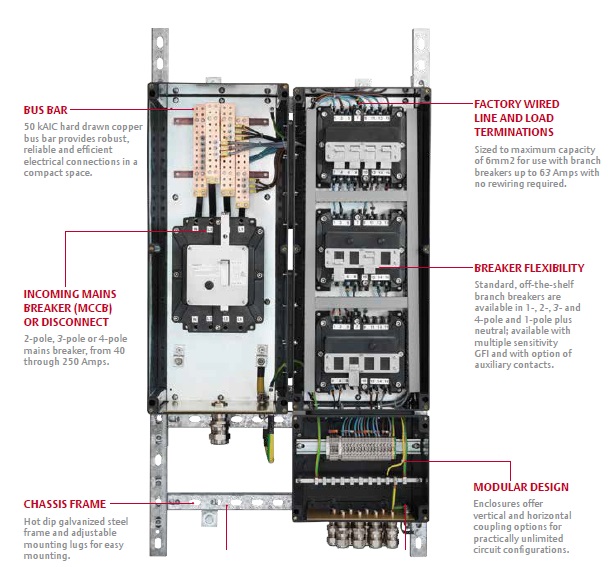
Intro: AppletonTM PlexPowerTM Panelboards by Emersonuse circuit breaker modules that provide explosion proof protection for standard off-the-shelf breakers, eliminating the need for a heavy cast enclosure. Component level protection means the panelboard enclosure is lighter, more compactand easier to install.
Breakers can be easily replaced, upgraded or added in the hazardous area zone or workplace with no bolted cover to remove, no need for sealing or rewiring and no dangerof compromising flamepath integrity. There’s never been a simpler, more versatile way to protect lighting, power and heat trace circuits in wet, weather exposed, corrosive or hazardous locations.
It’s been ten years ago since now Emerson introduced their AppletonPlexPower™line of hazardous location distribution boards – bringing the concept of component-level protection to North American markets governed by NEC and CEC standards. With new certifications for IECEx and ATEXinstallations, Emerson introduced the AppletonPlexPower distribution boards to the global marketplace.
PlexPower Easy To Install, Operate and Maintain.
ATEX & IECEx Panelboards – Appleton PlexPower | Low Voltage Electric Power for Hazardous Area Distribution Systems & Explosive Gas & Dust Atmospheres
An Innovative Way to Protect Breakers in Hazardous Area Locations
For Zone 1 and Zone 2 (Gas) and Zone 21 and Zone 22 (Dust) explosive atmosphere applications, Appleton PlexPower distribution boards offer an innovative method for protecting power distribution, explosion proof lighting and heat trace sytems. Appleton’s exclusive technology incorporates Labyrinth Joint Flamepaths into modular main and branch circuit breaker housings – allowing the use of standard, off-the-shelf circuit breakers that can be replaced in the field, instead of specialized, epoxy-encapsulated breakers.
Easy Maintenance
Easier Upgrades
Easier Operation
Easier Installation
Use infrared scanning to inspect breakers without powering down the panelboard
• Minimize downtime and production loss
during routine inspection
• Replace breakers by opening individual
housings with standard hand tools
Add circuits and increase breaker capacity using affordable off-the-shelf breakers
• Modular design allows you to expand or reconfigure the panel
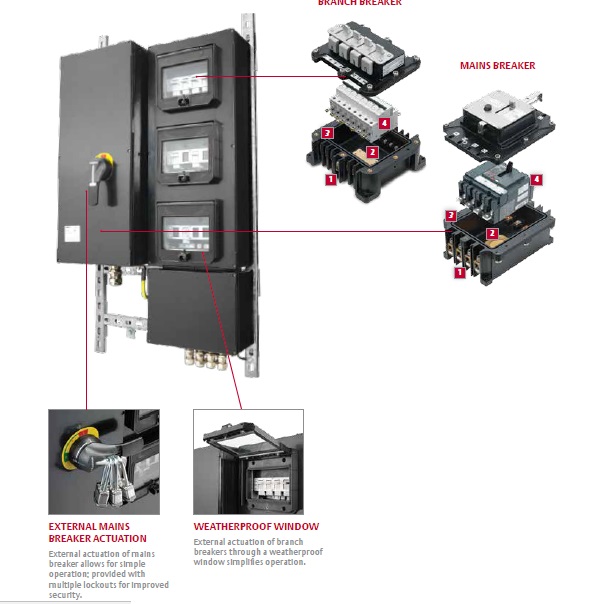
Main breaker (MCCB) provides short circuit and overload protection with external actuation for quick reset
• Weatherproof windows allow external operation of branch breakers, with no
need to open the enclosure
Lighter weight enclosure
• No need for special handling equipment
• No need to install additional seals
such as barrier glands, Teck connectors orconduit seals
PlexPower Features & Benefits
ATEX IECEx Panelboards
Appleton PlexPower offers the versatility to meet your hazardous area power distribution application requirements.
Standard Features
Branch breaker current ratings:
– 1-pole: 120, 240 Amps, 63 Amps maximum
– 2-, 3- and 4-pole: 240 and 415 Amps, 63 Amps maximum
Branch breakers are labeled with numbers:
– Odd numbers for line side
– Even numbers for load side
– Labeled with inside breaker details
Mains circuit breaker rating:
– 40 to 250 Amps, 2- , 3- or 4-pole
Mains and branch breaker combinations offer multiple cascading and short circuit ratings
Branch and mains breakers can be padlocked in either the On or Off position
Breaker modules supplied with captive bolts
Ground bar provided as standard
External ground lug provided as standard
240/415 Volts breaker module 8-pole terminal wire range: 2.5 mm2 through 10 mm2 (standard), 16 mm2 with special lug
Cable glands installed, add suffix – CG; (cable details to be provided by customer)
For Ex de IIC, add suffix – IIC
Optional frame (structure) for floor mounting, self standing with and without canopy; contact your local sales representative for additional information
Standard Materials
Enclosure: fiberglass reinforced polyester (FRP) or 304 stainless steel
Hardware: stainless steel
Bus bar: hard drawn copper
Chassis: hot dip galvanized for wall mounting
This unique flameproof design offers many advantages. For example, the Appleton PlexPower uses standard circuit breakers which are less expensive than sealed breakers and are easier to source and stock. The lightweight, corrosion-resistant polyester enclosure is easy to mount, and the door can be opened without needing to remove multiple bolts and without compromising the flameproof integrity of individual breaker housings.
Hazardous Area Industries & Applications
ATEX IECEx Panelboards are specified extensively in the following industry sectors:
Chemical Plants
Process Facilities
Petroleum Plants
Refineries
Flexible Installation
Appleton PlexPower is engineered to solve operational problems, easily adapting to your installation needs while providing the flexibility you require to reconfigure electrical power circuits and increase capacity at any time.
Appleton PlexPower distribution boards are also designed to fit a user’s unique power requirements and installation footprint. The modular design allows multiple distribution panel boards to be coupled together horizontally or vertically, offering practically unlimited circuit configurations while adapting to the available space.
A hot-dip galvanized steel wall mounting frame is included with each distribution board, and an optional self-standing frame is available for floor mounting, with or without a canopy, making the Appleton PlexPower distribution board flexible to any installation requirements.
A 50 kA copper busbar simplifies wiring while providing robust, reliable connections in a compact space. Factory installed Increased Safety line and load terminations are sized to accommodate branch breakers up to 32 amps, so facilities can easily upgrade ampacity in the future without rewiring the distribution board. Optional removable gland plates can be punched or drilled in the field to accommodate cable or conduit entries.
Operation & Maintenance Of The PlexPower
RUGGED CABLE TERMINATION – Each circuit breaker housing connects to the panelboard through Increased Safety line and load terminations for unyielding performance through years of heavy vibrations and shocks
VENTING PLATE – Unique design of breaker housing allows safe heat dissipation, enabling breakers to maintain their rated amperage while eliminating nuisance tripping
FLAMEPROOF ENCLOSURE HOUSING – Labyrinth joint construction maintains hazardous location rating while allowing easy dissassembly for servicing breakers
FIELD REPLACEABLE BREAKER – Standard, off-the-shelf circuit breakers are easy to obtain and reduce inventory costs and downtime.
Operating the distribution board is simple, with external actuation of the main breaker, as well as branch breakers through a weatherproof window. Breakers can be locked in the On or Off position, with the ability to use multiple lockouts on the main breaker for extra security. Plus, PlexPower is the only ATEX, IECEx certified distribution board that allows user’s to reconfigure or replace breakers in the field anytime, with no specialized components required.
PlexPower distribution boards are available in six standard configurations, fulfilling a majority of hazardous area field requirements. Panelboards can also be coupled together to create over 300 configurations, as well as custom configurations to suit any specific requirements.
Hazardous Area Certifications
ATEX/IECEx:
— Zone 1 and 2 – 21 and 22 Hazardous Areas
— II2GD
— EPL Gb Db
— Ex db eb IIB+H2
— Ex tb IIIC
— IP66/IK10
ATEX/IECEx — Optional:
— Zone 1 and 2 – 21 and 22 Hazardous Areas
— II2GD
— EPL Gb Db
— Ex db eb IIC
— Ex tb IIIC
— IP66/IK10
Ambient Temperature Ratings:
— Standard model:
–25°C to +55°C (–13°F to +131°F)
— Standard model without switching:
–40°C to +55°C (–40°F to +131°F)
About Emerson’s brand Appleton
Since 1903, the Appleton brand of Emerson has been the hallmark for electrical products designed to protect people and equipment while delivering reliable power. They supply the widest range of lighting fixtures, electrical fittings, plugs and receptacles, control stations, distribution panels and more. All are manufactured with the highest quality materials and finishes.
With the addition of ATX hazardous area product lines and ongoing new product introductions, Emerson offers Appleton products with certified protection for any environment, from ordinary commercial settings to hazardous locations (NEC, CEC, IEC, ATEX, and more) and the harshest industrial conditions – onshore or offshore, in any region of the world.
Thorne & Derrick are leaders in the development and distribution of Product Innovations that deliver significant improvements to clients plant, people and operational safety in the explosive atmosphere industries.
Your proactive problem solvers experienced in succession planning for the replacement of obsolete, non-conformant and legacy equipment in hazardous areas.
Your first-choice provider of innovative and competitive solutions to ensure ATEX & IECEx Compliance for Hazardous Area Electrical, HVAC & Process Instrumentation Equipmentto UK and international projects.
The formal approval of electrical equipment for use in Canada was introduced in the Canadian Electrical Code, first published in 1927. While there have been many changes to the code and related regulations since then, Canadian-made electrical products continue to require the approval of a certifying body (e.g. CSA Group, Underwriters Laboratories of Canada Inc., QPS) to assure their safety.
Certification by an impartial third-party or certification agency is an attestation that minimum relevant safety and performance standards have been met.
The certification of electrical products being designed and manufactured for use in hazardous locations and explosive atmospheres (Ex equipment) is especially stringent because of the associated risk of explosion should those products fail. Such a catastrophic event could result in loss of life and the destruction of property, not to mention damaging the reputations of the designer, manufacturer, installer—even the certifying agency.
“Certification by an impartial third-party or certification agency is an attestation that minimum relevant safety and performance standards have been met.”
The requirements for hazloc certification have also become more complex since their introduction. Given today’s global marketplace, the chances are high that a new product must also be approved by authorities in other jurisdictions.
Manufacturers of products intended for use outside their country of origin face a few daunting challenges, which can include dealing with foreign engineering firms and unfamiliar equipment distributors, gaining the approval of unfamiliar certifying agencies, meeting additional regulations, and even overcoming language barriers.
No matter how complex, the certification process cannot be avoided, and is a requirement for manufacturers aspiring to have their electrical products Approved for Use. Certification translates into consumer confidence in both the manufacturer and its products. It enables a product’s end user to procure the correct equipment for a specific application.
Certification, and its enforcement by the appropriate authority having jurisdiction, gives manufacturers comfort in knowing their products continue to comply with relevant safety standards—from design and installation, to use in the field.
Certification gives the AHJ the right to inspect and enforce the requirements of the applicable codes, regulations and standards. Liability is no longer solely borne by the manufacturer.
“No matter how complex, the certification process cannot be avoided, and is a requirement for manufacturers aspiring to have their electrical products Approved for Use.”
So if certification is such an integral part of getting a product to market, why do so many manufacturers spend more time and pay more money than necessary for this process?
Really know your product
In my experience, manufacturers aren’t always as prepared as they should be for each stage of the application process. An efficient certification process can take between two to four months, while an ill-prepared or unprepared application can easily extend the process to a whole year, with double the cost.
To begin with, an application for certification requires an understanding of where the product will be sold, installed, and used.
Knowing where the equipment is intended to be sold (which country/ies) helps identify applicable certification requirements and standards, which vary from one jurisdiction to another. The certification process for electrical products designed for use in hazardous locations in North America, for example, is different than the requirements for international (IECEx) and European certification (ATEX).
In some cases, manufacturers wish to secure all three marks and certifications so they can sell their product anywhere in the world. Naturally, this adds cost and possibly time to the certification process—especially if the manufacturers are unfamiliar with and/or unprepared to meet each of these requirements.
The manufacturer needs to know which directives, regulations/Code of Practice apply in each jurisdiction where the product will be purchased, installed and used, in addition to the standards for that specific product. They also need to anticipate the impact of those standards with regard to:
product design,
relevant technical guidelines,
appropriate protection techniques for installation,
required hazardous location markings, and
expectations at each phase of the certification application, including testing and sampling
Any time spent ensuring a product meets standards and technical guidelines is time wasted if the correct standard/guideline was not identified and referenced at the outset. The standards themselves are complex and may require interpretation. The language in standards include statements such as “applies only to” or “except as permitted by Subrule[…]” or “unless otherwise specified”. Rules are typically numbered (e.g. Rule 10-212[2] or Article 3.6.2.8) and often refer to Subrules, Notes and Appendices that may also apply.
Manufacturers do not always speak the language found in these documents.
“An efficient certification process can take between two to four months, while an ill-prepared or unprepared application can easily extend the process to a whole year, with double the cost.”
Forewarned is forearmed
The certifying agency controls the process: the manufacturer submits documents and waits for a response. Manufacturers begin the process by initiating a Request for Quotation from the certifying agency. At this stage, their proposal documents need only contain enough information to obtain an accurate quote quickly.
However, when critical information is missing, or the product is described insufficiently, the certifying body will need more time to obtain the required details before providing a quote. This adds time to the process.
The initial request should include a general description of the product (main and safety parts), electrical ratings, hazardous location markings, list of applicable standards, type(s) of certification requested, and protection techniques. In some cases, more than one method of protection is needed.
Each protection technique needs to be separately designed by the manufacturer, and individually evaluated and tested by the certifying agency.
Upon receipt of the quote, the manufacturer will be able to anticipate subsequent requirements. This information is spelled out in checklists that certifying agencies use to better to understand a product, thereby more quickly completing their assessment and evaluation to determine compliance.
It is in the manufacturer’s best interest to access, use and submit the checklist(s) as a self-assessment. Those who are prepared for this stage will accelerate their process.
The scheduled drawings should be separated from manufacturing drawings, and must contain information critical to the product’s compliance with applicable hazardous location standard(s). This separation will be helpful when internal documentation and non-safety details need to be updated (such updates can then proceed without engaging the certifying agency).
As a general principle, it’s important to anticipate what will be involved in maintaining hazloc product certification while preparing for its certification.
Manufacturers also need to anticipate the certifying body’s requirements for testing (e.g. preparing the correct number of samples, in the correct configuration). Manufacturers can begin preparing them right away so that, when samples are requested, they can be provided immediately.
Failure to consider and anticipate the certifying agency’s requirements may lead to redesigning the product, repeating certain steps, redoing documentation, creating new drawings—all of which add time and cost unnecessarily to the process.
For example, let’s take the certification process for a hazloc LED fixture, Zone 1 application. The certification process should take 3 months to complete. However, if the manufacturer is not prepared to design the LED arrays, driver and internal PCB components based on requirements in the standards, the process can easily take up to 6 or 8 months!
He who hesitates… adds cost
As a manufacturer, it is in your best interest to move your products quickly through the design, testing, approval, and production stages into the marketplace to keep pace with rapidly changing technology. The certification process takes time: it involves assessing the required technical documentation, testing the product against the relevant standards, and ensuring compliance with the applicable legal framework, and all the certification rules and procedures.
It is wiser to be well-prepared for success than to receive notice that a certification application has failed. Know your plans for your product in advance; know the applicable standards and technical guidelines; know which documents you will be expected to provide to the certifying agency; anticipate the need to provide samples. Delays are never pleasant—especially ones that could have been avoided.
Director & Consulting Engineer at Hazcon Inc.; Hazardous Locations Consulting Services; IECEx, ATEX, CEC & NEC
Specializing in the design, safety and approval of electrical equipment for hazardous locations.
Mr. Nejad has over 15 years of experience as an Electrical Engineer and is a sought after professional in the hzardous area and explosion protection industry. He is fully-qualified at the advanced level of all hazardous locations protection techniques including Intrinsic Safety & Non-incendive, Explosion Proof & Flame proof, Increased Safety, Non-arcing, Purging and Pressurization, Encapsulation, Optical Radiation, and Dust-tight enclosures. Mr. Nejad’s tenure in the industry includes six years at the CSA certification agency, working closely with manufacturers (Emerson, GE, ABB, Siemens, Endress-Houser, VEGA etc.) as a technical and certification engineer for Hazardous locations equipment.
EXPERTS IN EQUIPMENT FOR EXPLOSIVE ATMOSPHERES
leaders in ATEX Innovation To The Hazardous Area Industries
Thorne & Derrick are leaders in the development and distribution of Product Innovations that deliver significant improvements to clients plant, people and operational safety in the explosive atmosphere industries.
Your proactive problem solvers experienced in succession planning for the replacement of obsolete, non-conformant and legacy equipment in hazardous areas.
Your first-choice provider of innovative and competitive solutions to ensure ATEX & IECEx Compliance for Hazardous Area Electrical, HVAC & Process Instrumentation Equipmentto UK and international projects.
By: Brian Duffy (General Manager - ATEC Group) & Tony Scott (Global Technical Solutions Manager - Eutex Interntional)
USA, Gulf of Mexico (GoM), April 20, 2010: An explosion and fire occurred on the Transocean Deepwater Horizon semi-submersible MODU (Mobile Offshore Drilling Unit) which resulted in the deaths of 11 workers and caused a massive oil spill into the Gulf of Mexico.
Numerous investigations identified the cause of the accident as a Blow Out Preventer failure. However, the explosion was caused by an unknown hot surface or spark.
Mexico , GoM, April 5th 2015: another explosion and subsequent fire that broke out in the dehydration and pumping area of the Abkatun A-Permanent, an oil-processing platform, causing four deaths and 45 injuries.
Hazardous Area Standards & Inspections
Both of these catastrophic, fatal explosions in the GoM underscore the dangerous conditions that oil workers around the world are compelled to work under. The need for critical maintenance, especially in the Zoned or Divisional areas, and regular and thorough Ex inspections is paramount.
In the US and the GoM, NEC/API (National Electrical Code/ American Petroleum Institute) 500 and 505 are used as standards for hazardous areas. Drilling companies may also follow IEC (International Electrotechnical Commission) standards, especially on MODU’s (Mobile Offshore Drilling Units) and Drillships, that are capable of being reassigned globally.
The IEC 60079 series is the universally accepted base electrical standard and individual member nations enact their own legislation to adopt the standards and may have minor variations.
The laws of physics and chemistry are the same in all countries and there are many similarities between the IEC and NEC concepts and practices with both having long and distinguished usage and backgrounds. There are however some significant Installation, Maintenance and Inspection differences between these standards.
Companies following NEC 500 tend to gravitate towards Explosionproof boxes for many applications which are large, heavy, expensive and difficult to install and maintain, where as organizations that subscribe to NEC 505 or IEC 60079 may opt for Increased Safety options, like Ex e equipment where the installation and maintenance routines are more practicable.
The comprehensive curriculum delivered at the ATEC facility in Houston, Texas, provides an excellent opportunity for key personnel to learn about, understand and implement these systems.
Hazardous Area inspections are mandatory and each MODU must have a Hazardous Area Register. ATEC inspectors are highly trained personnel who have many years of field experience installing, maintaining and crucially inspecting Ex equipment. They are trained to take an in-depth analysis of each piece of item , no matter which method of Ex protection has been employed, for any recognized Ex standard adopted at a client’s facility.
Fixed platforms in the GoM have even been known to mix NEC and IEC standards on the same asset which can cause confusion, particularly for the MODU maintenance personnel. ATEC inspectors assess each piece of equipment, recording all of the equipment data on a Hazardous Area Register, collating Certificates showing that the equipment is suitable for the area where it has been installed, complete approved checksheets for each item and show evidence that the inspection team are fully qualified and have their own accredited personal and company certification.
Critical to this activity is that all Ex equipment deficiencies are recorded and an action list to rectify the faults is created. New and existing MODU’s may have a register but in many cases this is actually just a list of equipment in Hazardous Areas and no item has ever been properly checked to ensure they are safe and compliant for the area.
This is a dangerous gap in the industry where companies believe that a stamp on their register/list from the governing body ensures safety, but in fact it allows for potentially explosive situations to exist until an actual inspection has been completed.
In some cases ATEC have noted an average of 40% of equipment compliance failure on newly built MODU’s, albeit most of the issues were minor, however it still remains that the company was not aware of this until they took the action to complete a full Ex inspection.
The deficiency report submitted for a particular problem is accompanied (whenever possible) with a photograph of the deficiency. Deficiencies which are not deemed as a cause for concern, (e.g. low level rust issues) are noted as ‘minor deficiencies.’
Minor deficiencies are not always identified in the written report but are nevertheless reported to the client, usually at a daily meeting. Ideally, a company electrician accompanies the ATEC inspector and is therefore able to close out easily fixed items as the Ex inspection progresses.
The Hazardous Area typically referred to as Zoned areas, where the Ex certified equipment should be located, normally account for approximately 35% of the MODU. Often, the weather conditions in the GoM can be very challenging: the heat can be overbearing for both staff and the Ex equipment; rain can be torrential and hurricanes are an annual occurrence.
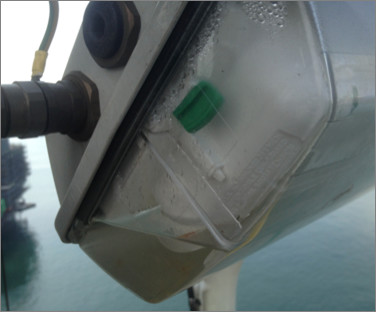
When ATEC inspectors came to inspect the lighting fixture shown below, it was full of water, and this was throughout the vessel affecting over 200 items.
Water inside light fixture
Ex Competency – CompEx
Competency is a key word that describes qualified personnel who have years of experience and have been trained and assessed. Currently the only internationally recognised scheme that does this is CompEx. While CompEx certificates are mandatory in other sectors in the world it is yet to mandated in the USA, however more companies are recognizing the need to have their personnel assessed.
ATEC are the largest supporter of CompEx globally through their network of Training Academies in Houston, Singapore and Dubai and are the only organization in that is qualified to deliver the CompEx NEC 505 course, which focuses on Installation and Maintenance practices as set out by API recomended practices.
CompEx courses have grown in popularity in the US, due mainly to the level of complexity and thoroughness of the program and it has also been acknowledged by offshore operators that it is extremely relevant and applicable to the workplace.
The CompEx NEC505 course is designed to provide personnel with skills to enhance downstream safety.
CompEx NEC505 Lab – ATEC Houston
EXPERTS IN EQUIPMENT FOR EXPLOSIVE ATMOSPHERES
leaders in ATEX Innovation To The Hazardous Area Industries
Thorne & Derrick are leaders in the development and distribution of Product Innovations that deliver significant improvements to clients plant, people and operational safety in the explosive atmosphere industries.
Your proactive problem solvers experienced in succession planning for the replacement of obsolete, non-conformant and legacy equipment in hazardous areas.
Your first-choice provider of innovative and competitive solutions to ensure ATEX & IECEx Compliance for Hazardous Area Electrical, HVAC & Process Instrumentation Equipmentto UK and international projects.
Every mechanically activated pressure instrument relies on an elastic element to bend in response to a pressurized medium.
Most often, the element is a metallic “C” shaped or coiled Bourdon tube that attempts to straighten under pressure. Specifiers need to be especially careful that the chemical composition of the excitation medium does not react unfavorably with the instrument’s wetted materials. Measuring the pressure of compressed air or water seldom results in an incompatibility.
However, when oil and gas first come out of the ground, the story can be quite different.
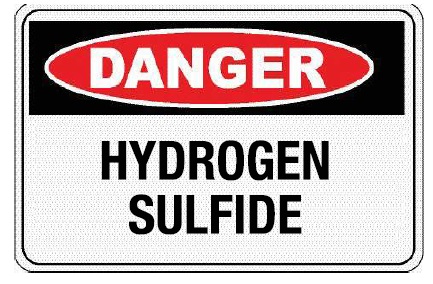
Both hydrogen sulfide (H2 S) and carbon dioxide (CO2, when combined with water forms carbonic acid) can exist as unwanted components.
Raw petroleum fluids infused with hydrogen sulfide are known as “sour gas” or “sour crude”, and can attack containment materials, causing stress corrosion cracking. This can lead to a breach in the vessel and allow gas or oil to escape into the surrounding environment.
The consequences can be disastrous.
To measure harsh pressure media, it is preferable to use an instrument or gauge with compatible wetted parts. However, this choice is limited by the ability of compatible materials to perform adequately as a Bourdon tube. The alternative is to isolate the pressure instrument from corrosive media by installing a diaphragm seal in between.
Although offered in a variety of corrosion-resistant materials, not all will be impervious to every combination of application variables. Given the consequences of component failures, the selection of appropriate materials and best practices is paramount.
So what are the correct materials? Who will make the determination?
How It Started
Founded in 1943 by corrosion engineers working in the pipeline industry, the National Association of Corrosion Engineers set out “To protect people, assets, and the environment from corrosion”.
By the 1960s, they had begun to develop control standards that would establish appropriate materials for a wide variety of corrosive applications, including oil and gas production and refinery facilities.
In 1993, the organization was renamed “NACE® International” after having grown in scope, importance and geography.
Gauges & Pressure Switches | IECEx & ATEX Certified for Explosive Atmospheres Explosion Proof | UL CSA CE CRN SIL 3 Capable FM ATEX IECEx | View Pressure Gauges
WHAT DOES NACE SPECIFY?
NACE offers over 150 standards that address metal corrosion in a vast number of applications ranging from exposed metal structures to corrosion resistant coatings on railroad cars.
For purposes of this overview, the discussion will be limited to the NACE standards that specifically address corrosion resulting from exposure to sour gas or sour crude.
Two primary NACE standards are MR0103 that applies to refineries, and MR0175 (also adopted by ISO as 15156) which is directed to oil and gas production. Both apply to metals only, and do not address plastics or elastomers.
Using materials selected in accordance with these NACE standards will reduce the likelihood of failure due to stress corrosion cracking in sour environments. MR0175 / ISO 15156 – 2009: “Materials for Use in H2S Containing Environments in Oil and Gas Production”. This specification has been adopted as a worldwide standard by NACE, ANSI, and ISO. It is divided into three sections, separately addressing general requirements, ferrous alloys, and corrosion resistant alloys as used
in sour oil and gas field applications.
MR0103 – 2010:“Materials Resistant to Sulfide Corrosion Cracking in Corrosive Petroleum Refining Environments”. This document addresses the selection of materials in oil and gas refineries. Refinery environments are typically less severe than production environments, due to lower chloride concentrations and higher pH levels. As a result, MR0103 tends to be less stringent than MR0175 / ISO15156.
These NACE specifications only consider stress corrosion cracking due to exposure to H2S and other corrosives and do not address general or localized corrosion.
Additionally, the standards restrict the usage of many alloys by limiting the temperature, pH, and/or composition to which these alloys may be exposed.
It is the responsibility of the specifier to select an appropriate instrument or component with the correct features for their particular set of variables to ensure NACE compliance.
The Variables Temperature
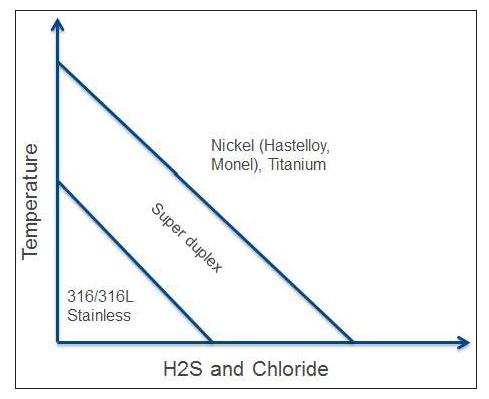
The temperature of the process medium can have a significant effect on the ability of any material to resist corrosion. Stainless steels are especially sensitive to temperature, especially when chlorides are present.
Chemistry
The presence of hydrogen sulfide, chlorides (salts, often from subterranean salt deposits) and carbon dioxide can all contribute to corrosion. The quantities and combinations of these compounds will also be a factor in determining the adequacy of specific metals.
pH
Whether the pressure media are acid or base is another consideration. Low pH (acids) can increase corrosion rates and cause hydrogen liberation that can result in embrittlement of the metal.
Metallurgical Condition
Hardened metals are more susceptible to stress fractures. Annealed metals are softer and less likely to crack, but have a lower tensile strength.
ASSURING THAT A COMPONENT IS COMPLIANT
To ensure that a component meets the NACE standards, determinations can be based on:
Meeting the Conditions Specified in the Standard
By following the NACE recommendations, all requirements will be met. When in doubt, use materials that are compliant with the worse-case application.
Laboratory Testing
Laboratory tests that recreate applicable test variables defined in the standard will ensure that the tested materials and components will be compatible. Certified testing labs with experience in this type of testing will establish and execute an appropriate test protocol.
Field Experience
Components that have been in service and have not succumbed to corrosion over an appropriate period of time may be documented and considered a proof test for the specific application.
SO WHAT MATERIALS CAN BE USED?
Depending upon the severity of the corrosive conditions, different materials may be safely employed. In these cases, metal choices are a function of cost. While Hastelloy® C22/C276 or titanium may be the best choice to ensure unquestionable compatibility, the price for these specialized metals would add unnecessary cost to facilities handling less harsh media.
The list and chart below provide a simplified reference for choices of metals tested and used by Ashcroft as elastic elements and other wetted parts, (in compliance with NACE MR0175):
Favorable Conditions
(Low concentrations of hydrogen sulfide and chlorides)
Stainless Steels (316 is most commonly used)
Alloy 20
Moderate Conditions
(Where higher temperatures can begin to hasten corrosion, depending on the chemistry of the media)
Super Duplex Steels
Alloy 400 (Monel®)
Extreme Conditions
(High concentrations of hydrogen sulfide, chlorides and acids and high temperatures pose a risk of stress cracking due to corrosion. Titanium and Nickel, Chromium and Molybdenum alloys are best, but most expensive)
Hastelloy® C22/C276
Alloy 400 (Monel®)
Titanium
NACE specifications are detailed and can be complex when addressing combinations of variables. Regardless, they are important and necessary requirements for the safe measurement and control of raw, corrosive gas and oil that have been extracted from the ground or seabed.
To learn more about NACE specifications, visit www.nace.org.
This article was written by John Carissimi (Media Manager) and Jeremy Payne (Materials and Testing, Engineering Manager) of Ashcroft Inc. With over 160 years of experience, Ashcroft manufactures pressure and temperature instrumentation, including media isolation devices, for a wide variety of industries throughout the world, including oil and gas processes.
These pages have not been reviewed/approved by NACE® International and are offered as an introductory reference only. Specifiers and users should refer to the published NACE specifications to establish the correct materials for their applications.
Process Instrumentation
Explosive Atmosphere Experts
Thorne & Derrick are Specialist Distributors of Hazardous Area Electrical, HVAC & Process Instrumentation Equipmentwith IECEx & ATEX Certifications to the onshore and offshore oil, gas, petrochemicals and process industries.
We supply major UK and international infrastructure projects and also MRO (Maintenance, Repair, Operations) requirements for both planned and unplanned plant shutdowns – we react with a rapid response to customer demand to ensure downtime is minimised and reliable Power, Light & Heat is restored or provided.
We distribute Innovative products to manage the planned replacement of legacy equipment conformant with international classifications including ATEX and IECEx.
Process Measurement Instruments – Flow, Temperature, Level & Pressure Measurement
KROHNE Flow Meters
Process Instrumentation for Industrial, Hazardous Area & Explosive Atmopheres
Ultrasonic Flow Measurement
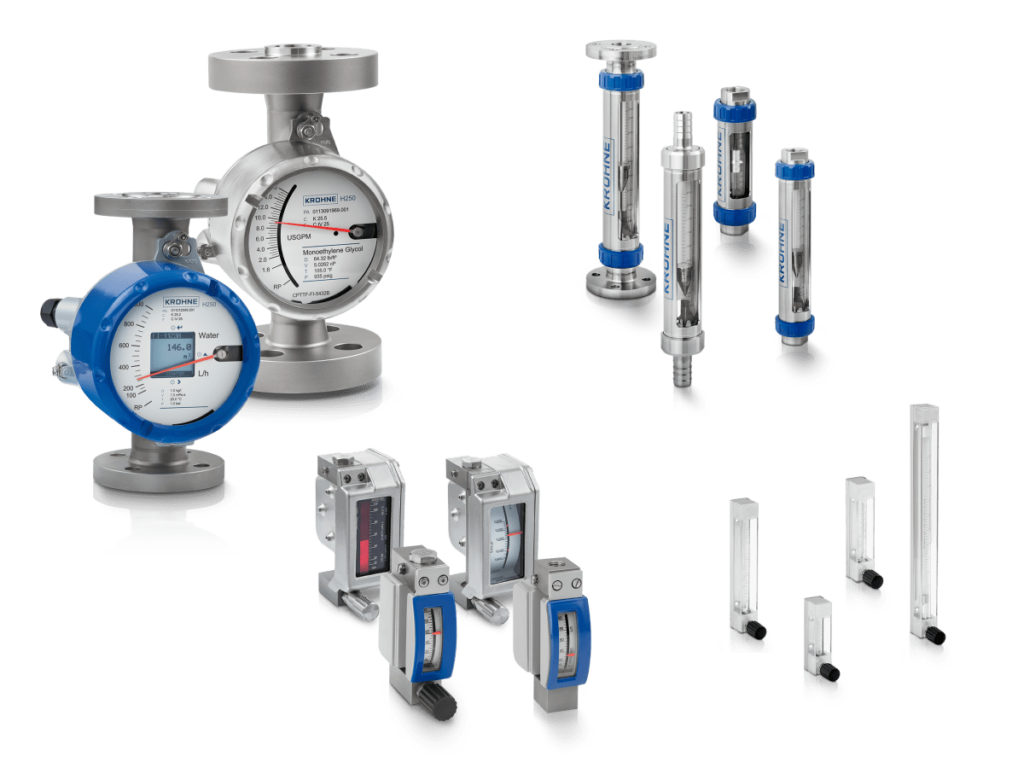
KROHNE flowmeters and measurement instruments provide accurate and reliable measurement of industrial liquids, gases and other media (including emulsions, corrosive liquids and gases) with a range of low/high flow rates.
KROHNE is a world-leading manufacturer and supplier of solutions in industrial and explosive atmosphere process instrumentation – with over 30 worldwide approvals for hazardous area gas and dust Zones including ATEX, IECEx, usFMc, NEPSI, INMETRO, KGS, GOST-R and PESO/CCOE. The range of flowmeters manufactured by KROHNE incorporates multiple explosion proof and protection concepts – including IS (Intrinsically Safe) and Ex d (Flameproof) for flow measurement and metering in the hazardous area industries.
Flowmeters by KROHNE | the world-leading manufacturer and supplier of solutions in industrial and hazardous area process instrumentation: flow meters, level meters, temperature meters and pressure measurement.
Background
For a natural gas transportation project in Queensland, Australia, a leading international supplier of infrastructure solutions manufactures compressors for the compressor stations.
The compressors are designed to concentrate natural gas under pressure so that it can be transported. The manufacturer produces turn-key systems for this purpose, fits them with gas seals and equips the compressors with seal gas systems to seal the shafts.
Flow Measurement requirements
The function of the mechanical gas seals is to prevent the flammable natural gas from leaking out and to protect the compressors, which operate under significant pressures and high temperatures. Due to axial movement, the seals are subject to a high degree of wear and can fail, so they are equipped with seal gas systems.
These systems flush the seals with nitrogen to generate counterpressure. The objective of the measurement is to determine the amount of nitrogen used (3.0 to 30 kg / 6,6 to 66 lbs per hour) in order to ensure a continuous gas flow over the seals and monitor the amount of leakage.
In order to supply the compressors, the infrastructure specialist needs reliable flow measurement units to assemble such a seal gas system. Because ATEX approvals are no longer accepted in Australia, it was an absolute requirement that the devices be certified in accordance with IECEx-i. Moreover, it was required that all of the information can be transferred to a DCS via FOUNDATION™ fieldbus communication.
KROHNE Solution
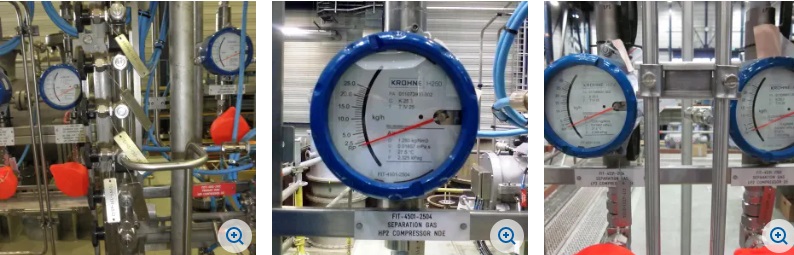
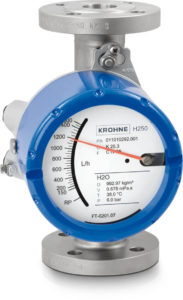
KROHNE manufactured over 300 units of the H250 M40 variable area flowmeter with a stainless steel cone, mechanical local display and a FOUNDATION™ fieldbus interface for the compressor manufacturer. The instruments have the required, intrinsically safe design in accordance with IECEx-i and the FISCO model. They were supplied with NPT process connection.
The customer performed the final assembly of the metering skids. The units were mounted onto a seal gas panel on a large frame next to the compressor. The H250 M40 devices measure the flow rate of the seal gas. The measuring results for the nitrogen can be transferred via 2-wire bus line in accordance with the FOUNDATION™ fieldbus standard.
With the H250 M40 devices, KROHNE met the customer’s extensive operational requirements, which included providing evidence of pressure tests and carrying out radiographic tests, among others, because many of the devices were supplied in the high pressure version.
KROHNE Flowmeters
Customer benefits
By equipping the seal gas panels with the H250 M40, the compressor specialist met a significant requirement for supplying his customer. This continuous nitrogen flow measurement enables leaks and defective seals to be recognized quickly. In this way, damage to the compressors can be prevented as early as possible.
Because the measuring instruments were supplied with screw process connections, the assembly time was shortened significantly and allowed a flexible, space-saving installation of the devices, in contrast to flange connections. The FOUNDATION™ fieldbus version design enabled direct integration into the end customer’s communication network without additional power supply or converters.
Equipping seal gas panels for natural gas compressors
Variable area flow measurement in accordance with the high safety requirements of IECEx-i
Metering devices connected to a distributed control system (DCS) via FOUNDATION™ fieldbus
KROHNE Flowmeters Used
H250 M40 FlowMeter
Hazardous Area Process Instrumentation, Meters & Measurement – KROHNE H250 M40
The KROHNE H250 M40 is the standard variable area (VA) flowmeter for the process and OEM industry. The VA meter combines mechanical flow measurement of liquids or gases with state-of-the-art communication capabilities. The device is modularly extendable.
Additional electronic modules can be added or replaced at any time without process interruption. In this way, its functionality adapts to new requirements – from analogue flow measurement without auxiliary power to digital integration into a fieldbus system.
Simple, low-cost installation: Able to measure and display without auxiliary power supply
Unique modularity and serviceability: Limit switches, 2-wire 4…20mA, totalizer with LCD and pulse output, fieldbus interfaces
Device and application diagnostics, e.g. float blockade detection
Universal ex-concept: Explosion proof and intrinsically safe
Various stainless steel and alloy sensor materials
Optional stainless steel housing for corrosive atmospheres
Ingress protection IP66 and IP68 / NEMA4X and NEMA6, IP69K optional
Full scale value for liquids: 10…120,000 l/h / 5…32,000 GPH
Full scale value for gases: 0.7…2800 m3/h / 25…100,000 SCFH
Turndown ratio 10:1 (optional 100:1)
Accuracy: ±1.6% (acc. to VDI/VDE 3513, sheet 2)
Suitable for use in Safety Instrumented Systems (SIL 2)
Optional hygienic design for use in the food and pharmaceutical industry
Process Instrumentation
Explosive Atmosphere Experts
Thorne & Derrick are Specialist Distributors of Hazardous Area Electrical, HVAC & Process Instrumentation Equipmentwith IECEx & ATEX Certifications to the onshore and offshore oil, gas, petrochemicals and process industries.
We supply major UK and international infrastructure projects and also MRO (Maintenance, Repair, Operations) requirements for both planned and unplanned plant shutdowns – we react with a rapid response to customer demand to ensure downtime is minimised and reliable Power, Light & Heat is restored or provided.
We distribute Innovative products to manage the planned replacement of legacy equipment conformant with international classifications including ATEX and IECEx.
Press Release Date: 02.04.2020 uploaded by Chris Dodds (T&D Sales + Marketing Manager) World’s First Fully Certified ATEX Doors Thorne & Derrick International, the Experts in Equipment for Explosive Atmospheres, today announce the signing of a Commercial Distribution Agreement...
Press Release Date: 04.07.2019 uploaded by Chris Dodds (T&D Sales + Marketing Manager) Category: Stockist Distributor Agreement Announcement Thorne & Derrick International announce that they have signed a Preferred Distributor Agreement with Raytec, the world leading manufacturer of LED...