Euramco Group and Wolf Safety Announce Strategic Alliance to Accelerate Partner Success
Ramfan
Portable Fans & Temporary Ventilation for Hazardous Areas with ATEX Certification
Ramfan | UK Distributor | Wolf Safety Lamp Company
Written by Euramco Group
San Diego, CA — Euramco Group has appointed Wolf Safety Lamp Company (Wolf), the UK’s leading manufacturer of portable and temporary hazardous area lighting, as Exclusive Distributorof RAMFAM brand hazardous location portable ventilators throughout the United Kingdom.
Since 1912, Wolf Safety Lamp has been a pioneer and grown to become the pre-eminent manufacturer of hazardous area lighting. With such a storied history, well-known brand, a diverse product range, and deep experience in the market, Wolf is well positioned to actively sell and service RAMFAN™ brand hazardous area ventilator fans.
Ramfan is a world leading manufacturer of portable fans and ventilators for confined spaces and hazardous area zone locations where potentially explosive risks (flammable gas or combustible dusts) necessitate a compliant and certified ventilation fan in accordance with ATEX & IECEx.
Euramco customers will now have a strong, local UK partner for fast deliveries and top-quality service from the most knowledgeable team in the country.
“We have, for many years, had a strong presence in the North Sea Oil & Gas industry,” said Euramco Group VP Zach Allen, “but with our European headquarters in continental Europe, we lacked a strong local presence in the U.K. market, and we were largely unable to provide the level of service we feel our customers deserve. Our partnership with Wolf addresses these challenges, allowing us to focus on our next phase of growth and provides a solid channel for introducing next generation technologies that are in the pipeline.”
Alex Jackson, Managing Director of Wolf Safety, commented: “We are delighted with the new partnership between Wolf Safety and Euramco. As two of the major leading global brands in portable ATEX equipment, this new collaboration is a logical fit and allows Wolf to enhance its already extensive offering aimed at the oil, gas and petrochemical industries within the UK. We see a strong synergy between the two companies who both manufacture market leading, durable, robust products and our new enhanced product portfolio will offer the market a single source for the best hazardous area lighting and ventilation.”
About Euramco Group
Euramco Group is a leading manufacturer of portable ventilation solutions for the world’s toughest job sites, with a primary focus on rotating machinery, engineered for superior fluid dynamics, and developing innovative industry-specific drive and control solutions. Euramco Group sells to defense, firefighting, hazardous area, and commercial safety markets worldwide through five locations globally.
Wolf Safety is the world’s leading manufacturer of hazardous area portable & temporary lighting, offering the widest range of ATEX and IECEx certified explosion protected lighting and power distribution systems designed in the United Kingdom for safe use in potentially explosive atmospheres worldwide.
For more information, visit www.wolfsafety.com
Choose from a wide range of Ramfan Portable Ventilation Products such as industrial fans, blowers and ducts distributed in the UK by Wolf.
Tank Ventilation in Explosive Atmospheres
Special thanks to Tank Storage Association (TSA) for sharing the Editorial
Terry McDonald, Thorne & Derrick International, UK, and Scott Harding, Woodcock & Wilson, UK, outline the importance of using safe equipment for tank ventilation in explosive atmospheres.
There are many hazards associated with work activities carried out inside of storage tanks, such as flammable atmospheres, chemical exposure, toxic risk, and oxygen deficiency. These risks can and do cause serious injury or death.
This article will focus on tank ventilation and the associated risks of using ventilation fans in an explosive
atmosphere. It will specifically discuss electrical and non-electrical safety within explosive atmospheres. It is widely accepted that electrical knowledge and understanding of regulations throughout the industry is good, but non-electrical knowledge is poor and learning is a slow process.
This article serves to provide information relevant to electrical and non-electrical safety standards and regulations to anyone using portable ventilation fans in an explosive atmosphere.
When working inside tanks, an efficient ventilation system is critical. Safe working procedures dictate that a tank should be properly ventilated and/or forced ventilation should be used to ensure the tank is safe prior to man e try. There have been many accidents and fatalities caused by people entering tanks/confined spaces when it is not safe to do so. Breathing one or two breaths of air containing oxygen levels below 10% can cause immediate loss of consciousness.
The safe use of portable ventilation fans can be an area of particular confusion when they are being used in a
potentially explosive atmosphere. They are essentially a mechanical piece of equipment, which is electrically
powered. It is important to ask a number of questions, including the following:
Which standards should be considered?
Who is responsible for ensuring compliance?
Who is responsible for maintenance?
How often should the equipment be inspected?
Is a competent person required to install/use such equipment?
Who takes responsibility for ensuring any equipment is compliant with explosive atmosphere regulations?
In the Dangerous Substances and Explosive Atmospheres Regulations (DSEAR), an explosive atmosphere is defined as a mixture of dangerous substances with air, under atmospheric conditions, in the form of gases, vapours, mist or dust in which, after ignition has occurred, combustion spreads to the entire unburned mixture.1
In Europe, explosive atmospheres are regulated under the ATEX directive. ATEX 2014/34/EU is the latest standard
and was originally launched in 1996. It became mandatory in July 2003 within the EU. Its purpose is to protect
employees from explosion risk in areas with a potentially explosive atmosphere.
These directives place responsibility on the original equipment manufacturer (OEM) and the ultimate end user to ensure safe and proper use of any equipment which is to be used within a potentially explosive atmosphere. The ultimate end user is considered to be the duty holder/site owner on which the equipment will be used.
Explosive atmospheres are classified dependant on the likelihood of risk, for gases, vapours and mists, these are
defined as follows:
Zone 0 – a place in which an explosive atmosphere consisting of a mixture with air of dangerous substances in the form of gas, vapour or mist is present continuously or for long periods or frequently
Zone 1 – a place in which an explosive atmosphere consisting of a mixture with air of dangerous substances in the form of gas, vapour or mist is likely to occur in normal operation occasionally
Zone 2 – a place in which an explosive atmosphere consisting of a mixture with air of dangerous substances in the form of gas, vapour or mist is not likely to occur in normal operation but, if it does occur,
will persist for a short period only.2
Under the ATEX equipment directive, manufacturers of electrical equipment designed for use in Zone 1 hazardous
areas, must obtain third party certification from a notified body. This process involves stringent testing procedures
and technical review to ensure that the product is safe for use in an explosive atmosphere. Although not a legal
requirement, manufactures more often than not also obtain third party certification for Zone 2 electrical equipment.
However, under current ATEX regulations, manufactures of mechanical equipment can self-certify for both Zone 1
and Zone 2. To self-certify, an OEM has to lodge a technical file with a third party notified body. The notified body does not have to read the file and the file may never be looked at unless there is a subsequent problem/failure/accident with the piece of equipment.
There are many advocates of self-certification and there are occasions when there is no other option. Thorne
& Derrick International (T&D) would suggest that self-certification of any equipment should at least raise a doubt
in the mind of the ultimate end user. It is worth pointing out that any manufacturer of such equipment must take
their responsibility seriously and the majority do. But questions can be raised as to whether there is a conflict of
interest when a profit making, commercially driven organisation is permitted to self-certify its own equipment.
Without third party testing and certification, how can the end user ever be 100% satisfied? It is also worth
commenting that some manufactures knowledge and understanding of the regulations can be questionable.
While their electrical knowledge may be good, their mechanical knowledge may not. T&D has seen examples of
end users accepting a piece of equipment because the electrical motor is third party certified. A third party
certificate is issued, which the end user accepts, but the certificate only covers the motor not the product. Has
spark mitigation been considered? What about electrostatic discharge? Has the manufacturer considered this? Has the end user considered this?
Ventilation fans are also unique in that fans have their own specific standard ‘EN14986-2017 – Design of Fans
Working in Potentially Explosive Atmospheres’. There is no doubt that there will be people reading this article who are not familiar with the standard or know that it exists.
Before any piece of equipment is used in a hazardous area, it should be inspected by a competent person to ensure that it is fit for purpose and compliant with the full hazardous area classification (Zone, gas group, T-class, ambient temperature range). This normally involves a review of certification and the associated certificate of compliance.
But here lies the problem: this relies wholly on the knowledge of the person carrying out the inspection and places too much reliance on the certificate of conformity.
Does every inspector know that EN14986-2017 exists? When a portable ventilation fan is being inspected, is it
considered an electrical piece of equipment or a nonelectrical piece of equipment? What If EN14986 is not referenced on the certificate of compliance, how will the inspector ensure compliance?
It is often the case that inspectors are electrically biased and have excellent electrical knowledge and understanding of the electrical standards. Unfortunately their non-electrical knowledge may not be as good.
To further complicate matters and increase risk, portable ventilation fans are often hired for the duration of
a contract. The supply chain can involve OEM, distributor, reseller, hire company and contractor before the product is placed into use on site. This relies on the contractor’s knowledge and expertise, as well as that of the hire
company, to ensure the products they are bringing into their hire fleet are compliant.
Are such companies aware of difference between third party certification and self-certification? Allowing self-certification for mechanical equipment means there has to be too much trust placed on the supply chain and that each company carrying out their own due diligence at each stage is capable of doing so. This may not always be the case.
When it goes wrong
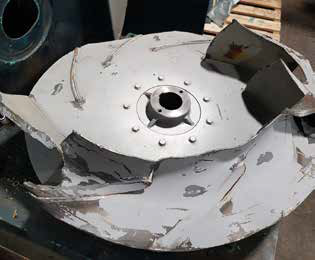
Figure 1 shows the catastrophic failure of an impeller on a fan which was in use within an explosive atmosphere. The manufacturer’s documentation issued with this fan read:
“Please note that under ATEX directive, it is the responsibility of the purchaser/installer to ensure compliance with ATEX directives and ensure safe operation of the unit. We are unable to accept liability for the design and specification of the product in its intended application.”
This statement puts the risk entirely with the end user and essentially negates the manufacturer from any responsibility.
Figure 1. Damage as a result of a 90 kW motor failing at 1450 rpm.
There are examples of fans that make no reference to the fan standard on their certificate of compliance, and it is
also possible that some ventilation fans may use fraudulent certificates. This is much more serious and obviously a
criminal offence. Again, it relies on the buyer of such equipment having the knowledge and expertise to question a certificates legitimacy.
IECEx vs ATEX
IECEx is an international certification scheme for electrical and non-electrical equipment. It is a voluntary scheme that provides an internationally accepted means of proving compliance with IEC standards.3
Self-certification under the scheme is strictly prohibited; manufacturers must be audited by an IECEx
notified body. The manufacturer’s quality procedures and facility are reviewed before a quality assurance report
(QAR) is issued. The equipment requiring certification is then tested/reviewed by the notified body against relevant international standards. An IECEx Certificate of Conformity is issued after successful assessment.
The IECEx scheme is arguably more transparent from an end users perspective. The certificate of conformity is
available to view on the IECEx website/database. The means the end user can quickly check and establish the
quality credentials of the OEM. It also means unscrupulous manufacturers cannot issue fraudulent certificates.
Within the EU, IECEx is a voluntary scheme rather than mandatory as with ATEX. As time moves on, more and more UK and EU specifications are requesting dual certification (ATEX & IECEx) for equipment.
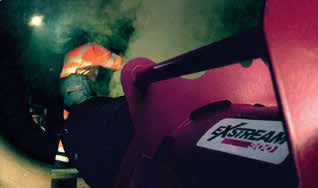
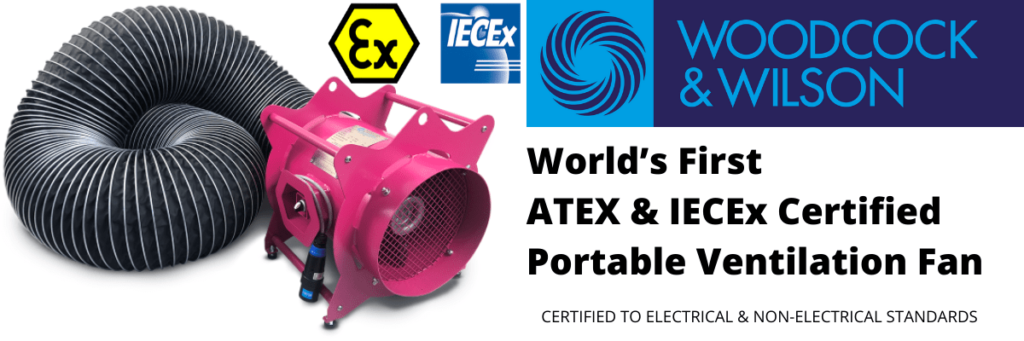
Figure 2. The world’s first ATEX and IECEx certified
Conclusion
Although this article focuses on ventilation fans, the same regulations and said drawbacks of these regulations apply
to any equipment that is to be used in an explosive atmosphere. T&D would urge all end users/dutyholders to carefully consider their full supply chain. They should also continue to improve their own knowledge and understanding of electrical and non-electrical standards.
References
1. ‘The Dangerous Substances and Explosive Atmospheres
Regulations’, Health and Safety Executive (HSE), (2002).
2. ‘Explosive Atmospheres – Classification of Hazardous Areas (Zoning) and Selection of Equipment’, Health and Safety Executive (HSE).
3. https://www.csagroupuk.org/services/ex-product-certificationapprovals/iecex/
About Tank Storage Association (TSA) TSA is an industry based organisation whose members are dedicated to the professional provision of third party bulk liquid storage in the UK. Products stored typically include crude oil, petroleum and chemicals as well as potable liquids, edible oils and fats.
Receipt and delivery of these products takes place by means of sea transport, inland barge, road, rail and cross country pipeline. Tank storage thus provides an essential interface between these various modes of transport.
The industry also provides additional services, such as heating, blending and transformation of these products so that the diverse requirements of customers can be effectively met in a safe and cost effective way.
Exstream | Worlds First Portable Ventilation Fan with ATEX & IECEx Certification
Experts In Equipment for Explosive Atmospheres with ATEX & IECEx Certification
LEADERS IN ATEX INNOVATION
T&D are your first-choice provider of innovative and competitive solutions to ensure ATEX & IECEx Compliance for Hazardous Area Electrical, HVAC & Process Instrumentation Equipment to your UK and international projects.
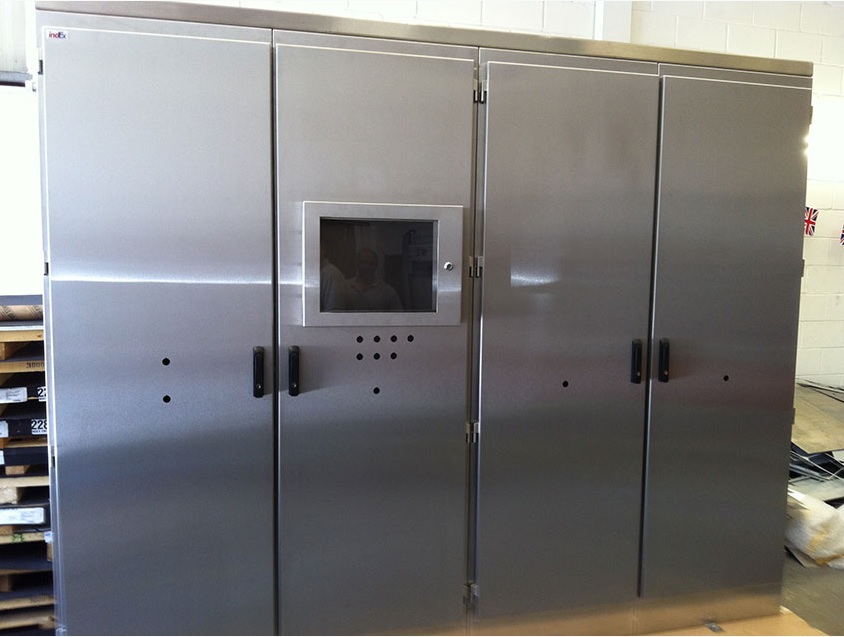
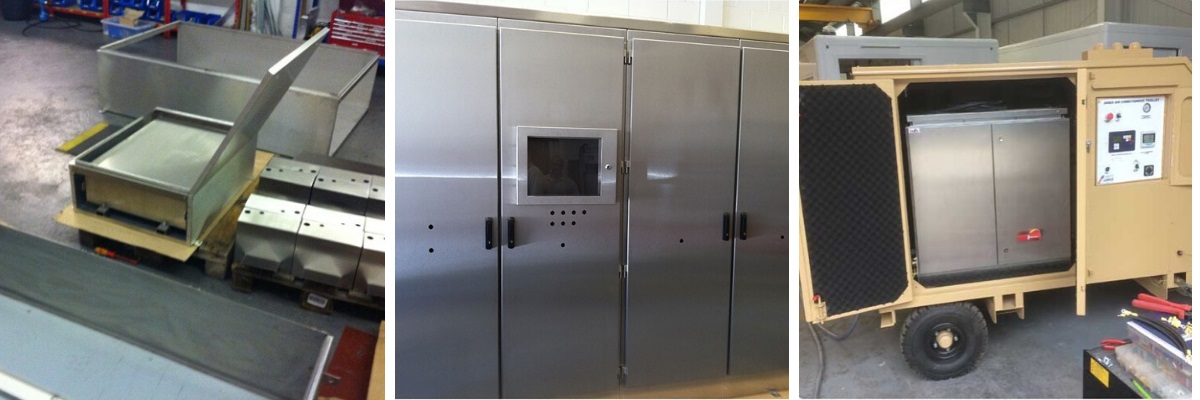
The client required a heavy duty construction ATEX enclosures made to ATEX standards but not certified. The construction was to house control and switch gear and include an HMI screen and had to fit a pre-determined mounting position at the rear of the compressor.
Solution – ATEX Cabinet Enclosures
Working closely with the component integrator, the ATEX cabinet enclosure was designed to the exact end user requirements. It was built in four sections to be joined together once on the compressor for ease of wiring, shipping and final installation.
As the material was of the highest grade 2mm thick, 316l stainless steel, the engineers were required to hand TIG weld all the seams thus ensuring all sides were upright and the tops and bases dead level.
The TIG welding method is a major feature of all ATEX enclosures offering speed & accuracy but with no weld spotting, burn or scorch marks inside or outside. We then use a TIG brush to passivate all welds which ensures optimum corrosion protection on the exterior but also the interior as well and this forms as part of our cleaning process for every ATEX enclosure.
ATEX Cabinet Enclosure with HMI Screen for use on Turbo Compressor
Thorne & Derrick International areSpecialist Distributors of Hazardous Area Electrical, Mechanical, Process & Instrumentation Equipment to the UK and global oil, gas, petrochem and hazardous area and explosive atmospheres industries.
Our extensive product range combined with the knowledge of our trained EX product specialists provides world-class customer service and support to the industry.
T&D consolidate your supply chain by providing single-source logistics delivered to any international location – supplying explosion proof Zone 1, Zone 21, Zone 2 and Zone 22 hazardous area equipment in compliance with ATEX & IECEx international classifications (Class/Division/Zone).
ELECTRICAL & PROCESS INSTRUMENTATION EQUIPMENT
FOR EXPLOSIVE ATMOSPHERES
Thorne & Derrick are Specialist Distributors of Hazardous Area & Explosion Proof Equipment with IECEx & ATEX Certifications suitable for Zone 1 and Zone 2 hazardous areas in the following onshore and offshore oil, gas, petrochemicals and process industries.
ATEX Solutions for the Oil & Gas Industry
Delivering safety critical ATEX cabinet enclosures and fabrications for client’s customised needs means that there cannot be compromise on a single component. Experts in steel fabrications ATEX enclosures are fast becoming a byword for the highest quality products with rapid delivery. Cost effectiveness and understanding that many of clients must work up to SIL 3 (Safety Integrity Level) – this is reflected in the design and build of every ATEX enclosure.
It’s crucial in the oil and gas industry for integration in all facets of the upstream, midstream and downstream processes, here are some examples of where ATEX enclosures and cabinets have been implemented:
Process control systems (SCADA)
Testing and sampling systems
BOP (Blow Out Preventers)
Shut down systems
Turbo compressor units
Fire and Gas systems
Control and instrumentation systems
Shale Gas Fracking control and process systems
Wellhead systems
High voltage and distribution solutions
Foundation Fieldbus
Battery and transformer crates
Intrinsically safe for use in Zones 1 & 2
Purge and pressure systems
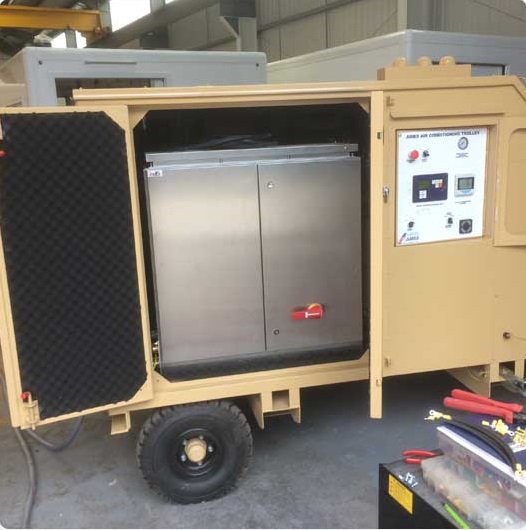
ATEX Mobile Air Conditioning Trolley
ATEX Mobile Air Conditioning Trolley
Application for Hazardous Areas
A global leader in aircraft support services use ATEX enclosures regularly for bespoke hazardous and industrial panels which need to be robust and delivered on time to the exact specifications.
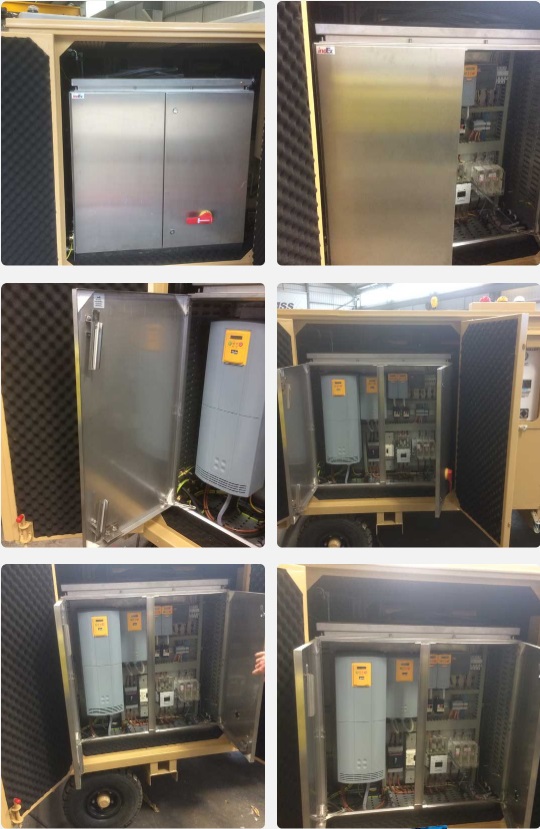
The below photographs show a mobile air conditioning trolley being factory tested prior to being shipped out to the middle east.
There are 4 in total and comprise a full control station which must work continuously for long periods of time.
This was for industrial use but could easily be adapted for zone 2 & 22 solutions.
Thorne & Derrick International areSpecialist Distributors of Hazardous Area Electrical, Mechanical, Process & Instrumentation Equipment to the UK and global oil, gas, petrochem and hazardous area and explosive atmospheres industries.
Our extensive product range combined with the knowledge of our trained EX product specialists provides world-class customer service and support to the industry.
T&D consolidate your supply chain by providing single-source logistics delivered to any international location – supplying explosion proof Zone 1, Zone 21, Zone 2 and Zone 22 hazardous area equipment in compliance with ATEX & IECEx international classifications (Class/Division/Zone).
ELECTRICAL & PROCESS INSTRUMENTATION EQUIPMENT
FOR EXPLOSIVE ATMOSPHERES
Thorne & Derrick are Specialist Distributors of Hazardous Area & Explosion Proof Equipment with IECEx & ATEX Certifications suitable for Zone 1 and Zone 2 hazardous areas in the following onshore and offshore oil, gas, petrochemicals and process industries.
ATEX Solutions for the Oil & Gas Industry
Delivering safety critical ATEX cabinet enclosures and fabrications for client’s customised needs means that there cannot be compromise on a single component. Experts in steel fabrications ATEX enclosures are fast becoming a byword for the highest quality products with rapid delivery. Cost effectiveness and understanding that many of clients must work up to SIL 3 (Safety Integrity Level) – this is reflected in the design and build of every ATEX enclosure.
It’s crucial in the oil and gas industry for integration in all facets of the upstream, midstream and downstream processes, here are some examples of where ATEX enclosures and cabinets have been implemented:
Process control systems (SCADA)
Testing and sampling systems
BOP (Blow Out Preventers)
Shut down systems
Turbo compressor units
Fire and Gas systems
Control and instrumentation systems
Shale Gas Fracking control and process systems
Wellhead systems
High voltage and distribution solutions
Foundation Fieldbus
Battery and transformer crates
Intrinsically safe for use in Zones 1 & 2
Purge and pressure systems
ATEX Passive Cooling Cabinet
ATEX Passive Cooling Cabinet
Application for Hazardous Areas
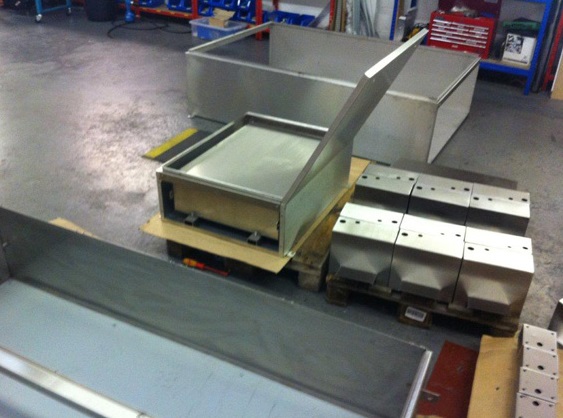
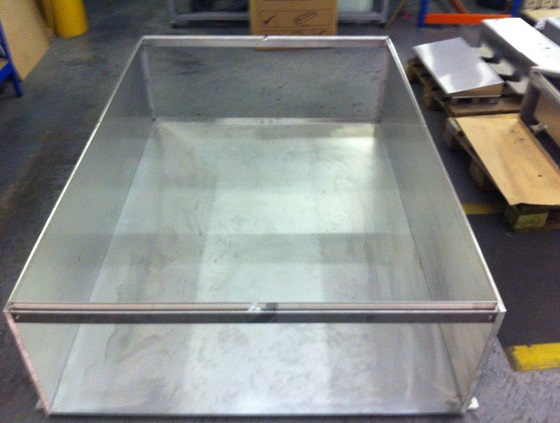
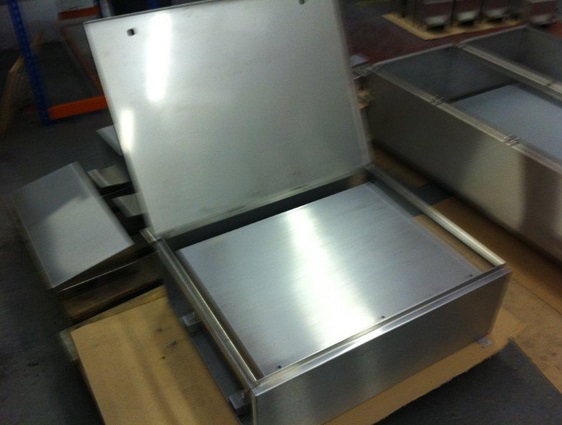
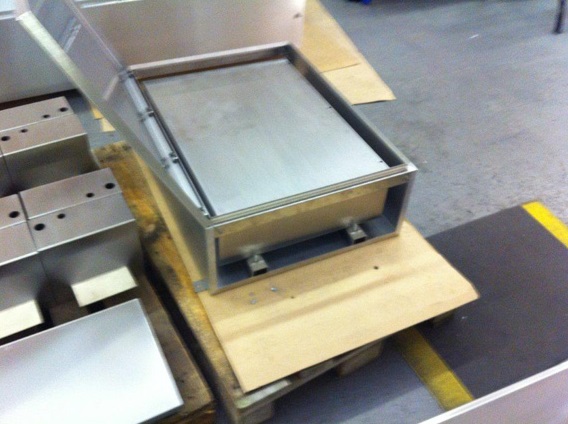
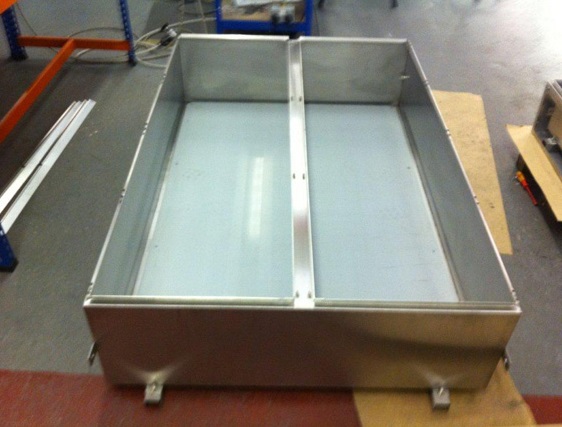
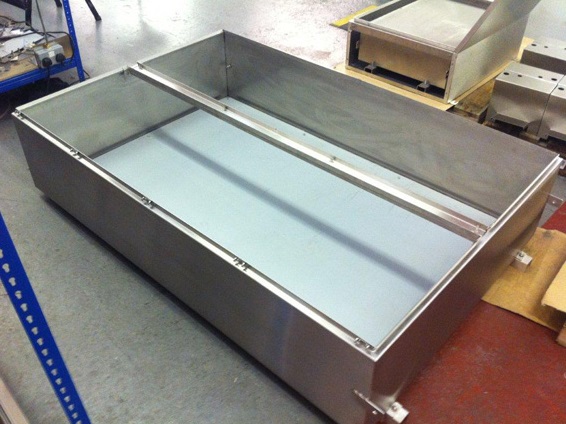
The client required a supply of a large double door panel ATEX enclosures to house two smaller panels complete with safety critical apparatus. The large panel must allow the passive cooling of the internal system without compromising IP integrity.
How Atex Cabinet Enclosures Solved The Problem
The ATEX enclosures specified were cost and time sensitive as well as having to fit a pre-determined footprint
The apparatus inside the internal ATEX enclosure could potentially become hot in normal operation and hence a unique passive cooling design was required
Flameproof enclosures (Ex d) were considered far too expensive, over engineered, cumbersome, heavy and unsuitable
The completed system needed to be ready for a pre allotted test and performance trial already pre -arranged by the client
The complete system needed to be assembled on site by no more than two persons
Solution – ATEX Cabinet Enclosures
T&D are able to design, manufacture and ship within the allotted time frame. Ingress and performance tests were carried out and passed with out incident
T&D specialise in difficult and time consuming ATEX panel designs using the most up to date software design tools available thus dramatically cutting down on cost, time and delivery
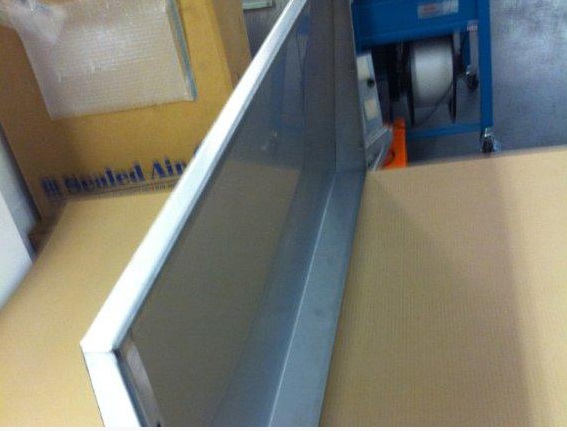
A weather canopy – allows free movement of air through the large panel without water ingress
The larger external ATEX cabinet allows the fixing of the smaller enclosures
The inner panel to house the apparatus. The outer panel to allow free air movement and inner panel access
Apparatus panels to be fixed inside the large panel
The large panel with double access doors and mounting plate
Thorne & Derrick International areSpecialist Distributors of Hazardous Area Electrical, Mechanical, Process & Instrumentation Equipment to the UK and global oil, gas, petrochem and hazardous area and explosive atmospheres industries.
Our extensive product range combined with the knowledge of our trained EX product specialists provides world-class customer service and support to the industry.
T&D consolidate your supply chain by providing single-source logistics delivered to any international location – supplying explosion proof Zone 1, Zone 21, Zone 2 and Zone 22 hazardous area equipment in compliance with ATEX & IECEx international classifications (Class/Division/Zone).
ELECTRICAL & PROCESS INSTRUMENTATION EQUIPMENT
FOR EXPLOSIVE ATMOSPHERES
Thorne & Derrick are Specialist Distributors of Hazardous Area & Explosion Proof Equipment with IECEx & ATEX Certifications suitable for Zone 1 and Zone 2 hazardous areas in the following onshore and offshore oil, gas, petrochemicals and process industries.
ATEX Solutions for the Oil & Gas Industry
Delivering safety critical ATEX cabinet enclosures and fabrications for client’s customised needs means that there cannot be compromise on a single component. Experts in steel fabrications ATEX enclosures are fast becoming a byword for the highest quality products with rapid delivery. Cost effectiveness and understanding that many of clients must work up to SIL 3 (Safety Integrity Level) – this is reflected in the design and build of every ATEX enclosure.
It’s crucial in the oil and gas industry for integration in all facets of the upstream, midstream and downstream processes, here are some examples of where ATEX enclosures and cabinets have been implemented:
Press Release Date: 02.04.2020 uploaded by Chris Dodds (T&D Sales + Marketing Manager) World’s First Fully Certified ATEX Doors Thorne & Derrick International, the Experts in Equipment for Explosive Atmospheres, today announce the signing of a Commercial Distribution Agreement...
Press Release Date: 04.07.2019 uploaded by Chris Dodds (T&D Sales + Marketing Manager) Category: Stockist Distributor Agreement Announcement Thorne & Derrick International announce that they have signed a Preferred Distributor Agreement with Raytec, the world leading manufacturer of LED...


















 Technical Resources |