- By Chris Dodds : estimated reading time 8 minutes
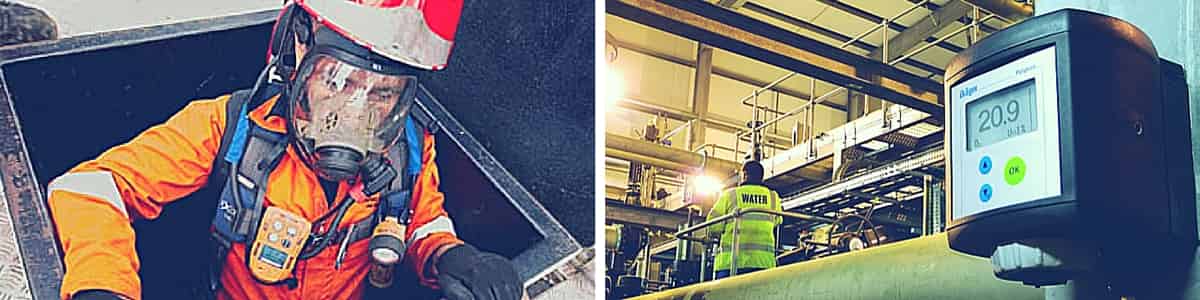

T&D Supply Gas Detection Equipment For The Monitoring Of Toxic & Flammable Gas Levels
Gas Detectors
Gas detectors, both fixed and portable, provide life saving alerts and notice of the presence of potentially fatal gases in working areas. Typically, a fixed gas detector is used as a permanent gas monitoring solution installed in a specific location such as a process area of a control or a plant room.
The area is continuously monitored measuring the concentration of a selection of gases within the air. Fixed gas detectors are used for the detection of flammable gases, toxic gases and for monitoring oxygen depletion levels.
Fixed gas detection uses the latest technology to ensure the safety of plant and personnel at all times. In the event of a gas concentration reaching a preset high level, fixed gas detectors have alarms, lights and indicators that act as a warning signal to alert the user of the gas risk hazard in both safe and hazardous area zone locations.
Portable gas detectors are, as their name suggests, portable and easy to carry around. They can be attached to clothing or overalls for continuous gas detection and monitoring when moving between zones and sites.
selecting the correct gas detector
As both fixed and portable gas detectors are available for many gases and applications, it is vital to ensure the correct product is specified. Prior to any gas detection equipment being specified, a full risk assessment must be carried out in order to determine the exact range of potential dangers and gas risk hazards that may be present.
When identifying the most suitable fixed gas detector for your application you must consider the following:
- The most suitable fixed gas detector to ensure quick and reliable operation
- If the fixed gas detector has any limitations (such as being affected by temperature, humidity or other gases in the environment)
- The location of the gas detector should still be accessible for maintenance and testing
- The sensor technology used mustn’t be affected by other substances in the surrounding environment e.g. catalytic bead sensors should not be used in areas where lead is present
- Accessories should be used so the fixed gas detector can operate suitably in the chosen environment e.g. spray deflectors should be used in wet areas
Know your site risks – Knowing the potential and existing risks can identify any potential hazards and prevent any incidents occurring. This is achieved through a risk assessment and if gas hazards are identified, gas detection is applicable as a risk reduction method.
Ask the right questions – Having identified the primary objective and the most likely gas, there are many key questions to ask which typically fall into one of 3 categories; the gases to be detected and where they come from, the location and environmental conditions and the ease of use for operators and routine servicing personnel.
Consider the environmental conditions – The performance, accuracy and reliability of any gas detector is dependent upon environmental conditions in which the gas monitor device will be operated in.
Temperature, pressure levels and humidity at the working location all have an affect on the performance of gas detection equipment and can also affect the decision of which detector should be used.
Understand product functionality – Product functionality and aspects like wiring configuration are important to consider, especially when retro-fitting into an existing application. If the gas detection equipment is to be integrated into a separate safety system, certain communication protocols may be required.
Gas monitoring of flammable gases, toxic gases & oxygen levels
Gas detectors are used in the following industries:
- Oil and gas industry where harmful by-products are created when processing oil and gas – hazardous area gas detectors are available.
- Offshore industry where the climate can be volatile and the fixed gas detector needs to be able to work effectively in harsh ambient conditions
- LNG industry where the risk of gas leakages that could lead to explosions is very high – Zone 1 & Zone 2 explosive atmospheres
- Pharmaceutical industry where monitoring oxygen depletion levels in confined spaces is crucial to the safety of the plant and personnel
- Petrochemical industry where petroleum and natural gases pose serious risks during production
Facilities within the oil and gas industry including gas compressors stations and buildings are often prone to high levels of gas exposure and leaks, spills emissions which if left undetected can damage entire facilities and halt production which can be extremely costly financially and reputationally.
Gas and flame detectors minimise these risks by providing comprehensive monitoring of equipment and work areas. Detectors should be installed overlooking compressors and pumps and detection is provided by the use of air particle and ultrasonic gas leak detection.
Efficient placement of gas detection sensors
Two of the most common questions regarding gas detection systems are “How many detectors do I require?” and “Where should I locate them?”. These are also two of the most difficult questions to answer as they are dependent upon the individual application.
Detectors should be mounted where the presence of gas is most likely with typical application locations including gas boilers, around pressurised storage tanks, cylinders and areas where leaks are likely to occur such as valves, gauges, flanges and filling/draining connections.
There are many considerations that should be taken into account when determining the location of a gas detector including:
- When detecting gases that are lighter or heavier than air, detectors should be mounted at either a high or lower location respectively.
- Consider how escaping gas may behave due to natural or forced air currents and if required, detectors should be mounted in ventilation ducts.
- When locating gas detectors, consider the potential damage that can be caused by natural events such as rain or flooding. For detectors that are installed outdoors, it is preferable to use a weather protection assembly.
- Consider process conditions when installing gas detection equipment. For example, butane and ammonia a typically heavier than air however if they are released from a process line at an elevated position then the gas can bypass the detector if it is placed in a low position.
- Ensure the structure to which the gas detector is installed is sturdy and not susceptible to vibration.
- Detectors should be installed at the designated location upside down. This will ensure that no dust or water will collect on the front of the sensor and stop the gas from entering the device.
- When installing open path infrared devices, it is important to ensure there is no permanent obscuration or blocking of the IR beam however short term blockages from vehicles, personnel or birds etc can be accommodated.
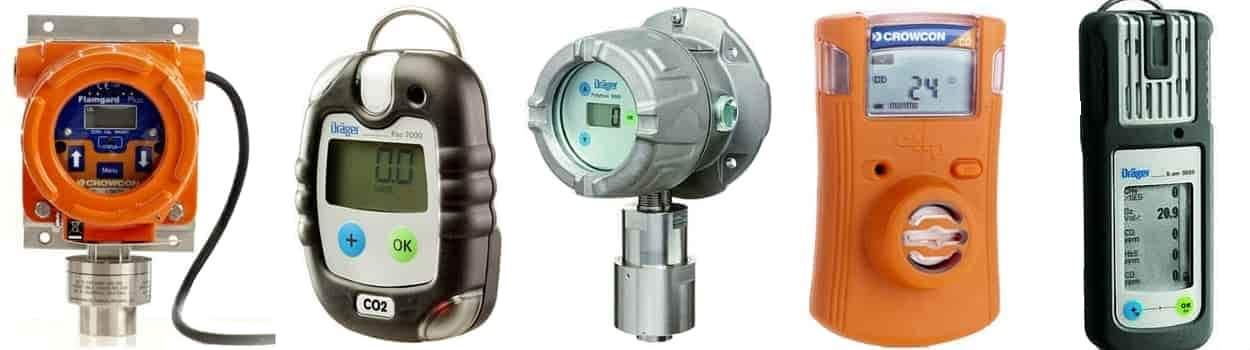
Portable & Fixed Gas Detection Solutions
Gas Detectors – Frequently Asked Questions
- What types of gas detectors are available?
Gas detectors are typically classified as either portable or fixed. Portable gas detectors are able to monitor gases present close to the user and can be easily connected to clothing or held in the user’s hand. For instance, Drager Pac 3500 is a compact, single-gas detector suitable for monitoring hydrogen sulphide, oxygen or carbon monoxide.
Fixed gas detectors are permanently installed in a certain area e.g plant room so they can continuously monitor the concentration of gases or vapours in the air – the Drager Polytron range of detectors provide gas monitoring for industrial and explosion-proof requirements in hazardous areas.
- How do gas detectors work?
Most portable and fixed gas detectors trigger lights, indicators or audible alarms to alert the user/users that the preset gas and vapour concentration has been exceeded. The user can then act quickly to rectify the problem or remove themselves from the situation potentially dangerous situation.
- Which gases can be detected?
Gas detection uses a number of different technologies to help classify the gas types. Gas detectors can identify flammable, toxic and combustible gases and can also be used to monitor oxygen levels and oxygen depletion.
Typical gases to be detected include methane, hydrogen sulphide, carbon dioxide, carbon monoxide, ethane and oxygen depletion.
- Which industries are gas detectors used in?
Both fixed and portable gas detectors can be used in a wide range of industries including the petrochemical, food and drink, manufacturing and oil and gas industry. Specific applications are dependent upon individual requirements, the level of gas present and the type of gas or gases that may present a risk.
- How is product battery life affected by outside temperature?
Product batteries are tested at room temperature however if this temperature drops significantly this can reduce battery life. Excessive heat can cause damage to the whole device and battery. Each detector is supplied with standard working temperature limitations.
- Can more than one gas be detected by a single detector ?
Yes, multi-gas detectors are available and can be configured to detect many gases. For instance, Drager Pac 7000 portable detector can monitor up to 14 single gases.
- What is the difference between LEL and UEL?
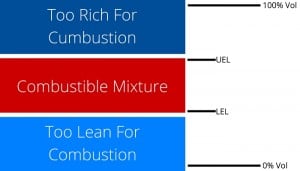
Gas Lower Explosion Limit And Upper Explosion Limit
The LEL of a gas is the lower explosion limit and this refers to minimum dilution of a gas that must be present for it to be detectable by a gas detector. The UEL is the upper explosion limit.
These limits are vital to the working of a gas detector as too little of a gas and the device will not be able to detect it, too much and the gas will also not be detectable. Each gas has its own LEL and UEL and these are typically shown by percent of total volume, with the balance as normal air.
More Reading
Flame, Heat, Gas Detectors & Detection Systems

Hazardous area industries including offshore oil/gas platforms and FPSOs, onshore oil refineries, processing plants, pipelines, storage farms and LPG/LNG plants all utilise or produce a wide range of hazardous flammable liquids and gases that can be detected using correctly specified flame and gas detectors.
Detecting toxic and flammable gases requires the detectors to be classified and certified according to the specific IECEx or ATEX standard – we distribute flame and fire detectors manufactured by Spectrex to operate in the harshest environmental conditions including self-contained stand-alone devices designed for direct connection to control and alarm systems or automatic fire extinguishing systems.
Our range of Hazardous Area Fire & Gas Detection System products also includes Explosion Proof Warning Systems & Hazardous Area Lighting – comprehensive range of intrinsically safe, flameproof and explosion proof alarm sounders, sirens, bells and horns, loudspeakers and beacons.
♦ LV Power Products | Junction Boxes & Enclosures ATEX | Plugs ATEX | Control Stations ATEX | Isolators ATEX
Experts in Equipment
for Explosive Atmospheres
Follow our Showcase Page on LinkedIn to receive hazardous area product innovations, industry news, whitepapers, videos, technical tips and training webinars for professionals involved in the explosive atmosphere industries.
- By Chris Dodds : estimated reading time 5 minutes
T&D are distributors of Gas Detectors & Detection Equipment for industrial and hazardous area gas detection; this includes both portable and fixed gas detectors for improving site and worker safety in the food processing and beverage industries.
Stationary or fixed gas detectors provide advance warning against explosions, toxicity and oxygen levels by triggering alarms.
Portable gas detectors are suitable for working in confined spaces where mobile monitoring of harmful, flammable and toxic gas levels is required, whether the gas risk is in a safe or hazardous area.
Effective monitoring and detection of gases is essential to provide worker safety in the food and beverage industries where common gas risks include :
- Ammonia
- Carbon monoxide
- Carbon dioxide
- Hydrogen chloride
- Hydrogen cyanide
- Hydrogen sulfide
- Nitrogen dioxide
- Phosphine
- Combustible gases
- Oxygen deficiency/enrichment
Typical applications and workplace exposures to gas: confined space entry, cold storage, grain delivery and storage, general safety, flash freezing and data-logging/industrial hygiene.
Gas Detection
Food preparation and processing forms an integral part of the global food supply network and is one of the key factors that has enabled people to enjoy such a varied diet. The preparation and collection of foodstuffs typically involves gas, whether as a bi-product or in the direct preparation of food.
Monitoring these gases is vital to not only guarantee food quality and hygiene but to also protect those working in and around preparation areas. A variety of gases can be present throughout the food and beverage industry and monitoring these effectively can save lives and increase productivity.
Gas is present throughout the food production industry from fresh food produce to processed meals and packaging. Let’s review 2 recent instances where portable gas detectors have improved both safety and productivity.
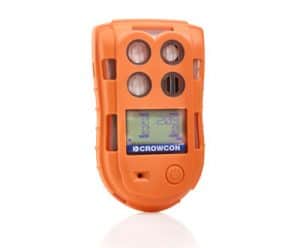
Crowcon Portable Gas Detectors
| T4 |
Gas-Pro |
Gas-Pro IR |
Gas-Pro PID |
Tetra 3 |
Clip |
Gasman |
Laser Methane Mini |
 |
 |
 |
 |
 |
 |
 |
 |
Portable Gas Detectors – Helping Hens Lay Eggs
Yes, you read correctly portable gas detectors can help hens when they are laying eggs.
Thorne and Derrick have recently been approached by a client searching for a solution to a rather unusual application. The client required a portable gas detection solution that could be used inside of poultry shelters that would require minimum training.
Portable gas detectors installed inside of poultry shelters are able to monitor the gas levels of the following gases; CO2, O2, NH3 and CH4.
Excess levels of these gases can prevent the hens from laying eggs or stop the eggs that do get laid from hatching.
A portable gas detector with built in data logger could be left in the coop and then removed to monitor the gas level average before being moved to the next coop and repeating the process.
Using a portable gas detector will keep the cost down as only one monitoring device is required and it can move throughout the coops.
Typically with chicken coops and the collection of eggs on a commercial scale, ammonia is the most prominent gas to cause harm and can be easily identified by its smell – a bleach like odour. Poultry farm animals naturally release ammonia gas and proper ventilation and gas detection is vital to protect farmers and anyone working in or around poultry.
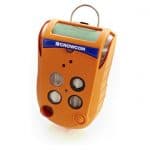
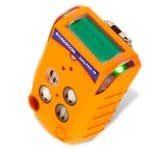
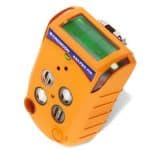
T&D, distributors for Crowcon, recommended the Crowcon Gas-Pro Portable Gas Detector as an ideal solution for this application as the monitor is able to detect up to 5 gases at any one time.
There is an option to be able to preset the gases. In this instance the client would preset the gas monitor to detect CO2, O2, NH3 and CH4. The display screen is top mounted to allow easy reading of the results at a glance.
The Crowcon Gas-Pro gas detector is very simple to use as it is operated by a single button so product training is not required to operate the device.

Crowcon Gas-Pro Gas Detectors
Portable Gas Detectors – Keeping Pizza Dough Rising
From eggs to pizza….
A further application that T&D have supplied portable gas detectors for is the production of pizza dough demonstrating the diversity of gas detection requirements in the food industry.
This process can emit carbon dioxide which if left undetected can build up and rise to potentially fatal levels – CO2 displaces oxygen causing potentially fatal suffocation. Oxygen deficiency can also be caused by processes such as food cooling.
The fermentation of sugar and yeast in pizza dough produces carbon dioxide which in turn give the bubbles that appear in a pizza crust when baked. Although delicious when eaten, the levels of CO2 build up in commercial pizza dough production can be dangerous requiring gas detection to alert when levels are too high.

Brewing – Fermentation is also used to make alcohol when producing drinks such as beer, wine and cider. In brewing, alcoholic fermentation is the conversion of sugar into carbon dioxide gas (CO2) and ethyl alcohol.
If CO2 levels rise above 1,000 ppm workers can begin to experience headaches and drowsiness. If left unresolved or undetected, CO2 levels rising to 5,000 ppm will exceed safe workplace limits resulting in staff not being able to work, hampering production and incurring financial losses.
If the levels of carbon dioxide remain undetected and rise above 40,000 ppm this can lead to serious oxygen depletion resulting in brain damage, coma and ultimately death.
Portable gas detectors can be attached to clothing, overalls and transported around within manufacturing areas for the detection of carbon dioxide and other gases.

Gas Detectors – single gas and multi-gas detectors are capable for detecting up to 5 gases
Portable Gas Detectors
The range of portable gas detectors distributed by T&D can detect many gases with certain detectors able to monitor up to 5 gases. With products available from leading brands such as Crowcon, T&D gas detector sales engineers are on hand to specify the correct portable gas detector for your needs.
The 4 key gases (but not limited to) that portable gas detectors are typically deployed for are Methane, Hydrogen Sulphide, Carbon Monoxide and Oxygen depletion (lack of Oxygen).
Portable gas detection offers a cost effective solution to a potentially fatal problem. The products easily pay for themselves in terms of saved revenue in keeping production going but also in preventing loss of life from toxic gas level exposure.
Flame, Heat, Gas Detectors & Detection Systems
Hazardous area industries including offshore oil/gas platforms and FPSOs, onshore oil refineries, processing plants, pipelines, storage farms and LPG/LNG plants all utilise or produce a wide range of hazardous flammable liquids and gases that can be detected using correctly specified flame and gas detectors.
Detecting toxic and flammable gases requires the detectors to be classified and certified according to the specific IECEx or ATEX standard – we distribute flame and fire detectors manufactured by Spectrex to operate in the harshest environmental conditions including self-contained stand-alone devices designed for direct connection to control and alarm systems or automatic fire extinguishing systems.
Our range of Hazardous Area Fire & Gas Detection System products also includes Explosion Proof Warning Systems & Hazardous Area Lighting – comprehensive range of intrinsically safe, flameproof and explosion proof alarm sounders, sirens, bells and horns, loudspeakers and beacons.
♦ LV Power Products | Junction Boxes & Enclosures ATEX | Plugs ATEX | Control Stations ATEX | Isolators ATEX
Experts in Equipment
for Explosive Atmospheres
Follow our Showcase Page on LinkedIn to receive hazardous area product innovations, industry news, whitepapers, videos, technical tips and training webinars for professionals involved in the explosive atmosphere industries.