The UK Office for Product Safety and Standards has issued a product recall for a pneumatic fan that has been incorrectly and unsafely sold as “explosion proof”.
The product may not be safe for use in potentially explosive or flammable atmospheres as there is no evidence it has been subject to the appropriate conformity assessment, the Trading Standards website says.
Serious Risk
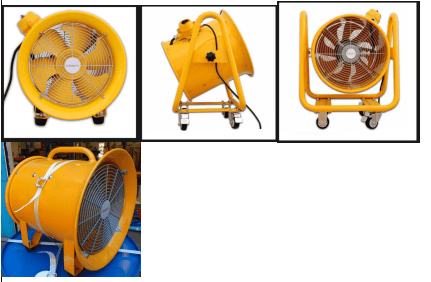
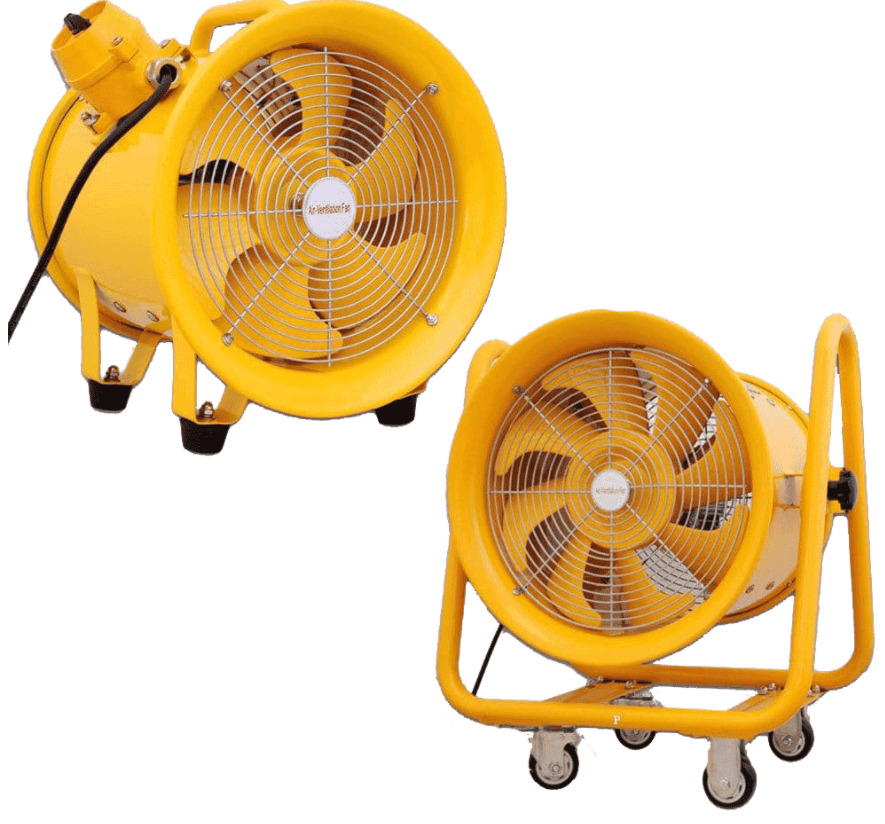
The ‘Powerstar Electricals BTF Series Explosion Proof Axial Flow Fan’ originates from China and was sold in the UK as suitable for use in hazardous areas and explosive atmosphere environments – the fan was available in 10″, 12″, 14″, 16″, 18″ and 20″ diameters. This product poses a “Serious” level of risk if used in potentially explosive or flammable atmospheres.
The fan has been assessed as presenting a serious risk of harm as it has the potential to act as an ignition source in a flammable atmosphere, which could lead to fire and explosion.
The range of fans have not been subject to an appropriate conformity assessment and do not bear any of the required markings from an ATEX Notified Body. The products do not meet the requirements of the Equipment and Protective Systems Intended for Use in Potentially Explosive Atmospheres Regulations 2016 (ATEX), the Office for Product Safety and Standards website says.
The products have been withdrawn from saleand recalled from all known end-users and customers. Any customers who bought one of the products is being recommended to stop using these products in environments where a flammable or explosive atmosphere could form. The UK Office for Product Safety and Standards advise customers should contact their distributor to request redress.
Here is a copy of the Safety Report – this Product Safety Report 46 was published on 19th November 2021 and the original version is available to download here.
Product
Powerstar Electricals BTF Series Explosion Proof Axial Flow Fan
Images
Alert Number
2111-0107
Product Type
Pneumatic fan intended for use in explosive atmospheres
Product Identifiers
Powerstar Electricals BTF Series Explosion Proof Axial Flow Fan
Product Description
Pneumatic portable axial flow fan with AC electric motor – was sold as
suitable for use in high-hazard environments
Country Of Origin
China
Counterfeit
Not Counterfeit
Risk Level
SERIOUS
Risk Type
The product may not be safe for use in potentially explosive or flammable atmospheres as there is no evidence it has been subject to the appropriate conformity assessment
Risk Description
This product has been assessed as presenting a serious risk of harm as it has the potential to act as an ignition source in a flammable atmosphere, which could lead to fire and explosion. The product has not been subject to an appropriate conformity assessment and does not bear any of the required markings. The products do not meet the requirements of The Equipment and Protective Systems Intended for Use in Potentially Explosive Atmospheres Regulations 2016 (ATEX).
Corrective Measures
The products have been withdrawn from sale and recalled from all known customers. We recommend customers stop using these products in environments where a flammable or explosive atmosphere could form. Customers should contact their distributor to request redress.
Notifier
HSE
Powerstar Electricals BTF | Withdrawn and Recalled– should you require impartial technical support regarding ATEX Certification requirements for products on your project, process or facility please do not hesitate to contact us.
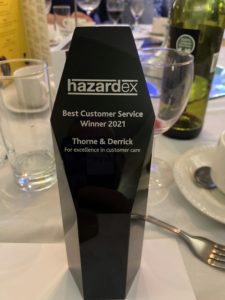
Thorne & Derrick Win Excellence in Customer Service Award At HazardEx 2021
Thorne & Derrick
Compliance Commitment
Experts In Equipment for Explosive Atmospheres
Thorne & Derrick and their world-class supply chain of manufacturers are committed to providing compliant explosion proof products to provide safe Power, Lighting, Heating & Ventilation to the hazardous area industries – additionally our team of Sales Engineers are CompEx Foundation course certified and attend regular product training with manufacturers.
We are leaders in the development and distribution of Product Innovations with ATEX-UKCA & IECEx Compliance that deliver significant improvements to clients plant, people and operational safety in the explosive atmosphere industries. Your proactive problem solvers experienced in succession planning for the replacement of obsolete, non-conformant and legacy equipment in hazardous areas.
UKEX Fan | Certified For Use In Hazardous Areas And Explosive Atmospheres
UKEX Fans
Republished with Kind Permission of Scott Harding from Woodcock & Wilson |
the UK leading specialist manufacturers of centrifugal, industrial, Axial and 3rd Party Certified Atex and IECEx fans.
A UKCA “Ex” fan is a fan that has been manufactured, and is correctly certified, for use in potentially explosive atmospheres within Great Britain, meeting all UKCArequirements. As a result of the UK leaving the European Union, the UK government issued a Statutory Instrument to product safety legislation meaning that the European Conformity “CE” marking will be phased out and replaced with a UKCA mark. Hazardous Area certification is also affected, meaning that the European term ATEX will no longer be recognised within Great Britain as it gets replaced with the agreed “UKEX” term.
The UK Government now recognises its own Designated Standards which will replace the EU’s Harmonised Standards that companies must use to ensure their products have conformity to GB Law.
Due to the high potential of a fan producing an ignition, the European Committee for Standardisation, back in 2007, published a standard for the Design of fans working in potentially explosive atmospheres. The current form of this standard is BS EN 14986:2017, which along with standards for non-electrical equipment for explosive atmospheres BS EN ISO 80079-36:2016 and BS EN ISO80079-37:2016 form the constructional requirements for any fan that is to meet the new UKEX certification, GB Law and therefore be suitable to be placed on the “UK market”.
UKEX marking
The common Ex–in–hexagon symbol remains. This symbol alongside the UKCA mark will indicate that the fan complies with current UK legislation for hazardous area use. The correct marking is supported by UKEX documentation. Many manufacturers are using the UKCA, EU CE and the Ex logo where products meet both UKEX and ATEX requirements. From the beginning of January 2021, UKCA marked products along with UKEX goods for hazardous areas are being phased to replace CE and ATEX products. From the 1st January 2023 UKCA and UKEX requirements will only apply. CE and ATEX will no longer be accepted in Great Britain.
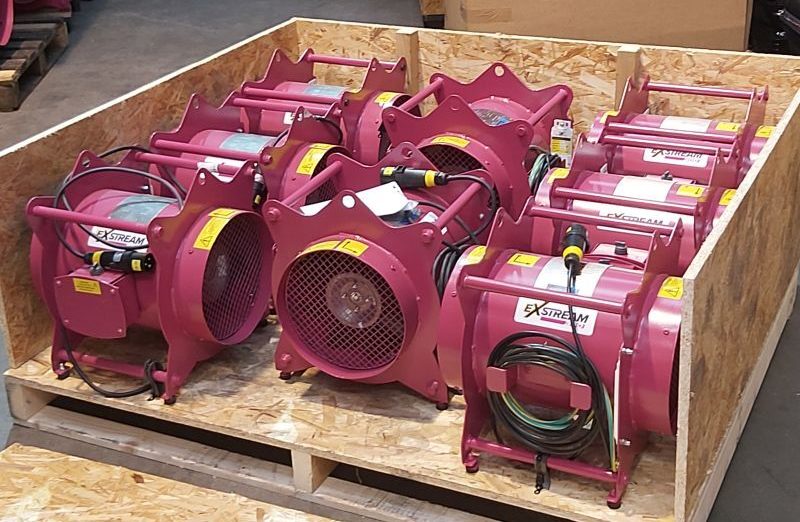
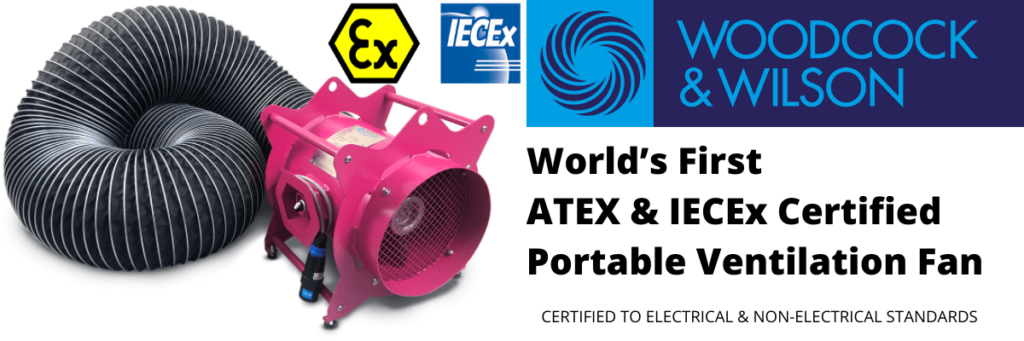
The World’s First ATEX & IECEX certified portable ventilation fans packed and ready to go from our warehouse with fast delivery. Contact Us for more information.
What is the difference between ATEX, IECEx and UKEX fans?
The requirements for self-certification and third party certification for Category 1, 2 and 3 hazardous area equipment remain unchanged across both UKEX and ATEX schemes. This contrasts with the IECEx scheme, where all equipment and the manufacturers design and production facilities must be independently assessed and approved. IECEx documentation can be used to form the technical assessments for both UKEX and ATEX certification. It is important to note that the documentation must be approved by, or submitted to, the appropriate accredited body. Only UK Approved Bodies can certificate for UKEX products. Only EU Notified Bodies can be used for ATEX certification which is valid in the European Economic Area (EEA) including Northern Ireland.
UKEX is being phased in and will become mandatory in GB from 1st January 2023
UK Designated Standards compliance
UKEX requires involvement of a UK Approved Body for Category 1 and 2 equipment
UKEX allows for “self certification” of Category 2 and 3 equipment
ATEX is mandatory in the EEA
ATEX 2014/34/EH Directive and EU Harmonised Standards compliance
ATEX requires involvement of an EU Notified Body for Category 1 and 2 equipment
ATEX allows for “self certification” of Category 2 and 3 equipment
IECEx is an international standard, seen as best practise outside EU and UK.
IECEx does not allow for any “Self-certification”, ensuring that the purchaser/end user is not held accountable for product compliance.
IECEx : the manufacturer must hold a relevant BS EN ISO 80079-34 Quality Assessment Report (QAR)
➡ See more information about the Exstream fan range – the first in the World certified to both Electrical & Non-Electrical (Mechanical) requirements of the ATEX IECEx Directive.
EXPERTS IN EQUIPMENT FOR EXPLOSIVE ATMOSPHERES
LEADERS IN ATEX INNOVATION TO THE HAZARDOUS AREA INDUSTRIES
Thorne & Derrick are leaders in the development and distribution of Product Innovations that deliver significant improvements to clients plant, people and operational safety in the explosive atmosphere industries.
Your proactive problem solvers experienced in succession planning for the replacement of obsolete, non-conformant and legacy equipment in hazardous areas.
Your first-choice provider of innovative and competitive solutions to ensure ATEX & IECEx Compliance for Hazardous Area Electrical, HVAC & Process Instrumentation Equipment to UK and international projects.
Back in the early noughties, Sigma-HSE’s Technical and Operations Director was working in the UK’s Health and Safety Executive as a Process Safety Specialist Inspector and was drafting guidance for the warehousing industry.
This cumulated with the publication of HSG71 Chemical Warehousing: The Storage of Packaged Dangerous Substances, which is still freely available from the HSE website.
This guidance was aimed at anyone with the responsibility of storing dangerous substances, regardless of facility size, and was applicable to transit/distribution warehouses, open-air compounds and locations generally associated with a chemical production site or end-user.
Prior to drafting this guidance, he also undertook a survey of the warehousing and logistics industry. Throughout this time, the examination and analysis of multiple returned survey forms raised one significant issue – only 30% of respondents stated that they stored chemicals or dangerous substances. A subsequent question on the survey provided the reason for this.
When asked what types of substances were stored, the replies stated pharmaceuticals, household and commercial consumer products, cosmetics, agrichemicals, food products etc. The wider logistics/warehousing industry clearly did not recognise that such products can indeed contain or be classified as dangerous substances.
When looking into the products stored by many warehouses and logistics companies across the UK, items such as aerosol cans of hairspray were seen as simply consumer personal products, despite containing extremely flammable LPG gas as an aerosol propellant. Indeed, the individual aerosol cans were correctly labelled as containing dangerous substances.
Warehousing & Logistics | DSEAR Regulations
You only need to travel along the UK’s motorway network to appreciate the growth in extremely large warehousing and logistics operations throughout the country (which continues to expand significantly), to understand how much potential there is for catastrophe if dangerous substances are not correctly understood, let alone stored or transported properly.
Introduction to DSEAR and Warehousing/Logistics
Although there is a guide for the safe storage of packaged dangerous goods, there is, in fact, a set of regulations with which the warehouse and logistics industry must comply. These regulations are the Dangerous Substances and Explosive Atmosphere Regulations (DSEAR) 2015.
DSEAR regulations deal with anything that can burst into flames or explode. This can include standardised materials that have already been classified as explosive or flammable i.e., liquids and gases, but will also include a range of combustible dust and powders. Many of these combustible substances are not classified as dangerous, but can still be ignited, thus resulting in fires or explosions, examples include foodstuffs (flour, sugars etc) and other organic solids.
Alongside materials, DSEAR regulations will apply to most activities that are undertaken throughout the warehousing and logistics industry (if materials are capable of combustion). The HSE state that a DSEAR may apply to any of the below activities:
storage of petrol as a fuel for cars, boats or horticultural machinery
handling and storage of waste dust in a range of industries
handling and storage of flammable wastes such as fuel oils
storage and display of flammable goods, such as paints, in shops
filling, storing and handling aerosols with flammable propellants such as LPG
transporting flammable substances in containers around a workplace
deliveries from road tankers, such as petrol and bulk powders
chemical manufacturing, processing and warehousing
the petrochemical industry, both onshore and offshore
handling, storage and use of gases under pressure
As with all UK health and safety legislation, the regulations require you to undertake a risk assessment – this time focussed on those work activities handling substances capable of fire and explosion – and aim to prevent fires or explosions and to protect against the effects of fire and explosion.
Warehousing/Logistics Equipment
The primary focus of a DSEAR is to prevent fires and explosions. Essentially, this requires the prevention of a flammable atmosphere (a mixture of fuel and air capable of combustion). Where such flammable atmospheres are present on-site, then you must reduce the probability of potential ignition sources becoming realised.
As a result, mechanical or electrical equipment that has the potential to create an ignition source and is located within a flammable atmosphere generated under normal and expected malfunction operations needs to be special – this is often known as ATEX or Ex equipment.
Understanding Site Zones
To ensure that all equipment present in specific zones are suitable, the determination of where on your site potential flammable atmospheres and their extent/size is done by undertaking a Hazardous Area Classification (HAC) study. This, in effect, results in the creation of specifically classified zones.
Once these zones are known, any mechanical or electrical equipment, as well as fixtures, fittings and tools present, must be removed or replaced by special ATEX or EX equipment.
However, a challenge that many companies that Sigma-HSE have worked with, as stated in a previous blog on how to avoid over-zoning in hazardous areas, is that when they undertake risk assessments, like DSEAR, they;
‘Err on the side of safety. Whilst this should not be deemed to be an issue, it may be over cautious as it can result in large hazardous areas being designated and, in some cases, a higher than necessary classification of zoning (i.e. Zone 1/21 instead of Zone 2/22) or by blanket zoning an entire area.’
It must be noted that when hazardous zones are updated then a risk assessment must be undertaken by a competent person. Therefore, by incorrectly assigning an area the wrong zone, a large amount of financial expense in terms of purchasing and maintaining ATEX or EX certified equipment can be caused.
ATEX
Storage of Potentially Hazardous Materials
Obviously, with most warehousing operations, packaged substances are simply stored and then transported. These materials, when in their individual containers, ensures that the generation of flammable atmospheres is not possible. But, if these materials are to be spilt during stock movement, or if said containers leak, the possibility of generating a flammable atmosphere increases drastically.
There have been many serious fires caused by the spillage of flammable materials during the movements of materials within warehouses. One very large fire that resulted in the destruction of the whole warehousing structure occurred at a Boots site in Nottingham several years ago. In this incident, a forklift truck (not certified for use in flammable atmospheres) ran over a spilt aerosol can – the forklift truck was the source of ignition, and a small incipient fire very quickly grew to involve other combustible stock stored nearby.
Even if you are confident that you do not store or handle dangerous substances as stock, ancillary operations on site will utilise dangerous substances – and hence a DSEAR risk assessment including the Hazardous Area Classification is necessary. The presence of natural gas-powered boilers and heating systems; LPG or diesel-powered forklift trucks; even recharging electric forklift trucks (due to the generation of hydrogen gas) means that a DSEAR risk assessment is required.
ATEX Doors | Providing safe segregation between safe (non-hazardous) and explosive atmosphere (hazardous areas) workplaces
Stock Insurance
The safe storage and supply of goods, alongside the safety of employees and your businesses infrastructure i.e., warehouses, machinery and transport equipment are of huge importance to the success of your business. So, by complying with DSEAR regulations, you’re preventing potential disasters that could severely impact your operations.
We touched upon the topic of insurance for the manufacturing industry a recent blog that you can read here. But a key finding was the fact that insurance companies are increasingly asking manufacturing businesses if they have undertaken a DSEAR assessment. As a result, we at Sigma-HSE have had multiple requests from these manufacturing businesses to undertake a DSEAR as requested by insurance companies.
As a result, warehousing and logistics businesses should start to think about the relationship between DSEAR and insurance. Although there isn’t a specific fire and explosion damage insurance policy that can be issued by insurance companies, there are other forms of insurance, that can pay to repair or replace items damaged due to a disaster caused by the above. So, by undertaking a DSEAR assessment, you can decrease insurance costs by confirming to insurance companies that you have applied a recognised safety regulation to your work environment.
Sigma-HSE are recognised experts in DSEAR and have undertaken DSEAR risk assessments throughout the processing industries for many years. Our consultancy team are on hand to discuss your requirements and will work with you to provide actionable safety solutions that are both cost and time effective.
If you are unsure about the fire and explosion capabilities of the substances handled at your facility, Sigma-HSE’s accredited testing laboratory can undertake all required testing, according to the relevant standards with a quick turnaround service.
Contact Details
Sigma-HSE (UK) Ltd, Unit 2 Moorside Point, Moorside Road, Winchester, Hants., SO23 7RX Tel: +44 (0)1962 840570, Web: www.sigma-hse.com
About Sigma-HSE (UK) Ltd
Sigma-HSE was formed in 2012 in Winchester, UK. Our vision is to provide a single source of expert knowledge regarding process safety in the work environment. Our broad range of consultancy services include, ATEX/DSEAR Assessments, HAZID/HAZOP Studies, SIL/LOPA Assessments. We have the expertise to facilitate COMAH needs and to meet Process Safety Management requirements.
Sigma-HSE is a fast-growing organisation in the fields of health & safety and the environment, with bases in Europe, Asia and the Middle East, and have associated partnership in USA.
EXPERTS IN EQUIPMENT FOR EXPLOSIVE ATMOSPHERES
leaders in ATEX Innovation To The Hazardous Area Industries
Thorne & Derrick are leaders in the development and distribution of Product Innovations that deliver significant improvements to clients plant, people and operational safety in the explosive atmosphere industries.
Your proactive problem solvers experienced in succession planning for the replacement of obsolete, non-conformant and legacy equipment in hazardous areas.
Your first-choice provider of innovative and competitive solutions to ensure ATEX & IECEx Compliance for Hazardous Area Electrical, HVAC & Process Instrumentation Equipmentto UK and international projects.
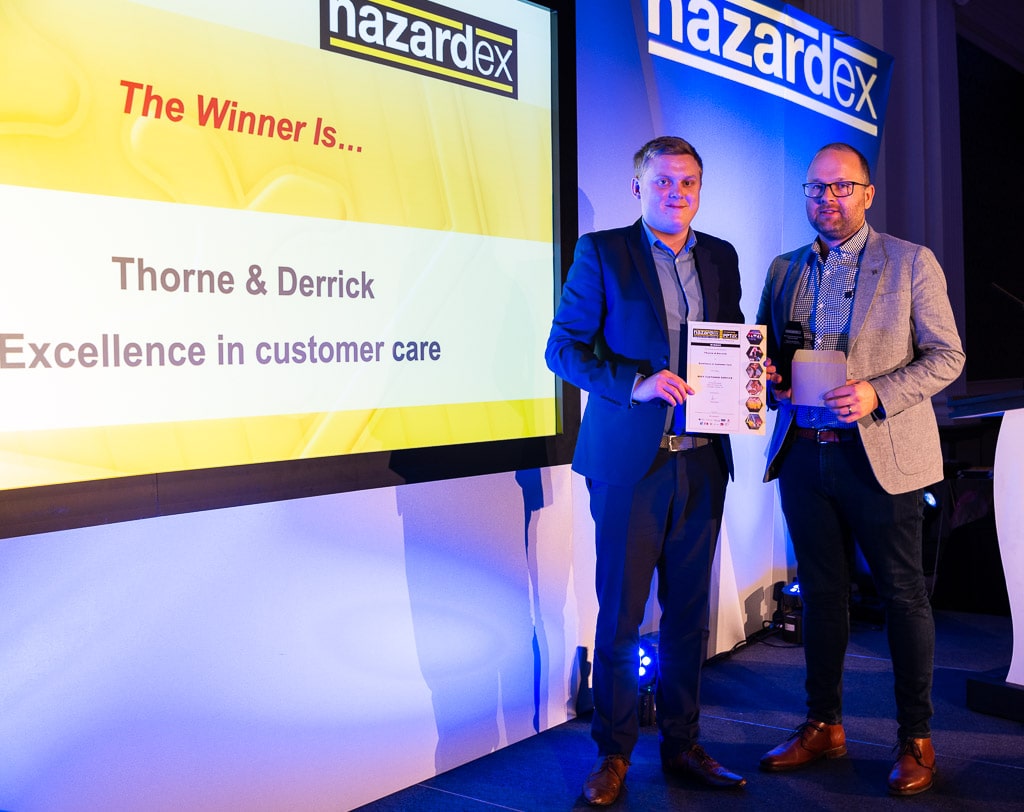
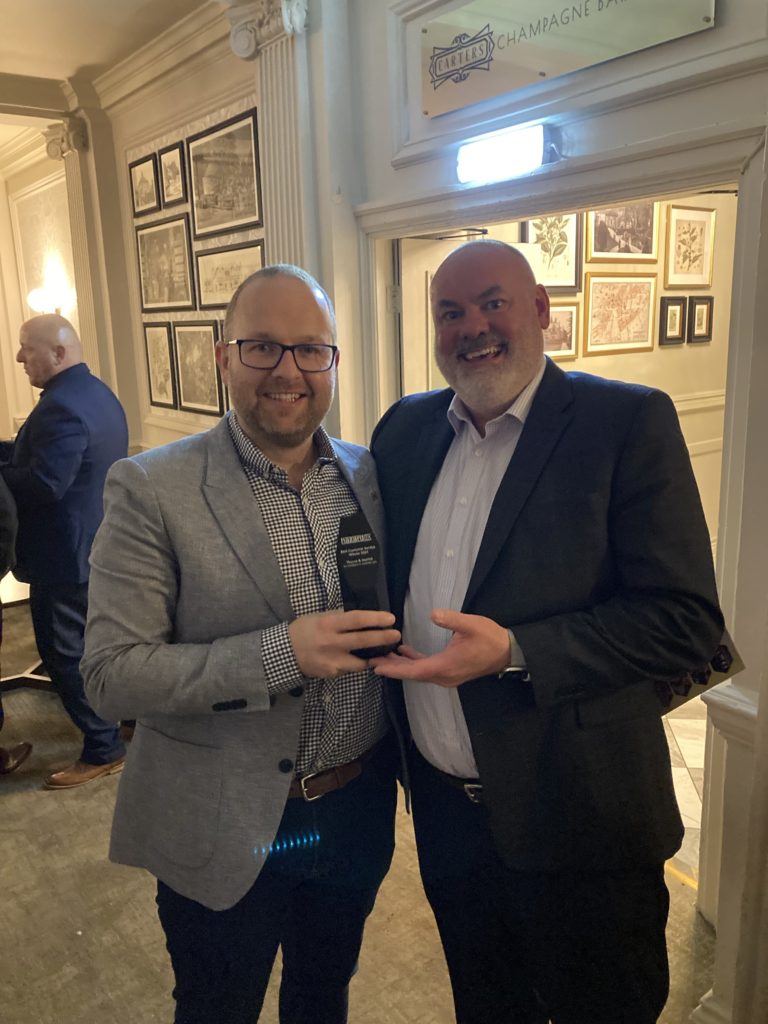
Terry McDonald (Sales & Business Development Manager) collecting the Winners Award on behalf of Thorne & Derrick from Alistair Hookway (Editor, HazardEx).
Best Customer Service
Thorne & Derrick International, based in the UK, are delighted to announce that we have been voted Winners of the Award for ‘Best Customer Service’ at the annual HazardEx Gala Dinner on 6th October 2021. The competitive Award category at the prestigious event was for providing excellent customer service over the last two years.
Terry McDonald said, “It was an honour to collect the award for Excellence in Customer Service on behalf of Thorne & Derrick – we have a robust reputation for supporting our customers with the replacement and upgrade of end-of-life equipment to deliver significant operational safety and process improvements to their project or plant.
We proactively solve problems for customers.
We are experienced in succession planning, often providing customised products and engineered solutions to complex challenges in the provision of LV-HV electric power, lighting, heating and ventilation.
We design systems.
Whether it be complex multi-kilometre, major-project heat tracing systems for process pipework, cable jointing solutions for high voltage power networks or compliant lighting systems for explosive atmospheres.
Thorne & Derrick have been at the forefront of many critical national infrastructure projects supplying customers with world-class cable accessory productsto build new high voltage electrical systems; powering the renewable energy revolution and data centre sectors across numerous UK, European and international projects.
We are passionate about Customer Care – service levels are subject to continuous improvement by ongoing investment in professional and technical training for the staff by our supply chain and outsourced providers, such as CompEx and Just Williams.
Working closely with Northern Skills Group and their Apprenticeship Programmes we have successfully employed 5 new staff into our business over the last 2 years – the Apprentices have successfully achieved City & Guilds Distinction grade certificates and support our customers across sales, marketing and business administration roles.
We would like to thank everyone who took the time to vote for Thorne & Derrick and all Delegates, Speakers, Exhibitors and Visitors that attended Hazardex2021.
Innovation, sAFETY, Design
& Customer Service
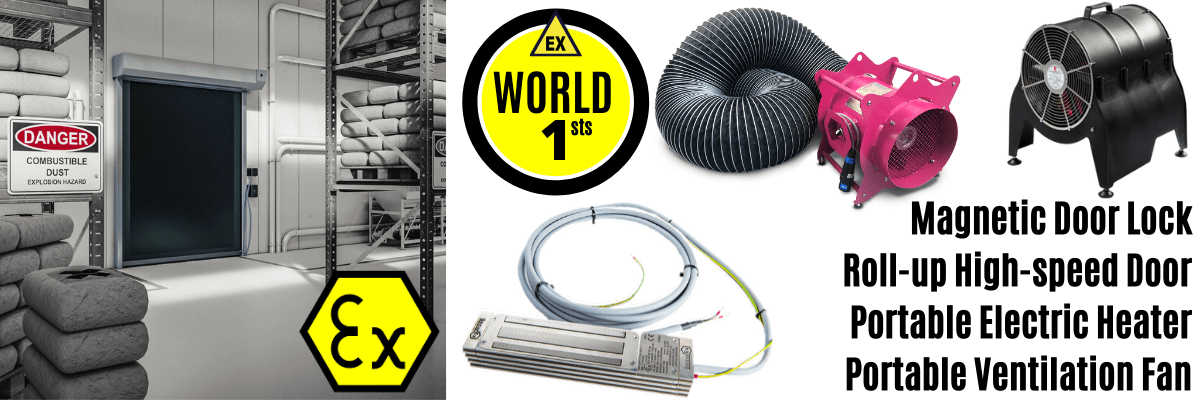
Introducing Innovation & Improving Safety |in 2019 Thorne & Derrick, the Exclusive Distribution Partner for Dynaco, launched their World’s First ATEX Certified High-speed Roller Doors into the UK – providing the customer with economic benefits through reduced energy costs with carbon footprint reductions and Health & Safety improvements.
Over the last 2 years, Thorne & Derrick the Leaders in ATEX Innovation, have introduced several products which have led to improved efficiency, reliability and productivity in the hazardous area and process industries.
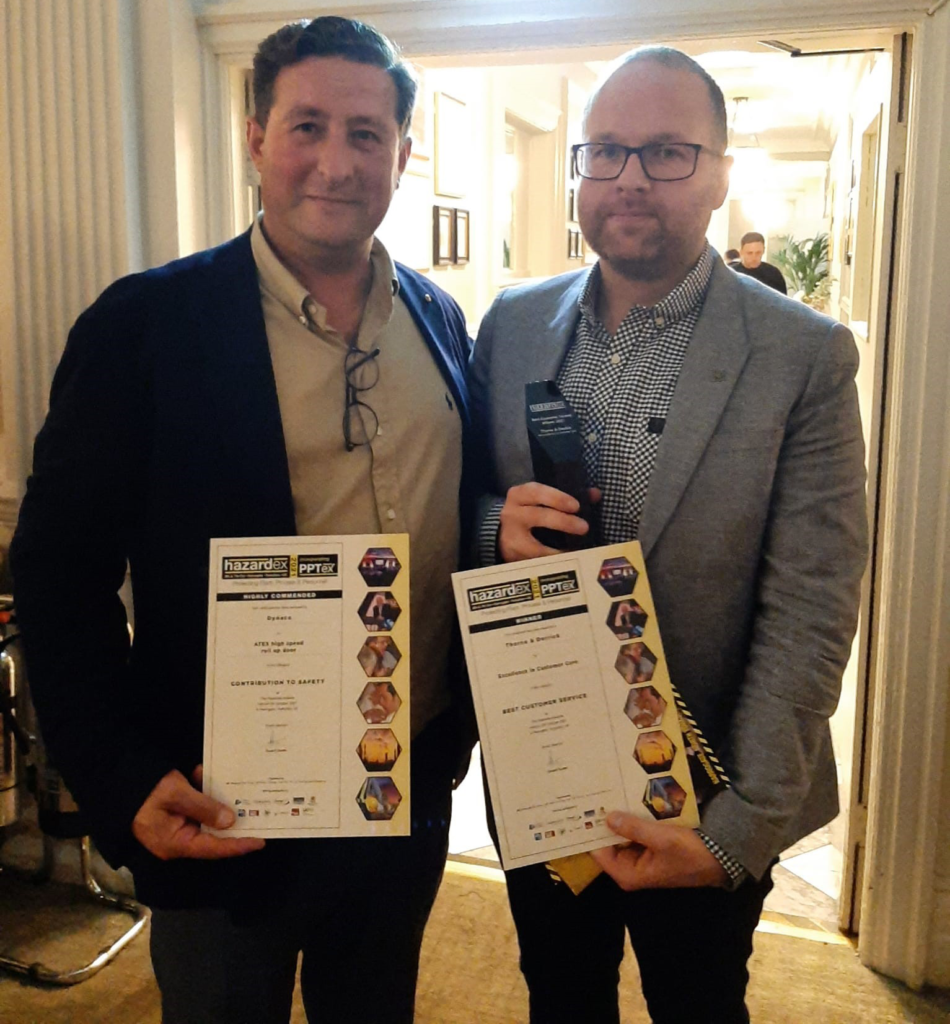
The Dynaco product range was selected as Highly Commended in the Contribution To Safety Categoryat Hazardex 2021. Pictured : Yves Degroote (Dynaco, Business Development Manager).
Designing Customer Service Excellence | Pictured: Barry Thompson (Director of Hazardous Area Lighting Division at Raytec) congratulates Terry on the evening of the Awards ceremony. Raytec, world leaders in the manufacture of LED lighting for explosive atmospheres, won the HazardEx 2020 Award for “Best Customer Service” for their Lighting Design Service.
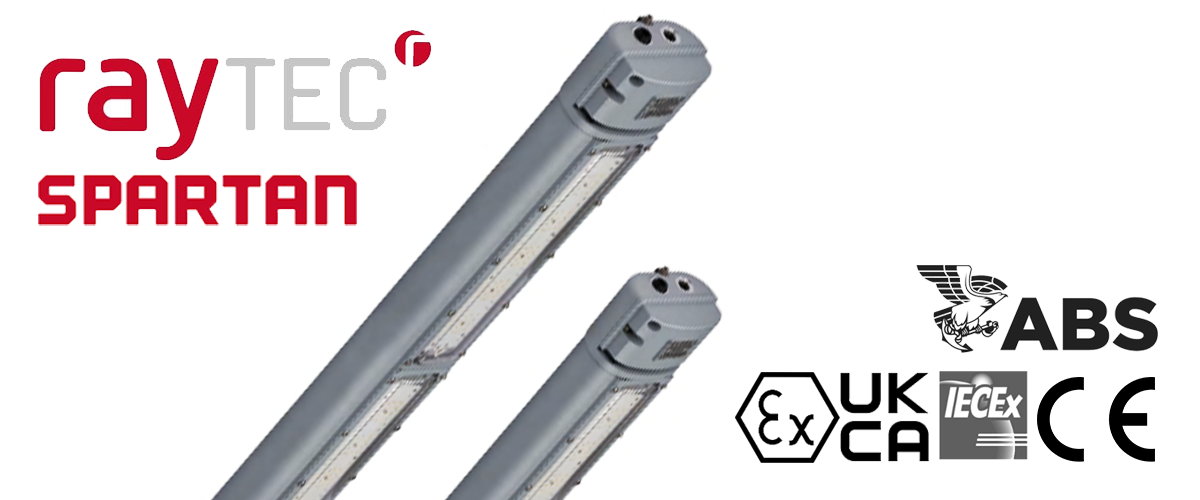
Thorne & Derrick are a Preferred Stockist & Distributor for the Raytec SPARTAN range providing customised lighting design services and competitive product supply from extensive stocks – we have successfully supplied and upgraded multiple customers facilities to SPARTAN brilliant bright-white LED technology, providing hazardous area lighting systems with significantly reduced annual energy consumption and lower carbon emissions.
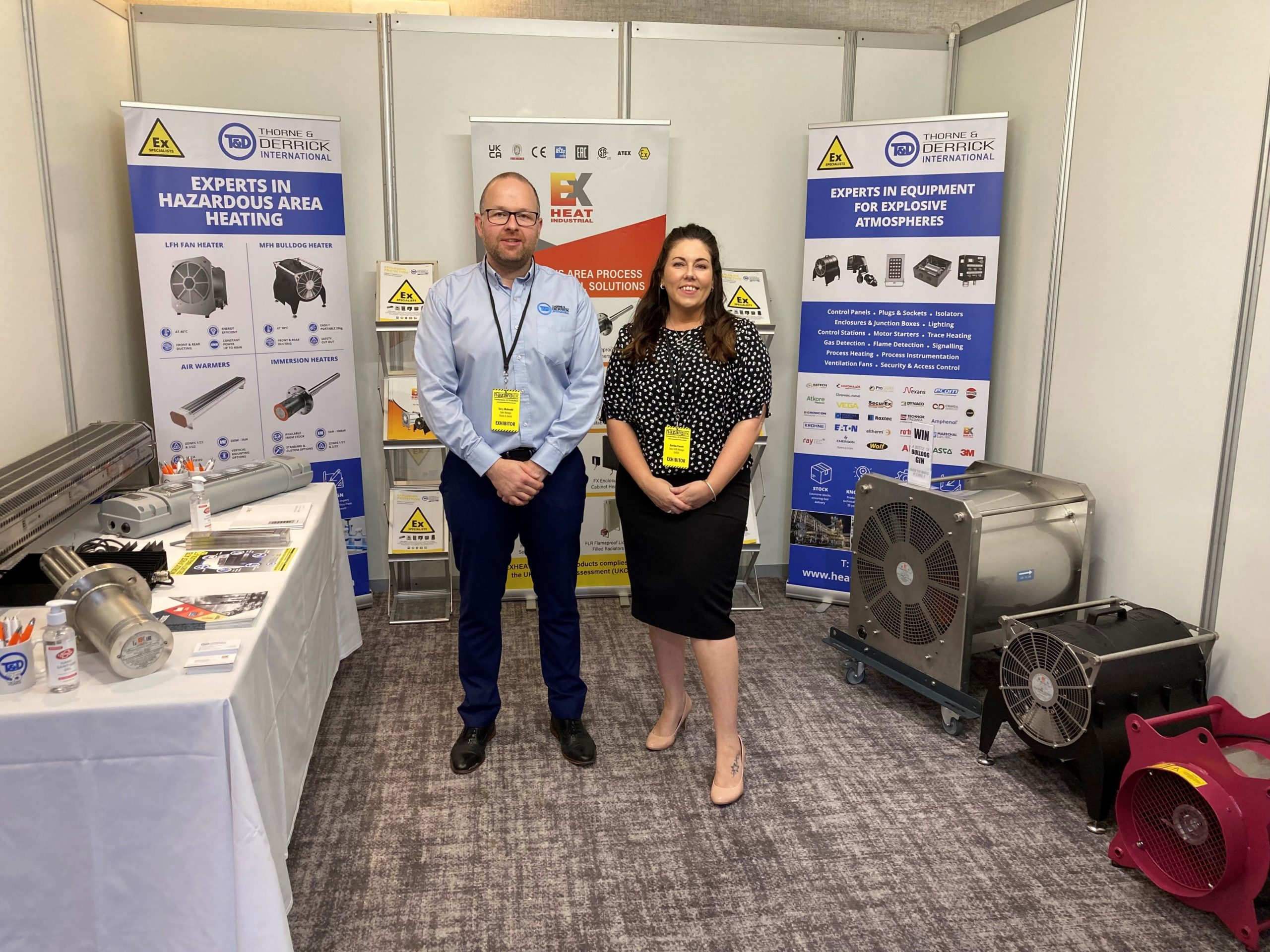
Terry McDonald with Katrina Parrot (Sales & Business Development Manager | EXHEAT) displaying the most extensive range of Hazardous Area Electrical Heating products including their Bulldog, The World’s First Portable ATEX Heater, at Hazardex 2021. To maintain the highest levels of customer service Thorne & Derrick hold the largest stocks of electrical heating products for explosive atmospheres in the UK.
An Introduction to Maintaining an Ex Luminaire
When sourcing lighting to install in hazardous areas, cost, performance and reputation of the manufacturer, are important criteria to consider. But how much thought do end-users give to ease of maintenance? For many, the answer to this question is probably, ‘not enough’.
This White-Paper is intended to help end users gain a better understanding of what makes a hazardous area luminaire easy to maintain, and how it can help to reduce costs.
The design of a luminaire, and how easy it is to maintain, can vary significantly between different manufacturers and different luminaires. In part, this is down to how the units are certified; certification can restrict the level of maintenance that can be carried out on-site. However, ease of maintenance is also down to the manufacturer and how much importance it’s given during the design process. It’s easy for a manufacturer to overlook ease of maintenance, especially as the person specifying the lighting is not always responsible for maintaining it.
Choosing an LED luminaire will of course help to reduce the amount of maintenance required, but as with any electrical product, there is always some risk of failure. In hazardous area applications, where the environment can be particularly harsh and challenging, this risk is often amplified. So, while LED undoubtedly helps to reduce the level and frequency of maintenance, no hazardous area luminaire should really be thought of as being completely ‘maintenance free’.
Before we look more closely at what actually makes a luminaire easy to maintain, we’ll first consider what maintenance is required for any luminaire installed in a hazardous area.
What Maintenance is Required?
Routine Inspection
Luminaires that are certified for use in hazardous areas possess special features which render them suitable for use in these environments. Routine inspections are therefore required over the lifetime of the luminaire to ensure these special features are preserved.
The level and complexity of these inspections are covered under hazardous area guidelines (BS EN60079- 17), but speaking generally, will usually be visual and are unlikely to require the unit to be opened up. As a result, the design of a luminaire, and how easy it is to maintain, is unlikely to have any significant impact on the complexity and duration of these routine inspections. Crucially though, these inspections are designed to highlight the need for any additional, unplanned maintenance. It is these requirements that make a luminaire’s ease of maintenance so important.
Unplanned Maintenance
Unplanned maintenance can be categorised as any maintenance procedure which is required outside of routine inspection. Unplanned maintenance is likely to be more complex, and there is a higher chance that the unit will need to be opened up for a problem to be rectified or repaired.
A luminaire’s ease of maintenance will determine two things;
Who can carry out the repair; the end-user or the manufacturer?
Whether the unit can be repaired at all, or if it must be replaced?
The answer to these two questions will have a significant effect on the length of time which the end-user will be left without light, and on the cost (both the direct cost of the repair, but also the associated costs of downtime).
➡ Pro-Tip – Any unplanned maintenance requirements could increase the lifetime cost of the luminaire if it is not easy to maintain.
Identifying Ease of Maintenance
Traditional Luminaires
Luminaires in this category are non-LED and use traditional technology (such as fluorescent tubes or sodium lamps). Of course, this category is very broad with a wide variety of different types of luminaire.
However, they are similar in that they all have a shorter lifetime (so lamps will have to be replaced numerous times over the lifetime of the luminaire). While the process of maintaining the luminaire may be a slow or difficult process, maintenance can generally be carried out on-site.
Sealed for Life LED Luminaires
We know that choosing an LED luminaire means maintenance is required less often, but we’ve also highlighted that when installed in a hazardous area application, it should not be considered as being ‘maintenance free’.
Despite this, many LED luminaires are factory sealed. Because the seal is critical to the luminaire’s hazardous area certification, it cannot be opened up for maintenance or repair.
Tampering with the seal, or forcing the unit open, would mean the luminaire no longer complies with its Ex rating and could present a risk of explosion. Sealed for life units must therefore
be returned to the manufacturer for any maintenance procedures to be carried out.
Modular LED Luminaires
Modular luminaires are designed with maintenance in mind; the unit is not factory sealed and can be opened up on-site. Maintenance can therefore be carried out by the end-user.
Spare parts are interchangeable and can be removed independently, while the ability to mount key components remotely can also make access for maintenance much easier.
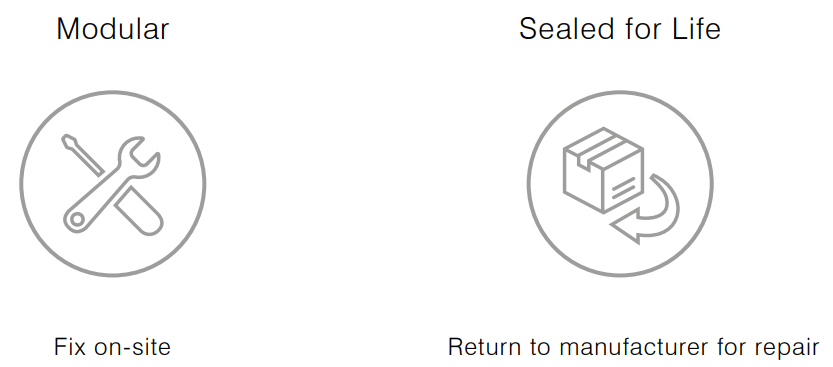
The key feature of a modular luminaire is that maintenance can be done on-site and there is no need to return the unit back to the manufacturer.
➡ Pro-Tip – A modular luminaire allows maintenance to be carried out on-site, whereas a sealed for life unit must be returned to the manufacturer to resolve any issues.
Why is Modular Easier to Maintain?
Now we know how different types of luminaire can be grouped, we need to understand what’s different about a modular luminaire which makes it easier to maintain.
A modular luminaire should be designed to ensure parts can be removed and replaced without causing damage to the luminaire.
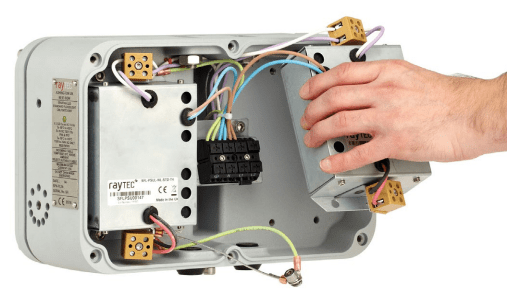
This means parts such as PSUs, emergency batteries, light engines etc. can all be removed independently. The luminaire is not factory sealed, which means an end-user can access internal components and carry out maintenance without having to remove the luminaire first. Meanwhile, spare parts can also be kept on-site to service the installation.
These features help to speed up the process of maintenance and reduce downtime.
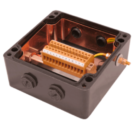
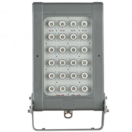
Figure 1: A modular luminaire allows parts to be removed independently
At this point, you may be asking, ‘How is all this possible within a hazardous area environment?’. Primarily, it’s down to the unit’s protection method and how it’s been certified. A true modular unit will be ‘Ex e’ certified (increased safety), which in short, means the unit has been designed and certified to prevent an explosion (rather than contain it). Not all Ex e luminaires are modular but certifying using this protection method does allow the manufacturer more flexibility in being able to design it for easy maintenance.
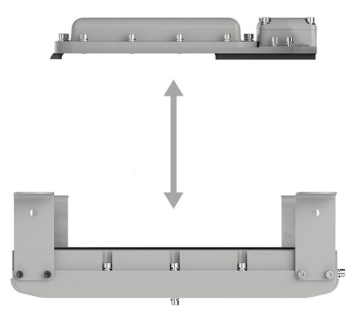
A modular unit should also make access for maintenance easier. In the same way that parts can be removed independently, the control gear can be mounted remotely, away from the luminaire’s main body. This makes access for maintenance much easier (we cover this in more detail in section 6.0).
Figure 2: Modular luminaire’s also allow PSU’s to be removed and mounted remotely for easy access
➡ Pro-Tip – Because a modular luminaires parts are interchangeable, a small stock of spare parts can be kept on-site to service the installation.
Modular vs Sealed for Life
If you are reading this White-Paper, and have an interest in reducing maintenance costs, you probably already understand the benefits of selecting a luminaire using LED technology. For the remainder of this White-Paper we will therefore be focusing on the differences between sealed for life and modular luminaires.
We know that a modular luminaire is easier to maintain, but we also need to understand why ease of maintenance is so important. To recap, the biggest and most significant difference between the two is that modular luminaires can be maintained on-site, whereas a sealed for life luminaire must be returned to the manufacturer.
Downtime
A component failure could result in either a partial or total loss of light from the luminaire. A loss of light may mean an increased risk to workers onsite, or operations may even have to cease. This
could have huge cost implications, which means the speed of resolution is critical.
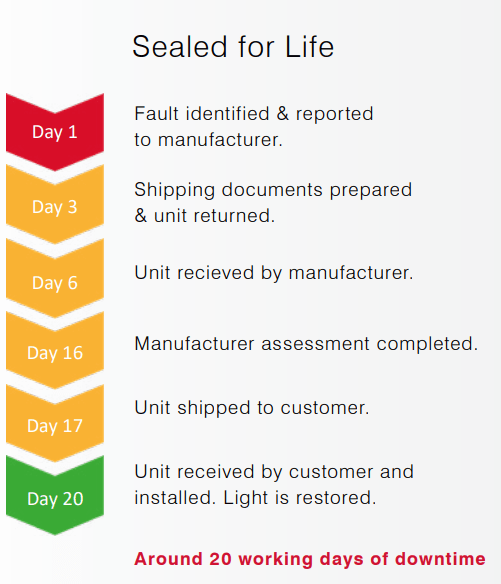
Sealed for LifeLuminaire
If a failure does cause a loss of light output, it’s unlikely that an end-user will be able to do anything to rectify the problem. The luminaire must therefore be returned to the manufacturer which will have a significant impact on the length of downtime. Let’s take a look at a typical downtime period for a sealed for life luminaire.
Figure 4: Typical downtime of a Sealed for Life luminaire
Transporting a unit between an end-user and manufacturer can be a slow process. Ex lighting is installed across the world, but a customer will often be expected to return it to a single location for repair. The exact duration will depend on the end user’s proximity to the manufacturer, but it could add a number of days to the overall downtime period.
Another factor that contributes towards the duration of downtime is the time it takes for a manufacturer to complete a fault assessment. The assessment will identify the cause of the failure and establish whether it can be covered under warranty (this is usually required before any further action can be taken to resolve the issue). Of course, the length of time this takes to complete will vary between manufacturers. While the best case may be that the assessment is completed within a few days of the unit being received, in reality, it could take significantly longer.
For offshore applications (and other applications where access is difficult and transport is restricted) the duration of downtime could increase significantly. Offshore applications rely on the use of helicopters to get goods to and from shore; these flights are often limited in frequency, and also unreliable due to the harsh conditions of an offshore environment. This could lead to long delays which will increase overall downtime. The longer the downtime, the higher the cost to the end-user.
Modular Luminaire
With the ability to access the internal components (without risk of invalidating the certification), modular ex lighting can be serviced on-site. This allows light to be restored much quicker in the
event of a failure.
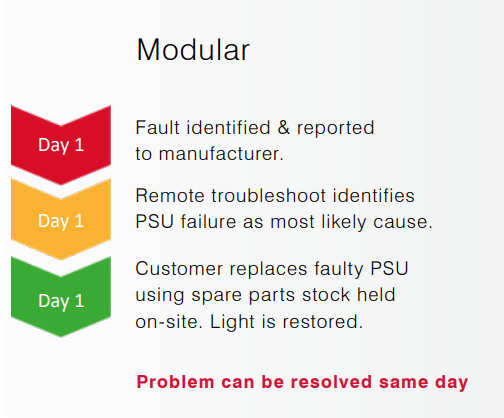
Without the need to return the unit to the manufacturer, transit times are no longer an issue. With the ability to keep spare parts on-site to service the installation, combined with a design which lends itself to easy maintenance, any issues with a modular luminaire can be rectified almost as quickly as they’re identified.
Figure 5: Typical downtime of a Modular luminaire.
On-site maintenance also facilitates remote troubleshooting. For a sealed for life unit (with no way of carrying out a repair), a remote troubleshoot would be a pointless exercise. For a modular unit though, it allows a faulty component to be identified quickly, and then replaced from spare part stock kept on-site.
However, understanding the exact cause of failure may still be important. If the failure has been caused by something on-site, the assessment will provide important information to the end-user and help them rectify the problem.
Because faulty components can be removed independently, they can be returned to the manufacturer without having to ship the entire luminaire back. As well as reducing shipping costs, time also becomes less critical. The luminaire’s output can be restored first using the spare parts, and the faulty components can be returned for assessment afterwards.
How Fast Can You Change a Power Supply on Spartan Linear?
Watch the video below as we demonstrate how quick the process is to change a PSU/driver on a SPARTAN Zone 1 Linear
Environmental Impact
Knowing that a sealed for life luminaire must be returned to the manufacturer for maintenance, let’s now consider the environmental impact; an increasing global concern.
Sealed for Life Luminaire
Once the luminaire eventually reaches the manufacturer, even they may be unable to actually repair it. Carrying out the fault assessment is often impossible without damaging the luminaire to the extent that it cannot be resealed. The process of returning the luminaire is more likely to be for fault identification purposes (and whether the fault is covered under warranty). Regardless of the cause of the fault, the most likely solution will be for it to be replaced by a brand-new unit. The existing housing will be scrapped, and if it contains high levels of polycarbonate or GRP (glass reinforced plastic), this could be particularly damaging to the environment.
We identified earlier that Ex lighting is installed across the world, so the logistics of shipping the luminaire back to the manufacturer could significantly add to the luminaire’s environmental footprint (the extent of this will depend on the location of where the unit is installed, and of the manufacturer). The best case is that the manufacturer has a local repair centre (to reduce shipping distance), but with many manufacturers, the luminaire will have to be returned to a single global location.
Modular Luminaire
The environmental cost of a modular luminaire is a fraction of that of a sealed luminaire. Because the parts are interchangeable, a single component failure will not render the whole luminaire useless. Basic troubleshooting should allow a faulty component to be identified remotely, and the ability to replace parts while the luminaire is in-situ, means in theory, there is never a requirement to return the entire fitting to the manufacturer.
To identify the exact cause of failure, and for warranty purposes, a faulty component could still be returned to the manufacturer for inspection. However, the ease and environmental impact of doing this will be much smaller when compared to returning the entire unit.
Cost
Reducing downtime and the impact on the environment will ultimately translate into significant cost reductions too.
Modular Luminaire
The ability to repair the luminaire on-site removes any costs associated with returning the luminaire back to the manufacturer. Furthermore, even if the repair is not covered under warranty, the cost of repair will be significantly cheaper than having to replace the entire luminaire.
Sealed for Life Luminaire
Transporting goods to and from site can be challenging and expensive. The responsibility of returning the faulty unit to the manufacturer will almost always lie with the customer, rather than the manufacturer. Even if the fault is covered by the luminaires warranty, the customer may still be expected to cover the cost of the luminaire being shipped back.
Furthermore, if a fault occurs which is not covered under warranty, i.e. over-voltage of a PSU, the customer may have to pay the cost of a new unit as the entire luminaire is likely to be replaced rather than repaired (even though only one, relatively inexpensive component has caused the failure).
Figure 6: Summary of Modular vs. Sealed for Life
Sealed for Life Luminaire
Modular Luminaire
Increased downtime; no on-site maintenance possible
Reduced downtime; allows field-based repair
Increased environmental impact; more scrappage, more shipping
Increased lifetime cost; no cost-effective method of repair
Reduced lifetime cost; spare parts can be kept for servicing
Increasing Ease of Access
A luminaire that is easy to maintain is only likely to benefit an end-user if they are able to easily access the unit in the first place. The nature of some hazardous area applications means that doing so may be dangerous or require specialist equipment. Thankfully, the design of a luminaire can also help to make access easier.
As well as being easy to maintain, a truly modular solution should also allow key components to be mounted remotely (with a wired connection to the luminaire head, via a cable) and provide an end-user with greater flexibility in the way that they mount the luminaire. If PSUs can be mounted at ground level, access for maintenance becomes far easier. As well as reducing the cost of maintenance, this will also help to increase speed and minimise downtime.
At Raytec, this is something we’ve experienced when working with clients installing luminaires in grain storage warehouses, which will usually have High Bay luminaires mounted to (or suspended from) the warehouse ceiling. With non-modular lighting installed, gaining access to the luminaire may require the grain to be removed before maintenance is carried out; a slow and costly process. Plus, even if the luminaire can be accessed without needing to remove the grain, carrying out maintenance with the grain still below is risky; it could lead to it becoming contaminated if anything falls while maintenance is being carried out. In contrast, being able to mount the PSUs remotely means maintenance can be carried out at ground level (so there is no risk of contamination), and the grain does not have to be removed. Ultimately this means maintenance can be done quicker, and at a lower cost.
Make Maintenance Easier with a Remote PSU
Watch the video below to see how SPARTAN’s High Power Flood and Bay luminaires removable PSU can benefit installation and maintenance.
Warranties and Returns
We have mentioned warranties a few times during this White-Paper, and a good warranty is certainly an important thing to look for when selecting a luminaire for a new lighting installation. A good warranty can help to reduce costs and provide peace of mind. However, even with the best warranty, associated downtime costs are unavoidable if the unit cannot be maintained on-site and must be returned to the manufacturer. There may also be hidden costs to a warranty that you might not have considered. We consider some of these here;
What’s Actually Covered?
Some warranties may only cover mechanical problems (such as corrosion to the luminaires housing). But what about electrical components, such as the luminaires PSU, where failures are more
common? If they are not covered by the warranty, the manufacturer will not be obligated to rectify the problem should something go wrong. Furthermore, the labour cost to repair the fault could come as an extra charge to the end-user.
Return Shipping
If the unit has to be returned to the manufacturer for repair, it will generally be the responsibility of the end-user to cover the cost of doing so. In some instances, the customer may also be expected to cover the cost of getting the unit back to site after the repair has been carried out; even if the repair has been covered under warranty. This will depend on the manufacturer’s terms, so it’s always best to check if you’re unsure.
Is a Repair Possible?
We highlighted earlier that even the manufacturer may be unable to repair a sealed for life luminaire. This issue is amplified for issues not covered under warranty. It means the end-user is more likely to have to pay for an entire replacement, rather than just covering the cost of repair. The expense of this is likely to be significantly larger than the end user would have anticipated.
Discretion
Warranty terms vary between different manufacturers. Some warranties may include a reference to manufacturer ‘discretion’, which gives the manufacturer more authority and flexibility in deciding how warranty claims are resolved. As an example, the manufacturer may have the discretion to resolve a problem by repairing the luminaire, replacing it with an equivalent, or to issue a credit instead; regardless of the customer’s preference.
Raytec Emergency Hazardous Area Lighting
💡 Did you Know? Thorne & Derrick using latest software provide a FREE LIGHTING DESIGN SERVICE for the specification and supply of ATEX & IECEx Certified light fittings to provide safe and reliable lighting in explosive atmospheres and hazardous area locations.
Industry leading manufacturers of Lighting Products for hazardous areas | Raytec
SPARTAN is a full range of Ex LED luminaires and lighting approved for all ATEX and IEC Ex Zone 1 and Zone 2 hazardous area environments, including UL /CSA C1D2 installations. The hazardous area lighting products are designed for the most extreme environments – Flood, Linear, Bulkhead, Bay and Crane luminaires with emergency and industrial lighting versions are also available from Thorne & Derrick International.
Specialists to the Process & Hazardous Area Industries
EXPERTS IN EQUIPMENT FOR EXPLOSIVE ATMOSPHERES
leaders in ATEX Innovation To The Hazardous Area Industries
Thorne & Derrick are leaders in the development and distribution of Product Innovations that deliver significant improvements to clients plant, people and operational safety in the explosive atmosphere industries.
Your proactive problem solvers experienced in succession planning for the replacement of obsolete, non-conformant and legacy equipment in hazardous areas.
Your first-choice provider of innovative and competitive solutions to ensure ATEX & IECEx Compliance for Hazardous Area Electrical, HVAC & Process Instrumentation Equipmentto UK and international projects.
Press Release Date: 02.04.2020 uploaded by Chris Dodds (T&D Sales + Marketing Manager) World’s First Fully Certified ATEX Doors Thorne & Derrick International, the Experts in Equipment for Explosive Atmospheres, today announce the signing of a Commercial Distribution Agreement...
Press Release Date: 04.07.2019 uploaded by Chris Dodds (T&D Sales + Marketing Manager) Category: Stockist Distributor Agreement Announcement Thorne & Derrick International announce that they have signed a Preferred Distributor Agreement with Raytec, the world leading manufacturer of LED...
























 An Introduction to Maintaining an Ex Luminaire