Dazzled by Floodlight Glare in a Pitch Black Tank? Wolf Safety Finds the Ideal Solution
A totally enclosed tank in a hazardous area which needs inspecting, cleaning or repairing is never going to win a workplace of the month award. You need good portable lighting just to see where you’re going, let alone carry out the task in hand.
If you’re working in a team there will be floodlights in use in different locations within the tank and the last thing you want is to be dazzled by the glare of your own light or those of your colleagues.
Aware of the problem Wolf Safety, world leaders in ATEX portable lighting, have found the ideal solution. Their design team has developed an easily portable LED floodlight, designed to reduce beam glare when working in potentially explosive atmospheres.
ATEX TANK LIGHTING
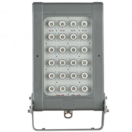
The robust LinkEx™WF-250XL Floodlite, easy to carry and more economical than comparable units, produces more than 3,000 lumens of white light, more than enough to illuminate a 5m square tank or similar space without dazzling.
Wolf LinkEx WF-250XL Floodlite
With full application support available from Wolf’s technical team the WF-250XL offers an efficient, cost effective and highly versatile lighting solution for use in potentially explosive atmospheres, even in the world’s harshest environments.
It also incorporates Wolf’s unique SOVI™ technology which alerts the user if lights are running outside certified and optimal voltage ranges, maximising safety and performance. Both LV and HV units are certified safe down to zero volts, as are Wolf’s WF-300XL and LX-400/E luminaires.
Wolf Safety Lamp torches and portable hazardous area lighting ranges are certified to both ATEX and IECEx standards – this includes handlamps and headlamps for lighting in potentially explosive atmospheres.
ATEX Portable Lights
“Users tell us our more powerful WF-300®XL Floodlite, which provides over 6,000 lumens, is great but can be too intense when working in small spaces,” says Michael Morley, Wolf Safety’s Technical Director.
“This new product not only solves that problem but also offers great lighting performance in confined spaces.”
Fully compliant with the latest ATEX and IECEx standards, including OPIS (optical intrinsic safety), the ATEX portable light is fitted with a highly reliable LED array designed to provide at least 100,000 hours of working life. The product’s design and construction incorporate cooling fins which ensure effective heat dissipation.
Contact Thorne & Derrick for the competitive supply of the complete range of Wolf Safety Lamp portable & temporary lighting products including handlamps, torches, warning lights, ATEX tank lighting and floodlights.
EXPERTS IN EQUIPMENT FOR EXPLOSIVE ATMOSPHERES
leaders in ATEX Innovation To The Hazardous Area Industries
Thorne & Derrick are leaders in the development and distribution of Product Innovations that deliver significant improvements to clients plant, people and operational safety in the explosive atmosphere industries.
Your proactive problem solvers experienced in succession planning for the replacement of obsolete, non-conformant and legacy equipment in hazardous areas.
Your first-choice provider of innovative and competitive solutions to ensure ATEX & IECEx Compliance for Hazardous Area Electrical, HVAC & Process Instrumentation Equipmentto UK and international projects.
Thorne & Derrick, Experts in Equipment for Explosive Atmospheres, are Specialist Distributors of Gas Detection monitors and instruments for detecting oxygen, flammable and toxic gas hazards in industrial and hazardous area locations with explosive atmospheres – the gas detectors manufactured by Crowcon are economical, reliable and innovative.
Crowcon gas detectors, both fixed and portable, provide life saving alerts and notice of the presence of potentially fatal gases in working areas. Typically, a fixed gas detector is used as a permanent gas monitoring solution installed in a specific location such as a process area of a control or a plant room.
Crowcon Fixed Gas Detectors
Gas Detectors
Fixed gas detection uses the latest technology to ensure the safety of plant and personnel at all times. In the event of a gas concentration reaching a preset high level, fixed gas detectors have alarms, lights and indicators that act as a warning signal to alert the user of the gas risk hazard in both safe and hazardous area zone locations.
The below webinar is taken by Will Allum Product Marketing Manager at Crowcon for fixed gas detection systems.
Gas Detection Webinar Outline
-Fixed gas detection system communications
Benefits of digital communications
-Crowcon’s Digital solution
Introduction to GM controller
GM controller operation & navigation video
-Remote visibility
Benefits of remote visibility
GM controller remote visibility functionality
GM controller remote visibility operation & navigation video
Fixed Gas Detector Communications
For many fixed gas detector operators the go to communication type is the conventional analogue ‘point to point systems’ that has been around for many years. Reliability offers operators reassurance when they are dealing with familiar technology and functionality.
However the development of digital & communication technologies allows further information to be processed and sent to a control system dramatically reducing the cost.
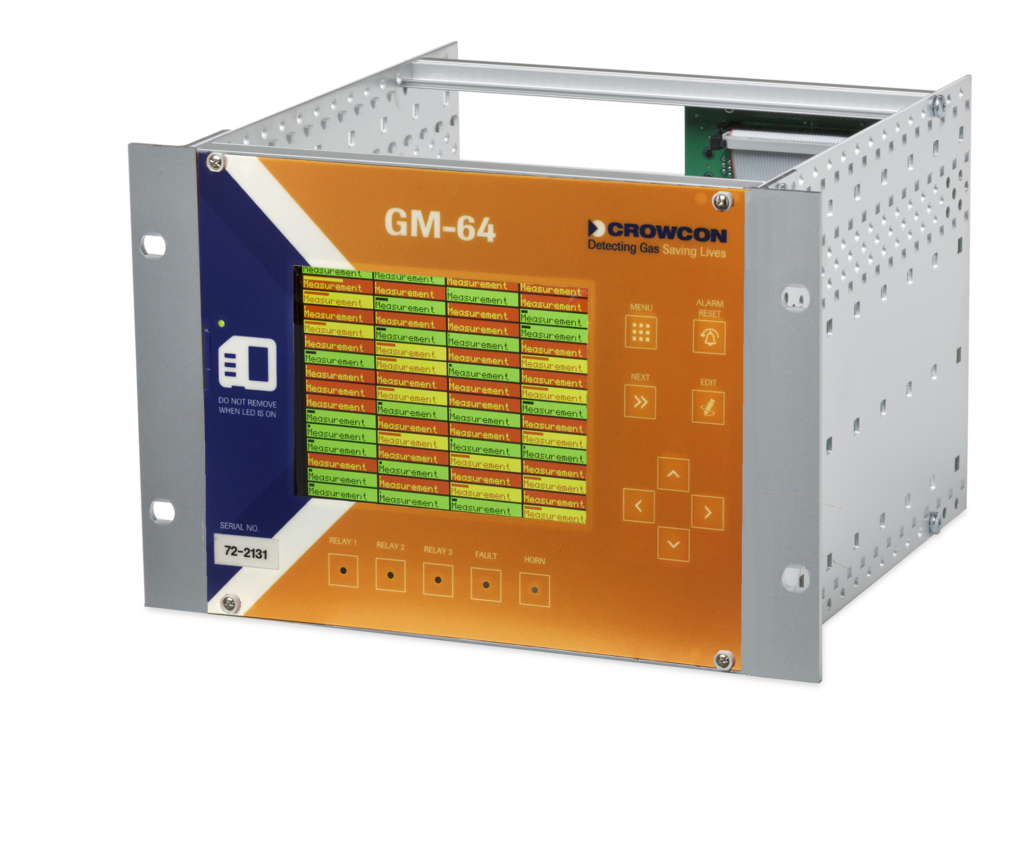
GM Controller By Crowcon
Crowcon’s GM Controller range is user friendly with a simple set up allowing up to 64 channel addressable by the controller.
Options for 16 / 64 / 128 channel capability controller which provides simultaneous display and alarm functions for up to 64 input variables on one screen (GM128 has twin screens)
4-20mA analog, RS-485 MODBUS & HART enabled communications as standard.
Addressable functionality enabled
Direct to web page live feed communication
Local non-intrusive operation or via direct web page configuration
Colour LCD display – Monitor live data & trends. Colour change to indicate alarm
Available in rack or enclosure mountings
Crowcon GM Controller
3 fixed gas detector heads available allows for digital communications –
Xgard Bright : Versatile detector with digital comms and non-intrusive operation via OLED display window.
Xgard IQ : Intelligent Gas Detector and Transmitter, with smart sensor modules with SIL2 certification.
IRmax : Infrared (IR) gas detector that delivers rapid, fail-safe detection of hydrocarbon gases and vapours
Remote visibility & control
Fixed gas detection system can be mounted in potentially hazardous locations, and access to the system is necessary for general maintenance and key task completion.
Crowcon GM controller range once connected to a network allows access to a ‘Direct to webpage’ feature. A controller IP address is activated and can be found in the controller network settings.
The IP address can be entered into any device with internet access and the user will be able to remotely login in to the same functions that are available at the controller panel.
Crowcon suggest that you look for possibilities where addressable systems or remote visibility could offer a distinct advantage and an alternative solution to your installation or operations.
Contact Thorne & Derrick for specification guidance, product selection, competitive prices and delivery from stock for the complete range of Gas Detectors manufactured by Crowcon.
Distributors of Gas Detection Monitors & Instruments
Flame, Heat, Gas Detectors & Detection Systems
Hazardous area industries including offshore oil/gas platforms and FPSOs, onshore oil refineries, processing plants, pipelines, storage farms and LPG/LNG plants all utilise or produce a wide range of hazardous flammable liquids and gases that can be detected using correctly specified flame and gas detectors.
Detecting toxic and flammable gases requires the detectors to be classified and certified according to the specific IECEx or ATEX standard – we distribute flame and fire detectors manufactured by Spectrex to operate in the harshest environmental conditions including self-contained stand-alone devices designed for direct connection to control and alarm systems or automatic fire extinguishing systems.
Our range of Hazardous Area Fire & Gas Detection Systemproducts also includes Explosion Proof Warning Systems & Hazardous Area Lighting – comprehensive range of intrinsically safe, flameproof and explosion proof alarm sounders, sirens, bells and horns, loudspeakers and beacons.
Follow our Showcase Page on LinkedIn to receive hazardous area product innovations, industry news, whitepapers, videos, technical tips and training webinars for professionals involved in the explosive atmosphere industries.
Amphe-309 | Industrial, Commercial & Data Centre
Amphenol Connectors
Reliable, Safe Operation in New Amphenol Industrial Power Connectors
In August 2015 Amphenol Industrial Products Group, a global leader in interconnect systems, introduced a new generation of industrial power connectors for use in harsh industrial, commercial and data centre applications.
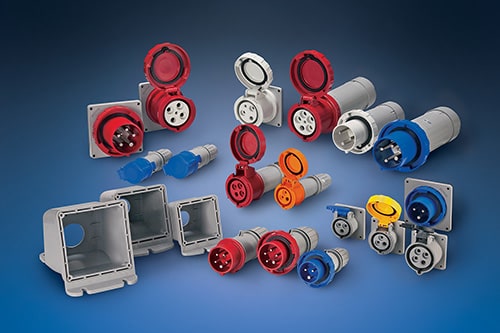
The IP44 rated Amphe-309 and IP67 rated Amphenol EX309 ranges provide safe, reliable and portable electrical connections for the most extreme and hazardous area environments.
The connectors are ideal for use on construction sites and in commercial and agricultural installations as well as in the lighting and audio power industry, the Amphe-309 has a current rating from 16 A up to 125 A, and a maximum operating voltage of 690 VAC or 250 VDC, with low-voltage options as well. These easily-recognisable and interchangeable devices feature a colour-coded system that matches amperage and voltage requirements, making them ideal for use in the field.
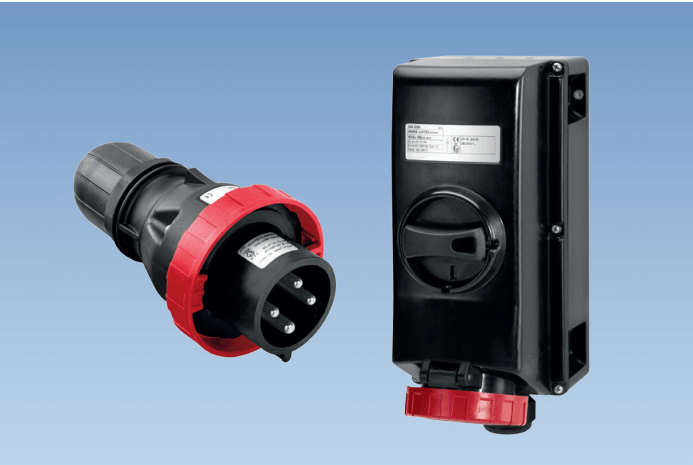
Amphenol EX309 ATEX Connectors
These ranges of connectors can be used in extreme climates (both indoors and outdoors), the devices are available in a variety of designs from a simple plug to flexible customer-created combination units. Amphe-309 is designed to withstand vibration, impact, dirt, moisture, corrosive elements as well as wash-downs. ATEX certified options available – Amphenol EX309 range.
Technical Specifications
Cable, surface and panel mounted connector types with straight and angled options
IP44 and IP67 rated
Connector current rating from 16 A up to 125 A
Maximum operating voltage of 690 V
Operating temperature range from -25°C to +40°C
Approved and certified by CE, UL, CSA and CCC
Complies with the requirements of IEC 603 09-1 &2, EN 60 309-1 & 2, BS 4343-2 1992 and UL 1682 & 1686
Amphenol EX309 & Amphe-309 Connectors
AMPHENOL EX309 & amphe-309 CONNECTORS
Approvals & Certifications
Amphenol’s Amphe-309 and EX309 range currently covers all clock positions in use and offers low profile, watertight, heavy duty and ATEX solutions.
Each connector features a positive locking feature to stop accidental withdrawal or insertion of the pin while under load. Approved and certified by CE, UL, CSA and CCC, Amphe-309 can be used in both international and domestic markets.
All components, from the plugs and receptacles to the inlets, mechanical interlocks and combination boxes, comply with the requirements of IEC 603 09-1 &2, EN 60 309-1 & 2, BS 4343-2 1992 as well as UL 1682 & 1686. Amphe-309 has an operating temperature range from -25°C to +40°C.
Amphenol EX309 connectors
ATEX Code: II 2GD Ex Protection Type: Ex d e BC Txxx°C Gb | Ex tb #IC T80°C Db IP 66 Ambient Temperature Range: -50°C + 60°C for plug 16/32A, -40°C + 60°C for plug 63/125A Maximum Permissible Surface Temperature (DUST): T80°C/T90°C Temperature Class (GAS): T4/T5 Impact Resistance: 7J Switched Socket Outlets with Dissipative Interlock Material: Thermosetting (GRP) Plug Material: PA6 – Dissipative
Amphenol Amphe-309 connectors
Protection degree (IEC 60529): IP66/IP67 Operating ambient temperature: -25°C +40°C Max. operating ambient temperature: +70°C Self-extinguishing (IEC 60695-2-I): GW test 850°C Self-extinguishing (UL94): 5VA (3mm) Material: PC siloxane IK degree at 20°C (EN 50102): IK10 (20J)
EXPERTS IN EQUIPMENT FOR EXPLOSIVE ATMOSPHERES
LEADERS IN ATEX INNOVATION TO THE HAZARDOUS AREA INDUSTRIES
Thorne & Derrick are leaders in the development and distribution of Product Innovations that deliver significant improvements to clients plant, people and operational safety in the explosive atmosphere industries.
Your proactive problem solvers experienced in succession planning for the replacement of obsolete, non-conformant and legacy equipment in hazardous areas.
Your first-choice provider of innovative and competitive solutions to ensure ATEX & IECEx Compliance for Hazardous Area Electrical, HVAC & Process Instrumentation Equipment to UK and international projects.
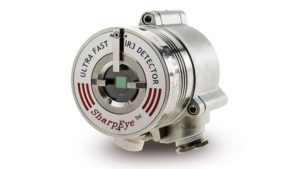
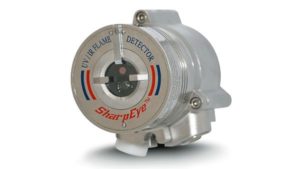
Thorne & Derrick International are suppliers of Spectrex Flame Detectors for the accurate detection of Flame in potentially explosive atmospheres and hazardous area locations according to ATEX and IECEx classifications.
SpectrexFlame Detectors are Hazardous Area Approved for use in Zone 1 & Zone areas (ATEX) and 3rd party Performance Approved for onshore and offshore flame detection.
In this blog we will be uncovering the gas and fire risks in the oil and gas industries.
Oil & Gas Fire Risks
Activities in the oil and gas industry, including gas stations and oil rigs, involve many different types of equipment and materials. Recognising and controlling hazards is critical to prevent injuries and deaths.From gas stations to oil rigs, workers in the oil and gas industries face the risk of fire and explosion.
This is due to ignition of flammable vapours or gases.
Where there is any tank storing flammable substances, vapours could ignite. Loading and unloading such substances is also highly dangerous. Because of these dangers, detection systems must be able to detects leakage for a rapid response before widespread fire occurs.
Spectrex flame detectors
Application Spotlights
Floating Roof Tanks
A floating roof tank is often used to sore large quantities of combustible and flammable substances such as crude oil and petroleum, preventing fire is a priority.
Flammable and combustible liquid storage tanks are found in industrial refineries, petrochemical facilities, bulk storage plants, and marine terminals. Tanks can range from 10 feet to more than 350 feet in diameter, averaging 45 feet tall. In a tank with a rim seal, flame detection around the rim seal must occur at the earliest stage to enable prompt activation of suppression; before the rim seal is damaged and more vapours can escape.
Fixed Roof Tanks
Fixed roof tanks is a type of storage tank used to store liquids, such as petroleum products, with vapour pressures close to atmospheric pressure. It consists of a cone- or dome-shaped roof that is permanently affixed to a cylindrical shell.
Pressure-vacuum valves purged with natural gas prevent air intake into the vapour space. Dangerous levels of toxic H2S can be present if the vapour loss through a tank’s pressure vent is high. Risks include overfill ground fires due to leaks, vent fires caused by vapour ignition due to a lightning strike, and fires due to equipment malfunction or human error.
Obstructed full liquid surface fires are hard to extinguish, as the tank roof blocks access to the burning surface. Large unobstructed full liquid surface fires can occur if a roof-shell joint separates and the tank roof sinks, such as after an explosion, leaving an exposed liquid surface vulnerable to lightning strike.
Refining
A refinery is an industrial process plant where crude oil is transformed and refined into more useful products such as petroleum, gasoline, diesel fuel, and kerosene.
In a refinery, there are numerous processes that create hazards such as fire, explosion, toxicity and asphyxiation. For example, gas and vapour leaks from crude desalting and catalytic cracking present a fire risk if sources of ignition, such as heaters, are present. Rapid flame detection prevents these fires, which can otherwise spread quickly.
Oil Rigs
Oil and gas rigs deal with a large number of highly combustible and toxic chemicals and gases. This increases the risk of fire and explosions, which can occur without warning.
There is also an increased risk of exposure to dangerous levels of toxic gases such as H2S and NH3. Consequently, there is a critical need for continuous gas and flame detection.
If exposed to fuel on an oil platform, a rapid fire can breakout. Many fires have begun during oil drilling, when a large pocket of gas is discovered. As the gas rises, it can cause a blowout: the leading cause of explosions and fire on oil platforms, occurring when the gravity of the drilling mud fails to counteract the pressure of a pressurised gas zone underground.
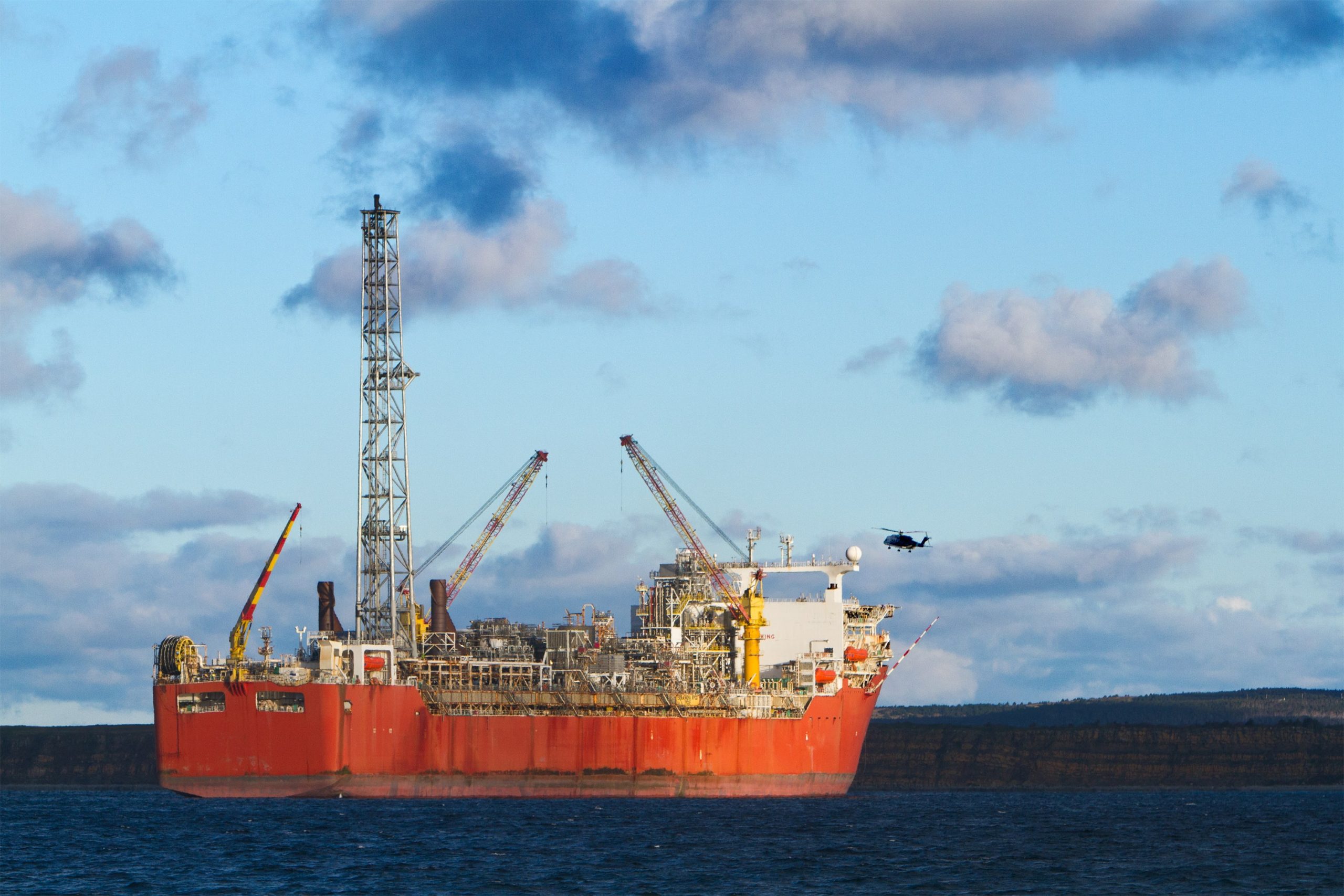
FPSO Units
The potential for gas leaks in an FPSO unit is enormous. Many types of gas leak are possible: hydrocarbons, hydrogen, H2S, and more. Each type of gas leak presents its own set of risks to both personnel and the plant.
Offshore oil and gas platforms, rigs, and FPSOs require flame detectors and open path gas detectors to protect equipment, personnel, and the installations themselves.
Both PFSO and oil and gas rigs hold many hazards areas, such as:
Production areas (drilling pits and pipes)
Offloading areas (piping connecting to loading vessels)
Turbines/engines enclosures
Heating ventilation and air-conditioning ducts (HVAC)
Control rooms, operation cabins, and captain bridges
Residence cabins and recreational areas
Kitchen areas and dining rooms
Marine, Rail & Road
Flammable and toxic products are often transported by sea, rail, or road.When these products are loaded or offloaded, there is an increased risk of spillage or leakage.
There are various hazards associated with loading and unloading, for example, releasing methanol from pressurised piping can cause instant liquid flashing and vapour generation.
Combustion and toxic hazards are always present to a varying extent in loading and offloading processes.
Pumping Stations
Pumping stations, also known as compressor stations, are located along pipelines and facilitate the transportation of natural gas from one location to another. The gas is repeatedly pressurised every 40-100 miles, to allow its transportation. The stations have engines or special turbines to pressurise the gas.
Although the occurrence of fires in natural gas compressor stations is infrequent, the consequences are often severe. These fires can lead to destruction or extensive damage of equipment to the loss of an entire station, and even loss of lives.
The two major causes of compressor station fires are failures of the gas piping systems and failures of the lubricating and seal oil systems on the compressor units.
Gas Stations
Fire is a very real possibility in a gas station. This is due to the presence of flammable fuel, together with possible ignition sources, such as static electricity.
Gas stations sell vehicle fuels such as gasoline and diesel, and condensed gas. Fuel dispensers are used to pump the fuel into vehicles. Gasoline and diesel are obviously highly flammable, presenting a significant fire risk.
By using an effective flame detector, you can reduce this risk and benefit from increased safety for your gas station and its personnel.
Compressor Stations
Compressor stationscarry natural gases, presenting a large fire risk. Stress to the machinery can result in malfunctions that cause leaks, where the flammable fuel can come into contact with an ignition source.
Compressor decks require continuous gas and flame monitoring due to the following factors:
Constant high stress on the machinery.
Vibration, spills, high pressure leaks and fugitive emissions
In the natural gas stream, hydrogen sulfide, liquids, and undesirable particles can corrode components such as pipelines.
Possibility of seals or gaskets failing, allowing the fuel to come into contact with heated parts and an ignition source.
LNG and LPG Facilities
Liquefied natural gas (LNG) vaporises when warm, presenting a large ignition risk. It is 600 times denser than the gas form, making it more feasible and less expensive to transport.
Several processes are used to make LNG, all of which involve refrigerating the gas and expanding it, to turn into a cryogenic liquid. Spills, leakage, and subsequent explosion are a risk in every operational step of LNG production.
Petrochemical
The production of petrochemicals creates many individual hazards that must be monitored. Natural gas and petroleum are highly flammable, while some processes may create dangerous, toxic byproducts.
The chemicals involved in each petrochemical process present their own individual hazards that must be monitored.
Both natural gas and petroleum are highly combustible products. In addition, many petrochemical processes have dangerous byproducts, like toxic H2S. One such process is the production of aromatic hydrocarbons Benzene, Toulene, and Xylene.
Flame Detectors For Explosive Atmospheres & Hazardous Areas
LEADERS IN ATEX INNOVATION TO THE HAZARDOUS AREA INDUSTRIES
Thorne & Derrick are leaders in the development and distribution of Product Innovations that deliver significant improvements to clients plant, people and operational safety in the explosive atmosphere industries.
Your proactive problem solvers experienced in succession planning for the replacement of obsolete, non-conformant and legacy equipment in hazardous areas.
Your first-choice provider of innovative and competitive solutions to ensure ATEX & IECEx Compliance for Hazardous Area Electrical, HVAC & Process Instrumentation Equipment to UK and international projects.
Thorne & Derrick International, based in the UK, are Experts in Equipment for Explosive Atmospheres & ATEX Product Innovation – we supply and distribute the Marechal range of low voltage power, control and signal plugs and sockets for heavy industrial and hazardous area applications where ATEX IECEx Certified products are required.
In this series of application Blogs we review the use of Decontactors in Heavy Industry.
Changing your old connectors to Marechal DECONTACTOR™ sockets enhances electrical performance of the plant, minimises the risk of electrical shock and plant downtime.
The functional contact design allows for long life use.
Thanks to these plugs and socket-outlets power can be restored to machines quickly to minimise downtime, while always ensuring the electrical safety of operators.
Plug & Socket applications
For optimal electrical safety, Marechal offer a wide range of dedicated industrial electrical outlets for:
IP protection and differently keyed circuits (protection, motive power)
The DECONTACTOR™ and Marechal product ranges depending on the model, have glass-reinforced GRP-type polyester or metal casings.
This choice in materials contributes to the plug and sockets excellent mechanical strength and long life expectancy.
Assembly Flexibility
The 230/400 V – 3P+N+E dual-voltage sockets are able receive both four-phase and three-phase 400 V plugs, and single-phase 230 V plugs.
This compatibility constitutes a real saving for the user when installing these sockets.
Different keying positions are available by using one of 24 notch positions. This means only plug and socket combinations with the same notch position can be connected together.
Safety & Ergonomics for Operators
A simple push of the button on the top of the socket enables disconnection of equipment under full load, up to currents of 250A.
Disconnection can be performed by unskilled operators in complete safety without risk of injury from arcing. It guarantees quick and easy operation and saves time during installation or machine shutdown.
For applications where machine lock out is required or situations where the plug must not be removed, then optional padlocking can be used for LOCK OFF and LOCK ON procedures.
Machine Shutdown
Marechal DECONTACTOR™ sockets have become the first choice for ease of connection and disconnection of electrical equipment, including motors and pumps.
The integral socket switch enables equipment to be connected and disconnected on load at the push of a button.
This reduces downtime for maintenance, repositioning of production equipment etc. both skilled and unskilled staff can operate the socket release button to disconnect equipment.
DN DECONTACTOR™20 A / 30 A / 50 A / 90 A / 150 A
The metal casing on this range is designed for industries where robust connectors are crucial. DN DECONTACTOR™ can accommodate a wide range of cable diameters, making them perfect for the long cables used in mining and tunnel digging.
PF HIGH-CURRENT PLUGS AND SOCKET-OUTLETS315 A / 400 A / 500 A / 600 A – 1,000 V
The Marechal PF range can accommodate up to six auxiliaries and two pilots, is IP66/IP67 watertight (standard), and has an electro-mechanical lock-out system, for maximum safety and water protection. The metal casing offers IK10 shock resistance and is well-suited to connections for heavy equipment and generators for mining and tunnel-digging operations.
MULTICONTACT CRIMP MOUNTING CONNECTORS 5 to 37 contacts; 5 A to 30 A
Low currents: 4 mA to 20 mA Marechal multi-contact connectors can hook up equipment to a power supply and transmit data. The silver-nickel alloy used for the butt contacts provides exceptional conductivity and longevity (can withstand several thousands of operations). The casing is available in glass-reinforced polyester or metal to ensure excellent resistance – even in harsh conditions.
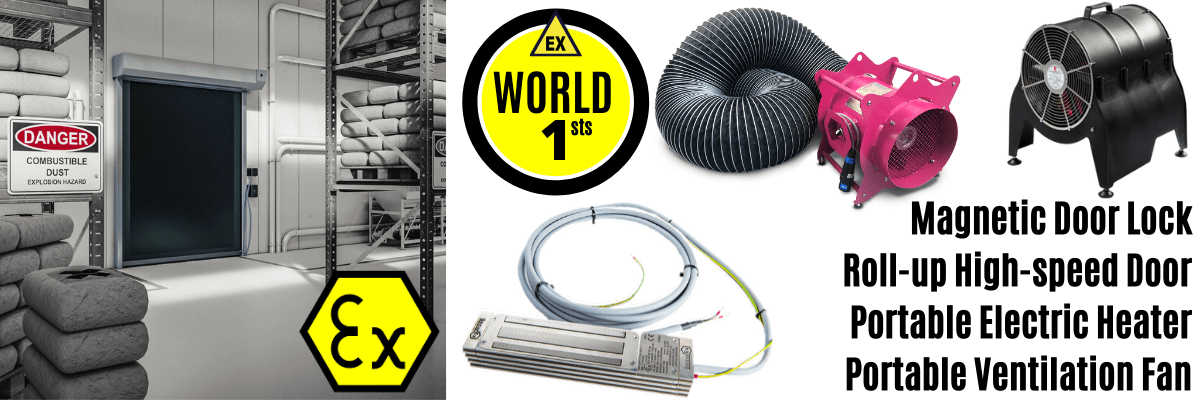
Press Release Date: 02.04.2020 uploaded by Chris Dodds (T&D Sales + Marketing Manager) World’s First Fully Certified ATEX Doors Thorne & Derrick International, the Experts in Equipment for Explosive Atmospheres, today announce the signing of a Commercial Distribution Agreement...
Press Release Date: 04.07.2019 uploaded by Chris Dodds (T&D Sales + Marketing Manager) Category: Stockist Distributor Agreement Announcement Thorne & Derrick International announce that they have signed a Preferred Distributor Agreement with Raytec, the world leading manufacturer of LED...