Thorne & Derrick International, based in the UK, are Experts in Equipment for Explosive Atmospheres & ATEX Product Innovation – we supply and distribute the Marechal range of low voltage power, control and signal plugs and sockets for heavy industrial and hazardous area applications where ATEX IECEx Certified products are required.
In this series of application Blogs we review the use of Decontactors in the offshore and maritime industries.
MARECHAL® offers a wide range of intrinsically safe products specifically certified for use in marine and offshore applications.
Based on our experience in the oil and gas industry, the investment will enable our customers in this market to have a wide range of options to choose the best solution for their applications in Maritime areas.

Plugs & Sockets
Certificates for many products are available from organisations such as the Bureau Veritas.
Marechal products have been used in applications on board ships for more than 20 years (Navy & Merchant Navy).
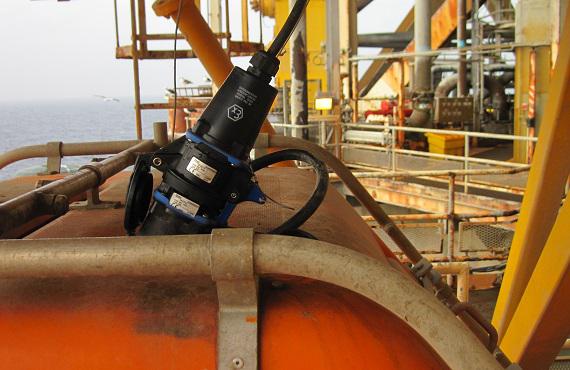
Plug applications
Marechal distribution boxes, certified BV Marine sockets and Ex-control connectors are ready for these very rigorous environments:
- Extraction, storage and offloading platforms (FPSO)
- Floating storage units
- Oil tankers
- Offshore oil and gas platforms
- Drilling ships
- Floating platforms
- Semi-submersible platforms
- Cables
- SPARS
SOLUTIONS TO YOUR NEEDS
Ensuring Operator & Infrastructure Safety
Operators can connect and disconnect electrical outlets or in line coupler sockets without any supervision or special electrical training.
Just press the button once to cut the power and eliminate the risk of electric shock; the plug is ejected automatically, disconnecting the appliance.
Marechal offers a range of electrical connectors and boxes that ensure the safe and efficient operation of a refinery, pipeline or gas pipeline.
Compactness
We know that space is one of the main issues on board ships and offshore platforms. Marechal intrinsic safety products are robust in design, with the majority being extremely compact.
Marechal Electric have more than 65 years of experience of intrinsic safety technology and protection against the risk of explosion.
All products are designed to ensure that you have the safety, stability, and reliability that your applications require.
Need for Reliability
Reliable operation, regardless of location or external conditions:
- Corrosive environments
- High vibration level
- Marine and salt water
- Water spray, stagnant water, steam and moisture
- Oil, solvents and chemicals.
Compliance with European Standards for Industrial Sockets
The plugs and sockets as well as socket-outlet boxes and junction boxes in this range are meant for use in hazardous areas in compliance with the ATEX 2014/34/EU Directive and as per the IECEx in Zones 1 and 2 (Gas) and Zones 21 and 22 (Dust).

ATEX Certified Plugs & Sockets from Marechal Electric
WE ADVISE YOU
DXN / DX Decontactor plugs and sockets are designed for hazardous areas, with ‘de’ protection mode. They comply with the ATEX 94/9/CE Directive for explosion protection applications.
They can be used in Zones 1 & 2 (Gas) and Zones 21 & 22 (Dust). Plug assemblies are certified according to IECEx standards.
Marechal multicontact connectors can hook up equipment to a power supply and transmit data. The silver-nickel alloy used for the butt contacts provides exceptional conductivity and longevity (can withstand several thousands of operations).
Due to their silver butt-contact technology, single-pole power connectors SP/SPeX admit a permanent current of 700A / 1000V ac or 1500V dc. They are waterproof IP66/IP67 and have a reliable mechanical and electrical interlocking with pilot contact circuit.


Explosion Proof Electrical Equipment Distributors
Suppliers of market-leading brands of ATEX & IECEx Certified Hazardous Area Electrical, HVAC & Process Instrumentation Equipment : CEAG | Wolf Safety | Technor | Raytec | Abtech | MEDC | Amphenol | ATEXOR | Appleton ATX | Pepperl+Fuchs | Raxton

by Manny Arceo
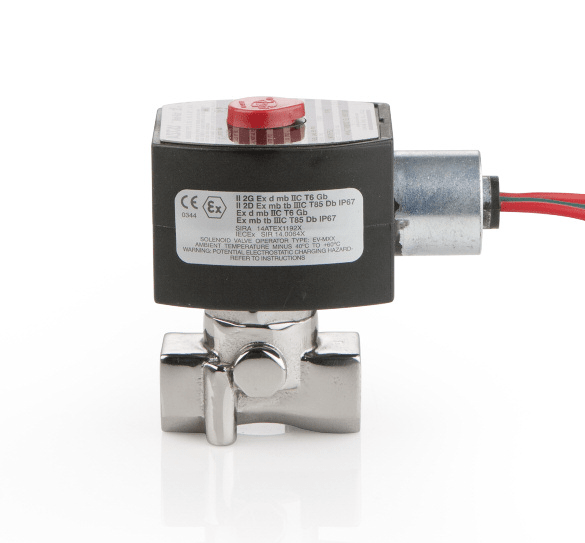
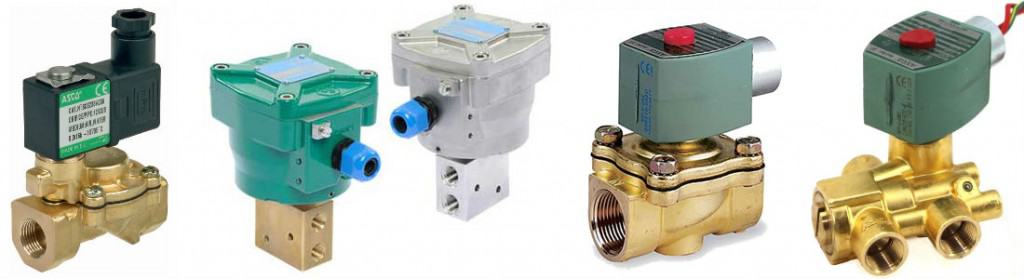
Solenoid Valves
Solenoid valves are a vital component of many process automation systems. Users must depend on these valves to operate flawlessly in hazardous or explosive environments; to comply with safety regulations; and to stay up and running for continuous and safe operation of the process and the plant.
Understanding the differences between valves is critical in specifying and selecting the correct model. This is a useful skill not only for end-user application and process engineers, but also for design engineers employed by original equipment manufacturers (OEMs). However, such understanding can be hard to come by.
Particularly difficult for many buyers to work with, are differences in the temperature ratings of valves. These T-code ratings are assigned by approval agencies in the U.S., Europe, and many other regions worldwide as industrial globalisation increases.
This paper examines and explains the differences among the world’s major temperature ratings for solenoid valves. (Note that the ratings may apply to some other electrical devices as well.)
It should serve as a concise guide to understanding and applying these ratings in order to correctly specify these components.
The advantages of global approvals
As more companies conduct their operations on a global scale, products that have received global ratings and approvals by appropriate standards bodies naturally become more popular. For solenoid valve purchasers, global approvals offer multiple advantages:
- Due to rationalization of parts, a single design/setup can be used in multiple regions.This simplifies end users’ supply chains.
- Users can specify one valve; track one SKU number; and be assured of consistent quality.
- Companies with operations in multiple locations can simplify ordering and stocking of their spare parts and rebuild kits.
- Users can streamline training, operation — and especially maintenance.
- All the above can help to cut costs and reduce inventory efforts.
From the users’ point of view, the ideal approvals regimen would feature one global set of standards emanating from one agency. Or at least one set of common standards across multiple agencies. This may be attained eventually, but not soon.
For the foreseeable future, users will be required to deal with multiple agencies issuing multiple ratings and approvals. Fortunately, some suppliers make it a point to get multiple approvals for the same valve. For example, ASCO valves with EV solenoids recently added ATEX and IECEx approvals to their existing UL- and CSA-approved products.
A valve supplier that obtains multiple approvals certainly aids its users in their global stocking efforts. However, companies specifying and using these valves must deal with multiple temperature codes (T-codes) on each product.
It is important that users interpret these ratings correctly in order to make the right specifying decisions.
The approvals world
For solenoid valve purchasers around the world, key approval agencies with international profiles are UL in the United States, CSA in Canada, and ATEX and IECEx in Europe.
Local agencies — such as NEPSI or INMETRO — typically accept test reports from these four major agencies and use the same standards, often under official cross-certification agreements. (See map below.)
Fortunately, as the map makes clear, local approvals almost invariably follow either U.S. or European methods. For this reason, knowledge of temperature ratings and approvals systems accepted in the U.S. and Europe will serve users well in making almost any valve specifying/purchasing decision.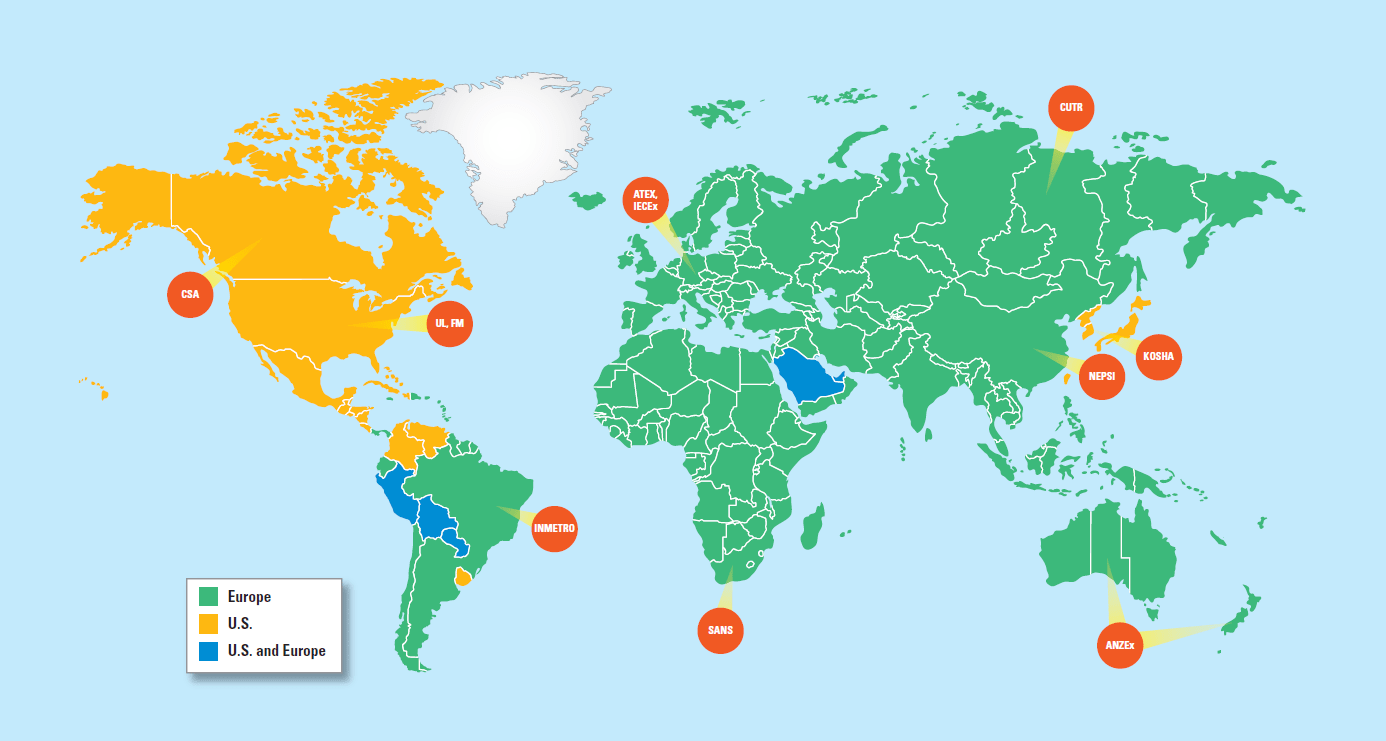
| ANZEx |
Australian Program for the Certification of Equipment for Explosive Atmospheres |
| INMETRO |
National Institute of Metrology, Quality and Technology |
| CSA |
Canadian Standards Association |
| NEPSI |
National Supervision and Inspection Center for Explosion Protection and Safety of Instrumentation |
| ATEX |
(Devices for Use in) Explosive Atmospheres |
| IECEx |
International Electrotechnical Commission System for Certification to Standards Relating to Equipment for Use in Explosive Atmospheres |
| KOSHA |
The Korea Occupational Safety and Health Agency |
| CUTR |
Customs Union Technical Regulations |
| SANS |
South African National Standards |
| UL |
Underwriters Laboratories Inc. |
| FM |
Factory Mutual |
Approvals from U.S. agencies
In the U.S., approval types are based on area classification. These vary depending on the type of hazardous environment in which a given device can be used. U.S. systems focus on two basic explosion-proof area classifications:
- Class I, Division 1: where flammable gases, vapors, or liquids can exist under normal operating conditions
- Class I, Division 2: areas adjacent to Class I, Division 1 locations, where flammable gases, vapours, or liquids can be present occasionally
Approvals from European agencies
In contrast to the U.S. area classifications above, European systems group their approval types based on the method of protection used for a given device – flameproof enclosure, encapsulate, etc. Users may encounter four popular types of protection methods for valve products.
These methods are designated by the protection methods d, m, e, and i:
| “d” |
A component that can ignite an environment containing explosive gas is placed in a metallic enclosure. If the component causes ignition of the explosive gas inside the box, the enclosure will be strong enough to contain the explosion without letting it propagate to the outside environment. This method is considered to offer the best protection in an explosion-proof environment. |
| “m” |
A component that can cause ignition (via arcing or sparking) is encapsulated by a compound that prevents the explosive environment from being ignited. Thus potentially explosive gases and component arcing/sparking sources are isolated from one another. |
| “e” |
Spacing between electrical parts is strictly controlled, so that a component cannot produce arcs or sparks that might cause ignition in an explosive environment. |
| “i” |
Power levels of electrical components are so low that, even under fault conditions, there is not enough energy to produce ignition. An intrinsically safe barrier is required, but a full enclosure is not needed. This is also known as the “intrinsically safe” method. |
Users should develop a basic understanding of these codes to apply them correctly in specifying and/or purchasing solenoid valves.
Note: IECEx vs. ATEX
Temperature code ratings and other standards from Europe may refer to either or both IECEx approvals and ATEX approvals.
IECEx is an industry group standard. It’s the system used by the International Electrotechnical Commission (IEC) for certification to standards relating to equipment for use in explosive atmospheres.
ATEX is a government standard. It’s derived from European Union directives that regulate what equipment and work environments are permissible in an explosive atmosphere.
How are these two different approvals applied to evaluating electrical equipment for purchase or specification? For practical purposes, IECEx and ATEX standards can be understood as essentially identical.
T-codes: defined
A “T-code,” or temperature code, states the maximum surface temperature which a component is able to reach in certain conditions. For the U.S., these are abnormal operating conditions and nominal voltage. For Europe, they are normal operating conditions and 10% over nominal voltage.
Basically, a valve’s T-code offers temperature information that’s critical to the safe operation of the valve. The process industries, including oil and gas, chemicals, power generation, and others, possess many hazardous locations where an explosion could occur and cause extreme damage, as well as personal injury or even loss of life.
For example, oil refineries may carry flammable gases or vapours in ambient air: a textbook case of a hazardous industrial environment.
For safety in such an environment, it is important to determine if any component can become hot enough to ignite those gases or vapours. The minimum temperature at which a gas or vapour will ignite is known as its auto-ignition temperature or AIT. All flammable chemicals have a characteristic AIT.
For rating purposes, the surface temperature of a product such as a solenoid valve must not exceed 80% of the AIT for a specific gas or vapour.
Therefore T-code ratings are assigned to products used in hazardous environments. Their purpose is to help users determine whether a given solenoid valve or other electrical device can be used in a given hazardous application or explosive location without reaching local AIT and causing gases or vapours present in that environment to ignite.
T-codes: compared
Valves sourced from both the U.S. and Europe use similar-looking T-codes to indicate safe upper thermal limits. However, some differences can be found. Maximum temperature limits are the same for both areas — except that in the U.S., the T-codes T2, T3, and T4 are further subdivided (see table below).
In the U.S., codes are based on ambient temperature plus the temperature rise of the valve surface. Here, “temperature rise” indicates the average increase in surface temperature above ambient temperature when the valve is operating.
By contrast, in Europe, codes are based on ambient temperature plus the temperature rise of the valve surface plus a safety margin of 5° C.
| Temperature Code – Europe |
Temperature Code – U.S. |
Maximum Surface Temperature |
| T1 |
T1 |
450°C (842°F) |
| T2 |
T2 |
300°C (572°F) |
|
T2A |
280°C (536°F) |
| T2B |
260°C (500°F) |
| T2C |
230°C (446°F) |
| T2D |
215°C (415°F) |
| T3 |
T3 |
200°C (392°F) |
|
T3A |
180°C (356°F) |
| T3B |
165°C (329°F) |
| T3C |
160°C (320°F) |
| T4 |
T4 |
135°C (275°F) |
|
T4A |
120°C (248°F) |
| T5 |
T5 |
100°C (212°F) |
| T6 |
T6 |
85°C (185°F) |
Again, certain U.S. temperature codes are subdivided, with different temperatures for each. For instance, the European method has only one T2 code, at 300° C (572° F). By contrast, notice that the U.S. method lists ratings from T2 at that temperature through T2A at 280° C (536° F) down to T2D at 215° C (415° F).
To avoid confusion in these or similar circumstances, some product labels state an actual temperature, instead of or in addition to a T-code. So a label may read not just “T6,” but also “85C” or “T85” (meaning maximum surface temp of 85° C) for the greatest clarity.
In both methodologies shown above, the ambient temperature is a significant factor in T-code calculations.
Since the European method adds that extra 5°C, some valve manufacturers label a valve with one maximum ambient temperature rating based on U.S. approvals, and another based on European approvals. Manufacturers often go to the trouble of seeking these multiple approvals to keep the same temperature code and prevent user confusion.
Example: a product label might list a maximum ambient rating of 80° C (T5) under U.S.-type approvals. However, to keep the consistent T5 rating, the same product might also bear European-type approvals where the maximum ambient rating might be listed as 74° C.
Tip: check the maximum ambient temperature rating for the worst case your installation might encounter. If characteristics are otherwise similar, then select your valve according to the lower maximum ambient temperature listed on its label.
T-codes: beyond the label
Markings on a label may have multiple T-codes to try to cover every real-world contingency for the entire range of industrial environments (see Figure 1).
Example: for certain applications in some locations, the maximum ambient temperature of the facility may actually be lower than the rated maximum ambient temperature of the solenoid valve. Since U.S. T-codes, for example, are based on temperature rise plus maximum ambient temperature, the valve would actually outperform its nominal T-code rating. Suppose a valve or other product is rated for T4A (120° C), with a maximum ambient rating of 95° C. If in reality the facility reaches a maximum ambient temperature of only 60° C, the product might actually deserve a T6 (85° C) rating in that situation.
If conditions at the facility where the valve will be used might qualify as this kind of special circumstance, contact our sales team before specifying a final purchase.
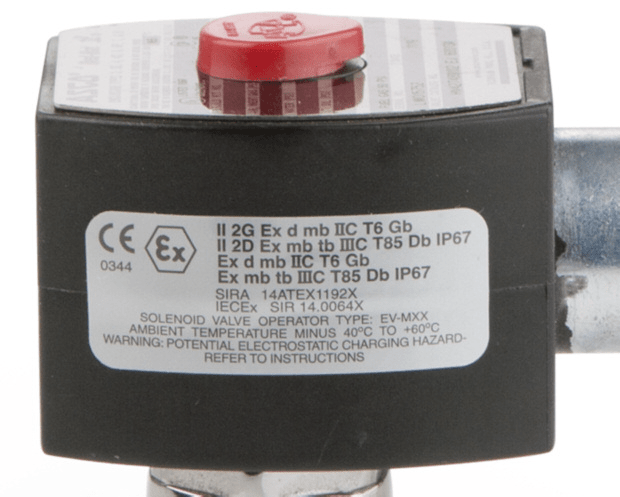
Figure 1: labels may have multiple T-codes to cover every real-world contingency
Conclusion
At first glance, the cryptic looking temperature codes printed on valve labels might seem confusing. However, using the simple explanations and pointers above, the buyer or specifier can easily select the correct ratings for a given valve and its intended application and location. Matching the right solenoid valve to the right environment helps ensure safe, efficient performance. Users can also help ensure compliance and reliable performance by making sure valves are properly tested. Query a prospective supplier about the development and testing regimen a given valve has undergone: Is it extensive? Does it test all production units, or only a few? Does it subject tested units to extreme conditions? Do tested conditions match those found on your sites?
Takeaways
- Where operating globally, seek solenoid valves with multiple T-code approvals
- Local agencies usually accept approvals from the top four agencies in North America and Europe (UL, CSA, ATEX, IECEx)
- If U.S. and Euro T-code ratings differ, select the lower rating that meets your site’s maximum ambient temperature
- For exceptionally low ambient temperatures and other special circumstances, consult Thorne & Derrick
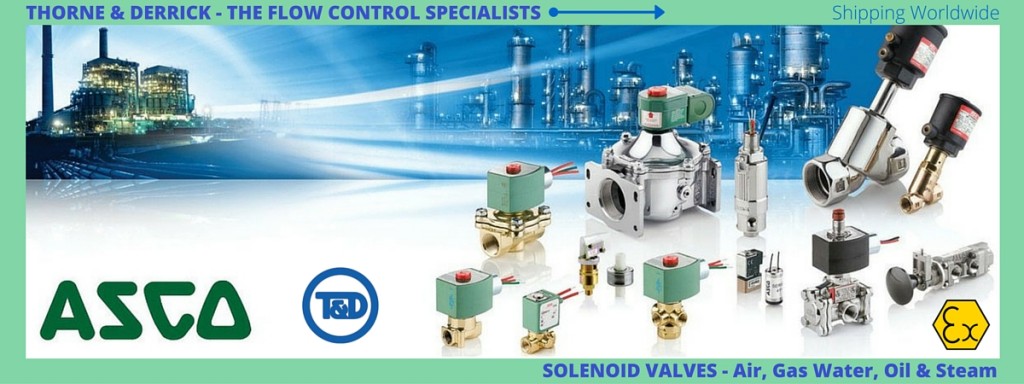
ASCO Valves

Explosive Atmosphere Experts
Thorne & Derrick are Specialist Distributors of Hazardous Area Electrical, HVAC & Process Instrumentation Equipment with IECEx & ATEX Certifications to the onshore and offshore oil, gas, petrochemicals and process industries.
We supply major UK and international infrastructure projects and also MRO (Maintenance, Repair, Operations) requirements for both planned and unplanned plant shutdowns – we react with a rapid response to customer demand to ensure downtime is minimised and reliable Power, Light & Heat is restored or provided.
We distribute Innovative products to manage the planned replacement of legacy equipment conformant with international classifications including ATEX and IECEx.
Key Product Categories: Control Panels | Plugs & Sockets | Isolators | Enclosures & Junction Boxes | Lighting | Control Stations | Motor Starters | Heat Trace Cables & Systems | Gas Detection & Detectors | Fire Detection & Detectors | Heat Detectors | Electrical Heating & Heaters
➡ Also Process Instrumentation Products: Ashcroft Pressure Gauges | ASCO Valves | Katronic Flow Meters | KROHNE Flow Meters | VEGA Level Sensors | Rotronic Temperature & Humidity Sensors
A White Paper From ASCO Valve, Inc. by David Park and George Wahlers
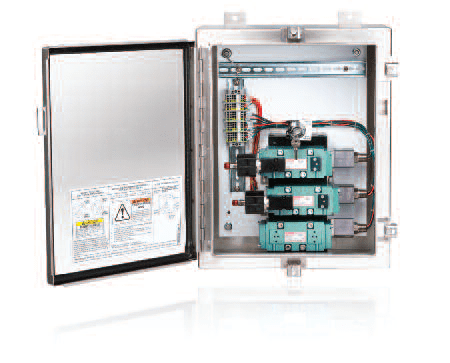 Introduction
Solenoid Valves
Regulatory modifications in 2010 raised important issues in the design and use of industrial safety systems. Certain changes in IEC 61508, now being widely implemented, mean that designers and users who desire full compliance must give new consideration to topics such as SIL (Safety Integrity Levels) and the transition from 1H to 2H methodologies.
In particular, these issues can impact users’ selection of solenoid valves and prepackaged redundant control systems (RCS) for implementation in a safety instrumented system (SIS).
Such selections may also be affected by how experienced valve suppliers are at dealing with complex new compliance methodologies. These issues are especially applicable to the oil, gas, chemical, and power industries – in applications such as safety shutdown systems, boilers, furnaces, high-integrity protection systems (HIPS), and more. They are of concern to safety engineers and reliability engineers, as well as to process engineers, engineering executives, and plant managers.
This report will address these issues in developing a compliant SIS using valves and RCSs. Making the right choices in safety system planning and in valve supplier selection can affect design time, costs, and effort — as well as the safety of the plant itself.
Safety in process
 Every industrial plant must be concerned with risks to its safety and to the mitigation of those risks. Safety of process components continues to be of critical importance in light of periodic industrial disasters such as Buncefield, Deepwater Horizon, and the November 2013 oil pipeline explosion in Qingdao, China.
Such events naturally draw media attention, and often increase regulatory pressures on all operations. In plants that actually suffer these or even lesser safety incidents, consequences can include the trouble and costs of process downtime – as well as the paramount considerations of harm to employees, the community, and the environment.
Therefore planners at all industrial process operations must avoid complacency on safety issues. Certified solenoid valves properly used in SISs are important elements of any corporate risk mitigation strategy.
Evolving standards
IEC 61508, titled “Functional Safety of Electrical/Electronic/Programmable Electronic Safety-Related Systems,” is the accepted international standard that guides selection of components for industrial safety systems. Its latest revision, explained below, was issued in 2010. However, certain provisions of this standard, especially Route 2H, are only now becoming widely implemented.
In fact, engineering groups at numerous process manufacturers are currently wrestling with complexities arising from these issues as they evolve new approaches to adjust to the new standard.
Note that the technicalities may be daunting, as this report itself demonstrates.
An extensive selection of specialised concepts and terms are introduced here (plus their accompanying initialisms, from SIS, SIL, and SIF to PFDavg, FMEDA, and FIT). All of these are used in determining correct compliance.
Their number and scope give some indication of the difficulties facing professionals who may not be well versed in this area of safety practice. Thus many designers and safety engineers tackling these changes find it helpful to consult a knowledgeable solenoid valve supplier. They report that their supplier’s experts can help deliver welcome savings in schedules and cost. This allows engineers to devote more attention to other critical parts of the project.
➡ Contact T&D’s expert sales team for more help and advice when selecting suitable solenoid valves.
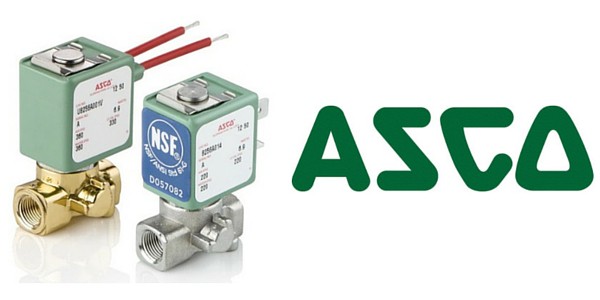
ASCO 256 solenoid valves. T&D are an ASCO Numatics Authorised Distribution Channel.
Evaluating solenoid valve redundancy and SIL
The safety engineer faces numerous challenges in designing an efficient SIS for a given plant process. He must decide what technology should be selected, what level of risk reduction must be achieved, what architecture is appropriate for the given control system components, and what testing is required to reach the system’s desired safety integrity level (SIL).
System development includes how frequently diagnostic test are performed both manually and automatically and is important because frequent testing may mean system downtime.
In particular, when selecting crucial technology such as solenoid valves, the engineer must begin by considering three factors:
- Architectural constraints dictate the required level of redundancy needed to achieve a desired SIL level for a given safety instrumented function (SIF). This redundancy is referred to as the hardware fault tolerance (HFT).
- A solenoid valve’s average probability of failure on demand (PFDavg) determines the device’s contribution to the SIF’s overall PFDavg when used with other devices, not its SIL-capability as a stand-alone device.
- Does the device possess IEC 61508 certification? Certification indicates that its manufacturer’s design, manufacturing, and quality procedures satisfy this IEC standard’s requirements for the device’s listed SIL capability.
Once the SIF is designed, SIL verification calculations determine if it will provide the desired risk reduction. For example, the safety engineer may use the following simplified formula on a single-channel, one out of one (1oo1) SIF with proof test coverage to determine if the PFDavg meets the desired SIL level:
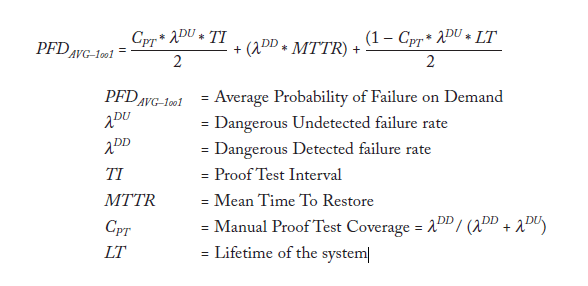
Consideration of certification is the next step. Devices such as solenoid valves are categorised as type A devices — “non-complex” mechanisms that possess discrete elements according to IEC 61508 (2010).
Certification begins with a failure mode effect and diagnostics analysis (FMEDA). This analysis determines the failures in time (FIT) rates “λ” for different types of failures: safe
detected, safe undetected, dangerous detected, and dangerous undetected. Once these rates are established, the safe failure fraction (SFF) and PFDavg can be calculated: 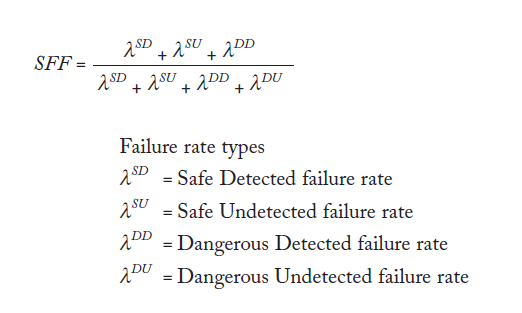
IEC 61508 allows two routes to determine a solenoid valve’s SIL capability. The traditional Route 1H uses FIT rates to calculate a safe failure fraction (SFF) for the given valve. The SFF can then be used to determine the HFT, which in turn can establish the level of redundancies required in using this valve, and can show what SIL level the safety function utilizing this valve would attain.
As part of an effort to reduce ambiguity in failure type definitions, for its 2010 release IEC 61508 altered the SFF formula used in Route 1H. Briefly, “no effect” failures are no longer a component of safe failures.
This change usually produces a lower SFF in the formula above. If the SFF values drop below certain thresholds as shown in the table below, a higher HFT than before is
required to achieve desired SIL levels. For example, a valve with an SFF of 75% would be SIL 3 capable with an HFT of 1. But if the SFF dropped below 60%, the valve would only be SIL 2 capable with that same HFT of 1.
| Type A Subsystem |
| Safe Failure Fraction (SFF) |
Hardware Fault Tolerance (HFT) |
|
0 |
1 |
2 |
| < 60% |
SIL 1 |
SIL 2 |
SIL 3 |
| 60% to < 90% |
SIL 2 |
SIL 3 |
SIL 4 |
| 90% to < 90% |
SIL 3 |
SIL 4 |
SIL 4 |
| ≥ 99% |
SIL 3 |
SIL 4 |
SIL 4 |
| Note: An HFT of N means that N+1 faults could cause a loss of the safety function. |
Evaluating Routes 1H and 2H
Another major change in the 2010 release of IEC 61508 was the introduction of Route 2H. This began the process whereby some certifying agencies are phasing out Route 1H approaches for evaluation of final elements (solenoid valves, actuators, ball valves, etc.).
As with Route 1H, failure rates (λ) are first determined via lab testing or FMEDA calculation. But instead of SFF and HFT, Route 2H uses the failure rates to determine PFDavg and HFT for SIL capability.
And perhaps most importantly, Route 2H affirms the failure rates with historical information — actual customer field return data on component reliability. In fact, Route 2H can only be applied if there is sufficient field data to support the failure rates used in the PFDavg calculations and that a valve is proven in use. If so, this data can be used to determine SIL levels.
How is that historical data obtained? It’s most often available when dealing with a supplier who has received validation from leading independent global safety certification sources, such as Exida or TÜV. Failure rates for numerous ASCO parts and components are supported by data collected by Exida arising from literally billions of hours of operation.
The paramount advantage of using Route 2H: its higher confidence level. This refers to the statistical probability that the actual failure rate — λactual— will fall between the limits λ5% and λ95% (which are at the higher and lower edges of a bell curve, respectively). While Route 1H usually exhibits only 70% confidence, Route 2H typically achieves 90% — promising a 90% certainty that the predicted failures will occur as expected. This higher confidence is possible due to the support of calculated failure rates by actual field return data, and the ability to take more uncertainties into account.
Note that Route 1H will still be used for electronic or other complex devices, programmable systems, and other devices incorporating diagnostics. Route 2H is applied to simple or mechanical products such as valves and other final elements.
Nevertheless, industry-wide acceptance of the Route 2H method has been growing steadily since it was first implemented. Agencies such as exida use the Route 2H approach for both new and renewed certifications. Some customers have been understandably hesitant to adopt it because of existing investments in their systems using Route 1H. Fortunately, changing from the 1H to the 2H approach makes little or no difference in certification. We recommend that users become familiar with Route 2H and understand its significance.
Evaluating suppliers
For the safest system design, selecting the right solenoid valve supplier may be as important as any of the technical choices discussed above.
Solenoid valves are too critical to be purchased as mere commodities; avoid vendors who emphasise the lowest price alone. Look instead for a supplier that’s deeply involved in safety issues, understands what’s involved in setting up a safety system, and has comprehensive resources to provide technical support.
Safety certification of valve components can involve considerable complexities for the supplier. Gravitate toward suppliers who have taken the trouble to obtain such certification — and who are validated by independent sources. ASCO possesses the world’s widest variety of SIL-certified pilot valve solutions. Many of these products have certifications from both Exida and TÜV international agencies.
Ask the right questions. When you’re evaluating products for an SIS, does a given supplier furnish your required level of local/international service/support? Does it provide a comprehensive selection, so you can find precisely the products you need?
Conclusion
Safety is a critical requirement for most if not all industrial plants. It’s vital that users keep up with new developments in regulation and technology within this fast-changing field.
This is particularly true of the ability to make informed decisions on issues such as compliance with IEC 61508, consideration of SIL levels, transition from 1H to 2H, and selecting solenoid valves.
An experienced solenoid valve supplier that’s knowledgeable about these issues can serve as a valuable resource for advice and information. Users who stay informed can ensure compliance and improve savings and process safety.
Takeaways
- IEC 61508 has new methods to determine SIL-capability for valves used in safety systems.
- Designers and users must consider valve redundancy, SIL levels, and transition from 1H to 2H certification methodologies
- A valve supplier concerned with and experienced in compliance topics can remove much of the burden of these issues in safety system design
- Making correct choices can affect design time, costs, and effort, as well as overall plant safety
ASCO Valves
Explosive Atmosphere Experts
Thorne & Derrick are Specialist Distributors of Hazardous Area Electrical, HVAC & Process Instrumentation Equipment with IECEx & ATEX Certifications to the onshore and offshore oil, gas, petrochemicals and process industries.
We supply major UK and international infrastructure projects and also MRO (Maintenance, Repair, Operations) requirements for both planned and unplanned plant shutdowns – we react with a rapid response to customer demand to ensure downtime is minimised and reliable Power, Light & Heat is restored or provided.
We distribute Innovative products to manage the planned replacement of legacy equipment conformant with international classifications including ATEX and IECEx.
Key Product Categories: Control Panels | Plugs & Sockets | Isolators | Enclosures & Junction Boxes | Lighting | Control Stations | Motor Starters | Heat Trace Cables & Systems | Gas Detection & Detectors | Fire Detection & Detectors | Heat Detectors | Electrical Heating & Heaters
➡ Also Process Instrumentation Products: Ashcroft Pressure Gauges | ASCO Valves | Katronic Flow Meters | KROHNE Flow Meters | VEGA Level Sensors | Rotronic Temperature & Humidity Sensors

A Management Brief From ASCO Numatics
Controlling the flow of profit
A fluid automation product such as a valve operates to shut on and off – to control – the flow of a process liquid, or the supply of compressed air. However, perceptive managers realise that valves, pneumatic actuators, and similar components can do something more.
They can control the flow of profit.
In fact, their speed and reliability can provide competitive economic advantages in operations worldwide. Because these fluid automation products offer exceptional opportunities to extend overall equipment service life, reduce warranty costs, cut maintenance/repair/operations (MRO) inventories, and increase production productivity.
Changing the rhythm
Wherever goods and materials are manufactured, processed, or packaged, the process often depends on fluid automation components. These include fluid control products such as solenoid pilot valves, angle body piston valves, linear valve position indicators, redundant control systems, and pressure sensors. They also comprise fluid power products, which provide pneumatic and motion control. Examples: valve manifolds; filters, regulators, lubricators (FRLs); actuators or cylinders; grippers; slides; and gantries.
New technologies and forward-thinking business developments have made these offerings faster and more reliable than ever before. Managers across the spectrum, from OEMs to end users, have begun to appreciate how often these fluid automation components play quiet but critical roles in total plant economic performance.
Making even small changes in their performance can change the whole rhythm of the operation. So you prevent losses and drive gains throughout the business.
Feeding the bottom line
The speed and reliability of your fluid automation components can have both immediate and long-lasting impact on the following areas:
Asset availability. Where success is measured by the minute, assets must perform for a lifetime. Selecting the most reliable components ensures fewer shutdowns and lower maintenance costs.
Engineering optimisation. Find suppliers that can deliver the products quickly. And make sure they’re the right products: ones that suit the unique application at hand, with optimum fit for pipe size, pressure rating, corrosion resistance, and more. This gets easier when your supplier carries a wide selection. For instance, with 50,000 different valves, ASCO Numatics leads the industry in offering a comprehensive choice.
Productivity improvement. Reliability reduces downtime, eliminating one of the most significant drags on productivity. In addition, properly engineered fluid automation products often offer proven improvements in repeatability, flow rates, throughput, and other critical performance characteristics.
Cost reduction. Seek competitive pricing. But remember that total cost of ownership advantages such as longer life, lower maintenance, and reduced power consumption soon outweigh differences in initial purchase cost.
Competitive advantage. For OEMs, superior fluid automation products can be integrated into products offering performance and reliability that other manufacturers can’t match. For end users, the right fluid automation solution can help your operation clearly outperform the competition.
You want to deal with suppliers who can provide products that truly make a difference. Not every valve or cylinder vendor fits the bill. Find the ones that do, and drive them to bring the benefits your operation demands.
The benefits of reliability
Selecting fluid automation products with proven records of reliability brings multiple advantages. Products that perform the first time, every time, may permit an elevated pace of operations. In addition, high-reliability products greatly reduce the chances of unplanned plant outages or downtime.
Users report that well-built products using advanced designs and top-grade materials more often perform to spec, provide long-term service, and realise lowest cost of ownership.
We’re not just talking about incremental advantages here. The differences can be truly significant. Example: the coils in ASCO solenoid valves outlast competitive designs by factors of two or more!
Nor are engineering advances limited to the features of a given product. Smart engineering can involve a whole program’s worth of new approaches. For example, ASCO Numatics is successfully cutting costs for many manufacturers with a new pneumatics methodology. Numasizing® emphasises properly sizing all a plant’s pneumatic system components, as well as correctly selecting plant-wide operating pressures. Both efforts optimise the use of a single overlooked but costly energy medium: compressed air.
Finally, the more challenging your application, the more value that ultra-reliable fluid automation can add. Today’s best products are designed to tackle tough tasks and difficult environments — from the pressures and radiation levels in a nuclear power plant to the corrosive combination of heat and humidity found in a commercial laundry facility.
The power of speed
These days, your customers won’t wait.
So your need for speed starts early, and never lets up.
First, look for fluid automation suppliers who make maximum use of the interactive informational power of the net. Good vendors will put up detailed engineering drawings of components. Great vendors will even allow you to configure the product for your application online. And once you know what you want, they’ll provide user-friendly capabilities for rapid online ordering.
Accelerated delivery schedules are also critical. Long lead times are no longer acceptable – or often, even survivable – for today’s time-crunched businesses. Especially when downtime for a single piece of equipment may mean shutdown of an entire operation.
So seek out suppliers that recognise that need for speed. For instance, the ASCO Today program offers guaranteed same-day shipping for many popular fluid control products. The Numatics Express program similarly offers the fastest lead times across the broadest product range of any quick-ship program for fluid power.
ASCO
Knowledge is not only power. In today’s challenging engineering environment, knowledge is profit. Immediate, responsive technical support from professionals who know their product — and your application — can make the difference between a successful application and an inefficient fit. Select a fluid automation vendor that can provide answers within minutes, and onsite technical support within hours. Some smaller fluid automation vendors just don’t have the resources to compete here. By contrast, as part of the Emerson Industrial Automation Group, ASCO Numatics can provide fast, full-spectrum coverage worldwide.

Via ASCO Numatics FASTSHIP and SAMEDAY Express Delivery Service we are able to deliver 2,000+ ASCO solenoid valves and valve operators from stock direct to you.
Advantages for the OEM
Original equipment manufacturers can leverage their choice of the right fluid automation supplier to achieve significant improvements in the economic performance of their plants and products.
Speed. A supplier who appreciates the value of speed can allow OEMs to:
- Accommodate just-in-time inventory management
- Implement faster development and production cycle times
- Make last-minute engineering changes without disrupting project schedules
- Reduce time to market
Reliability. Look for fluid automation vendors who focus on reliability measures, permitting OEMs to:
- Realize more efficient air usage
- Optimize Six Sigma and lean manufacturing programs
- Shorten startup and commissioning times
- Sell more competitive products with fewer callbacks and warranty claims
- Attain maximum competitive advantage for their products
- Sell products on value, not on price
- Ensure greater customer loyalty
Advantages for the end user
Choosing the right fluid automation supplier can also help reap real economic gains for end users in industries including life sciences, power generation, biofuels, food and beverage, automotive, petroleum and chemical, water and wastewater, pulp and paper, packaging, commercial laundries, and HVAC.
Speed. Quick delivery and responsive support enable end users to:
- Maintain greater asset availability
- Get fast parts replacement and rebuild kits, with reduced MRO inventory for maintenance departments
- Achieve more efficient engineering of production lines
Reliability. Ensured dependability allows end users to:
- Reduce air leakage
- Rely on longer equipment life
- Cut overall maintenance costs
- Ensure maximum uptime and greater manufacturing asset availability
- Achieve higher assembly line productivity
- Eliminate time or consumables lost to shutdowns
Conclusion
Successful manufacturers across a wide range of industries realise that their choices of valves, actuators, or other components really make a difference. They report that fluid automation products have made surprisingly strong contributions to the economic performance of their operations.
For end users, judicious selection of fluid automation components must play a key role in their performance improvement plans. For OEMs, the right fluid automation choices provide significant cost, time-to-market, and product competitive advantages.
ASCO Valves
Explosive Atmosphere Experts
Thorne & Derrick are Specialist Distributors of Hazardous Area Electrical, HVAC & Process Instrumentation Equipment with IECEx & ATEX Certifications to the onshore and offshore oil, gas, petrochemicals and process industries.
We supply major UK and international infrastructure projects and also MRO (Maintenance, Repair, Operations) requirements for both planned and unplanned plant shutdowns – we react with a rapid response to customer demand to ensure downtime is minimised and reliable Power, Light & Heat is restored or provided.
We distribute Innovative products to manage the planned replacement of legacy equipment conformant with international classifications including ATEX and IECEx.
Key Product Categories: Control Panels | Plugs & Sockets | Isolators | Enclosures & Junction Boxes | Lighting | Control Stations | Motor Starters | Heat Trace Cables & Systems | Gas Detection & Detectors | Fire Detection & Detectors | Heat Detectors | Electrical Heating & Heaters
➡ Also Process Instrumentation Products: Ashcroft Pressure Gauges | ASCO Valves | Katronic Flow Meters | KROHNE Flow Meters | VEGA Level Sensors | Rotronic Temperature & Humidity Sensors
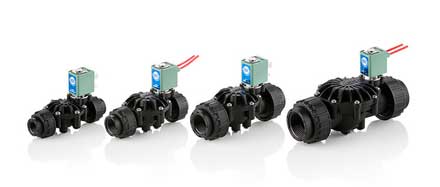
DuPont™ Zenite® LCP liquid crystal polymer helps assure reliability of RedHat Next Generation solenoid valves from ASCO® in exposure to water, aggressive chemicals, hazardous conditions.
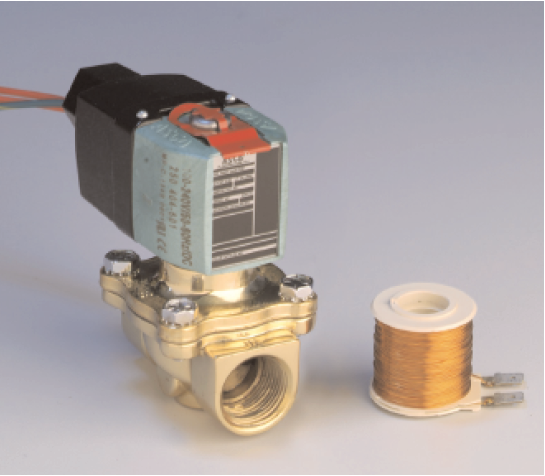
Solenoid Valves
The valve’s solenoid is encapsulated in Zenite® 6130 and has a coil bobbin molded from the same material inside. An earlier model uses thermoset epoxy for encapsulation.
The redesigned valve is ideal for use in hazardous locations, aggressive chemical environments and for indoor and outdoor use where protection is required against splashing water, water seepage, falling or hose-directed water, or severe external condensation, according to ASCO.
The RedHat Next Generation line also delivers a sharp reduction in power consumption. Designed to run on either AC or DC power, a RedHat Next Generation solenoid uses only 2 watts of power to deliver the same performance as a typical 17-watt AC solenoid.
Benefits Gained
- Withstands harsh conditions – The valves are certified for use in hazardous locations and watertight applications as outlined in Class I, Division 2 of the National Electrical Code. In addition, the valves meet all NEMA Types 1 through 4X requirements for water- and dust-tight applications.
- Handles temperature extremes – The solenoid withstands ASCO’s stringent thermal shock testing and can serve at temperatures from -40 to +200ºC.
- Lower production costs – Encapsulation with Zenite® via injection molding costs significantly less than the thermoset epoxy technology used for earlier models. Molding cycles are faster, and sprues and runners are recycled, avoiding waste and disposal costs incurred with thermosets.
- Development assistance – DuPont specialists provided solid technical support to ASCO engineers in part design, tooling and processing.
Material Selected, and Why?
DuPont™ Zenite® 6130 meets this application’s needs for resistance to a wide range of aggressive chemicals, a UL94 V-0 flammability classification, excellent stability and cracking resistance in thermal shock testing and excellent performance in the encapsulation injection moulding process. The resin contains 30% by weight of glass fibre reinforcement.
ASCO Valves
Explosive Atmosphere Experts
Thorne & Derrick are Specialist Distributors of Hazardous Area Electrical, HVAC & Process Instrumentation Equipment with IECEx & ATEX Certifications to the onshore and offshore oil, gas, petrochemicals and process industries.
We supply major UK and international infrastructure projects and also MRO (Maintenance, Repair, Operations) requirements for both planned and unplanned plant shutdowns – we react with a rapid response to customer demand to ensure downtime is minimised and reliable Power, Light & Heat is restored or provided.
We distribute Innovative products to manage the planned replacement of legacy equipment conformant with international classifications including ATEX and IECEx.
Key Product Categories: Control Panels | Plugs & Sockets | Isolators | Enclosures & Junction Boxes | Lighting | Control Stations | Motor Starters | Heat Trace Cables & Systems | Gas Detection & Detectors | Fire Detection & Detectors | Heat Detectors | Electrical Heating & Heaters
➡ Also Process Instrumentation Products: Ashcroft Pressure Gauges | ASCO Valves | Katronic Flow Meters | KROHNE Flow Meters | VEGA Level Sensors | Rotronic Temperature & Humidity Sensors