Storage Tank & Sludge Consultant Engineer at Bro Nant International
Consultancy + Training Programmes to the Oil and Petrochemical Industry
Many dangerous situations can occur during tank cleaning and working in confined spaces. Our guest author, Mr. Steve Scott of Bro Nant International, discusses possible hazards like ignition, chemical exposure, oxygen deficiency, physical hazards etc. and gives his views on how they can be avoided.
Steve Scott has a highly specialised background in the field of oil tank cleaning, hydrocarbon recovery and waste minimisation.
Tank cleaning is an extremely hazardous activity.
When working in a confined space personnel are exposed to a number of hazards that in some cases have led to injury or even death.
There are various definitions of a ‘confined space’ though two are consistently applied. “A place which does not have the benefit of natural ventilation” and, “a place which is difficult to enter and therefore presents a hindrance to rapid escape in case of an emergency”.
Working in a confined space requires a degree of good physical and mental health and is certainly not for the claustrophobic, those with heart or breathing problems or those with physical disabilities.
Identification and elimination of potential hazards at the tank cleaning planning stage will enhance the Health & Safety and Environmental performance of a tank cleaning project.
Hazards relating to tank cleaning are as many and varied as the designs and physical dimensions of the tanks themselves. We list below some of the most significant hazards, you will identify others by risk assessment.
Fire & Explosion
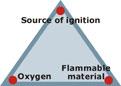
The cleaning of a tank having contained a flammable material presents specific hazards. If a flammable mixture of vapour and air exists inside a tank, then the introduction of a source of ignition may cause a fire and/or explosion.
The Fire Triangle
How To Avoid The Hazard?
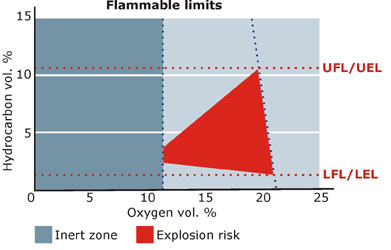
For an explosion to occur all three elements of the fire triangle need to be present in the appropriate ratios. If the oxygen level can be maintained at below 8% then, regardless of hydrocarbon content, the atmosphere can be considered inert and a fire or explosion cannot occur.
Excluding a source of ignition or reducing hydrocarbon vapour levels to below the LFL (Lower Flammable Limit) will have the same effect.
Flammable Vapours
Whenever we remove the manways on a tank containing flammable material, the hydrocarbon rich vapour within the tank becomes diluted with air and the mixture approaches the flammable zone.
It is imperative that we eliminate any potential source of ignition.
How To Avoid The Hazard?
For a mixture of hydrocarbon vapour and air to ignite, the ratio has to be within certain limits. For most hydrocarbons the lower flammable limit (LFL) and the upper flammable limit (UFL) are typically 1% and 10% by volume respectively.
The requirement for man-entry into a tank containing flammable vapours is currently generally accepted as 10% of LFL. This means that in real terms hydrocarbon in air measurements are at or below 0.1%.
Beware that in tanks where sludge or scale is present, disturbing the sludge on man-entry can release trapped vapours.
This may cause the atmosphere to re-enter the flammable zone.
Should this occur there is no alternative but to remove personnel from the tank until the atmosphere is retested at below 10% LFL.
The tank atmosphere should be closely monitored, using intrinsically safe constant monitors installed inside the tank, until all of the sludge has been removed. This is particularly important during the early days of a tank clean
How To Avoid The Hazard
Sources of Ignition
Defined as any heat source having sufficient energy to ignite a flammable vapour/air mixture by locally raising it above its auto ignition temperature. Possible sources of ignition in and around tankage include: Sparks from electrical equipment, Lightning, Static Electricity, Hot Surfaces and Pyrophoric Scale.
How To Avoid The Hazards?
Electrical Equipment– the use of electrically driven equipment, lighting, internal combustion engines and battery operated devices should be strictly controlled.
Lightning – is well known for causing tank fires. All tank cleaning activities should be suspended during electrical storms. Personnel should follow emergency evacuation procedures and should subsequently leave the vicinity of the tank.
Static Electricity – is a surface phenomenon associated with the contact and separation of dissimilar materials. High pressure water jetting, steam cleaning, grit blasting, air driven lighting systems etc. are all potential generators of static electricity. To avoid accumulation of static charge, hoses, nozzles etc. should be made from electrically conductive material and should be bonded and earthed.
Hot Surfaces – smoking and fires must be strictly controlled and only allowed in restricted locations. Avoid the risk from hot exhaust systems by siting powered equipment at an appropriate distance from the open tank manways. Steam lines, temporary or otherwise, should be lagged. Look for other heat sources and eliminate.
Pyrophoric Scale– is iron sulphide which can be formed in tanks which store sulphur containing products e.g. sour crude oil, naphtha etc. due to a reaction between sulphur compounds and rust. The reaction between iron sulphide and air is exothermic and can generate sufficient heat to ignite any flammable vapours in the vicinity. Control by damping with water and removing from the tank as quickly as possible.
Chemical Hazards
Tanks which have contained hazardous chemicals require special precautions during the cleaning process. Exposure to hazardous chemicals can arise from skin contact, inhalation or accidental ingestion.
Hazardous chemicals often encountered during tank cleaning include; Lead anti-knock compounds, Hydrogen Sulphide, Polycyclic Aromatic Hydrocarbons (PAH), and Benzene. Beware also toxic dusts from lagging, paint systems, grit blasting etc.
Some of the compounds have an immediate toxic effect, others have a long-term effect (carcinogenic, mutagenic) on your health.
How To Avoid The Hazard?
When planning any tank clean always consult the Material Safety Data Sheet for the product stored. Fortunately, refined product tanks are not prone to significant build up of sludge therefore the duration of exposure should be limited.
Always ensure that personnel entering the tank are wearing appropriate Personal Protective Equipment (P.P.E.).
Oxygen Deficiency
In the absence of toxic and flammable gases, the safe level for oxygen concentration in the tank atmosphere is 20%. Below this, breathing apparatus must be worn. Oxygen deficiency can arise in a number of ways, particularly during the gas freeing phase when the tank atmosphere is product rich.
Certain products require a blanket of inert gas e.g. nitrogen above the liquid level which can result in oxygen deficiency once the tank is opened. Oxygen levels in a tank that has been cleaned and then resealed and left unused for a period of time may be depleted due to the oxygen being consumed by the process of internal corrosion.
How To Avoid The Hazard?
In any event, oxygen levels should be checked before allowing personnel to enter a tank without breathing apparatus and monitored frequently using gas detectors thereafter for the duration of the exercise.
Physical Hazards
Personnel entering a tank will be exposed to a number of physical hazards (climatic conditions, tripping/obstruction hazards etc.) particular to the location and physical design of the tank. It is imperative that a thorough risk assessment is conducted prior to entry and that a safe system of work is initiated to minimise the risk of injury.
How To Avoid The Hazard?
Climatic conditions can create unsafe conditions for those engaged in tank cleaning. Excessive internal temperatures are particularly difficult to manage and personnel must be allowed regular breaks for rest and for water and salt tablets to be consumed. Extreme cold and excessive noise can be equally debilitating.
Tripping hazards and other obstructions proliferate in storage tanks, it is essential that personnel be given a thorough understanding of the tank internal layout prior to entry. This problem is exacerbated due to generally poor lighting conditions which are often difficult to improve due to flammable atmospheres and/or the physical dimensions of the tank.
Falling objects, slippery surfaces, poor housekeeping, obstructions at head height in floating roof tanks, poorly maintained or inappropriate equipment etc. are other sources of danger which can be minimised by adequate risk assessment and training.
When performing manual cleaning, many hazards exist due to the location and design of the tank, and many more are introduced by way of tank cleaning equipment and personnel. Always ensure that an unrestricted exit is maintained for evacuation in case of emergency.
Radiation Hazards
Naturally occurring radioactive material (NORM) or low specific activity (LSA) scale can be detected in certain crude oil, ballast and slop systems. The radioactivity originates in the formation water at the well and results in radioactive scale in pipelines, which can be carried through to storage.
How To Avoid The Hazard?
The cleaning of tanks containing radioactive material requires special controls to be observed. Where radiation is considered a potential problem, the advice of an expert in this field should be sought.
Microbiological Hazards
Where water is present in tank bottoms and sludge, microbial proliferation is not uncommon. In severe cases, infection or allergic reaction can result.
How To Avoid The Hazard?
Where significant microbial proliferation is suspected, the advice of a qualified expert should be sought.
Special precautions when cleaning crude oil storage tanks
The sheer physical dimensions of a crude oil storage tank (up to 120 metres diameter) and the propensity for crude oil to deposit sludge (can be more than 10,000 m³) make these tanks worthy of special consideration.
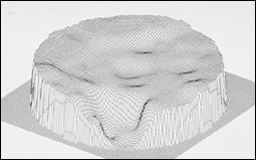
Always determine by Topographic Survey that it is safe to land the floating roof on the sludge banks and/or that it is safe to remove the manways.
Using traditional, pump assisted desludging techniques on an 80 metre diameter crude oil storage tank containing c. 2,500 m³ hydrocarbon sludge will require c. 300 mandays. That is 300 mandays during which personnel are at risk from many of the above hazards.
Perspective view of tank from manway (143 deg)
Additionally, crude oil sludge will typically contain more than 90% valuable hydrocarbon. It is imperative that this valuable commodity is recovered in a useable form.
Specialist proprietary techniques are commercially available which minimise the need for man-entry while recovering the soluble hydrocarbons in a form suitable for processing or export. Ballast water tanks and heavy fuel oil tanks may present similar problems.
Conclusions
Tank cleaning is an extremely hazardous activity with many difficult to quantify variables. As a general rule, time spent by personnel inside a tank should be kept to a minimum.
Training is the key to safe working in a confined space and personnel engaged in such activities should be carefully instructed and trained in all safety systems and procedures.
A key element in minimising the risk is choosing an appropriate cleaning method. A number of semi and fully automated methods are commercially available. In any event, there is no doubt that when implementing non-man entry cleaning systems many hazards are dramatically reduced and some even eliminated.
EXPERTS IN EQUIPMENT FOR EXPLOSIVE ATMOSPHERES
leaders in ATEX Innovation To The Hazardous Area Industries
Thorne & Derrick are leaders in the development and distribution of Product Innovations that deliver significant improvements to clients plant, people and operational safety in the explosive atmosphere industries.
Your proactive problem solvers experienced in succession planning for the replacement of obsolete, non-conformant and legacy equipment in hazardous areas.
Your first-choice provider of innovative and competitive solutions to ensure ATEX & IECEx Compliance for Hazardous Area Electrical, HVAC & Process Instrumentation Equipmentto UK and international projects.
Safety Lighting For Explosive Atmosphere Environments
Lighting luminaires play a critical role in the safe, efficient and productive operation of any industrial facility or production process. Darkened, enclosed and round-the clock operations rely on them exclusively for illumination. Daylight operations benefit from the additional and spot lighting they provide.
However, facilities, such as petrochemical, refining and grain storage, require more from their lighting luminaires. In addition to providing light, luminaires for these industries must address and overcome the inherent challenges of hazardous environments.
Hazardous environment lighting luminaires are designed to specifically handle the highly corrosive elements, combustible dusts and flammable gases and vapours that are endemic to these industries.
💡 Did you Know? Thorne & Derrick using latest software provide a FREE LIGHTING DESIGN SERVICE for the specification and supply of ATEX & IECEx Certified light fittings to provide safe and reliable lighting in explosive atmospheres and hazardous area locations.
This Whitepaper examines the distinct hazardous environments defined by global electrical codes, which luminaires are suited for them and technologies that are available to help keep them operating longer and safer.
This information provides the foundation for achieving optimal plant safety and efficiency through proper lighting, safe electrical installation and operation.
Around the world, explosion proof lighting locations are broken down into different categories. Each category defines the type of hazard present, its explosive force and if its exposure is part of normal or abnormal facility operations.
Hazardous Area Lighting Specialists
Class of Threats
The National Electric Code (NEC) and earlier editions of the Canadian Electric Code (CEC) define hazardous environment combustible dusts and flammable gases and vapours into three separate Classes.
Class I locations are categorised by the flammable gases and vapours present in industries such as natural gas, petroleum and chemical.
Class II locations contain combustible dusts. These dusts can be carried aloft during pulverising processes or compacted in storage centres. Combustible dusts are found inside plastic, pharmaceutical, coal and agricultural (grain and flour) processing locations.
Class III locations contain the ignitable fibers and flyings that are produced in the wood, cotton, and textile industries, among others.
Define the Presence with Divisions
NEC/CEC Divisions define hazardous environments by the amount of exposure to the gases, vapors, or dusts.
Division 1 classifies hazardous atmospheres in which the flammable gas or vapor or combustible dust is present during normal operations or routine maintenance. The existing or potentially hazardous atmosphere must also be in the right mixture concentrations to be ignitable. Thus, proper ventilation can change a Division 1 location in to a Division 2 location.
Division 2 locations are where hazards are encountered only during an abnormal situation, such as equipment failure or a spill. Locations adjacent to Class I, Division 1 areas may be deemed Division 2, as well, to accommodate for the potential seeping of gases or vapours.
Groups within each Class
Class ratings are further broken down into material groups, which identify the explosive characteristics of the material. The volatility of these groupings are based on MESG (Maximum Experimental Safe Gap) and MIC (Minimum Ignition Current).
Class I locations consist of Groups A, B, C and D:
Group A, acetylene, features the highest outward pressure during an explosion
Group B is hydrogen
Group C is ethylene
Group D is gasoline
Class II locations are divided into three Groups, E, F, and G in accordance with NFPA® 499.
Group E is combustible metal dust such as aluminium and magnesium
Group F consists of coal, printer ink powder and coke
Group G features agricultural dusts such as cake mix, grain dust and flour
Class III locations are not broken down into groups.
NFPA 499 :Recommended Practice for the Classification of Combustible Dusts and of Hazardous (Classified) Locations for Electrical Installations in Chemical Process Areas. This recommended practice presents criteria to determine ignitability hazards in chemical process areas where combustible dusts are produced, processed, or handled to assist in the selection of electrical systems and equipment for safe use in Class II hazardous (classified) locations.
Around the Globe
The International Electrotechnical Commission (IEC) and European Committee for Electrotechnical Standardization (CENELEC) classifies hazardous locations into Zones, Groups and Gas Groups. The CEC and NEC include provisions for the Zone system in addition to the Division classification scheme. Zones are similar to the NEC/CEC Divisions, except that they classify three levels of the existence of hazardous atmospheres instead of two.
Zone 0: hazardous atmospheres are continuously present
Zone 1: hazardous atmosphere is often present
Zone 2: hazardous atmosphere may accidentally be present
Equipment Groups are used to denote equipment used for the mining industry. Group I consist solely of mines.
Group II encompasses every industry, but mining.
The Atmosphere Groups of A, B, and C rate the pressure caused by an ignited gas, vapor or dust, much like the NEC/CEC Group. However, they are placed in the opposite order. Gas Group C, therefore, represents the extreme force of hydrogen and acetylene while Gas Group. A denotes the less destructive forces of gasoline and natural gas.
Safely lighting facilities for the different Classes, Groups and Divisions requires engineering and manufacturing a variety of luminaire designs. Each design incorporates features that meet the specific rating criteria of the hazardous location.
Explosionproof luminaires
for Class I Division 1
Due to the ever-present condition of hazardous gases or vapours, luminaires placed in Class I, Division 1 locations must ensure that ignition is never allowed into the environment.
To do this, engineers calculate that the gas or vapour has successfully leaked into the interior of the luminaire and has ignited. To prevent ignited gases or vapours from propagating to the surrounding atmosphere, explosionproof luminaires feature engineered flamepaths.
The flamepaths vent burned gases from an explosion to the surrounding atmosphere only after the gas has travelled within the luminaire’s flamepaths long enough to cool. Cooled gases are released from the flamepaths at temperatures that will not ignite the surrounding flammable atmospheres.
Depending on the luminaire’s design and application, these flamepaths can be incorporated into ground joints, threaded joints, labyrinth-paths, close tolerance shafts, interlocking concentric rings and precision acme/conical threads.
Class I: Flammable Vapours & Gasses
(Volatile gas or vapour present in sufficient
quantity to produce ignition or explosion)
Class II: Combustible Dusts
(Combustible dusts present in sufficient quantity to present a fire or explosion hazard)
Class III: Fibers & Flyings
(Easily ignitable fibers or flyings present but not likely to be suspended in the air
Group A Acetylene
Group E Metal Dusts
Group B Hydrogen
Group F Carbon Dusts – Coal
Group C Ethylene
Group G Grain Dusts
Group D Gasoline
Encapsulated & Flameproof Luminaires
for Zone 1 Hazardous Area Lighting Applications
Two common ATEX/IECEx Protection Concepts for Zone 1 environments include Flameproof (d) and Encapsulation (ma and mb).
Flameproof construction contains and vents the explosion using engineered flamepaths similar to Explosionproof construction.
Encapsulation construction keeps the flammable substances out by sealing LED arrays and drivers using common potting polymer systems, such as epoxies, silicons and polyurethanes.
The characteristics of LED light sources and supporting electronic components are particularly well suited to the application of encapsulation to isolate both electrical connections and heat sources from the intrusion of gases.
Enclosed & Gasketed Luminaires
for Class I, Division 2 & Class II / Zone 2, 20, 21 and 22 Lighting
Class I, Division 2/ Zone 2 luminaires must be gasketed to prevent the hazardous atmosphere from entering the luminaire’s interior. As such, enclosed and gasketed luminaires are most suitable for this environment.
Class II/ Zone 20, 21, and 22 luminaires also must function under a blanket of explosive dust as grain silos and other agricultural and mineral processing plants position lights where they can get covered by dust or grains for extended periods of time.
These conditions mandate that enclosed and gasketed luminaires prevent dust ingress and keep temperatures low. Internal control components need to be engineered to radiate less heat. Surfaces need to be contoured to prevent the accumulation of dust on the luminaire and reduce blanketing. If not engineered properly exterior light temperatures can soar.
5 Day Express Service for Hazardous Area Products
5 Day Express Service for Hazardous Area Products
Temperatures to a “T”
Every hazardous atmosphere has a temperature that, if exceeded, will cause the flammable or combustible to ignite. Accordingly, this temperature, called the “T” rating, is a critical safety benchmark. Hazardous location lighting luminaires must run cooler than the ignition temperature of the surrounding atmosphere.
Per the “T” rating chart (below), T1 rated luminaries can only be used in locations where the atmosphere needs a temperature greater than 450° C to ignite. Conversely, T6 rated luminaires run the coolest and can be used in very volatile environments where temperatures cannot exceed 85° C.
Encapsulation construction of LED Arrays
The “T” rating for a luminaire is the temperature of the hottest spot on or in the luminaire depending on the luminaires’ Class or Zone rating. Whether the “T” rating is recorded on or in the luminaire depends on whether it is an explosionproof, flameproof, encapsulated or enclosed and gasketed.
For explosionproof, flameproofand encapsulated luminaires, the “T” ratings are measured on the exterior of the luminaire. This is due to the explosionproof, flameproof or encapsulated luminaire’s ability to disarm any explosion caused within the interior of the luminaire.
Therefore, the exterior temperature of the luminaire becomes the forerunning concern.
Class II, Division 1 T-codes are also measured on the exterior of the luminaire. Enclosed & gasketed luminaires measure their “T” ratings on the inside. If a hazard is accidentally released into the atmosphere and reaches inside the luminaire, it will not ignite assuming the luminaire’s “T” rating is below that of the hazard.
Silicone rubber gaskets seal out moisture, dirt and dust
Hazardous Lighting – “T” Rating
Degree ºC
Degree ºF
ID #
351-450
664-842
T1
326-350
619-662
350
301-325
574-617
325
281-300
538-572
T2
261-280
502-536
T2A
231-260
448-500
T2B
216-280
421-446
T2C
201-215
394-419
T2D
181-200
358-392
T3
166-180
331-356
T3A
161-180
322-329
T3B
136-160
277-320
T3C
121-135
250-275
T4
101-120
214-248
T4A
86-100
187-212
T5
85
185
T6
Keeping your cool in hazardous area and explosive atmospheres
A light that lasts longer is safer for the production line and the maintenance crew. It provides more light over its lifetime and reduces the potential of a maintenance related accident by stretching out the amount of time between servicing. Simply put, cooler running luminaires stay lit longer. That’s why it is important to design and manufacture enclosed and gasketed and explosionproof luminaires that reduce the amount of heat they produce.
Thermal Design
When it comes to LED luminaires, reliability begins with good thermal design. Product designs need to take into consideration such facets as placement of LED drivers and LED array boards and the thermal design needed to draw heat away from the internal components and direct it out through the casting. Reliable LED luminaire designs emphasise thermal performance first and foremost to provide long term field reliability.
Extensive thermal simulation during the design process ensures driver electronics and LED semiconductor devices operate within their thermal limits even at the fixture’s maximum rated ambient temperature. No failure-prone fans or other active thermal management devices are employed.
These designs optimise housing thermal conduction, maximise radiating surface areas, and employ strategically placed thermal conduction breaks to balance heat flows within each LED fixture (Patent Pending). Choose luminaires that deliver rated illumination through their full ambient operating temperature range to make sure your facility is safely lit even when the going gets hot.
Complex Engineering Made Simple
The seemingly simple look of hazardous are location lighting can often cause work crews to underestimate the potentially explosive atmosphere environments that they work in and the engineering of these luminaires. This is reinforced by surveys that show maintenance practices usually do not follow standard guidelines. 80% of the time, HID luminaires are relamped with the electrical power on.
In the 20% of the time that the power is turned off, 69% of the relamping happens as soon as the power is shut off. This does not allow the proper amount of time for many luminaires to cool. Utilising LED technology eliminates these safety hazards posed by improper relamping procedures.
However, research also shows that 32% of gaskets and seals are not inspected and maintenance crews are “pretty sure” the gaskets are properly sealed only 55% of the time. Also, 95% of the time, luminaires are maintained only after the unit fails. Again, LED luminaires eliminate these risks by removing the need for maintenance altogether. And features that reduce the need to open the luminaire, such as separate wiring compartments, further reduce the risk of compromised seals.
New risks, however, have arisen with the use of LED retrofit lamps. Care must be taken to ensure that any retrofit lamp used in a hazardous location has been tested and certified for use in that fixture. New labels must be provided to identify a retrofitted luminaire complete with correct wattage and T-code information. Retrofit lamps that require disconnecting the existing ballast violate warranty and pose additional concerns.
When specifying luminaires for hazardous area lighting locations, look for innovative features that speed maintenance and ensure the integrity of those luminaires remains uncompromised. The explosive atmosphere industry standard, hinged mounting hood design provides the easiest installation with the most flexibility, often allowing many different mounting types with one standard luminaire body.
For an easy upgrade to LED, crews can quickly unscrew a nut and swing open the luminaire with one hand; easily replacing the existing ballast tank with a brand-new LED driver housing. Certified adapters on the market today even provide for simple conversion from one manufacturer’s luminaire to another, offering additional flexibility.
Rugged Reliability
Hazardous location luminaires need to be able to withstand the toughest environments on earth from the deserts of Saudi Arabia, to off shore platforms, and the North Slope of Alaska. In these dangerous environments dependable lighting is essential to keeping workers safe.
Reliable lighting is key to improving operational efficiency and reducing expensive maintenance costs. Choose a luminaire manufacturer with a commitment to reliability; beginning with a rigorous process, where designs are qualified to perform in environments beyond the worst expectations relative to corrosive atmospheres, extreme temperatures, heavy vibration, and electrical disturbances.
Appleton Mercmaster LED Generation 3 Thermal Simulation
Corrosion Resistance
Hazardous locations and corrosion go hand in hand. Gases inherently present in these environments eat away at surfaces and require protection beyond the capabilities of low cost luminaires. Unlike liquid paint, powder coating uses an electrostatic process to apply a finish to metallic parts in a dry state.
Correct surface preparation and application quality are essential.
Once applied, the finish should be heat-cured to create a finish that is thicker, tougher, and more even on all outer surfaces and edges. Epoxy powder coat products last longer, thus reducing callbacks, lowering total installation and operation costs.
Preferred luminaires should be suitable for use in wet locations and undergo rigorous testing procedures that comply with Marine Outside Type (Salt Water).
Reliable Protection
Careful gasket design is essential to keeping water and dust on the outside. Critical to the reliability, gasket seals must be tested to the stringent application requirements encountered in heavy industrial and hazardous applications. ISO accredited third-party laboratories conduct gasket performance testing according to ASTM-D-395.
Manufacturers should also conduct extended duration product life tests exceeding product operating specifications and verifying long term field reliability. Aging tests include thermal endurance spanning -50°C to +120°C (-58°F to +248°F), humidity levels of 95% RH, and continuous Ultra Violet (UV) exposure.
Top grade gasket material composed of high performance closed cell silicone foam and superior low compression set characteristics deliver years of reliable service in the toughest environments on the planet.
Appleton Mercmaster LED Generation 3 Luminaire Enclosed and Gasketed
The Devil is in the Detail
Explosionproof luminaire flamepaths are frequently viewed as simple threads. However, each thread is tuned precisely to contain, shape and control an explosion caused by the rated hazard.
The threads for Class I, Division 1 luminaires for Group A and B have more robust flamepaths to handle the more violent explosions of detonated acetylene and hydrogen.
Explosionproof luminaires should employ acme double lead threads and pre-lubrication to ensure a quick, tight seal without the possibility of galling or seizing, even in the most corrosive environments. This negates the need for added lubrication or elbow grease in tight spots.
Wireless mounting designs simplify installation and minimize the time worker’s spend in Division 1 locations. These mounting hoods are easily wired by simply attaching two wires to the connection block. This allows the luminaire to be installed, replaced or moved to a safer location for servicing without exposing wiring to a hazardous environment. There are no bare wires that can spark or wire nuts to handle.
Appleton Code Master; LED Factory Sealed Luminaires Explosionproof
Safely lighting the way
Lighting in hazardous locations is a necessity and a potential danger. Knowing the facility environment, combustible composition and luminaire application enables the proper lighting design for a safe and productive working environment.
Experts In Equipment for Explosive Atmospheres with ATEX & IECEx Certification
LEADERS IN ATEX INNOVATION
T&D are your first-choice provider of innovative and competitive solutions to ensure ATEX & IECEx Compliance for Hazardous Area Electrical, HVAC & Process Instrumentation Equipmentto your UK and international projects.
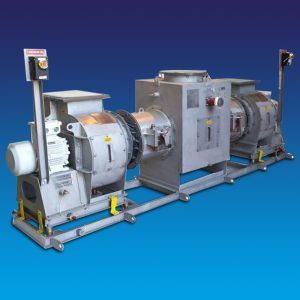
Thorne & Derrick International are Official UK Distributors for Woodcock & Wilson the UK specialist manufacturers of centrifugal, industrial, Axial and 3rd Party Certified ATEX and IECEx fans – we distribute their range of IECEx and ATEX certified fans that have been constructed to safely operate and provide ventilation in a hazardous areas with potentially explosive atmospheres.
What is an IECEx Fan?
An IECEx fan is one that has been constructed in accordance with EN ISO 80079-36 & EN ISO 80079-37 to safely operate in a hazardous or explosive atmosphere.
The compliance with these standards, as well as quality controls that are in place during the Mechanical Design, Manufacturing, Inspection and Testing of the equipment, have been approved by the IEC’s certification process.
Founded in 1906, the IEC (International Electrotechnical Commission) is the world’s leading organisation for the preparation and publication of international standards for all electrical and related technologies.
EN ISO 80079-36 | Explosive Atmospheres — Part 36: Non-electrical equipment for explosive atmospheres — Basic method and requirements.
EN ISO 80079-37| Explosive Atmospheres — Part 37: Non-electrical equipment for explosive atmospheres — Non-electrical type of protection constructional safety ”c”, control of ignition sources ”b”, liquid immersion ”k”.
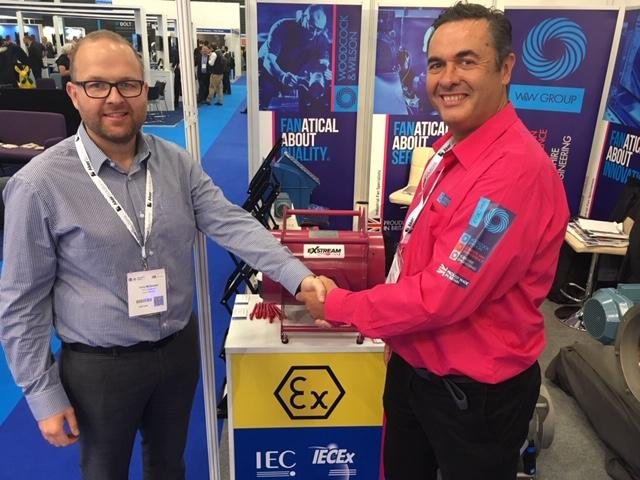
Pictured:Terry McDonald (Thorne & Derrick Business Development Manager) with Scott Harding (Wood & Wilson Director) presenting and exhibiting the Exstream range of ATEX fans at SPE Offshore Europe 2019.
What IECEx means
IECEx stands for International Electrotechnical Explosive.
IECEx International Certification is the globally recognised standard relating to equipment for use in Explosive Atmospheres.
In 2016, the IECEx standards for non-electrical (mechanical) equipment, for use in potentially explosive atmospheres were introduced. The EN ISO 80079 36 and 37 standards, set out requirements for assessment and mitigation of risks for mechanical equipment.
With the adoption of these by IECEx, it is no longer acceptable to simply “bolt on” IECEx electrical goods to a mechanical piece of ATEX certified equipment and supply the assembly as IECEx compliant.
Key features of IECEx
IECEx provides Improved Safety confidence that the equipment is manufactured in compliance with IEC international standards.
IECEx reduces the cost for additional testing.
Instant verification.
IECEx provides increased security and safety in all types of Ex areas through IECEx-certified equipment.
IECEx certification helps build confidence in the safety of Ex equipment.
Possibility to verify all issued Certificates instantly on www.iecex.com or on the IECEx app
What is the difference between ATEX and IECEx?
IECEx is the international equivalent of the European ATEX standard.
However, one of the largest distinctions between the two approvals is the need for Design and Quality Assurance controls to be approved by an IECEX approved Certification Body (CB), which is essentially a two stage process.
IECEx Fans
Firstly, the design and manufacturing is subject to a Quality Assurance Report (IECEx QAR) which ensures the correct Quality Assurance systems are in place. This contrasts with ATEX which requires no officially recognised Quality Assurance for its Category 3 (Zone 2) fans and simply requires that a manufacturer has been awarded an ISO9001 : 2015 quality certification in order to manufacture Category 2 (Zone 1) fans.
The second stage is the issuing, again by an IECEx CB, of the “IECEx Certificate of Conformity”. Essentially, this is the detailed technical assessment of the potential hazards and design mitigation of the equipment in accordance with the above referenced standards.
Again this differs from the ATEX, self-certification of product, which is permitted under ATEX for Category 3 (Zone 2) and Category 2 (Zone 1) equipment but is not permitted under the IECEx scheme. This is intended to ensure the Improved safety of equipment being put to market. Any IECEx certified piece of equipment, including fans, should be accompanied by an IECEx Certificate of Conformity which should clearly identify the product being supplied.
Compliance can no longer be claimed by fitting IECEx electrical equipment to an existing mechanical design.
Therefore, IECEx does not allow self-certification from manufacturers or equipment.
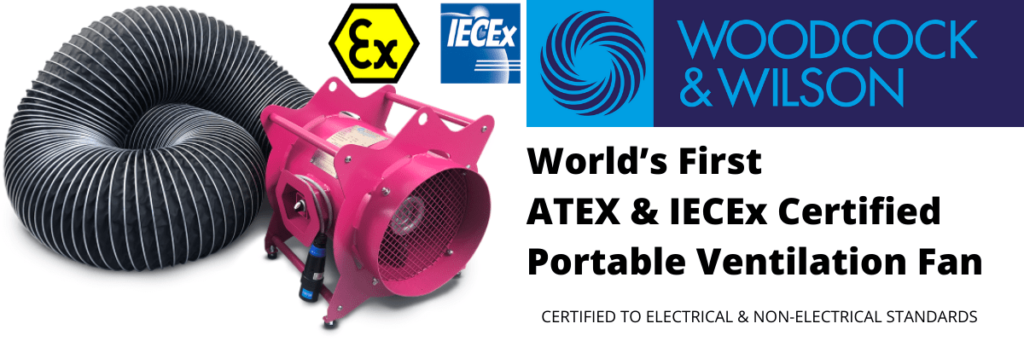
Exstream fans are the market-leading ATEX fan to provide powerful and portable ventilation in hazardous areas – specified for safe and reliable extraction and blowing of dangerous gases and vapors in explosive atmospheres with airflow capability up to 7750m3/hr. Both ATEX & IECEx dual certified to Electrical & Non-Electrical Standards (Mechanical) for Zone 1 & Zone 2 ventilation applications.
Class Leading Airflow: Up to 7750m3/hr
Robust: Mild Steel or Stainless Steel Casing
Low Power Consumption: <8A FLC
Low Noise Output: 49db
Easy to Use: Plug & Play Fan
Voltage Options: 110V/230V & 3-Phase Options Available
How to check my fan is an IECEx fan
IECEx operates an International Mark licensing System, that is intended to provide a clear notification that a product bearing the IECEx logo is a correctly certified IECEx fan product.
It can be easily verified that the manufacturer has been issued with an appropriate IECEx Certificate to cover the range of products being supplied, by checking www.iecex.com or by using the IECEx app., searching Woodcock and Wilson’s certificate number: IECEx SIR 17.0076X.
What does IECEx mean for your business?
Specifying an IECEx fan, provides a globally recognised and independently certified level of safety for your products. For OEMs, it reduces the need for individual country by country certification and for end users, it provides an independently assessed level of safety for equipment. It also removes the uncertainty in the due diligence of supplying or using self-certified mechanical equipment for both end users and OEMs alike.
In the following series of 6 Articles we look to understand more about centrifugal, industrial, axial and 3rd Party Certified ATEX and IECEx fans for hazardous areas and explosive atmospheres
leaders in ATEX Innovation To The Hazardous Area Industries
Thorne & Derrick are leaders in the development and distribution of Product Innovations that deliver significant improvements to clients plant, people and operational safety in the explosive atmosphere industries.Your proactive problem solvers experienced in succession planning for the replacement of obsolete, non-conformant and legacy equipment in hazardous areas.Your first-choice provider of innovative and competitive solutions to ensure ATEX & IECEx Compliance for Hazardous Area Electrical, HVAC & Process Instrumentation Equipmentto UK and international projects.
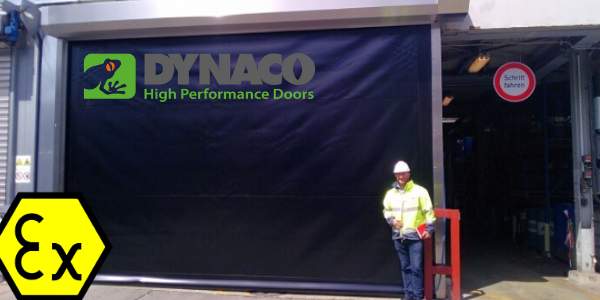
They approached Entrematic in Belgium requiring an ATEX Doorsolution to protect the potentially explosive atmospheres around the internal facility and also protect it from direct sunlight. Evonik goes far beyond chemistry to create innovative, profitable and sustainable solutions for customers. The company is active in more than 100 countries globally and operates production plants in almost 30 countries on six continents.
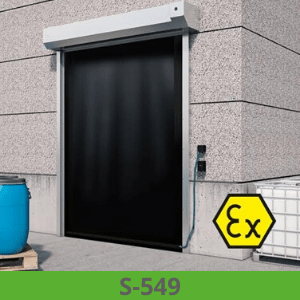
Together with a local distributor, Entrematic Belgium installed a Dynaco S-549 High Speed ATEX Door. The high speed door allows Evonik to have easy access with a forklift to the stock of active ingredients stored and warehoused in a classified hazardous area zone with potentially explosive atmosphere according to the ATEX Directive.
The ATEX Door significantly improves the internal working environment and protects the products against direct sunlight. The ability to deal with the number of forklifts and the automatic reinsertion of the door curtain were the most important criteria for Evonik when selecting a Dynaco Door.
The internal working environment could be significantly improved by closing off the area and protecting it against the sun as well as bad weather.
Solution
Entrematic Belgium supplied a Dynaco S-549 Category 2 Zone 2 ATEX Door with the following dimension 5500x3700mm.
ATEX Doors – DYNACO S-549 High Speed Roll-up Door
Benefits of Dynaco Doors
Save Energy
Reduced heat loss as a result of installing high speed doors can provide a ROI within 2 years.
Thorne & Derrick can provide energy saving calculations at point of enquiry.
💡 We can calculate your temperature losses and confirm the expected energy savings by installing high speed doors. Should you be interested to receive a FREE ROI REPORT to assess the energy efficiency impact Dynaco doors could have on your facility contact us.
The reduced heat loss also means fewer heaters or lower KW rated electric heaters in new builds. This reduces capital costs and reduces operating costs.
ATEX Doors Product Overview
The Dynaco range of High Speed Roll-up Doors include options for interior and exterior applications for use in explosive gas and dust atmospheres. An overview and certification details can be found below.
Refer to individual door product pages for full specification details.
Zone 1 & 21 ATEX Door – All Weather
Zone 1 & 21 ATEX Door – Power
Zone 1 & 21 ATEX Door – Compact
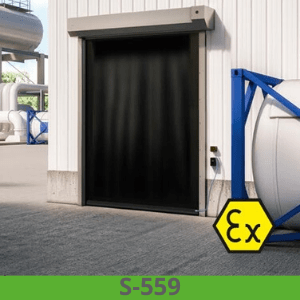
S-559 is suitable for use in Zone 1 and Zone 21 explosive atmospheres and is specifically designed for outdoor use. The ATEX door is wind resistant up to wind load class 5.
S-549 is suitable for use in Zone 1 & Zone 21 explosive atmospheres. The ATEX door is designed for outdoor use and is wind resistant up to wind load class 4.
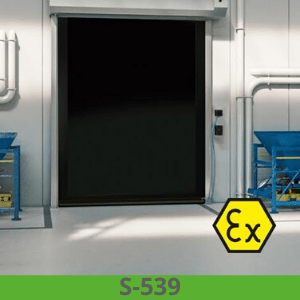
S-539 is suitable for use in Zone 1 & Zone 21 explosive atmospheres and is specifically designed for hazardous area indoor applications.
Ex II 2 G/D
Ex h T4 135°C
Ex db ia e IIC T4 EPL Gb
Ex tb ia IIIB 135°C EPL Db
Ex II 2 G/D
Ex h T4 135°C
Ex db ia e IIC T4 EPL Gb
Ex tb ia IIIB 135°C EPL Db
CE 0029 APRAGAZ 17 ATEX 0157 X
Ex II 2 G/D
Ex h T4 135°C
Ex db ia e IIC T4 EPL Gb
Ex tb ia IIIB 135°C EPL Db
CE 0029 APRAGAZ 17 ATEX 0157 X
Zone 2 & 22 ATEX Door – All Weather
Zone 2 & 22 – ATEX Door – Power
Zone 2 & 22 – ATEX Door – Compact
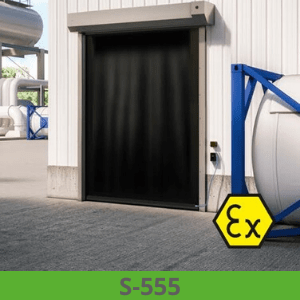
S-555 is suitable for use in Zone 2 & 22 explosive atmospheres and is specifically designed for outdoor use. The ATEX door is wind resistant up to wind load class 5.
EX II 3 G/D
Ex h IIC T6 EPL Gb
Ex h IIIC 85°C EPL Db
Ex db mc ia e IIC T4 EPL Gc
Ex tb mc tD IIIB 135°C EPL Dc
CE 0029 APRAGAZ 16ATEX 0150X/1
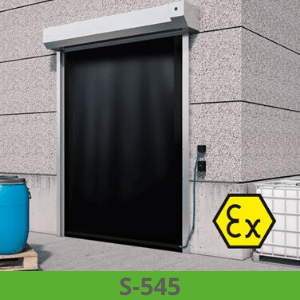
S-545 is suitable for use in Zone 2 & 22 explosive atmospheres. The ATEX door is designed for outdoor use and is wind resistant up to wind load class 4.
EX II 3 G/D
Ex h IIC T6 EPL Gb
Ex h IIIC 85°C EPL Db
Ex db mc ia e IIC T4 EPL Gc
Ex tb mc tD IIIB 135°C EPL Dc
CE 0029 APRAGAZ 16ATEX 0150X/1
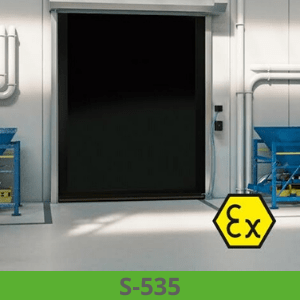
S-535 is suitable for Zone 2 & Zone 22 explosive atmospheres and is specifically designed for hazardous area indoor applications.
EX II 3 G/D
Ex h IIC T6 EPL Gb
Ex h IIIC 85°C EPL Db
Ex db mc ia e IIC T4 EPL Gc
Ex tb mc tD IIIB 135°C EPL Dc
CE 0029 APRAGAZ 16ATEX 0150X/1
EXPERTS IN EQUIPMENT FOR EXPLOSIVE ATMOSPHERES
leaders in ATEX Innovation To The Hazardous Area Industries
Thorne & Derrick are leaders in the development and distribution of Product Innovations that deliver significant improvements to clients plant, people and operational safety in the explosive atmosphere industries.
Your proactive problem solvers experienced in succession planning for the replacement of obsolete, non-conformant and legacy equipment in hazardous areas.
Your first-choice provider of innovative and competitive solutions to ensure ATEX & IECEx Compliance for Hazardous Area Electrical, HVAC & Process Instrumentation Equipmentto UK and international projects.
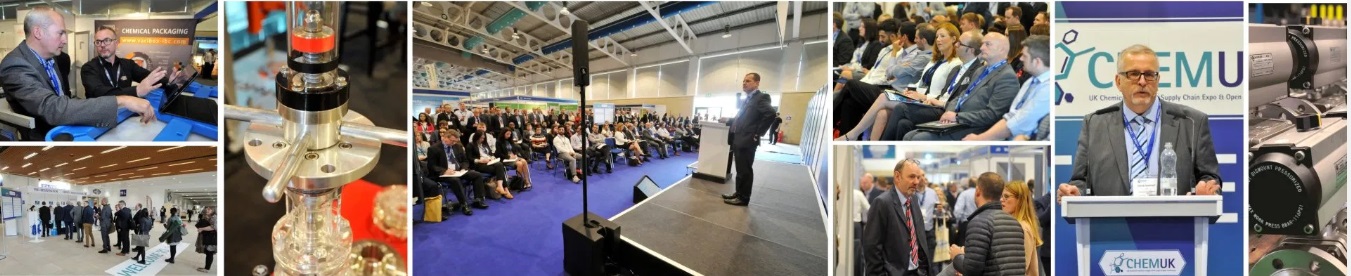
CHEMUK 2020 will bring together the UK’s chemical processing and chemical product formulation industries, providing an intensive 2-day supply chain sourcing, business networking, intelligence gathering, best-practice and strategy development experience.
➡ Exhibition floorspace for 2020 is SOLD OUT but enquiries are being accepted for 2021.
Designed to introduce new relationships and strengthen existing ones throughout the intersecting layers of the UK’s ‘chemical sector’, the event allows the ‘industry’ to consider the big challenges and opportunities.
2-Day Chemicals Industry Supply Chain Expo
CHEMUK 2020 will provide visitor groups with a diverse and impressive showcase of 250+ specialist exhibitors showcasing latest plant, equipment, materials and services supporting the chemicals industries, driving operational performance, efficiency, future-proofing, safety, compliance and more.
Key Segments
Experts in Equipment for Explosive Atmospheres | ATEX Product Innovations
Primary FILTER STREAMS – including (but not limited to..)
Chemicals, Ingredients, Raw Materials
– Industrial & Supply Chain Chemicals / Chemical & Formulation ingredients & additives / Raw Materials – for Chemicals processing & product formulation sectors
– Green Chemistry
Plant, Process, Flow & Control
– Process Plant & Equipment/ Process Engineering /Process Control / Process Automation/Flow Management/ Plant Management/Optimisation & QC/Plant Automation & Digitalisation
– Chemical Synthesis, Formulation plus Bio process solutions
– Research & Development Services, Innovation & Disruptive Tech
Business & Operations Management
– Engineering & Technical Services / Business Support Services / Trade & Business Performance / Operational & Asset Mgmt / Brexit & Regulatory Mgmt
– International Trade
Skills, Training, HR & Recruitment
– Careers, Skills & Training
CHEMUK 2020 Speaker Programme
The 2-day speaker programme will deliver some 30+ hours of free to attend expert intelligence, case studies, best practice and tech-insight ‘snapshots’, to inspire and assist next level investment and operational strategies for attending industry groups across the UK chemicals and chemical product sectors.
Centre stage will be critical themes such as process innovation, improvement & intensification, sustainability and responsible care, digitisation, new technology, plant & supply chain management, process safety and regulatory landscape, global trade, sector skills, Brexit and more.
Sectors in Focus
Programmes will address the needs of the diverse industrial chemicals development, processing & distribution sectors, from commodity to fine & speciality chemicals, intermediates, dyestuffs, additives, bio-based chemicals etc. Downstream formulated-product sector focus will include Cosmetics, Personal Care Products, HI&I Cleaning & Biocidal Products, Adhesives & Sealants, Polymers & Resins, Lubricants, Pharma & Healthcare, Paints, Inks & Coatings and more, as well as ’breaking markets’.
EventCity, Manchester
Hosted at the largest exhibition space in the North, EventCity, CHEMUK 2020 is located in the heart of the UK’s largest chemical region whilst providing excellent connectivity for the rest of the UK and Europe.
With FREE ENTRY into all exhibits, features & presentations, plus on-site FREE PARKING, as well as easy access by rail and air, the venue provides an easy experience for all visitors.
Who Should Attend?
CHEMUK 2020 reaches out to all key industrial chemicals manufacturing & distribution /chemical product manufacturing & chemical using industries, targeting Chemicals & Ingredients specifiers plus Chemical Process Engineers, Operational, HS&E, Control & Instrumentation, Test & Inspection, Manufacturing, Formulation, Logistics, Procurement & Supply Chain, R&D & Scientific professionals plus Chemical industry business teams.
Organisers are anticipating attendee groups from across the broad industrial chemicals processing & distribution sectors, from petrochemicals & base chemicals, to fine & speciality, intermediates & additives, polymers, inorganics, dyes, pigments, green chemicals, process chemicals and more.
Equally, the event provides chemical-based formulated product industries, from the cosmetics & personal care industries to paints & coatings, household & industrial cleaning, pharmaceuticals, water treatment, plastics and others, with crucial access to supply chain raw materials, chemical product processing plant & technologies, support services.
Dates For The Diary
CHEMUK 2020 takes place on Wed 16th & Thu 17th September 2020
Venue: Phoenix Way, Off Barton Dock Road, TRAFFORDCITY, Manchester. M41 7TB (Sat Nav: M17 8AS)
For a debut show there was nothing to fault the inaugural ChemUK 2019. It was everything Loadtec could have hoped for from a focused two-day exhibition and conference. An abundance of the right people in the right place at the right time. There is a real appetite for innovative manufacturing that aims to reduce OPEX, which was proven by the level of enquiries Loadtec received over the two-day event. We look forward to exhibiting at ChemUK 2020, Robert Keeler, Regional Sales Manager. Loadtec
A standout UK chemical event in particular for the quantity, quality and variety of the speaker program which resulted in an informative and inspiring two days. Paul Spencer, Product Development Manager, Gurit UK.
One of the best exhibitions we’ve exhibited at in the UK over the last 5 years – Tosh Singh, MD, Lutz UK Ltd
An excellent event to meet potential new suppliers & customers, and catch up with friends and contacts Miles Smith, Contracts Manager Counter Corrosion
For a first event it was excellent – a good range of exhibitors and the speaker programme was informative and well-balanced. It was a shame that so many exhibitors had to be turned away due to space constraints at this venue – but this did not detract from the interest factor and value for attendees. All the people I spoke with during the 2 days I was there (exhibitors and fellow-visitors) gave similar positive feedback about the event which was vibrant and interesting – so I am sure that it will be even more successful next year, and I am looking forward to attending again in Manchester. Maria Sanderson – EHS Manager, Indivior UK Limited, Fine Chemical Plant
I have attended exhibitions and trade fairs etc for over 50 years and I found Chem UK 2019 one of the most relevant, interesting, informative and well organised that I have visited. Edward Jennings Business Development and Sales C E Bennett and Sons Limited
Well done ChemUK. Your event was a useful mixture of supplier initiatives and legislation updates. I thoroughly recommend your event. Andy Thomas. Managing Director: Coating Technologies Ltd
➡ Exhibition floorspace for 2020 is SOLD OUT but enquiries are being accepted for 2021. Given demand for positions, if you would like to exhibit, we recommend visiting the CHEMUK house stand (M8) where the sales team will be taking bookings for CHEMUK 2021. We will also be running our ‘Early Bird’ rates at the show.
Why exhibit at CHEMUK21?
Speaking Opportunities
Exhibitors will be invited to submit a title should they wish to speak as part of the 2-Day speaker programme running on the exhibition floor.
Full Website and Show-Guide Profiling
All exhibitors receive a full profiling through the show website and in the print show guide, handed to all visitors over the two days.
Visitor Networking Tool
Exhibitors and visitors will be connected via our pre-show networking tool allowing meetings & demonstration to be arranged in the weeks leading up to the event.
Social Media Support
The event will be regularly sharing and promoting all exhibitor content through the events social media accounts
EXPERTS IN EQUIPMENT FOR EXPLOSIVE ATMOSPHERES
leaders in ATEX Innovation To The Hazardous Area Industries
Thorne & Derrick are leaders in the development and distribution of Product Innovations that deliver significant improvements to clients plant, people and operational safety in the explosive atmosphere industries.
Your proactive problem solvers experienced in succession planning for the replacement of obsolete, non-conformant and legacy equipment in hazardous areas.
Your first-choice provider of innovative and competitive solutions to ensure ATEX & IECEx Compliance for Hazardous Area Electrical, HVAC & Process Instrumentation Equipmentto UK and international projects.
Press Release Date: 02.04.2020 uploaded by Chris Dodds (T&D Sales + Marketing Manager) World’s First Fully Certified ATEX Doors Thorne & Derrick International, the Experts in Equipment for Explosive Atmospheres, today announce the signing of a Commercial Distribution Agreement...
Press Release Date: 04.07.2019 uploaded by Chris Dodds (T&D Sales + Marketing Manager) Category: Stockist Distributor Agreement Announcement Thorne & Derrick International announce that they have signed a Preferred Distributor Agreement with Raytec, the world leading manufacturer of LED...