- By Chris Dodds : estimated reading time 8 minutes
Exposure to hydrogen sulphide (H₂S) gas is a serious risk to people, even at low levels.
Portable gas detectors and fixed gas detectors from leading manufacturers such as Crowcon and Drager, provide a gas monitoring solution alerting the worker to the danger and preventing accidents or even death.
Hydrogen sulphide gas (H₂S) has a very distinctive smell – everyone has experienced the rancid stink bomb or rotten egg smell at some point.
H₂S can be a man made by-product and is commonly found in the refining of crude oil and the processing of “soured” natural gas. Other names for H2S include sewer gas, stink damp, swamp gas and manure gas.
The gas is also a by-product of the bio degeneration of organic matter posing a particularly high risk to those working in the sewage treatment industry.
H₂S can be deadly if workers are exposed to certain concentrations of the gas – it is not an option to rely on a person’s sense of smell when it comes to Health & Safety and the protection of life.
This is why portable and fixed gas detectors are used to protect people from the risk.
In one incident, three workers lost their lives whilst working on an oil transfer line in a corrosion coupon pit. A 4th worker was critically injured and air lifted to hospital – the cause of death was cited as exposure to a lethal concentration of H₂S gas.
Why is Hydrogen Sulphide Gas So Dangerous?
H₂S is a flammable gas when in high concentrations. However this is not the main danger. Just like CO₂, it is a toxic gas and poses a risk even at low exposure levels:-
- 2-5PPM – Nausea & Headaches
- 20PPM – Fatigue, Headaches, Loss of Memory, Dizziness
- 1000 – 2000PPM – Instant Death
- PPM Parts Per Million
Ironically, one of the side effects of exposure to H₂S gas is depletion of the sense of smell meaning workers exposed to the gas may inadvertently continue to work despite initially being exposed to the “rotten egg” smell.
H₂S is heavier than air and therefore will sink to the floor meaning working in confined spaces like shafts or trenches is particularly dangerous.
Workers can be exposed to hydrogen sulphide gas in numerous process industries including mining, paper mills, iron smelting, petroleum refining and sewage treatment works.
Even low concentration levels of H₂S can be toxic if individuals are subjected to the gas for an extended period of time leading to fatigue, pulmonary edema, loss of consciousness and even death.
Occupational exposure to hydrogen sulphide typically occurs in oil, gas and petrochemical industries as the by-product of coke (blast-furnacing).
The warning signs of H2S exposure are easy to recognise with many parts of the body being affected. Eye irritation will occur with physical soreness, light sensitivity and pain experienced when viewing or looking towards a bright light; commonly known as ‘Gas Eye’.
Other symptoms include breathing irritation such as sore naval passages, a burning sensation on the lungs, headaches, confusion and nausea. The real danger with H2S is that it can kill at reasonable low levels.
Managing Hydrogen Sulphide In The Offshore Work Environment
Hydrogen sulphide is considered a broad spectrum poison and as such it can poison several systems in the body, however the most severely affected are the nervous and respiratory. 
In addition to being toxic, H2S is highly flammable and therefore presents an extra risk in the offshore environment.
The gas is heavier than air and tends to accumulate in low lying areas, rapidly destroying the sense of smell which would be a first stage indicator of the presence of H2S. Hydrogen sulphide is toxic at breathable concentrations between 500-1000ppm however death is not instantaneous.
At concentrations of 1000ppm and above however, the lethal effects are much more instant as this causes strong stimulation of the central nervous system and rapid breathing, leading to a total loss of breathing.
The Health & Safety Executive (HSE) states that 800ppm is the generally accepted lethal concentration for 50% of an exposed human population for 5 minutes exposure to hydrogen sulphide gas. On an offshore installation, standards recommend a 3 tier approach to gas detection that are similar to the flammable hazardous area classification arrangements.
The three tiers of gas safety are classified as:
Category 0 – Areas where H2S will be present during normal working operations, such as confined spaces or vessels.
Category 1 – Areas in which H2S may be encountered during normal working operations. Entry is only allowed with a portable gas detector and fixed gas detection is recommended.
Category 2 – Areas which are free from H2S during normal operations but could be contaminated by a gas leak or equipment malfunction.
Gas detection installations in offshore environments typically operate with an alarm and action at least 20% and 50-60% LEL however some duty holders will operate their hydrocarbon detection systems at 10% and 25% LEL to provide a more sensitive system – it is recommended to operate hydrocarbon gas detection systems at the more sensitive values.
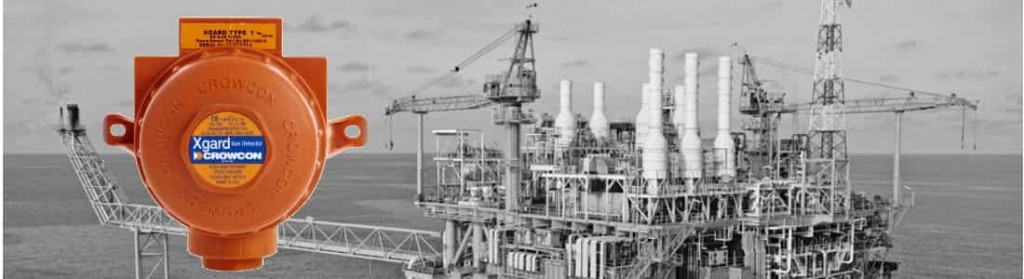
Crowcon X-Gard provides a fixed gas detection solution in the offshore oil and gas industry.
The Solution – Gas Detectors to Monitor H₂S & How To Reduce The Risks
Fixed gas detectors for H₂S are suitable for larger areas such as plant rooms where numerous detectors can be networked to a master control panel. In the event of H₂S reaching the preset exposure limit, visual and audible alarms will activate to alert the workforce to the danger.
The Crowcon Xgard and the Crowcon TXgard Plus can both be used for H₂S gas detection and offer a fixed, permanent detection solution.
Portable gas detectors for H₂S can also be used for personal protection and are especially useful when working in confined spaces. Easy to use, operated simply by one button and easily attachable to the workers clothing. Portable gas detectors offer a safe monitoring solution alerting the user when preset levels of gas/gases are detected.
For portable Hydrogen Sulphide detection solutions, the Crowcon Gasman and Crowcon Gas-Pro PID both offer an effective solution.
Reducing The Risk Factors Of H2S Gas In The Workplace
Reducing the risks of Hydrogen Sulphide poisoning in the workplace is a key responsibility and can be managed by following these points:
- Monitoring – By providing H2S monitors, gas levels can be managed and action taken when they reach potentially harmful levels. Where there is a risk of Hydrogen Sulphide exposure, it is vital to have adequate gas detection facilities in place.
- Training and education – Workers must be educated to the dangers of H2S exposure, how to prevent and recognise H2S poisoning and how to effectively operate breathing apparatus.
- Ventilation – Where practical, effective ventilation should be installed to reduce the levels of H2S and the potential threat posed to staff.
- Storage – Any cylinders containing H2S should be clean, isolated and stored in a shaded and well ventilated area.
- Confined space precautions – Any confined spaced must be tested, ventilated and deemed safe for use before any workers can enter.
- Worker attitude – Workers are more likely to be harmed if they are unaware of the risks of H2S or become lax about their safety. This cements the need for thorough training and education about the dangers of this gas.
- Regular maintenance – In order to reduce the risk posed by H2S, regular maintenance of drums, pipes, valves and containers must be carried out.
- Emergency plans – An emergency action plan must be put in place where workers are trained to used emergency exits and equipment. This procedure must be practiced periodically to maintain standards and educate any new members of staff.
Useful information and guidance on H₂S gas detection and monitoring can be found at:-
Managing Hydrogen Sulphide Offshore
ISO1014: 2003 Petroleum & Natural Gas Industries
HSE EH40/2005 – Workplace Exposure Limits
Thorne and Derrick International are able to provide a wide range of Gas Detectors to monitor H₂S gas many other dangerous toxic and flammable gases – for more information or to discuss your requirements please contact us.
More gas detection Reading
Flame, Heat, Gas Detectors & Detection Systems

Hazardous area industries including offshore oil/gas platforms and FPSOs, onshore oil refineries, processing plants, pipelines, storage farms and LPG/LNG plants all utilise or produce a wide range of hazardous flammable liquids and gases that can be detected using correctly specified flame and gas detectors.
Detecting toxic and flammable gases requires the detectors to be classified and certified according to the specific IECEx or ATEX standard – we distribute flame and fire detectors manufactured by Spectrex to operate in the harshest environmental conditions including self-contained stand-alone devices designed for direct connection to control and alarm systems or automatic fire extinguishing systems.
Our range of Hazardous Area Fire & Gas Detection System products also includes Explosion Proof Warning Systems & Hazardous Area Lighting – comprehensive range of intrinsically safe, flameproof and explosion proof alarm sounders, sirens, bells and horns, loudspeakers and beacons.
♦ LV Power Products | Junction Boxes & Enclosures ATEX | Plugs ATEX | Control Stations ATEX | Isolators ATEX
Experts in Equipment
for Explosive Atmospheres
Follow our Showcase Page on LinkedIn to receive hazardous area product innovations, industry news, whitepapers, videos, technical tips and training webinars for professionals involved in the explosive atmosphere industries.
- By Chris Dodds : estimated reading time 15 minutes
Hydrogen sulphide (H2S) is a naturally occurring gas and can be found in many of the worlds crude oils. The gas is colourless and has a distinctive rotten egg odour at low levels however at high concentrations the gas will numb the human sense of smell which can be fatal.
Heavy oils such as crude oil, residual fuel and gas oil tend to have large concentrations of hydrogen sulphide and this can become a concern if the oils are to be stored over extended time periods.
This Blog looks at the dangers of hydrogen sulphide gas in the oil refining industry and the working areas that may have H2S present and the gas detection solutions available.
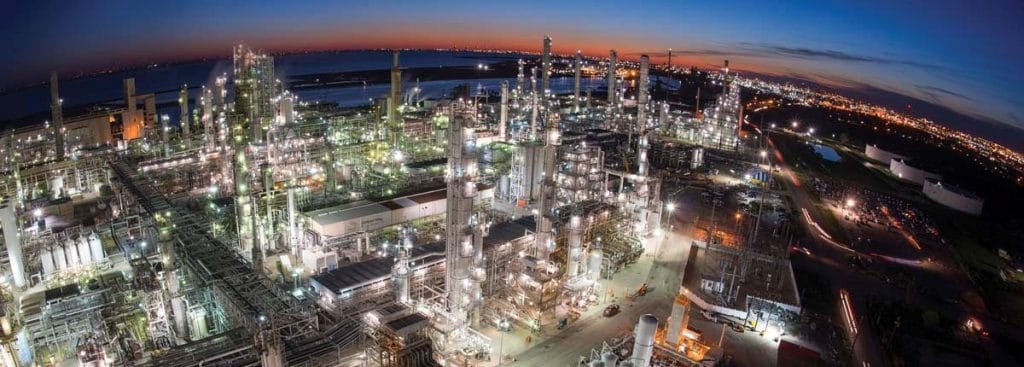
Image: Valero
What Are The Dangers Of H2S Gas?
Working in and around an oil refinery is naturally fraught with dangers and potentially hazardous areas. One of the most common and most underestimated problems faced by personnel is the presence of toxic gases and particularly hydrogen sulphide (H2S) gas.
H2S is a colourless gas and therefore invisible. The gas does have a distinctive rotten egg smell that can only be smelt at low concentrations as at higher and more dangerous levels, peoples sense of smell is significantly numbed and therefore without adequate fixed or portable gas detectors, they can succumb to the harmful effects of the gas.
Inhalation of hydrogen sulphide gas can lead to acute poisoning and death by suffocation occurs extremely fast. This Blog looks at where hydrogen sulphide gas can occur within refineries and which situations are particularly dangerous including hazardous areas.
H2S Gas Risks – Case Studies
- Death Caused After Fainting Due To H2S Gas – St. Charles Refinery, Norco, Louisiana, U.S. A contract worker was killed after being hospitalised following an incident of exposure to hydrogen sulphide gas. The surviving worker reported to police that he smelt hydrogen sulphide and began an immediate evacuation of the area. He lost consciousness and woke up half way down the ladder he was working on to see his colleague at ground level. The fatality also had a head trauma and later died in hospital however his loss of consciousness was related directly to the presence of hydrogen sulphide.
- Death Caused By H2S Gas Due To Unauthorised Maintenance – Workers at a sulphide refinery in Douglasville, Texas were busy relighting a waste boiler/heater and their task was to remove the sight glass and push the lighter into the valve and the burner. They discovered the glass was warped and replaced it without a safety permit. Meanwhile, Hydrogen Sulphide had leaked in to the area. One worker died on site from H2S poisoning where the other was hospitalised. There were also five other workers who showed symptoms of hydrogen sulphide poisoning.
- H2S Gas Causes Death Due To Disregard For Safety Rules – A fatal incident at a sour water stripper unit (SWSU) occurred when a field operator was collecting stripped sour water. The operator had gone to collect a sample and H2S gas had escaped from an open manhole. The worker lost consciousness and when eventually taken to hospital he was pronounced dead on arrival from gas poisoning. The levels of hydrogen sulphide gas were found to be above 40-50 ppm.
The above case studies highlight just how dangerous this gas can be and how essential it is to install effective, working gas detection systems.
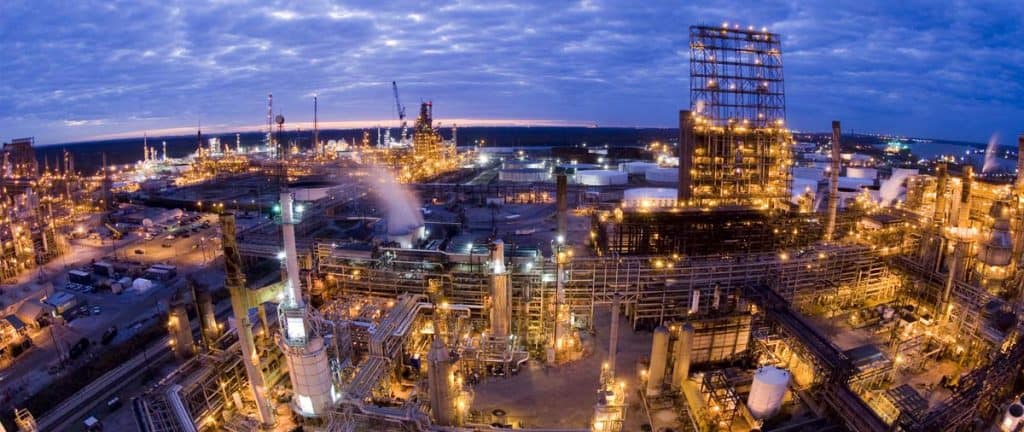
Valero St. Charles Refinery’s major process units were built or substantially reconstructed in the late 1990s, making the refinery one of the newest in the USA.
Characteristics Of Hydrogen Sulphide GAS

Hydrogen Sulphide – H2S Fact Card
Hydrogen sulphide gas is colourless and at certain low concentrations it has a distinctive rotten egg odour which is instantly recognisable and as a result of this smell, H2S is commonly know as sewer gas, digester gas or marsh gas.
However, at higher concentrations the gas numbs olfactory nerves and starting at a concentration of 100ppm. People are therefore no longer able to smell the gas – concentrations higher than 1000ppm can be instantly fatal.
in addition to the numbing of senses, H2S gas is heavier than air and therefore will often collect in low-lying areas and working sites near ground level. The gas will ignite itself at a temperature of 270°C and due to its highly inflammable properties an explosive atmosphere may occur when combined with air.
Strong reactions are possible that can trigger spontaneous combustion, explosions and detonations. In addition, H2S gas combined with air and humidity or moisture can corrode metals through the formation of sulphuric acid.
Where Can H2S gas Occur?
90% of hydrogen occurs naturally in the environment for example in hot sulphur springs and rock masses, however there are many areas within the oil and gas industry in which the presence and bi-production of H2S gas is a common occurrence.
The refining process commonly produces H2S as a bi-product however the gas also occurs at wellheads, oil and water tanks, pumps, piping systems and flare heads.
The most common locations for the presence of hydrogen sulphide within refineries are:
Storage – The crude oil is transported via either a pipeline or barge and is stored waiting to be processed. Hydrogen sulphide can be found in the head space of the tank and can corrode the tank reducing it’s product lifespan and as the tank fills the headspace concentration increases.
Distillation Columns – The crude oil is separated into various components in the distillation columns based on boiling points. The lightest components are used for gas with the heaviest elements used for asphalt. Hazards occur even though this is a closed system and the gas can be present in the heat exchanger, furnace, tower flash column, vacuum furnace and bottom exhcanger.
Hydrotreater & Hydrocracker – The hydrotreater is used to remove the sulphur and the hydro cracker breaks long hydrocarbon chains into shorter chains in order to create more efficient petroleum products. These actions are performed over a catalyst at high pressure and temperature with excess hydrogen. Hydrogen and sulphur combine and create H2S which is then sent to a recovery unit to create water and sulphur. H2S content in the feedstock must be monitored along with any leaks.
Blending – This is the physical mixing of various hydrocarbons in order to produce an end product with desired characteristics. H2S hazards can occur during sampling, inspection, maintenance and turnaround.
Solution: Safety considerations to undertake include fixed and portable gas detectors to be installed in and around maintenance equipment and on turnaround equipment.
Chemical Treatment Process – This process removes contaminants such as sulphur, nitrogen, oxygen, dissolved metals and salts. This in turn improves the odour, colour and oxidation stability. Hydrogen sulphide is commonly used during the recovery of sulphur and the hydrogen sulphur scrubbing process.
Gas hazards will occur during sampling, inspection, maintenance and turnaround.
Solution: Portable and fixed gas detector solutions should be used in and around maintenance and inspection equipment to ensure gas detection safety.
Power Generation – Oil refineries have many other operations including electric generation, steam generation, cooling towers, wastewater treatment and flaring systems. The potential for H2S hazards to occur are around cooling towers and contaminated wastewater. Caution should always be taken during sampling, inspection and maintenance.
Solution: Portable gas detectors should be used along with respirators and air purifiers.
Effects On The Human Body And Exposure Limits
Hydrogen sulphide gas is a so called ‘nitrogen’ gas and causes damage to the lungs, central nervous system and can also cause skin and mucous membrane irritation. Typical symptoms of poisoning include headaches, dizziness, fatigue, dry mouth, anxiety, confusion and lack of coordination.
Even in low concentrations and a low dose, H2S can be harmful if exposure is continuous over several hours or days. High concentrations can lead to unconsciousness almost instantly and a coma followed by death in just a few short breaths – these effects show exactly how dangerous this gas is and highlights the need for effective gas detection.

Solutions For Effective H2S Gas Detection
There are a number of gas detection solutions available from Thorne & Derrick including fixed, portable and transportable suitable for use in safe and hazardous areas. Each working area and gas hazard requires a different gas detection solution in order to provide the proper, effective protection for personnel and buildings.
Typically, smaller confined spaces require personal and portable gas detection solutions to be carried by workers.
Fixed Gas Detectors
Fixed point gas detectors provide constant, 24 hour gas monitoring 365 days a years which is important for the detection of random gas release. T&D are distributors for the Crowcon ranges of gas detection equipment. Our gas detection specialists can help you determine exactly the correct product for your requirements.
The ever-present safety protection provided by Crowcon fixed gas detectors means personnel working in areas such as distillation columns and chemical treatment plants are able to work freely – improving safety figures and increasing productivity.
Fixed gas detection systems are favoured in many oil and gas areas for their constant gas safety protection, monitoring of any gas leaks and providing both audible and visual warnings when there are no personnel on site.
Portable Gas Detectors
Portable gas detectors provide an excellent solution for the detection and monitoring of hydrogen sulphide among other hazardous gases. There are many benefits of using portable gas detection and differences compared to the use of fixed point detection systems.
The use of portable gas detection allows personnel the freedom to move between working areas safe in the knowledge that they are carrying their safety devices with them to detect and alert the presence of hazardous gases.
The difference between portable gas detectors and fixed is the length and continuity of detection – portable detection equipment must be tested, re-charged and have its own power supply whereas a fixed point detection system is hard wired and will provide constant, 24/7 detection however the flexibility and portability is compromised
Hazardous Area Gas Detection
Hazardous areas can occur when the presence of hazardous vapours, dusts or mists exist in a high enough volume. There are three categories of risk that must be identified reliably in order to protect human life and assets:
- Ex – The risk of explosion by flammable gases
- Ox – Oxygen; the risk of oxygen displacement or risk of increased flammability by oxygen enrichment
- Tox – Risk of poisoning by toxic gases
Without the use of auxiliary tools, people are often unable to recognise these dangers early enough to take action and prevent a serious incident or accident occurring.
Any equipment to be used in hazardous areas for gas monitoring purposes must fulfill the Essential Health And Safety Requirements (EHSR). In addition, as gas detection systems are products of safety technology, it is important not to misinterpret their role within oil refinery safety.
They are not simply a handful of detectors spread across and manufacturing plant, they are and should be considered a bespoke solution developed to fulfill the requirements of individual protection objectives.

Hazardous Area Gas Detectors Certified To International Classifications
All equipment to be used in zone 1 and zone 2 hazardous areas must be explosion proof and certified for use under the relevant local hazardous areas classifications such as ATEX and IECEx.
The 4 hazard levels of hydrogen sulphide gas
Hydrogen sulphide gas is extremely corrosive and causes metals to become brittle when exposed. All oil well drilling sites and areas within oil refineries must be classified according to areas of potential or actual exposure to H2S gas.
The four hazard levels are:
- No Hazard Condition – This is any well or area that will not penetrate a known hydrogen sulphide formation is a ‘no hazard’ zone. Specialist equipment is not required.
- API Condition I (Low Hazard) – These are working areas where concentrations of H2S are less than 10 PPM. Recommendations for working in these areas include hydrogen sulphide warning signs, keeping all safety equipment in adequate working order and storing equipment in accessible locations.
- API Condition II (Medium Hazard) – These are working conditions where atmospheric concentrations of H2S are greater than 10 PPM and less than 30 PPM. Recommendations for working in these areas include legible H2S warning signs, keeping a safe distance from dangerous working locations, pay attention to audible and visual alarms and store safety equipment in accessible locations.
- API Condition III (High Hazard) – Work locations with atmospheric concentrations of H2S higher than 30 PPM. Recommendations for working in these areas are two H2S detectors must be present (one should be a metered gas detector and one should be a pump type with detector tubes. There should also be an oxygen resuscitator, two usable exits at each location and signs 500 feet from each location warning of the presence of hydrogen sulphide.
Monitoring Hydrogen Sulphide (H2S)
To Meet New Exposure Standards
In any working area where there is the potential for exposure to hydrogen sulphide, a gas monitoring strategy is recommended to ensure exposure levels are kept below acceptable levels and that the appropriate action is taken if there is ever exposure above these levels.
In order to protect workers from exposure to harmful levels of hydrogen sulphide, the American Conference Of Governmental Industrial Hygienists (ACGIH) modified the Threshold Limit Value (TLV) for H2S in 2010.
From 1976 to 2009, the 8 hour time weighted average TLV (TLV-TWA) was 10 parts per million (PPM) and the 15 minute short-term exposure limit TLV (TLV-STEL) was 15 PPM. In 2010 a TLV-TWA of 1 PPM was adopted along with a TLV-STEL of 5 PPM for H2S.
ACGIH
The ACGIH is a globally recognised authority on the establishing of exposure limits for chemical agents including toxic gases, and the changes to the H2S limits followed a five year review period during which industry experts had the chance to express any concerns they had.
The best protection would be an electronic instrument that could measure and store both the 1 PPM TWA and 5 PPM STEL H2S levels and also provide and alarm when concentrations reached 5 PPM.
A portable gas detector is ideal for users who want to accurately and reliably measure H2S levels. It provides a noticeable visual, audible and vibration alarm notification to alert the user to dangers levels of hydrogen sulphide gas that is present.
The detector features an easy-to-use intuitive interface and also features data logging which records the entire history of the monitor for complete analytical and safety uses.
More Reading
ELECTRICAL & PROCESS INSTRUMENTATION EQUIPMENT
FOR EXPLOSIVE ATMOSPHERES
Thorne & Derrick are Specialist Distributors of Hazardous Area & Explosion Proof Equipment with IECEx & ATEX Certifications to the onshore and offshore oil, gas, petrochemicals and process industries.
Key Product Categories: Control Panels | Plugs & Sockets | Isolators | Enclosures & Junction Boxes | Lighting | Control Stations | Motor Starters | Heat Trace Cables & Systems | Gas Detection & Detectors | Fire Detection & Detectors | Heat Detectors | Electrical Heating & Heaters
 Also Process Instrumentation Products: Ashcroft Pressure Gauges | ASCO Valves | Katronic Flow Meters | KROHNE Flow Meters | VEGA Level Sensors | Rotronic Temperature & Humidity Sensors | SIKA Pressure Gauges