Tank Radar Level Sensor For Ships
VEGAPULS 66 Non-Contact Radar Level Sensor
Application – VEGAPULS 66 Non-Contact Radar Level Measurement
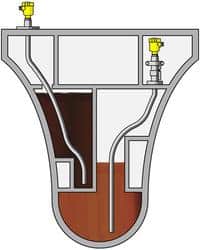
In the shipbuilding industry time is crucial, so extending their lifespan at sea is the main priority. Non-contact radar level measurement is used to ensure the service tanks are constantly carrying enough supplies. In this Instance the VEGAPULS 66 radar level non-contact level sensor is used.
Every inch of space on a marine vessel is used to its full potential. Places that aren’t easy to access or existing cavities are used as service tanks for diesel and drinking water.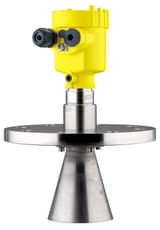
These tanks come in a range of different sizes depending on the ship and often span over numerous decks on larger ships. The capacity of the tank can range anywhere between one and one hundred tons.
A non-contact radar level measurement instrument uses microwave signals to determine the level of a liquid or solid.
Accurate non-contact radar level measurement is imperative to ensure the ships are always fully stocked when out at sea. A tank level sensor was required that could measure the contents without making contact.

Radar Level Sensor Signals
Solution – VEGAPULS 66 Non-Contact Radar Level Measurement
In the shipbuilding industry a sounding pipe is made available by the shipyard to ensure accurate non-contact level measurement in the tank.

VEGAPULS 66 non-contact radar level sensor is the ideal solution as the non-contact radar level measurement works regardless of product or tank form. The guided wave radar microwaves are undeterred by constructions or installations on the vessel.
The tank level sensor uses this data to determine the distance to the product surface and is thus able to calculate the product level.
Non-contact radar level sensors can be used for level measurement of process tanks, storage tanks and silos.
T&D are an approved stockist & distributor for the VEGA range of non-contact radar level measurement instruments. Please contact us today to discuss your requirement.
Further Reading
Radar Level Measurement – How Does It Work?
Guided Wave Radar Level Sensor – How Does it Work?
ELECTRICAL & PROCESS INSTRUMENTATION EQUIPMENT
FOR EXPLOSIVE ATMOSPHERES
Thorne & Derrick are Specialist Distributors of Hazardous Area & Explosion Proof Equipment with IECEx & ATEX Certifications to the onshore and offshore oil, gas, petrochemicals and process industries.
Key Product Categories: Control Panels | Plugs & Sockets | Isolators | Enclosures & Junction Boxes | Lighting | Control Stations | Motor Starters | Heat Trace Cables & Systems | Gas Detection & Detectors | Fire Detection & Detectors | Heat Detectors | Electrical Heating & Heaters
 Also Process Instrumentation Products: Ashcroft Pressure Gauges | ASCO Valves | Katronic Flow Meters | KROHNE Flow Meters | VEGA Level Sensors | Rotronic Temperature & Humidity Sensors | SIKA Pressure Gauges
Radar Level Measurement Starch Processing, Cheese Production & In The Brewing Industry – Application
A major supplier to the food industry in Asia has specialised in the production of enzymes. There are used for the following where hygienic requirements need to be taken into consideration: in
Radar Level Measurement
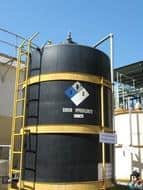
starch processing, cheese production and in the brewing industry. Cleanliness in process technology is imperative so the process water lines are thoroughly cleansed regularly through active chlorination. The medium (sodium hypochlorite) is the active ingredient that is stored in plastic PE tanks outdoors and metered in for the cleaning process which has proved beneficial.
Level Measurement in the tank was measured and displayed with a gauge glass. However this required regular checks which became untenable. The sodium hypochlorite is react with other substances particularly organic materials. Therefore this application requires a reliable, low maintenance solution preferably a non-contact solution so no changes need to be made to the container.
Radar Level Measurement Starch Processing, Cheese Production & In The Brewing Industry – Solution
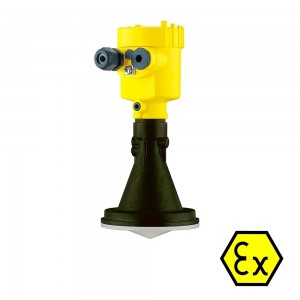
The ideal solution was identified as the VEGAPULS 61 non-contact radar level sensor as the sensor is able to measure non-invasively through the closed vessel top. Mounted onto the boom above the storage tank with a mounting bracket so changes to the container are not necessary.
Accurate level measurement regardless of weather conditions is possible thanks to a two-wire technology the output signal can be integrated directly into the control system.
For the user, this solution means dependable production, efficient cleaning and time savings resulting from the discontinuation of manual reading and gauge maintenance.
VEGAPULS 61 Non-Contact Radar Level Sensor
For more information on the VEGA Radar Level Measurement Instruments suitable for use in the metal processing industry please click here to request a quote or contact T&D’s sales office today.
Further Reading
Non-Contact Radar Level Measurement Used In The Shipbuilding Industry
Radar Level Measurement – How Does It Work?
Guided Wave Radar Level Sensor – How Does it Work?
ELECTRICAL & PROCESS INSTRUMENTATION EQUIPMENT
FOR EXPLOSIVE ATMOSPHERES
Thorne & Derrick are Specialist Distributors of Hazardous Area & Explosion Proof Equipment with IECEx & ATEX Certifications to the onshore and offshore oil, gas, petrochemicals and process industries.
Key Product Categories: Control Panels | Plugs & Sockets | Isolators | Enclosures & Junction Boxes | Lighting | Control Stations | Motor Starters | Heat Trace Cables & Systems | Gas Detection & Detectors | Fire Detection & Detectors | Heat Detectors | Electrical Heating & Heaters
Also Process Instrumentation Products: Ashcroft Pressure Gauges | ASCO Valves | Katronic Flow Meters | KROHNE Flow Meters | VEGA Level Sensors | Rotronic Temperature & Humidity Sensors | SIKA Pressure Gauges

Hazardous Area Thermostats – ATEX IECEx EAC Ex Certified
- By Chris Dodds : estimated reading time 5 minutes
Thermostats for Hazardous Areas
ExCaliber Series from Hazloc Heaters
Thorne & Derrick are specialist Hazardous Area Electrical Heating Equipment Distributors – we distribute Flameproof, Explosion Proof and Intrinsically Safe equipment for Zone 1, 2, 21 and 22 hazardous area heating. For over 10 years Hazloc Heaters have been providing industrial heating solutions for hazardous area, non-hazardous area and harsh working environments.

Hazardous Area Electrical Heating
T&D together with Hazloc Heaters, a leading manufacturer of industrial heating products for hazardous and severe-duty locations are pleased to announce the introduction of the hazardous area EXCaliber Series of explosion-proof air-sensing thermostats that are CE Marked and certified to meet ATEX, IECEx & EAC Ex requirements in Gas and Dust atmospheres.
Hazardous Area Thermostats
Thermostats are components of a control system which sense and maintain a system at a constant temperature by switching the devices on or off as and when needed – the thermostat serves as a control unit for heating or cooling the system or a component of heaters or air conditioners. Hazardous area thermostats are specially designed for hazardous location temperature control i.e. heating, cooling or ventilation system control with an adjustable knob for easy and convenient adjustments.
Hazloc EXCaliber hazardous area thermostats are available in a bi-metal (BTX) and electronic (XET) type configuration designed for use with heating or cooling equipment located in Zone 1 & 2 or Zone 21 & 22 hazardous locations. Both models are extremely rugged and offer IP ratings and come with an easily adjustable and lockable dial.
Hazloc BTX1-E-A is a bi-metal sensing thermostat suitable for heating and cooling applications with an IP65 rating and suitable for a hydrogen gas atmosphere (Zone Group IIB+H2). The thermostat has a temperature adjustment range of 5°C to 25°C, a fast acting bi-metal sensing plate that is unaffected by altitude, dial locking screw to prevent unwanted adjustments, phenolic thermal-break standoffs between the knob and base to prevent heat creep, two (3/4”NPT) openings for easy field wiring and can be field wired from either a vertical or horizontal orientation for flexibility of install.

The Hazloc BTX1-E-A Hazardous Area Thermostat
Hazloc XET1-1-E-A is an electronic thermostat for heating applications only with an IP66 rating and suitable for a hydrogen gas atmosphere (Zone Group IIB+H2). This is the world’s first electronic hazardous location Excaliber thermostat. 24VAC is required to operate it. It has a temperature adjustment range of 5°C to 25°C, is extremely rugged, has a very fast acting electronic temperature sensor that is unaffected by altitude, dial locking screw to prevent unwanted adjustments, a contact-free switching mechanism that is not susceptible to wear, EMC compliance that guarantees no nuisance tripping, two (3/4”NPT) openings for easy field wiring and its non-orientation sensitivity allows for mounting in any position.

The Hazloc XET1-1-E-A Hazardous Area Thermostat
Hazloc Heaters General Manager, Darren Ochosky, stated, “The Hazloc EXCaliber hazardous area thermostats are unique in their design features. Furthermore, the innovative Hazloc XET electronic thermostat is the first of its kind in the world. This reinforces our dedication to helping our customers grow and prosper by providing leading edge hazardous area heating and cooling related products, technical expertise, and outstanding service.”
Hazloc Heaters is also committed to a high standard of quality and on-time delivery performance.

EXCaliber Thermostats – Hazardous Area Certified To International Classifications
T&D are the UK Approved Distributor for Hazloc Heaters for heating hazardous areas including the AEU1 Explosion Proof Air Heater. The AEU1 provide reliable and safe heating on offshore vessels including drill ships, jack-up vessels, semi-submersible vessels, offshore barges and floating platforms.
T&D supply the Offshore & Marine industries with an extensive range of Hazardous Area & Explosion Proof Equipment.

T&D, Your Explosive Atmosphere Experts – making hazardous areas safe.

The EXHEAT Bulldog – safe electrical heating for hazardous areas – see ATEX fan heaters.
More Reading
Invitation – network, engage, promote
Thorne & Derrick are inviting you to join LinkedIn’s fastest growing Discussion Group – Process & Hazardous Area Industries : Heat Tracing, Gas Detection, Fluid Control & Flow Measurement. News, projects, videos, promotions, whitepapers, jobs, webinars, press plus much more. 


Stockists
ABOUT US
Thorne & Derrick International are your single-source supplier of Electrical, Mechanical, Process & Instrumentation Equipment for use in industrial, hazardous area zones and explosive atmospheres.
T&D provide an outstanding service to UK and international customers – we are highly customer responsive and absolutely committed to providing a world-class service.
Electrical Heating Products
Thorne & Derrick International supply heated hoses, trace heating and heating cables for mechanical services and pipework to ensure optimum temperature maintenance is achieved and production losses are eliminated for industrial and process industries. We can design and supply electrical heat tracing systems for both process temperature maintenance and pipework frost protection in commercial, industrial and hazardous area applications – call us.
From stock we supply an extensive range of Electric Process Heating and Control Systems with IECEx, ATEX and CSA certification.

Air Warmers | Immersion Heaters | Thermostats | Water Heaters | Line Heaters | Portable Fan Heaters

Heating Cables | Pipework | Hoses | Drums | IBC
Hazardous Areas | Explosive Atmospheres | Flameproof & Explosion Proof Eqpt | ATEX

LED Floodlights For
Hazardous Area Lighting
LED floodlight, light fittings and luminaires for hazardous area locations offer several, significant advantages over traditional fluorescent lighting technology. The biggest question when replacing your traditional light fittings and luminaires with LED is to understand which LED luminaires offer a suitable replacement of existing fittings.
Raytec SPARTAN understand hazardous area lighting and have created a quick and simple lighting guide which allows you to compare which Raytec SPARTAN Floodlight or Bay light fittings can be used to replace your traditional lighting technology.
The upgrade guide allows a simple way for distributors, specifiers and end-users to identify the correct hazardous area lighting product from the SPARTAN Flood and Bay range, in order to efficiently and effectively replace an existing unit.
As the guide shows, the power input and output related to a LED luminaire installation is far less than a traditional alternative.
This is largely due to its highly efficient distribution of light, amongst other factors, which targets more light where it is most needed, using fewer lumens at source. This means that significant savings can be made on running costs of hazardous area lighting systems, in Zone 1 or Zone 2 potentially explosive atmosphere locations.
The below tables shows a comparison between traditional light fittings and Raytec LED type light fittings – showing delivered lumens by both and the percentage of power savings from the Raytec LED lights.
| Traditional Light Fittings |
Quoted Consumption |
Total Consumption inc gear loss |
Initial Lumens |
Delivered Lumens |
Replacement Raytec LED Light Fittings |
Raytec Delivered Lumens |
Raytec Wattage inc gear loss |
Raytec % Power Savings
|
| High Pressure Sodium |
400W |
460W |
48,000 |
28,800 |
SPARTAN High Power Flood / Bay HP 25K |
25,000 |
300W |
35% |
| 250W |
288W |
27,000 |
16,200 |
SPARTAN High Power Flood / Bay HP 15K |
15,000 |
180W |
38/29% |
| 150W |
173W |
15,000 |
9,000 |
SPARTAN High Power Flood / Bay HP 10K or FL48 |
10,000 |
120/136W |
31/21% |
| 100W |
115W |
10,000 |
6,000 |
SPARTAN Flood FL24 |
5,000 |
71W |
38% |
| 70W |
81W |
6,000 |
3,600 |
SPARTAN Flood FL12 |
2,500 |
34W |
58% |
| 50W |
58W |
3,500 |
2,100 |
SPARTAN Flood FL12 |
2,500 |
34W |
41% |
| Metal Halide |
400W |
460W |
38,000 |
22,800 |
SPARTAN High Power Flood Bay HP 10K or FL48 |
20,000 |
240W |
48% |
| 250W |
288W |
21,000 |
12,600 |
SPARTAN High Power Flood Bay HP 20K |
10,000 |
120/136W |
58/53% |
| 150W |
173W |
13,000 |
7,800 |
SPARTAN Flood FL48 of FL24 |
10,000/5,000 |
136/71W |
21/59% |
| 70W |
81W |
6,000 |
3,600 |
SPARTAN Flood FL24 or FL12 |
5,000/2,500 |
71/34W |
12/58% |
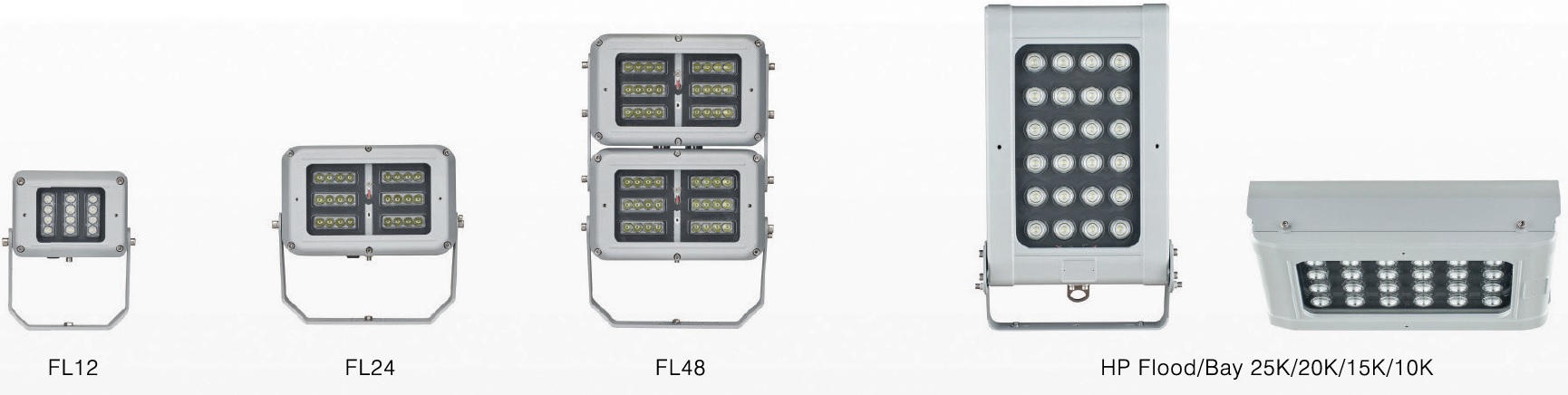
Raytec ATEX Floodlights
| Traditional Luminaire |
Quoted Consumption |
Total Consumption inc gear loss |
Initial Lumens |
Delivered Lumens |
Replacement Raytec LED Luminaire |
Raytec Delivered Lumens |
Raytec Wattage inc gear loss |
Raytec % Power Savings
|
| Mercury Vapour |
400W |
460W |
22,000 |
13,200 |
SPARTAN High Power Flood / Bay HP 15K |
15,000 |
180W |
61/56% |
| 250W |
288W |
13,000 |
7,800 |
SPARTAN High Power Flood / Bay HP 10K or FL48 |
10,000 |
120/136W |
58/53% |
| 125W |
114W |
6,300 |
3,780 |
SPARTAN Flood FL24 |
5,000 |
71W |
51% |
| 80W |
92W |
3,800 |
2,280 |
SPARTAN Flood FL12 |
2,500 |
34W |
63% |
| 50W |
58W |
2,100 |
1,260 |
SPARTAN Flood FL12 |
2,500 |
34W |
41% |
Tungsten Halogen
|
1500W |
N/A |
33,000 |
19,800 |
SPARTAN High Power Flood Bay HP 20K |
20,000 |
240W |
84% |
| 1000W |
N/A |
22,000 |
13,200 |
SPARTAN High Power Flood Bay HP 15K |
15,000 |
180W |
82/80% |
| 750W |
N/A |
15,000 |
9,000 |
SPARTAN High Power Flood Bay HP 10K or FL48 |
10,000 |
120/136W |
84/82% |
| 500W |
N/A |
9,000 |
5,400 |
SPARTAN Flood FL24 |
5,000 |
71W |
86% |
| 300W |
N/A |
5,000 |
3,000 |
SPARTAN Flood FL12 |
2,500 |
34W |
89% |
| 200W |
N/A |
3,000 |
1,800 |
SPARTAN Flood FL12 |
2,500 |
34W |
83% |
Contact Thorne & Derrick Sales Team for the complete range of ATEX Lighting manufactured by Raytec.
ELECTRICAL & PROCESS INSTRUMENTATION EQUIPMENT
FOR EXPLOSIVE ATMOSPHERES
Thorne & Derrick are Specialist Distributors of Hazardous Area & Explosion Proof Equipment with IECEx & ATEX Certifications to the onshore and offshore oil, gas, petrochemicals and process industries.
Key Product Categories: Control Panels | Plugs & Sockets | Isolators | Enclosures & Junction Boxes | Lighting | Control Stations | Motor Starters | Heat Trace Cables & Systems | Gas Detection & Detectors | Fire Detection & Detectors | Heat Detectors | Electrical Heating & Heaters
Also Process Instrumentation Products: Ashcroft Pressure Gauges | ASCO Valves | Katronic Flow Meters | KROHNE Flow Meters | VEGA Level Sensors | Rotronic Temperature & Humidity Sensors | SIKA Pressure Gauges
Hazardous Area Lighting – Emergency Lighting & Luminaires (3 Essential Factors)
Emergency Lighting For Hazardous Areas
Emergency Ex lighting plays an important role in maintaining the safety of hazardous area zones and locations, and the well-being of those who work in them, by providing back-up illumination and lighting when the primary power source fails.
In this article, attributed to Raytec SPARTAN, we take a closer look at how the latest ‘intelligent’ emergency hazardous area lighting can improve performance of emergency systems, ultimately increasing safety and reducing risk on-site.
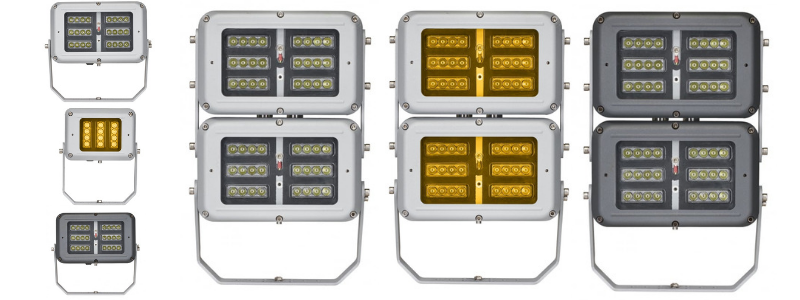
Emergency Lighting & Luminaires Zone 1 & Zone 2
What Is an Intelligent Emergency Lighting?
‘Intelligent’ emergency lighting features a built-in microprocessor which automatically cycles the emergency batteries, checks the health status of the hazardous area lighting and communicates it via an LED indicator. The entire process is automated, unlike conventional emergency lighting where checks and battery cycling are a manual process.
Three charge and discharge cycles are carried out automatically at the point of the initial installation. This is essential in ensuring the battery maintains its full capacity.
Occurring every seven days, this is a shorter test lasting just a few minutes which checks the function of the battery, luminaire and power supply.
A random test occurring every three months, this more rigorously tests the battery’s capacity and the lighting overall condition. Critically, if the battery is not operating at full capacity, the light fitting can also perform self-recovery to restore optimum performance.
Without the light fittings ability to automate testing, these processes would otherwise have to be carried out manually. As well as using up time and resource, this could also potentially cause disruption to site.
To improve ease of inspection, the new lighting communicate the current health of the luminaire via a tri-colour LED indicator. This system communicates when the unit is going through one of the testing procedures and highlights the health of the lighting.
Hazardous Area Lighting
| LED Indication |
Condition |
 |
Battery charged and PSU OK |
 |
Emergency mode activated |
 |
Function Test |
| Self-test |
 |
Commissioning |
 |
Fault – further troubleshooting required |
Why Do I Need
Intelligent Emergency Lighting?
To operate effectively (by providing optimum levels of light and duration in emergency scenarios), an emergency lighting’s battery must be regularly checked and tested to ensure there is no degradation in its capacity. Further conditioning is also required to maintain its optimum performance.
Given that conventional emergency lighting rely on human intervention in the process of routinely monitoring, checking and testing, there is an associated risk of human error or neglect. If the luminaire is not properly tested and maintained there could be serious implications on the performance of the hazardous area lighting when an emergency scenario occurs.
Automating the process by introducing intelligent emergency lighting effectively eliminates this risk, increasing reliability of the emergency network and improving overall site safety. A reduction in the time and cost of maintenance is another associated benefit.
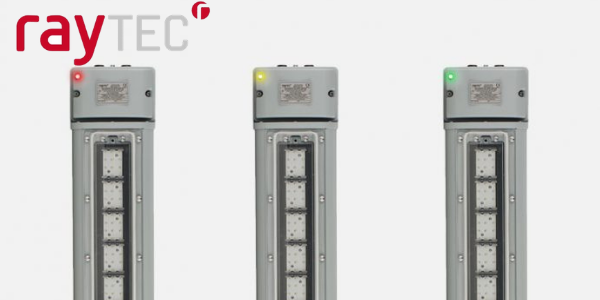
Hazardous Area Emergency Lighting
3 Things to Consider When Choosing an Intelligent Emergency Lighting
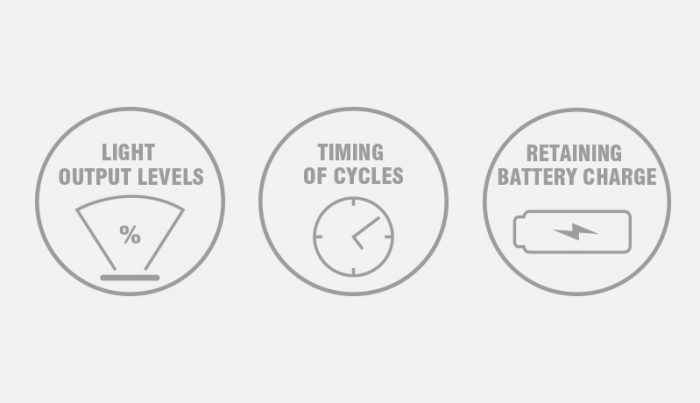
1. What level of light output will your intelligent emergency lighting provide once an automatic test begins?
This is an important consideration. If the emergency lighting can only operate in the hazardous area at a reduced output during testing procedures or battery cycling, parts of the site could unexpectedly lose significant levels of light, albeit for a temporary period.
If this occurs at a critical moment it could cause disruption or create a serious safety risk. In contrast, a lighting capable of maintaining 100% light output during testing will continue to provide the same constant level of performance.
2. When will the automatic testing occur?
As batteries are cycled, their charge is drained and then recharged to ensure they are operating at full capacity. It is important to consider when and how these cycles will occur, and the impact the timing of them could have.
If all lighting on-site were to enter a testing cycle at roughly the same time, performance of the entire network would be compromised if an emergency scenario occurred while this was ongoing; with battery charge levels depleted, output duration is stunted.
An intelligent emergency lighting should therefore conduct testing randomly to ensure there is never a significant proportion of luminaires undergoing a testing cycle at one time. This will help to avoid any unexpected duration shortages should an emergency scenario occur.
3. What happens if an emergency scenario occurs when a test is taking place?
Even if testing does occur randomly, having even one lighting on-site which is completely discharged could present a safety risk. Allowing a battery to discharge completely presents a risk of total light loss if an emergency scenario occurs at the end of a discharge cycle; with no charge in the battery, there is no power to the luminaire in emergency mode.
Crucially, if some reserve capacity is retained, and the batteries are only discharged to around a third of their capacity, at worst the lighting will still be able to provide around one hour of light in emergency mode (depending on the power / % output).
Opting for a luminaire which retains reserve capacity during testing is therefore an important consideration.
Raytec Performance Advantage
The new range of Raytec SPARTAN intelligent emergency lighting incorporate all the key features which you need to consider when upgrading to an intelligent system.
100% light output is maintained during all testing procedures, while discharge cycles occur randomly every 3 months and always retain around a third of the battery’s charge, so you’re never left with a total loss of light.
Contact Thorne & Derrick Sales Team for the complete range of ATEX Lighting manufactured by Raytec.
ELECTRICAL & PROCESS INSTRUMENTATION EQUIPMENT
FOR EXPLOSIVE ATMOSPHERES
Thorne & Derrick are Specialist Distributors of Hazardous Area & Explosion Proof Equipment with IECEx & ATEX Certifications to the onshore and offshore oil, gas, petrochemicals and process industries.
Key Product Categories: Control Panels | Plugs & Sockets | Isolators | Enclosures & Junction Boxes | Lighting | Control Stations | Motor Starters | Heat Trace Cables & Systems | Gas Detection & Detectors | Fire Detection & Detectors | Heat Detectors | Electrical Heating & Heaters
Also Process Instrumentation Products: Ashcroft Pressure Gauges | ASCO Valves | Katronic Flow Meters | KROHNE Flow Meters | VEGA Level Sensors | Rotronic Temperature & Humidity Sensors | SIKA Pressure Gauges