As a result of the UK leaving the European Union (Brexit), the UKCA mark (UK Conformity Assessed) will be phased in to replace the CE mark (European Conformity) for applicable goods to be placed in Great Britain (ie. England, Scotland and Wales.
This white paper was written on the subject by G. Warren May and shared with kind permission from Mike Davies.
UKCA Mark and UKCA ‘Ex’ (UKEX)
Background and Timescales
As a result of the UK leaving the European Union (Brexit), the UKCA mark (UK Conformity Assessed) will be phased in to replace the CE mark (European Conformity) for applicable goods to be placed in Great Britain (ie. England, Scotland and Wales). Under the current agreements, Northern Ireland will continue to accept the CE mark or the new UKNI mark. For Products traditionally sold with ATEX marking, UKCA ‘Ex’ (or UKEX) will be required in Great Britain.
UKEX will retain the familiar Ex-in-hexagon logo:
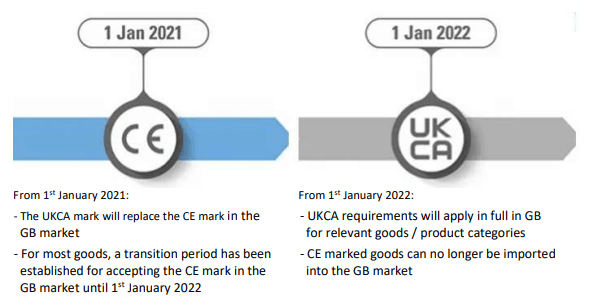
From 1st January 2021, the UKCA mark is available to be used for goods placed in Great Britain, with the CE mark still being legal until 31st December 2021.
From 1st January 2022, only the UKCA mark will be acceptable for goods placed in Great Britain and the CE mark will no longer be accepted. It will be acceptable for paperwork and packaging-only to contain the UKCA mark during 2022, but from 1st January 2023, the goods themselves must carry the UKCA mark.
Note that “Approved Body” is the new term for organisations permitted to carry out UKCA approvals. The existing term for those who carry out ATEX approvals is “Notified Body”. All former UK Notified Bodies automatically became Approved Bodies and currently, a number of European Notified Bodies, such as TÜV SÜD in Germany are applying for Approved Body status, so they will
also be able to carry out UKCA approvals.
For ATEX and CE mark, a Notified Body carries out an EU Type Examination.
For UKCA ‘Ex’ (UKEX), an Approved Body carries out a UK Type Examination.
The Process
In order for a product to receive UKCA ‘Ex’ marking, it should be approved to the latest version(s) of the EN 60079 standard(s). So, for example, an Exd product should be to EN 60079-1 2014, not 2007.
On the surface, this implies that many products would have to go through the costly process of updating their certification, before they can be assessed for UKCA and so in some cases, a
manufacturer may decide it is not worth the cost.
The usual route to update a certificate would involve assessing the product’s characteristics against every clause of the new standard. However, it has been agreed between the Approved Bodies and the UK Government, that only a gap analysis based on the changes to the standard (as highlighted in the standard) needs to take place. This means that the work is likely to be more cost-effective than might have been expected. The costs also, typically, are per Product, not per standard used to approve the product.
Note that in the case of products approved for use in Dust Zone 20 (da or II 1 D), there may be an additional dust immersion heat rise test required to meet the 60079-0:2018 version.
As with ATEX, UKEX still allows Zone 2 products to be self-certified if a manufacturer wishes to do so. This will often be done when a large system, incorporating a variety of approved components is assembled. However, for defined products such as lamps or smart phones, many customers will have more confidence in third-party approved items and may purchase accordingly.
Additionally, the manufacturer will also require a UK QAN (Quality Assurance Notification). However, this will not involve an extra audit besides the ATEX / CE audit, only an extra set of paperwork.
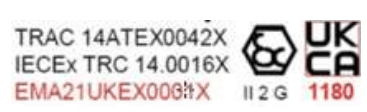
Many Ex products are currently marked for both ATEX and IECEx and it is likely, going forward, that products will be tri-marked to also include UKEX. See example of part of a certification label, below:
Example of part of a Certification Label
Note that the CE mark is also shown elsewhere on this label (cropped to preserve manufacturer’s anonymity).
Disclaimer
This guide is intended to give a general overview of the background, terms and processes relating to UKCA / UKEX. As individual products and the methods by which they are approved vary greatly, it is important to seek advice from an Approved Body and if applicable, obtain a quotation or price indication before making decisions about obtaining / applying the UKCA mark.
➡ Contact us to discuss your Electrical Heating, Lighting, Ventilation or Power requirements for safe and reliable use in hazardous areas and explosive atmospheres in accordance and compliance with UKCA certification requirements and ATEX/IECEx.
UKCA Support
View further reading about the introduction of the UKCA Mark and ATEX Hazardous Area Equipment – Thorne & Derrick can assist with the specification and supply of UKCA “Ex” Accredited, Marked and Certified equipment for Explosive Atmospheres – Leaders In ATEX & IECEx Product Innovation | Supporting DSEAR Regulatory Compliance & COMAH Sites.
IBC Heaters
Problem Solving For Ammonia Solutions
An EU Directive covering the carriage of dangerous goods created a significant UK problem for the supply of ammonia solution. Temporary fixes will come to an end in February 2022.
Chief Executive, Peter Newport, explains how the Chemical Business Association (CBA) and its member companies tackled the issue.
Chemical Business Association (CBA) | CBA is the voice of the UK chemical supply chain. It represents a wide range of businesses – from distributors and traders to manufacturers and blenders as well as logistics and service providers.
When the International Carriage of Dangerous Goods by Road (ADR) regulations almost halved the percentage concentration of Ammonia solution that could be legally carried by road, from 35% to 19%, specialist sectors of the chemical supply chain faced serious issues.
Ammonia solution in the higher concentration is used for a number of specialist applications. It is a key chemical component in the recycling of catalytic converters, the approval process for many pharmaceutical products, in the disposal of military ammunition, and in dealing with slurry in the oil and gas sector.
The UK adopted the revised provisions of the ADR in 2000 but agreed to allow deliveries at the higher concentration to continue through the use of Multi-Lateral Agreements (MLAs).
MLAs offered an interim solution that ensured supplies could continue. They are authored by one party and have to be counter-signed by at least one other party in order to operate.
The expiry date for MLAs can vary, but they normally last for five years unless they are extended due to the advent of new regulations. MLAs provided the industry with some breathing space in order to tackle the precise requirements of the ADR regulations.
The ADR regulations contained three key requirements in relation to the carriage of ammonia solution:
It specified three types of Intermediate Bulk Containers (IBCs) that could be used to carry ammonia solution (Types 31H1,31H2, 31HZ1).
The IBC must be fitted with a device to allow venting during carriage and the venting device had to be sited in the vapour space under maximum filling conditions.
The IBC(s) must be carried on an open vehicle (this includes curtain-sided vehicle). Carriage through the Channel Tunnel was specifically excluded.
These requirements are valid until 31 January 2022 for carriage of ammonia solution in territories that continue to remain contracted to the ADR agreement. The central challenge within these provisions was the creation of a venting device that would conform to ADR’s requirements.
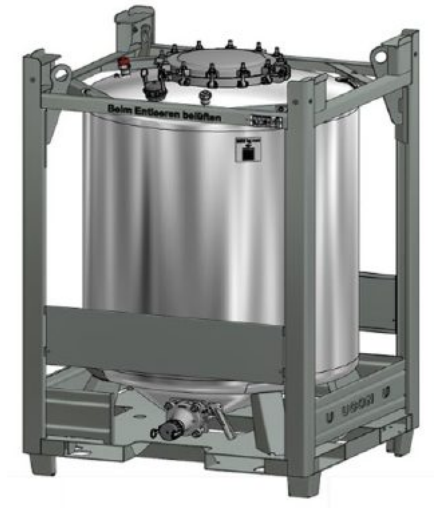
Standard IBC | 1000 Litre Intermediate Bulk Container
The first step was to review a range of IBC heater models to establish if any conformed or could be adapted to meet the ADR’s provisions. It quickly became apparent that a simple solution of this kind was not available.
The main stumbling block was the vapour pressure restriction imposed by the ADR.
Other problems involved the size and construction of IBCs. Supply chain companies required an IBC capacity of 1,000 litres.
In addition, the use of plastic to form the containers was limited to five years and it was not economically viable to construct a more robust plastic container. It became clear that a new design for an IBC would have to be developed.
CBA therefore contacted THIELMANN, a German company recognised as one of the world’s leading manufacturers of stainless steel containers and offering tailor-made in-house solutions to meet a range of design requirements.
IBC Containers
The specification provided to THIELMANN by CBA and a group of interested member companies was for a 1,100-litre cylindrical stainless steel IBC suitable for a liquid (Packing Group II) with a specific gravity not exceeding 1.00 and able to withstand hydraulic pressures of 550kpa. This specification was agreed, and development work began.
A prototype IBC was produced in a conical shape, with 2.5mm thick sidewalls, a convex head, two-inch camlock filling aperture, a butterfly outlet valve, and a pressure-relief valve.
In January 2018, testing the prototype began.
It successfully passed all its tests apart from the hydraulic pressure test. Over 510kpa, the base cone distorted forcing the valve handle onto the base plate causing the valve assembly to leak so the required pressure could not be maintained.
Several possible solutions were considered, including making a hole in the base plate to allow the handle to move and making the walls of the IBC thicker. For different reasons, these solutions were not appropriate.
The design team then recalculated the ADR formula suggesting that the hydraulic pressure the IBC had to withstand was 550kpa. Research showed that the actual hydraulic pressure was 460kpa. The UK Department for Transport subsequently agreed this revised calculation.
In August 2018, the new IBC was retested and maintained its integrity at 460kpa for ten minutes. The results of the full range of testing procedures were:
Vibration test 3.95Hertz for 60 minutes
Bottom lift test 1,816.02kg load with 75% fork penetration
Top lift test 2,997.57kg load for 5 minutes
Stacking test 5,101.30kg load for 5 minutes
Leakproofness test 20kPa for 10 minutes
Hydraulic pressure test 65kPa, 200kPa, 350kPa and 460kPa (ten minutes each)
Drop test 98% water filled IBC dropped from 1.2metres
This article originally featured in the May 2020 publication of HazardEx – the leading print and online magazine for safety, health and hazardous area professionals.
About The Author
Peter Newport is the Chief Executive of the Chemical Business Association. Peter is a key industry advocate to governmental and regulatory authorities in the UK and Europe.
He is also a board member and current Treasurer of the European Association for Chemical Distributors (Fecc) and a board member of the International Chemical Trade Association (ICTA).
CBA represents the UK’s independent chemical supply chain.
Its membership includes distributors, traders, warehouse operators, along with logistics and transport companies.
CBA’s members, the majority of which are SMEs, are the main industry interface with thousands of UK downstream chemical users.
CBA member companies employ more than 8,700 people. They distribute, pack, and blend over 4 million tonnes of chemicals each year with a market value of almost three billion euros.
In addition, CBA’s logistics member companies handle more than four million tonnes of chemicals annually.
About CBA
The ADR is a European agreement covering the transnational carriage of dangerous goods by road. It establishes specific conditions of carriage for nine separate classes of dangerous goods – from gases to flammable liquids and from oxidising substances, corrosive materials, and toxic substances.
A distinguishing four-digit UN number is allocated to each hazard class along with an explanatory pictogram that must be displayed on the vehicle carrying the dangerous goods.
ADR is derived from the French ‘Accord européen relatif au transport international des marchandises Dangereuses par Route’. From 1 January 2021, the treaty is to be renamed the Agreement concerning the International Carriage of Dangerous Goods by Road.
What Is The ADR?
This example of the industry creating an effective solution to a significant regulatory issue was brought to a successful conclusion with the issue of the new IBC’s Vehicle Certification Agency in September 2018, the Department for Transport’s authorisation issued in April 2019, and the beginning of the final roll out phase in January 2020.
Industrial & hazardous area
Electrical Heating Specialists
We can specify and supply from stock an extensive range of Electrical Heating Equipment for industrial and process heating applications -this includes temperature maintenance and frost protection (Winterisation) products for pipework, valves, IBC’s, drums, hoses, tanks and vessels. We produce custom silicone heaters for rapid and high temperature heat-up of complex shapes and surfaces – from concept, design to the delivery of standard or bespoke heaters on the shortest lead times. From the largest UK heat tracing cable stocks we deliver Electric Trace Heating Systems for pipework frost protection, ramp heating, roof/gutter snow melting and de-icing – enquire about our in-house design service.
EXPERTS IN WINTERISATION SOLUTIONS FOR INDUSTRIAL & HAZARDOUS AREA ENVIRONMENTS
Thorne & Derrick hold the largest UK stocks of frost protection & winterisation equipment to help keep your plant and personnel operational during the winter months.
Thorne & Derrick understand that prolonged periods of low ambient temperatures can bring operations to a standstill costing thousands of pounds in lost downtime.
Experts in heating solutions for use in industrial & explosive atmospheres, Thorne & Derrick have the knowledge & expertise to help clients prevent unnecessary down time this winter.
We can provide overnight delivery of Trace Heating Cables at the most competitive prices to guarantee frost protection of your pipelines and mechanical services.| Ask About Our Heat Trace Design Service.
💡 Contact us today and our skilled and friendly team can provide technical support as well as reliable, fit for purpose and compliant solutions to suit your exact requirements.
➡See our Winterisation blog TOP PICKS, including our most read articles about Trace Heating and the requirement for electrical heating products and systems to combat and mitigate Winter weather effects.
Low Voltage Lighting In Confined Spaces & Explosive Atmospheres
Low Voltage Lighting
Confined Spaces & Hazardous Areas
Guest Article By Tuomas Seilo Hazardous Area ATEX Lighting Specialist with ATEXOR Oy
Tuomas Seilo is a hazardous area ATEX lighting specialist at Atexor – with more than 15 years of experience at Atexor providing specification support for temporary lighting solutions for explosion atmospheres and hazardous areas in the Oil & Gas industry (both onshore and offshore). Tuomas has responsibility for the international sale and marketing of portable ATEX & IECEx lighting and power distribution systems and developing a global distribution network to serve customers.
Technology Leaders in Ex-Lighting for Hazardous Areas & Explosive Atmospheres
Confined spaces are special no matter how you approach them. Simple things like moisture in the air or a metal bar alongside you can become life-threatening.
In this article, we look specifically at the risk of electrocution. I present what low voltage is and how it affects ATEX temporary lighting.
Low Voltage Defined
According to the international standard IEC60364-4, anything below 50VAC (or 120VDC) is low voltage. At that level, you are unlikely to suffer injury if you are exposed to the current.
When I talk here about ‘low voltage,’ I am referring to what is technically classified as ‘extra-low voltage.’ The IEC60364 standard uses this term because it also addresses ‘high voltage’ (over 1000VAC) used, for example, in electricity transmission, and ‘low voltage’ which covers, for example, typical mains voltages in the 110-200VAC range.
But in everyday speak, we typically just use ‘low voltage’ when discussing 50VAC and below.
When you enter a confined space, your proximity to anything conductive becomes an immediate risk if there is electrical current in the area. Simply, a torn cable with 110-240V (your typical mains supply) can result in electrocution and possible death.
One thing I should point out right up front: low voltage is not the same as explosion protection. Ex-certified equipment can be high or low voltage, and low voltage in itself is not inherently safe to use in Explosion Hazardous Areas.
While not all confined spaces are Ex Zones, they all have special requirements for electrical protection if there is any presence of conductive material, including water.
Small vessels, columns, tanks, offshore platform separators, and the like need low voltage equipment. Whereas habitat spaces (pressurized tents on rigs), for example, typically do not present electrocution risks.
Low Voltage in Practice
Over the last several decades, however, you will find 24VAC as the most common requirement for LV equipment.
However, particularly for temporary lighting, we frequently use 48VAC. With this higher voltage, you remain safe from electrocution, but gain a lot more flexibility in your setup.
You can extend your lighting arrangement by linking luminaires in a chain, for example, much further with 48VAC compared to 24VAC.
In some markets, the LV requirements are much stiffer than the international standards – Belgium, Russia, and some parts of the United States require 12VAC for portable lighting in confined spaces.
In Belgium, for instance, confined spaces have two classifications based on the presence of heat and moisture. If the confined space is dry and cool (cool enough that workers won’t sweat), 24VAC lighting is allowing. If the confined space has humid air and/or is hot, 12VAC lighting is required.
But with lower voltage comes lower efficiency. You can’t link luminaires and cables cannot be more than 66 meters long. So, 12VAC presents a different range of challenges than normal LV setups.
Hazardous Area Lighting in Confined Spaces
Take Nothing for Granted
Whether it’s 12, 24 or 48VAC, LV equipment has become fairly standard in most parts of the world. Nonetheless, I have seen rather shocking practices, if you pardon the pun.
While on a site visit, I noticed our Atexor Ex-certified transformer was inside the confined space. The transformer is part of the temporary lighting solution to be able to provide LV supply current to LV luminaires.
In other words, the transformer itself is not low voltage.
One side of it is getting the full mains juice. So, having it inside a confined space that requires LV lighting was a major mistake.
So, whenever you are facing low-voltage requirements, it is important to think the whole thing through – equipment selection, placement, etc.
At Atexor, we pay special attention to electrical properties of our equipment. All exposed parts, for example, are either non-metallic or at least covered to eliminate the risk of sparks and electrical shocks. It is easy to take this sort of thing for granted, but you can still find temporary lighting with prominent, exposed metallic constructions.
In case you feel you have more interest in this topic, perhaps it should be worth checking out these food for thought points as well:
Classes I, II and III are safety protection classes for electrical equipment defined by standards:
Class I 230V with earth wire in place, Class II: isolation by plastic enclosure, Class III: low-voltage <50VAC (and 110VDC)
Class IIequipment are mainly hand lamps with cables operating with 230V but without earth wire
Class III i.e. low-voltage equipment are in practice the safest choice in case of accident as there is no danger of electrocution
And
Electrical configurations mainly include 2-pole (N+P) and 3-pole options (N+P+E)
3-pole option provides more flexibility, i.e. use of armored cables
Experts In Equipment for Explosive Atmospheres with ATEX & IECEx Certification
LEADERS IN ATEX INNOVATION
T&D are your first-choice provider of innovative and competitive solutions to ensure ATEX & IECEx Compliance for Hazardous Area Electrical, HVAC & Process Instrumentation Equipmentto your UK and international projects.
Special thanks to Guillaume Baral Marketing Manager at Marechal for writing this for T&D
Foreword
The content of this article considers the situation in April 2021 for the cases of Low Voltage (LV) electrical equipment in industrial or explosive environments. Regulation may evolve over time and all modifications enforced after April 2021 have not been considered in this article.
UKCA Marking and regulatory timing
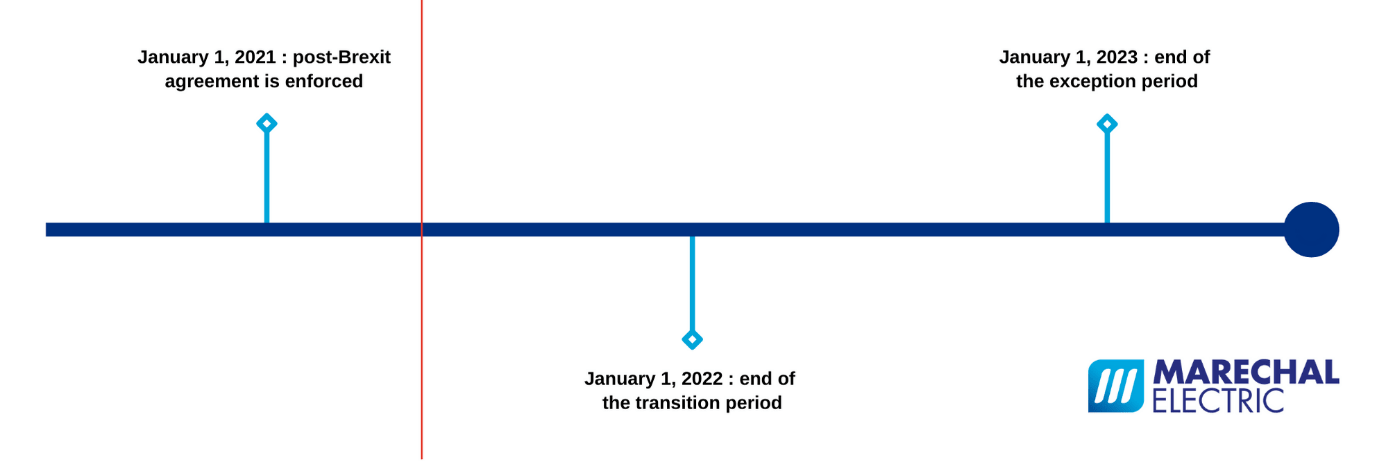
In the European Union (EU), CE marking is mandatory for all industrial LV products. Meanwhile, the ATEX Directive including a specific ATEX marking applies for LV products dedicated to explosive environments. The CE marking was recognised in all countries of the EU – including the UK – until the enforcement of the post-Brexit agreement on January 1st, 2021.
Following this date, the trading of industrial and explosion-proof LV products between the UK and the countries still part of the EU is slightly complexified. Manufacturers willing to serve the UK market will have to place a UKCA marking. It should be noted that this will apply to England, Scotland and Wales territories (Great Britain).
As a mean to help the manufacturers in the different areas, the UK government has issued new guidance on placing goods on the market in Great Britain, Northern Ireland and in the EU. The modification of the regulation is progressive and there are several dates which are to be considered.
January 1st, 2021 : UKCA is required in Great Britain. Beginning of the 12-month long transition period in which the CE marking remains valid.
January 1st, 2022 : The CE marking is no more recognised in Great Britain. The only applicable marking is the UKCA marking. One exception remains: the placement of the UKCA marking can be permanent but it is not mandatory. It can be applied on the labels, the packaging or a separate informative sheet.
January 1st, 2023 : The placing of the UKCA marking will have to be permanent.
As a worldwide provider of Low Voltage (LV) solutions, MARECHAL ELECTRIC is directly impacted by these new requirements. MARECHAL ELECTRIC’s approach to comply with the new UK regulation is detailed below.
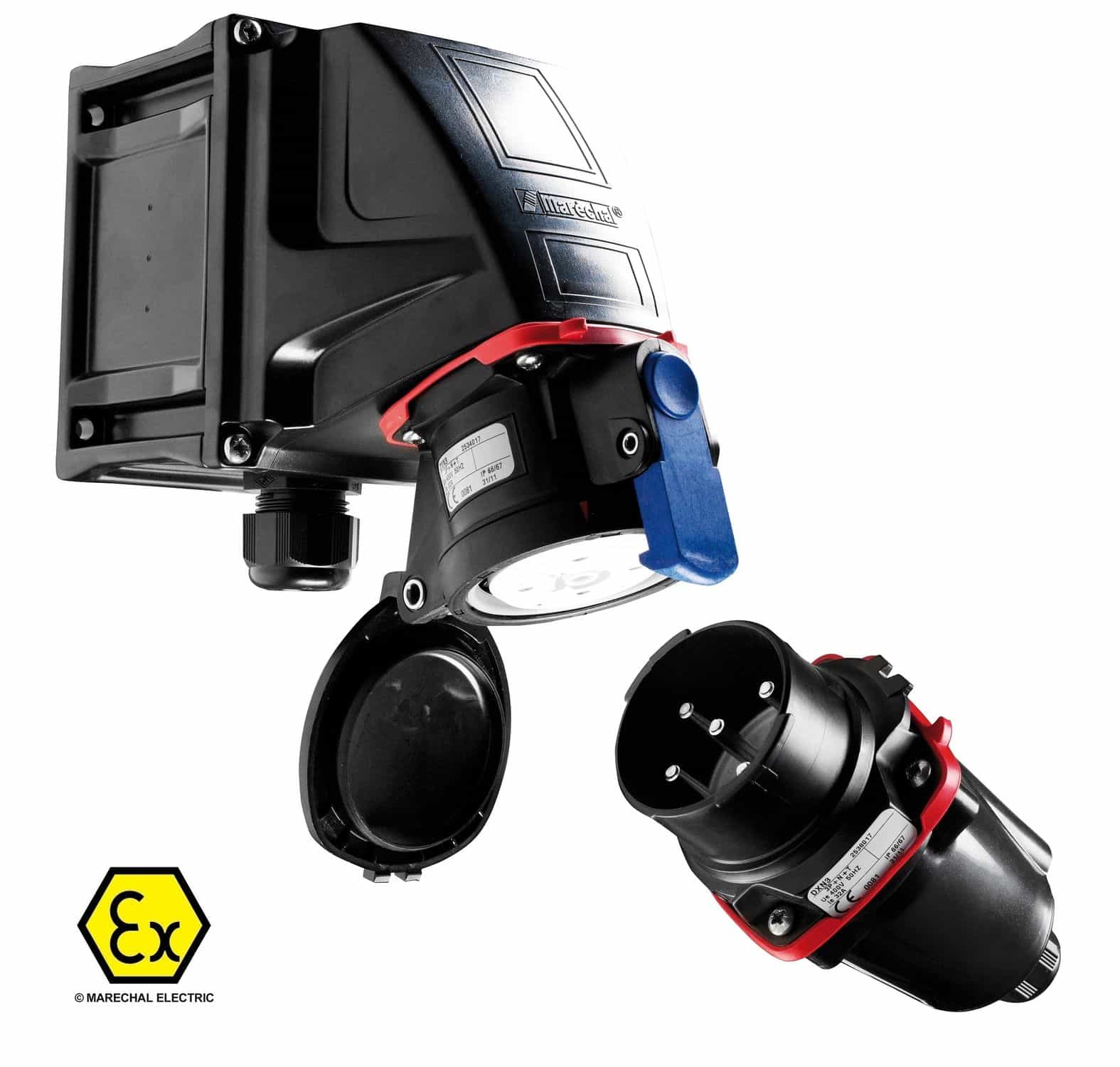
Hazardous Area Plugs DXN | ATEX
MARECHAL ELECTRIC’s approach
MARECHAL ELECTRIC has undertaken actions on two main topics: customs administrative formalities and regulatory requirements related to UKCA marking. What follows details how MARECHAL ELECTRIC will fulfil the regulatory requirements.
The MARECHAL ELECTRIC group manufactures plugs and sockets as well as distribution boxes for industrial and Ex environments. For these two types of products, the group will work on separate actions.
The UKCA marking for LV industrial electrical equipment is a self-declaration. For this type of products, it will be applied progressively on the products and placed in addition to the CE marking. The CE marking as well as the ISO 9001 certification of the MARECHAL ELECTRIC production site gives sufficient confidence for the application of the UKCA marking.
The approach for placing the UKCA marking on ATEX products is slightly different since the UKEX certification must be delivered by a third party notified body based in the UK. The notified body also delivers a UKQAN certification for the production quality assurance of the company.
MARECHAL ELECTRIC ATEX range is made of 14 different families:
DECONTACTOR™ is a MARECHAL® technology used on most MARECHAL® plugs and sockets. It uses silver-nickel butt contacts and specific spring-loaded terminals to provide exceptional connection performance and disconnection under load up to 200 A in complete safety.
Among all these families, MARECHAL ELECTRIC will start the product certification process by the DXN1and DXN3. As most European certification bodies have agreements with UK certifications bodies, the MARECHAL ELECTRIC certification will be done by the usual certification body. It will then be acknowledged by the partner local body.
The certification of the quality system will remain based on European ATEX certification. The UK certification will only be a transfer of certification to the new UK requirements.
Once the product certification is obtained, MARECHAL ELECTRIC will placed the UKCA marking permanently on the products. There are two possibilities explored to this day:
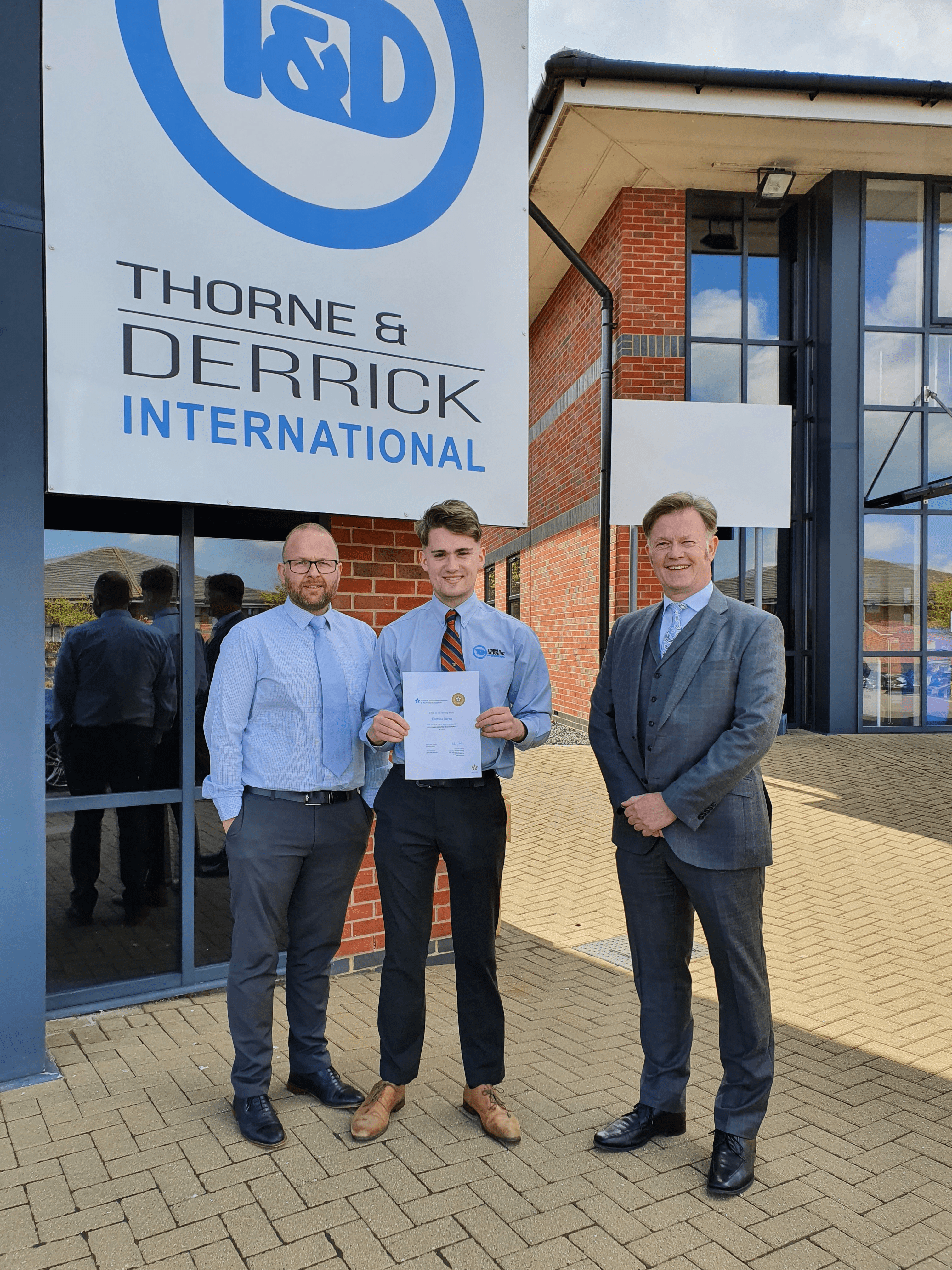
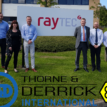
Left to Right – Terry McDonald Sales & Business Development Manager, Thomas Heron Customer Service Apprentice & Richard Derrick Managing Director
Congratulations Thomas!
All staff at Thorne & Derrick would like to say a huge congratulations to one of our Customer Service Apprentices, Thomas Heron, who passed his Level 2 Customer Service Apprenticeship with Distinction.
Terry McDonald, Sales & Business Development Manager at T&D said ‘Congratulations to Tom for passing his Customer Service apprenticeship with distinction. It has been a challenging year completing the apprenticeship under lockdown restrictions which has meant distance learning and few opportunities for practical training. Thomas has took on the challenge and credit to him for not letting it hold him back. Well done Thomas, building blocks are now in place for long and successful career with T&D’.
Thomas chose to study an apprenticeship to learn whilst starting a new a career as a Sales Engineer with Thorne & Derrick. He felt an apprenticeship was ‘more beneficial than traditional study as means you start working at an earlier age than others might’.
After completing the apprenticeship Thomas said;
‘I am delighted to have now completed my qualification at Thorne and Derrick, the support from both the business and College was excellent. I received all the help that was required when I found tasks challenging, in order to get me through. I found the experience both valuable and critical to my self-development on the road to becoming a full member of the T&D team.’
Thorne & Derrick International, based in the North East of England, are enthusiastic supporters of Apprenticeships and work closely with Northern Skills Group to recruit new and next generation staff into the business for integration into our future growth strategy.
The structured training programmes provided by Northern Skills Group give the Apprentice a chance to enter the workplace while working towards a recognised qualification – to gain, then develop the skills and knowledge needed to succeed in their chosen career in a competitive jobs market.
It’s a fact getting into employment earlier means there is increased potential for quick career progression.
Gaining work experience increases employability and strengthens their CV.
This powerful combination of classroom learning and workplace experience nurtures a broader skill-set: developing people skills, problem solving skills and technical skills.
Stephanie Coleman, Director of Business Developments and Partnerships at Northern Skills Group is thrilled by the company’s commitment to apprenticeships, she said:
“Thorne and Derrick are a great example of how apprenticeships can really benefit businesses and help train the workforce of tomorrow, we’re passionate about aligning our offering to the skills needed out in industry and it’s great to see apprentices succeed and make a real difference.”
Experts in Apprenticeships and Training
Northern Skills Group
Northern Skills Group is an expert provider of apprenticeships, employer-led training and retraining and works with over 2000 businesses in the North East and Yorkshire. Their specialist team of industry trained experts deliver courses across the North including Newcastle, Gateshead, Middlesbrough and North Yorkshire as well as dentistry apprenticeship programmes in York. NSG offer an extensive range of courses and programmes including engineering, dentistry, accountancy, electrical, leadership and management, customer service, manufacturing and many more.
Press Release Date: 02.04.2020 uploaded by Chris Dodds (T&D Sales + Marketing Manager) World’s First Fully Certified ATEX Doors Thorne & Derrick International, the Experts in Equipment for Explosive Atmospheres, today announce the signing of a Commercial Distribution Agreement...
Press Release Date: 04.07.2019 uploaded by Chris Dodds (T&D Sales + Marketing Manager) Category: Stockist Distributor Agreement Announcement Thorne & Derrick International announce that they have signed a Preferred Distributor Agreement with Raytec, the world leading manufacturer of LED...












 As a result of the UK leaving the European Union (Brexit), the UKCA mark (UK Conformity Assessed) will be phased in to replace the CE mark (European Conformity) for applicable goods to be placed in Great Britain (ie. England, Scotland and Wales.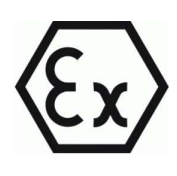
 The Process