What are the Best Practices to Prevent the Risk of Electrical Accidents in Industrial Applications?
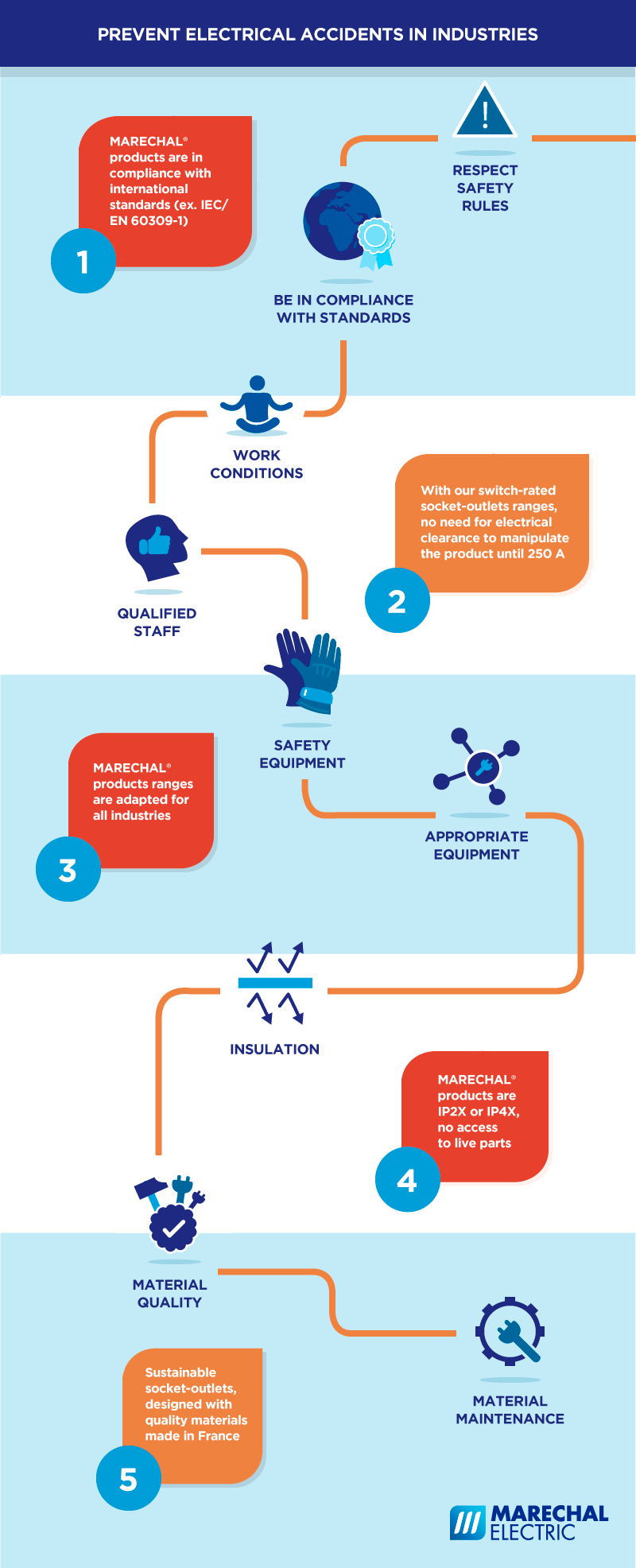
Several factors must be considered in order to optimise electrical safety in an industrial environment. Three main aspects must be considered:
Safety rules and standards;
Staff training;
The equipment used and its installation
Electrical Safety Rules & Standards
The first rule in electrical safety is to check for the presence of voltage before any intervention. This is an essential point, for example during the LOTO procedure.
It is a very precise procedure that must be followed step by step in order to comply with safety rules. Marechal products comply with international product standards and most are padlockable.
PPE – Personal Protective Equipment – are essential in industries: helmet, goggles, gloves… In the case of electrical handling, it is necessary to have the adapted equipment to avoid accidents at work.
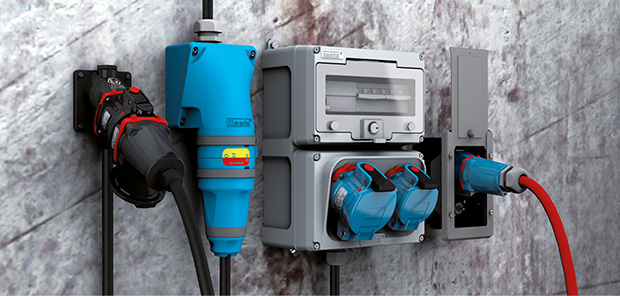
For example, electrical insulation is essential to avoid an electric shock. That is why Marechal plugs and sockets for industrial applications have an IP2X or IP4X protection level: there is no access to live parts.
Installation & Maintenance
The equipment must be used in accordance with the rules defined by the manufacturer, adapted to the environment and installed in accordance with good engineering practice and the manufacturer’s instructions.
Marechal products are delivered with an instruction manual with the rules of installation and maintenance.
Finally, the quality and maintenance of the equipment ensure maximum user safety at work:
Deteriorated equipment will involve risks during its use.
Poor quality equipment will deteriorate quickly (e.g. poor electrical insulation) and must be replaced regularly.
Marechal products are known and recognised for their durability and robustness, allowing them to be handled safely. Furthermore, if only one part of the plug and socket-outlet is damaged, there is no need to replace the whole unit, only the affected part needs to be replaced.
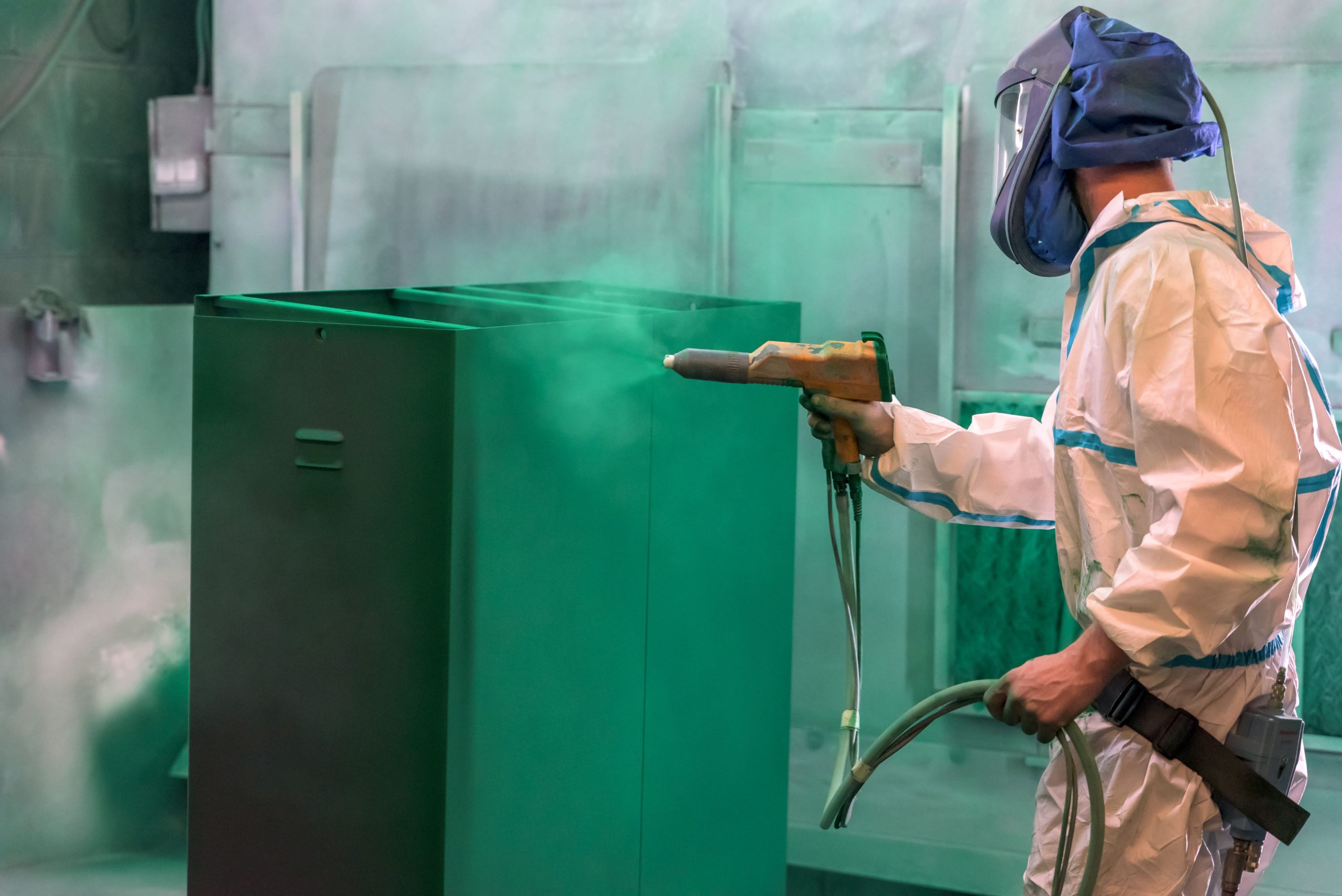
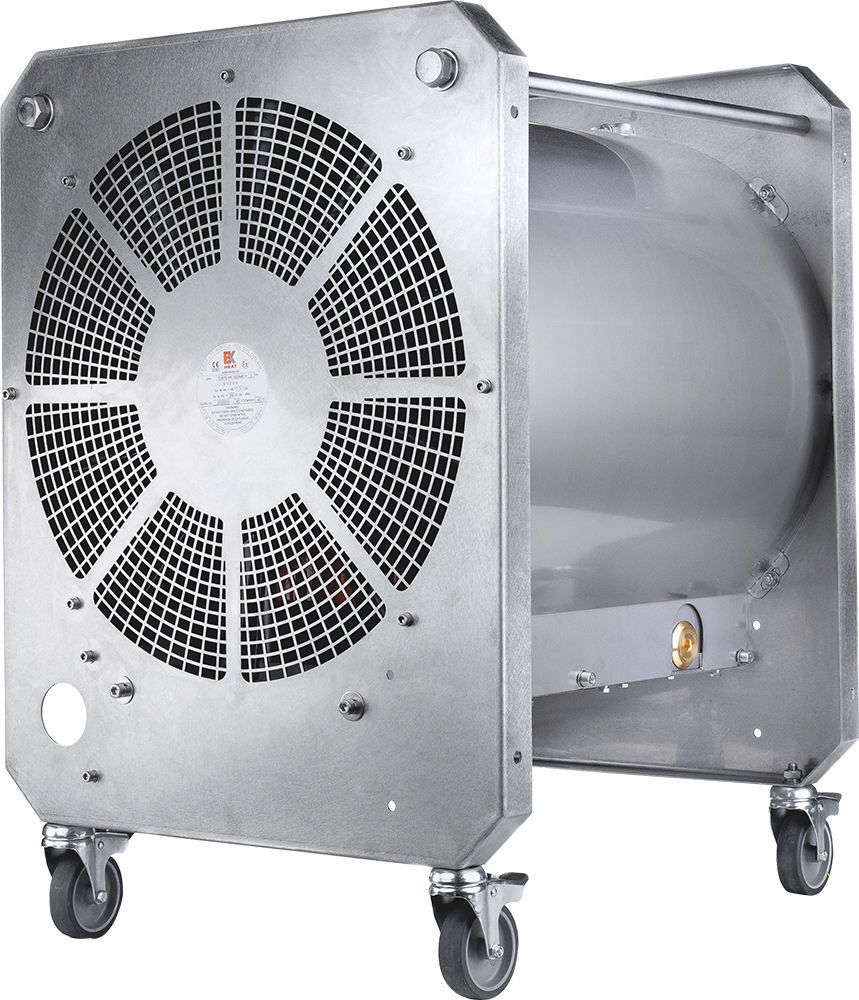
This Case Application for “The Bulldog“ electric heater, which is manufactured by EXHEAT and is stocked and distributed exclusively in the UK by Thorne & Derrick, focuses on an application whereby the client required a portable heating solution for a paint mixing room, to maintain the precise ambient temperature needed for equipment efficiency – while also adhering to safety regulations in the Hazardous Area.
The client are market leaders in a wide range of high performance industrial coatings including electricity transmission tower paints and drum coatings. The complex hazardous processes taking place in paint mixing rooms marks these areas as hazardous zone environments. Furthermore, equipment used in these hazardous area zones must comply with ATEX & IECEx approvals to ensure maximum safety.
Industry Sector| Industrial Painting
Hazardous Areas & Explosive Atmospheres
Electrical Heater Application & Benefits | The portable electric fan heater with ATEX Certification was selected after careful competitor evaluation to provide a safe process heating solution to an industrial paint mixing room.
Paint mixing | Hazardous Area
For this application, a portable solution was required to safely maintain the required temperature in a paint mixing facility, especially during the winter months, in order to ensure optimal conditions for the industrial paint application. In this instance, the client required an ambient temperature of above 15°C. The temperature requirements for these types of industrial paint applications are further explained in this guide.
As well as specific temperature requirements needed for this application, a hazardous area approved solution was also essential to ensure the safety of workers and to protect the facility. Many industrial paints are solvent-based, which can release solvent vapours, gas and dust into the air – creating a potentially explosive atmosphere with a need for risk minimising equipment. The risk of ignition of the solvent gas poses an instant threat to life in the facility, thus a safe, hazardous are approved, heating solution was needed.
Thorne & Derrick have eliminated the risk of ignition and explosion by supplying a suitable portable and safe electric heater to deliver the required heating to the paint mixing room.
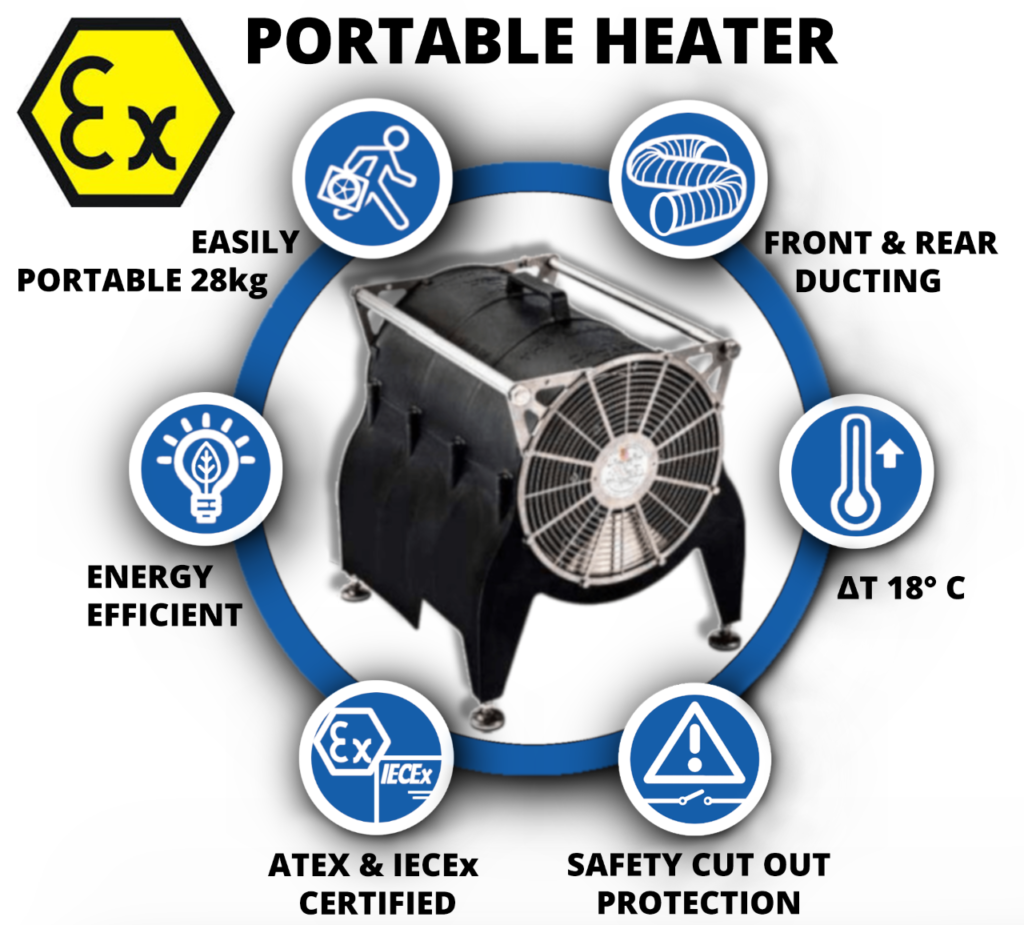
The ‘Bulldog’ ATEX portable heater has not only delivered the required temperatures to enable the continuity of optimal processes, but has also greatly reduced the risk of catastrophic danger, by adhering to ATEX & IECEx safety regulations.
EXHEAT MFH
We provided the solution to the client of the EXHEAT MFH, 6-400 model, which is ATEX & IECEx certified, and offers Ingress protection of IP65. The MFH heater (“Bulldog”) is constructed with polyamide PA66 with glass and steel fibre reinforcement.
T Class Rating T3
ClassifiedHazardous Area Zone 1/2 (IIB) or Zone 21/22 (IIIC)
The MFH Portable Fan Heater manufactured by EXHEAT and Distributed Exclusively in the UK by Thorne & Derrick is the world’s first truly portable fan assisted heater with dual hazardous area ATEX & IECEX Certification. The portable heater has been extensively adopted by the process and hazardous area industries to safely provide temporary and portable air warming to workplaces in potentially explosive atmospheres.
LEADERS IN ATEX INNOVATION TO THE HAZARDOUS AREA INDUSTRIES
Thorne & Derrick are leaders in the development and distribution of Product Innovations that deliver significant improvements to clients plant, people and operational safety in the explosive atmosphere industries.
Your proactive problem solvers experienced in succession planning for the replacement of obsolete, non-conformant and legacy equipment in hazardous areas.
Your first-choice provider of innovative and competitive solutions to ensure ATEX & IECEx Compliance for Hazardous Area Electrical, HVAC & Process Instrumentation Equipment to UK and international projects.
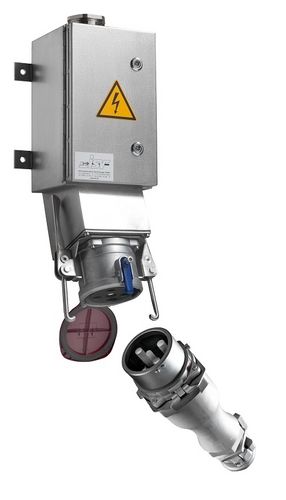
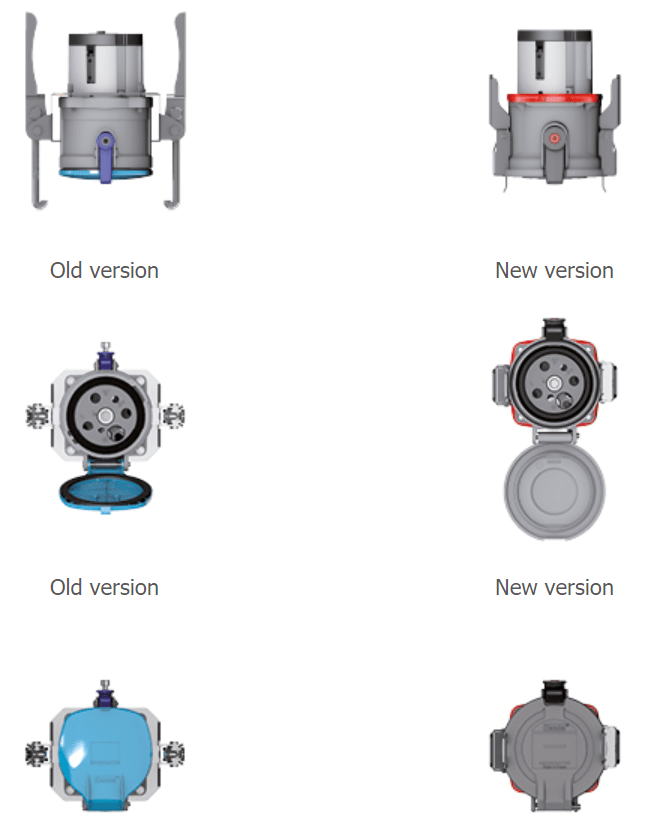
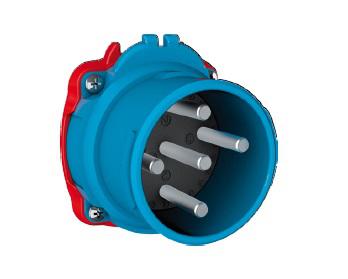
Recently Marechal Electric have introduced technical improvements to the metal socket casing of their DS4 400A plugs & sockets. Electrical plugs and socket-outlets in the Marechal DECONTACTOR™ range are sized from 30A to 400A. The DS range with integrated switch is the widest and most comprehensive DECONTACTOR™ range.
Both sockets and inlets are available in metal version from 90A rating. It offers numerous mounting options (boxes, handles and sleeves). Marechal DS plugs & sockets have an incorporated breaking capacity of AC-22 / AC-23 and have either an impact resistant GRP or metal casing.
Design changes include new colours, integrated closing mechanism of the socket, increased robustness and easier connection
Casing wall thickness increased for improved impact resistance (IK10)
Addition of a silicon gasket giving IP66/67 watertightness with closed lid or with inlet/socket connected. An IP66/67 compatibility kit is available as an accessory for use with older DS4 inlets.
The old style “operating lever” remains available and is compatible with the new DS4 casing after removal of the new integrated drawbar system
Marechal DS4 | Product Innovation in Electrical Distribution & Safety
Marechal DS4
Technical Specification
Rated Current (with wiring according to standard)
400A
Maximum Voltage
1000V
Protection
IP54 (IP66/IP67 optional)
Shock Resistance
IK10
Ambient Temperature
-40ºC to +60ºC
Flexible Wiring (Min-Max)
95mm² – 150mm²
Stranded Wiring (Min-Max)
95mm² – 185mm²
Pilots contacts for electrical interlock
2
Keying Positions
12
Marechal DS Decontactor
Features
Butt Contact on a Silver-Nickel Tip
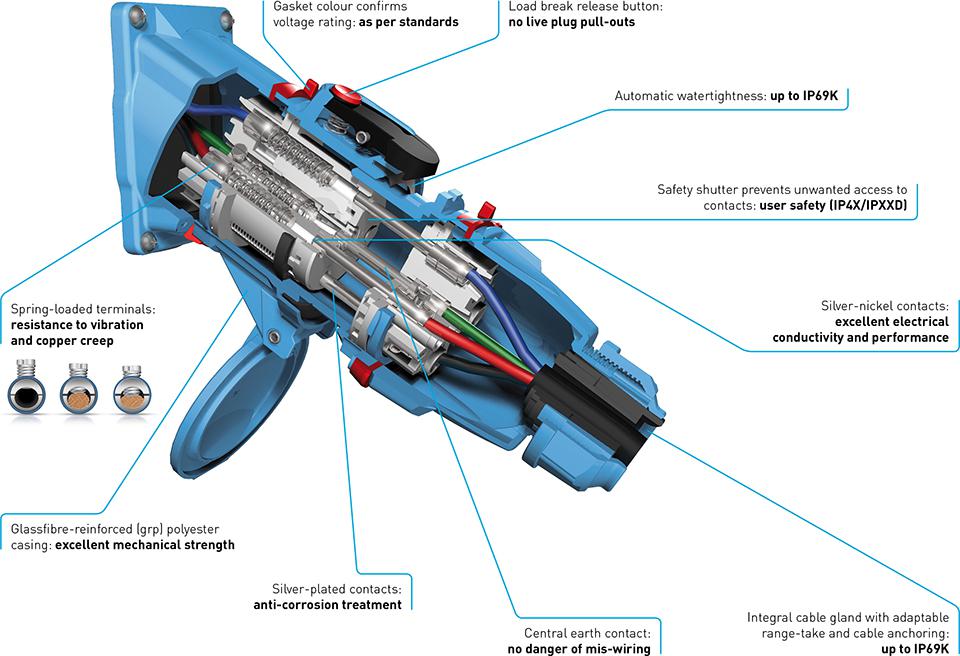
The Marechal DECONTACTOR™ and connectors are all fitted with butt contacts with silver-nickel tips. They provide exceptional connection quality by eliminating the damage due to electric arcs and to wear seen with pin and sleeve sockets. The silver is an excellent conductor of current even when oxidised. Conductivity is optimal even in the presence of vibration and temperature variation thanks to the pressure of the springs.
Crimped Braids
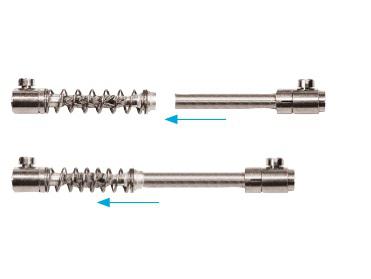
The Marechal contact uses a crimped braid with a spring which provides contact performance and tolerances superior to pin and sleeve contacts. The flexibility of the braid and the spring allows the base contact tip to always be perfectly aligned with the plug contact tip. These contacts, which are silver and anti-corrosion treated, offer very good corrosion resistance.
Elastic Lock Terminals
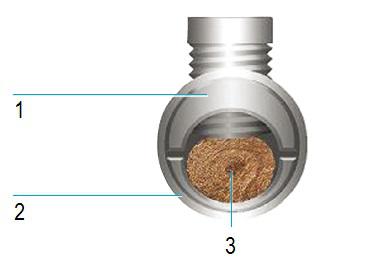
Marechal contacts are fitted with “elastic lock” connection terminals.
The wire clamp is split and surrounded by a rubber ring. This method allows the tightening force on the wire to be constant. Hence despite the creep of the copper or aluminium, the variations of temperature and vibration, the conductor wire is perfectly connected to the contact terminal.
Safety Shutter
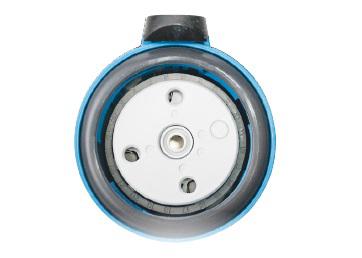
DECONTACTOR™ bases are fitted with an interlocked safety shutter which prevents access to live contacts. This shutter only unlocks at the time of connection of the plug into its base. The Marechal range connectors and DECONTACTORs™ have casings made from fibre glass- or metal-reinforced GRP, depending on the models. This choice of material contributes to the excellent mechanical performance and longevity of the socket.
Marechal DS Decontactor
Benefits
These technical choices provide Marechal connectors and DECONTACTORs™ with unparalleled levels of performance:
Absolute safety, even after thousands of connections/disconnections,
The ability to withstand repeated overloads, particularly on power supplies to motors with frequent starting,
Perfect operation in the presence of vibration and variations in temperatures,
Resistance to shocks, falls and climatic variations,
A perfect resistance to corrosion and the most severe chemical agents.
The quality of the material, the design, the assembly and the inspection of each component are at the core of Marechal’s know-how and technology.
Each component provides a precise function that optimizes the performance, safety and sustainability of our sockets and installations.
Certifications & Compliances
The Marechal DS DECONTACTOR™ range complies with:
• IEC/EN 60309-1 & IEC/EN 60309-4 European and International standards (plugs and socket-outlets for industrial purposes),
• The European Low Voltage Directive 2014/35/EU, conformity with the CE marking,
• The European ‘Machine Directive’ 2006/42/CE regarding equipment isolation,
• The French NF C 15-100 standard,
• The French decree dated 20 December 2011 pertaining to the wiring and operating conditions of movable electrical apparatuses,
• The decrees relating to workers’ protection in Belgium, Spain and Italy,
• The switch utilization categories AC-22 A and AC-23 A described in IEC/EN 60947-3.
• The UL 1682 and 2682 (USA) and CSA C22.2 N° 182.1-07 (Canada) standards for plugs and socket-outlets.
Also certified by UL, TR CU (GOST), CCC and cCSAus (French, American, German, Russian, Chinese and Canadian inspection laboratories).
Marechal DS Range – Bursting with features to ensure user safety
When choosing an enclosure, care must be taken to select the most suitable material by considering:
location
level of pollution
temperature
UV levels
vibration
humidity
Typical enclosure materials include Aluminium, powder coated Mild Steel or Stainless Steel.
Enclosures that are sealed to IP65 are commonly mistaken as being suitable for all outside environments. Some powder coated mild steel or Aluminium enclosure may degrade and corrode under certain environmental conditions.
Installing enclosures in an external environment may also result in condensation forming on the inside of the enclosure, resembling water ingress. This is caused by a difference in temperature between inner and outer surfaces of the enclosure and the most common solution is to fit an anti-condensation heater and breather gland within the enclosure.
When the product is subject to chemical cleaning a stainless steel enclosure is recommended although the correct grade of stainless steel must be selected.
Please consult our expert technical department for help with choosing the correct enclosure for your application – this includes both safe “non-hazardous” types and ATEX enclosures certified for hazardous areas.
CRAIG & DERRICOTT ISOLATORS
IECEx & ATEX Certified Isolators for Explosive Atmospheres
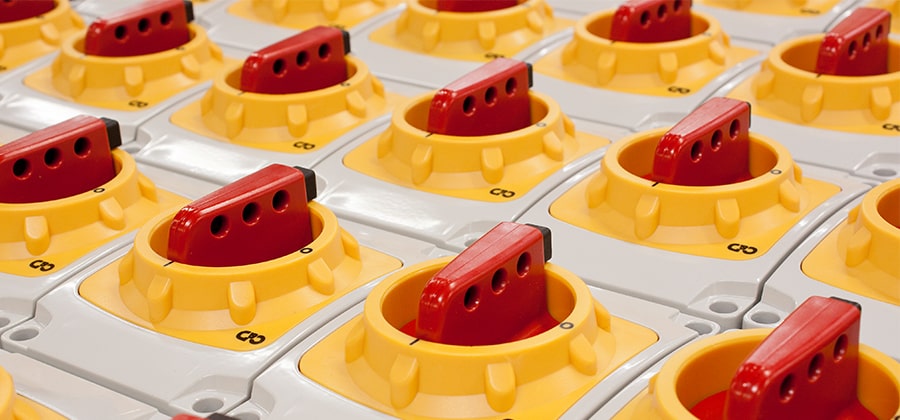
Isolators and control stations manufactured by Craig & Derricott are certified by ATEX & IECEx for Zone 1 (21) and Zone 2 (22) hazardous areas – the range of i-switch isolators are suitable for Ex d (flameproof) and Ex e (increased safety) applications and the i-push control stations are certified for Zone 22 potentially explosive dust atmospheres.
Craig & Derricott has been at the cutting edge of Explosion Proof Switchgear design and manufacture for more than 70 years focussing solely on the design specifications of the installer. This led to the development of the i-switchand i-pushproduct range suitable for hazardous areas offering simple installation, enhanced safety and effectiveness for LV electrical isolation.
ATEX Zones 1 Zone 2 Isolator – 16A 4P + 2 EB – Craig & Derricott
DSEAR & ATEX
What Will The Impact Of Brexit Be?
Special thanks to EEUK for granting kind permission to republish
The UK has formally left the EU – but what does this mean for companies with hazardous, explosive areas and its health and safety standards, particularly regarding DSEAR and ATEX?
Understanding The Difference Between Standards & Directives
Technical standards provide the best practice put together by technical experts to create a uniform engineering or technical criteria. They are not mandatory and will not be affected by Brexit.
European directives come from the European Parliament and must be embodied into the laws of each EU member. They are there to make it fair for trade within the EU and cover all angles of trade.
Technical standards and European directives are often entwined – standards are used to help meet European directive obligations.
What is ATEX?
ATEX is the name commonly given to the two European Directives for controlling explosive atmospheres:
Directive 99/92/EC(also known as ‘ATEX 137’ or the ‘ATEX Workplace Directive’) – this outlines the requirements for improving the health and safety protection of workers at risk from explosive atmospheres.
Directive 94/9/EC (also known as ‘ATEX 95’ or ‘the ATEX Equipment Directive’) – this concerns the equipment and protective systems used in potentially explosive atmospheres.
The legislation that covers the ATEX directives into the UK legal system is DSEAR (The Dangerous Substances and Explosive Atmosphere Regulations).
What is DSEAR?
DSEAR places duties on employers (and the self-employed, who are considered employers for the purposes of the regulations) to eliminate or reduce risks from dangerous substances in the workplace by defining hazardous zones.
Employers are responsible for identifying and controlling fire and explosion hazards posed by dangerous substances used in their facilities to ensure that employees, assets, and the environment are protected.
Explosive atmospheres can be caused by flammable gases, mists, or vapours or by combustible dusts. If there is enough of the substance, mixed with air, then all it needs is a source of ignition to cause an explosion. These kinds of substances are commonly found in solvent handling operations, gas cylinder storage, papers and food manufacturers, foundries and more.
Will The Government Alter DSEAR If It Doesn’t Need To Comply With Europe?
DSEAR makes sure everything manufactured or imported to the UK still complies with the European Directive. ATEX is respected internationally – its requirement in the UK protects our markets from a flood of non-ATEX compliant equipment and should continue to enable the free movement of Hazardous Area Equipment from the UK to Europe, and vice versa.
No difficulties are expected to arise as laws agreed while the UK was part of the EU are part of UK legislation anyway. However, some legislation may need updating in the future to include changes brought in by EU Directive 2014/34/EUto keep UK legislation aligned with the EU.
How can EEUK help keep you compliant with DSEAR and ATEX?
At EEUK, we keep up to date with legislation and stay on top of changes and alterations to regulations in the UK and beyond. We can help companies across the country to understand what DSEAR and ATEX means for them, and whether they need to change any processes due to Brexit.
We also have vast experience of conducting assessments in line with both the ATEX Workplace Directive and DSEAR, which include hazardous area classification, risk assessment, and pragmatic recommendations for compliance and reducing risks to as low as reasonably practicable (ALARP).
Our qualified consultants can carry out a DSEAR risk assessment to evaluate what dangerous substances you have in your workplace and how to control or remove the risks.
EXPERTS IN EQUIPMENT FOR EXPLOSIVE ATMOSPHERES
Zone 1/2 Gas & Zone 21/22 Dust
Thorne & Derrick are leaders in the development and distribution of Product Innovations that deliver significant improvements to clients plant, people and operational safety in the explosive atmosphere industries.
Your proactive problem solvers experienced in succession planning for the replacement of obsolete, non-conformant and legacy equipment in hazardous areas.
Your first-choice provider of innovative and competitive solutions to ensure ATEX & IECEx Compliance for Hazardous Area Electrical, Heating, Lighting & Process Instrumentation Equipmentto UK and international projects.
Press Release Date: 02.04.2020 uploaded by Chris Dodds (T&D Sales + Marketing Manager) World’s First Fully Certified ATEX Doors Thorne & Derrick International, the Experts in Equipment for Explosive Atmospheres, today announce the signing of a Commercial Distribution Agreement...
Press Release Date: 04.07.2019 uploaded by Chris Dodds (T&D Sales + Marketing Manager) Category: Stockist Distributor Agreement Announcement Thorne & Derrick International announce that they have signed a Preferred Distributor Agreement with Raytec, the world leading manufacturer of LED...