Special thanks to TÜV SÜD for allowing us to republish of this article
WHAT IS THE UKCA MARK?
UKCA marking (UK Conformity Assessed marking) is the UK product marking requirement that will be needed for products being placed on the market in Great Britain (England, Scotland and Wales), substituting the EU requirements for CE Marking (CE marking will continue to be accepted in Northern Ireland).
UKCA marking will indicate that a product placed on the Great Britain market meets the UKCA Marking requirements. UKCA marking was specified in the original ‘EU Exit’ UK Statutory Instruments, and for most products this is defined in UK Statutory Instrument 2019 No. 696 and amendments (exceptions being Automotive, Marine and Medical devices for example).
‘EU exit’ UK Statutory Instruments and amendments require UKCA marking for products that can be self-declared or currently need a notified body assessment. Initially the UKCA marking requirements will align with CE marking requirements that they replace, but overtime divergence is possible.
Note – Additional requirements may need to be considered for products being placed on the UK Northern Ireland market due to separate Northern Ireland Protocol requirements.
WHEN IS UKCA MARKING REQUIRED?
UKCA will be used to replace the CE Marking requirements for products being placed on the GB market from the 1st January 2021.
For most products there is a transitional arrangement for acceptance of CE marking until 1st January 2022 (the exception being marine equipment and medical devices for example which have longer periods).
WHAT ARE UK STATUTORY INSTRUMENTS (UK SI’S)?
Today, the vast majority of law in the UK is made through Statutory Instruments. Now that the United Kingdom has left the European Union, the European Union (Withdrawal) Act 2018 and the European Union (Withdrawal Agreement) Act 2020 allow Statutory Instruments to be made which rescind and amend legislation which originally emanated from Europe. These Statutory Instruments can be referred to as the ‘EU Exit’ Statutory Instruments.
HOW CAN TÜV SÜD SUPPORT YOU IN MEETING THE UKCA MARK REQUIREMENTS?
As TÜV SÜD is a global company, we have offices in multiple locations to be able to satisfy both CE and UKCA requirements. TÜV SÜD have EU and UK based Notified Bodies and TÜV SÜD BABT has become a UK Conformity Assessment Body (UK Approved Body 0168).
TÜV SÜD UK is still UKAS ISO 17025 accredited and an ILAC member, this will remain acceptable for all test and certification requirements with for example Mutual Recognition Agreements, as with the U.S. for FCC testing and TCB work.
TÜV SÜD BABT can offer immediate UKAS accredited UKCA certification work for the following, with an increasing scope:
Marine Equipment Regulations 2016
Electromagnetic Compatibility Regulations 2016
Supply of Machinery (Safety) Regulations 2008
Radio Equipment Regulations 2017
To read more please click here
TÜV SÜD
At TÜV SÜD, we bring clients and technology closer together. We are a global provider of technical services in key areas including testing, certification, verification and knowledge transfer. In the UK, we share this expertise with customers from the following sectors:
Aerospace
Consumer electronics
Defence
Machinery
Marine
Medical
Nuclear
Oil and gas
Real estate
Telecommunications
Transport
What our customers have in common is a belief that technology is an indispensable asset to their business and with our expertise and support it can take them to the next level.
We help our customers across the UK understand how technology can drive their business forward in a way that is safe, secure and sustainable. Our team of 600 technology experts provides unrivalled cross-sector experience which makes us the first-choice partner for businesses from across the industry spectrum.
By building trust in technology, we can inspire our customers to reduce risk, accelerate change and improve business performance. And in doing so, they can look forward to a safer, more connected and sustainable future.
Experts In Equipment for Explosive Atmospheres | Leaders in ATEX Innovation
➡ Contact us to discuss your Electrical Heating, Lighting, Ventilation or Power requirements for safe and reliable use in hazardous areas and explosive atmospheres in accordance and compliance with UKCA certification requirements and ATEX/IECEx.
UKCA Support
View further reading about the introduction of the UKCA Mark and ATEX Hazardous Area Equipment – Thorne & Derrick can assist with the specification and supply of UKCA “Ex” Accredited, Marked and Certified equipment for Explosive Atmospheres – Leaders In ATEX & IECEx Product Innovation | Supporting DSEAR Regulatory Compliance & COMAH Sites.
Electrical and non-electrical equipment intended for use in explosive atmospheres need a safety certification confirming that the product complies with safety requirements.
Due to the UK leaving the European Union (“Brexit”), a new marking, UKCA, meaning UK Conformity Assessed, was created for goods being put into the UK market. This marking and its Regulations replace CE marking for the UK.
UKCA MARK
Manufacturers may wonder about the timelines for the transition and the impact on current ATEX certificates for hazardous locations.
In this article we address the following questions:
What has been the impact of Brexit on “Ex” product markings in the UK?
What are the timelines for the introduction of the UKCA?
Are the CE and UKCA markings based on similar requirements?
Who may provide the UKCA mark?
When should manufacturers begin to pursue UKCA marking for existing CE-approved products?
What’s involved in a UK Declaration of Conformity?
What was the impact of Brexit on electrical product markings in the UK?
Because the UK recently left the European Union (“Brexit”), a new marking was created for UK goods that previously were subject to the CE marking system.
The UKCA, meaning UK Conformity Assessed, was created for goods being put into the UK market. This marking and its Regulations will replace the CE marking for the UK (England, Wales, and Scotland). For products placed on the market in Europe, the EU continues to require that they be marked CE.
This CE requirement includes Northern Ireland. The UKCA marking is not accepted for products placed on the European or Northern Ireland markets.
What are the timelines for the introduction of the UKCA?
The UKCA marking became available as of January 1, 2021. Given the proper assessment, new products for the UK marketplace will be required to mark their products with UKCA marking.
To ease the transition, most products that previously met EU requirements and were already given a CE marking may still place their CE marked products onto the UK marketplace until January 1, 2022.
Such CE marking must have been issued from an EU Notified Body. The duration of this transition period is strictly defined. After January 1, 2022, products placed in the UK marketplace must be UKCA-approved.
Are the CE and UKCA markings based on similar requirements?
At the present, the assessment and certification requirements for both CE and UKCA are similar. Existing quality data and documentation for CE marking may form the basis for UKCA certification.
Some amendments may be required. In both cases, the relevant legislation must be strictly adhered to.
Who may provide the UKCA mark?
Only UK Approved Bodies situated in the UK may conduct the required assessments and provide the UKCA certification. In other words, UKCA assessment and certification must be conducted by a UK Approved Body located in the UK. Note the physical presence requirement of UKCA.
Both UKCA and CE markings may be used simultaneously on products, but only the UKCA marking indicates conformity with relevant UK legislation. For entry into the EU, certification must be conducted by an EU Notified Body.
When should we begin to pursue UKCA marking for existing CE-approved products?
Although you may continue to use your CE markings for products destined for the UK market until January 1, 2022, you are advised to pursue the UKCA marking as soon as possible. Allow yourself lots of time. No existing stock marked CE may be placed in the UK market after that date. A UK Declaration of Conformity must have been achieved for these products before the deadline.
What’s involved in a UK Declaration of Conformity?
As was already noted, the requirements for a UK Declaration of Conformity are similar to the requirements of an EU Declaration of Conformity. Manufacturers are responsible for ensuring that their product conforms with the relevant UK legislation.
The UKCA mark, once achieved, may be placed on the product, its packaging, or on product literature, as indicated in the relevant legislation.
Further resources:
Conformity assessment bodies: change of status from 1 January 2021.
Director & Consulting Engineer at Hazcon Inc.; Hazardous Locations Consulting Services; IECEx, ATEX, CEC & NEC
Specializing in the design, safety and approval of electrical equipment for hazardous locations.
Mr. Nejad has over 15 years of experience as an Electrical Engineer and is a sought after professional in the hzardous area and explosion protection industry. He is fully-qualified at the advanced level of all hazardous locations protection techniques including Intrinsic Safety & Non-incendive, Explosion Proof & Flame proof, Increased Safety, Non-arcing, Purging and Pressurization, Encapsulation, Optical Radiation, and Dust-tight enclosures.
Mr. Nejad’s tenure in the industry includes six years at the CSA certification agency, working closely with manufacturers (Emerson, GE, ABB, Siemens, Endress-Houser, VEGA etc.) as a technical and certification engineer for Hazardous locations equipment.
Experts In Equipment for Explosive Atmospheres | Leaders in ATEX Innovation
➡ Contact us to discuss your Electrical Heating, Lighting, Ventilation or Power requirements for safe and reliable use in hazardous areas and explosive atmospheres in accordance and compliance with UKCA certification requirements and ATEX/IECEx.
UKCA Support
View further reading about the introduction of the UKCA Mark and ATEX Hazardous Area Equipment – Thorne & Derrick can assist with the specification and supply of UKCA “Ex” Accredited, Marked and Certified equipment for Explosive Atmospheres – Leaders In ATEX & IECEx Product Innovation | Supporting DSEAR Regulatory Compliance & COMAH Sites.
Industry leading manufacturers of lighting products for hazardous areas | Available from stock at Thorne & Derrick
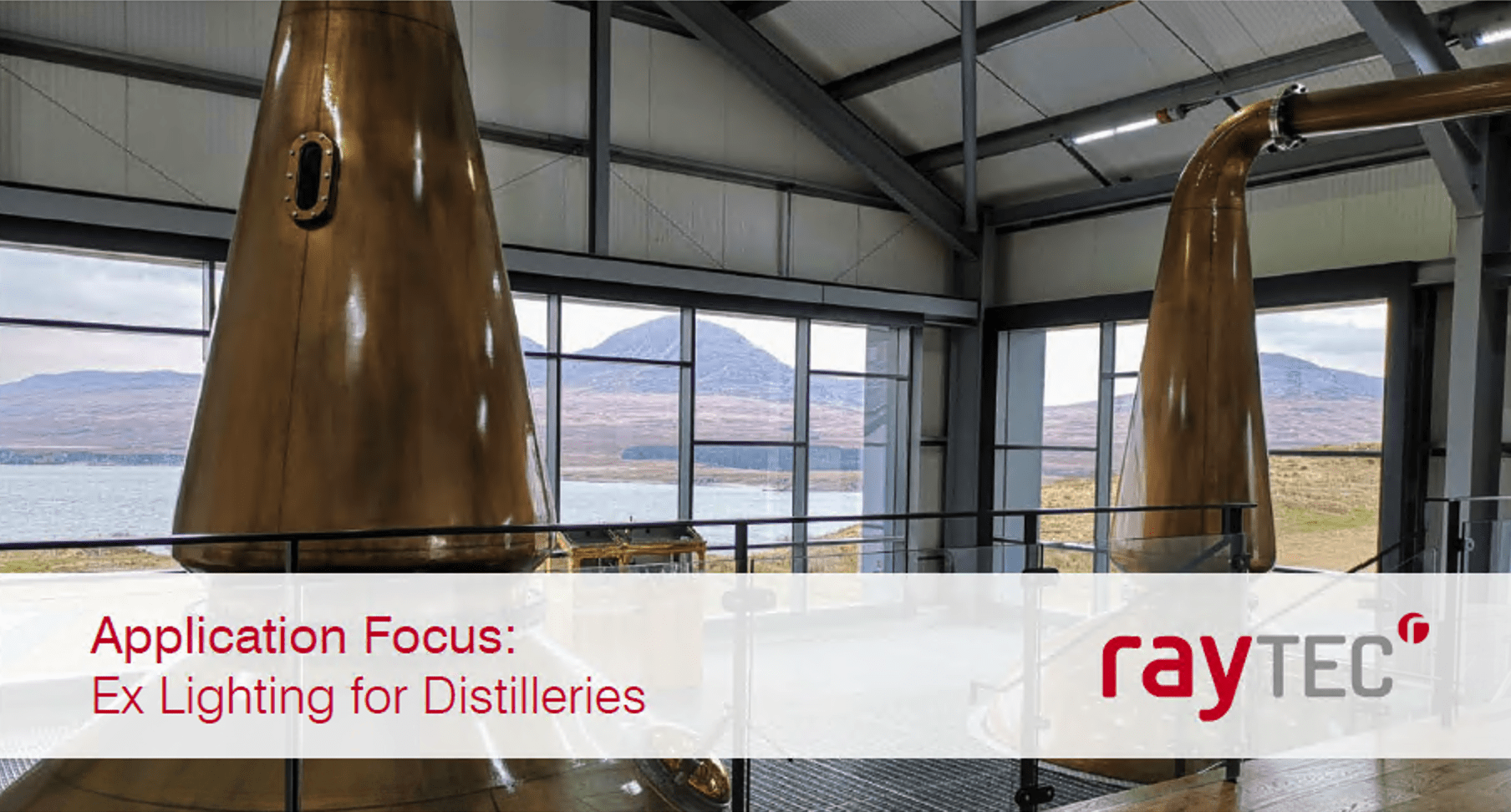
Hazardous Area Lighting For Distilleries
Special thanks to Raytec for allowing the republish of this article.
Raytec is a world leader in LED hazardous area lighting for harsh environments and industrial applications. SPARTAN is the range of globally certified Ex LED luminaires, also available as heavy-duty industrial variants. SPARTAN ATEX lights deliver world leading performance, reliability, and durability.
In this Application Focus, Raytecwill explore the ATEX LED lighting requirements for distilleries and identify some of the key features to consider when specifying luminaires for these types of environments.
Why Ex Lighting is Needed for Distilleries
The production of spirits involves several processes that can result in a potentially explosive atmosphere, including the release of vapour during distillation and storage. The correct selection of Ex lighting is therefore imperative.
Distilleries are often found in old and quirky buildings which can present a challenge in itself, but fairly unique among hazardous area environments, distilleries also often have a dual role as being both a production area for the manufacture of spirits, and also as tourist and visitor attraction. When considering the requirements for lighting, distilleries must therefore do this with both uses in mind.
Typical Areas Requiring Lighting Includes
Grain Warehouses – Within grain warehouses and silos there is always airflow and the stored grain deposits layers of dust across surfaces. During loading and unloading operations, these layers can generate a dust cloud as particles are sucked up by the circulating air meaning they are commonly designated as a Zone 21 hazardous area.
Distillation Areas – The production of alcohol uses heat of up to 70°C, and the vapour it gives off, mean that main distillation areas around the stills & mash tuns are designated as a Zone 1 hazardous area.
Barrell Storage Areas – Meanwhile, vapour is also present (albeit to a lesser degree) in barrel storage, where the whiskey is stored and allowed to mature. These areas are commonly classified as a Zone 2 hazardous area. All luminaires installed on-site must comply to the classification of each area.
Specifying Hazardous Area Lighting for Distilleries
Choosing LED Lighting for Hazardous Areas
The benefits of LED over conventional lighting technology for potentially explosive atmospheres are well documented but are especially relevant for distillery applications.
Aesthetics
With distilleries often doubling up as tourist attractions, the general aesthetics of hazardous area lighting in these environments is also important; both in terms of how the luminaire fits in with its environment (i.e. not being an eye sore), and in the quality and visual impact of its light output.
Physical Lighting Appearance
Installing a luminaire which fits in with the architecture and design of the building is important to many distilleries, given that the overall look and feel of the distillery represent the image of the brand to those who visit it.
The option to have the luminaire’s painted in bespoke colours can help them to blend in and be less intrusive, or it can even to add to the overall look and feel of the distillery. Notice how we matched the colour of our SPARTAN luminaires to the wood panelling in Torabhaig distillery?
Lifetime, Maintenance, Energy Costs & Quality of Light
Providing it uses effective thermal management, an LED luminaire can offer a lifetime of 100,000 + operating hours, without the need to re-lamp.
With many distilleries facing the challenge of maintaining their required levels of production, balanced with frequent visitor tours, reducing the level and frequency of maintenance is a major benefit.
Energy Costs
Reducing running costs is a common goal for most businesses, and LED luminaires help to reduced energy costs by running far more efficiently than conventional lighting.
This is beneficial to distilleries of all sizes, but especially to smaller, independent distilleries – production of whiskey is often considered to be a seasonal business where keeping costs down in the slower months is imperative.
Quality of Hazardous Area Lighting
Choosing an LED luminaire allows light quality to be improved, with LED’s capable of providing improved CRI and higher colour temperatures than conventional lighting, drastically improving working conditions.
With many distilleries also being used as a visitor attraction, LED luminaires also provide greater flexibility in being able to tailor the light for each area, depending in its use. While higher colour temperatures may be ideal for production areas, warmer colour temperatures may be better suited for parts of the distillery used as part of the visitor tours.
Light Output
As well as lighting playing an important functional role in the running of the distillery, it can also be used to draw attention to architectural features, or to add to the experience of visitors during tours of the distilleries.
The iconic copper stills are often a focal point for many distilleries, so using warmer colour temperatures, or even coloured lenses over the LEDs, can help to add a deeper glow to the colour of the stills.
Using warmer colour temperatures can also make areas of the distillery more aesthetically pleasing for visitors. While it depends on the preferences of each distillery, many opt to use warmer colour temperatures in areas such as barrel storage or tasting rooms to make them more inviting to visitors, while still being compliant with the hazardous area classification.
Selecting a luminaire which provides this level of flexibility is an important consideration when specifying lighting for a distillery.
Easy Maintenance & Reducing Downtime of Lighting Systems
Specifying an LED luminaire can help in reducing the frequency of maintenance required, but the way in which a manufacturer has designed the luminaire has a large impact on how easily maintenance can be carried out if it is required.
Minimising downtime is crucial to the financial viability of distilleries. If the lighting fails, certain parts of the production process may be unable to take place due to the health and safety risks to the workers and the visiting general public. This could have a detrimental impact on both the volume of production, and the number of visitors the distillery can receive.
Having a hazardous area lighting solution which allows maintenance to be carried out quickly and easily on-site ensures downtime is kept to a minimum.
The key to this is to specify a luminaire which has a modular design and allows maintenance to be carried out on-site. If the luminaire is sealed, any on-site maintenance will not be possible. Any faults would result in the luminaire having to be removed and returned to the manufacturer, increasing downtime.
Making Easier Access
Choosing an LED luminaire with a removable PSU (Power Supply Unit) can help to make access for maintenance much easier. Luminaire’s such as the SPARTAN High-Power Flood & High-Power Bay, allow the PSU to be removed from the main body of the luminaire, so all wiring and serviceable parts can be positioned in an easy-to-access locations.
Let’s consider this benefit in the context of a common application within larger distilleries; grain storage areas.
These areas will usually have High Bay luminaires mounted to (or suspended from) the ceiling of the storage building. With non-modular lighting installed, gaining access to the luminaire may require the grain to be removed before maintenance is carried out; a slow and costly process.
Plus, even if the luminaire can be accessed without needing to remove the grain, carrying out maintenance with the grain still below is risky; it could lead to it becoming contaminated if anything falls while maintenance is being carried out. In contrast, being able to mount the PSUs remotely means maintenance can be carried out at ground level (so there is no risk of contamination), and the grain does not have to be removed.
Ultimately this means maintenance can be done quicker, at a lower cost and risk.
Emergency Lighting for Explosive Atmospheres
Clean fresh water, which contributes to each whiskey’s flavour, is an essential ingredient of the distillation process and means that distilleries are often located in hard to access locations (such as remote Hebridean islands where power cuts and longer outages can be more frequent).
Emergency backup lighting is therefore a necessity to maintain the safety of anyone on-site, providing back up illumination in the event of a power outage. This protects both visitors and workers on-site and is especially important to any distillery open to the general public.
Raytec Emergency Hazardous Area Lighting
Duration & Output
To ensure an emergency luminaire will provide back-up illumination for the required length of time, it is important to check the emergency duration when specifying.
Consideration should also be given to the level of light output the luminaire provides whilst operating in emergency mode. This is usually expressed as a percentage of the luminaire’s output in normal operation, and it is common for output to drop significantly when in emergency mode.
Most of Raytec’s SPARTAN emergency luminaires provide 25% light output for 3 hours as standard but can also offer up to 100% output for a shorter duration if required. The duration and intensity of output are often specific to individual applications, so this flexibility can be an important benefit.
Automated Testing
Some manufacturers are now providing emergency luminaires which increase safety and reliability of emergency systems. Raytec’s SPARTAN Intelligent Emergency luminaires provide a self-testing function which automatically cycle the emergency battery, to maintain its health and to measure its capacity.
This ensures the luminaire is operating at its optimum and reduces the requirement for manual intervention. Inspection of emergency luminaires is also made easier, with a tri-colour LED indicator which communicates when the unit is going through a testing procedure and highlighting the health of the luminaire.
Other Considerations – Lighting Design
Lighting design is an essential part of specifying lighting within distilleries.
The nature of distilleries means walkways between hot stills need to be well lit and any pipes or other distillation equipment need to be clearly illuminated to maintain the safety of workers and the visiting general public.
For specifiers going through the initial design process with a clear brief in mind, a lighting design will provide peace of mind that the final solution will achieve the required, on-site lighting goal, with no surprises at the point of commissioning.
💡 Did you Know? Thorne & Derrick using latest software provide a FREE LIGHTING DESIGN SERVICE for the specification and supply of ATEX & IECEx Certified light fittings to provide safe and reliable lighting in explosive atmospheres and hazardous area locations.
Industry leading manufacturers of Lighting Products for hazardous areas | Raytec
SPARTAN is a full range of Ex LED luminaires and lighting approved for all ATEX and IEC Ex Zone 1 and Zone 2 hazardous area environments, including UL /CSA C1D2 installations. The hazardous area lighting products are designed for the most extreme environments – Flood, Linear, Bulkhead, Bay and Crane luminaires with emergency and industrial lighting versions are also available from Thorne & Derrick International.
Specialists to the Process & Hazardous Area Industries
EXPERTS IN EQUIPMENT FOR EXPLOSIVE ATMOSPHERES
leaders in ATEX Innovation To The Hazardous Area Industries
Thorne & Derrick are leaders in the development and distribution of Product Innovations that deliver significant improvements to clients plant, people and operational safety in the explosive atmosphere industries.
Your proactive problem solvers experienced in succession planning for the replacement of obsolete, non-conformant and legacy equipment in hazardous areas.
Your first-choice provider of innovative and competitive solutions to ensure ATEX & IECEx Compliance for Hazardous Area Electrical, HVAC & Process Instrumentation Equipmentto UK and international projects.
Follow our Showcase Page on LinkedIn to receive hazardous area product innovations, industry news, whitepapers, videos, technical tips and training webinars for professionals involved in the explosive atmosphere industries.
Heating Rubber & Plastics
IBC Heaters
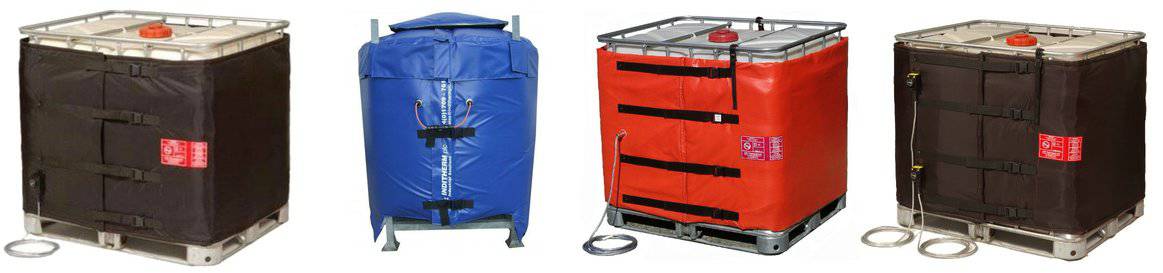
Thorne & Derrick International are the UK’s largest stockistand supplier of IBC Heaters providing excellent technical support and overnight delivery from stock for standard 1000 litre container heaters – the high quality UK manufactured electric heaters provide optimal thermal efficiency and highest levels of function safety. We can produce custom heating jackets designed to fit most shapes to deliver completely uniform surface heating over large areas without heat loss, hot spots or colds spots.
What Are IBC’s?
Intermediate Bulk Containers or IBCs are multi-use, reusable industrial-grade containers designed for the transport, handling and storage of liquids, pastes, semi-solids or solids.
These can include chemicals, food ingredients, sugars, solvents, oils, waxes, cosmetics, detergents and crop science products as well as hazardous class goods such as general and speciality chemicals, resins, paint and inks.
The contents of IBCs, particularly those which may become viscous at room temperature, often needs to be heated or kept at a certain temperature in order to prevent spoiling.
IBC Heaters For Rubber & Plastic Manufacturing
IBC Heaters for Heating Plastics & Rubber
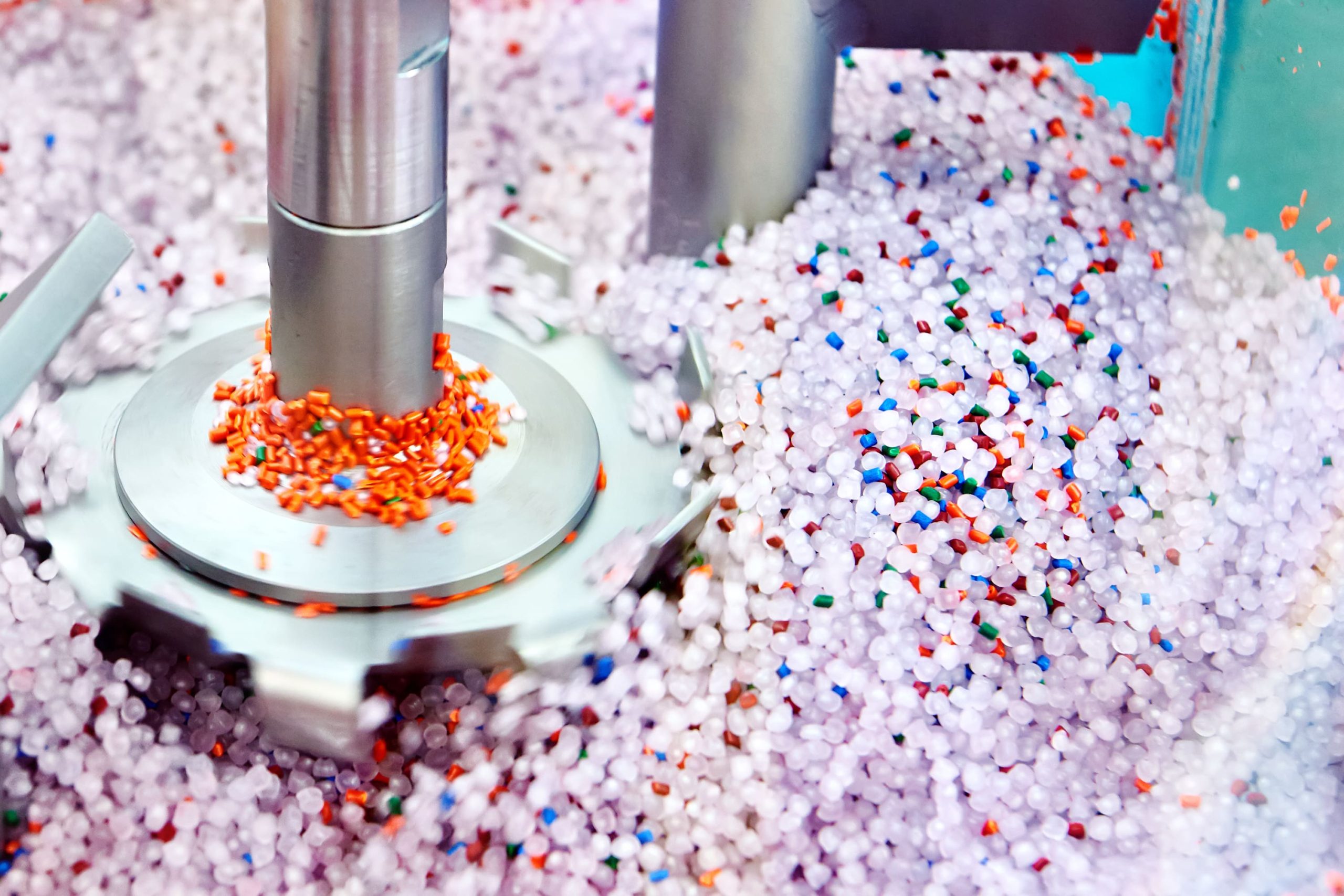
In industrial processes, controlled temperatures are crucial to obtaining the desired end result. Plastic injection moulding is an excellent example of the importance of temperature control. One of today’s most common methods of manufacturing, plastic injection moulding is used to make millions of parts and products each year, from wristwatch gears to plastic bins and IBCs.
Precise temperature control is essential throughout the entire rubber and plastic engineering process. When manufacturing injection-moulded parts from rubber or plastics, the mould temperature has a decisive influence on the quality of the parts produced and the cycle time. Optimum temperature control during the processing stage also has a direct influence on the efficiency of the production.
Rubber & Plastics Engineering HEATING APPLICATION
Specified Product Solution: Heating Jacket
Heating Jacket Type: IBC Heating Jacket
Area Classification: Suitable for Industrial Areas (ATEX Heaters & Insulating Jackets for Hazardous Areas also available)
Heating Fluid, Medium or Contents: Rubber & Plastics
IBC Heater Application: Precise temperature control during rubber and plastic engineering process.
T&D – Largest UK Stockist of Heat Trace Cables – UK & International Delivery.
Thorne & Derrick International, based in the UK, can specify and supply from stock an extensive range of Electrical Heating Equipment for industrial and process heating applications – this includes temperature maintenance and frost protection (Winterisation) products for pipework, valves, IBC’s, drums, hoses, tanks and vessels. We produce custom silicone heaters for rapid and high temperature heat-up of complex shapes and surfaces – from concept, design to the delivery of standard or bespoke heaters on the shortest lead times. From the largest UK heat tracing cable stocks we deliver Electric Trace Heating Systems for pipework frost protection, ramp heating, roof/gutter snow melting and de-icing – enquire about our in-house design service.
Thorne & Derrick International are the UK’s largest stockistand supplier of IBC Heaters providing excellent technical support and overnight delivery from stock for standard 1000 litre container heaters – the high quality UK manufactured electric heaters provide optimal thermal efficiency and highest levels of function safety. We can produce custom heating jackets designed to fit most shapes to deliver completely uniform surface heating over large areas without heat loss, hot spots or colds spots.
What Are IBC’s?
Intermediate Bulk Containers or IBCs are multi-use, reusable industrial-grade containers designed for the transport, handling and storage of liquids, pastes, semi-solids or solids.
These can include chemicals, food ingredients, sugars, solvents, oils, waxes, cosmetics, detergents and crop science products as well as hazardous class goods such as general and speciality chemicals, resins, paint and inks.
The contents of IBCs, particularly those which may become viscous at room temperature, often needs to be heated or kept at a certain temperature in order to prevent spoiling.
IBC Heaters For Heating Oil During The Ink Manufacturing Process
IBC Heaters for Heating Oil & Solvent
Ink is manufactured in two stages: first varnish (a mixture of solvent, resins and additives) is made and then pigments are mixed into it. The varnish is a clear liquid which solidifies as a thin film. It binds the pigment to the printed surface, provides the printability of the ink and wets the pigment particles.
Oleoresinous varnish, which incorporates a drying oil such as linseed oil, is manufactured at much higher temperatures and in much more rigorous conditions than non-oleoresinous varnish.
These varnishes are typically manufactured in closed kettles where the oil and solvent are heated to allow for rapid solutioning or transesterification. The temperatures involved in the process will vary but may range from 120°C to 260°C. Cooking times may range from a few minutes to several hours.
Temperature control is critical in the process. Rate of temperature change, maximum temperature attained and cooking duration are closely monitored.
Ink Manufacture HEATING APPLICATION
Specified Product Solution: Heating Jacket
Heating Jacket Type: IBC Heating Jacket
Area Classification: Suitable for Industrial Areas (ATEX Heaters & Insulating Jackets for Hazardous Areas also available)
Heating Fluid, Medium or Contents: Oil & solvent (Liquid)
IBC Heater Application: To reduce viscosity and temperature maintenance of oils & solvents stored in 1000 litre containers
T&D – Largest UK Stockist of Heat Trace Cables – UK & International Delivery.
Thorne & Derrick International, based in the UK, can specify and supply from stock an extensive range of Electrical Heating Equipment for industrial and process heating applications – this includes temperature maintenance and frost protection (Winterisation) products for pipework, valves, IBC’s, drums, hoses, tanks and vessels. We produce custom silicone heaters for rapid and high temperature heat-up of complex shapes and surfaces – from concept, design to the delivery of standard or bespoke heaters on the shortest lead times. From the largest UK heat tracing cable stocks we deliver Electric Trace Heating Systems for pipework frost protection, ramp heating, roof/gutter snow melting and de-icing – enquire about our in-house design service.
Press Release Date: 02.04.2020 uploaded by Chris Dodds (T&D Sales + Marketing Manager) World’s First Fully Certified ATEX Doors Thorne & Derrick International, the Experts in Equipment for Explosive Atmospheres, today announce the signing of a Commercial Distribution Agreement...
Press Release Date: 04.07.2019 uploaded by Chris Dodds (T&D Sales + Marketing Manager) Category: Stockist Distributor Agreement Announcement Thorne & Derrick International announce that they have signed a Preferred Distributor Agreement with Raytec, the world leading manufacturer of LED...