Wolf ATEX Worklite are ATEX certified floodlights for safe use in hazardous area Zone 1 & 2 (Gas, Vapour & Mist Explosive Atmospheres) and Zone 21 & 22 (Dust Explosive Atmospheres) where a T4 temperature class permits. See T Class ratings to understand how surface ignition temperatures impacts upon hazardous area classification of lighting and electrical equipment.
The portable floodlights from Wolf Safety Lamp with IECEx approval as well as ATEX certification are used extensively to provide temporary lighting in explosive atmosphere applications.
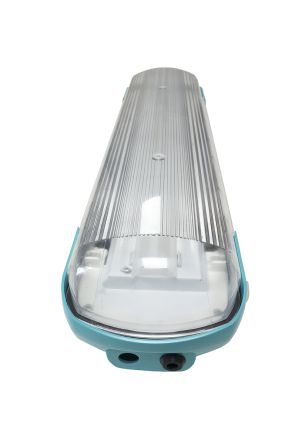
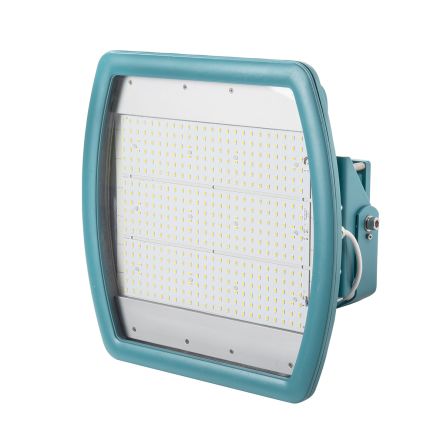
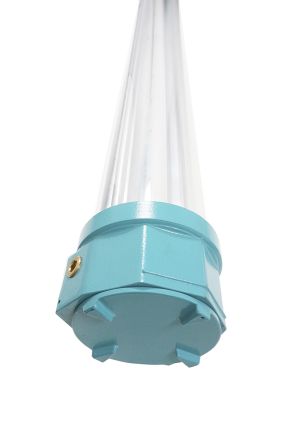
For permanent and fixed location flood lighting in Zone 1 hazardous areas please see the Petrel range of ATEX floodlights available with an extensive range of lamp options.
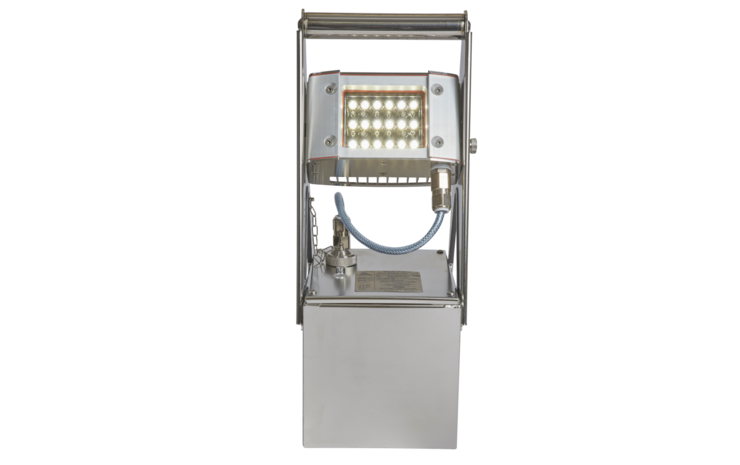
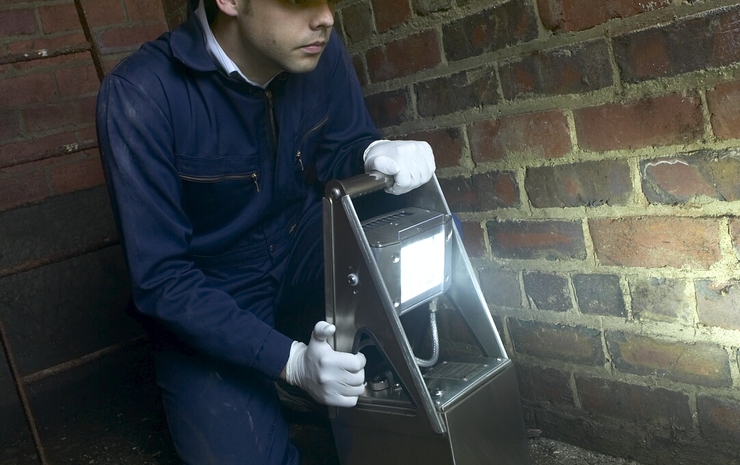
ATEX/IECEx LED Worklite is a rechargeable, high output LED floodlight for use in harsh, remote applications for extended periods now offering more light for a longer period of time with better protection from hazardous areas.
Wolf Worklite has established a reputation for being a hazardous area floodlight with unrivaled durability and toughness. Over the years the Worklite has undergone many advancements including trebling a light output to 3100 lumens at source (previous version just over 1000 so there has been a threefold increase), doubling of light duration up to 40 hours (max) and a considerable increase in LED life which is now 100,000 plus.
➡ Should you require support or advice on selecting the correct hazardous area floodlight please do not hesitate to contact T&D.
The LED panel, integral to the Worklite range or portable floodlights manufactured by Wolf Safety Lamp, now has 18 LED’s providing a brighter beam of light with each LED having an encapsulated optical device. This unique design gives a piercing spot beam which provides excellent long-distance illumination and a flood of lower level fringe light into open and confined spaces in hazardous zone areas and potentially explosive atmospheres.
The 18 LED’s now offer 100,000 hours life securing reliability and LED longevity assured by efficient heat dissipation through built in fins in the LED head unit.
The WL-85 Worklite has seen an increase in LED efficieny due to the low power option increasing to a maximum of 40 hours duration. The emergency floodlight option, both with ATEX and IECEx certification, ensures that even if the power fails the user will not be in the dark when charging in a non hazardous area.
ATEX/IECEx LED Worklite for use in harsh, remote applications for extended periods
The Wolf WL-80 and WL85 Worklites are both certified to IP66 and IP67 – in other words they are dust tight and have protection against powerful jets of water, heavy seas and immersion due to the new fully sealed piezo switch.
The newer version of the ATEX Worklite retains the stainless steel casing and aluminium lamp head continuing the ability to withstand arduous and corrosive environments characterised by flammable gas and vapour atmospheres due to the solid and robust design.
The new and further developed Wolf WL-80 Worklite offers the same performance as the WL85 and now boasts a 30% decrease in weight (6.5kg), Futher to this the Wolf WL-85 now has increased battery operation on a low power at a maximum of 40 hours.
All Wolf Worklites come supplied with a disposable anti-static Lens Guards to protect the lens in shot blasting and painting applications, which can be re-ordered on the W-200 part number.
HAZARDOUS AREA CERTIFICATION
Wolf Worklites are certified according to leading hazardous area classifications including:
Area Classification Zone 1 & Zone 21, Zone 2 & 22, Gas and Dust
Type of Protection ‘e’ Increased Safety, ‘ib’ Intrinsic Safety, ‘mb’ Encapsulation, tD Enclosure Protection
Apparatus Coding II 2 GD II T4 (Tamb = 55°C) T135°C
Certificate Numbers Sira07ATEX3027 & IECEX SIR 18.0028X
Portable Lighting for hazardous areas
Wolf Safety Lamp lighting ranges include an extensive range of ATEX and IECEx certified portable lighting for safe use in potentially explosive atmospheres, including hazardous area Zone 1 & Zone 2: explosion proof Wolf handheld torches, headtorches, handlamps with bulb or LED versions.
Thorne & Derrick are Specialist Distributors of Hazardous Area & Explosion Proof Equipment with IECEx & ATEX Certifications to the onshore and offshore oil, gas, petrochemicals and process industries.
uploaded by Chris Dodds - Sales & Marketing Manager Thorne & Derrick
Hazardous Area Lighting
LED Light Fittings
Overview
The purpose of this White Paper is to discuss in layman terms the use of Petrel LED light fittings within hazardous areas. The intention is to de-mystify the selection of LED light fittings and luminaires by explaining the benefits and pitfalls in non-technical terms, and offer basic advice on issues which are specific to lighting for explosive atmospheres, whilst also providing an insight into the kind of service you should expect from your supplier of light fittings for Zone 1 & Zone 2 lighting installations in hazardous areas.
Hazardous Area Lighting For Potentially Explosive Atmospheres In Both Onshore & Offshore
Atex Directive
ATEX is a European directive covering equipment intended for use in potentially explosive atmospheres.
Within the European Community, manufacturers of such equipment, including lighting product ranges, must comply with the requirements of this ATEX directive by law, and maintain relevant certificates to demonstrate conformity.
Certain other countries accept the IECEx standard, which is derived from similar principles.
In addition to the technical requirements demanded by the appropriate standards for each explosion protection concept, the ATEX directive imposes additional demands on certificate holders in terms of quality assurance system, product documentation, installation information, possible limitations of use in relation to its intended environment, labelling information etc.
Categories and Zone definitions
for gas and dust
The information below is a guide only.
Under the strict guidelines issued by the HSE, employers must classify areas where hazardous explosive atmospheres may occur into zones. The classification given to a particular zone, and its size and location, depends on the likelihood of an explosive atmosphere occurring and its persistence if it does.
Luminaire manufacturers of lighting fittings for hazardous areas can only offer advice on the luminaire type and not the definition of the zone in which it is to be used.
Lighting for Gas Explosive Atmospheres & Zones
Zone 0: A place in which an explosive atmosphere consisting of a mixture with air of dangerous substances in the form of gas vapour or mist is present continuously or for long periods frequently. Zone 1: A place in which an explosive atmosphere consisting of a mixture with air of dangerous substances in the form of gas vapour or mist is likely to occur in normal operation occasionally. Zone 2: A place in which an explosive atmosphere consisting of a mixture with air of dangerous substances in the form of gas vapour or mist is not likely to occur in normal operation but if it does occur, will persist for a short period only.
Lighting for Dust Explosive Atmospheres & Zones
Zone 20: A place in which an explosive atmosphere in the form of a cloud of combustible dust in air is present continuously or for long periods frequently. Zone 21: A place in which an explosive atmosphere in the form of a cloud of combustible dust in air is likely to occur in normal operation occasionally. Zone 22: A place in which an explosive atmosphere in the form of a cloud of combustible dust in air is not likely to occur in normal operation but if it does occur, will persist for a short period only.
Zone 1 Hazardous Area Lighting – Petrel Bulkhead, Fluorescent Fitting, Well Glass, Floodlights & LED Luminaires (ATEX Certified)
Why LED Lighting?
Background to Lighting for Hazardous Area Industry
LED luminaires or light fittings as we know them are a very recent addition to the general lighting market.
The LED or Light Emitting Diode was introduced on an industrial scale in the 1960s, at the time its main usage was for indication lamps within electrical and electronic devices.
By the 1990s the LED had been widely adopted in moving message (sign) displays, modern electronic devices such as mobile phones, computers etc. It would not be until around 2006 when research and development had advanced the LED to the point of it being a useful general light source.
Zone 1 LED Luminaire ATEX – Petrel 7 Series
LED Lighting Efficiency
The development of the LED as a general light source has since accelerated at such a pace that they are now in some cases producing 200 Lumens per Watt. Until very recently the theoretical maximum output had been calculated to be around 220 Lumens per Watt.
To put the above into perspective a GLS lamp typically produces around 10 Lumens per Watt, a Fluorescent lamp typically produces around 90 Lumens per Watt and an HID (High Intensity Discharge) Lamp produces up to 120 Lumens per Watt.
As you can conclude from the above the potential for energy savings has been the main driving force behind the development of ever more efficient LED lighting solutions.
One of the most confusing aspects of luminaire selection for hazardous area lighting is that some manufacturers will quote luminaire lumens and others will quote just lumens or lamp lumens. Luminaire lumens are a measured figure of the light produced by the luminaire once the Led is installed inside.
This takes into account efficiency losses through the diffuser of the luminaire and any other aspect of the luminaire design which may affect its efficiency. Lumens or Lamp lumens are light outputs taken directly at the led source and do not include any losses or inefficiencies of the luminaire.
The above is particularly relevant in hazardous area lighting due to the protection concepts employed by manufacturers to achieve a “zone certified” product.
Pictured:71W LED Module Hazardous Area Light Fitting Zone 1 – T Class T4, 240V
Many manufacturers use an encapsulation or lensing arrangement to achieve the standards. These protection concepts introduce further materials which can reduce light output.
With the above in mind it is vital to check with the manufacturer if the figures quoted are true luminaire lumen figures backed up with photometric test data.
This will provide assurance of a genuine like for like comparison when making specification decisions. Always ask for a specific lighting design or proof of lumen output claims from the manufacturer. We will cover the importance of lighting design later in this document.
Pictured: 150W Hazardous Area Floodlight LED Zone 2 – Temp T4, 220V 240V
ATEX Floodlight | LED
Long Service Life
Another plus point for the LED is its very long service life of typically 30,000 to 100,000+ hours of operation. This extended service life is particularly relevant within the hazardous area environment, where maintenance of lighting is both dangerous and extremely costly.
Maintaining traditional light sources within hazardous areas can mean having to shut down site operations to allow any lamp changes to be made. For this reason many sites do not perform lamp maintenance until absolutely necessary, usually when safety is being affected by the lack of working lighting within an area. The costs involved can be significant due to having to stop site production.
Light Colour & CRI (Colour Rendering Index)
Light emitted by a LED is made up of wavelengths with a specific colour depending on the semiconductor material. One of the most common ways to produce white light is to utilise the property of photoluminescence.
In this approach an LED which produces blue light is covered with a thin layer of phosphor. When the LED is turned on the blue wavelength passing through the phosphor produces white light. The colour temperature in Kelvins is controlled by the mix of phosphor used.
Typically the warmer the white light the less efficient is the conversion from blue to white.
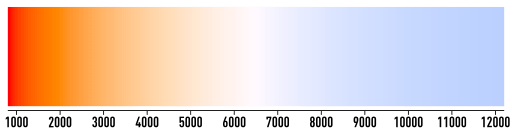
Typical colour temperatures are:
2700K – 3200K WW Warm White Light
4000K – 4500K NW Natural White Light
5000K – 5500K DW Day White Light
The CRI (Colour Rendering Index) is a measure of how accurately a light source renders colour. The better the light source represents colours, the better the index. Sunlight and GLS give a CRI 100, this would be described as true colour rendering.
They have a wide spectrum which replicates all colours well. The CRI of a LED varies between 70 and 97, a fluorescent lamp is between 60 and 98, and a High Pressure sodium can have a CRI as low as 60.
Interestingly one of the most common light sources still in use today in the external lighting field, the SOX or low pressure sodium lamp has a CRI of 0! This in effect means that no colour is represented accurately under this type of lighting.
In hazardous area lighting certain protection concepts can have an effect on both colour temperature and CRI. The encapsulation of the LED light source within a hazardous area luminaire can make the colour temperature cooler.
For instance a colour 4000K LED will have a tested colour temperature of around 7000K when encapsulated. This is the result of removing the air gap in front of the phosphor. However the CRI can improve once the LED is encapsulated. In the above example the CRI improved from 85 to 90, which means even though the colour temperature is cooler the Colour rendition will still be excellent.
ATEX Light Fitting | LED
Suppliers of LED Lighting
Service You Should Expect From A Manufacturer
Quality Assurance
The hazardous area equipment manufacturing market is one of the most highly regulated sectors within manufacturing. All manufacturers should be able to supply their customers with relevant certification for any products which they supply into a hazardous environment.
If the luminaire manufacturer is from overseas then you should request an English language version of their test certification. Check for yourself that the test house and notifying body on the test certificates are correct.
In hazardous area lighting, the manufacturer should also be able to supply photometric test data for the products they manufacture.
Those with an in house design capability will also be able to supply and carry out lighting designs to the customers brief.
Pictured:56.8W LED Module Hazardous Area Light Fitting – Zone 1 LED T Class T6 230V
Hazardous Area Lighting Design
One of the most important aspects of any lighting system is its initial design. This is even more important in hazardous areas due to the often complicated nature of both new and existing installations.
Many manufacturers can supply a lighting design which is for an office or open area warehouse etc., but hazardous area design is very different. There are very few if any sites which do not have multiple obstacles which can impede the effectiveness of the lighting.
A typical example would be a chemical site which will have various walkways pipe runs tanks etc. within one area.
To produce an open area design for this kind of environment would be at best inaccurate and at worst not fit for purpose.
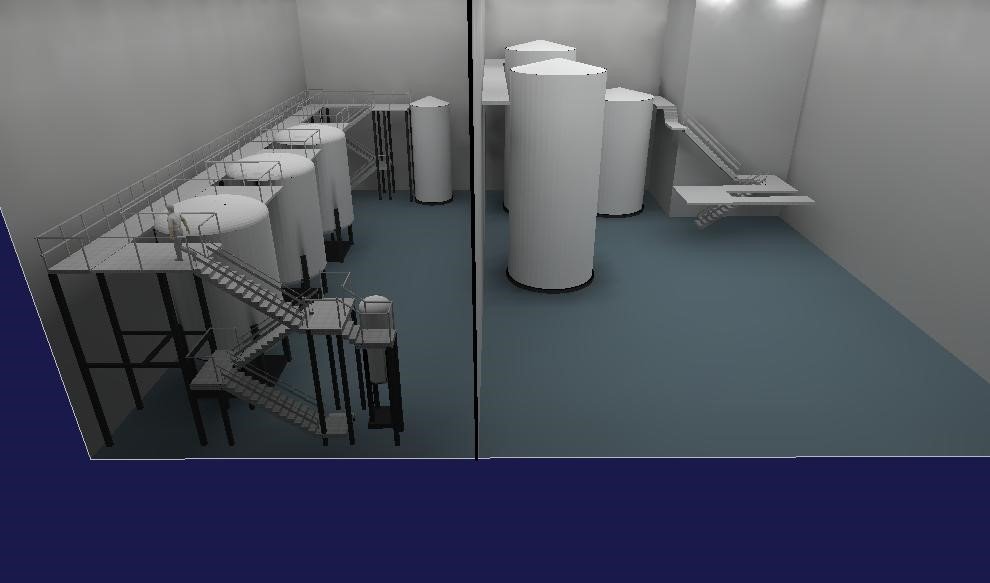
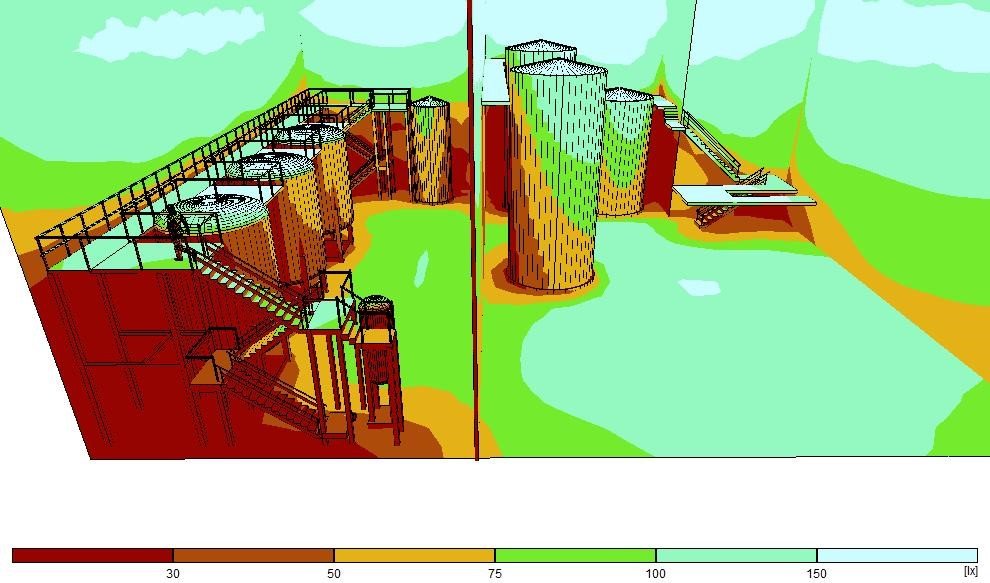
The advent of modern design software allows manufacturers to produce lighting designs which can show, in 3D, the space to be lit and give a more accurate representation of what the end user needs for a given space. See sample designs below.
Fig.1 Sample Gantry Walkway 3D
Fig.2 Sample Gantry Walkway light levels
These designs can be done remotely using information provided by the end user, but are more effective when accompanied by a site survey if this is an existing upgrade.
Traceability of Lighting Products
A manufacturer of hazardous area lighting products should be able to provide traceability on all its products and parts used within its lighting range. It is vitally important that your chosen manufacturer has full visibility on its supply chain and manufacturing partners.
Due to the nature of the manufacturing and approvals process manufacturers must know in advance of material changes which may affect their current product certification.
Each luminaire should have an individual serial number to allow its manufacture to be traced to a specific point in time and method of manufacture.
LED Lighting Product Warranty
Product warranty is becoming both a major selling tool and also a major bone of contention, not only in the Hazardous area sector but in the LED lighting market in general. There are suppliers in the market place offering 10 or even 15 year warranties on their products without knowing where or how they are being installed.
Some of these suppliers have been in existence for less than this time so it is extremely difficult for end users be confident in these warranty offerings. In fact, there can be no guarantee. A reputable supplier or manufacturer will always stand by their product, but before offering any extended warranty will want to know where and how the products are to be installed.
This is extremely relevant in hazardous area installations as by their very nature the installations are far more gruelling on the luminaires than a standard office, domestic or even industrial environment.
Reputation & History of Lighting Supplier
Finally an aspect of your supplier that is probably the most important element, Trust. If you are considering a manufacturer and supplier, how much do you know about them? How long have they been established? Are they reputable company? Does the company have in house design facilities, are they manufacturers or do they factor imported lighting products? Can you visit their site and see their lighting products being produced?
A good manufacturer will be more than happy for potential customers to visit their site, and they will give you details of reference projects. Also it should be possible to talk to other customers who have had dealings with them to get first hand opinions of their experience.
T&D UK & Exports support worldwide oil, gas and petrochemical projects with an extensive range of Hazardous Area Lighting, Motor Starters & Electrical Enclosures.
Hazardous Area Equipment & Explosion Protection Specialist Distributors
ELECTRICAL & PROCESS INSTRUMENTATION EQUIPMENT
FOR EXPLOSIVE ATMOSPHERES
Thorne & Derrick are Specialist Distributors of Hazardous Area & Explosion Proof Equipment with IECEx & ATEX Certifications to the onshore and offshore oil, gas, petrochemicals and process industries.
Identifying Zone 0, Zone 1 & Zone 2 Hazardous Areas | Raytec Lighting | Petrol Station
uploaded by Chris Dodds - Sales & Marketing Manager Thorne & Derrick
Hazardous Area Zones
Zone | Zone 1 | Zone 2 Definitions
A hazardous area can be defined as any location where there is risk of an explosion – this could include on offshore oil rig or an onshore grain storage facility.
But every hazardous area is different and each has specific requirements depending on the nature of the explosive atmosphere and the elements that are present.
Fundamentally, for an explosion to take place, flammable or explosive gases, vapours, mists or dusts will be present. Then, the level of risk of an explosion is based on the frequency and duration of the occurrence of an explosive atmosphere. This level of risk is represented by classifying the hazardous area zones as Zone 0, Zone 1 or Zone 2 (for gas, vapour and mist atmospheres) or Zone 21 or Zone 22 for dust atmospheres.
In this article we will look at what defines Zone 0, Zone 1 and Zone 2 hazardous area classifications and the considerations for specifying lighting for hazardous zones into each area. But first, we must consider what is likely to cause an explosion in the first place.
Hazardous Area Lighting Using LED Technology
There are three necessary components for an explosion to occur;
1. Flammable Substance – this needs to be present in a relatively high quantity to produce an explosive mixture (e.g. gas, vapours, mists and dusts).
2. Oxygen – oxygen is required in high quantities and in combination with the flammable substance to produce an explosive atmosphere.
3. Ignition Source – a spark or high heat must also be present.
Components of an explosion
Lighting & Hazardous Area Zones
Where there is potential for an explosive atmosphere, special precautions are needed to prevent fires and explosions. Electronic equipment, including hazardous area lighting, needs to be purpose designed for use in hazardous areas to prevent a spark occurring and igniting any flammable substances.
Although every application is different, for the ease of monitoring and specification each hazardous area is classified as a particular level or “zone”. As a result, all hazardous area equipment must be designed with hazardous area zone classifications in mind, as the “zone” governs the level of protection and precaution required. It is essential to know which zone you are working in, so that you can specify the most appropriate equipment.
For gases, vapours and mists the zone classifications are recognised as Zone 0, Zone 1 and Zone 2 areas.
Let’s take a look at what defines each zone…
Zone 0
Zone 0 is a hazardous area in which an explosive atmosphere is present continuously for long periods of time or will frequently occur.
Zone 1
Zone 1 is a hazardous area in which an explosive atmosphere is likely to occur occasionally in normal operation. It may exist because of repair, maintenance operations, or leakage.
Zone 2
Zone 2 is a hazardous area in which an explosive atmosphere is not likely to occur in normal operation but, if it does occur, will persist for a short period only. These areas only become hazardous in case of an accident or some unusual operating condition.
Whenever you are filling up your tank you are standing in a Zone 1 hazardous area. That is why the use of mobile phones on petrol forecourts are banned.
You’re phone isn’t rated for use in hazardous areas. Have a think about it next time you’re filling up!
Zone 1 light fittings are supplied as silver, Zone 2 fittings as dark grey and industrial fittings as white.
All emergency versions, whether Zone 1 or Zone 2 can also be easily visually identified by their red end cap, encapsulating the emergency battery back-up.
The part codes for each Raytec SPARTAN light fitting variant also differ depending on the level of protection required. SPARTAN’s Zone 1 part code begins SPX, Zone 2 SPZ and industrial products having a SPI prefix.
Raytec do not currently offer any lighting solutions for Zone 0 hazardous areas.
This is because Zone 0 usually classifies areas for gas storage or containment, and any lighting required would be used on a small and portable basis for visual inspection, e.g. a headtorch, rather than a dedicated fixed luminaire or light fitting.
Therefore, it is very important to make sure that you are using a suitable luminaire for your application by choosing your fitting based on its suitability for the hazardous area Zone in which it will be located.
The SPARTAN range of lighting manufactured by Raytec is designed for lighting hazardous areas which require high performance, high reliability, White-Light illumination using LED technology – ATEX Certified Zone 1 & Zone 2.
Thorne & Derrick are Specialist Distributors of Hazardous Area & Explosion Proof Equipment with IECEx & ATEX Certifications to the onshore and offshore oil, gas, petrochemicals and process industries.
uploaded by Chris Dodds - Sales & Marketing Manager Thorne & Derrick
Lighting for hazardous areas
Frustrated by frequent maintenance, poorly lit areas, and high-energy consumption, you’ve decided to upgrade your facility’s explosion proof lighting. You’ve gotten your manager’s approval for the retrofit of the lighting and are eager to begin the switch to LEDs.
💡 Did you Know? Thorne & Derrick using latest software provide a FREE LIGHTING DESIGN SERVICE for the specification and supply of ATEX & IECEx Certified light fittings to provide safe and reliable lighting in explosive atmospheres and hazardous area locations.
But, before you purchase your lighting fitting and fixtures and start the installation, consider these 10 factors.
factors to consider
1. Request sample light fittings or fixtures: Have you evaluated a sample lighting fixture? Always request a sample prior to settling on a fixture design. Nothing compares to seeing a fixture hung in the actual application, and most manufacturers have a sample program to “try out” a lighting fixture prior to making a large investment. Enhancements in colour rendering, and a variety of choices in colour temperatures, optics, and brightness levels allow you to truly customize your hazardous area lighting design to meet the needs of your specific application.
2. Research rebates and incentives: Are there rebates available in your area? Do the hazardous area lighting fixtures you’re considering appear on the Designlights™ Consortium’s Qualified Products List (DLC QPL)? Most agencies require a hazardous area luminaire to appear on this list in order to be considered eligible for state and utility energy efficiency program incentives. The Database of State Incentives for Renewables & Efficiency (DSIRE®) is another great resource tool for finding incentives in the United States.
Explosion Proof Lighting | Switching to LED
3. Consider fixture reliability and luminaire lifespan: How long do you plan on keeping your lighting fixtures? How often are you willing to perform hazardous area maintenance tasks, such as driver replacement? For many, the ultimate objective is to upgrade their lighting — reducing maintenance and manpower requirements while maintaining or increasing levels of uniformity and comfort. When evaluating new hazardous area lighting systems, consider both the total system power consumption and the expected luminaire life in order to evaluate energy and maintenance costs and savings.
4. Don’t forget about color temperature options: Do you have a colour temperature preference for your facility? What type of work is being performed and what are the mounting heights of the fixtures? It’s important to remember different colour temperatures create different effects. Cool white has a crisp, bluish appearance, with the highest perceived brightness. It is a great choice for floodlights, especially at higher mounting heights. However, a warmer or neutral colour temperature LED luminaire produces a softer glow and might be a better choice for lower mounted task lights or light fittings.
5. Double check the power system requirements for your facilities hazardous area lighting: What voltages are your hazardous area lights running on? Is your power clean, or is it affected by surges and dips from nearby equipment? New IEEE standards recommend a minimum of 6kV of surge protection for outdoor solid-state lighting, with a recommendation of 10kV for high-risk areas.
6. Research true 1-for-1 retrofit solutions: Is the LED solution you’re considering a true 1-for-1 retrofit for your facility? If not, do you have enough circuits available to add additional fixtures? Labour costs are a major factor in any retrofit lighting project. Being able to mount directly to the existing mounting hoods can save a significant amount of labour time and cost. Ideal retrofit LED solutions allow facilities to utilize existing mounting hoods and conduit/wiring systems, helping to reduce new fixture installation labor costs. Retrofit adapters are often available, allowing fixtures to mate with a wide range of mounting hoods, letting your facility consolidate with a single luminaire.
7. Reconsider facility obstructions:Are there any obstructions in the ceiling that might block light or prevent lighting fixtures from access? Consider alternate mounting means for the lighting fixture, such as pendant mount. For example, Emerson task luminaires have five different mounting hoods to ensure the fixture is installed in the ideal location to properly light the area.
8. Review light levels (IES, RP540): What illumination level are you targeting? Are you following a standard such as IES RP7 for industrial lighting, or API RP540 for petroleum applications? Make sure your lighting layout provides the appropriate illumination level. Most fixture manufacturers have a variety of lumen outputs, so choose the right illumination level to meet the needs of the hazardous area. Too much light can be just as debilitating as not enough. Also remember LEDs are directional, which means you can achieve required light levels with much fewer lumens and watts. For example, a 5,000 lumen LED task light can replace a fixture with a 150W HPS lamp (which generates about 15,000 lumens of light).
9. Evaluate mounting heights: How high do you intend to hang your lighting fixtures? For higher mounting heights, high lumen hazardous area floodlights are a great choice. When mounted higher up on a structure, these floodlights can be used to “wash light” over lower areas, providing uniform general illumination, while minimizing the need for task lighting. Additionally manufacturers that offer field replaceable globes for their fixtures will allow you to retrofit a variety of mounting heights using just one fixture. Globe assemblies can be quickly removed and changed, depending on the application.
10. Assess area locations: Do the locations of your retrofit have hazardous or environmental ratings? What are the area classifications for your retrofit? Are there other certifications or environmental considerations, such as damp locations, marine ratings, or elevated ambient temperatures that your fixtures need to address? When you purchase lighting for a harsh or hazardous industrial location, you need to know that your lights are going to hold up against the environment. Lighting products should be rugged and durable, in addition to meeting all of the certifications and requirements appropriate to your environment, whether it be wet location, marine, hazardous, or harsh industrial.
Thorne & Derrick are Specialist Distributors of Hazardous Area & Explosion Proof Equipment with IECEx & ATEX Certifications to the onshore and offshore oil, gas, petrochemicals and process industries.
Raytec | Hazardous Area Lighting EAC Approved & Certified
Lighting for Hazardous Area Zone 1 & Zone 2
The hazardous area lighting you choose to install today will make the difference in plant safety, worker comfort and maintenance costs for years to come.
Raytec’s White-Paper is the ultimate guide to maintaining lighting in a hazardous area environment. Considering some of the biggest maintenance challenges, we explore how Raytec Ex lighting is designed differently, and why choosing the correct luminaire for your project can help to reduce costs. In this free, in-depth guide we look at;
How much maintenance does an Ex luminaire require?
What makes a luminaire easy to maintain?
How to reduce maintenance costs and downtime?
How to overcome problems with restricted access?
When sourcing lighting to install in hazardous areas, cost, performance and reputation of the manufacturer, are obviously important criteria to consider. But how much thought do end users give to ease of maintenance? For many, the answer to this question is probably, ‘not enough’.
This White-Paper is intended to help end users gain a better understanding of what makes a hazardous area luminaire easy to maintain, and how it can help to reduce costs.
The design of a luminaire, and how easy it is to maintain, can vary significantly between different manufacturers and different luminaires. In part, this is down to how the units are certified; certification can restrict the level of maintenance which can be carried out on-site. However, ease of maintenance is also down to the manufacturer and how much importance it’s given during the design process. It’s easy for a manufacturer to overlook ease of maintenance, especially as the person specifying the lighting is not always responsible for maintaining it.
Choosing an LED luminaire will of course help to reduce the amount of maintenance required, but as with any electrical product, there is always some risk of failure. In hazardous area applications, where the environment can be particularly harsh and challenging, this risk is often amplified. So, while LED undoubtedly helps to reduce the level and frequency of maintenance, no hazardous area luminaire should really be thought of as being completely ‘maintenance free’.
Before we look more closely at what actually makes a luminaire easy to maintain, we’ll first consider what maintenance is required for any luminaire installed in a hazardous area.
2. What Maintenance is Required?
2.1 Routine Inspection
Luminaires which are certified for use in hazardous areas possess special features which render them suitable for use in these environments. Routine inspections are therefore required over the lifetime of the luminaire to ensure these special features are preserved.
The level and complexity of these inspections are covered under hazardous area guidelines (BS EN60079- 17), but speaking generally, will usually be visual and are unlikely to require the unit to be opened up. As a result, the design of a luminaire, and how easy it is to maintain, is unlikely to have any significant impact on the complexity and duration of these routine inspections. Crucially though, these inspections are designed to highlight the need for any additional, unplanned maintenance. It is these requirements which make a luminaire’s ease of maintenance so important.
2.2 Unplanned Maintenance
Unplanned maintenance can be categorised as any maintenance procedure which is required outside of routine inspection. Unplanned maintenance is likely to be more complex, and there is a higher chance that the unit will need to be opened up for a problem to be rectified or repaired.
A luminaire’s ease of maintenance will determine two things;
Who can carry out the repair; the end user or the manufacturer?
Whether the unit can be repaired at all, or if it must be replaced?
The answer to these two questions will have a significant effect on the length of time which the end user will be left without light, and on the cost (both the direct cost of the repair, but also the associated costs of downtime).
Pro-Tip – Any unplanned maintenance requirements could increase the lifetime cost of the luminaire if it is not easy to maintain.
Identifying Ease of Maintenance
3.1 Traditional Luminaires
Luminaires in this category are non-LED and use traditional technology (such as fluorescent tubes or sodium lamps). Of course, this category is very broad with a wide variety of different types of luminaire. However, they are similar in that they all have a shorter lifetime (so lamps will have to be replaced numerous times over the lifetime of the luminaire). While the process of maintaining the luminaire may be a slow or difficult process, maintenance can generally be carried out on-site.
Traditional Luminaires
3.2 Sealed for Life LED Luminaires
We know that choosing an LED luminaire means maintenance is required less often, but we’ve also highlighted that when installed in a hazardous area application, it should not be considered as being ‘maintenance free’. Despite this, many LED luminaires are factory sealed. Because the seal is critical to the luminaire’s hazardous area certification, it cannot be opened up for maintenance or repair. Tampering with the seal, or forcing the unit open, would mean the luminaire no longer complies with its Ex rating, and could present a risk of explosion. Sealed for life units must therefore be returned to the manufacturer for any maintenance procedures to be carried out.
Sealed for Life LED Luminaires
3.3 Modular LED Luminaires
Modular luminaires are designed with maintenance in mind; the unit is not factory sealed and can be opened up on-site. Maintenance can therefore be carried out by the end user. Spare parts are interchangeable and can be removed independently, while the ability to mount key components remotely can also make access for maintenance much easier.
The key feature of a modular luminaire is that maintenance can be done on-site and there is no need to return the unit back to the manufacturer.
Pro-Tip – A modular luminaire allows maintenance to be carried out on-site, whereas a sealed for life unit must be returned to the manufacturer to resolve any issues.
Modular LED Luminaires
4. Why is Modular Easier to Maintain?
Now we know how different types of luminaire can be grouped, we need to understand what’s different about a modular luminaire which makes it easier to maintain.
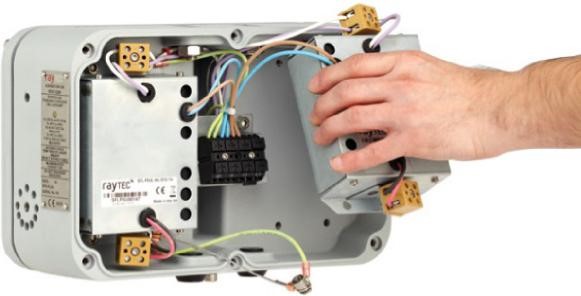
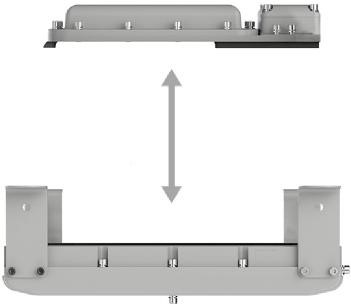
A modular luminaire should be designed to ensure parts can be removed and replaced without causing damage to the luminaire. This means parts such as PSUs, emergency batteries, light engines etc. can all be removed independently. The luminaire is not factory sealed, which means an end user can access internal components and carry out maintenance without having to remove the luminaire first. Meanwhile, spare parts can also be kept on-site to service the installation. These features help to speed up the process of maintenance and reduce downtime.
Figure 1 A modular luminaire allows parts to be removed independently
At this point, you may be asking, ‘How is all this possible within a hazardous area environment?’. Primarily, it’s down to the unit’s protection method and how it’s been certified. A true modular unit will be ‘Ex e’ certified (increased safety), which in short, means the unit has been designed and certified to prevent an explosion (rather than contain it). Not all Ex e luminaires are modular but certifying using this protection method does allow the manufacturer more flexibility in being able to design it for easy maintenance.
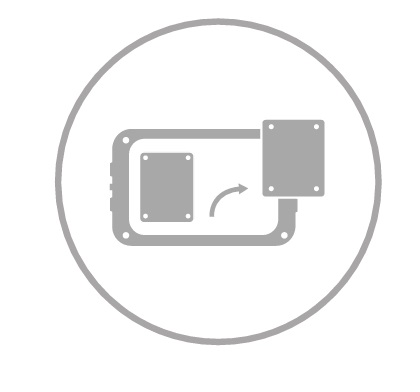
A modular unit should also make access for maintenance easier. In the same way that parts can be removed independently, the control gear can be mounted remotely, away from the luminaire’s main body. This makes access for maintenance much easier (we cover this in more detail in section 6.0).
Pro-Tip – Because a modular luminaires parts are interchangeable, a small stock of spare parts can be kept on-site to service the installation.
Figure 2: Modular luminaire’s also allow PSU’s to be removed and mounted remotely for easy access
5. Modular vs Sealed for Life
If you are reading this White-Paper, and have an interest in reducing maintenance costs, you probably already understand the benefits of selecting a luminaire using LED technology. For the remainder of this White-Paper we will therefore be focusing on the differences between sealed for life and modular luminaires.
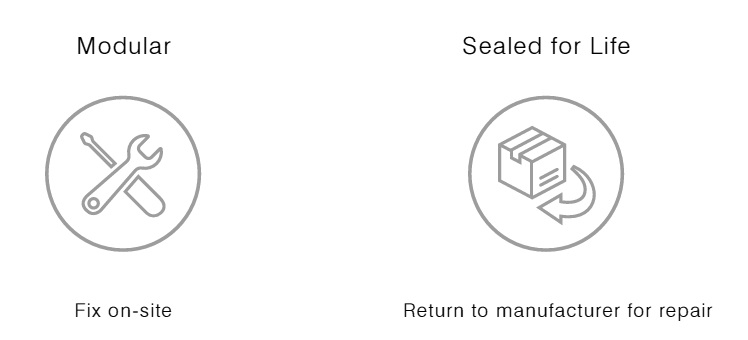
We know that a modular luminaire is easier to maintain, but we also need to understand why ease of maintenance is so important. To recap, the biggest and most significant difference between the two is that modular luminaires can be maintained on-site, whereas a sealed for life luminaire must be returned to the manufacturer.
Modular vs Sealed for Life
5.1 Downtime
A component failure could result in either a partial or total loss of light from the luminaire. A loss of light may mean an increased risk to workers on-site, or operations may even have to cease. This could have huge cost implications, which means speed of resolution is critical.
Sealed for Life Luminaire
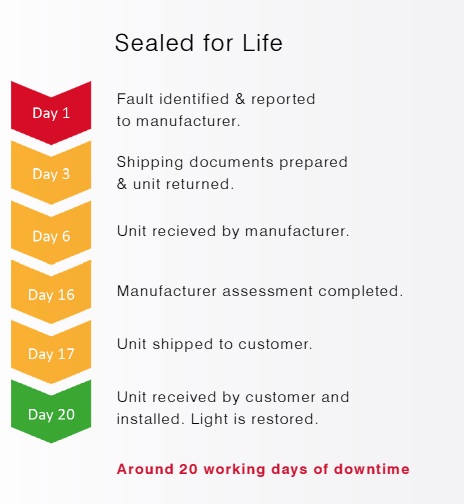
If a failure does cause a loss of light output, it’s unlikely that an end user will be able to do anything to rectify the problem. The luminaire must therefore be returned to the manufacturer which will have a significant impact on the length of downtime.
Let’s take a look at a typical downtime period for a sealed for life luminaire.
Figure 4 Typical downtime of a Sealed for Life luminaire
Transporting a unit between an end user and manufacturer can be a slow process. Ex lighting is installed across the world, but a customer will often be expected to return it to a single location for repair. The exact duration will depend on the end user’s proximity to the manufacturer, but it could add a number of days to the overall downtime period.
Another factor which contributes towards duration of downtime is the time it takes for a manufacturer to complete a fault assessment. The assessment will identify the cause of the failure and establish whether it can be covered under warranty (this is usually required before any further action can be taken to resolve the issue).
Of course, the length of time this takes to complete will vary between manufacturers. While the best case may be that the assessment is completed within a few days of the unit being received, in reality it could take significantly longer.
For offshore applications (and other applications where access is difficult and transport is restricted) the duration of downtime could increase significantly. Offshore applications rely on the use of helicopters to get goods to and from shore; these flights are often limited in frequency, and also unreliable due to the harsh conditions of an offshore environment.
This could lead to long delays which will increase overall downtime.
The longer the downtime, the higher the cost to the end user.
Modular Luminaire
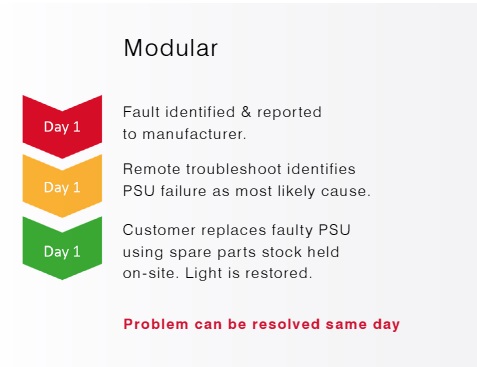
With the ability to access the internal components (without risk of invalidating the certification), modular ex lighting can be serviced on-site. This allows light to be restored much quicker in the event of a failure.
Without the need to return the unit to the manufacturer, transit times are no longer an issue. With the ability to keep spare parts on-site to service the installation, combined with a design which lends itself to easy maintenance, any issues with a modular luminaire can be rectified almost as quickly as they’re identified.
Figure 5 Typical downtime of a Modular luminaire
On-site maintenance also facilitates remote troubleshooting. For a sealed for life unit (with no way of carrying out a repair), a remote troubleshoot would be a pointless exercise. For a modular unit though, it allows a faulty component to be identified quickly, and then replaced from spare part stock kept on-site.
However, understanding the exact cause of failure may still be important. If the failure has been caused by something on-site, the assessment will provide important information to the end user and help them rectify the problem.
Because faulty components can be removed independently, they can be returned to the manufacturer without having to ship the entire luminaire back. As well as reducing shipping costs, time also becomes less critical. The luminaire’s output can be restored first using the spare parts, and the faulty components can be returned for assessment afterwards.
5.2 Environmental Impact
Knowing that a sealed for life luminaire must be returned to the manufacturer for maintenance, let’s now consider the environmental impact; an increasing global concern.
Sealed for Life Luminaire
Once the luminaire eventually reaches the manufacturer, even they may be unable to actually repair it. Carrying out the fault assessment is often impossible without damaging the luminaire to the extent that it cannot be resealed.
The process of returning the luminaire is more likely to be for fault identification purposes (and whether the fault is covered under warranty). Regardless of the cause of the fault, the most likely solution will be for it to be replaced by a brand-new unit.
The existing housing will be scrapped, and if it contains high levels of polycarbonate or GRP (glass reinforced plastic), this could be particularly damaging to the environment.
We identified earlier that Ex lighting is installed across the world, so the logistics of shipping the luminaire back to the manufacturer could significantly add to the luminaire’s environmental footprint (the extent of this will depend on the location of where the unit is installed, and of the manufacturer).
The best case is that the manufacturer has a local repair centre (to reduce shipping distance), but with many manufacturers, the luminaire will have to be returned to a single global location.
Modular Luminaire
The environmental cost of a modular luminaire is a fraction of that of a sealed luminaire. Because the parts are interchangeable, a single component failure will not render the whole luminaire useless.
Basic troubleshooting should allow a faulty component to be identified remotely, and the ability to replace parts while the luminaire is in-situ, means in theory, there is never a requirement to return the entire fitting to the manufacturer.
To identify the exact cause of failure, and for warranty purposes, a faulty component could still be returned to the manufacturer for inspection. However, the ease and environmental impact of doing this will be much smaller when compared to returning the entire unit.
5.3 Cost
Reducing downtime and the impact on the environment will ultimately translate into significant cost reductions too.
Modular Luminaire
The ability to repair the luminaire on-site removes any costs associated with returning the luminaire back to the manufacturer.
Furthermore, even if the repair is not covered under warranty, the cost of repair will be significantly cheaper than having to replace the entire luminaire.
Sealed for Life Luminaire
Transporting goods on and off site can be challenging and expensive. The responsibility of returning the faulty unit to the manufacturer will almost always lie with the customer, rather than the manufacturer. Even if the fault is covered by the luminaires warranty, the customer may still be expected to cover the cost of the luminaire being shipped back.
Furthermore, if a fault occurs which is not covered under warranty, i.e. over-voltage of a PSU, the customer may have to pay the cost of a new unit as the entire luminaire is likely to be replaced rather than repaired (even though only one, relatively inexpensive component has caused the failure).
Figure 6: summary of modular vs. sealed for life
Modular Luminaire
Sealed for Life Luminaire
Increased downtime; no on-site maintenance possible
Reduced downtime; allows field-based repair
Increased environmental impact; more scrappage, more shipping.
Increased lifetime cost; no cost-effective method of repair
Reduced lifetime cost; spare parts can be kept for servicing
6. Increasing Ease of Access
A luminaire which is easy to maintain is only likely to benefit an end user if they are able to easily access the unit in the first place. The nature of some hazardous area applications means that doing so may be dangerous or require specialist equipment. Thankfully, the design of a luminaire can also help to make access easier.
As well as being easy to maintain, a true modular solution should also allow key components to be mounted remotely (with a wired connection to the luminaire head, via a cable) and provide an end user with greater flexibility in the way that they mount the luminaire. If PSUs can be mounted at ground level, access for maintenance becomes far easier. As well as reducing the cost of maintenance, this will also help to increase speed and minimise downtime.
At Raytec, this is something we’ve experienced when working with clients installing luminaires in grain storage warehouses, which will usually have High Bay luminaires mounted to (or suspended from) the warehouse ceiling. With non-modular lighting installed, gaining access to the luminaire may require the grain to be removed before maintenance is carried out; a slow and costly process.
Plus, even if the luminaire can be accessed without needing to remove the grain, carrying out maintenance with the grain still below is risky; it could lead to it becoming contaminated if anything falls while maintenance is being carried out. In contrast, being able to mount the PSUs remotely means maintenance can be carried out at ground level (so there is no risk of contamination), and the grain does not have to be removed.
Ultimately this means maintenance can be done quicker, and at a lower cost.
Warranties and Returns
We have mentioned warranties a few times during this White-Paper, and a good warranty is certainly an important thing to look for when selecting a luminaire for a new lighting installation. A good warranty can help to reduce costs and provide peace of mind. However, even with the best warranty, associated downtime costs are unavoidable if the unit cannot be maintained on-site and must be returned to the manufacturer.
There may also be hidden costs to a warranty which you might not have considered. We consider some of these here;
What’s Actually Covered?
Some warranties may only cover mechanical problems (such as corrosion to the luminaires housing). But what about electrical components, such as the luminaires PSU, where failures are more common? If they are not covered by the warranty, the manufacturer will not be obligated to rectify the problem should something go wrong. Furthermore, the labour cost to repair the fault could come as an extra charge to the end user.
Return Shipping
If the unit has to be returned to the manufacturer for repair, it will generally be the responsibility of the end user to cover the cost of doing so. In some instances, the customer may also be expected to cover the cost of getting the unit back to site after the repair has been carried out; even if the repair has been covered under warranty. This will depend on the manufacturer’s terms, so it’s always best to check if you’re unsure.
Is a Repair Possible?
We highlighted earlier that even the manufacturer may be unable to repair a sealed for life luminaire. This issue is amplified for issues not covered under warranty. It means the end user is more likely to have to pay for an entire replacement, rather than just covering the cost of repair. The expense of this is likely to be significantly larger than the end user would have anticipated.
Discretion
Warranty terms vary between different manufacturers. Some warranties may include a reference to manufacturer ‘discretion’, which gives the manufacturer more authority and flexibility in deciding how warranty claims are resolved. As an example, the manufacturer may have the discretion to resolve a problem by repairing the luminaire, replacing it with an equivalent, or to issue a credit instead; regardless of the customer’s preference.
8. Summary
In order to reduce costs over the lifetime of a hazardous area luminaire, maintenance should be at the forefront of an end users mind when choosing a new lighting solution. Ease of maintenance should be considered alongside the cost and performance of the luminaire, and the reputation of the manufacturer. For some applications, where the associated costs of downtime are higher, it should be considered as being of greater importance.
Choosing an LED luminaire which is modular in its design is critical. It means maintenance can be carried out on-site, and output can be restored in a matter of minutes if there is an issue. This speed of maintenance is critical to keeping downtime to a minimum and keeping costs low.
Figure 7: Comparison of the benefits between Modular vs Sealed for Life
Thorne & Derrick are Specialist Distributors of Hazardous Area & Explosion Proof Equipment with IECEx & ATEX Certifications to the onshore and offshore oil, gas, petrochemicals and process industries.
Press Release Date: 02.04.2020 uploaded by Chris Dodds (T&D Sales + Marketing Manager) World’s First Fully Certified ATEX Doors Thorne & Derrick International, the Experts in Equipment for Explosive Atmospheres, today announce the signing of a Commercial Distribution Agreement...
Press Release Date: 04.07.2019 uploaded by Chris Dodds (T&D Sales + Marketing Manager) Category: Stockist Distributor Agreement Announcement Thorne & Derrick International announce that they have signed a Preferred Distributor Agreement with Raytec, the world leading manufacturer of LED...















 Technical Resources |