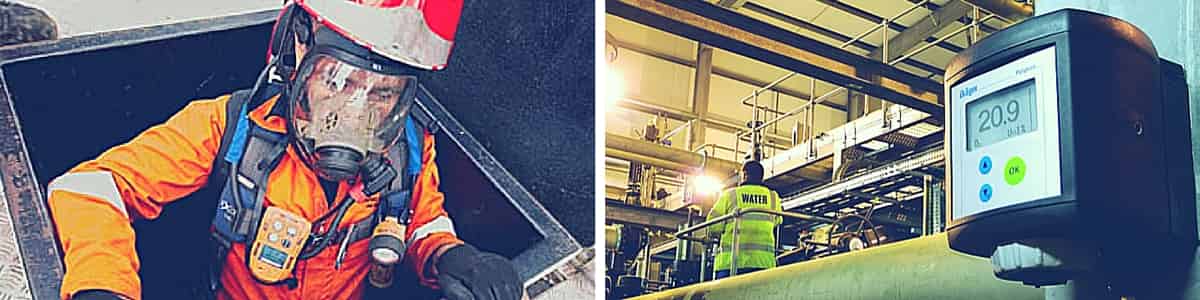
T&D Supply Gas Detection Equipment For The Monitoring Of Toxic & Flammable Gas Levels
Gas Detectors
Gas detectors, both fixed and portable, provide life saving alerts and notice of the presence of potentially fatal gases in working areas. Typically, a fixed gas detector is used as a permanent gas monitoring solution installed in a specific location such as a process area of a control or a plant room.
The area is continuously monitored measuring the concentration of a selection of gases within the air. Fixed gas detectors are used for the detection of flammable gases, toxic gases and for monitoring oxygen depletion levels.
Fixed gas detection uses the latest technology to ensure the safety of plant and personnel at all times. In the event of a gas concentration reaching a preset high level, fixed gas detectors have alarms, lights and indicators that act as a warning signal to alert the user of the gas risk hazard in both safe and hazardous area zone locations.
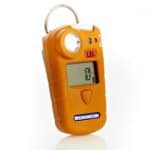
Portable gas detectors are, as their name suggests, portable and easy to carry around. They can be attached to clothing or overalls for continuous gas detection and monitoring when moving between zones and sites.
selecting the correct gas detector
As both fixed and portable gas detectors are available for many gases and applications, it is vital to ensure the correct product is specified. Prior to any gas detection equipment being specified, a full risk assessment must be carried out in order to determine the exact range of potential dangers and gas risk hazards that may be present.
When identifying the most suitable fixed gas detector for your application you must consider the following:
The most suitable fixed gas detector to ensure quick and reliable operation
If the fixed gas detector has any limitations (such as being affected by temperature, humidity or other gases in the environment)
The location of the gas detector should still be accessible for maintenance and testing
The sensor technology used mustn’t be affected by other substances in the surrounding environment e.g. catalytic bead sensors should not be used in areas where lead is present
Accessories should be used so the fixed gas detector can operate suitably in the chosen environment e.g. spray deflectors should be used in wet areas
Know your site risks– Knowing the potential and existing risks can identify any potential hazards and prevent any incidents occurring. This is achieved through a risk assessment and if gas hazards are identified, gas detection is applicable as a risk reduction method.
Ask the right questions – Having identified the primary objective and the most likely gas, there are many key questions to ask which typically fall into one of 3 categories; the gases to be detected and where they come from, the location and environmental conditions and the ease of use for operators and routine servicing personnel.
Consider the environmental conditions – The performance, accuracy and reliability of any gas detector is dependent upon environmental conditions in which the gas monitor device will be operated in.
Temperature, pressure levels and humidity at the working location all have an affect on the performance of gas detection equipment and can also affect the decision of which detector should be used.
Understand product functionality – Product functionality and aspects like wiring configuration are important to consider, especially when retro-fitting into an existing application. If the gas detection equipment is to be integrated into a separate safety system, certain communication protocols may be required.
Gas monitoring of flammable gases, toxic gases & oxygen levels
Gas detectors are used in the following industries:
Oil and gas industry where harmful by-products are created when processing oil and gas – hazardous area gas detectors are available.
Offshore industry where the climate can be volatile and the fixed gas detector needs to be able to work effectively in harsh ambient conditions
LNG industry where the risk of gas leakages that could lead to explosions is very high – Zone 1 & Zone 2 explosive atmospheres
Pharmaceutical industry where monitoring oxygen depletion levels in confined spaces is crucial to the safety of the plant and personnel
Petrochemical industry where petroleum and natural gases pose serious risks during production
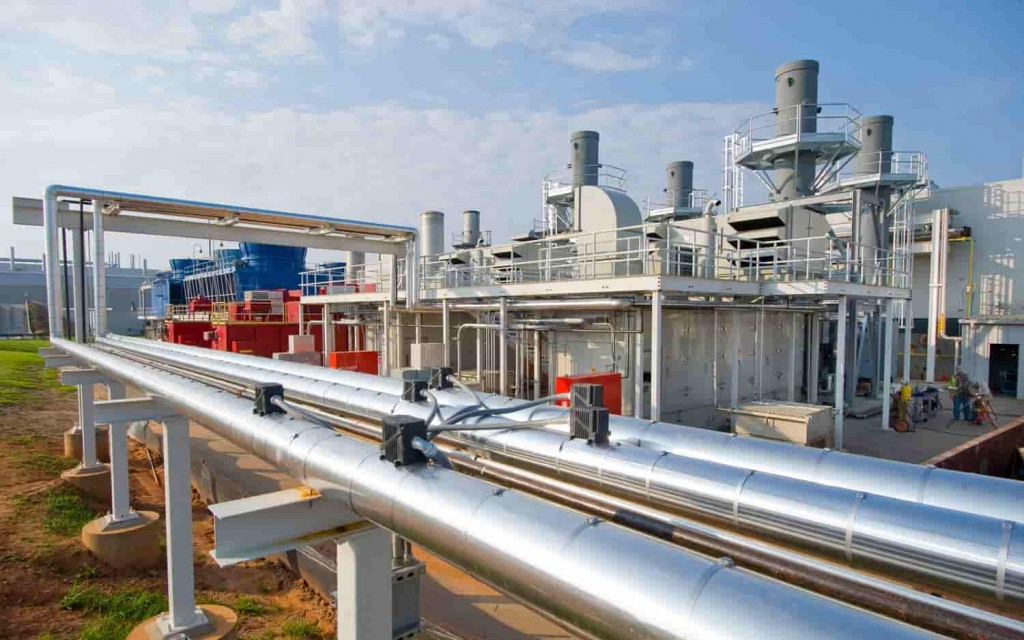
Facilities within the oil and gas industry including gas compressors stations and buildings are often prone to high levels of gas exposure and leaks, spills emissions which if left undetected can damage entire facilities and halt production which can be extremely costly financially and reputationally.
Gas and flame detectors minimise these risks by providing comprehensive monitoring of equipment and work areas. Detectors should be installed overlooking compressors and pumps and detection is provided by the use of air particle and ultrasonic gas leak detection.
Efficient placement of gas detection sensors
Two of the most common questions regarding gas detection systems are “How many detectors do I require?” and “Where should I locate them?”. These are also two of the most difficult questions to answer as they are dependent upon the individual application.
Detectors should be mounted where the presence of gas is most likely with typical application locations including gas boilers, around pressurised storage tanks, cylinders and areas where leaks are likely to occur such as valves, gauges, flanges and filling/draining connections.
There are many considerations that should be taken into account when determining the location of a gas detector including:
When detecting gases that are lighter or heavier than air, detectors should be mounted at either a high or lower location respectively.
Consider how escaping gas may behave due to natural or forced air currents and if required, detectors should be mounted in ventilation ducts.
When locating gas detectors, consider the potential damage that can be caused by natural events such as rain or flooding. For detectors that are installed outdoors, it is preferable to use a weather protection assembly.
Consider process conditions when installing gas detection equipment. For example, butane and ammonia a typically heavier than air however if they are released from a process line at an elevated position then the gas can bypass the detector if it is placed in a low position.
Ensure the structure to which the gas detector is installed is sturdy and not susceptible to vibration.
Detectors should be installed at the designated location upside down. This will ensure that no dust or water will collect on the front of the sensor and stop the gas from entering the device.
When installing open path infrared devices, it is important to ensure there is no permanent obscuration or blocking of the IR beam however short term blockages from vehicles, personnel or birds etc can be accommodated.
Portable & Fixed Gas Detection Solutions
Gas Detectors – Frequently Asked Questions
What types of gas detectors are available?
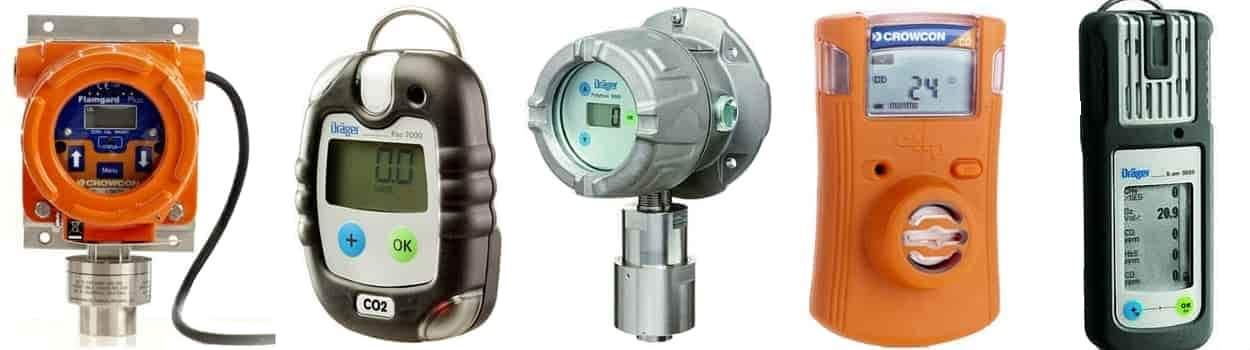
Gas detectors are typically classified as either portable or fixed. Portable gas detectors are able to monitor gases present close to the user and can be easily connected to clothing or held in the user’s hand. For instance, Drager Pac 3500 is a compact, single-gas detector suitable for monitoring hydrogen sulphide, oxygen or carbon monoxide.
Fixed gas detectors are permanently installed in a certain area e.g plant room so they can continuously monitor the concentration of gases or vapours in the air – the Drager Polytron range of detectors provide gas monitoring for industrial and explosion-proof requirements in hazardous areas.
How do gas detectors work?
Most portable and fixed gas detectors trigger lights, indicators or audible alarms to alert the user/users that the preset gas and vapour concentration has been exceeded. The user can then act quickly to rectify the problem or remove themselves from the situation potentially dangerous situation.
Which gases can be detected?
Gas detection uses a number of different technologies to help classify the gas types. Gas detectors can identify flammable, toxic and combustible gases and can also be used to monitor oxygen levels and oxygen depletion.
Both fixed and portable gas detectors can be used in a wide range of industries including the petrochemical, food and drink, manufacturing and oil and gas industry. Specific applications are dependent upon individual requirements, the level of gas present and the type of gas or gases that may present a risk.
How is product battery life affected by outside temperature?
Product batteries are tested at room temperature however if this temperature drops significantly this can reduce battery life. Excessive heat can cause damage to the whole device and battery. Each detector is supplied with standard working temperature limitations.
Can more than one gas be detected by a single detector ?
Yes, multi-gas detectors are available and can be configured to detect many gases. For instance, Drager Pac 7000 portable detector can monitor up to 14 single gases.
What is the difference between LEL and UEL?
Gas Lower Explosion Limit And Upper Explosion Limit
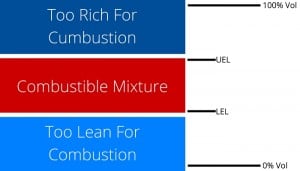
The LEL of a gas is the lower explosion limit and this refers to minimum dilution of a gas that must be present for it to be detectable by a gas detector. The UEL is the upper explosion limit.
These limits are vital to the working of a gas detector as too little of a gas and the device will not be able to detect it, too much and the gas will also not be detectable. Each gas has its own LEL and UEL and these are typically shown by percent of total volume, with the balance as normal air.
Hazardous area industries including offshore oil/gas platforms and FPSOs, onshore oil refineries, processing plants, pipelines, storage farms and LPG/LNG plants all utilise or produce a wide range of hazardous flammable liquids and gases that can be detected using correctly specified flame and gas detectors.
Detecting toxic and flammable gases requires the detectors to be classified and certified according to the specific IECEx or ATEX standard – we distribute flame and fire detectors manufactured by Spectrex to operate in the harshest environmental conditions including self-contained stand-alone devices designed for direct connection to control and alarm systems or automatic fire extinguishing systems.
Our range of Hazardous Area Fire & Gas Detection Systemproducts also includes Explosion Proof Warning Systems & Hazardous Area Lighting – comprehensive range of intrinsically safe, flameproof and explosion proof alarm sounders, sirens, bells and horns, loudspeakers and beacons.
Follow our Showcase Page on LinkedIn to receive hazardous area product innovations, industry news, whitepapers, videos, technical tips and training webinars for professionals involved in the explosive atmosphere industries.
By Chris Dodds : estimated reading time 5 minutes
T&D – Crowcon Distributors. Hazardous Area Gas Detectors (ATEX) For Zone 1 & Zone 2.
ATEX Directive – the Ex logo indicates that the gas detection equipment is suitable for use in a Flammable Atmosphere, Typically Zone 1 or Zone 2 hazardous area.
We begin by generally reviewing the 3 stages of the oil and gas process and focussing on the specific gas risks.
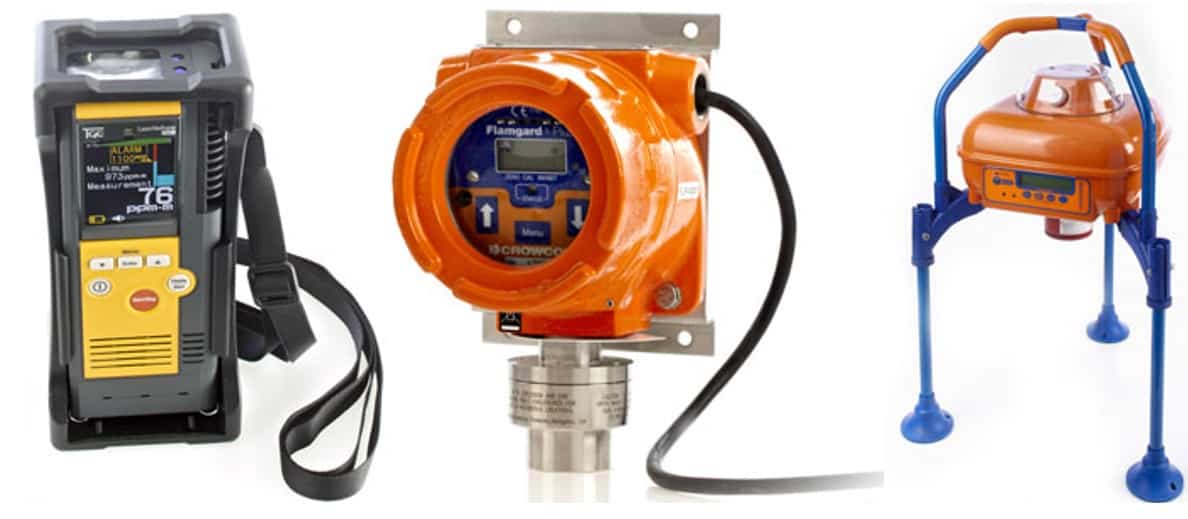
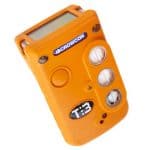
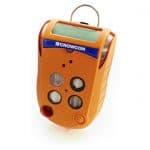
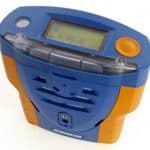
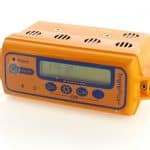
4 types of Crowcon gas detectors often deployed in Zone 1 and Zone 2 hazardous areas (ATEX) forming their hazardous area gas detector range for the detection and monitoring of flammable or toxic gases are highlighted for each of the 3 sectors.
Upstream industry – discovers and produces crude oil and natural gas and is commonly referred to as the exploration and production (E&P) sector.
Midstream industry – processes, stores, markets and transports commodities such as crude oil, natural gas, natural gas liquids (NGLs, ethane, propane and butane) and sulphur. The midstream oil and gas sector provides the vital link between often remote petroleum producing areas and the population centres where most consumers are situated. Transmission pipeline companies are a key part of the midstream petroleum industry.
Downstream industry – oil refineries, petrochemical plants, petroleum products distributors, retail outlets and natural gas distribution companies. The downstream oil and gas industry connects consumers providing thousands of products such as gasoline, diesel, jet fuel, heating oil, asphalt, lubricants, synthetic rubber, plastics, fertilizers, antifreeze, pesticides, pharmaceuticals, natural gas and propane.
Hazardous Area Gas Detectors
Zone 1 & Zone 2 Crowcon Gas Detectors – Personal, Portable & Fixed Detectors For Toxic & Flammable Gases.
1. gas detection for Upstream OIL & GAS
The upstream sector includes exploration and drilling for potential oil and gas fields, followed by the recovery and production of crude oil and natural gas if it is viable. Gas hazards in the upstream sector are compounded by the very harshest of environments providing challenges for the reliable detection of harmful gases.
Enhanced oil recovery (EOR) technologies and unconventional methods are allowing access to new geographic areas, as well as improving the level of recoverable resources within known reservoirs.
Fixed and portable gas detectors are required to protect plant and personnel from the risks of flammable gas releases (commonly methane gas detection) as well as high levels of hydrogen sulphide particularly from sour wells. Oxygen depletion, sulphur dioxide and volatile organic compounds (VOC’s) are also among the most common gas risks.
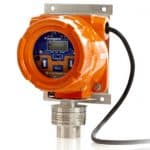
originaldate 1/1/0001 6:00:00 AMwidth 370height 305Crowcon XgardIQ Gas Detector – intelligent fixed-point Crowcon gas detector, increases safety by minimising the time operators must spend in Zone 1 and Zone 2 hazardous areas.
originaldate 1/1/0001 6:00:00 AMwidth 5421height 4469Crowcon Triple+ Plus Gas Detector – latest generation of the respected Crowcon "Triple" family of toxic, oxygen and flammable gas detectors. Over 90,000 units sold to oil and gas, chemical, utility and manufacturing companies worldwideoriginaldate 1/1/0001 6:00:00 AMwidth 370height 305
2. GAS DETECTION FOR MIDSTREAM OIL & GAS
The main components of the midstream process are transportation and storage. Raw products are held in storage areas until ready for the next process or to be transported to a refinery.
Maintaining the integrity of storage and transportation vessels as well as protecting personnel during cleaning, purging and filling activities are a constant challenge within the midstream sector.
Fixed monitoring of flammable gases situated close to pressure relief devices, filling and emptying areas deliver early warning of localised leaks. Multigas portable monitors maintain personal safety especially during confined space work as well as supporting hot work permit area testing.
Infrared technology supports purging with the ability to operate in inert atmospheres, and delivers reliable detection in areas where pellistor type detectors would fail due to poisoning or volume level exposure.
Portable laser methane detection allows leak location at distance for hard to reach areas, reducing the need for personnel to enter potentially dangerous environments or situations while performing routine or investigative leak monitoring.
CROWCON GAS DETECTORS : MIDSTREAM OIL & GAS
3. GAS DETECTION FOR DOWNSTREAM OIL & GAS
The downstream sector refers to the refining and processing of raw natural gas and crude oil, and subsequently distribution and sale of the products derived from this. Such products can include jet fuel, diesel fuel, asphalt and petroleum coke.
The desire to reduce energy consumption, increasing operational efficiency, has driven device manufacturers to innovate both detection principals and the way in which power is used. Gas detectors employ state-of-the-art technologies to deliver industry leading power consumption per device.
The volume of personnel on plant and high number of toxic and flammable gases used and manufactured increase the potential hazards. Some risks can be mitigated by ensuring rugged and reliable portable gas detectors and monitors are used, that are well suited to individual on-site requirements. Fleet management tools such as bump test stations deliver exceptional reporting to track site compliance and calibration status.
The ongoing demand to reduce facility down-time whilst ensuring safety, especially during shutdown and turnaround operations, ensures that gas detection manufacturers must deliver solutions offering ease of use, simple training, reduced maintenance times with local service and support.
Hazardous area industries including offshore oil/gas platforms and FPSOs, onshore oil refineries, processing plants, pipelines, storage farms and LPG/LNG plants all utilise or produce a wide range of hazardous flammable liquids and gases that can be detected using correctly specified flame and gas detectors.
Detecting toxic and flammable gases requires the detectors to be classified and certified according to the specific IECEx or ATEX standard – we distribute flame and fire detectors manufactured by Spectrex to operate in the harshest environmental conditions including self-contained stand-alone devices designed for direct connection to control and alarm systems or automatic fire extinguishing systems.
Our range of Hazardous Area Fire & Gas Detection Systemproducts also includes Explosion Proof Warning Systems & Hazardous Area Lighting – comprehensive range of intrinsically safe, flameproof and explosion proof alarm sounders, sirens, bells and horns, loudspeakers and beacons.
Follow our Showcase Page on LinkedIn to receive hazardous area product innovations, industry news, whitepapers, videos, technical tips and training webinars for professionals involved in the explosive atmosphere industries.
By Chris Dodds : estimated reading time 9 minutes
Gas Detection Systems
Gas detection systems have been used for centuries in various forms (from feathered to infrared) and today are an essential element of plant safety throughout industry – gas detectors save lives, protect workers and safeguard property.
However if they are not installed, commissioned or maintained properly they will not provide the protection against dangerous toxic and flammable gases.
The risks of not having adequate gas detection systems and procedures in place can be catastrophic resulting in serious harm or death to personnel and significant financial damage done to equipment.
How do you ensure that your gas detection system will respond as expected when you need it most? Do you know if it is working right now?
In many industries, the installation and correct placement of gas detection equipment is a key part of the safety plan for reducing risks to personnel – industries such as oil and gas are at the most risk from explosive gases due to the nature of the products they are transporting, storing and refining.
T&D look at the 5 main best practices that you should consider in the installation, commissioning and maintenance of your gas detection systems.
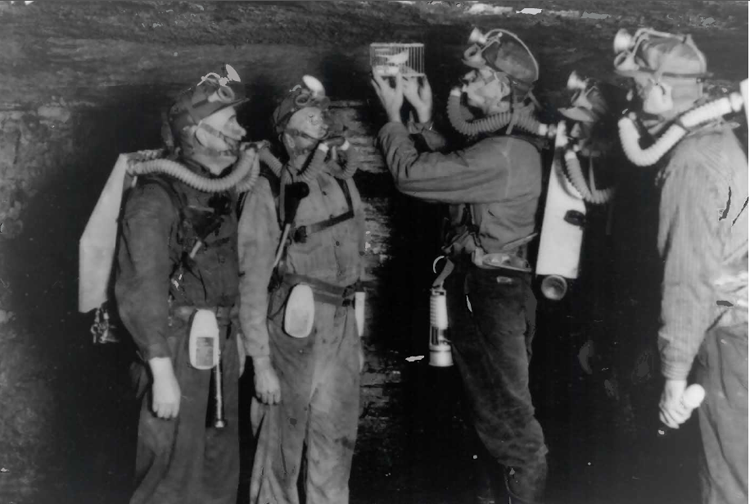
Once upon a time underground miners used canaries to test air quality in mines – today gas detection is provided by instruments manufactured by market-leaders
1. Adequate gas detection coverage
There is no legislation or specific standards governing gas detector location as there are for fire detection systems there are however general guidance documents including:
BS EN 50073:1999: Guide for selection, installation, use and maintenance of apparatus for the detection and measurement of combustible gases or oxygen – replaced by BS EN 60079-29-2:2015
IEC 60079-29-2 2015 : Explosive atmospheres – Part 29-2: Gas detectors – Selection, installation, use and maintenance of detectors for flammable gases and oxygen.
Ensuring the gas detector in use, whether it is portable or fixed, provides adequate gas detection coverage for the assets being protected. With fixed gas detectors this is often decided during the initial design and survey of the site to be monitored.
For portable gas detectors, this typically means ensuring the gas detector is located within the breathing space of the user. For retrospective installations, it is vital to ensure the gas detectors are given adequate space and will come into contact with any gas that may be present.
For the detection of heavier gases, such as hydrogen sulphide (H2S), it is essential to ensure the gas detector is placed close to ground as H2S gas is heavier than air – if the detector is located at high level then it will fail to detect gas.
Portable Gas Detection – Personal & Area Monitoring
Portable gas detectors are often subject to extremely diverse working conditions and environments – the many different applications require solutions tailored to the individual requirements and respective application conditions.
Portable gas detection can be distinguished between personal and area monitoring, confined space entry and leak detection:
Personal Monitoring – the gas detection instrument should warn the wearer in his/her immediate working area. These detectors are typically worn on work clothing and therefore typical basic requirements include a high degree of comfort, robustness and reliability. The wearer will require continuous detection for single gases or multiple gases.
Area Monitoring – area monitoring is the monitoring for gases in a specific working area with active workers present. The device is located in a central area to provide maximum gas detection coverage and monitor the whole working area. For area monitoring continuous measurement devices for multiple gases should be used.
Confined Space Entry – in many working areas where maintenance or repair work is required to, access to confined spaces is needed. With limited space, often a lack of ventilation and the presence of harmful and dangerous gases, a clearance measurement is required before entry. After a successful measurement of the confined space, the same device can then continue to be used for ongoing confined space gas detection requirements.
Gas Leak Detection – leakages can occur anywhere where gases or liquids are stored or transported. It is vital to identify these leakages immediately to reduce the risks to people and prevent as much as damage as possible. Detection instruments with corresponding pumps must have rapid response times in order to detect even slight changes in concentration.
2. Proper air flow to the gas detector
If the gas detector is being installed in a dock mount, it is vital to ensure there is adequate airflow so that it is not in a dead zone. Proper airflow to the gas detector ensures that new air that may contain harmful gas can be detected.
It also means any stagnant air that may set off the gas detector erroneously will not linger around the detector causing a false alarm. In addition, any air inlet filters should be clean to allow unrestricted air flow into the detector.
The height of the gas detector installation must be considered also as many gases are heavier than air and therefore if the gas detector is installed too high up, gases such as refrigerant or Freon gases will settle lower in the room and not be readable by the gas detector.
3. Proper device calibration
Gas detectors should be fully calibrated upon initial installation and then checked annually under a routine maintenance schedule. Some gases are sensitive to different conditions such as altitudes and therefore require calibration before use in a new environment.
Without adequate calibration, gas detector devices do not provide the protection and alert users as they should. Calibration is effectively a product reset against a known concentration of target gas, in a balance of synthetic air or nitrogen and is required for a number of reasons.
If the detector has been subjected to adverse conditions such as a change in temperature, sensor poisoning through exposure to contaminants like silicone and solvents, or exposure to high gas concentrations this can result in a change to which the detector responds to certain gases. In addition, mechanical shock or stress and sensor age can affect performance.
The calibration is a two step procedure:
The instrument is zeroed in fresh air, synthetic air or a nitrogen background so the readings equal clean air.
The second step is to expose the gas detector to calibration gas that contains known levels of the gases the detector is known to measure.
Calibration is not required as frequently as bump testing which should be carried out before each use.
4. Routine maintenance & bump testing
Routine maintenance of gas detectors can be classified as a full calibration, bump testing and a general inspection of the devices. The frequency of when each should be carried out varies.
Bump testing of gas detectors should be carried out regularly and ideally before each use. The bump test is a much shorter test than the full calibration and ensures the gas detection device is functioning as expected.
The OSHA defines the bump test as: “a qualitative function check in which a challenge gas is passed over the sensor(s) at a concentration and exposure time sufficient to activate all alarm settings.”
Put simply, this test verifies the performance of the of the gas detector and ensures the sensors are responding to their target gas as expected. The OSHA also confirms that the bump test should be carried out “before each day’s use in accordance with the manufacturer’s instructions”.
As portable gas detectors are an important part of a workers’ daily safety equipment, bump testing ensures that equipment is safe for use and performing at the standards expected. Only fully functioning gas detectors can provide detection and protection against deadly gases.
Eventually, all gas detector sensors will come to the end of their life and some can reach this point suddenly. The product longevity depends upon the application conditions and environmental influences.
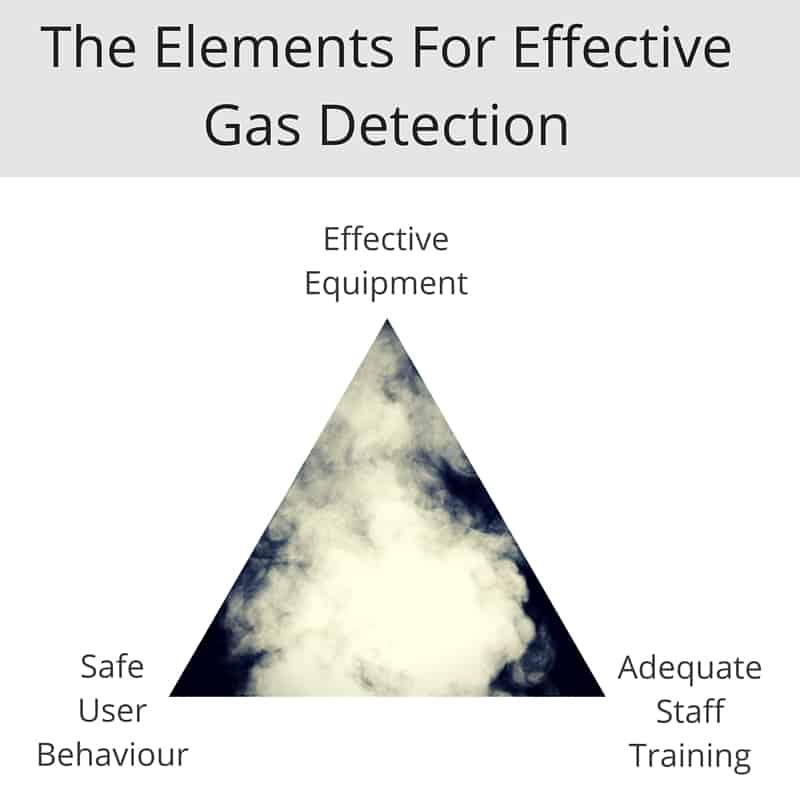
5. The Elements Of Effective Gas Detection
Reliable equipment, safe user behaviour and adequate training are the three components needed for effective gas detection. Staff training is just as important to gas detection as having the appropriate equipment. If staff are unaware of how to effectively and safely operate and calibrate their gas detection equipment then they put their own lives and colleagues well-being at risk.
Effective staff training is a key part of effective gas detector usage and maintenance which can often be overlooked. As a minimum, staff should have basic training and understanding of the nature of any likely gas hazards and how to minimise the chances of an encounter with these gases.
Gas monitors display information about the type of gas present and the levels of that gas. It is vital that personnel working around gases understand the information being shown, how to access it and what to do if a gas alert sounds.
Staff must also know the benefits of bump testing and calibration and how to carry out such servicing. Similarly, employees should be trained on how to fully service and maintain gas detectors and should always be carried out by someone who fully understands gas detection equipment and how to ensure safe operation in hazardous areas.
The effectiveness of any gas detection equipment is significantly impaired if it is not maintained properly and without adequate staff training the protection of personnel is always likely to be compromised.
The Three Elements Required For Effective Gas Detection
Hazardous Area Gas Detection
Many industrial processes and environments frequently involve flammable substances and particles including gases and vapours. For prevention purposes these areas are classified as Ex-areas or zones and are graded by the likelihood of gas being present.
ATEX European Hazardous Area Certifications
Only gas detection equipment that has been certified as suitable for use and is equipped with explosion protection in hazardous areas can be used. Explosion protection is regulated globally and the basic standards are are:
IEC (International)
CEN, CENELEC (Europe)
NEC 505 (North America)
The ATEX 95 European directive is mandatory in the European Union and has been since 2003. This directive sets out the standards that equipment and protective systems for use in potentially explosive atmospheres need to fulfil in order to meet Essential Health and Safety Requirements (EHSR).
Hazardous area industries including offshore oil/gas platforms and FPSOs, onshore oil refineries, processing plants, pipelines, storage farms and LPG/LNG plants all utilise or produce a wide range of hazardous flammable liquids and gases that can be detected using correctly specified flame and gas detectors.
Detecting toxic and flammable gases requires the detectors to be classified and certified according to the specific IECEx or ATEX standard – we distribute flame and fire detectors manufactured by Spectrex to operate in the harshest environmental conditions including self-contained stand-alone devices designed for direct connection to control and alarm systems or automatic fire extinguishing systems.
Our range of Hazardous Area Fire & Gas Detection Systemproducts also includes Explosion Proof Warning Systems & Hazardous Area Lighting – comprehensive range of intrinsically safe, flameproof and explosion proof alarm sounders, sirens, bells and horns, loudspeakers and beacons.
Follow our Showcase Page on LinkedIn to receive hazardous area product innovations, industry news, whitepapers, videos, technical tips and training webinars for professionals involved in the explosive atmosphere industries.
Watch, listen and learn how Crowcon, CH4 gas detection specialists, protect people and plant from the gas risks posed by flammable and toxic gas.
Methane is formed by digestion of organic matter
Under ATEX, CH4 becomes flammable at 4.4% of air by volume
In very high concentration (i.e. low oxygen), methane cannot burn
CH4 methane detectionis imperative as methanemay cause narcotic effects at low concentrations
Methane is lighter than air and it can collect in the high points of enclosed spaces
Pellistors are very sensitive to low methane levels
Above LEL levels, pellistors may “burn out” and do not fail-safe
H2S inhibits pellistors, so infrared sensors may be better
Gas detectors are needed to ensure worker safety against methane gas
T&D are Crowcon distributors – market leading fixed and portable gas detectors and monitors for flammable and toxic gases, including ATEX Certified equipment
CROWCON GAS DETECTORS
Methane (CH4) Gas Detection
CH4 Methane Gas Detection : Crowcon are market leading manufacturers of Portable and Fixed Gas Detection Equipment
Remote methane gas detection
Unmanned platforms or storage areas are commonplace in the offshore oil and gas industry – the offshore platforms are continuously monitored by fixed gas detection equipment.
Laser-based gas detection equipment can identify fugitive leaks at a safe distance so workers know it is safe before they board an unmanned FPSO. Crowcon are industry specialists at methane gas detection for both onshore and offshore hazardous area working environments.
Crowcon Laser Methane Mini Green
where is methane gas used?
Methane gas is commonly used in chemical industries and is used to refine petrochemicals. It is also used as a fuel and is burned in gas turbines or steam generators to produce electricity. Methane is widely used domestically for heating and cooking in homes (but you knew that didn’t you).
Methane is the main component of Liquefied Natural Gas (LNG) and Compressed Natural Gas (CNG) and is generated by the decomposition of biodegradable solid waste as well as animal and human waste. It is therefore commonly present in landfill sites and sewage treatment works.
“Trash To Treasure” : BMW convert landfill methane to hydrogen as part of their “gas-to-energy” policy. Image BMW.
WHY IS METHANE GAS DANGEROUS?
Methane is not generally considered a toxic gas, however it is extremely flammable even in low concentrations when mixed with other chemicals – methane is also an asphyxiant as it will displace oxygen and this is particularly dangerous in confined spaces.
In order to create a fire/explosion, you need three things, 1) oxygen 2) ignition source and 3) a fuel. Take away the
Fire Triangle
oxygen and you remove the risk of explosion, in contrast high levels of oxygen will cause fuels to burn faster and more vigorously. For an explosive atmosphere to exist, a certain ratio of oxygen and fuel must exist. The ratio differs depending on the fuel. In the gas detection industry, such ratios are known as lower explosion limits (LEL) and upper explosion limits. (UEL)
LEL is defined as “the minimum concentration of a particular combustible gas necessary to support its combustion in air.” Concentrations below this level will not burn. The UEL is defined as “Highest concentration (percentage) of a gas or a vapor in air capable of producing a flash of fire in presence of an ignition source. The range between LEL and UEL is referred to as the flammable range and as the name suggests is when fire/explosions will occur.
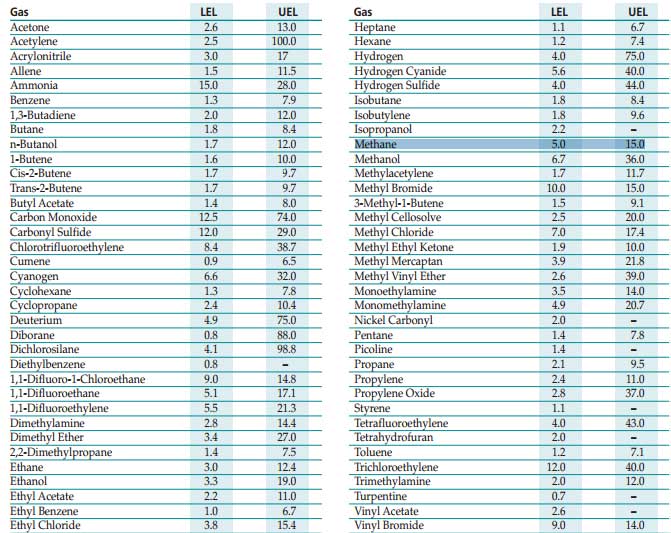
Methane Lower & Upper Explosive Limits
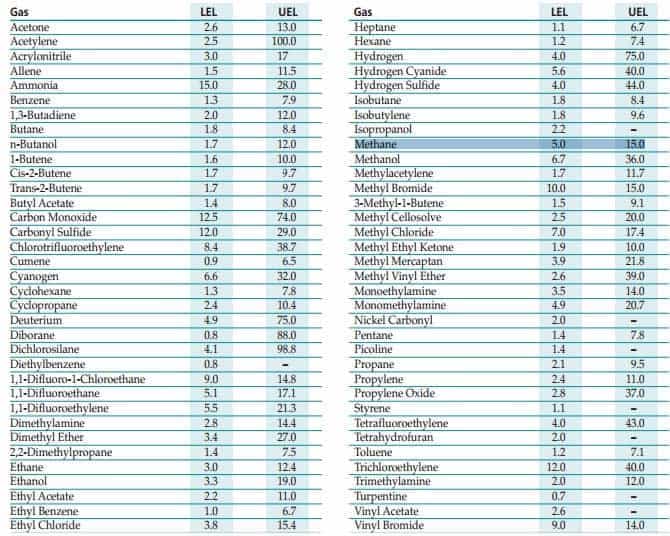
As can be seen from the table, the LEL for methane is 5% and UEL is 15%. Concentrations of 9% are thought to be the most volatile. It may sound strange but concentrations above 15% will not be explosive as the air is too saturated with Methane. However this is when asphyxiation can be just as hazardous.
Asphyxiation becomes a risk when there are high concentrations of methane. This is because the methane displaces the oxygen. We need approximately 18% oxygen to breath, levels below 16% can be dangerous and levels below 10% can cause immediate loss of consciousness and inevitably death. Working in confined spaces can be extremely dangerous if exposure to methane (or any other gas for that matter) is considered a risk.
Detecting Methane Gas With Crowcon
The following table provides an overview of the Crowcon Gas Detectors available for detecting methane gas – for expert technical support and product selection guidance please call T&D Sales Engineers.
Crowcon Xgard INFO
Crowcon Flamgard Plus INFO
Crowcon IRMax INFO
Crowcon IREX INFO
Crowcon Gasman INFO
Crowcon Tetra 3 INFO
Crowcon GasPro INFO
Crowcon Tetra INFO
Crowcon Triple Plus+ INFO
Crowcon Detective+ INFO
Crowcon Laser Methane Mini INFO
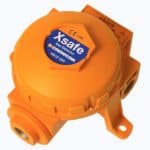
Crowcon Xsafe INFO
Crowcon Open Path Gas Detectors INFO
Crowcon Gas-Pro PID INFO
Crowcon Hazardous Area Gas Detectors (ATEX Certified) Zone 1 & Zone 2. Contact T&D for with your enquiry.
Detecting Hydrogen Sulphide, Methane, Oxygen & Carbon Monoxide Gas Using Crowcon Detectors
Flame, Heat, Gas Detectors & Detection Systems
Hazardous area industries including offshore oil/gas platforms and FPSOs, onshore oil refineries, processing plants, pipelines, storage farms and LPG/LNG plants all utilise or produce a wide range of hazardous flammable liquids and gases that can be detected using correctly specified flame and gas detectors.
Detecting toxic and flammable gases requires the detectors to be classified and certified according to the specific IECEx or ATEX standard – we distribute flame and fire detectors manufactured by Spectrex to operate in the harshest environmental conditions including self-contained stand-alone devices designed for direct connection to control and alarm systems or automatic fire extinguishing systems.
Our range of Hazardous Area Fire & Gas Detection Systemproducts also includes Explosion Proof Warning Systems & Hazardous Area Lighting – comprehensive range of intrinsically safe, flameproof and explosion proof alarm sounders, sirens, bells and horns, loudspeakers and beacons.
Follow our Showcase Page on LinkedIn to receive hazardous area product innovations, industry news, whitepapers, videos, technical tips and training webinars for professionals involved in the explosive atmosphere industries.
The following article has been written for anyone working in industries where exposure to methane gas is a risk. The article begins by identifying common industries where methane gas is present or used and goes on to discuss the hazards it poses to plant and personnel.
The largest ever marine oil spill occurred on the night of April 20th, 2010 when a methane gas release triggered a deadly explosion on the BP Macondo site – for 87 days oil spewed over 68,000 square miles of ocean and 16,000 miles of coastline off the Gulf of Mexico.
Disaster By Numbers
11 – platform workers killed, bodies never found
36 – hours the oil platform burned before sinking
4, 900,000 – total barrels of crude oil released before the leak was capped on 15 July
53,000 – leaked barrels per day, BP initial prediction was 1,000 barrels
3,850 – square mile spread of leaked oil along 125 mile coastline by 4 June
4,768 – dead animals collected as of 13 August
Disaster In Dollars
$2.5 billion – initial estimated cost of the oil spill to the US fishing industry
$23 billion – estimated cost to local tourist industry (US Travel Association)
$105 billion – total share-price value lost by BP between April and June
$69 billion – bill sent to BP by the Obama administration for the clean up effort
In the correct concentration, methane gas can be very dangerous and can cause huge explosions if ignited. It has been the cause of many disasters in the mining, water, oil and gas industries.
In 1984, 16 people were killed in the Abbeystead disaster (8 at the scene and 8 later of injuries) – here methane gas had seeped into the valve house of a pumping station from underground coal beds and became ignited.
T&D working in partnership with Crowcon aim to provide useful and informative articles about the detection of a range of toxic, flammable and explosives gases – as well as methane gas detection we discuss the risks posed by hydrogen sulphide, carbon monoxide, ammonia and oxygen depletion.
Electrical, Heating & Process Instrumentation Specialists
Thorne & Derrick are stockists and suppliers of an extensive range of equipment for use in industrial, process and hazardous area industries where potentially explosive atmospheres necessitate the use of products certified for safe use in the presence of flammable gases and vapours according to hazardous area classifications such as ATEX or IUECEx.
What Is Methane Gas?
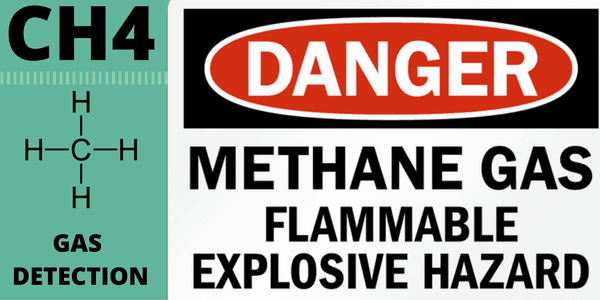
Methane Gas CH4
Methane is a colourless, tasteless, odourless gas and has the chemical formula CH4 – methane is the main component of natural gas. For those who didn’t listen to their chemistry teacher at school, it is made up of one atom of carbon and four atoms of hydrogen.
Methane is produced naturally by the process of methanogenesis and is found under the ground and in seabed locations – it is commonly used in chemical industries and also for electricity generation.
Methane is non-toxic but highly explosive (more on that later.)
Production of methane gas occurs naturally in many industries including waste disposal, mining, oil and gas, petrochemical and the energy sector.
Detection, Analysis & Monitoring Of Landfill Methane Gas
Despite the established trend towards household waste recycling, DEFRA (Department of The Environment, Food & Rural Affairs) reported that 8.7 million tonnes of Biodegradable Municipal Waste (BMW) were sent to landfill in 2014.
Methane is both a serious potential explosion risk and as a landfill gas should be effectively monitored and analysed using either a portable or permanent gas detection system in accordance with UK government emission targets.
3 Gas Monitoring Options
Borehole Monitoring – methane gas concentration levels can be monitored in the borehole headspace, the relative concentration of carbon dioxide, oxygen and methane indicates the extent of the decomposition process. On site methane gas emissions can be detected using handheld portable detectors or fixed detection systems which provide gas readings for logging and analysis.
Flux-Box Monitoring – here methane gas is detected through breaches in the cap of a closed landfill therefore quantifying the total emission extent from the surveyed area. Landfill gas methane emissions are monitored using either static closed chamber or dynamic closed chamber flux-boxes – cap defects and specific point gas emissions monitored by flux-boxes provide reliable methane gas monitoring and analysis for low landfill gas fluxes.
Perimeter Monitoring – the landfill site is monitored for methane gas around the perimeter of the landfill area – the permitted limit for ambient methane gas leaks and escapes from a landfill site is 10ppm.
Where is Methane Gas Used?
Methane gas is commonly used in chemical industries and is used to refine petrochemicals. It is also used as a fuel and is burned in gas turbines or steam generators to produce electricity.
Methane is widely used domestically for heating and cooking in homes (but you knew that didn’t you).
Methane is the main component of Liquefied Natural Gas (LNG) and Compressed Natural Gas (CNG). Methane is generated by the decomposition of biodegradable solid waste as well as animal and human waste. It is therefore commonly present in landfill sites and sewage treatment works.
As methane is an incredibly potent, hazardous greenhouse gas it is important to not only manage storage and production but also re-use and recycle the gas. Methane emissions represent a profitable solution to global climate change.
The most common anthropogenic sources of methane gas are agriculture, mining, landfills and natural gas oil activities.
Why Is Methane Gas Dangerous?
Methane is not generally considered a toxic gas, however it is extremely flammable even in low concentrations when mixed with other chemicals – it is also an asphyxiant as it will displace oxygen. This is particularly dangerous in confined spaces working.
In order to create a fire/explosion, you need three things: 1. oxygen 2. an ignition source and 3. a fuel.
Take away the oxygen and you remove the risk of explosion – in contrast high levels of oxygen will cause fuels to burn faster and more vigorously. For an explosive atmosphere to exist, a certain ratio of oxygen and fuel must exist. The ratio differs depending on the fuel.
In the gas detection industry, such ratios are known as lower explosion limits (LEL) and upper explosion limits. (UEL)
Methane Gas: LEL & UEL
LEL is defined as “the minimum concentration of a particular combustible gas necessary to support its combustion in air.” Concentrations below this level will not burn. The UEL is defined as “the highest concentration (percentage) of a gas or a vapor in air capable of producing a flash of fire in presence of an ignition source.”
The range between LEL and UEL is referred to as the flammable range and as the name suggests is when fire/explosions will occur.
As can be seen from the table, the LEL for methane is 5% and UEL is 15%. Concentrations of 9% are thought to be the most volatile. It may sound strange but concentrations above 15% will not be explosive as the air is too saturated with methane. However this is when asphyxiation can be just as hazardous.
Asphyxiation becomes a risk when there are high concentrations of methane. This is because the methane displaces the oxygen. We need approximately 18% oxygen to breath, levels below 16% can be dangerous and levels below 10% can cause immediate loss of consciousness and inevitably death. Working in confined spaces can be extremely dangerous if exposure to methane (or any other gas for that matter) is considered a risk.
Coal Mining & Methane
Coalbed methane occurs naturally in coal seams. Methane recovered from underground coal mines is generally grouped under the term Coal Mine Methane (CMM). 2 key factors influence CMM recovery : mine safety and the opportunity to mitigate significant volumes of methane emissions arising from coal mining activities.
Methane emissions in mines arise at 2 two key stages :
(1) Methane is released as a direct result of the physical process of coal extraction. In many modern underground mines, the coal is extracted through longwall mining. Longwall mining, as with other sub-surface techniques, releases methane previously trapped within the coal seam into the air supply of the mine as layers of the coal face are removed, thus creating a potential safety hazard.
(2) Methane emissions arise from the collapse of the surrounding rock strata after a section of the coal seam has been mined and the artificial roof and wall supports are removed as mining progresses to another section. The debris resulting from the collapse is known as gob and also releases methane or ‘gob gas’ into the mine.
32 miners unaccounted for, 1 dead after coal mine explosion in eastern #Ukraine. Methane gas is suspected cause: http://t.co/g3lTgxT6Dl
Advice & Considerations For effective Methane Gas Detection
There are no specific guidelines for detection of methane but the UK Health & Safety Executive (HSE) does provide information for the selection and use of flammable gas detectors. The HSE provides advice and information on the selection, installation, use and maintenance of industrial flammable gas detectors – it is aimed at process engineers and managers and others concerned with the use of flammable gas detectors.
Fixed and portable methane gas detectors should be used to help minimise risk and provide early warnings should gas levels become dangerous. They can be a life saving pieces of equipment and it is important that the correct gas detection measures are implemented to ensure your plant is protected but more importantly that people return home from work.
Thorne & Derrick are distributors for Crowcon Detection Instruments Ltd – specialists in the manufacture of flammable and toxic gas detection equipment.
Part of this measure should also include adequate training for the users. As some people pointed out following a recent blog article about portable gas detectors, “the gas detector will not prevent accidents if the user doesn’t know how to use it”.
This may sound obvious but there are many stories about people incorrectly using gas detectors, ignoring warning alarms, failing to bump test and calibrate sensors.
Gas detectors usually measure in either % volume or PPM (parts per million).
Flammable gases are usually measured by % volume and toxic gases by PPM. As mentioned earlier the LEL for Methane is 5%. Typically warning levels on gas detectors can be set between 0-100% of the LEL.
The HSE recommend that first alarm level should be set no higher than 10% of the LEL and the second alarm level should be no more than 25% of the LEL.
There are two main types of detector technology used for measuring flammable gases : Infrared and Pellistor.
Infrared Gas Detectors
Gases such as methane which contain more than one type of atom can be detected by IR gas sensors. This is because the gas will absorb infrared radiation. An infrared gas detector such as the Crowcon IRmax are made up of an infrared source (transmitter) and an infrared detector (receiver).
If methane passes between the transmitter and receiver, it absorbs the radiation and the intensity of the signal at the receiver is weakened. Specific gases are detected by measuring the amount of absorbed infrared radiation at specific wavelengths, the difference being related to the concentration of gas present.
There are many benefits to using infrared gas detection technology and advancements in technology mean that they are no longer as complicated, cumbersome or expensive and gases detected with infrared equipment are typically corrosive and reactive.
The main advantage of IR gas detectors is that the equipment does not directly interfere with gas that is being detected. The major functional components of the analyser are protected with optical lights and therefore gas molecules only ever interact with a light beam.
Pellistor Detectors
Pellistor sensors are commonly used in both fixed and portable gas detectors such as the Crowcon Flamegard Plus, Crowcon Clip, Gasman and Tetra 3.
Pellistors can be used to detect combustible gases such as Methane.
The principal of operation is based around changes in resistance caused by target gases on the small pellets of catalyst loaded ceramic. As the gas comes into contact with the sensor, it is burned which generates heat and alters the resistance of the detecting element of the sensor which is proportional to the target gas.
Pellistor sensors are accurate and remain unaffected by changes to ambient temperatures, humidity or pressure. The main drawback to pellistor technology is the possibility of contamination or poisoning – pellistor gas detectors are susceptible to sulphides, silicones, hydrocarbons and lead.
Therefore a routine maintenance programme including regular calibration should be considered when using this type of technology. This can and will add to the lifetime cost of the product. A further disadvantage is that they will fail to work properly if oxygen isn’t present and therefore they are not always suitable for gas detection in confined spaces. In contrast Infrared sensors do not require the presence of oxygen and should therefore be used when oxygen depletion is a possibility.
IR sensors also have a failsafe function whereby if the detector becomes obscured or fails, no radiation will register and an alarm will be raised.
The following Crowcon video is an illustration of how the pellistor, based on a Wheatstone bridge circuit, includes two “beads”, both of which encase platinum coils. One of the beads (the ‘active’ bead) is treated with a catalyst, which lowers the temperature at which the gas around it ignites.
This bead becomes hot from the combustion, resulting in a temperature difference between this active and the other ‘reference’ bead. This causes a difference in resistance, which is measured; the amount of gas present is directly proportional to it, so gas concentration as a percentage of its lower explosive limit (%LEL) can be accurately determined.
Pellistor sensor operation from Crowcon Detection Instruments on Vimeo.
Pellistor sensors are accurate are remain unaffected by changes to ambient temperatures, humidity or pressure. The main drawback to pellistor technology is the possibility of contamination or poisoning.
They are susceptible to sulphides, silicones, hydrocarbons and lead. Therefore a routine maintenance programme including regular calibration should be considered when using this type of technology.
This can and will add to the lifetime cost of the gas detection process.
A further disadvantage is that they will fail to work properly if oxygen isn’t present and therefore they are not always suitable for gas detection in confined spaces. In contrast Infrared sensors do not require the presence of oxygen and should therefore be used when oxygen depletion is a possibility.
IR sensors also have a failsafe function whereby if the detector becomes obscured or fails, no radiation will register and an alarm will be raised.
Further Reading & Guidelines
BS EN 50073: 1999 Guide for the selection, installation, use and maintenance of apparatus for the detection and measurement of combustible gases or oxygen.
BS EN 50241: 1999 Specification for open path apparatus for the detection of combustible or toxic gases and vapours.
The EXHEAT Bulldog – hazardous area electrical heating for Zone 1 & Zone 2 potentially explosive atmospheres
The Crowcon Gas Academy
Interested to learn more about gas detection? Are you involved with the specification or design of gas detection systems for your plant? Crowcon provide training courses tailored to suit your needs. Crowcon manufacture single gas and multigas detectors for personal monitoring and portable safety applications providing protection against a wide range of industrial gas hazards.
The Crowcon Gas Academy – training courses cover the full Crowcon fixed systems and portable gas detection product ranges
Know-How & Expertise
T&D take customer support and service seriously and are committed to excelling their product knowledge to ensure the safe and optimum sale of gas detectors for all applications – all T&D Sales Engineers are certificated by Crowcon for Selling Crowcon Products.
T&D: Trained By Crowcon, The Gas Detection Specialists
Hazardous area industries including offshore oil/gas platforms and FPSOs, onshore oil refineries, processing plants, pipelines, storage farms and LPG/LNG plants all utilise or produce a wide range of hazardous flammable liquids and gases that can be detected using correctly specified flame and gas detectors.
Detecting toxic and flammable gases requires the detectors to be classified and certified according to the specific IECEx or ATEX standard – we distribute flame and fire detectors manufactured by Spectrex to operate in the harshest environmental conditions including self-contained stand-alone devices designed for direct connection to control and alarm systems or automatic fire extinguishing systems.
Our range of Hazardous Area Fire & Gas Detection Systemproducts also includes Explosion Proof Warning Systems & Hazardous Area Lighting – comprehensive range of intrinsically safe, flameproof and explosion proof alarm sounders, sirens, bells and horns, loudspeakers and beacons.
Follow our Showcase Page on LinkedIn to receive hazardous area product innovations, industry news, whitepapers, videos, technical tips and training webinars for professionals involved in the explosive atmosphere industries.
Press Release Date: 02.04.2020 uploaded by Chris Dodds (T&D Sales + Marketing Manager) World’s First Fully Certified ATEX Doors Thorne & Derrick International, the Experts in Equipment for Explosive Atmospheres, today announce the signing of a Commercial Distribution Agreement...
Press Release Date: 04.07.2019 uploaded by Chris Dodds (T&D Sales + Marketing Manager) Category: Stockist Distributor Agreement Announcement Thorne & Derrick International announce that they have signed a Preferred Distributor Agreement with Raytec, the world leading manufacturer of LED...