Lighting | Explosive Dust Atmospheres | Zone 20 21 22 | UK & Export Sales
Lighting for Explosive Dust Atmospheres
Hazardous Areas
Zone 21 & Zone 22
Uploaded by Chris Dodds – Thorne & Derrick Sales / Marketing Manager
Do you work with industrial processes and manufacturing applications where there is a risk of explosion due to the presence of dusts?
If so, you should be aware of the need to use specialist hazardous area electrical and lighting equipment which is appropriate for use in these potentially explosive dust atmospheres and environments, commonly called “hazardous areas”.
Any so-called hazardous area lighting should be certified to Zone 21 or Zone 22 standards, depending on the level of dust explosion risk and specified correctly to the recognised international classification such as the European standard referred to as the ATEX Directive.
Protecting our people and your plant against explosive dust hazards is a key factor for lighting applications where dust explosion is a threat such as grain storage, flour mills and food production.
When specifying hazardous area lighting in applications for explosive dust atmospheres, such as Zone 21 floodlights, selecting the correct ATEX light fitting or luminaire can help to save overall costs and ensure plant operational safety.
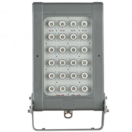
The SPARTAN Bay Light manufactured by Raytec is designed for hazardous area environments which require high performance, high reliability, White-Light illumination. This Zone 21 certified light has been designed to light up large, open areas such as grain, flour and sugar storage warehouses, as well as processing facilities or any other location where a combustible dust hazard is present in a potentially explosive atmosphere.
Manufacturing plants are always trying to find ways to reduce operating costs and save money in order to increase profits. Unfortunately, housekeeping is commonly one area where budget cuts are made, leading to a lack of worker and plant safety.
Incorrectly specified or sub-standard lighting can be fatal – dust explosions kill.
Selecting the most suitable lighting for these explosive atmosphere applications can also ultimately save you money.
Before we look at how, let’s grapple and get to grips with dust.
Firstly, what is and what causes a Dust Explosion?
Dust Explosions
Costs & Causes
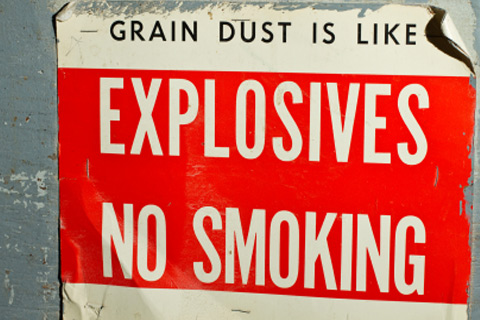
Grain dust explosions are responsible for injuring and killing workers while destroying infrastructure. Here a series of fiery explosions rip through a grain elevator: the surveillance video shows the explosive blast shredding building materials, blowing out windows and propelling debris at the Bunge grain elevator in Evendale, USA.
Bunge is an agribusiness business that manufactures and exports food ingredients, animal feed and biofuels products – this was caused by a single spark.
So What’s The Economic Cost of Dust Explosions?
Thankfully, on this occasion nobody was injured. But whatever your currency, explosions can cost millions.
The financial costs, both direct and consequential, can be painfully calculated by insurers and litigation.
According to US statistics in just the period between 1996 and 2005 there were over 100 dust explosions that caused 16 deaths and over 120 injuries. The damage to the facilities involved was estimated at $162.8 million – this does not include the costs brought about by medical bills, legal fees from lawsuits, lost production time and of rebuilding costs
The reputational loss caused by dust explosions is immeasurable.
In 1998, an explosion at the DeBruce Grain Elevator killed seven people, injured ten others, and heavily damaged the structure.
Although the immediate cause of the explosion was the ignition of grain dust in one of the conveyor belt tunnels found beneath the silo complex, a subsequent Occupational Safety and Health Administration (OSHA) investigation determined that deliberate decisions made by DeBruce Grain Inc. (the owner of the complex), to forego repair and preventive maintenance of both grain conveyor and dust control systems, were the underlying causes of the explosion. While OSHA initially proposed a $1.7 million fine for 32 counts of federal rule violations, ultimately DeBruce Grain, Inc., paid only a $685,000 fine.
The most significant chapters from the report on the explosion of the DeBruce Grain Elevator that occurred June 8, 1998 Wichita, KS are featured here. This report was submitted by the Grain Elevator Explosion Investigation Team (GEEIT) and explains the investigation and cause of the explosion that killed 7 and injured 10 employees.
Causes of Dust Explosions
If fuel, oxygen and an ignition source are present in a confined space, a series of destructive explosions can occur that may cause structural damage and risk to life.
Most grain dust explosions occur at grain transfer points.
Dust concentrations in bucket elevators can exceed the Minimum Explosible Concentration (MEC). MEC is also often called the Lower Explosive Limit (LEL) i.e. the minimum explosible concentration that provides insight into the minimum amount of combustible dust that will explode when dispersed in air. This data can be used to define explosion protection methods against the risk of combustible dust explosions when specifying hazardous area lighting systems and installations.
The MEC is the measure of the dispersion factor in the Combustible Dust Pentagon.
The Combustible Dust Pentagon
A dust explosion is different to a fire.
To create a fire, three factors are required: Oxygen, Fuel and an ignition source.
However, for a dust explosion to occur, two additional factors are needed.
The dust must be dispersed at the correct concentration in the air, and it must also be confined in some sort of enclosure, e.g., a silo, dust control filter, bin, conveyor, bucket elevator or room.
All five elements (oxygen, fuel, heat, dispersion and confinement) must be present for a combustible dust explosion to occur. If one is missing, it would be difficult to have a dust explosion occur.
This is known as the “Combustible Dust Pentagon.”
Hazardous Area Classification
Where Explosive Dusts Are Handled
A Viewpoint from the UK HSE & European ATEX Standard
Hazardous area classification is a technique intended to help responsible persons decide where specific controls over all sources of ignition in potentially explosive atmospheres are needed.
It was originally developed to help with the selection of fixed electrical equipment, but its use has now been extended to lighting systems and any equipment that has hot surfaces or generates other possible ignition sources.
Parts of buildings or process plant may be described as Zone 21 or 22 hazardous areas, depending on the amount of time that an explosive dust cloud may be present. Equipment installed in a zoned area should then be built and certified to an appropriate standard, such as the ATEX Directive.
The hazardous area zone definitions are contained in ATEX regulations and detailed below.
Zones Definitions
Zone 20
A place in which an explosive atmosphere in the form of a cloud of combustible dust in air is present continuously, or for long periods or frequently.
Zone 21
A place in which an explosive atmosphere in the form of a cloud of combustible dust in air is likely to occur in normal operation occasionally.
Zone 22
A place in which an explosive atmospherein the form of a cloud of combustible dust in air is not likely to occur in normal operation, but if it does occur, will persist for a short period only.
These hazardous area industry regulations established a legal requirement to carry out potential hazardous area classification, where explosive dusts are handled in quantity.
In most plants and facilities handling dusts the inside of the dust equipment will be Zone 20 or Zone 21. Rooms within the building, if they need to be zoned, should only be the less onerous Zone 22hazardous area classification.
A few very small areas where explosive dust escapes in quantity in normal operation might need to be Zone 21.
In the open air, dust clouds are unlikely to persist for more than a brief period, and any zoning is likely to be very limited in extent. Where dust layers are often present, explosible dust clouds can be formed by any sudden movement of air, except with products like sugar, which quickly absorb moisture from the air. Experience shows however, that while fires may easily start in dust layers on hot surfaces, very few explosions are caused by hot surfaces outside the dust containment system.
Should you require any technical support, specification advice or require a hazardous area lighting design to be prepared please do not hesitate to contact Thorne & Derrick, The Explosive Atmosphere Experts.
Thorne & Derrick Stockists for Raytec | Lighting For Explosive Dust Atmospheres
Determining Combustibility According to NFPA
In The USA, The National Fire Protection Association is a trade association, albeit with some international members, that creates and maintains private, copyrighted standards and codes for usage and adoption by local governments.
The National Fire Protection Association (NFPA) defines combustible dust as “a combustible particulate solid that presents a fire or deflagration hazard when suspended in air, or some other oxidizing medium, over a range of concentrations, regardless of particle size or shape.” Using this definition, almost any agricultural product dust has some potential to be classified as a combustible dust.
NFPA further defines combustible dust as:
Finely ground/finely divided organic or metal material – typically 420 micrometers (μm) or smaller. In fact, the finer the dust, the more explosive it can be. Dust partciles that are at 420 μm or smaller in diameter can pass through a No. 40 standard sieve.
The dust is able to cause an explosion when suspended in air and exposed to a sufficient source of ignition.
SPARTAN by Raytec | Flood | Linear | Bulkhead | Luminaires | Hazardous Area Lighting
Explosive Atmospheres
Gas & Dust – What are the Differences?
The different properties of gas and dust affects how testing is carried out as part of the hazardous area lighting certification process. This is why gases and dusts are both classed under separate ‘Zones’.
Gas certification tends to be more complex.
Gas can permeate a lighting’s housing, and the internal components exposed to the gas (regardless of IP rating), so the luminaire must be tested accordingly to ensure it does not present an explosion risk.
In contrast, protecting and certifying against explosive dust is more straightforward.
All hazardous area lighting must carry a minimum IP rating, which will depend on the level and method of protection. An IP rating has two digits (e.g. IP67), the first of which (the 6 in this example) denotes the luminaires protection against dust ingress. A rating of 6 is the highest level of protection which means a luminaire with this rating has complete protection against dust ingress.
As a result, testing for dust certification on lighting which carry an IP rating of IP6x is focused on the luminaires exterior, usually to ensure the surface temperature of the enclosure does not reach temperatures which could cause a buildup of dust to ignite.
Zone 21 Lighting for Hazardous Areas
What Does This Mean for My Zone 21 Installation?
When thinking about lighting, the majority of Ex lighting certified for use in hazardous area Zone 1 (gas) areas, will also be certified for use in Zone 21 (dust) areas. While some applications may have a risk of gas and dust, in others such as flour mills or grain stores, no explosive gases will be present.
In applications such as these, there’s therefore no need to install luminaires with Zone 1 protection.
Killer question, so how does this relate to being able to save money?
Think of it like this.You’re purchasing a new car; one of the options the manufacturer offers you is to upgrade from 2-Wheel to 4-Wheel Drive. You never intend to take the car off-road and you live in a warm climate where there is no risk of snow or severe weather. Upgrading to 4WD will cost you £3,000. The 4WD option may be considered as a higher spec, but with no practical use for it, the 2WD model is the most logical and economical choice.
The same concept applies to hazardous area lighting.
If there is an option of a more cost-effective Zone 21 certified luminaire, why would you pay more for a luminaire which has Zone 1 + Zone 21 certification if your application only requires Zone 21 protection?
Thorne & Derrick working with Raytec recognise that some projects only require dust protection, not both gas and dust explosion protection.
A number of our hazardous area lighting products have been certified with dust applications specifically in mind and provide cost savings compared to Zone 1/ Zone 21 light fittings to reduce the cost of your installation.
Reducing Ownership Costs of Lighting – Remote PSU Mounting
3 Benefits of Mounting a PSU Remotely
Ease of access
Reduced costs
Lifetime
Reducing the initial cost for dust application lighting in hazardous area locations is one consideration but selecting the correct lighting can also help to reduce costs in other areas over a longer period.
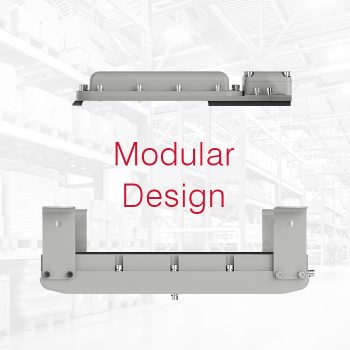
A hazardous area luminaire with a modular design, which allows the PSU (power supply unit) module to be mounted remotely, can be particularly beneficial for explosive dust applications.
As an example, maintenance in grain storage warehouses (where the grain can sometimes pile up almost to the ceiling) can be particularly challenging, to the extent where the grain may need to be removed first before the luminaires can be accessed.
This is likely to be a costly and time-consuming exercise.
A modular luminaire, such as Raytec’s SPARTAN High Power Floodlight or Bay range, is designed with maintenance in mind. The luminaire’s drivers are housed in a separate, removable module, which can be mounted at ground level and accessed easily.
In summary, if you’re working on a hazardous area lighting project where you need to protect solely against explosive dust, then selecting a luminaire which has been specifically certified and designed for Zone 21 dust applications could help to significantly reduce your initial outlay and long-term ownership costs.
Talk to us about SPARTAN Range of Lighting Manufactured by Raytec
SPARTAN is a full range of Ex LED luminaires and lighting approved for all ATEX and IEC Ex Zone 1 and Zone 2 hazardous area environments, including UL /CSA C1D2 installations.
The hazardous area lighting products distributed by Thorne & Derrick are designed for the most extreme environments – SPARTAN offers the widest range of Floodlight, Linear, Bulkhead, Bay and Crane luminaires, with emergency and industrial lighting versions also available for UK and international projects
The SPARTAN range of lighting manufactured by Raytec is designed for lighting hazardous areas which require high performance, high reliability, White-Light illumination using LED technology – ATEX Certified Zone 1 & Zone 2.
➡ Contact Thorne & Derrick Sales Team for the complete range of ATEX Lighting manufactured by Raytec.
Further Reading References
Dust Explosion Prevention & Protection: A practical guide: Institution of Chemical Engineers 2002 ISBN 0 85295 410 7
Dangerous Substances and Explosive Atmospheres Regulations 2002 SI 2002/2776 The Stationery Office ISBN 0 11042957 5
The Equipment and Protective Systems for Use in Potentially Explosive Atmospheres Regulations 1996, Implementing the ATEX 95 directive SI 1996/192 as amended by SI 2001/3766 The Stationery Office ISBN 0 11 038961 1
Corn Starch Dust Explosion At General Foods Ltd, Banbury Oxfordshire, 1981 The Stationery Office ISBN 0 11 8836730 – Read Now
Electrical & Process Instrumentation Equipment for Explosive Atmospheres
Thorne & Derrick are Specialist Distributors of Hazardous Area & Explosion Proof Equipment with IECEx & ATEX Certifications to the onshore and offshore oil, gas, petrochemicals and process industries.
We supply major UK and international infrastructure projects and also MRO (Maintenance, Repair, Operations) requirements for both planned and unplanned plant shutdowns – we react with a rapid response to customer demand to ensure downtime is minimised and reliable Power, Light & Heat is restored or provided.
Working closely with clients and our supply chain we can assess the condition and degradation of your hazardous area installations and implement specifications to manage the planned replacement of legacy equipment conformant with international classifications including ATEX and IECEx.
Uploaded by Chris Dodds – Thorne & Derrick Sales/Marketing Manager
Zone 1 LED Floodlight
The Appleton Areamaster Hazardous Area Floodlight
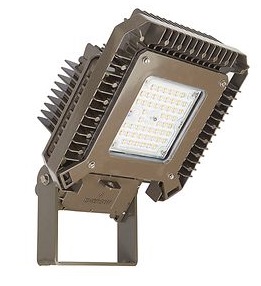
Appleton Areamaster is a Zone 1 LED floodlight that sets the standard for reliability and performance of explosion proof lighting. The LED floodlight is simple to install and easy to work with in hazardous area and potentially explosive atmospheres.
Prior to the Appleton Areamaster the end user did not have a high lumen Zone 1 hazardous area lighting option for LED floodlighting. The only floodlights available were heavy, difficult to wire and install and unable to provide a 400W HID equivalency.
Now with the development of the Areamaster by Appleton ATX everything has changed. Lightweight in design weighing 10.5kg (23lbs) and available with an easier to wire front compartment with captive screws Trunnion mounts.
The Zone 1 LED floodlight provides a wide range of lumen output options 9,000- 36,000 equivalent to a 175W and 1500W HID floodlights respectively.
Zone 1 LED Floodlight
Appleton Areamaster
Ex emb Encapsulation for Zone 1
Ex mb Encapsulation: seals LED arrays and LED driver components
Ex e Increased Safety: used for remainder of housing and terminals
Service: LED driver is still easily replaced
Gaskets: high temperature silicon gasket for demanding environments
The Appleton Areamaster innovative explosion proof lighting solutions include being able to use the same copper free metallic housing as it’s Zone 2 counterpart by employing encapsulation on the LED driver and arrays for Zone 1 protection method.
This model also removes the need for heavy duty flameproof housing as it typically requires frequent maintenance to maintain the flame path. This accounts for a reduction of 50% in weight compared to the ex d flameproof options and offering virtually the same light distribution and brightness as the Appleton Areamaster Zone 2.
Zone 1 LED Floodlights can now be sleek lightweight whilst still delivering high performance and accuracy.
Junction Boxes | Zone 1 & Zone 2 Hazardous Area Junction Boxes EX ATEX Certified 5 Day Express Service
Control Stations | Zone 1 & Zone 2 Hazardous Area Control Stations EX ATEX Certified 5 Day Express Service
Junction Boxes Explosion Protection
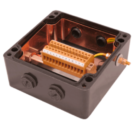
Both Ex d Flameproof and Ex e Explosion Proof junction boxes and electrical enclosures can be customised and shipped by our 5 Day Express Service.
Flame, HeAt, Gas Detectors & Detection Systems
Detecting toxic and flammable gases requires the detectors to be classified and certified according to the specific IECEx or ATEX standard – we distribute flame and fire detectors manufactured by Spectrex to operate in the harshest environmental conditions including self-contained stand-alone devices designed for direct connection to control and alarm systems or automatic fire extinguishing systems.
Our range of Hazardous Area Fire & Gas Detection Systemproducts also includes Explosion Proof Warning Systems & Hazardous Area Lighting – comprehensive range of intrinsically safe, flameproof and explosion proof alarm sounders, sirens, bells and horns, loudspeakers and beacons.
Thorne & Derrick are inviting you to join LinkedIn’s fastest growing Discussion Group – Process & Hazardous Area Industries : Heat Tracing, Gas Detection, Fluid Control & Flow Measurement. News, projects, videos, promotions, whitepapers, jobs, webinars, press plus much more.
ABOUT US
Thorne & Derrick International are your single-source supplier of Electrical, Mechanical, Process & Instrumentation Equipment. T&D provide an outstanding service to UK and international customers – we are highly customer responsive and absolutely committed to providing a world-class service.
T&D supply utilities, power, renewable energy, construction, rail, manufacturing, food/beverage, mining, oil, gas and petrochemical industries – distributing 100,000+ products from 100+ manufacturers from multi-million pound stocks. Since 1985 we have established a solid reputation based on service, integrity and trust.
Invitation – network, engage, promote
Thorne & Derrick are inviting you to join LinkedIn’s fastest growing Discussion Group – Process & Hazardous Area Industries : Heat Tracing, Gas Detection, Fluid Control & Flow Measurement. News, projects, videos, promotions, whitepapers, jobs, webinars, press plus much more.
Control Panels for Hazardous Areas
Control Panels for Hazardous Areas
10 Design & Build Tips For Zone 2 Applications
Article by Intertek
Uploaded by Chris Dodds - Thorne & Derrick Sales & Marketing Manager
Background: Electrical Distribution & Control Panels for Zone 2/22
The equipment, in normal operation, has no active ignition sources such as sparking electrical contacts or hot surfaces and is therefore safe to install in potentially explosive atmospheres and hazardous area locations.
The design requirements for this type of hazardous area electrical equipment are typically laid out in two European or International standards in the 60079 series:
EN / IEC 60079-0 – General Requirements and
EN / IEC 60079-15 – Type of protection “n”
♦ IEC 60079 Series Explosive Atmosphere Standards
The International Electrotechnical Commission (IEC) 60079 series of explosive atmosphere standards covers a wide array of important considerations when it comes to potentially explosive atmospheres and hazardous area classified workspaces and locations.
Dealing with general equipment requirements, gas detectors, intrinsically safe equipment, a variety of different methods of equipment protection, and moving on to the classification of areas, material characteristics, and some industry specific standards, the IEC 60079 series is truly expansive.
There are other methods of explosion protection for hazardous area Zone 2, such as purge and pressurization type “pz” (EN / IEC 60079-2), restricted breathing enclosure “nR” (also covered by EN 60079-15) or any of the other hazardous area Zone 1 types of explosion protection.
Non-sparking, Type “nA” is perhaps the most common, and is the subject of this article, which aims to guide the reader through the 10 most common pitfalls or mistakes encountered when equipment is assembled.
Zones
IEC 60079-14 identifies the Zones:
Zone 0 Hazardous Area
Place in which an explosive atmosphere consisting of a mixture with air of flammable substances in the form of gas, vapour or mist is present continuously or for long periods or frequently.
Zone 1 Hazardous Area
Place in which an explosive atmosphere consisting of a mixture with air of flammable substances in the form of gas, vapour or mist is likely to occur in normal operation occasionally.
Zone 2 Hazardous Area
Place in which an explosive atmosphere consisting of a mixture with air of flammable substances in the form of gas, vapour or mists is not likely to occur in normal operation but, if it does occur, will persist for a short period only.
Zone 20 Hazardous Area
Area in which an explosive atmosphere in the form of a cloud of combustible dust in air is present continuously, or for long periods or frequently.
Zone 21 Hazardous Area
Area in which an explosive atmosphere in the form of a cloud of combustible dust in air is likely to occur, occasionally, in normal operation.
Zone 22 Hazardous Area
Area in which an explosive atmosphere in the form of a cloud of combustible dust in air is not likely to occur in normal operation but, if it does occur, will persist for a short period only.
What does the legislation say?
ATEX
Equipment for use in Explosive Atmospheres in Europe must comply with the requirements of the ATEX Directive 94/9/EC.
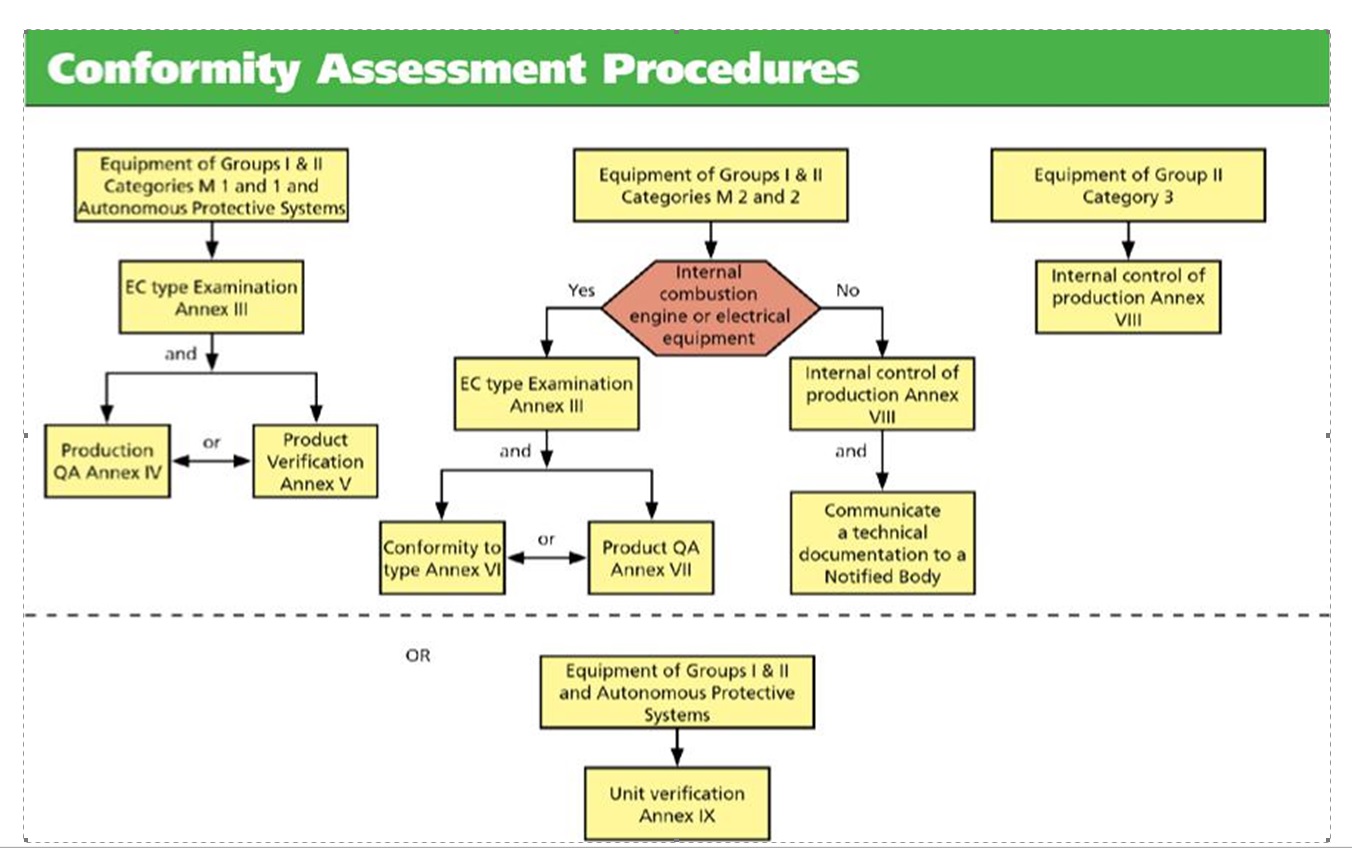
Manufacturers of electrical equipment intended for use in Zone 2/22 (ATEX Category 3) do not need to undertake the EC Type-examination certification route that is required for equipment for Category 1 & 2 electrical equipment and therefore do not need to use a notified body.
Instead, compliance is achieved by “self-declaring” that the equipment is compliant with the Essential Health and Safety Requirements of the ATEX Directive, and then controlling production under “Internal Control of Production” as described under Annex VIII of the Directive.
Note:Non-electrical equipment rules are slightly different and do not form part of this white paper.
IECEx
Under the IECEx Certified Equipment Scheme, equipment is subjected to independent testing and assessment by Test Laboratories and Certification Bodies recognized by the IECEx scheme and its management committee.
All equipment certified under the IECEx scheme is subjected to independent testing and assessment. There is no self-declaration as exists under ATEX, regardless of the intended hazardous area zone of use.
Under IECEx, manufacturing must be controlled under a quality management system that has been audited to the IECEx scheme requirements and the manufacturer must hold a Quality Assessment Report issued by an IECEx Certification Body or unit verification.
Within Europe, many manufacturers prefer to obtain some form of third party testing and assessment of their product, and many of the testing and certification bodies (who may also be Notified Bodies!) issue what are commonly termed “Type Examination Certificates”.
This can be a rather confusing situation, but has come about because the directive prohibits notified bodies from issuing EC Type Examination certificates for electrical equipment (or non-electrical equipment) for category 3.
There are some exceptions, where equipment has parts used in several different zones, and for Unit Verifications, but in general, third party certification of category 3 equipment has evolved into the “Type Examination”, although it is stressed that adopting such an assessment route is purely voluntary by the manufacture.
There are many aspects to specifying an ATEX panel for a hazardous location that can be easily overlooked. Before starting the design and specifying the components to be used, make sure you know the specifics of the hazardous area where the panel will be eventually located.
Some vital questions to answer before starting include:
What is the hazard and is there anything else that could affect the local conditions?
Aside from the explosion hazard, what other hazards or aggressive substances might exist in the installation? Aggressively corrosive chemicals or contamination from dust and dirt may affect how the explosion protection measures employed perform over time. It is a requirement of the ATEX directive that such considerations are taken into account in the design of equipment for its adequate performance throughout its anticipated lifetime.
What is the Gas Group or Dust Group? Equipment protected for dust explosion hazards may not be suitable for gas explosion hazards, make sure the components meet or exceed the minimum requirements of the installation site.
What is the ambient temperature range? Make sure that the ambient temperature range of the installation site in known so that it can be certain that the selected components are used within their certified range, and take into account the effect of local heat generation. (Internal temperature rise see point 4)
What certification scheme will be acceptable for the end user? Not all end users will be happy with self-declaration, despite the fact that it is permitted under the ATEX directive.
2) “I thought I could put a panel together just by gathering together parts that are certified. Do I need to read the standards?”
Considering the somewhat obscure nature of many of the requirements of 60079 series of standards, and the expense of buying them in the first place, it is not surprising that many manufacturers try to make their way through the minefield of making equipment for use in explosive atmospheres without a thorough understanding of the standards’ requirements and those of the ATEX Directive itself.
There is really no substitute for a thorough understanding, and indeed not being fully aware of the requirements can lead to the manufacture of equipment that is potentially dangerous, and the possible loss of life and property should there be a catastrophic failure when the equipment is installed.
The standards themselves are not free. However, there is much valuable guidance information freely available directly from the EU website, including the ATEX Directive, a comprehensive guidance document, other guides on CE Marking in general, and the text and guides for any other Directives, such as EMC and R&TTE that may be applicable.
Bear in mind also, that although the Low Voltage Directive specifically excludes equipment used in Explosive Atmospheres, the manufacturer must still, as a requirement of the ATEX directive, manufacture equipment that is electrically safe, and should follow whatever electrical safety standard is applicable to their equipment, if it were to be used in a non-hazardous area.
3) “I’ve used an enclosure that states it is IP rated. Isn’t this enough?”
Many standard industrial IP rated enclosures are available on the market. When it comes to enclosures for equipment in hazardous areas, there are several other requirements the panel builder must be aware of, as detailed in the General Requirements 60079-0:
The electrical enclosure must meet some minimum strength requirements for impact.
Non-metallic parts such as plastics used in the enclosure, viewing windows, or elastomeric materials used in seals and gaskets, must stand up to accelerated aging tests against heat, humidity, cold and UV radiation.
The IP rating must be valid after the aging tests and impact tests have been performed, and where an enclosure must be dust tight, the dust ingress tests are performed with the enclosure under slight vacuum.
A standard “IP Rated” enclosure might not meet all these requirements.
So, it is highly recommended that the panel builder choose an enclosure that has already been tested and certified as meeting the enclosure requirements of the General Requirements Standard (60079-0). A way of achieving this would be to use an electrical enclosure that has been component certified under the “Increased Safety” standard, EN 60079-7.
Although this is a standard used for Category 2 applications (Hazardous Area Zone 1), the electrical enclosure will meet the minimum requirements for strength and IP rating.
IP54 is needed as a minimum for both Ex e and Ex nA enclosures containing bare live parts, although, the enclosure should also be fit for its intended use, and may require a higher IP rating, such as IP 56 or IP 65, depending on the application.
Of course, there are electrical enclosures on the market that are self-declared by their manufacturer as meeting the requirements for hazardous area Category 3, and these would also be potentially suitable (but see point 9 below).
4) “All my equipment is rated for the maximum ambient temperature”
Understanding the temperatures that equipment can be used in is one of the most confusing topics for any one assembling several different certified parts. A piece of equipment certified for use in a hazardous area will have a range of temperatures specified through which it is safe for use, with a default range of – 20°C to +40°C being applied where no other range is specified.
Confusion arises when a piece of equipment is installed within an enclosure, and therefore operated in a local ambient temperature that will be above the ambient temperature outside the enclosure, caused by the self-heating of the internal components.
Such a temperature rise is difficult to calculate and is typically determined by test, with the enclosure operated at full rated load (between 90 % and 110 % of the rated voltage of the electrical equipment that gives the maximum surface temperature). A correction is made linearly for the difference between the ambient temperature during test and the required maximum.
As an example, if the equipment installed within a panel has a maximum ambient temperature limit of +60°C, and the temperature rise inside the enclosure is 10°C, the maximum ambient temperature outside the enclosure must not exceed 50°C for the certification of the internal components to remain valid.
Some tricks can be employed to help manage the situation where some components have a lower ambient limit than others. Since heat rises, it is typically hotter at the top of an enclosure than at the bottom, so items with a lower ambient range could be placed at the bottom of the enclosure.
5) “I didn’t check all the conditions of use for the components”
Very often, some conditions of use will be noted in the documentation of parts used within the control panel. It is vital that all of these conditions are understood and any measures that they require must be implemented. One common requirement is the provision of the suppression of over-voltage transients on the supply connections of equipment.
This can be achieved by the use of dedicated transient voltage suppressors or by the use of an approver power supply unit to supply the power to the internal components.
Make sure that all the conditions of use (indicated by an X on the certificate number) are checked and do not preclude the use of the item you are intending to use.
6) “I’ve used some American equipment that is certified for Class I Division 2, isn’t that OK?”
Simply put NO. While equipment used in hazardous area locations in different parts of the world will have been designed to prevent explosions in the hazardous area, the standards used may vary in the detail of their requirements, and so caution must be exercised when using parts certified to standards other than the EN or IEC 60079 series.
The requirements for impact resistance, ingress protection and the like may be very different or may not even be specified for equipment certified to standards used in other countries.
7) “Some of the certificates for components are to old standards, is that OK?”
In Europe, as part of the general CE marking requirements, a manufacturer must provide their equipment with an EC Declaration of Conformity.
This document (which is prepared by the manufacturer under his own responsibility) details the directives that the equipment complies with, together with the standards used to justify that compliance. These standards must always be those that were harmonised at the time the equipment was put onto the market.
The manufacturer may declare compliance with a later version of the standard (say EN 60079-0:2012) than the version that is listed on his EC Type or Type examination certificate (which may list EN 50014:1998) provided they have done their own documented analysis of any changes to the standard affecting their product and is satisfied that the product is compliant with the new version.
So, any piece of equipment currently on the market and marked as complying with the ATEX directive, should be compliant with the latest standards and therefore it should be acceptable to use.
But, it is worth querying with the manufacturer whether his component is built to the latest standards, should there be any doubt, or in the situation where the part being used was manufactured before what is now the latest version of the standard came into force.
The standards for old Type N equipment, pre-dating the ATEX directive, and the dedicated Type “n” standard EN 50021 have several less severe requirements than are required now, and so any equipment found on the market to these out-dated standards will almost certainly not be acceptable for use in a new installation.
8) “Can I use IECEx certified parts in a panel self-declared under ATEX?”
Generally, the answer should be “yes”, provided that the standards listed on the IECEx Certificate of Conformity are of the same edition as their corresponding European version. Unlike ATEX, there is no requirement for manufacturers to keep their products compliant to the latest standards under the IECEx Scheme when the standards are updated, so careful examination of the certificate is needed.
Note: Always cross check with national Essential Health & Safety Requirements
9) “Can I use ATEX Category 3 parts in an IECEx Certified Panel?”
The answer is almost certainly “No”. All hazardous area equipment certified under IECEx requires testing and assessment by testing and certification bodies recognized by the scheme, together with manufacturing controlled by an audited quality management system. These are not mandatory for ATEX Category 3 equipment, and therefore the strict controls required by IECEx cannot be guaranteed to be met
For equipment that is self-declared, or even equipment that has been independently tested and certified, but is not manufactured under the required audited quality management system.
10) “I want 3rd party certification but the test house wants to test everything!”
Testing and certification companies that are accredited, for example, in the way that Intertek in the UK is accredited by UKAS, the United Kingdom Accreditation Service, must maintain a high level of diligence in ensuring that the products that they test and certify meet the requirements that they are certified to.
For hazardous area equipment that is also certified by other accredited test houses and laboratories, such diligence is relatively easy to prove.
However, where a piece of equipment is to be used where its manufacturer has (and quite rightly, as permitted by the directive) self-declared compliance, the test house will not have the required level of proof of compliance, and therefore may choose to perform some additional tests themselves, or may veto the use of that particular component altogether.
The diagram below highlights the conformity assessment types you will encounter.
Conformity Assessment Procedures
How Intertek can help
Credentials
Intertek has one of the largest and most experienced hazardous location teams available at multiple locations world-wide – their expertise is backed by a number of accreditations and recognitions including:
OSHA Nationally Recognized Testing Laboratory (NRTL) for Hazardous Location Listing
Standards Council of Canada accredited Certification Body (CB) and Testing Organization
United States Coast Guard recognised test lab
Notified Body and UKAS Accredited for the ATEX Directive, 94/9/EC.
IECEx Certification Body (CB) and Test Laboratory (TL)
Full HazLoc Training including an Accredited CompEx Training Centre
Site Safety Services (Risk Assessment, Area Classification and Inspection)
Specialist in Oil Tools, Rigs and Skids
Certification
Intertek certify products for compliance to National and International published standards which satisfy the applicable requirements of the National Electrical Code (NEC) in the U.S., the Canadian Electrical Code (CEC) in Canada, IECEX and the EU ATEX Directive.
Some of the standards Intertek test to include the following international hazardous area classification bodies: ANSI, UL, IEC, CSA, MIL Specs, FM, and CENELEC and CEN.
Design Reviews
Intertek offers free 2 hour design reviews from both their Leatherhead and Chester offices – this can also be conducted via telephone conference or Skype/ WebEx meetings.
For full design reviews or meeting at clients premises, please speak to us.
Intertek offers a ‘Review and Lodge’ service of technical files. This includes providing a GAP analysis report against the technical file and issuing a Certificate of Assessment and Lodging acknowledgment letter.
Training
Intertek is an ATEX Notified Body, DSEAR/ ATEX implementation specialist with dedicated Hazardous Locations Training Centres. They have dedicated CompEx licensed facilities in the UK (Chester & Grangemouth) as well as the capabilities to offer training and competency assessment globally on client sites.
Offering both open and bespoke training, and through our unique systems can ‘tie in’ with a company’s management systems to ensure that all staff are verified and attributed as competent and ‘remain’ competent through regular updates and refresher training.
Mobile CompEx
Designed for use outside of the United Kingdom, Intertek is the first CompEx centre to offer the scheme to a global market through their mobile CompEx Assessment Rigs. Based closely on our principal centres in the UK the mobile rigs are transported via bespoke “flight” cases and assembled at a suitable location on or near your site.
For more information on Intertek’s training services for hazardous location staff, or to begin your project right away,
Call: +44 (0)1244 882590
or Visit: www.intertek.com/hazloc
THORNE & DERRICK
Electrical & Process Instrumentation Equipment for Explosive Atmospheres
Thorne & Derrick are Specialist Distributors of Hazardous Area & Explosion Proof Equipment with IECEx & ATEX Certifications to the onshore and offshore oil, gas, petrochemicals and process industries.
We supply major UK and international infrastructure projects and also MRO (Maintenance, Repair, Operations) requirements for both planned and unplanned plant shutdowns – we react with a rapid response to customer demand to ensure downtime is minimised and reliable Power, Light & Heat is restored or provided.
Working closely with clients and our supply chain we can assess the condition and degradation of your hazardous area installations and implement specifications to manage the planned replacement of legacy equipment conformant with international classifications including ATEX and IECEx.
Raytec SPARTAN – ATEX op is Certified LED Hazardous Area Lighting
uploaded by Chris Dodds - Thorne & Derrick Sales / Marketing Manager
Raytec SPARTAN Hazardous Area Lighting
Raytec SPARTAN manufacture a full range of hazardous area lighting with Flood, Linear, Bulkhead, Bay and Crane lighting, meaning there’s a solution for any application.
All Raytec hazardous area lighting, fittings and products are designed and manufactured in the UK and are ATEX and IEC Ex approved.
Earlier in 2018, all products in the Raytec SPARTAN range of lighting were recertified to comply with an update in the ATEX directives (EN 60079-28:2015) referred to as ‘op-is’.
But what exactly does this mean, and more importantly, why does it matter?
Raytec SPARTAN
What is op-is?
Op-is focuses on the ignition risk caused by optical radiation from LEDs.
Light beams may not normally be perceived as dangerous, but as technology develops, LED lighting for hazardous areas is becoming increasingly powerful and their beams more intense. In certain environments this could present an ignition risk as particles in the atmosphere absorb the energy created by the light beam; otherwise known as optical radiation.
In a hazardous area or potentially explosive atmosphere this is a particular concern.
Why is op-is Important?
Simply put, any ignition risk in a hazardous area lighting application means there is a danger of an explosion which could lead to loss of life or catastrophic damage.
While the likelihood of an ignition due to optical radiation may be small, using luminaires or light fittings which do not carry the op-is mark is a risk; the luminaires or fittings will not have been tested or certified to ensure that optical radiation does not present a danger. Is it a risk worth taking?
Of course, the inclusion of op-is represents a fairly recent update to the ATEX directive, meaning any luminaires or light fittings installed prior to this will not carry the op-is mark. Replacing an entire installation of older luminaires in order to comply may be unrealistic, but the new standards should be taken into account for any new luminaires installed.
Is it Mandatory?
Any LED light fittings or luminaires certified after April 2018 must be certified to include op-is. However, as hazardous area certification is generally done prior to a lighting product first being launched, the majority of luminaires or light fittings available on the market today will probably have been certified prior to the introduction of op-is standards.
This raises the question, should manufacturers have their products retested to comply with op-is? While this could be considered a grey area (with no obvious legislation forcing manufacturers to do so), in the context of manufacturing products designed for use in dangerous, high risk applications, ensuring those products comply to the latest standards (which include op-is) is an essential process for any reputable manufacturer.
Lighting Fittings Linear | High Bay | Bulkhead | Floodlights | Zone 1 & Zone 2 Hazardous Area Lighting
ELECTRICAL & PROCESS INSTRUMENTATION EQUIPMENT
FOR EXPLOSIVE ATMOSPHERES
Thorne & Derrick are Specialist Distributors of Hazardous Area & Explosion Proof Equipment with IECEx & ATEX Certifications to the onshore and offshore oil, gas, petrochemicals and process industries.
Raytec are delighted to launch a new range of ‘intelligent’ emergency luminaires. Initially available in the Linear and Bulkhead product ranges, the new intelligent emergency products feature an innovative automatic testing function and take safety and performance of emergency luminaires to the next level.
Featuring a microprocessor programmed to automatically cycle the batteries, the new products perform three different testing procedures to ensure the luminaire is operating correctly and the emergency battery system is functioning at it’s optimum;
Commissioning test
Three charge and discharge cycles are carried out automatically at the point of the initial installation. This is essential in ensuring the battery maintains its full capacity.
Functional test
Occurring every seven days, this is a shorter test lasting just a few minutes which checks the function of the battery, luminaire and power supply.
Self-test
A random test occurring every three months, this more rigorously tests the battery’s capacity and the luminaires overall condition. Critically, if the battery is not operating at full capacity, the luminaire can also perform self-recovery to restore optimum performance.
Without the luminaire’s ability to automate testing, these processes would otherwise have to be carried out manually. As well as using up time and resource, this could also potentially cause disruption to site.
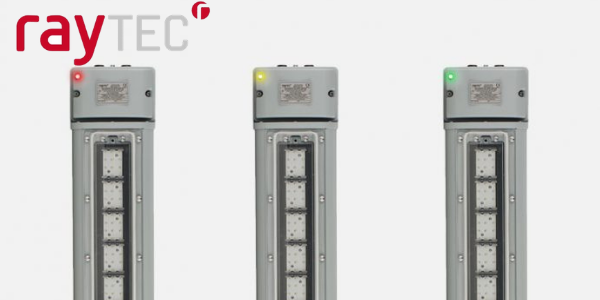
To improve ease of inspection, the new luminaires communicate the current health of the luminaire via a tri-colour LED indicator. This system communicates when the unit is going through one of the testing procedures and highlights the health of the luminaire:
LED Indication
Condition
Battery charged and PSU OK
Emergency mode activated
Function Test
Self-test
Commissioning
Fault – further troubleshooting required
In addition to the new intelligent self-testing functionality, all intelligent emergency luminaires are capable of up to 100% light output in emergency mode as well as being exceptionally easy to maintain thanks to a unique modular design which makes access easy.
While the new intelligent emergency products will initially be introduced to the Linear and Bulkhead product ranges, the Flood range will also be upgraded to the new intelligent system later in the year. The new products are available to order now, while the existing emergency products will still be available initially to satisfy any ongoing requirements.
Contact Thorne & Derrick Sales Team for the complete range of ATEX Lighting manufactured by Raytec.
ELECTRICAL & PROCESS INSTRUMENTATION EQUIPMENT
FOR EXPLOSIVE ATMOSPHERES
Thorne & Derrick are Specialist Distributors of Hazardous Area & Explosion Proof Equipment with IECEx & ATEX Certifications to the onshore and offshore oil, gas, petrochemicals and process industries.
Press Release Date: 02.04.2020 uploaded by Chris Dodds (T&D Sales + Marketing Manager) World’s First Fully Certified ATEX Doors Thorne & Derrick International, the Experts in Equipment for Explosive Atmospheres, today announce the signing of a Commercial Distribution Agreement...
Press Release Date: 04.07.2019 uploaded by Chris Dodds (T&D Sales + Marketing Manager) Category: Stockist Distributor Agreement Announcement Thorne & Derrick International announce that they have signed a Preferred Distributor Agreement with Raytec, the world leading manufacturer of LED...