Article Republished with Kind Permission of SGS Baseefa | 3 of 5 Articles
Uploaded by Natalie Lundie | Supply Chain: Marketing Lead at Thorne & Derrick International
Hazardous Atmosphere Training Courses
Helping To Protect Employees & Plants from the Risk of Explosion in Hazardous Areas
Thorne & Derrick, the Experts in Equipment for Explosive Atmospheres, with the permission of SGS Baseefa are providing a series of articles to advocate the importance of independent services that ensure the protection of employees and property from explosion risk in hazardous areas – this is achieved through the provision of training and ensuring that equipment intended for use in potentially explosive atmospheres is correctly certified according to ATEX and IECEx international classifications by a accredited Notified Body.
Part 3
Hazardous atmosphere training courses from SGS – equip employees and contractors with the knowledge and skills to design equipment or operate safely in the industry.
SGS Baseefa are a world renowned organisation in the field of explosion protection and a major player in the international IECEx Certification System, as well as servicing both of the ATEX Directives for Europe. Our training courses are designed to complement our explosive atmospheres services.
Their philosophy is clear, we like to keep it simple and all our training programmes have been devised with this aim in mind. They believe that if a person knows their subject they should be able to explain it to others simply. They can deliver and tailor our courses to suit personnel at every level of your organisation.
Their portfolio of training services includes:
Introduction to Hazardous Atmospheres & Explosion Protection Techniques (1 day)
Hazardous Area Products – QA System Planning (1 day)
ATEX / DSEAR Overview (1 day)
ATEX / DSEAR (2 day)
Risk Assessment and Hazardous Area Classification (2 day)
Safe Use of Electricity in Potentially Explosive Atmospheres & Intrinsic Safety (4 day)
Training for Designers of Ex Equipment (As required)
Bespoke Training Solutions (As required, tailored to meet your individual needs)
ATEX & IECEx Certification | hazardous area equipment certification from SGS meets the legal requirements for products used in explosive atmospheres.
All their training presenters are leaders in their field, providing delegates with expert opinions on subjects related to potentially explosive atmospheres. SGS Baseefa training programmes cover all our specialty technical subjects, but are delivered with a flair that makes our courses different and the learning experience that bit more enjoyable and memorable. Training is delivered at our purpose-built training facilities in Buxton, at customer premises, or at any suitable venue of convenience to you.
Their courses test delegates’ knowledge progressively during the course ensuring key learning points are clearly understood. Many of their courses provide a Certificate of Achievement upon successful completion, providing clear evidence of each individual’s skills and knowledge, whilst demonstrating your company’s investment in their continuing professional development.
To find out more, or book your hazardous atmospheres training courses, contact us today.
ABOUT SGS BASEEFA
Research work into explosions in hazardous atmospheres has been carried out at our Buxton site since the 1920s. SGS Baseefa is now one of the largest organisations in the world with a laboratory dedicated to certification in this area and a world leader in the field.
In Europe, SGS Baseefa is one of the most recognised Notified Bodies for issuing the certification required by the European ATEX Directive. We are at the forefront of international product certification within the IECEx Equipment Certification Scheme, having issued more certificates in this field than any other certification body in the world.
Beyond certification we also provide an accessible yet authoritative source of expertise in many related areas. With extensive experience and knowledge of the application of industry standards in many areas we actively participate in committees formulating standards both at the European and international levels.
Through our global network we can offer a truly worldwide service to you, wherever you may be, providing documentation to support your sales throughout the world and to give your customers confidence in the products you sell.
Thorne & Derrick are leaders in the development and distribution of Product Innovations that deliver significant improvements to clients plant, people and operational safety in the explosive atmosphere industries.
Your proactive problem solvers experienced in succession planning for the replacement of obsolete, non-conformant and legacy equipment in hazardous areas.
Your first-choice provider of innovative and competitive solutions to ensure ATEX & IECEx Compliance for Hazardous Area Electrical, HVAC & Process Instrumentation Equipmentto UK and international projects.
Servicing Explosive Atmosphere Industries Since 1985.
Article Republished with Kind Permission of SGS Baseefa | 2 of 5 Articles
Uploaded by Natalie Lundie | Supply Chain: Marketing Lead at Thorne & Derrick International
ATEX Certification & IECEx Certification of Equipment
Helping To Protect Employees & Plants from the Risk of Explosion in Hazardous Areas
Thorne & Derrick, the Experts in Equipment for Explosive Atmospheres, with the permission of SGS Baseefa are providing a series of articles to advocate the importance of independent services that ensure the protection of employees and property from explosion risk in hazardous areas – this is achieved through the provision of training and ensuring that equipment intended for use in potentially explosive atmospheres is correctly certified according to ATEX and IECEx international classifications by a accredited Notified Body.
Part 2
ATEX is a legal prerequisite for selling within the European Economic Area, but IECEx gives maximum international acceptance and, if feasible, most customers elect to have certificates for both schemes issued at the same time.
SGS Baseefa have long been recognised as being at the forefront of international product certification within the IECEx Equipment Certification Scheme, having issued more certificates in this field than any other certification body in the world. They are also one of the major Notified Bodies in Europe for issuing the documentation required by the European ATEX Directive.
A core principle of our operations is to encourage direct dialogue between our engineers and our customers’ engineers, avoiding the potential difficulties and misunderstandings that can occur when working through non-technical sales staff. Before a certification project is established, you are welcome to make use of our technical advice service to help you start the process of bringing your project to a successful conclusion.
There are two parts to product certification:
Type Examination is the process of assessing, testing and defining the prototype or representative sample
Production QA, or Product Verification, are alternative ways of confirming that future production is identical to the ‘type’ that was assessed
ATEX & IECEx Certification | hazardous area equipment certification from SGS meets the legal requirements for products used in explosive atmospheres.
ATEX treats the two aspects separately and the manufacturer issues the ‘Declaration of Conformity’ that brings both parts together. IECEx requires that the certification body is responsible for ensuring all production supervision is in place and monitored in order for the on-line IECEx Certificate to be issued and remain ‘current’. The status of all IECEx certificates may be monitored from the on-line certificate database.
In this respect, IECEx may be regarded as a full Type 5 Product Certification System, whereas ATEX is a hybrid, encompassing the possibility, for some types of equipment, of a manufacturer issuing all documents directly, without involving a Notified Body.
Contact us for more information about our product certification and explosive atmospheres services.
A UK WORLD LEADER FOR A WORLD-WIDE SERVICE
Based in Buxton, Derbyshire, SGS Baseefa’s staff has over 300 years experience of Ex equipment between them and is a major contributor to developing the standards for Ex equipment, at UK, European and international level.
ABOUT SGS BASEEFA
Research work into explosions in hazardous atmospheres has been carried out at our Buxton site since the 1920s. SGS Baseefa is now one of the largest organisations in the world with a laboratory dedicated to certification in this area and a world leader in the field.
In Europe, SGS Baseefa is one of the most recognised Notified Bodies for issuing the certification required by the European ATEX Directive. We are at the forefront of international product certification within the IECEx Equipment Certification Scheme, having issued more certificates in this field than any other certification body in the world.
Beyond certification we also provide an accessible yet authoritative source of expertise in many related areas. With extensive experience and knowledge of the application of industry standards in many areas we actively participate in committees formulating standards both at the European and international levels.
Through our global network we can offer a truly worldwide service to you, wherever you may be, providing documentation to support your sales throughout the world and to give your customers confidence in the products you sell.
Thorne & Derrick are leaders in the development and distribution of Product Innovations that deliver significant improvements to clients plant, people and operational safety in the explosive atmosphere industries.
Your proactive problem solvers experienced in succession planning for the replacement of obsolete, non-conformant and legacy equipment in hazardous areas.
Your first-choice provider of innovative and competitive solutions to ensure ATEX & IECEx Compliance for Hazardous Area Electrical, HVAC & Process Instrumentation Equipmentto UK and international projects.
Author: Christian Kuhn – Product Manager at SICK AG in Waldkirch, Germany
Introduction
Gas Detection in Tunnels
It is essential to monitor air quality and visibility in tunnels to ensure road safety. Measuring the visual range and CO concentration has therefore been part of standard practice for many years now.
In the current discussion surrounding exhaust gases emitted by diesel vehicles, the health risk posed by nitrogen oxides, nitrogen monoxide (NO), and nitrogen dioxide (NO2) plays a central role. These harmful gases present a considerable risk to the public. The European Environment Agency estimates that a total of 10,400 deaths were caused by nitrogen oxides in Germany alone in 2012. The total figure for Europe was an astonishing 75,0001¹.
The restricted airflow in a tunnel often means that the concentrations of gases are higher inside than outside. To reduce the harm to tunnel users’ health, the air must therefore be thinned or exchanged with the aid of jet fans, for example.
However, tunnel ventilation is extremely energy-intensive and expensive and must therefore be controlled according to demand. Measuring instruments provide the necessary data for this process. The ratio of NO2 to NO is not stable in tunnel systems. It can vary between 10:1 and 4:1. This is why it is important to measure both concentrations accurately.
When taking measurements in tunnel atmospheres in the ppb range, the measuring instruments need to meet the highest demands. They must be able to measure very low pollutant concentrations and must not require high levels of maintenance. This report demonstrates the measurement accuracy of the VICOTEC320 air quality tunnel sensor.
Long-term Stability
Tunnel availability needs to be maximized as far as possible. If a tunnel requires maintenance, then part or all of the tunnel must be closed. This must be avoided wherever possible. Measuring instruments in tunnels must therefore demonstrate exceptionally good long-term stability. Maintenance is often only performed once a year. The measurement accuracy may only exhibit a negligible change over this time.
Cross Sensitivity to Humidity and Dust
Tyre and brake wear as well as exhaust gas particles lead to an increased concentration of dust, and measuring instruments in tunnels must be able to cope with these conditions. Changing dust concentrations must not affect the measured values. In many tunnels, the relative humidity is also high. The humidity in the measuring gas often interferes with measuring instruments and can lead to anomalous measurement results. Cross sensitivity to air humidity cannot therefore be tolerated.
Accuracy
Protecting the health of users and ensuring the efficiency of the tunnel are equally important. The measuring instruments must supply data which is as accurate as possible for the tunnel ventilation to ensure that the limit values are not exceeded and, on the other hand, that energy is not consumed unnecessarily by ventilating a tunnel too frequently or for too long.
DOAS Measurement principle for measuring NO and NO2 in tunnels
Gas molecules are excited by electromagnetic radiation. This excitation occurs at wavelengths which are typical for the gas in question. If electromagnetic radiation of a certain wavelength encounters a suitable molecule, the radiation excites the molecule and at the same time loses energy. The molecule absorbs energy. The more molecules of a certain gas there are, the more the radiation is absorbed in this area.
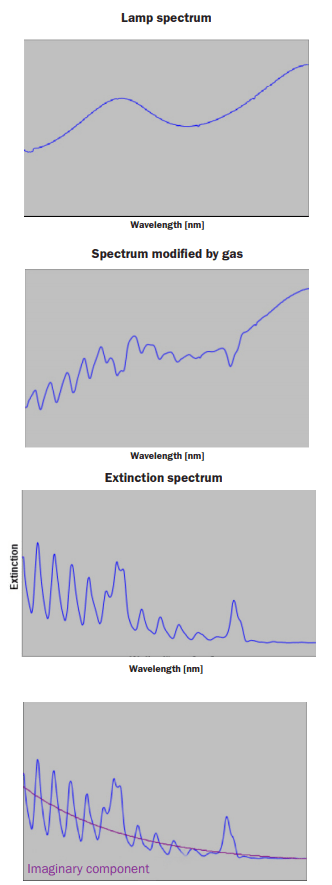
With differential optical absorption spectroscopy (DOAS), light is emitted from a sender or a lamp, travels through a measuring distance, and then encounters a receiver. The receiver splits the light into a spectrum. This enables you to detect how much energy is absorbed at which wavelength by the gases that are present.
The light source emits electromagnetic waves in a certain spectrum. This spectrum is absorbed by the receiver. To obtain the spectrum of the lamp, the light is sent directly to the receiver without traveling through the measuring distance. This is repeated at specified intervals during operation of the measuring instrument. This means that the measuring instrument always attains a reliable zero point.
This excludes the possibility of zero point drift for the measuring instrument.
If the electromagnetic radiation hits target molecules when traveling through the measuring distance, radiation is absorbed. This means that there is a lower signal at certain wavelengths.
The receiver then absorbs a modified spectrum. The degree of absorption of a molecule changes as little as the wavelength at which it is absorbed. The resulting measuring range drift, which is practically non-existent, is important for ensuring that measurements in the tunnel will remain
stable in the long term.
If you divide the modified spectrum by the spectrum of the lamp and plot it logarithmically, you get a spectrum which shows the weakening of the
output signal – otherwise known as extinction.
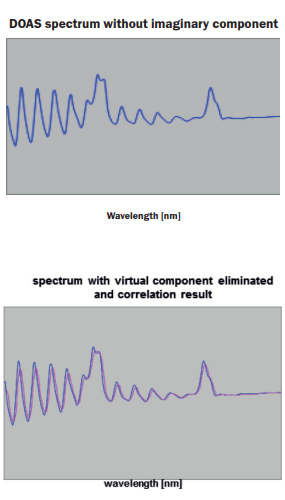
Extinction is not just caused by gas molecules. Fog droplets and dust can also result in extinction. This extinction, however, takes place across the whole spectrum rather than specifically at certain wavelengths. This impact over the entire spectrum can be represented by an imaginary component. This is crucial for application in a tunnel. The measurement result is therefore not affected by dust, contamination, or water droplets.
This means that the measurement principle is not affected by dust or dirt. Mechanical filters, as used in other measurement procedures, are therefore not required in this case.
Mechanical filters result in very long response times in the case of “sticky” gases such as NO2 and must therefore be avoided.
Removing the imaginary component from the extinction curve results in the differential absorption spectrum. It is differential because you analyse the distance between a peak and the subsequent trough rather than the absolute height of the individual peaks.
The calculated DOAS spectrum is compared with the reference spectra stored in the instrument. The associated measured value is displayed in the case of maximum agreement.
Requirement in tunnel
Spectrometer-based DOAS solution
Evaluation
Measurement with long-term stability
Zero point drift excluded due to absorption of the lamp spectrum
✔
Measured value drift extremely low due to physical laws
✔
Not affected by dust, dirt or droplets
Any effect is excluded by a method of calculation.
No mechanical filters required.
✔
Sensors – Temperature Measurement Technology from SICK.
Test Description
There are no standardized performance requirements for optical measuring instruments in tunnels. Either the concentrations of harmful gases emitted by vehicles are measured within the tunnel, or the gas emissions which escape from the tunnel into the area surrounding the tunnel portal are measured. To determine the performance data, it therefore makes sense to consult the latest version of the following test specification: EN 15267 “Air quality. Certification of automated measuring systems. Part 3: Performance criteria and test procedures for automated measuring systems for monitoring emissions from stationary sources”. In accordance with this standard, we have defined the following:
Linearity: Systematic deviation within the area of application of the measuring system between the recognized value of a reference material which has been assigned to the measuring system
and the corresponding measurement result supplied by the calibrated measuring system.
Setting time (t 90): Time period between an abrupt change to the value of the input of an automated measuring system (AMS) and the time as of which the value of the output remains reliably above 90% of the correct value of the input.
Repeatability: Capability of a measuring instrument to produce very similar results when supplied with the same measurand under the same measuring conditions
Drift: Monotone change of the calibration function within the specified maintenance interval, leading to a change in the measured value.
Gas Detection limit: Equal to double the repeatability standard deviation at the zero point.
Accuracy: The term “accuracy” does not have an exact definition in the field of measurement technology but is usually understood as a combination of precision and trueness.
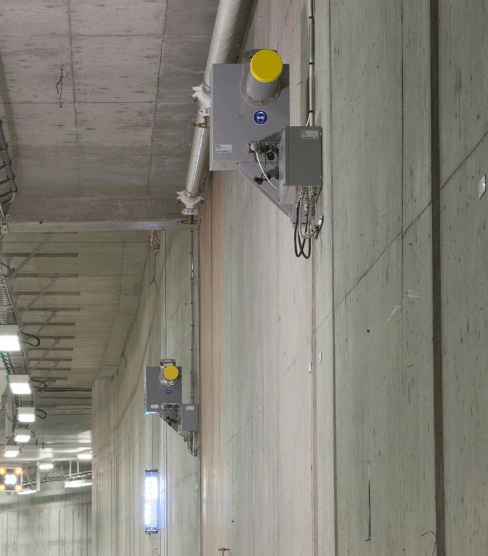
The tests were conducted using a standard VICOTEC320 on a measuring distance of 10 m. The gas concentration measurements were conducted based on cells filled with gas. The gases were generated by a HOVACAL gas generator. Certified gas mixtures were used as basic gases.
Linearity of measuring instruments
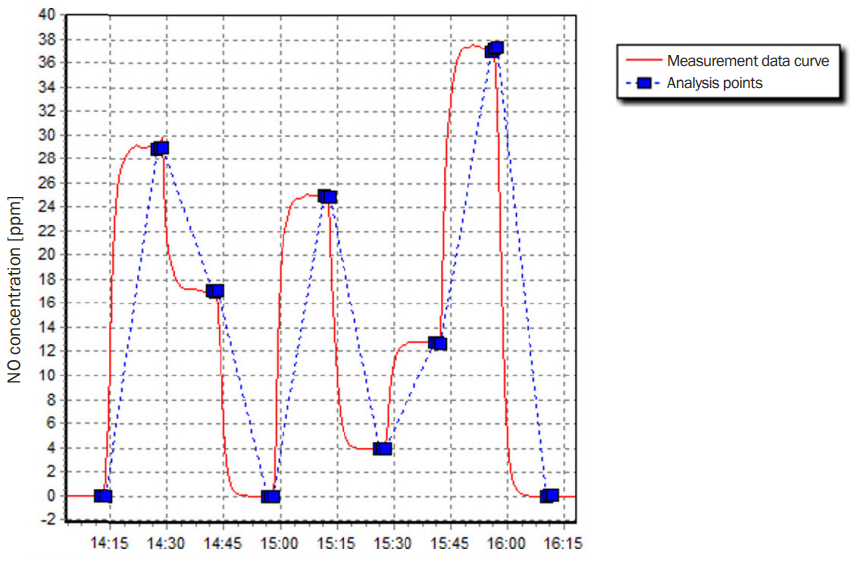
To prevent hysteresis effects from affecting the linearity of measuring instruments as much as possible, EN 15267 suggests a specific sequence of measured values. The concentration points should therefore be approached in the following order:
Zero point
Approximately 70% of the measuring range limit value
Approximately 40% of the measuring range limit value
Zero point
Approximately 60% of the measuring range limit value
Approximately 10% of the measuring range limit value
Approximately 30% of the measuring range limit value
Approximately 90% of the measuring range limit value
Zero point
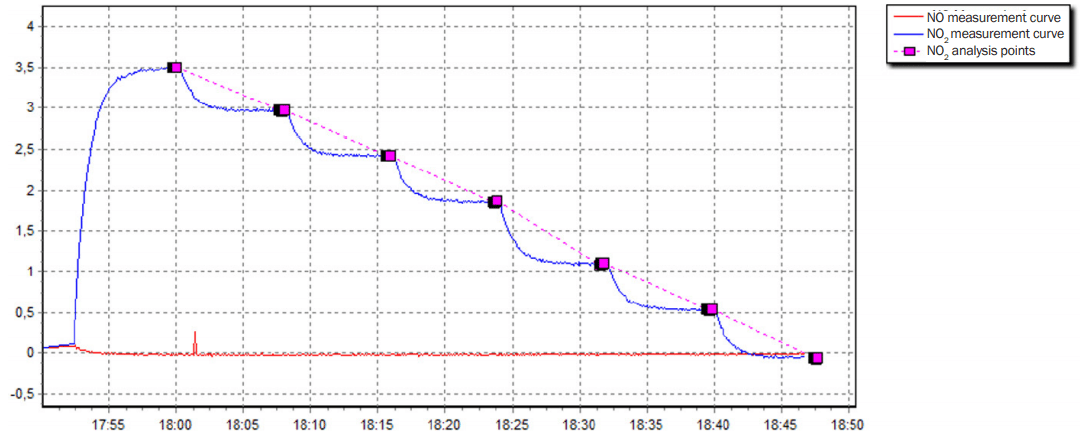
The concentrations were initially produced in a gas-filled cell. As soon as the measured values reached a stable plateau, the values were recorded and the analysis then progressed to the next concentration level.
NO Measurement
NO Measurement
The analysis of the measured values reveals a linearity error / lack of fit of:
Absolute deviation
Deviation relative to the measuring range limit value
Maximum
0.48 ppm
1.06%
Minimum
-0.33 ppm
-0.73%
NO2 Measurement
NO2 Measurement
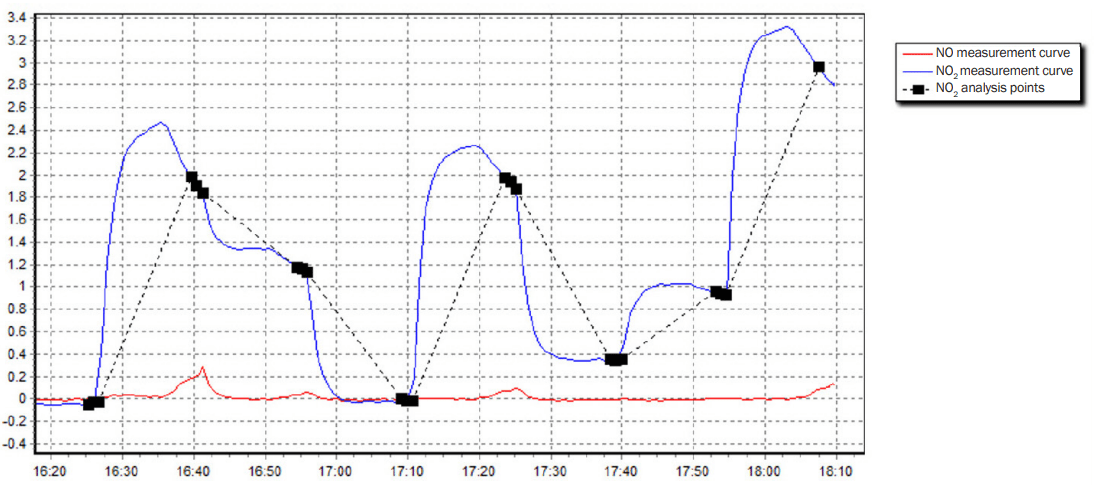
The results for NO2 revealed that the concentrations of NO2 are not stable and degrade quickly. The NO2 measurement was therefore taken in the flow of gas, which meant that the concentrations could no longer be set according to EN 15267-3.
NO2 Measurement
The analysis of the measured values reveals a linearity error / lack of fit of:
Absolute deviation
Deviation relative to the measuring range limit value
Maximum
0.017 ppm
0.335%
Minimum
-0.024 ppm
-0.485%
Gas Detection Limit
Gas measurement (NO/NO2)
Gas measurement following the SICK standard method
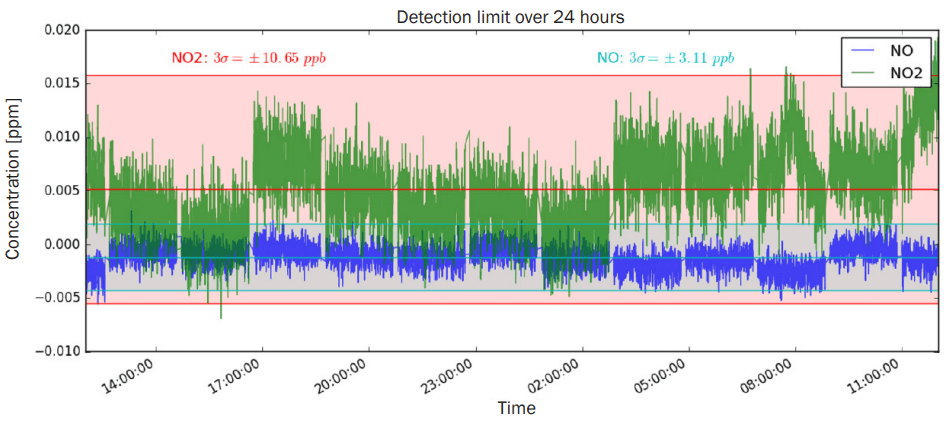
To check the gas detection limit, the time filter was selected such that a t90 setting time of approx. 30 seconds was achieved. The measurement data was saved with each measuring cycle (5 seconds). To calculate the standard deviation, a measurement time period of 24 hours was analysed. SICK uses three standard deviations to determine the gas detection limit.
Gas detection limit over 24 hours
Sigma
Gas Detection Limit*
NO
0.001 ppm
0.003 ppm
NO2
0.0036 ppm
0.011 ppm
*3 x sigma in 24 hours
Detection limit in accordance with EN 15267
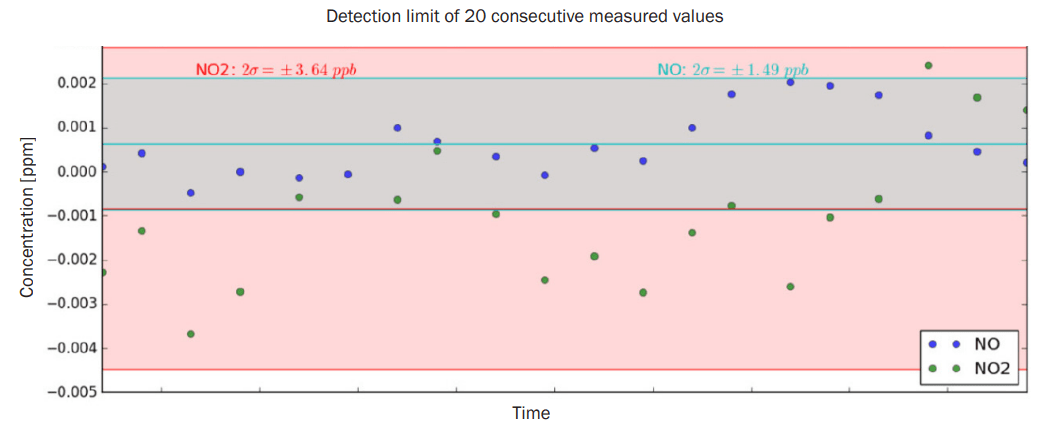
In contrast to the aforementioned method for determining the detection limit, EN 15267 stipulates that 20 consecutive measured values must be recorded.
Detection limit of 20 consecutive measured values
Detection Limit
NO
0.0015 ppm
NO2
0.0036 ppm
Visibility
Visibility in accordance with the SICK standard method
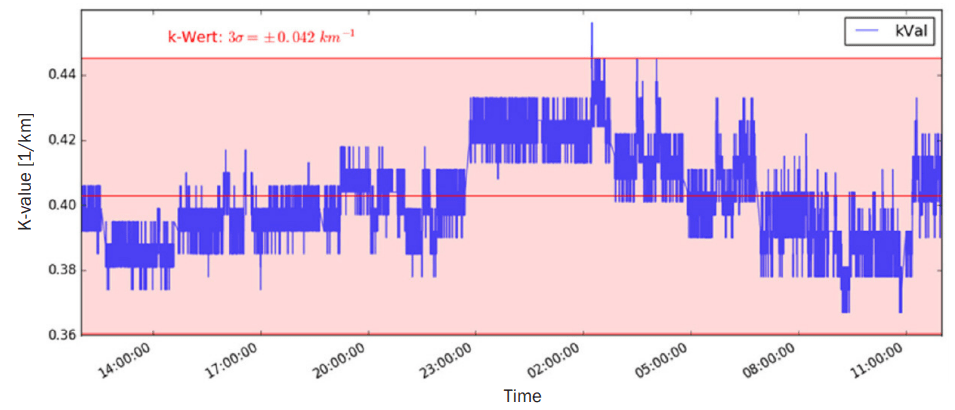
To determine the visibility detection limit, we followed the same method. The measured values with clear visibility are recorded for 24 hours.
Visibility in accordance with the SICK standard method
Single Standard Deviation
Triple Standard Deviation
Visibility
0.014 k
0.042 k
Visibility in accordance with EN 15267
Following the above requirements as stipulated by EN 15627 results in a double standard deviation with 20 consecutive measured values of 0.016 k.
Reproducibility / Repeatability standard deviation at the reference point
Gas measurement (NO/NO2)
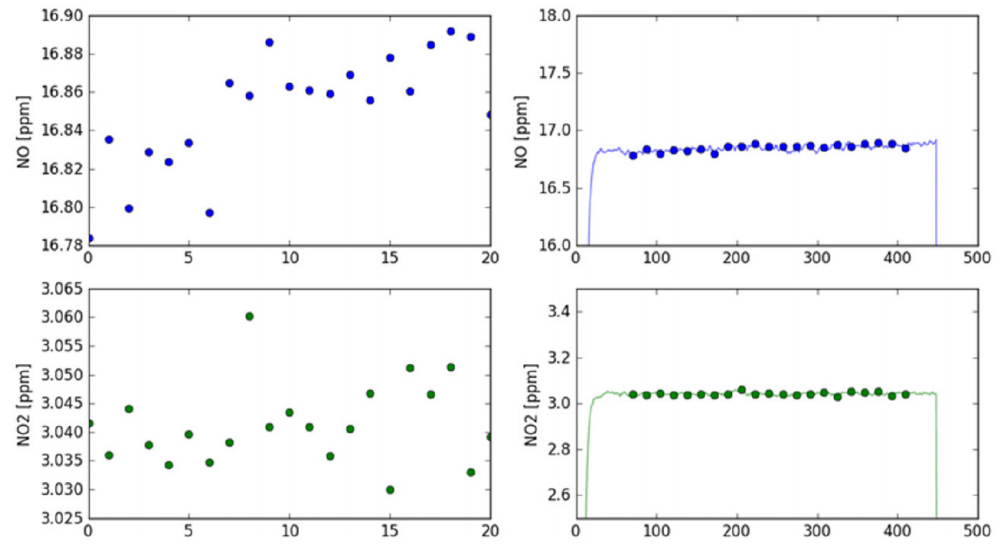
Due to the instability of NO and NO2, a cell is used which is constantly purged with calibration gas. This ensures that the gas concentrations are stable.
The measurement signals were recorded for 20 consecutive measured values.
To determine the repeatability standard deviation, EN 15267-3 stipulates that the single standard deviation must be determined. This results in the following standard deviations:
Unit
NO
NO2
Measuring range limit value
ppm
45
5
Average value
ppm
16.85
3.04
Standard deviation
ppG
30.92
7.08
Standard deviation relative to the measuring range limit value
%
0.07
0.14
Standard deviation relative to the measured value
%
0.18
0.23
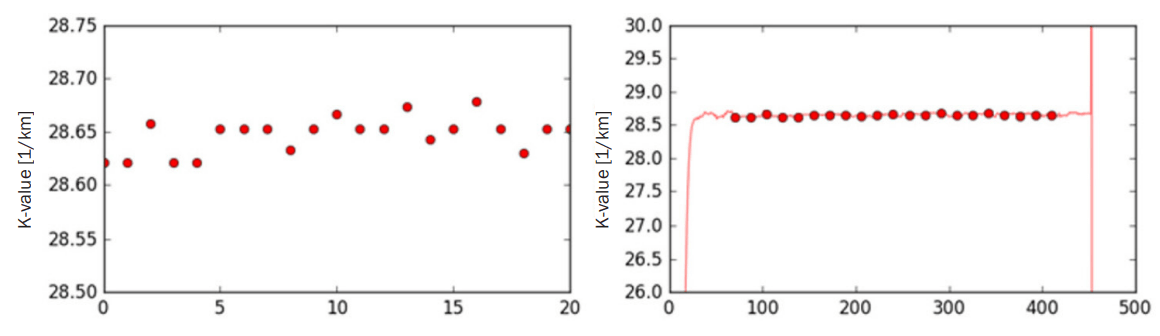
Visual Range
In the same way as the gas measurement, we determined the reproducibility using the standard deviation at the reference point. 20 independent consecutive measured values were taken and the standard deviation was calculated. A reference filter was used to measure the visibility.
Visual Range
Unit
K-Value
Measuring range limit value
km-¹
15
Average value
km-¹
28.65
Standard deviation
km-¹
0.017
Standard deviation relative to the measuring range limit value
%
0.11
Standard deviation relative to the measured value
%
0.06
Accuracy
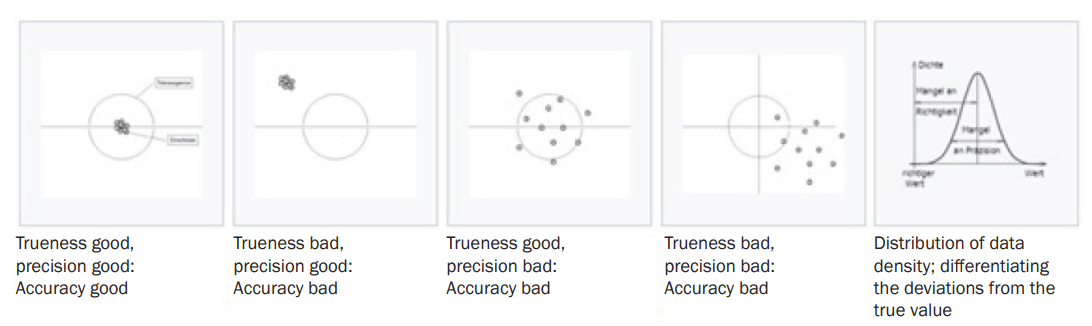
Copyright: Bernhard Thiery – own work, Saure – own work
Measurement results are considered accurate if they are both true and precise. The image of a target with multiple shots is often used by way of illustration.
Determining the measurement trueness
The trueness is influenced by systematic deviations. In the case of the VICOTEC320, these are:
Linearity error: The linearity error has already been determined (see above).
Cross sensitivity: When analysing NO2 in the region of 450 nm, no cross influences from gases present in the tunnel have been identified. NO is influenced by NO2 but this is compensated for within the spectrometric analysis.
Effects of temperature: The effects of temperature are not shown under controlled conditions with a measuring distance of 10 m. They are therefore not included when investigating the measurement trueness.
Determining the precision
All random errors are taken into account when determining the precision. This includes the above-determined factors:
– Repeatability standard deviation
– Zero point drift
Combined uncertainty as accuracy
The combined uncertainty is always the quadratic sum of the partial uncertainties.
When determining the combined uncertainty, we follow the specifications of DIN EN ISO 14956:2002 based on GUM (“Guide to the expression of uncertainty in measurement”). Statistically distributed uncertainties (normal distribution) are incorporated directly into the total and uniformly distributed uncertainties (rectangular distribution) are multiplied by 1⁄√3.
Thorne & Derrick are Specialist Distributors of Hazardous Area & Explosion Proof Equipment with IECEx & ATEX Certifications to the onshore and offshore oil, gas, petrochemicals and process industries.
Mobile potable and domestic water supply as well as the reliable drainage of rain and waste water at low temperatures is susceptible to freeze damage. Frozen and burst pipes cause serious problems and additional costs, especially at building sites.
Freeze protection for mobile water supply is essential, both internal heating of potable and domestic water pipes and on-pipe installation, e.g. for waste water applications.
Eltherm offer suitable heating cables for various freeze protection applications which are easy to install.
Being experts in freeze protection of different applications for 25 years, they have developed useful systems to fight frost damage professionally, like our food-safe and potable water approved self-regulating heating cable ELSR-M-AF/BF for potable water applications or our reliable heating cable ELSR-N for domestic and waste water applications.
Both can be installed inside a pipe. They keep the pipes ice-free without insulation, down to -30 °C. These heating cables are highly flexible and perfect for short heating circuits, whereby ELSR-M-AF allows the smallest dimension.
Eltherm also offers the appropriate system for the external heating of potable water, wastewater and rainwater pipes – including control and monitoring and suitable accessories.
A higher level of safety and considerable cost savings in the long term and are the key benefits of our systems.
Heat Tracing For Water Pipes Benefits
Small dimensions heat tracing cables
Trace heating cables can be installed inside the pipe
Control and monitoring and suitable accessories available for heat trace systems
Flexible heated hoses for mobile potable, tap and waste water supply
Nominal diameters: 19 & 25
Internally heated potable and waste water pipe
Eltherm Heated Hoses
Electrical Heating Specialists
Thorne & Derrick International, based in the UK, can specify and supply from stock an extensive range of Electrical Heating Equipment for industrial and process heating applications – this includes temperature maintenance and frost protection (Winterisation) products for pipework, valves, IBC’s, drums, hoses, tanks and vessels. We produce custom silicone heaters for rapid and high temperature heat-up of complex shapes and surfaces – from concept, design to the delivery of standard or bespoke heaters on the shortest lead times. From the largest UK heat tracing cable stocks we deliver Electric Trace Heating Systems for pipework frost protection, ramp heating, roof/gutter snow melting and de-icing – enquire about our in-house design service.
EXPERTS IN WINTERISATION SOLUTIONS FOR INDUSTRIAL & HAZARDOUS AREA ENVIRONMENTS
Thorne & Derrick hold the largest UK stocks of frost protection & winterisation equipment to help keep your plant and personnel operational during the winter months.
Thorne & Derrick understand that prolonged periods of low ambient temperatures can bring operations to a standstill costing thousands of pounds in lost downtime.
Experts in heating solutions for use in industrial & explosive atmospheres, Thorne & Derrick have the knowledge & expertise to help clients prevent unnecessary down time this winter.
We can provide overnight delivery of Trace Heating Cables at the most competitive prices to guarantee frost protection of your pipelines and mechanical services.| Ask About Our Heat Trace Design Service.
💡 Contact us today and our skilled and friendly team can provide technical support as well as reliable, fit for purpose and compliant solutions to suit your exact requirements.
➡See our Winterisation blog TOP PICKS, including our most read articles about Trace Heating and the requirement for electrical heating products and systems to combat and mitigate Winter weather effects.
Featured in Jan/Feb Edition of Hazardous Engineering Solutions - Article By Nightstick
A common misconception is that waterproof and water resistance have the same meaning, but this is far from true. Even though some companies use them interchangeably, they do not represent the same thing, and not knowing the difference can ruin your device.
You can tell precisely how waterproof something is if you know its IP rating. The IP rating scale is a standard set by the International Electrotechnical Commission. It specifies how resistant a device is to freshwater, dirt, dust, or sand and typically appears on the product’s packaging or in the instruction manual technical specifications. Here are the IP ratings from lowest to highest.
IPX0: No protection against. IPX1: Protected against vertically dripping water for a short amount of time at normal orientation. IPX2: Protected against vertically dripping water when tilted up to 15° from normal orientation. IPX3: Protected against water falling as spray rotated up to 60° from normal orientation.
Water-Resistant
IPX4: Protected against a splash of water from any direction. IPX5: Protected against a stream of water from any direction. IPX6: Protected against strong stream of water from any direction.
Waterproof
IPX7: Protected when submerged up to a 1-meter depth. (Often listed with a time duration.) IPX8: Object suitable for continuous immersion in water at a depth of more than 1 meter. (Often listed with a time duration.)
Nightstick’s new MagMateTM charging technology provides users a waterproof method to recharge their portable LED lighting. Simply hold the magnetic connector close to the hermetically sealed charging port; the coupler will automatically snap into place.
With no port to open or rubber cap to get torn off, the possibility of water entering the product while recharging has been eliminated. Nightstick has over 50 waterproof intrinsically safe portable lighting products.
NIGHTSTICK® – Performance, Quality and Value
Nightstick, designed and manufactured by Bayco Products, Inc., is a global brand of professional lighting products including flashlights, headlamps and Intrinsically Safe lighting solutions that exceed the industry standards in performance, quality, user-safety and value.
Experts In Equipment for Explosive Atmospheres | Leaders in ATEX Innovation
➡ Contact us to discuss your Electrical Heating, Lighting, Ventilation or Power requirements for safe and reliable use in hazardous areas and explosive atmospheres in accordance and compliance with UKCA certification requirements and ATEX/IECEx.
Press Release Date: 02.04.2020 uploaded by Chris Dodds (T&D Sales + Marketing Manager) World’s First Fully Certified ATEX Doors Thorne & Derrick International, the Experts in Equipment for Explosive Atmospheres, today announce the signing of a Commercial Distribution Agreement...
Press Release Date: 04.07.2019 uploaded by Chris Dodds (T&D Sales + Marketing Manager) Category: Stockist Distributor Agreement Announcement Thorne & Derrick International announce that they have signed a Preferred Distributor Agreement with Raytec, the world leading manufacturer of LED...























 To determine the repeatability standard deviation, EN 15267-3 stipulates that the single standard deviation must be determined. This results in the following standard deviations: