uploaded by Chris Dodds – Thorne & Derrick Sales & Marketing Manager
Amphenol Low Smoke Zero Halogen Inserts
EN 45545-2 Certification
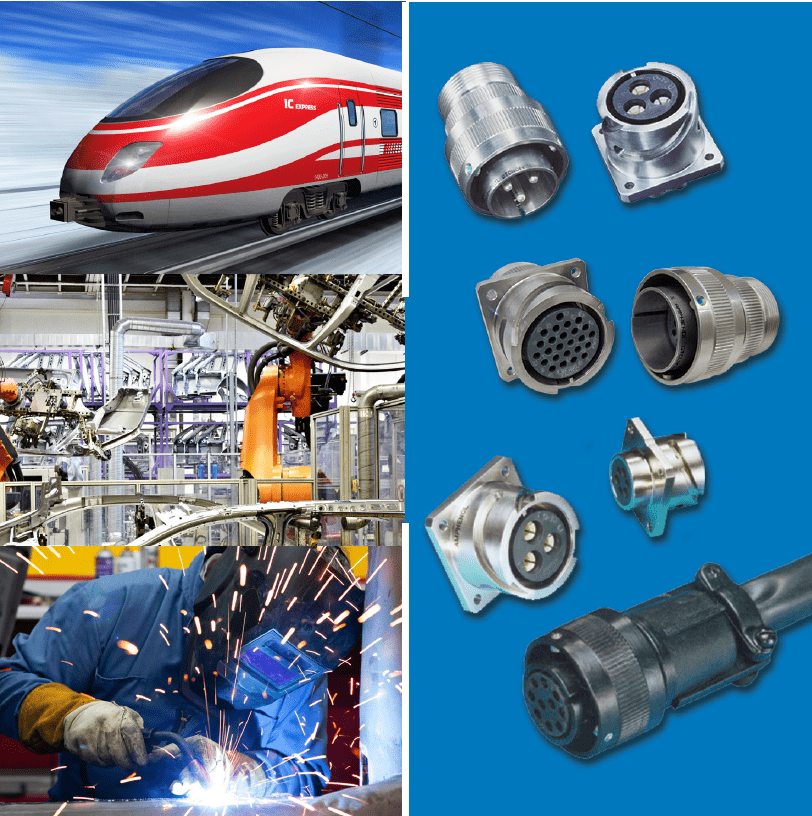
Amphenol Industrial Operations are a worldwide leader in interconnect systems. They have recently received the EN-45545-2 certification for their GT reverse bayonet connector series and 5015 connector series. EN-45545-2 is a certification which defines specific requirements for fire behaviour of materials used to manufacture products used in trains.
The testing process was carried out by SGS, the world’s leading inspection, verification, testing and certification company. The SGS certification process is well known around the world as the benchmark for quality and integrity.
The certification is for the low smoke zero halogen (LSZH) material used in these products.
Mark Cunningham, General Manager at Amphenol Industrial Operations, said, “Qualifying for this EN 45545-2 certification means we’re fulfilling our promise to produce the highest quality connectors. LSZH materials are essential for use in the rail and mass transit market and this shows the technology is meeting the highest standard. We are pleased that we are able to offer our customers the safest and very best products available.”
Low smoke zero halogen
Low smoke zero halogen is a material that is often used in the insert of the connector. When exposed to flames and high levels of heat, LSZH materials produce a very small amount of visible smoke, compared to other materials like PVC; and includes no halogen, which can be harmful to humans.
en 45545-2 classification
EN 45545-2 classifies all material on board trains into groups which have to fulfill specific “Requirement Sets”. These often include various test methods. The test methods included in each Requirements Set are shown in the below.
Test Methods
R1
R2
R3
R4
R5
R6
R7
R8
R9
R10
R11
R12
R13
R14
R15
R16
R17
R18
R19
R20
R21
R22
R23
R24
R25
R26
ISO 5658-2
X
X
X
X
X
X
X
X
EN ISO 5659-2
50*
50*
50*
50*
25**
50*
50*
25**
25**
25**
50*
50*
50*
25**
25**
25**
25**
ISO 5660-1
50*
50*
50*
25**
50*
50*
25**
25**
25**
50*
50*
50*
25**
25**
25**
EN ISO 9239-1
X
X
EN ISO 11925-2
Xª
Xª
Xª
X
X
Xª
Xª
Xª
Xª
ISO/TR 9705-2
X
EN ISO 4589-2
X
X
X
EN 13501-1
X
ISO 2592/ISO 2719
X
EN 60332-1-2
X
X
EN 60332-3-24 or EN 50305 b
X
X
EN 61034-2
X
X
EN 60695-2-11
X
EN 60695-11-10
X
NF X 70-100-1/-2
X
X
EN ISO 12952-2
X
ª Supplementation when, tested in accordance with ISO 5658-2, flaming droplets occur or test result is reported as unclassifiable.
* Irradiance level 50 kW/m 2 , for EN ISO 5659-2 test is conducted without pilot flame.
** Irradiance level 25 kW/m 2 , for EN ISO 5659-2 test is conducted with pilot flame.
amphenol GT Reverse Bayonet connectors
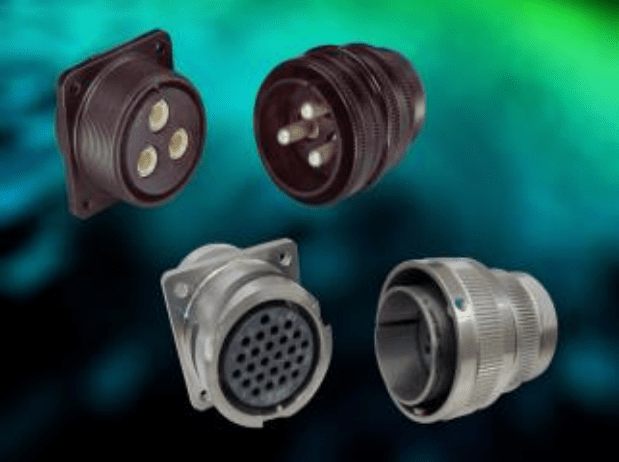
Amphenol GT Connectors with Reverse Bayonet Coupling have been designed according to MIL-DTL-5015 Standard insert patterns. Although these circular reverse bayonet connectors were first used in the military market, they are now the preferred hazardous area connector choice for the mass transit industry and have become a widely used connector for applications in other markets such as aerospace, geophysical and alternative energy.
Businesses in these markets are often based within or around hazardous area locations, and require a reliable connector that can survive the harshest environments while still supplying high current power and signal.
With such a large variety of design options available such as shell styles, insert configurations, and backshells, the GT connector offers a wide range of choices for a wide range of applications.
Features & Benefits
Rugged aluminum or stainless steel shell styles
Variety of additional shell platings available
Crimp and solder contacts available with silver or gold plating
Inserts with Neoprene or optional low smoke material or Viton material
Operating temperature: Neoprene/low smoke -55°C to +125°C; Viton -50°C to +200°C
Audible, tactile, and visual indication of positive coupling
LV HV Electrical & Process Instrumentation Equipment for Explosive Atmospheres
Specialist Distributors of Hazardous Area & Explosion Proof Equipment with IECEx & ATEX Certifications – we react with a rapid response to your enquiry to ensure downtime is minimised and reliable Power, Light & Heat is restored or provided.
Electrical Power LV HV | Heating | Lighting | Process Instrumentation | EX Specialists
Marechal EVO The First Separable, Switch-Disconnector
MARECHAL EVO
A Separable Switch & Disconnector
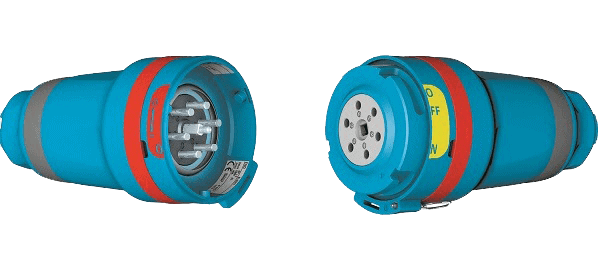
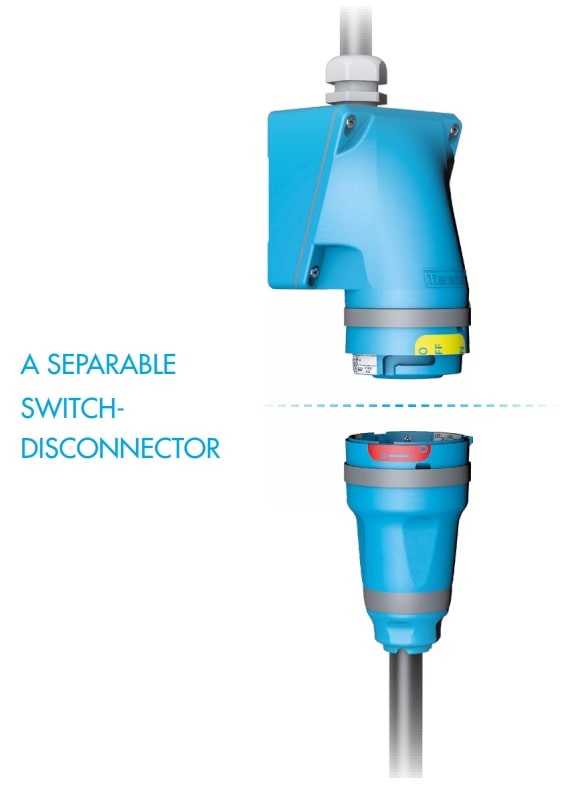
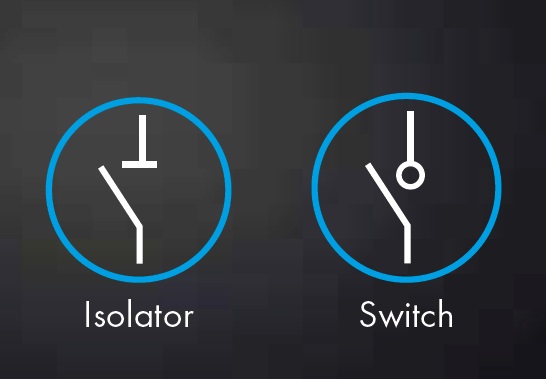
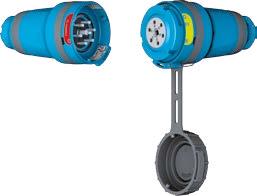
Marechal Electric is at the heart of innovation with the invention of the first switch disconnector up to 40A and first separable switch disconnector. The uniquely and ergonomically designed Marechal EVO combines three products in one – switch, disconnector and plug offering greater safety, easier use and less space for installation.
Thanks to the innovative « Twist & Switch » design, EVO offers a positive break indication that reflects the exact position of the contacts. Also referred to EVO40 (40A) is a detachable switch disconnector with rotary manual control from 2 to 6 poles.
Compliant with IEC/EN 60947-1 and 60947-3 standards, EVO40 allows for frequent making and breaking on load, while ensuring safe isolation of any low voltage electrical circuit:
resistive (AC-21A), mixed resistive/inductive (AC-22A) or inductive (AC-23A). EVO40 also allows for on load making & breaking of all electric motors (AC-3), as per IEC/EN 60943-3 standard requirements.
Equipped with self-cleaning silver alloy contact tips and a unique and patented mechanism, our new technological concept combines the functionalities of a switch and an isolator.
The design facilitates successive double breaking pole by pole, which ensures optimal safety during any maintenance operation.
Once the supply and load parts have been separated, a safety shutter prevents any risk of electric shock (IP4X/IPXXD). The robust mechanism allows distinctly and visibly
separated disconnection and separation even in the event of overload currents.
Below describes the features and benefits of Marechal’s new twist and switch technology.
Marechal EVO | The First Separable Switch-Disconnector
DISCONNECTOR, SWITCH, PLUG
Marechal EVO is created mainly to enhance the safety for user and installations. Its flawless design enables the opening and separation, even if there is an overintensity or overvoltage default. Nowdays, with a typical switch-disconnector, in case of overintensity, you can’t be guaranteed of the disconnection if the contacts melt. With EVO, the division is apparent as the product is split into in two parts.
EVO
TWIST AND SWITCH, SEPARATE
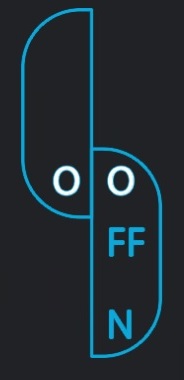
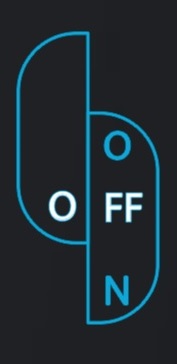
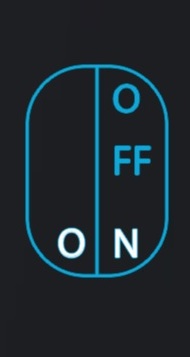
The industry has a new safety reflex thanks to its rotary twist: lining up both “O” and placing simultaneously the two parts of the switch disconnector without any powering. Twisting the EVO into the “OFF” position means it is prepared for connection without any power running through it.
The main benefit of the EVO in this position is to have a waterproof product without power.
Twist once more to place the product into the “ON” position meaning the EVO is powered but still watertight.
EVO offers a positive break indication that reflects the exact position of the contacts.
Mating Position
OFF position IP66/IP67, padlockable
ON position IP66/IP67 lockable
Marechal EVO – First Detachable Switch-Disconnector
Suitable for arduous environments with an operating temperature of between -25°C to +60°C as the separation shows the exact position of the contacts and promises 100% safety during any maintenance operation.
The design of the EVO provides greater flexibility and suitability in the most challenging applications in terms of hygiene, robustness and reliability.
The switch disconnector manufactured by Marechal can be used in all industries as it is very easy to install: only one tool is needed! Using a screwdriver the installer can easily put the switch isolator in the correct place.
EVO40 SEPARABLE SWITCH DISCONNECTOR
The unique technology incorporates functionalities of a 40A switch, a disconnector and an industrial connector available with self-cleaning silver contacts with silver tips and bespoke “twist” mechanism.
Merging three products into one streamlines your electrical installation and the ergonomic design makes managing and cleaning simpler. The product is watertight (IP66 / IP67), in the ON and OFF positions.
Safety is Marechal’s main priority when it comes to the EVO40. A visible and detachable break ensures the safe isolation of any low electrical circuit (AC-23 18.5 kW, AC-3 11 kW).
EVO40 complies with the IEC 60204-1 standard for machine safety and the switch disconnector is adapted for all motor plugging configuration up to 6 poles + earth.
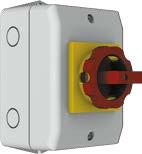
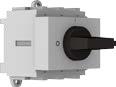
A strong and durable switch that can be installed on a wall or in-line for mobile installations and can be lockable and padlockable in ON and OFF positions.
Smooth crevice free design, no visible fixing screws – Easy to clean
Positive, clearly visible and detachable breaking – 100% assured safety
No access to live parts – User safety and compliance with standards
Disconnection speed independent of operator use – Easy to use
Up to 6 poles + earth – Ability to connect power and/or control signals
Automatic IP66/IP67 sealing in ON and OFF positions – Suitable for harsh industrial environments
Suitable for frequent switching of mixed resistive and inductive circuits
3 possible installations – In line coupler, on an enclosure & a wall box
EVO Technical Specification
Mechanical Endurance
> 10,000 cycles
Electrical Endurance
1500 cycles
Ui: Rated Insulation Voltage
1000 V AC/1500 V DC
Ith: Conventional Thermal Current in Free Air
40 A
Uimp: Rated Impulse Withstand Voltage
8 kV
AC-23A – 400 V AC
18.5 kW
AC-3 – 690 V AC
11 kW
Irms: Peak-to-Peak Current with Fuses (kA)
10 kA
Icm: Rated short-time making capacity (kA peak)
1 kA
Cable Cross-Section Cu (sqmm)
2.5 – 10 sqmm flexible
2.5 – 16 sqmm stranded
Degree of Protection (IEC 60529)
IP66/IP67
Shock Resistance (IEC62262)
IK09
Ambient Air Temperature
– 25ºC / + 60ºC
Marechal EVO40 Part Numbers
Voltage
Poles
Outlet
Inlet
Straight Sleeve
70º Inclined Sleeve
Handle
90º Wall Box
200-250 V AC
2P+E
8144032
8148032
51LM0
51LM7
51LP0D21(2)
51LC9000
3P+E
8144033
8148033
4P+E
8144034
8148034
6P+E
8144036
8148036
380-480 V AC
2P+E
8144012
8148012
51LM0
51LM7
51LP0D21(2)
51LC9000
3P+E
8144013
8148013
4P+E
8144014
8148014
6P+E
8144016
8148016
500-690 V AC
2P+E
8144052
8148052
51LM0
51LM7
51LP0D21(2)
51LC9000
3P+E
8144053
8148053
4P+E
8144054
8148054
6P+E
8144056
8148056
Other Voltages
2P+E
8144122
8148122
51LM0
51LM7
51LP0D21(2)
51LC9000
3P+E
8144123
8148123
4P+E
8144124
8148124
6P+E
8144126
8148126
(1) Without thread, entry upwards. Reversible at 50° with downward entry.
(2) Gland size 5-21 mm.
Compliance With IEC Standards
IEC/EN 60947-3/-4/-5 – Low voltage switchgear and control gear: Switches, disconnectors, switch-disconnectors and fuse-combination units
IEC/EN 60309-1/-4 – Plugs, socket outlets and couplers for industrial purposes
IEC/EN 61984 – Plugs, socket-outlets and couplers for industrial purposes
European Directive 2006/42/CE, ISO12100, IEC/EN60204-1 – Safety for machines and applications
➡ Thorne & Derrick supply the full product offering of Marechal switches, plugs and sockets. They are available in a range of current ratings, switching capabilities, voltage supply and for safe & hazardous areas (according to ATEX & IECEx) for safe use in potentially explosive atmospheres. Including oil, gas and petrochem industries with hazardous area Zones 1 & 2 (Gas) and Zones 21 & 22 (Dust).
Industrial Power Plugs – Marechal Decontactors with 16A to 700A current ratings and 1,000 volt power supply.
Hazardous Area Plugs & Sockets – ATEX certified for explosive atmospheres Zone 1 & Zone 2 (Gas) and Zone 21 & Zone 22 (Dust).
ELECTRICAL & PROCESS INSTRUMENTATION EQUIPMENT
FOR EXPLOSIVE ATMOSPHERES
Thorne & Derrick are Specialist Distributors of Hazardous Area & Explosion Proof Equipment with IECEx & ATEX Certifications to the onshore and offshore oil, gas, petrochemicals and process industries.
Many of the UK’s fire brigades use Wolf portable intrinsically safe lighting for breathing apparatus kits, personal issue and general purpose use. The equipment they require includes rechargeable and primary cell, bulb and LED right angle torches and handlamps.
For the past 16 years Wolf had the London Fire Brigade contract which supplies torches to the London Ambulance Service and the NHS Hazardous Area Response Teams across the UK.
Wolf are committed to delivering high performance products that are simple to maintain and and use the most up to date technologies that have compliance with European ATEX Directives, as well as International IECEx Certification.
Wolf ATEX Safety LED Torches – ATEX & IECEx approved for use in hazardous area
Wolf TR-30+and Wolf TS-30+ are ATEX torches with “ib” intrinsic safety type of protection for hazardous areas – using high power LED as the light source the TR-30+ and TS-30+ provide an output of 130lm.
ATEX Safety Torches with LED, with a `fitted for life’ LED, extend the ATEX Torch Range and providing an enormous improvement in light output over the bulb models from around 17 lumens to approximately 70 lumens.
Battery span has increased from 10 to 27 hours so the working environment is a lot safer as there’s more light for longer thanks to less battery changes bringing ultimately lower running costs.
Wolf Safety part number TP-300 Torch LED Module for use as a retro-fit replacement in the T4 bulb versions of the Wolf ATEX Torch range TS-24, TS-24+, TR-24, TR-24+. Meaning that S/TR-30+ can be retrofitted to existing TS/TR-24 and TS/TR-24+ safety torches to upgrade them.
Replacing the existing bulb contact with the LED module is fast and simple. In the future there won’t be a need for as many bulb changes to maintain an ultra bright light output. In addition the TP-300 module has an integrated battery monitoring system which informs the user when the batteries are close to running out and needing to be changed, eradicating ‘just in case’ battery changes and decreasing the potential of ‘over discharge’ of batteries that may cause the cells to leak and damage the torch.
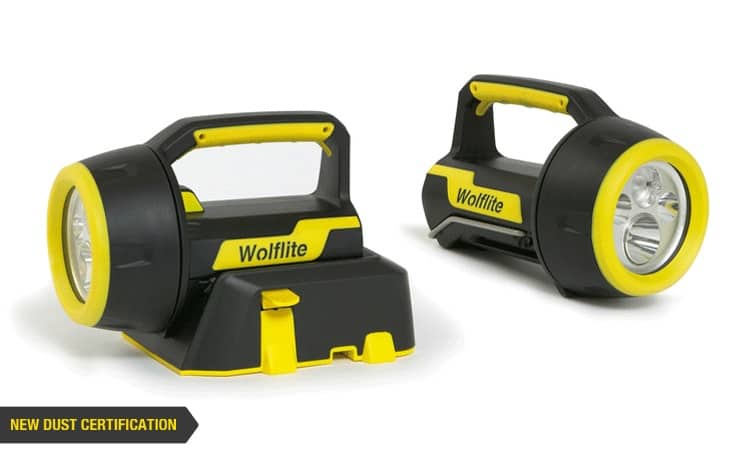
The Worklite H-251A handlamp has been established as the benchmark product by European fire brigades over many years; the latest generation Wolflite XT handlamp is one of our most significant advancements in the past 25 years.
Wolf Wolflite XT LED Handlamp
Wolflite XT is an ultra bright handlamp with high power LED light 350+ lumens on full power. Spot and flood switchable beam options enable a flexible solution for portable lighting requirements.
The Wolflite XT is currently in use at Leicestershire Fire and Rescue, Tyne & Wear Fire & Civil Defence, and, most recently, Hereford & Worcester Fire & Rescue Service.
“We trialled the XT handlamp and were so impressed we bought enough units to kit out six new appliances, and intend to replace our existing Wolf Lamps with XTs on every new appliance we purchase…ultimately [existing lamps] will be replaced with the XT on a rolling program in the future. We have used hand lamps from Wolf Safety for many years now and we are extremely happy with the products, the service and more so the staff we liaise with.” Toby Kempton, Station Commander, Hereford & Worcester Fire & Rescue Service.
As well as being extensively used within UK fire brigades several are used in fire markets in Europe including Germany, France and Austria. After being recently upgraded to the P4 LED technology, these torches have a light output of up to 145 and 185 lumens respectively, with bespoke optics delivering a focused spot beam combined with a wide-angle fringe of light for peripheral vision.
“The TR-40 has become an integral component of our breathing apparatus equipment, and helps us maintain the operational safety of our fire-fighters wearing BA in hostile environments.” Robin Turnbull, Sedgefield District Manager, County Durham and Darlington Fire and Rescue Service
The level of knowledge and expertise that we have of portable lighting products for the fire market allows us to offer high quality and robust products with a customised service for the requirements of the end user.
Wolf Safety Lamp lighting ranges include an extensive range of ATEX and IECEx certified portable lighting for safe use in potentially explosive atmospheres, including hazardous area Zone 1 & Zone 2: explosion proof Wolf handheld torches, headtorches, handlamps with bulb or LED versions.
Thorne & Derrick are Specialist Distributors of Hazardous Area & Explosion Proof Equipment with IECEx & ATEX Certifications to the onshore and offshore oil, gas, petrochemicals and process industries.
Bluefield is passionate about equipment that operates reliably, at the lowest cost per tonne, and at reduced risk for clients in the mining, gas and transport industries.
The Bluefield specialists assist our clients to overcome the following:
Stress that comes from unreliable equipment
Unwanted calls from the site at night and on the weekend due to unscheduled events
Meetings to review maintenance budgets or production targets that are not on target
Asset replacement decisions that are not optimal for the business bottom line
Risk or uncertainty over asset integrity that could lead to catastrophic equipment failures
VERIFICATION DOSSIERS
A Verification Dossier is defined, according toIEC 60079.14 Edition 5 2013-11, as a:
Set of documents showing the compliance of electrical equipment and installations.
Therefore, all electrical equipment that is to be installed in a hazardous area will need to be manufactured to a certain standard along with the electrical design of the installation.
Once a manufacturer develops a product, a sample of the equipment is to be sent to a Testing Laboratory (of which there are three acceptable Testing Laboratories in Australia) where they will put the equipment through a rigorous testing procedure. If the equipment satisfies these tests, results of the testing are then sent to the Certification Body that will Certify the equipment and issue a “Certificate of Conformity” for the equipment.
The ATEX equipment 2014/34/EU was put into place to remove barriers to trade by ensuring that the quality of equipment manufactured within the EU met rigorous essential safety requirements. The second ATEX directive is the 1999/92/EC which is a Workplace Directive that addresses safety where there is danger from potentially explosive materials.
These are directives and must be followed throughout the EU.
All documentation in relation to the hazardous area needs to be retained and kept as a live document – this collection of documentation is called the Hazardous Area Verification Dossier.
This can come in several different forms: hard copy, electronic copy, or the software tools that have been created in alignment with IEC 60079.17 Edition 5 2013-11.The software can be used to retain information, carry out inspections and highlight non-conformances and upcoming inspections. The dossier must be accessible to all those on-site working within or related to the hazardous area.
The following is an example of the process to be carried out in relation to developing compliant hazardous areas along with documentation that needs to be retained and included in the Hazardous Area Verification Dossier to maintain compliance.
CLASSIFICATION of hazardous areas
When a hazardous area is present or may be expected to be present, the first requirement is to complete a basic general arrangement design of the plant.From this design certain information is required to be able to perform a Hazardous Area Classification.
General arrangement drawings
Flammable gas, vapour
Possible sources of release of vapours
The hazardous area classification needs to be carried out to IEC 60079.10.1 by an electrical engineer with the required competency.
IEC Personal Competency CoPc Ex 002 – Perform Classification of Hazardous Areas
Australia
UEENEEM052A
Classify Hazardous Areas – Gas Atmospheres
UEENEEM053A
Classify Hazardous Areas – Dust Atmospheres
The hazardous area classification is a study on the flammable gases and possible sources of release which will determine the “Zonal extents” as a Zone 0, 1 or 2 (for flammable gas atmospheres) or Zone 20, 21 or 22 (for combustible dust atmospheres).
This restricts electrical equipment including lighting systems that can be installed in or enter these Zones (permanent, portable, transportable and personal).
The classification will also determine the gas group which determines how easily the gas can be ignited by “spark”.
There are 3 gas groups IIA, IIB and IIC, (IIC being the most easily ignitable) or on the case of combustible dust groups IIIA, IIIB or IIIC (IIIC being the most onerous).
The classification will also determine temperature class (T-Class) which will determine how easily the gas can be ignited by “temperature”. There are 6 temperature classes T1, T2, T3, T4, T5 and T6, (T6 being the most easily ignitable) these are dependent on ambient temperatures. In the case of dust, the ignition temperatures of the dust is considered for both a layer of dust and a cloud of dust and given as a temperature.
A flammable gas or combustible dust table will be created, giving properties of all flammable or combustible material found on site.
A source of release table showing all possible sources of release and other information such as Grades of release and zonal extents explained.
A Hazardous Area Classification Schedule is then created, which will include the previous tables mentioned in report form and hazardous area drawings drafted from information entered into the source of release table showing zonal extents gas or dust group and temperature class.
These drawings should be available in both plan and elevation.
As a plant increases in age, some things change that may include
Buildings erected or demolished
Changes to the process
Changes to chemicals used
Any of these may alter the original classification and require a review from a competent person as mentioned previously.
It is for this reason that it is recommended to have a review of the classification carried out on a regular basis to ensure safety, compliance and efficiency.
HAZARDOUS AREA ELECTRICAL DESIGN
Once the Hazardous Area Classification has been completed, the electrical design can be refined into suitable “certified” electrical equipment for that hazardous area.
All electrical equipment is required to have certification from an accepted certification scheme as previously mentioned.
Throughout the EU Hazardous Area Design must follow the ATEX directives
IEC is an international certification scheme that is accepted in all participating IEC member counties
In Australia, only equipment with a Certificate of Conformity under the ANZEx (previously AUS Ex) or IECEx scheme is suitable for installation within Australia (ATEX is not accepted).
Equipment certified to alternate foreign schemes may be accepted after a Conformity assessment or Fitness for purpose assessment has been completed for that equipment for it to be installed on that site under certain conditions.
The hazardous area electrical design needs to be carried out to IEC 60079.14 by an electrical engineer holding the required competency.
IEC Personal Competency CoPc Ex 009 – Design Electrical Installations
CompEx
Ex 12A
Design of Non-Intrinsically Safe electrical equipment installations in explosive atmospheres
Ex 12B
Design of Intrinsically Safe electrical equipment in explosive atmospheres
Australia
UEENEEM057A
Design explosion-protected electrical systems and installations – gas atmospheres
UEENEEM058A
Design explosion-protected electrical systems and installations – dust atmospheres
UEENEEM059A
Design explosion-protected electrical systems and installations – pressurisation
HAZARDOUS AREA ELECTRICAL INSTALLATION
Electrical equipment needs to be selected and installed according to the hazardous area electrical design.
The hazardous area installation is an electrical installation and still needs to be installed and tested in accordance with all electrical acts and regulations for the country as well as the latest edition of the hazardous area standard IEC 60079.14
The hazardous area installation needs to be installed by an electrician holding the required competency.
IEC Personal Competency CoPc Ex 003
Install Explosion-Protected Equipment & Wiring Systems
CompEx
Ex 01
The preparation & installation of Ex ‘d’, ‘n’, ‘e’ and ‘p’ electrical equipment in explosive atmospheres
Ex 03
The preparation & installation of Ex ‘i’ equipment and systems in explosive atmospheres
Australia
UEENEEM023A
Install explosion-protected equipment and wiring systems –
coal
UEENEEM024A
Install explosion-protected equipment and wiring systems – gas atmospheres
UEENEEM025A
Install explosion-protected equipment and wiring systems – dust atmospheres
UEENEEM026A
Install explosion-protected equipment and wiring systems – pressurisation
HAZARDOUS AREA ELECTRICAL MAINTENANCE
Maintenance for the hazardous area electrical installation needs to be carried out to the version of IEC 60079.17 to which it was installed and carried out by an electrician holding the required competency.
IEC Personal Competency CoPc Ex 004 – Maintain Equipment in Hazardous Areas
CompEx
Ex 02
The inspection and maintenance of Ex ‘d’, ‘n’, ‘e’ and ‘p’ electrical equipment in explosive atmospheres
Ex 04
The inspection and maintenance of Ex ‘i’ equipment and systems in explosive atmospheres
Australia
UEENEEM027A
Maintain equipment in hazardous areas – coal
UEENEEM028A
Maintain equipment in hazardous areas – gas atmospheres
UEENEEM029A
Maintain equipment in hazardous areas – dust atmospheres
UEENEEM030A
Maintain equipment in hazardous areas – pressurisation
HAZARDOUS AREA ELECTRICAL TESTING
The hazardous area electrical installation needs to be tested to IEC 60079.14 by an electrician holding the required competency.
IEC Personal Competency CoPc Ex 006 – Test Electrical Installations
Australia
UEENEEM038A
Conduct testing of hazardous area installations – coal
UEENEEM039A
Conduct testing of hazardous area installations – gas atmospheres
UEENEEM040A
Conduct testing of hazardous area installations – dust atmospheres
UEENEEM041A
Conduct testing of hazardous area installations – pressurisation
HAZARDOUS AREA ELECTRICAL INSPECTIONS
Once the installation has been completed the hazardous area electrical installation is required to have an “Initial Detailed Inspection” carried out.
Once the equipment is in service, ongoing periodic inspections are required to take place that can be completed as a visual inspection which is considered as a “hands in pockets” inspection, where the inspection is completed without tools or access equipment, or as a close grade inspection, which allows for the use of tools and access equipment and covers all aspects of a visual inspection with extra checks.
All inspections need to be compliant to the version of IEC 60079.17 to which the equipment was installed.
The inspections are to be carried out by an electrician holding the required competency.
IEC Personal Competency CoPc Ex 003
Install Explosion-protected Equipment & Wiring Systems
CompEx
Ex 02
The inspection and maintenance of Ex ‘d’, ‘n’, ‘e’ and ‘p’ electrical equipment in explosive atmospheres
Ex 04
The inspection and maintenance of Ex ‘i’ equipment and systems in explosive atmospheres
Australia
UEENEEM023A
Install explosion-protected equipment and wiring systems –
coal
UEENEEM024A
Install explosion-protected equipment and wiring systems –
gas atmospheres
UEENEEM025A
Install explosion-protected equipment and wiring systems – dust atmospheres
UEENEEM026A
Install explosion-protected equipment and wiring systems – pressurisation
In Australia, all Victorian hazardous area installations require an inspection carried out by an electrician holding the “H” class endorsed Victorian electrical licence.
NOTE: The hazardous area electrical inspector should be independent of the installation and maintenance personnel.
The hazardous area electrical inspectors do not need to be from a different company.
HAZARDOUS AREA ELECTRICAL AUDITS
In the State of Queensland, the Electrical Safety Act requires that all “new” hazardous area installations within Queensland require a Hazardous Area Audit completed on the entire installation after the installation has been completed.
The audit is required to be carried out prior to energisation of equipment and circuits within the hazardous area.
The auditor needs to be accredited by the Department of Justice, Electrical Safety Office to carry out electrical hazardous area audits for that category: –
Category A – flammable gases and liquids
Category B – combustible dusts
Category C – flammable gases, liquids and combustible dust
The audit will be carried out looking at classification, design, installation, maintenance strategies and information held in the verification dossier.
A list of accredited hazardous area auditors can be found on the Department of Justice website.
Australia
UEENEEM064A
Conduct audit of hazardous area installations – coal
UEENEEM065A
Conduct audit of hazardous area installations – gas
UEENEEM066A
Conduct audit of hazardous area installations – dust
CONCLUSION
The information contained here is basic information only to give people a better understanding of requirements for hazardous areas.
Every situation is different and needs to satisfy the following: –
Relevant ACT’s and regulations
Relevant standards
Individual country requirements
Individual State requirements
Site policy and procedures
Some people find standards ambiguous or difficult to interpret but most in most instances the requirements and intent can be worked out without ambiguity.
About Thorne & Derrick
Thorne & Derrick International, based in the UK, are Approved Vendors to most Oil & Gas exploration and production companies and international EPC contractors including Bechtel, Petrofac, Saipem and Lamprell – our key sectors are the mining, process, pharmaceutical, chemical, utility, food/beverage, renewable and oil/gas industries.
We contribute strategic and added-value to the supply chains of the global chemical processing and energy sectors via our memberships of North East of England Process Industry Cluster (NEPIC) and NOF.
We are the Explosive Atmosphere Expertsto COMAH-site operators providing innovative and often customised Ex solutionsengineered to improve site safety and reliability.
THORNE & DERRICK
LV HV Electrical & Process Instrumentation Equipment for Explosive Atmospheres
Specialist Distributors of Hazardous Area & Explosion Proof Equipment with IECEx & ATEX Certifications – we react with a rapid response to your enquiry to ensure downtime is minimised and reliable Power, Light & Heat is restored or provided.
Electrical Power LV HV | Heating | Lighting | Process Instrumentation | EX Specialists
The following article has been authored by Brad Guy of Bluefield Compliance
Hazardous areas can sometimes appear to be an area of ambiguity and mystery for some.
This article is aimed at removing the mystery and explaining the basics of hazardous areas by giving some examples of where hazardous areas may be found along with the basic individual requirements.
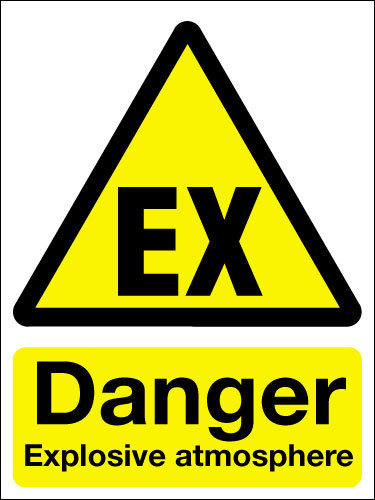
Hazardous Areas are centred around electrical installations that may be surrounded by a flammable or combustible atmospheres where precautions need to be taken to prevent that electrical equipment becoming an ignition source and causing an explosion.
Bluefield is passionate about equipment that operates reliably, at the lowest cost per tonne, and at reduced risk for clients in the mining, gas and transport industries.
The Bluefield specialists assist our clients to overcome the following:
Stress that comes from un-reliable equipment
Unwanted phone calls from site at night and on the weekend due to unscheduled events
Meetings to review maintenance budgets or production targets that are not on target
Asset replacement decisions that are not optimal for the business bottom line
Risk or uncertainty over asset integrity that could lead to catastrophic equipment failures
RELEVANT STANDARDS
Requirements for hazardous areas are found in the IEC60079 suite of standards.
The main standards used for classification, design, installation and inspection are:
IEC 60079.10.1 – Explosive Atmospheres Classification of Areas – Explosive Gas Atmospheres
IEC 60079.17 – Explosive Atmospheres Electrical Installations Inspection and Maintenance
WHAT IS A HAZARDOUS AREA?
According to IEC 60079.14 Edition 5 2013-11, a Hazardous Area is defined as an:
Area in which an explosive atmosphere is present, or maybe expected to be present, in quantities such as to require special precautions for the construction, installation and use of equipment.
An explosive atmosphere can be considered as a space that may at some stage through any means, may contain a flammable mixture of gas and air or a combustible mixture of dust and air – also referred to as potentially explosive atmospheres.
This does not consider what is called “catastrophic failure” in the standards, in this context, an example would be the rupture of a process vessel or pipeline and events that are not predictable. It would also apply to failures that cause a release of flammable or combustible material due to lack of, or incorrect maintenance.
EXAMPLES OF HAZARDOUS AREAS
Such hazardous areas can be found in many places throughout the industry in both large and small quantities, some examples are shown below.
Food manufacturing, where, in this case, it is the powdered milk that is combustible and when mixed with air if disturbed will ignite if an ignition source is available.
Coal handling prep plants are also considered as hazardous areas due to the concentrations of combustible coal dust clouds that can develop from spillage.
Gas wells, gas processing plants and gas-fired generators are common areas that contain hazardous areas due to the natural gas that is released in different sections of the plant in concentrations that can be considered as a flammable mixture.
Coal mines use MIBC which is flammable in certain concentrations requiring the surrounding area to be classified as a hazardous area.
Coal-fired power stations have hazardous areas where the coal dust can build up and form a combustible dust cloud.
The process of making paper utilises dust ingredients that can form a combustible mixture.
Ship fuel loading and unloading facilities have hazardous areas where fumes from the fuel can gather in flammable mixtures.
LPG bullets and fittings may have hazardous areas around possible sources of release.
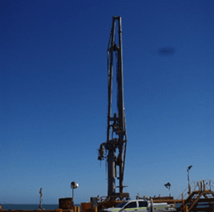
On and offshore drilling rigs have many hazardous areas throughout the process area and extending further where the possibility of a flammable atmosphere may exist.
Food processing where organic dusts such as flour and other organic dusts are utilised in the food-making process to produce pastries, breads, cakes and biscuits etc.
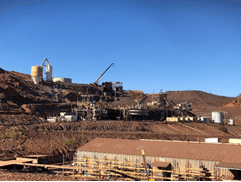
In some cases, copper mining utilises chemicals that can be extremely flammable.
Hydrogen is another extremely volatile gas that can be used in power generation.
Fuel farms are an obvious source of flammable liquids and vapours.
Pet food manufacturers can use flammable gasses throughout the process.
3D printing is a relatively new industry that during the process may create a combustible dust atmosphere.
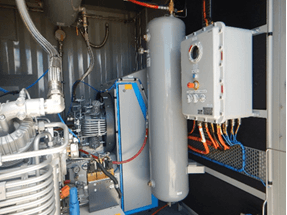
Gas compressors will create a hazardous area where the gas can congregate in flammable mixtures.
Mining and processing copper, lead, silver and gold use processes that have flammable gases and vapours including tanker loading and unloading.
Fume cupboards in laboratories will be considered as a hazardous area when flammable gasses and vapours are involved.
Biogas is a by-product of sewage and landfill that is treated as a hazardous area.
Methanol is a flammable liquid that gives off a flammable vapour and is used in some the processes at sewage treatment plants.
All the examples shown above are only a small cross-section of the industry that mayhave areas that can create a flammable atmosphere and where electrical equipment may need to be installed such as lighting, motors for pumps, heat tracing, solenoid valves, limit switches, process instrumentation and ventilation fans.
Thorne & Derrick International, based in the UK, are Approved Vendors to most Oil & Gas exploration and production companies and international EPC contractors including Bechtel, Petrofac, Saipem and Lamprell – our key sectors are the mining, process, pharmaceutical, chemical, utility, food/beverage, renewable and oil/gas industries.
We contribute strategic and added-value to the supply chains of the global chemical processing and energy sectors via our memberships of North East of England Process Industry Cluster (NEPIC) and NOF.
We are the Explosive Atmosphere Expertsto COMAH-site operators providing innovative and often customised Ex solutionsengineered to improve site safety and reliability.
THORNE & DERRICK
LV HV Electrical & Process Instrumentation Equipment for Explosive Atmospheres
Specialist Distributors of Hazardous Area & Explosion Proof Equipment with IECEx & ATEX Certifications – we react with a rapid response to your enquiry to ensure downtime is minimised and reliable Power, Light & Heat is restored or provided.
Press Release Date: 02.04.2020 uploaded by Chris Dodds (T&D Sales + Marketing Manager) World’s First Fully Certified ATEX Doors Thorne & Derrick International, the Experts in Equipment for Explosive Atmospheres, today announce the signing of a Commercial Distribution Agreement...
Press Release Date: 04.07.2019 uploaded by Chris Dodds (T&D Sales + Marketing Manager) Category: Stockist Distributor Agreement Announcement Thorne & Derrick International announce that they have signed a Preferred Distributor Agreement with Raytec, the world leading manufacturer of LED...






























 Food manufacturing, where