IBC Heater Jackets In The Food And Beverage Industry
By Chris Dodds : estimated reading time 5 minutes
IBC Heaters
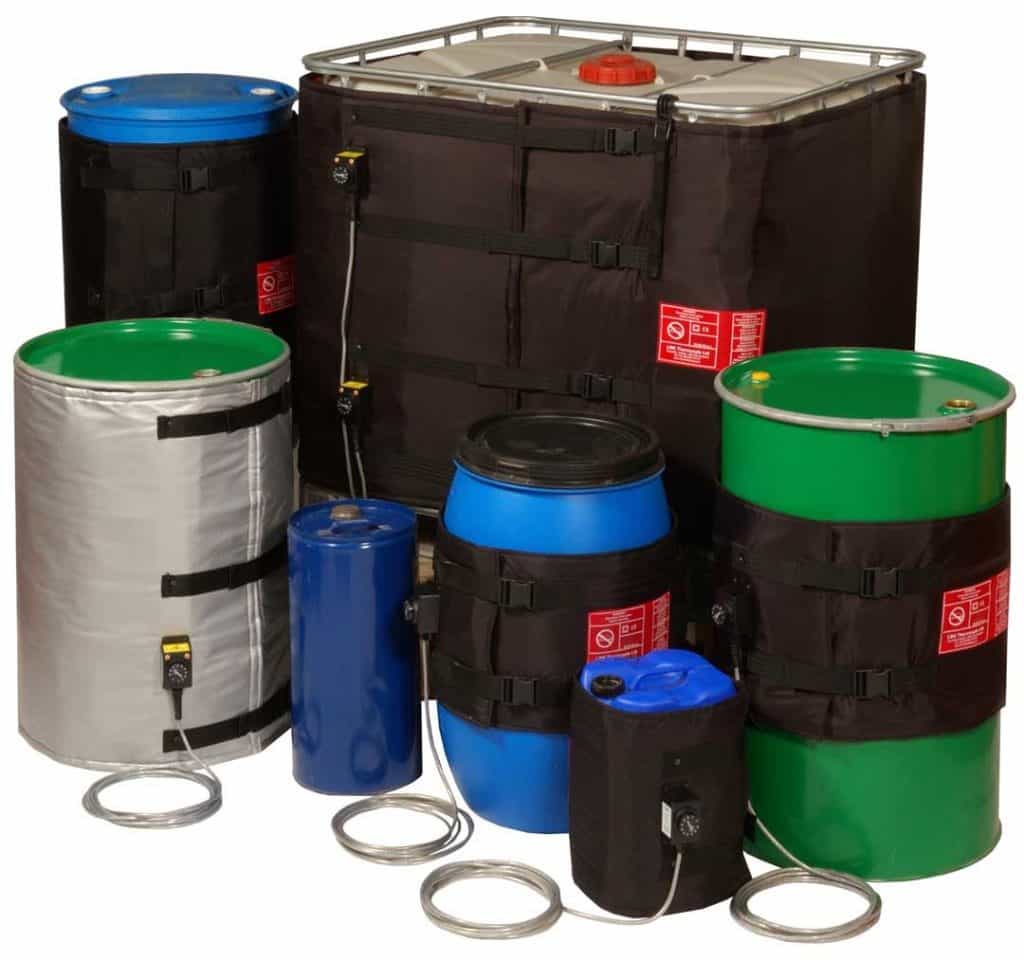
T&D are major distributors of IBC Container & Process Heating Products to the food and beverage industry supplying major customers with bespoke solutions to overcome heating challenges faced with consistent and reliable production – our range of IBC heaters provide reliable surface heating to bulk containers ensuring optimum contents viscosity, frost protection and temperature maintenance.
The range of Electrical Process & Drum Heating products that T&D supply can be used to ensure consistency, hygiene and guaranteed plant performance which is absolutely vital in the food processing industry.
IBC heating jackets and systems provide effective electric surface heating for food industry containers and drums:
Dairy
Beverages
Tea, Coffee & Cocoa
Bakery (Flour, Yeast, Bread products)
Breakfast Cereals
Soups & Sauces
Flavours & Fragrances
Colourants
Nutraceuticals
Common heating applications include IBC’s, containers or drums storing honey, corn sugar, palm oil and molasses.
Explosive Dust Atmospheres
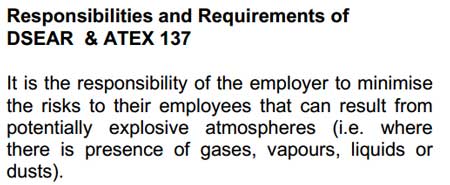
Powders including flour and sugar are routinely stored on site at bakeries – when mixed with air, they can form a potentially explosive mixture and are classified as Zones 20 / 21 under ATEX guidelines.
T&D distribute ATEX IBC heaters for safe use in both hazardous area gas (Zone 1 & Zone 2) and dust (Zones 20, 21 & 22) atmospheres – typical food industry applications include wheat starch, gluten, wheat gluten production, grain processing and sugar production.
Other combustible dusts include:
Most solid organic materials (wood, flour, grass, paper, cereals, etc.)
Many powdered metals (such as aluminium, magnesium and titanium)
Certain non-metallic inorganic materials (although less common)
Low Voltage IBC Heaters
Fox’s Biscuits
Thorne & Derrick are distributors and stockists of low voltage IBC heating jackets which provide a consistent heating solution at safe low voltages of either 24V or 48V.
Low voltage IBC heating jackets have been used in the past in a case study for Fox’s Biscuits. Fox’s Biscuits manufacture a wide range of premium quality biscuits within the UK and are part of the Northern Foods PLC.
The client required a heating method to maintain an IBC containing glucose at 35ºC to ensure consistent flow during production and had previously used trace heating to achieve this but found that heat tracing cables did not provide an even temperature across the large surface area of the IBC.
To provide a more suitable solution a low voltage IBC heater jacket was provided which wrapped around the IBC covering the entire surface area, along with an insulated PVC lid. Additionally, custom sized low voltage heater jackets were supplied to fit around 40 metres of associated process pipework.
Using IBC heater jackets, the client was able to achieve a constant heat, ensuring the glucose could be fed through the pump and at the optimum temperature production.
Sugar Glucose – sugars provide sweetening, texture, bulk, colour and act as preservative agents in the food and beverage industry.
Low Voltage IBC Heater Jacket Benefits
Accurate temperature control and monitoring
Even temperature distribution across the IBC container – no hot or cold spots
Safe – Low Voltage (24V-48V ac)
Low Power Consumption – provides energy cost savings – up to 72% reduction
T&D also provide heat tracing cables for the temperature maintenance of food industry process pipework.
IBC Heating Jackets Used To Heat Up Caramel
IBC Heaters – HIBC/A
T&D have supplied Nestle Bulgaria with an IBC heater to heat up liquid caramel. Our client required a process heating method to maintain the temperature of the caramel between 40 and 50ºC to reduce the viscosity of the caramel and approached T&D to supply IBC heating jackets.
The client held the caramel within ‘bag-in-a-box’ style IBC containers to which HIBC/A IBC heating mats are ideal for providing surface heating.
HIBC/A silicone IBC heater mats are placed underneath the container before filling and provide heat through the container. Insulated IBC jackets and insulated lids help to reduce heat loss from the container.
HIBC/A heating mats have a PTC temperature sensor which can be connected to a digital temperature controller to allow for accurate monitoring and control of the temperature.
Bag In A Box – IBC Heaters
Bag In Box IBC Heaters
Bag in box IBC systems offer safety and hygiene with replaceable liner bags – the reusable bulk container protects the liquid contents providing ideal transportation conditions. T&D provide IBC heating jackets to suit all type of plastic or steel containers.
EXPERTS IN WINTERISATION SOLUTIONS FOR INDUSTRIAL & HAZARDOUS AREA ENVIRONMENTS
Thorne & Derrick hold the largest UK stocks of frost protection & winterisation equipment to help keep your plant and personnel operational during the winter months.
Thorne & Derrick understand that prolonged periods of low ambient temperatures can bring operations to a standstill costing thousands of pounds in lost downtime.
Experts in heating solutions for use in industrial & explosive atmospheres, Thorne & Derrick have the knowledge & expertise to help clients prevent unnecessary down time this winter.
We can provide overnight delivery of Trace Heating Cables at the most competitive prices to guarantee frost protection of your pipelines and mechanical services.| Ask About Our Heat Trace Design Service.
💡 Contact us today and our skilled and friendly team can provide technical support as well as reliable, fit for purpose and compliant solutions to suit your exact requirements.
➡See our Winterisation blog TOP PICKS, including our most read articles about Trace Heating and the requirement for electrical heating products and systems to combat and mitigate Winter weather effects.
T&D – Crowcon Distributors. Hazardous Area Gas Detectors (ATEX) For Zone 1 & Zone 2.
ATEX Directive – the Ex logo indicates that the gas detection equipment is suitable for use in a Flammable Atmosphere, Typically Zone 1 or Zone 2 hazardous area.
We begin by generally reviewing the 3 stages of the oil and gas process and focussing on the specific gas risks.
4 types of Crowcon gas detectors often deployed in Zone 1 and Zone 2 hazardous areas (ATEX) forming their hazardous area gas detector range for the detection and monitoring of flammable or toxic gases are highlighted for each of the 3 sectors.
Upstream industry – discovers and produces crude oil and natural gas and is commonly referred to as the exploration and production (E&P) sector.
Midstream industry – processes, stores, markets and transports commodities such as crude oil, natural gas, natural gas liquids (NGLs, ethane, propane and butane) and sulphur. The midstream oil and gas sector provides the vital link between often remote petroleum producing areas and the population centres where most consumers are situated. Transmission pipeline companies are a key part of the midstream petroleum industry.
Downstream industry – oil refineries, petrochemical plants, petroleum products distributors, retail outlets and natural gas distribution companies. The downstream oil and gas industry connects consumers providing thousands of products such as gasoline, diesel, jet fuel, heating oil, asphalt, lubricants, synthetic rubber, plastics, fertilizers, antifreeze, pesticides, pharmaceuticals, natural gas and propane.
Hazardous Area Gas Detectors
Zone 1 & Zone 2 Crowcon Gas Detectors – Personal, Portable & Fixed Detectors For Toxic & Flammable Gases.
1. gas detection for Upstream OIL & GAS
The upstream sector includes exploration and drilling for potential oil and gas fields, followed by the recovery and production of crude oil and natural gas if it is viable. Gas hazards in the upstream sector are compounded by the very harshest of environments providing challenges for the reliable detection of harmful gases.
Enhanced oil recovery (EOR) technologies and unconventional methods are allowing access to new geographic areas, as well as improving the level of recoverable resources within known reservoirs.
Fixed and portable gas detectors are required to protect plant and personnel from the risks of flammable gas releases (commonly methane gas detection) as well as high levels of hydrogen sulphide particularly from sour wells. Oxygen depletion, sulphur dioxide and volatile organic compounds (VOC’s) are also among the most common gas risks.
originaldate 1/1/0001 6:00:00 AMwidth 370height 305Crowcon XgardIQ Gas Detector – intelligent fixed-point Crowcon gas detector, increases safety by minimising the time operators must spend in Zone 1 and Zone 2 hazardous areas.
originaldate 1/1/0001 6:00:00 AMwidth 5421height 4469Crowcon Triple+ Plus Gas Detector – latest generation of the respected Crowcon "Triple" family of toxic, oxygen and flammable gas detectors. Over 90,000 units sold to oil and gas, chemical, utility and manufacturing companies worldwideoriginaldate 1/1/0001 6:00:00 AMwidth 370height 305
2. GAS DETECTION FOR MIDSTREAM OIL & GAS
The main components of the midstream process are transportation and storage. Raw products are held in storage areas until ready for the next process or to be transported to a refinery.
Maintaining the integrity of storage and transportation vessels as well as protecting personnel during cleaning, purging and filling activities are a constant challenge within the midstream sector.
Fixed monitoring of flammable gases situated close to pressure relief devices, filling and emptying areas deliver early warning of localised leaks. Multigas portable monitors maintain personal safety especially during confined space work as well as supporting hot work permit area testing.
Infrared technology supports purging with the ability to operate in inert atmospheres, and delivers reliable detection in areas where pellistor type detectors would fail due to poisoning or volume level exposure.
Portable laser methane detection allows leak location at distance for hard to reach areas, reducing the need for personnel to enter potentially dangerous environments or situations while performing routine or investigative leak monitoring.
CROWCON GAS DETECTORS : MIDSTREAM OIL & GAS
3. GAS DETECTION FOR DOWNSTREAM OIL & GAS
The downstream sector refers to the refining and processing of raw natural gas and crude oil, and subsequently distribution and sale of the products derived from this. Such products can include jet fuel, diesel fuel, asphalt and petroleum coke.
The desire to reduce energy consumption, increasing operational efficiency, has driven device manufacturers to innovate both detection principals and the way in which power is used. Gas detectors employ state-of-the-art technologies to deliver industry leading power consumption per device.
The volume of personnel on plant and high number of toxic and flammable gases used and manufactured increase the potential hazards. Some risks can be mitigated by ensuring rugged and reliable portable gas detectors and monitors are used, that are well suited to individual on-site requirements. Fleet management tools such as bump test stations deliver exceptional reporting to track site compliance and calibration status.
The ongoing demand to reduce facility down-time whilst ensuring safety, especially during shutdown and turnaround operations, ensures that gas detection manufacturers must deliver solutions offering ease of use, simple training, reduced maintenance times with local service and support.
Hazardous area industries including offshore oil/gas platforms and FPSOs, onshore oil refineries, processing plants, pipelines, storage farms and LPG/LNG plants all utilise or produce a wide range of hazardous flammable liquids and gases that can be detected using correctly specified flame and gas detectors.
Detecting toxic and flammable gases requires the detectors to be classified and certified according to the specific IECEx or ATEX standard – we distribute flame and fire detectors manufactured by Spectrex to operate in the harshest environmental conditions including self-contained stand-alone devices designed for direct connection to control and alarm systems or automatic fire extinguishing systems.
Our range of Hazardous Area Fire & Gas Detection Systemproducts also includes Explosion Proof Warning Systems & Hazardous Area Lighting – comprehensive range of intrinsically safe, flameproof and explosion proof alarm sounders, sirens, bells and horns, loudspeakers and beacons.
Follow our Showcase Page on LinkedIn to receive hazardous area product innovations, industry news, whitepapers, videos, technical tips and training webinars for professionals involved in the explosive atmosphere industries.
Hazardous Area (ATEX Certified) Temperature & Humidity Sensors – Rotronic HygroFlex5-EX
By Chris Dodds : estimated reading time 5 minutes
Rotronic have announced the introduction of a new series of Intrinsically Safe Sensors and Measurement Transmitters, suitable for installation in hazardous area locations where there is a risk of explosion due to the presence of explosive dusts or gases in the environment – this includes Zone 1 which is common to the oil, gas and petrochemical industries.
For safe area, non-ATEX certified locations in the offshore industry aluminium housed temperature and humidity measurement transmitters are available, please visit Rotronic Hygroflex 7.
Rotronic humidity and temperature sensors were initially developed for the food and beverage, pharmaceutical, biotechnology, grain, sugar, petrochemical, oil and gas industries.
Zone 1 and Zone 21 ATEX certified Rotronic sensors and instruments are suitable for hazardous area industries where potentially explosive atmospheres preclude the safe use of uncertified equipment.
Rotronic HygroFlex5-EX is available with a Zone 21 certified transmitter for potentially explosive dust atmospheres in the pharmaceutical and food/beverage industry.
Dust Explosion & Fire Caused By Sugar Dust – Imperial Sugar Refinery At Port Wentworth GA USA. US Chemical Safety & Hazard Investigation Board.
Not So sweet sugar…..
This is a true story.
The floors of the Imperial Sugar Company’s plant buckled and the walls were blasted out.
The damage caused the electricity to be cut off from most of the plant, making escape and fire suppression difficult. The fire raged for hours.
By morning, the full extent of the devastation was clear. Thirteen people dead and 40 injured. The plant, which is the largest sugar refinery in the United States, was completely destroyed.
Investigators on the site quickly discovered the cause of the wreckage and the source of the explosion: sugar.
As raw sugar is refined and ground into ever smaller particles the potential explosion risk escalates as the total surface area prone to chemical reaction increases – as the surface area increases, the number of collisions between the molecules on the surface and the oxygen molecules in the air increases.
In the presence of a spark or flame, these molecular collisions become combustion reactions occuring at an increasingly rapid rate. Heat is released, triggering an increase in the volume of gases being formed, creating a shock wave. When the dust particles are suspended in air they can explode in the presence of an ignition source, such as a welding spark.
This process caused the catastrophic industrial plant explosion at the Imperial Sugar plant – a small spark or flame from plant machinery caused the explosions which instantly ignited and engulfed the plant. As the explosion rocked the plant and fire tore the plant to smithereens, accumulated sugar dust was tossed into the air further fuelling a series of explosions.
Further dust explosion hazards in the food processing industry include whole grains such as: maize, barley, wheat, oats, rye, soya beans, sorghum (milo). Flour, custard powder, instant coffee, sugar, dried milk, potato powder and soup powder also pose dust explosion risks in hazardous area locations.
Other industrial potential explosive dust atmospheres also include coal, metals, plastics and wood.
Rotronic hazardous area certified transmitters and instruments are for safe use in potentially explosive atmospheres, including both gases and dusts.
Rotronic HygroFlex5-EX
Rotronic HygroFlex5-EX temperature and humidity sensor is suitable for harsh but not hazardous area applications – due to being un-certified the sensor is therefore suitable for “safe” working areas. The stainless steel probe selected for the application from the Rotronic range available is rapidly interchangeable, no calibration adjustment required.
Rotronic HygroFlex5-EX – Hazardous Area Temperature Measurement ATEX Zone 1.
Rotronic Humidity & Temperature Sensors
atex certified for Hazardous Area Applications
Interchangeable stainless steel probes certified for operation in Zone 0/20
Standard and cable mount probes, screw-in probe for applications at pressure
HygroFlex5-EX measurement transmitter certified for hazardous area Zone 1/21
No intrinsically safe power supply required; galvanically separated
Wall and duct versions of the measurement transmitter available
2-wire supply, 2-analogue outputs (inc.dew point, g/kg and moisture values)
Sensor alarm – humidity and temperature can be set to fail high
LC display option with trend indicators. Keypad for configuration
Service interface (USB) for configuration using HW4 (outside explosion zone)
Range of calibration accessories (for use outside the explosion zone)
Rotronic Hygroflex5-EX
…
Rotronic HygroFlex5-EX measurement device is the latest development in two-channel transmitters for the exact measurement of humidity and temperature in hazardous area industries with explosive atmospheres. Rotronic HygroFlex5-EX device conforms to the latest international standards.
Rotronic HF5-EX series consists of a robust aluminium transmitter with or without display. The attached probes are cast into a stainless steel tube and are certified for operation in hazardous area Zone 0/20 – the transmitter itself is certified for hazardous area Zone 1/21.
The intelligent design of the circuitry with electrical isolation permits the measuring system to be operated without an intrinsically safe power supply.
ROTRONIC HygroFlex5 (HF5)
pharmaceutical applications
Rotronic HF5 sensor is compatible with HygroClip2 probes with integrated AirChip3000 technology, which achieves an unparalleled degree of accuracy.
In combination with advances in sensor technology and integration, the Rotronic HygroFlex HF52, HF53, HF54, HF55 and HF56 transmitters combined with a HC2-S probe provide precision and functionality through accurate humidity and temperature measurement of <0.8% rh and <0.1K at 23°C.
Rotronic HF5 Features:
Relative humidity and temperature measurement
Dew point and other psychrometric calculations
Interchangeable probe for easy maintenance
Wide range of probes for every application
Low voltage and mains versions
Freely scalable analogue signals
Various digital outputs available
Relative Humidity & The Pharmaceutical Industry
Pharmaceutical plant and process managers must implement control and measurement for relative humidity and “out-of-control” ambient temperatures. Humidity levels must be controlled and monitored using precision instruments where the pills are coated, stored and conditioned before packaging and despatch.
Rotronic Humidity Measurement – Pharmaceutical Industry
Thorne & Derrick are inviting you to join LinkedIn’s fastest growing Discussion Group – Process & Hazardous Area Industries : Heat Tracing, Gas Detection, Fluid Control & Flow Measurement. News, projects, videos, promotions, whitepapers, jobs, webinars, press plus much more.
Explosion Protection (ATEX) & Functional Safety (SIL) Training Seminar By Pepperl + Fuchs, The Process Automation Specialists
By Chris Dodds : estimated reading time 3 minutes
Thorne & Derrick, The Explosive Atmosphere Experts, have registered to attend the latest Pepperl + Fuchs training seminar – as specialist distributors of Electrical, Mechanical, Process & Instrumentation Equipment to the hazardous area industries our Sales Engineers are committed to providing the highest levels of customer service.
We deliver this commitment through a thorough understanding of hazardous area classifications, explosion protection methods, legislation compliance and the relationships between electrical equipment, gas groups and temperature classes.
We recommend our clients, suppliers and supporters consider registering their attendance to this excellent “up-skilling” opportunity provided by Pepperl + Fuchs, The Process Automation Specialists.
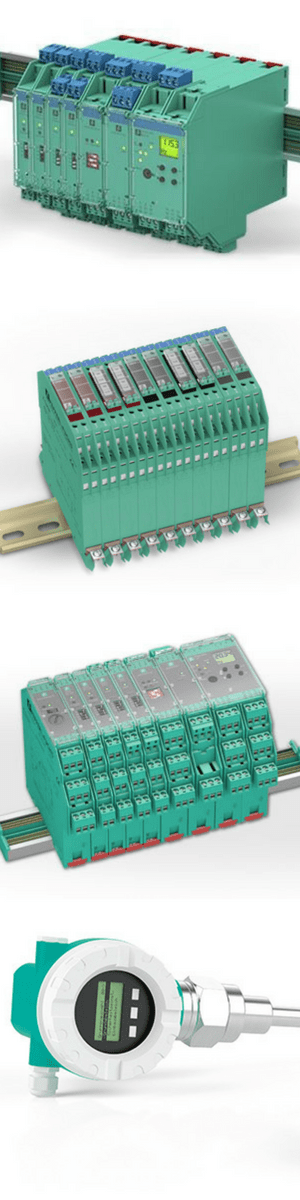
Thorne & Derrick distribute Pepperl+Fuchs Hazardous Area Electrical Equipment for the control of automation, machinery and electrical networks in harsh environments and potentially explosive atmospheres including control panels for Ex d Flameproof applications in hazardous areas with ATEX Certification.
type of protection “t”: functional principle and marking
consideration of the safety margins
SIL – EN 61508 & 61511
FREE Three ONE day SIL training seminars – 9am – 5pm
7th November 2016 – Teesside
9th November 2016 – Barton-upon-Humber
11th November 2016 – Oldham (9am – 4.15pm)
SEMINAR ITINERARY
1. Introduction
scope of EN 61508 and 61511
terms and definitions (risk, SIL, systematic and random failures, common misunderstandings with respect to SIL)
2. Risk Analysis
determination of basic risk and tolerable risk, quantification, minimum endogenous mortality
3. Failure performance of equipment
lifetime, MTBF, MTTR etc.; failure rates, difference between process technology and mechanical engineering, difference between electrical and mechanical equipment, Weibull-distribution
4. Avoidance of (systematic) failures
Functional Safety Management System, failure prevention and failure control, hardware fault tolerance, safety life cycle, documentation
5. Control of (unavoidable (?) and random)) failures
diverse and homogeneous redundancy, safe failure fraction SFF, diagnostic coverage DC, calculation of random failures
6. Proven in use
proven in use assessment according to NE 130 (German proposal)
7. Implementation of protective equipment
failure control acc. To EN 61511 – probability of failure on demand acc. To EN 61508
Please see the booking form PDF attached below.
BOOKING FORM – Complete for ALL seminars
We have curated a collection of our favourite Pepperl + Fuchs #AUTOMATION tweets – for more go to Twitter and Follow @PepperlFuchs
Process Automation & Electrical Equipment Product Range
Pepperl+Fuchs are leading suppliers of automation equipment for hazardous areas and process automation industries – the Pepperl + Fuchs product ranges includes intrinsic safety isolators, Zener barriers, signal conditioners, fieldbus technology, Remote I/O, HART interfaces, level measurement, purge and pressurization systems, Human Machine Interfaces (HMI) for hazardous environments, custom cabinets, and junction boxes.
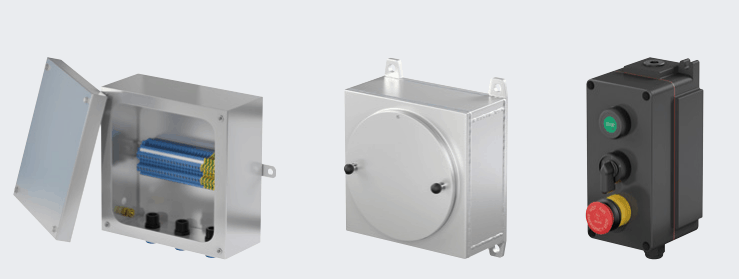
Explosion Proof Electrical Enclosures & Control Stations – Ex e, Ex ia, Ex e Hazardous Areas
Invitation – network, engage, promote
Thorne & Derrick are inviting you to join LinkedIn’s fastest growing Discussion Group – Process & Hazardous Area Industries : Heat Tracing, Gas Detection, Fluid Control & Flow Measurement. News, projects, videos, promotions, whitepapers, jobs, webinars, press plus much more.
ATEX Heaters – Mobile & Portable Hazardous Area Zone 1 & Zone 2 Heating
By Chris Dodds : estimated reading time 6 minutes
Safe. Reliable. Dependable.
Portable Heating for hazardous area locations
T&D International are Specialist Distributors of Hazardous Area Electrical Heating Equipment – we distribute Flameproof, Explosion Proof and Intrinsically Safe equipment for Zone 1, 2, 21 and 22 hazardous area heating.
T&D are UK Approved Distributors for leading manufacturers of electric heating equipment for hazardous areas, including EXHEAT, Chromalox and Thermon.
T&D service the global oil, gas and petrochemical industries with heat tracing and electrical process heating equipment – the demand for portable hazardous area heaters includes offshore vessels such as drill ships, jack-up vessels, semi-submersible vessels, offshore barges and floating platforms.
Hazardous Area Heating
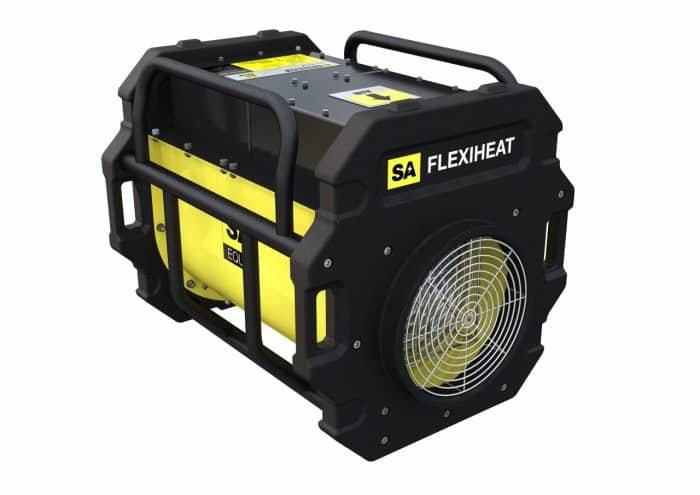
NEW : Portable ATEX Heaters
The application of reliable heat is often the only way to repair, remove or install equipment essential to offshore operations. Unfortunately, conventional heating methods (such as gas-fired open flames) and offshore atmospheres are potentially explosive bed-fellows. Sounds exciting in theory but is extremely dangerous in practice.
Hazardous area heaters must foremost be safe to use – certified according to the location, gas group, temperature rating and prevailing potentially explosive atmosphere. Know the Zone and match the certification of portable ATEX heaters for safe provision of heat without any hidden dangers.
For expert technical support in Hazardous Area Heating, Process & Instrumentation equipment selection, please contact T&D.
Additionally, offshore environments present hard-to-reach work sites. The equipment used to generate, apply and control heating must be rugged enough to withstand severe conditions, yet lightweight enough to be easily and cost-effectively transported.
Hazardous area heaters should be compact, powerful, user-friendly and portable.
Typical Temperature Rise Approx 20°C Above Ambient
Supply Voltage 400V (+/-10%) 3 Ph 50/60 Hz
Ingress Protection IP65
Typical Temperature Rise – Approx. 20°C Above Ambient
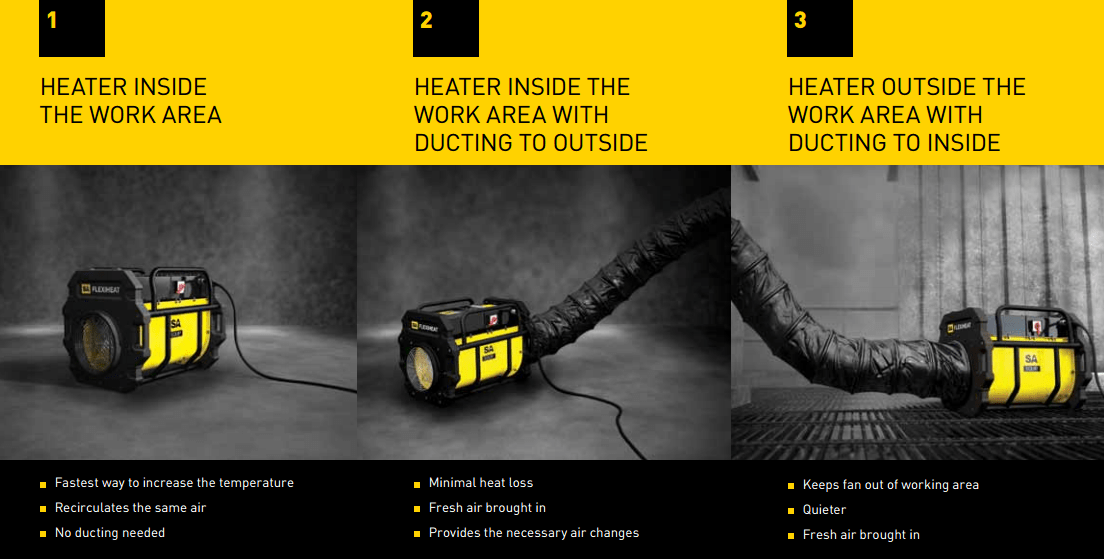
Portable ATEX Heaters are tough, compact, powerful, user friendly and easily moveable around jobsite.
Versatile : ATEX Heaters are suitable for multiple site configurations
Video : ATEX Heaters For Hazardous Areas
Portable Hazardous Area Heating
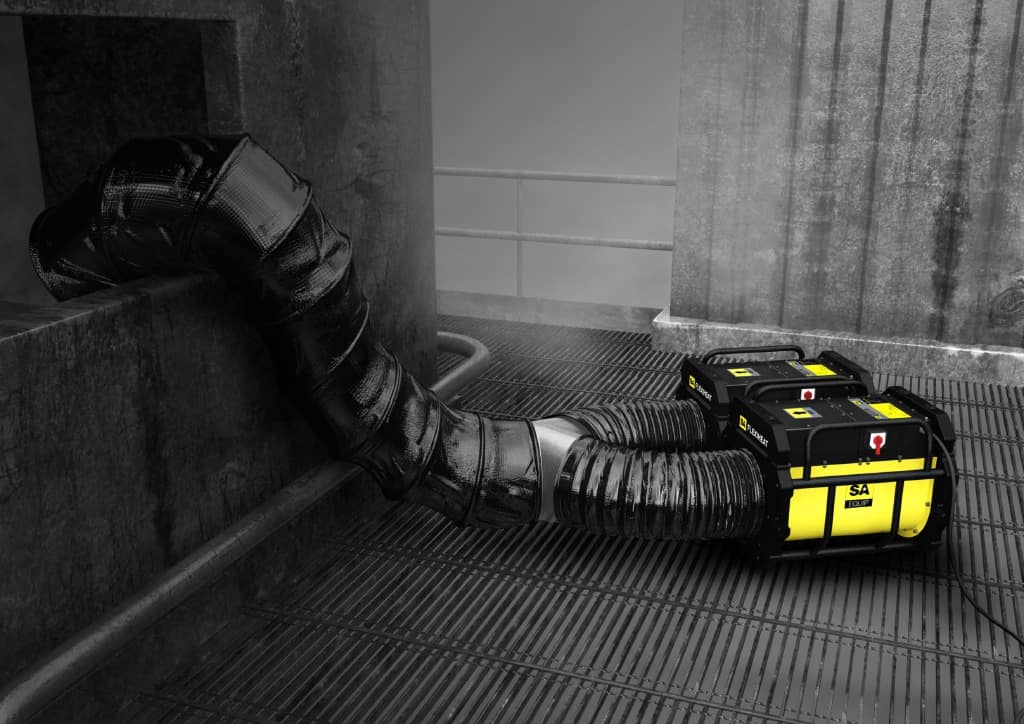
ATEX heaters can be configured to provide rapid heat-up with less ducting in the working area and dramatically reduced downtime.
Multiple heaters reduce downtime considerably with fabric maintenance, paint curing, and composite repair work. A recent client used two ATEX certified heaters coupled side-by-side when carrying out some blasting and painting work on a huge area on the underside of an offshore helideck completing the work task within than an hour rather than the usual full day shift.
ATEX Heating Applications
Portable ATEX heaters alleviate condensation build-up and dampness during painting works, counteract curing temperature challenges for composite repairs and combat frozen machinery and freezing process pipework.
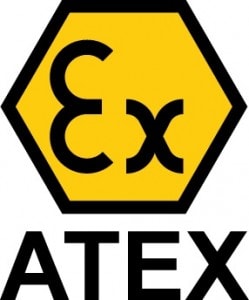
Hazardous area heating equipment is classified according to an EU directive introduced to protect people and plant in potentially explosive atmospheres, this hazardous area directive is known as ATEX.
ATEX & Heating Hazardous Areas Without Hidden Dangers
Flameless Is Blameless …
In sweeping terms, there are 3 pre-conditions for the ATEX directive to apply: the equipment a) must have its own effective source of ignition; b) be intended for use in a potentially explosive atmosphere and c) be under normal atmospheric conditions.
The ATEX directive consists of two EU directives describing the type of equipment (electrical and mechanical) and work environments allowed in an area with an explosive atmosphere.
ATEX derives its name from the French title of the 94/9/EC directive: Appareils destinés à être utilisés en ATmosphères EXplosibles.
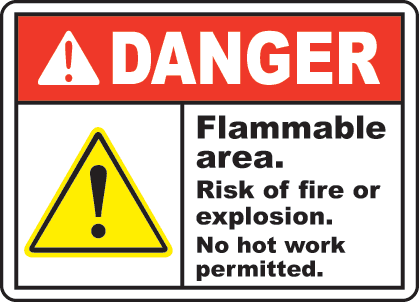
Naturally, the presence of invisible, inflammable gas or vapour mixtures could pose a serious threat to life where the Explosion Triangle could be triggered. Effective ignition sources in offshore working environments include sparks, open flames and flame arcs – consequently “hot-working” is prohibited offshore without safety working permits (WP’s).
Safety is not taken lightly anywhere in the offshore oil and gas sector and multiple tiers of responsibility prevail to prevent injury, accident or incident.
Take BP as an example.
Offshore Working Permits & Hazardous Area Locations
The Work Permit (WP) must be firstly registered as a Work Order (WO) request and attributed a risk-level by the offshore safety officer reflecting the work task, such as process pipework painting in Zone 1 hazardous areas.
Hot Working – this includes all temporary operations involving open flames or producing heat and/or sparks.
Several levels of authority exist to check and check again that the risk element of any proposed work task in a zoned hazardous area is scrutinised and minimised.
At BP, the Area Authority has responisibility for a given area and the Area Technician has operational responsibility for all activities in a given hazardous area.
Area technicians must measure the content of hydrocarbon gas in potential leakage points – pipework, flanges, seals, outlets etc – in the area around the hazardous area work site, immediately prior to work commencing.
Ultimately, the Offshore Installation Manager (OIM) has the overall responsibility for all activities on the field.
BP carry out a Safe Job Analysis (SJA) – a systematic and step-by-step review of all risk elements implemented prior to a specific task or operation so that all measures can be taken to remove or control any risk elements during the preparation for or performance of the WO request.
For instance, BP stipulate a Work Permit Level 1 is required for all high-risk work – this includes hot work in classified areas, where the classified area is defined as hazardous area Zone 0, Zone 1 and Zone 2 i.e. potentially explosive atmospheres dependent upon the concentration level and time period presence.
The application, planning, designation, administration, preparation and then implementation of “hot-working” permits is clearly complex, time-consuming and costly.
Portable ATEX electric heaters are certified under ATEX directive for safe use in potentially explosive atmospheres without resort to naked flames or hot work permit applications.
ICYMI 🎥 watch part of the new production and hotel platform being fitted as part of Valhall redevelopment #Norwaypic.twitter.com/3VUqrPjwrS
The drying and curing time of paint is affected by ambient temperature and relative humidity.
Low temperatures and excess humidity delays projects, maintenance and repair work – where shutdown periods need to be absolutely minimised to prevent downtime and associated lost revenue. Often painting and coating is subject to rescheduling and rescheduling. Curing takes longer. Costs overrun and deadlines are missed.
Not anymore– portable ATEX heaters with high ingress protection levels are tough, compact, powerful and easy to use whatever the weather. Fully ATEX certified for safe electrical heating in Zone 1 and Zone 2 hazardous area locations. Manufactured from marine grade 316 stainless steel with excellent corrosion resistance to offshore, sea-water atmospheres.
T&D’s portable ATEX heaters with a 15Kw output and powerful airflow (2130m cubed/hour) provides efficient hazardous area heating – ideal for warming enclosed workspaces which are “sheeted-off” for offshore shot blasting and industrial painting of gas compressor stations, tanks, pipework and structures.
Offshore Shotblasting & Painting. Designing-out risk through careful specification of electrical heating that eliminates or minimises danger is a key consideration for offshore multi-disciplined contractors. All thought and effort is geared towards preventing sparks in explosive atmospheres. Portable hazardous area heaters are designed to provide primary or supplementary heating for comfort or freeze protection in hazardous area (Gas or Dust) atmospheres.
Pictured : Zone 1 Paint Shop Containers – this paint shop and storage container manufactured by Trans Construction AS is typically used for storing and mixing paint. The hazardous area paintshop container is insulated to A60 and fully equipped with a mixer bench, storage lockers, ventilation supply and extract system.
Portable ATEX Heaters From Stock – call T&D.
Invitation – network, engage, promote
Thorne & Derrick are inviting you to join LinkedIn’s fastest growing Discussion Group – Process & Hazardous Area Industries : Heat Tracing, Gas Detection, Fluid Control & Flow Measurement. News, projects, videos, promotions, whitepapers, jobs, webinars, press plus much more. ABOUT US
Thorne & Derrick International are your single-source supplier of Electrical, Mechanical, Process & Instrumentation Equipment. T&D provide an outstanding service to UK and international customers – we are highly customer responsive and absolutely committed to providing a world-class service.
T&D supply utilities, power, renewable energy, construction, rail, manufacturing, food/beverage, mining, oil, gas and petrochemical industries – distributing 100,000+ products from 100+ manufacturers from multi-million pound stocks. Since 1985 we have established a solid reputation based on service, integrity and trust.
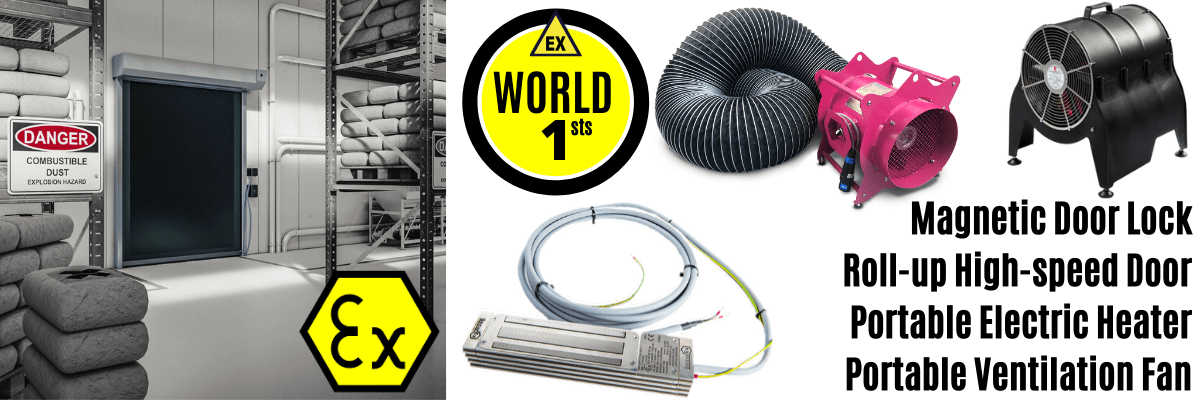
Press Release Date: 02.04.2020 uploaded by Chris Dodds (T&D Sales + Marketing Manager) World’s First Fully Certified ATEX Doors Thorne & Derrick International, the Experts in Equipment for Explosive Atmospheres, today announce the signing of a Commercial Distribution Agreement...
Press Release Date: 04.07.2019 uploaded by Chris Dodds (T&D Sales + Marketing Manager) Category: Stockist Distributor Agreement Announcement Thorne & Derrick International announce that they have signed a Preferred Distributor Agreement with Raytec, the world leading manufacturer of LED...




















 distributors of Electrical, Mechanical, Process & Instrumentation Equipment to the hazardous area industries our Sales Engineers are committed to providing the highest levels of customer service.



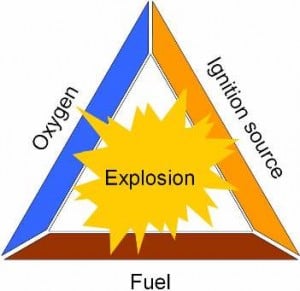 Naturally, the presence of invisible, inflammable gas or vapour mixtures could pose a serious threat to life where the Explosion Triangle could be triggered. Effective ignition sources in offshore working environments include sparks, open flames and flame arcs – consequently “hot-working” is prohibited offshore without safety working permits (WP’s).