Confined Spaces HEAT | VENTILATION | POWER | LIGHT
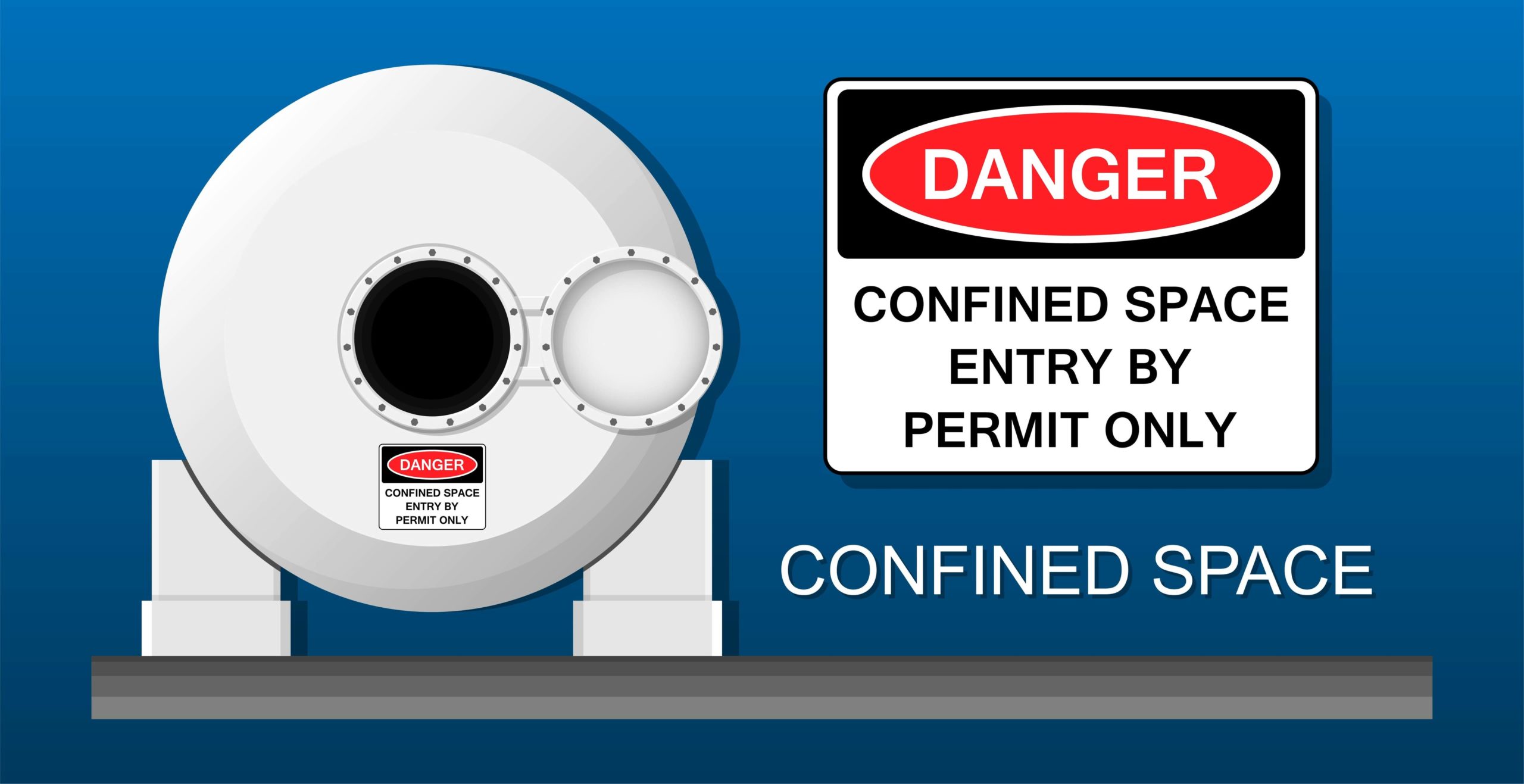
In this post Thorne & Derrick – The Experts in Equipment for Explosive Atmospheres – explain the dangers of confined space working and how we alleviate those risks with the provision of certified and safe confined space lighting, power, heat and ventilation to ensure workers can carry out maintenance, repair and installation works in hazardous area locations with potentially explosive atmospheres.
What is a Confined Space?
“A confined space is a place which is substantially enclosed (though not always entirely), and where serious injury can occur from hazardous substances or conditions within the space or nearby (e.g. lack of oxygen)” – HSE | Health & Safety Executive UK.
Specific Confined Space Working Risks
The following factors common to working in confined spaces cause acute effects including impairment of judgement, unconsciousness and death. Confined Space can refer to any workplace, including a vessel, tank, container, pit, bund, chamber, cellar or any other similar space which, by virtue of its enclosed nature, creates those conditions that give rise to a likelihood of an accident, harm or injury of such a nature as to require emergency action.
- Oxygen Deficiency
- Oxygen Enrichment
- Flammable or Explosive Atmospheres
- Flowing Liquid or Free Flowing Solids
- Excessive Heat
Claustrophobia is the irrational fear of confined spaces where the risk perception is subjective and personal.
However, the more rational dangers of confined space working, namely the threat to life posed by fire and explosive atmospheres, affects all workers.
Nevermind, possible hypoxia and asphyxiation caused by the suffocating effects of oxygen depletion.
Storage materials in confined spaces can deposit concentrations of potentially explosive vapours or gases – invisible but lethal potentially explosive pockets can accumulate presenting toxic and flammable hazards to workers.
For example, solvent-based paints and paint solvents are often flammable or emit vapours that pose hazardous risks when densely concentrated – such vapours can burst into flame when exposed to sparks or flames.
Reducing fire hazards and safety risks in confined spaces requires hazardous area certified explosion-proof heating, lighting, ventilation and power supply systems – a start-to-finish safety and rescue plan will review the specific equipment needed.
Confined space teams measure oxygen levels and toxic gas levels using portable gas detectors – hazardous atmospheres should be monitored for gas detection prior to entry and then continuously during the work task.
When the hazardous areas of a workspace or site have been classified, the remainder will be defined as non-hazardous, sometimes referred to as ‘safe areas’ – but how safe is “safe”?
Lighting
Wolf LinkEx Confined Space Lighting Kits
Thorne & Derrick International distribute ATEX certified portable lighting kits for safe lighting and use in hazardous area Zone 1 & 2 (Gas,  Vapour & Mist Explosive Atmospheres) and Zone 21 & 22 (Dust Explosive Atmospheres).
Wolf ATEX LinkEx provides reliable and versatile hazardous area lighting according to both ATEX Directive and IECEx classification standards – the portable and temporary floodlights utilise LED technology as a light source.
The LinkEx Tank Lighting kits allow for a flexible set-up of high quality task and ambient lighting to suit all confined space working conditions in tanks and vessels and offers your workers the highest level of safety through a configuration of:
- Wolf LinkEx™ LED Temporary Luminaires
- Wolf LinkEx™ Fluorescent Temporary Luminaires
- Wolf LinkEx™ LED Floodlites
- Handheld Leadlamps
- ATEX Transformer – 230V or 110V to 24V
- Range of cables, plugs and socket types and power distribution systems
- Protective, fixing and mounting accessories
- Temperature Classification (Gas) T3 T4

Wolf LinkEx Confined Spaces Lighting Kit ATEX – Hazardous Area Zone 1 & Zone 2
Explosion Protected Tank Lighting Kits
Confied spaces hazardous area lighting equipment requirements are centred on providing compact and portable light to explosive atmospheres including tank cleaning, confined space entry, aircraft maintenance, tunnel maintenance and sewers.
- ATEX certification for safe use in Zone 1 or Zone 2 potentially explosive gas atmospheres
- Low voltage 24V equipment for use in metal tanks to reduce the impact of electric shock
- High light output for both ambient and task working areas
- Positioning, mounting and protection accessories
Thorne & Derrick International are distributors for Wolf Safety Lamp providing an extensive range of LV intrinsically safe lighting solutions with LED and Fluorescent options both complying to ATEX certifications making the solution suitable for confined space lighting – including mounting and protection accessories. The Wolf portable lighting kit offers ultimate adaptability with regards to ambient and task lighting configurations and positioning.
The LinkEx tank lighting kits including accessories are suitable for cleaning and maintenance jobs where the equipment needs to be mounted on tripods, magnets and scaffold brackets and protected from the rigours of harsh onshore industrial and offshore applications with lens guards and protective films and grills.

Thorne & Derrick | Wolf Safety Lamp | Stockist, Supplier & Distributor

Wolf LinkEx Tank Lighting Kit ATEX – Ideal for flexible set up of temporary lighting in hazardous areas and potentially explosive atmospheres
The Wolf Safety LinkEx lighting kits are robust, durable and lightweight in design. Simple to set-up making the highly portable tank lighting solution suitable for use within a confined tank space and are extremely efficient in terms of power consumption and light output, increasing the productivity and safety of the cleaning, maintenance, repair and overhaul engineers.
Power
The cable reel with ATEX Certification enables chains of portable lighting in different confined space and hazardous areas workplace locations to be connected together and extended from one central point, allowing for an increased surface area to be lit fast and with ease.


Wolf | Handlamps | Torches | Headtorches | Tank Lights | ATEX Hazardous Areas
Heating & Ventilation

Heating & Ventilation
MFH The Bulldog
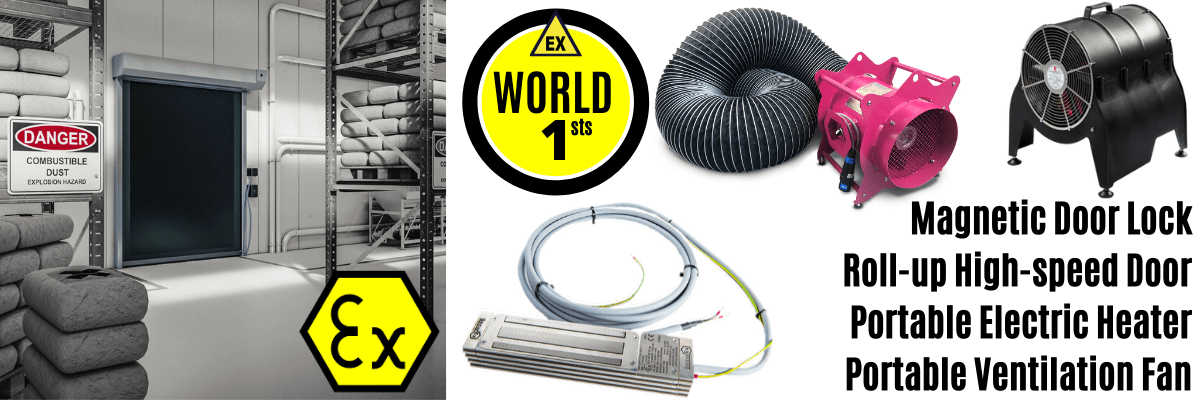
World’s First Portable Electric Heater with ATEX & IECEx Certification
Portable ATEX heaters can be placed inside the confined space or ducted to provide elevated ambient temperatures to help reduce curing times or ensure the application of paint is carried out as per manufacturer’s instructions.
Ambient temperatures can be critical for the successful application of paint and protective coatings.
This can be a major obstacle, especially if work has to be carried out during winter months or cold weather working. The MFH Bulldog provides a portable and compact heating solution for explosive atmospheres and is the safest and most efficient heater available.
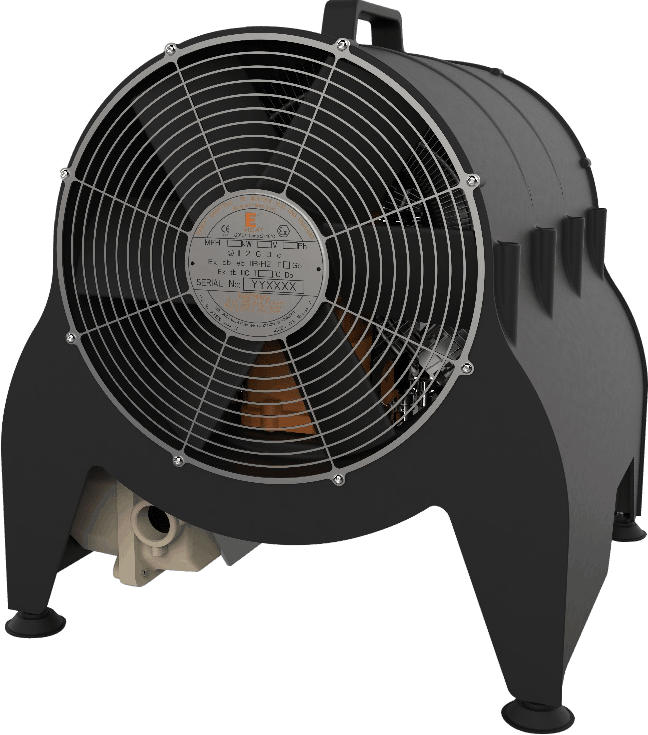
MFH The Bulldog | Worlds First Portable Electric Heater with ATEX & IECEx Certification
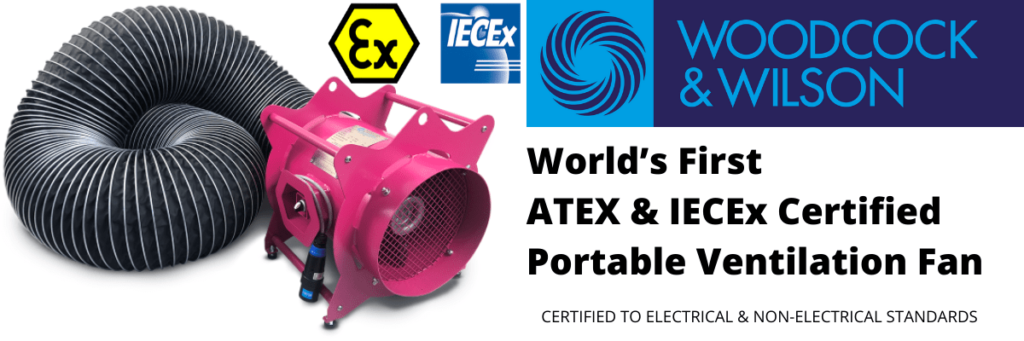
Exstream | Worlds First Portable Ventilation Fan with ATEX & IECEx Certification
 Technical Resources | Hazardous Area Zones | T Class Temperature Ratings | Explosive Atmospheres (Definitions)

Specialists to the Process & Hazardous Area Industries
LEADERS IN ATEX INNOVATION
T&D are your first-choice provider of innovative and competitive solutions to ensure ATEX & IECEx Compliance for Hazardous Area Electrical, HVAC & Process Instrumentation Equipment to your UK and international projects.
Key Product Groups
Control Panels | Plugs | Isolators | Enclosures & Junction Boxes | Lighting | Control Stations | Motor Starters | Heat Trace | Gas Detection | Flame Detection | Process Instrumentation | Process Heating | Ventilation Fans | Security Access Control

Competitive Prices | Extensive Stocks | Technical Support | Express Delivery

“Competency Validation of personnel who work on equipment for use in explosive atmospheres”
- By Chris Dodds : estimated reading time 3 minutes
Hazardous Area Knowledge & Experience
All T&D Sales Engineers hold CompEx Certificates (Hazardous Awareness Course EX F) and undertake advanced and ongoing Explosion Protection training with suppliers – we can be safely trusted to specify and supply Electrical, Mechanical, Process & Instrumentation Equipment for use in hazardous areas zones and explosive atmospheres.
The CompEx Certificates were awarded following successful completion of the course and written examination at Roxby Training Solutions Ltd, a UK Approved Licensed CompEx Centre.
Details of forthcoming Hazardous Area Training courses are available here, Book A Course.
The CompEx Scheme is now the global solution for validating core competency of employees and contract staff of major users in the gas, oil & chemical sectors, both with offshore and onshore activities – designed and developed by industry for industry.
Terry McDonald (Thorne & Derrick Business Development Manager – Hazardous Area Industries) commented on the training, “The CompEx Foundation course delivered by Roxby Training Solutions Ltd was well received by the candidates.
“The course was excellently presented by a knowledgeable instructor who has a wealth of experience working within Hazardous Areas.”
“The topics covered reinforced our employees’ current knowledge and bridged the gaps where required. With candidates being certificated in the ExF unit of the CompEx scheme, it has instilled greater confidence that Thorne & Derrick can continue to provide the support to customers.”
“Overall we were very pleased with the standard of training received and wouldn’t hesitate to recommend Roxby Training Solutions Ltd services.”

Roxby’s Training Solutions Limited is a UK Approved Licensed CompEx Centre based in Stallingborough, North East Lincolnshire
“Hazardous area topics covered reinforced our current knowledge and filled in the gaps. Keith helped give a genuine appreciation of the dangers and consequences of failure to comply with ATEX regulations and although ultimate responsibility lies with the end user, T&D can continue to support our customers in the knowledge that we are competent to EX F Foundation in Hazardous Awareness level and have a very sound understanding of hazardous areas, protection concepts and DSEAR/ATEX regulations,” concluded Terry.
Card
Explosion Protection Types
Ex i Intrinsic Safety
Type of Explosion Protection Ex ‘i’ is a protection type in which the energy available in the hazardous area is limited to a level below that which could ignite a flammable atmosphere.
Ex i intrinsic safety is the traditional electronic explosion protection where the power supply to electrical equipment is fed through a safety barrier (Shunt Diode Safety Barrier or Galvanically Isolated Barrier) that limits the current and voltage so that the minimum ignition energy and ignition temperature of an explosive mixture cannot be reached.
Ex ‘i’ Definition: a type of explosion protection in which additional measures are applied so as to give increased security against the possibility of excessive temperatures and of the occurrence of arcs and sparks in normal service or under specified abnormal conditions.
Temperature classifications T1 to T6 have been introduced for hazardous area equipment – the equipment is assigned to a temperature class or T Class Rating according to its maximum surface temperature. The temperature classes are:
| Temperature Class |
Max Equipment Surface Temperature |
Ignition Temperature Of Combustible Substances |
| T1 |
450°C |
>450°C |
| T2 |
300°C |
>300°C |
| T3 |
200°C |
>200°C |
| T4 |
135°C |
>135°C |
| T5 |
100°C |
>100°C |
| T6 |
85°C |
>85°C |
Ex e Increased Safety
Type of Explosion Protection Ex ‘e’ is a protection type where the occurrence of sparks and impermissable temperatures that could act as a source of ignition is prevented through additional mechanical protective measures.
Type Ex e protection requires an Ingress Protection minimum of IP 54. Ex e increased safety equipment, conforming to the requirements of the ATEX Hazardous Area Directive, is marked to indicate conformity with the Directive. The explosion protected equipment should also be marked with the requirements of the international hazardous area standard (eg IEC 60079-7).
- IEC 60079-7: Explosive Atmospheres – Part 7: Equipment Protection By Increased Safety “e”
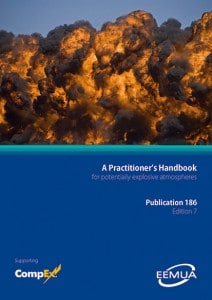
For more information, refer to the relevant standards, EEMUA 186 – A Practitioners Handbook.
Ex ‘e’ Definition: a type of explosion protection in which additional measures are applied so to give increased security against the possibility of excessive temperatures and of the occurrence of arcs and sparks in normal service or under specified abnormal conditions.
Ex d Flameproof Enclosure
Type of Explosion Protection Ex ‘d’ is a protection type where electrical equipment is installed in a flameproof enclosure to ensure that possible sparks cannot escape. The electrical components that could trigger ignition are built into an enclosure that will withstand the pressure of an explosion – the openings of the enclosure are designed and manufactured to prevent the explosion from escaping the enclosure.
Ex ‘d’ Definition: a type of explosion protection in which the parts that can ignite an explosive atmosphere are placed in an enclosure that can withstand the pressure developed during an internal explosion of an explosive mixture and which prevent the transmission of that explosion to the explosive atmosphere surrounding the enclosure.
Ex p Pressurized Enclosure
Type of Explosion Protection Ex ‘p’ is a protection type where electrical equipment and controls are installed in an enclosure that is constantly kept under slight overpressure with nitrogen or a nonexplosive gas to prevent penetration by flammable gases. The equipment enclosure in filled with an inert gas and an explosive gas mixture cannot get to the possible sources of ignition that are arranged on the inside of the enclosure.
Ex ‘p’ Definition: a type of explosion protection using the technique of guarding against the ingress of the external atmosphere into an enclosure by maintaining a protective gas therein at a pressure above that of the external atmosphere. Protection by pressurisation is subdivided into 3 explosion protection types (px, py and pz) which are selected based upon the external explosive atmosphere, the potential for an internal release and whether the electrical equipment within the pressurised enclosure is ignition capable.

T&D : UK & International – Hazardous Area & Explosive Atmosphere Experts.

ABOUT US

Stockists
Thorne & Derrick International are your single-source supplier of Electrical, Mechanical, Process & Instrumentation Equipment for use in industrial, hazardous area zones and explosive atmospheres.
T&D provide an outstanding service to UK and international customers – we are highly customer responsive and absolutely committed to providing a world-class service.
Electrical Heating Products
Thorne & Derrick International supply heated hoses, trace heating and heating cables for mechanical services and pipework to ensure optimum temperature maintenance is achieved and production losses are eliminated for industrial and process industries. We can design and supply electrical heat tracing systems for both process temperature maintenance and pipework frost protection in commercial, industrial and hazardous area applications – call us.
From stock we supply an extensive range of Electric Process Heating and Control Systems with IECEx, ATEX and CSA certification.

Air Warmers | Immersion Heaters | Thermostats | Water Heaters | Line Heaters | Portable Fan Heaters

Heating Cables | Pipework | Hoses | Drums | IBC
Hazardous Areas | Explosive Atmospheres | Flameproof & Explosion Proof Eqpt | ATEX

HazardEx supports hazardous area and process industry professionals and are the leading technical authority on explosive atmospheres – protecting people and plant through a series of Exhibitions, Conferences, Workshops, Seminars and Webinars across the globe.
HazardEx is where industry leaders meet to discuss and engage to ensure workplace and worker safety in potentially explosive atmospheres.
If you are affected by or concerned with developments surrounding the European ATEX Directives, IECEx, Hazloc, CENELEC, CSA, IECEE, IECQ, SILs and functional safety IEC 61508 & IEC 61511 then HazardEx is the recommended resource for you.
Why HazardEx?
Stay updated with industry news, network with industry influencers or via HazardEx: The Journal showcase product launches to a 40K+ readership – download media pack.
HazardEx: The Journal
The Journal is the first publication dedicated to the provision of up-to-date information on the key areas of legislation, certification and product and service application within those industrial and hazardous areas that are classed as at risk of explosion due to the presence of flammable gas, vapour or dust – registration is free.
Hazardex 2018 Conference & Exhibition
The 2018 Hazardex International Conference and Exhibition will be taking place once again at the Holiday Inn Hotel in Runcorn, Cheshire, UK on February 28 and March 1.
The two-day Conference & Exhibition, which also includes workshops, a networking dinner and awards ceremony, aims to strengthen and expand the community that looks to the Hazardex website and journal for industry intelligence and information.
Sponsorship or exhibitor queries should be addressed to the Event Director Russell Goater at phone +44 (0) 1732 359990.
Confirmed 2018 exhibitors include Drager, Intertek, Moflash, R Stahl, Roxby, SGS Baseefa and VEGA.
more Diary Dates……
Go to HazardEx Events for further information.
September 2017
- 05/09/2017 SPE Offshore Europe (UK)
- 05/09/2017 Process Safety Congress at EUROCORR (Czech Republic)
- 12/09/2017 4th CCPS Global Summit on Process Safety (Japan)
- 13/09/2017 Oil & Gas Indonesia (OGI) 2017 (Indonesia)
- 18/09/2017 PCIC 2017 (Canada)
- 28/09/2017 Tank Storage Conference and Exhibition (UK)
October 2017
- 02/10/2017 Kuwait Oil & Gas Show (KOGS) 2017 (Kuwait)
- 09/10/2017 CCPS Middle East Conference on Process Safety (Bahrain)
- 16/10/2017 International Conference on Pharmaceutical and Biomedical Engineering (Japan)
November 2017
- 13/11/2017 ADIPEC 2017 (UAE)
- 29/11/2017 Hazardex in the Regions 2017 – Antwerp (Belgium)
- 29/11/2017 PEFTEC 2017 (Belgium)
February 2018
- 28/02/2018 Hazardex Conference and Exhibition (UK)
Follow HazardEx

ABOUT US
Thorne & Derrick International are your single-source supplier of Electrical, Mechanical, Process & Instrumentation Equipment. T&D provide an outstanding service to UK and international customers – we are highly customer responsive and absolutely committed to providing a world-class service.
T&D supply utilities, power, renewable energy, construction, rail, manufacturing, food/beverage, mining, oil, gas and petrochemical industries – distributing 100,000+ products from 100+ manufacturers from multi-million pound stocks. Since 1985 we have established a solid reputation based on service, integrity and trust.
Invitation – network, engage, promote
Thorne & Derrick are inviting you to join LinkedIn’s fastest growing Discussion Group – Process & Hazardous Area Industries : Heat Tracing, Gas Detection, Fluid Control & Flow Measurement. News, projects, videos, promotions, whitepapers, jobs, webinars, press plus much more. 
hazardous area articles
- By Chris Dodds : estimated reading time 15 minutes
Hydrogen sulphide (H2S) is a naturally occurring gas and can be found in many of the worlds crude oils. The gas is colourless and has a distinctive rotten egg odour at low levels however at high concentrations the gas will numb the human sense of smell which can be fatal.
Heavy oils such as crude oil, residual fuel and gas oil tend to have large concentrations of hydrogen sulphide and this can become a concern if the oils are to be stored over extended time periods.
This Blog looks at the dangers of hydrogen sulphide gas in the oil refining industry and the working areas that may have H2S present and the gas detection solutions available.
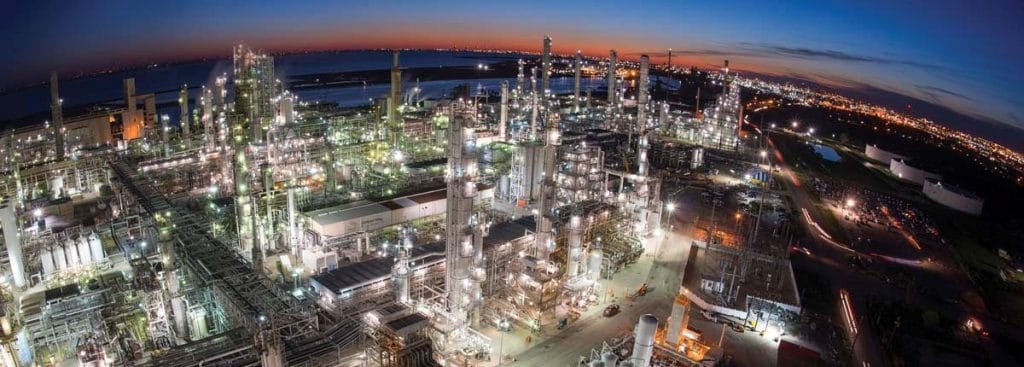
Image: Valero
What Are The Dangers Of H2S Gas?
Working in and around an oil refinery is naturally fraught with dangers and potentially hazardous areas. One of the most common and most underestimated problems faced by personnel is the presence of toxic gases and particularly hydrogen sulphide (H2S) gas.
H2S is a colourless gas and therefore invisible. The gas does have a distinctive rotten egg smell that can only be smelt at low concentrations as at higher and more dangerous levels, peoples sense of smell is significantly numbed and therefore without adequate fixed or portable gas detectors, they can succumb to the harmful effects of the gas.
Inhalation of hydrogen sulphide gas can lead to acute poisoning and death by suffocation occurs extremely fast. This Blog looks at where hydrogen sulphide gas can occur within refineries and which situations are particularly dangerous including hazardous areas.
H2S Gas Risks – Case Studies
- Death Caused After Fainting Due To H2S Gas – St. Charles Refinery, Norco, Louisiana, U.S. A contract worker was killed after being hospitalised following an incident of exposure to hydrogen sulphide gas. The surviving worker reported to police that he smelt hydrogen sulphide and began an immediate evacuation of the area. He lost consciousness and woke up half way down the ladder he was working on to see his colleague at ground level. The fatality also had a head trauma and later died in hospital however his loss of consciousness was related directly to the presence of hydrogen sulphide.
- Death Caused By H2S Gas Due To Unauthorised Maintenance – Workers at a sulphide refinery in Douglasville, Texas were busy relighting a waste boiler/heater and their task was to remove the sight glass and push the lighter into the valve and the burner. They discovered the glass was warped and replaced it without a safety permit. Meanwhile, Hydrogen Sulphide had leaked in to the area. One worker died on site from H2S poisoning where the other was hospitalised. There were also five other workers who showed symptoms of hydrogen sulphide poisoning.
- H2S Gas Causes Death Due To Disregard For Safety Rules – A fatal incident at a sour water stripper unit (SWSU) occurred when a field operator was collecting stripped sour water. The operator had gone to collect a sample and H2S gas had escaped from an open manhole. The worker lost consciousness and when eventually taken to hospital he was pronounced dead on arrival from gas poisoning. The levels of hydrogen sulphide gas were found to be above 40-50 ppm.
The above case studies highlight just how dangerous this gas can be and how essential it is to install effective, working gas detection systems.
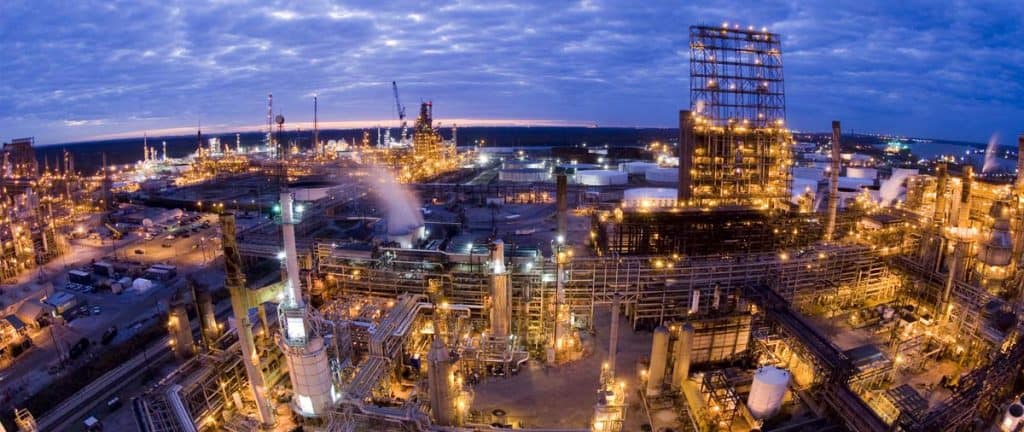
Valero St. Charles Refinery’s major process units were built or substantially reconstructed in the late 1990s, making the refinery one of the newest in the USA.
Characteristics Of Hydrogen Sulphide GAS

Hydrogen Sulphide – H2S Fact Card
Hydrogen sulphide gas is colourless and at certain low concentrations it has a distinctive rotten egg odour which is instantly recognisable and as a result of this smell, H2S is commonly know as sewer gas, digester gas or marsh gas.
However, at higher concentrations the gas numbs olfactory nerves and starting at a concentration of 100ppm. People are therefore no longer able to smell the gas – concentrations higher than 1000ppm can be instantly fatal.
in addition to the numbing of senses, H2S gas is heavier than air and therefore will often collect in low-lying areas and working sites near ground level. The gas will ignite itself at a temperature of 270°C and due to its highly inflammable properties an explosive atmosphere may occur when combined with air.
Strong reactions are possible that can trigger spontaneous combustion, explosions and detonations. In addition, H2S gas combined with air and humidity or moisture can corrode metals through the formation of sulphuric acid.
Where Can H2S gas Occur?
90% of hydrogen occurs naturally in the environment for example in hot sulphur springs and rock masses, however there are many areas within the oil and gas industry in which the presence and bi-production of H2S gas is a common occurrence.
The refining process commonly produces H2S as a bi-product however the gas also occurs at wellheads, oil and water tanks, pumps, piping systems and flare heads.
The most common locations for the presence of hydrogen sulphide within refineries are:
Storage – The crude oil is transported via either a pipeline or barge and is stored waiting to be processed. Hydrogen sulphide can be found in the head space of the tank and can corrode the tank reducing it’s product lifespan and as the tank fills the headspace concentration increases.
Distillation Columns – The crude oil is separated into various components in the distillation columns based on boiling points. The lightest components are used for gas with the heaviest elements used for asphalt. Hazards occur even though this is a closed system and the gas can be present in the heat exchanger, furnace, tower flash column, vacuum furnace and bottom exhcanger.
Hydrotreater & Hydrocracker – The hydrotreater is used to remove the sulphur and the hydro cracker breaks long hydrocarbon chains into shorter chains in order to create more efficient petroleum products. These actions are performed over a catalyst at high pressure and temperature with excess hydrogen. Hydrogen and sulphur combine and create H2S which is then sent to a recovery unit to create water and sulphur. H2S content in the feedstock must be monitored along with any leaks.
Blending – This is the physical mixing of various hydrocarbons in order to produce an end product with desired characteristics. H2S hazards can occur during sampling, inspection, maintenance and turnaround.
Solution: Safety considerations to undertake include fixed and portable gas detectors to be installed in and around maintenance equipment and on turnaround equipment.
Chemical Treatment Process – This process removes contaminants such as sulphur, nitrogen, oxygen, dissolved metals and salts. This in turn improves the odour, colour and oxidation stability. Hydrogen sulphide is commonly used during the recovery of sulphur and the hydrogen sulphur scrubbing process.
Gas hazards will occur during sampling, inspection, maintenance and turnaround.
Solution: Portable and fixed gas detector solutions should be used in and around maintenance and inspection equipment to ensure gas detection safety.
Power Generation – Oil refineries have many other operations including electric generation, steam generation, cooling towers, wastewater treatment and flaring systems. The potential for H2S hazards to occur are around cooling towers and contaminated wastewater. Caution should always be taken during sampling, inspection and maintenance.
Solution: Portable gas detectors should be used along with respirators and air purifiers.
Effects On The Human Body And Exposure Limits
Hydrogen sulphide gas is a so called ‘nitrogen’ gas and causes damage to the lungs, central nervous system and can also cause skin and mucous membrane irritation. Typical symptoms of poisoning include headaches, dizziness, fatigue, dry mouth, anxiety, confusion and lack of coordination.
Even in low concentrations and a low dose, H2S can be harmful if exposure is continuous over several hours or days. High concentrations can lead to unconsciousness almost instantly and a coma followed by death in just a few short breaths – these effects show exactly how dangerous this gas is and highlights the need for effective gas detection.

Solutions For Effective H2S Gas Detection
There are a number of gas detection solutions available from Thorne & Derrick including fixed, portable and transportable suitable for use in safe and hazardous areas. Each working area and gas hazard requires a different gas detection solution in order to provide the proper, effective protection for personnel and buildings.
Typically, smaller confined spaces require personal and portable gas detection solutions to be carried by workers.
Fixed Gas Detectors
Fixed point gas detectors provide constant, 24 hour gas monitoring 365 days a years which is important for the detection of random gas release. T&D are distributors for the Crowcon ranges of gas detection equipment. Our gas detection specialists can help you determine exactly the correct product for your requirements.
The ever-present safety protection provided by Crowcon fixed gas detectors means personnel working in areas such as distillation columns and chemical treatment plants are able to work freely – improving safety figures and increasing productivity.
Fixed gas detection systems are favoured in many oil and gas areas for their constant gas safety protection, monitoring of any gas leaks and providing both audible and visual warnings when there are no personnel on site.
Portable Gas Detectors
Portable gas detectors provide an excellent solution for the detection and monitoring of hydrogen sulphide among other hazardous gases. There are many benefits of using portable gas detection and differences compared to the use of fixed point detection systems.
The use of portable gas detection allows personnel the freedom to move between working areas safe in the knowledge that they are carrying their safety devices with them to detect and alert the presence of hazardous gases.
The difference between portable gas detectors and fixed is the length and continuity of detection – portable detection equipment must be tested, re-charged and have its own power supply whereas a fixed point detection system is hard wired and will provide constant, 24/7 detection however the flexibility and portability is compromised
Hazardous Area Gas Detection
Hazardous areas can occur when the presence of hazardous vapours, dusts or mists exist in a high enough volume. There are three categories of risk that must be identified reliably in order to protect human life and assets:
- Ex – The risk of explosion by flammable gases
- Ox – Oxygen; the risk of oxygen displacement or risk of increased flammability by oxygen enrichment
- Tox – Risk of poisoning by toxic gases
Without the use of auxiliary tools, people are often unable to recognise these dangers early enough to take action and prevent a serious incident or accident occurring.
Any equipment to be used in hazardous areas for gas monitoring purposes must fulfill the Essential Health And Safety Requirements (EHSR). In addition, as gas detection systems are products of safety technology, it is important not to misinterpret their role within oil refinery safety.
They are not simply a handful of detectors spread across and manufacturing plant, they are and should be considered a bespoke solution developed to fulfill the requirements of individual protection objectives.

Hazardous Area Gas Detectors Certified To International Classifications
All equipment to be used in zone 1 and zone 2 hazardous areas must be explosion proof and certified for use under the relevant local hazardous areas classifications such as ATEX and IECEx.
The 4 hazard levels of hydrogen sulphide gas
Hydrogen sulphide gas is extremely corrosive and causes metals to become brittle when exposed. All oil well drilling sites and areas within oil refineries must be classified according to areas of potential or actual exposure to H2S gas.
The four hazard levels are:
- No Hazard Condition – This is any well or area that will not penetrate a known hydrogen sulphide formation is a ‘no hazard’ zone. Specialist equipment is not required.
- API Condition I (Low Hazard) – These are working areas where concentrations of H2S are less than 10 PPM. Recommendations for working in these areas include hydrogen sulphide warning signs, keeping all safety equipment in adequate working order and storing equipment in accessible locations.
- API Condition II (Medium Hazard) – These are working conditions where atmospheric concentrations of H2S are greater than 10 PPM and less than 30 PPM. Recommendations for working in these areas include legible H2S warning signs, keeping a safe distance from dangerous working locations, pay attention to audible and visual alarms and store safety equipment in accessible locations.
- API Condition III (High Hazard) – Work locations with atmospheric concentrations of H2S higher than 30 PPM. Recommendations for working in these areas are two H2S detectors must be present (one should be a metered gas detector and one should be a pump type with detector tubes. There should also be an oxygen resuscitator, two usable exits at each location and signs 500 feet from each location warning of the presence of hydrogen sulphide.
Monitoring Hydrogen Sulphide (H2S)
To Meet New Exposure Standards
In any working area where there is the potential for exposure to hydrogen sulphide, a gas monitoring strategy is recommended to ensure exposure levels are kept below acceptable levels and that the appropriate action is taken if there is ever exposure above these levels.
In order to protect workers from exposure to harmful levels of hydrogen sulphide, the American Conference Of Governmental Industrial Hygienists (ACGIH) modified the Threshold Limit Value (TLV) for H2S in 2010.
From 1976 to 2009, the 8 hour time weighted average TLV (TLV-TWA) was 10 parts per million (PPM) and the 15 minute short-term exposure limit TLV (TLV-STEL) was 15 PPM. In 2010 a TLV-TWA of 1 PPM was adopted along with a TLV-STEL of 5 PPM for H2S.
ACGIH
The ACGIH is a globally recognised authority on the establishing of exposure limits for chemical agents including toxic gases, and the changes to the H2S limits followed a five year review period during which industry experts had the chance to express any concerns they had.
The best protection would be an electronic instrument that could measure and store both the 1 PPM TWA and 5 PPM STEL H2S levels and also provide and alarm when concentrations reached 5 PPM.
A portable gas detector is ideal for users who want to accurately and reliably measure H2S levels. It provides a noticeable visual, audible and vibration alarm notification to alert the user to dangers levels of hydrogen sulphide gas that is present.
The detector features an easy-to-use intuitive interface and also features data logging which records the entire history of the monitor for complete analytical and safety uses.
More Reading
ELECTRICAL & PROCESS INSTRUMENTATION EQUIPMENT
FOR EXPLOSIVE ATMOSPHERES
Thorne & Derrick are Specialist Distributors of Hazardous Area & Explosion Proof Equipment with IECEx & ATEX Certifications to the onshore and offshore oil, gas, petrochemicals and process industries.
Key Product Categories: Control Panels | Plugs & Sockets | Isolators | Enclosures & Junction Boxes | Lighting | Control Stations | Motor Starters | Heat Trace Cables & Systems | Gas Detection & Detectors | Fire Detection & Detectors | Heat Detectors | Electrical Heating & Heaters
Also Process Instrumentation Products: Ashcroft Pressure Gauges | ASCO Valves | Katronic Flow Meters | KROHNE Flow Meters | VEGA Level Sensors | Rotronic Temperature & Humidity Sensors | SIKA Pressure Gauges

Plugs Sockets Connectors Decontactors | Distributed in UK by Thorne & Derrick
Connect Production Machines, Conveyors, Motors, Pumps & packaging units
- By Chris Dodds : estimated reading time 6 minutes
Marechal plugs and sockets are waterproof, designed to withstand airborne and permanent humidity found within the food and beverage industry.
In the food and beverage industry electrical safety is critical where plant and machinery is subject to daily deep cleaning, high pressure water spray and steam cleaning.
Electrical power plugs and installations must be protected from water and dust ingress, impact shock and resist microbiological contamination in hazardous area applications.
Electrical safety
Live Disconnect Plugs
Decontactor = Plug + Socket + Motor Load Make/Break Switch
Marechal plugs & sockets can be disconnected under full load for planned maintenance or rapid change out of equipment during plant shutdowns without need for separate isolators and associated hard-wiring.
The decontactor from Marechal is supplied with an integral load-break switch offering technical benefits including quality contact, safe disconnection under load, watertight seal (up to IP68) and power supply reliability.
Marechal Plugs & Sockets For The Food & Beverage Industry
Marechal plugs and sockets are designed to suit all food and beverage industry applications and are fitted with a built-in switching function called a Decontactor which allows the plug and socket to be connected and disconnected with ease, under load, and without risk of electrocution to workers.
power plug Applications
- Electrical connection of mobile pumps and water jet hoses
- Connecting conveyors, cutting machines (slicers, mincers) and local control stations
- Electrical power supply to production machines, mixers, packaging units, fans, tanks
- Silos and bulk storage vessels (eg grain stores with Zone 21/22 explosive dust atmospheres)

Users can quickly and simply connect and disconnect Marechal plugs and sockets either from the wall-mounted electrical outlets or cable coupler to machinery such as conveyors, control stations, packaging units and silos.
Marechal DSN Plugs & Sockets
The Solution to your power requirements
Marechal DSN plugs and sockets are specified throughout the food processing and production industry for low voltage power distribution with current ratings 20A-63A.
DSN plugs provide IP66/67/69 ingress protection for resistance to intensive and deep cleaning associated with pressure power washing of food hygiene areas, including CIP (Cleaning in Place).
IK08 Shock Resistant Plugs
Marechal DSN plug and sockets provide unequalled strength over time and and have an impact resistant GRP casing providing IK08 shock resistance and protection against mechanical impacts up to 5 joules, guaranteeing robust, fast and safe operation during maintenance work – compliant with the IEC EN 60309-1 standard and the European Low Voltage Directive.
DSN range of plugs and sockets are watertight, robust, resistant to chemicals and steam cleaning – ideal for all your food plant safety needs, allowing your production facilities to be as efficient as possible without risk of unplanned downtime caused by sub-standard specification plugs and sockets.
Chemical Resistance
Marechal plugs and sockets are manufactured from highest quality advanced materials with excellent resistance to aggressive chemicals, cleaning solutions, saline solutions, diluted acids, hydrocarbons, mineral oils and alcoholic substances for use in highly corrosive atmospheres.
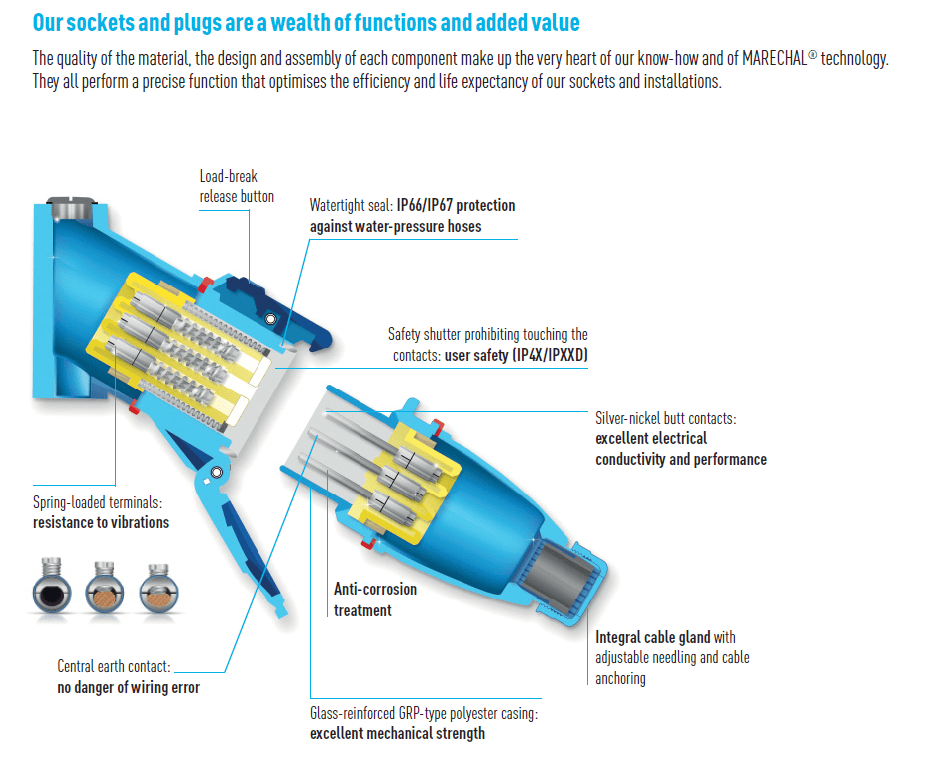
Butt pin contacts enable the Marechal DSN plug to be safely disconnected on full load – no requirements for separate local isolators.
For humid & corrosive environments – steam cleaning
 Silver-nickel butt contacts resist corrosion even after years of operation and the automatic socket seal resists steam cleaning, water jetting and corrosive chemicals and detergents.
Simple operation in fatty or humid environments
 Even if wearing protective gloves the operator can simply press the release button to eject the plug and a quarter turn removes the now “dead” plug from its socket. For extra safety in-line connections are also switched off.
Daily shutdown and machine mobility
 Acts as local isolation, padlocking available ON/OFF.
Robust requirements

The glassfibre-reinforced (GRP) casings protect against mechanical damage up to 5 joules (IK08) and have an operating temperature of -40°C and +60°C.
ATEX Certification For Hazardous Areas

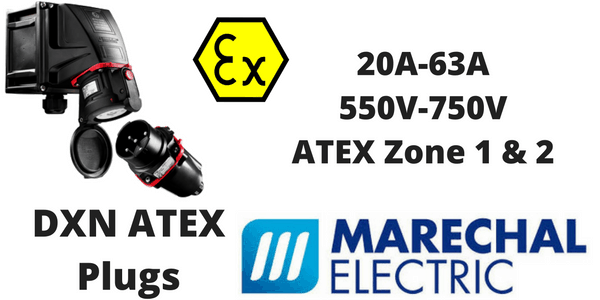
Marechal also manufacture plugs and sockets for explosive atmospheres in accordance with ATEX Directive 2014/34/EU and used in Zones 1 and 2 (gas) and Zone 21 and Zone 22 (dust) including the DXN ATEX plug and sockets.
marechal References
Eckes Granini, France

Marechal plugs and sockets for manufacturing of fruit juices.
- Provide power to pumps (near tanks)
- Equipment of stainless steel boxes to provide machines to load/unload and prepare fruit juices
Marechal’s DSN plugs and sockets provided Eckes Granini with a robust solution for their production plant which manufactures fruit juice brands including Joker, Rea and Granini.
Due to the constant presence of moisture from the production process and high pressure cleaning, the plugs and sockets needed to be water and dust tight and protected against corrosion from chemical products and detergents, temperature variations and shocks.
Lactalis, France

Marechal plugs and sockets for dairy industry
- Providing power to pumps in order to mix milk and dairy by-products
- Supplying power to cleaning stations for tanks
Marechal supplied a flexible and mobile solution allowing pump maintenance and overhaul to be carried out every 6 weeks and the keying positions of the DSN3 allowed for the right connection of plugs and sockets for cleaning stations.
Findus, France
- Fish packing plants
- Power supply to coating and breading machines
Alcass, Italy

Marechal plugs and sockets for meat packaging and frozen meals
- Power supply to production process with plugs and socket on extension cable
Legumex, Belgium

Marechal plugs and sockets for fresh vegetable wholesaler
- Transport and storage of fresh fruits and vegetables
- Power supply to conveyors, production control and packaging machines
Molkerei Alois Muller GMBH & Co. KG, Germany
- Milk industry
- Installation and power supply to vaporizers in the storage for milk powder, electrical connections for the dairy process
Stolle Machinery, United States and Brazil

Marechal plugs and sockets for tinned food production
- Power supply to production process, vaporisers, testers for the production of food and beverage cans
Image: Stolle Machinery
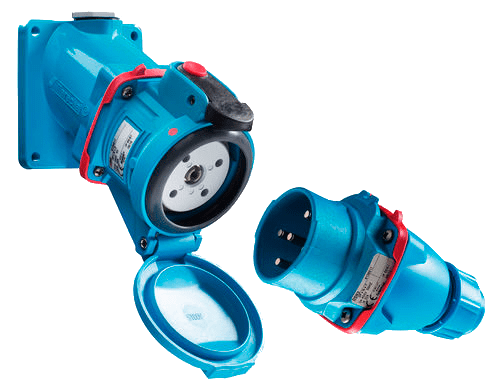
Marechal DSN Plugs – Compact & Watertight Decontactor
Industrial plugs & socket-outlets
safe watertight connectors up to IP66/IP67
More Marechal
Plugs | Sockets | Decontactors | Connectors | ATEX IECEx | Explosion Proof

EXPERTS IN EQUIPMENT FOR EXPLOSIVE ATMOSPHERES
leaders in ATEX Innovation To The Hazardous Area Industries
Thorne & Derrick are leaders in the development and distribution of Product Innovations that deliver significant improvements to clients plant, people and operational safety in the explosive atmosphere industries.
Your proactive problem solvers experienced in succession planning for the replacement of obsolete, non-conformant and legacy equipment in hazardous areas.
Your first-choice provider of innovative and competitive solutions to ensure ATEX & IECEx Compliance for Hazardous Area Electrical, HVAC & Process Instrumentation Equipment to UK and international projects.
Control Panels | Plugs | Isolators | Enclosures & Junction Boxes | Lighting | Control Stations | Motor Starters | Heat Trace | Gas Detection | Flame Detection | Process Instrumentation | Process Heating | Ventilation Fans | Security Access Control
Competitive Prices | Extensive Stocks | Technical Support | Express Delivery