“Competency Validation of personnel who work on equipment for use in explosive atmospheres”
By Chris Dodds : estimated reading time 3 minutes
Hazardous Area Knowledge & Experience
All T&D Sales Engineers hold CompEx Certificates (Hazardous Awareness Course EX F) and undertake advanced and ongoing Explosion Protection training with suppliers – we can be safely trusted to specify and supply Electrical, Mechanical, Process & Instrumentation Equipment for use in hazardous areas zones and explosive atmospheres.
The CompEx Certificates were awarded following successful completion of the course and written examination at Roxby Training Solutions Ltd, a UK Approved Licensed CompEx Centre.
Details of forthcoming Hazardous Area Training courses are available here, Book A Course.
The CompEx Scheme is now the global solution for validating core competency of employees and contract staff of major users in the gas, oil & chemical sectors, both with offshore and onshore activities – designed and developed by industry for industry.
Terry McDonald (Thorne & Derrick Business Development Manager – Hazardous Area Industries) commented on the training, “The CompEx Foundation course delivered by Roxby Training Solutions Ltd was well received by the candidates.
“The course was excellently presented by a knowledgeable instructor who has a wealth of experience working within Hazardous Areas.”
“The topics covered reinforced our employees’ current knowledge and bridged the gaps where required. With candidates being certificated in the ExF unit of the CompEx scheme, it has instilled greater confidence that Thorne & Derrick can continue to provide the support to customers.”
“Overall we were very pleased with the standard of training received and wouldn’t hesitate to recommend Roxby Training Solutions Ltd services.”
Roxby’s Training Solutions Limited is a UK Approved Licensed CompEx Centre based in Stallingborough, North East Lincolnshire
“Hazardous area topics covered reinforced our current knowledge and filled in the gaps. Keith helped give a genuine appreciation of the dangers and consequences of failure to comply with ATEX regulations and although ultimate responsibility lies with the end user, T&D can continue to support our customers in the knowledge that we are competent to EX F Foundation in Hazardous Awareness level and have a very sound understanding of hazardous areas, protection concepts and DSEAR/ATEX regulations,” concluded Terry.
Type of Explosion Protection Ex ‘i’ is a protection type in which the energy available in the hazardous area is limited to a level below that which could ignite a flammable atmosphere.
Ex i intrinsic safety is the traditional electronic explosion protection where the power supply to electrical equipment is fed through a safety barrier (Shunt Diode Safety Barrier or Galvanically Isolated Barrier) that limits the current and voltage so that the minimum ignition energy and ignition temperature of an explosive mixture cannot be reached.
Ex ‘i’ Definition:a type of explosion protection in which additional measures are applied so as to give increased security against the possibility of excessive temperatures and of the occurrence of arcs and sparks in normal service or under specified abnormal conditions.
Temperature classifications T1 to T6 have been introduced for hazardous area equipment – the equipment is assigned to a temperature class or T Class Rating according to its maximum surface temperature. The temperature classes are:
Type of Explosion Protection Ex ‘e’ is a protection type where the occurrence of sparks and impermissable temperatures that could act as a source of ignition is prevented through additional mechanical protective measures.
Type Ex e protection requires an Ingress Protection minimum of IP 54. Ex e increased safety equipment, conforming to the requirements of the ATEX Hazardous Area Directive, is marked to indicate conformity with the Directive. The explosion protected equipment should also be marked with the requirements of the international hazardous area standard (eg IEC 60079-7).
IEC 60079-7: Explosive Atmospheres – Part 7: Equipment Protection By Increased Safety “e”
Ex ‘e’ Definition: a type of explosion protection in which additional measures are applied so to give increased security against the possibility of excessive temperatures and of the occurrence of arcs and sparks in normal service or under specified abnormal conditions.
Ex d Flameproof Enclosure
Type of Explosion Protection Ex ‘d’ is a protection type where electrical equipment is installed in a flameproof enclosure to ensure that possible sparks cannot escape. The electrical components that could trigger ignition are built into an enclosure that will withstand the pressure of an explosion – the openings of the enclosure are designed and manufactured to prevent the explosion from escaping the enclosure.
Ex ‘d’ Definition:a type of explosion protection in which the parts that can ignite an explosive atmosphere are placed in an enclosure that can withstand the pressure developed during an internal explosion of an explosive mixture and which prevent the transmission of that explosion to the explosive atmosphere surrounding the enclosure.
Ex p Pressurized Enclosure
Type of Explosion Protection Ex ‘p’ is a protection type where electrical equipment and controls are installed in an enclosure that is constantly kept under slight overpressure with nitrogen or a nonexplosive gas to prevent penetration by flammable gases. The equipment enclosure in filled with an inert gas and an explosive gas mixture cannot get to the possible sources of ignition that are arranged on the inside of the enclosure.
Ex ‘p’ Definition: a type of explosion protection using the technique of guarding against the ingress of the external atmosphere into an enclosure by maintaining a protective gas therein at a pressure above that of the external atmosphere. Protection by pressurisation is subdivided into 3 explosion protection types (px, py and pz) which are selected based upon the external explosive atmosphere, the potential for an internal release and whether the electrical equipment within the pressurised enclosure is ignition capable.
T&D : UK & International – Hazardous Area & Explosive Atmosphere Experts.
Thorne & Derrick Internationalare your single-source supplier of Electrical, Mechanical, Process & Instrumentation Equipmentfor use in industrial, hazardous area zones and explosive atmospheres.
T&D provide an outstanding service to UK and international customers – we are highly customer responsive and absolutely committed to providing a world-class service.
Electrical Heating Products
Thorne & Derrick International supply heated hoses, trace heating and heating cables for mechanical services and pipework to ensure optimum temperature maintenance is achieved and production losses are eliminated for industrial and process industries. We can design and supply electrical heat tracing systems for both process temperature maintenance and pipework frost protection in commercial, industrial and hazardous area applications – call us.
From stock we supply an extensive range of Electric Process Heating and Control Systems with IECEx, ATEX and CSA certification.
VEGA – Radar Level Measurement Technology. The world’s first 80 GHz radar sensor for level measurement of liquids.
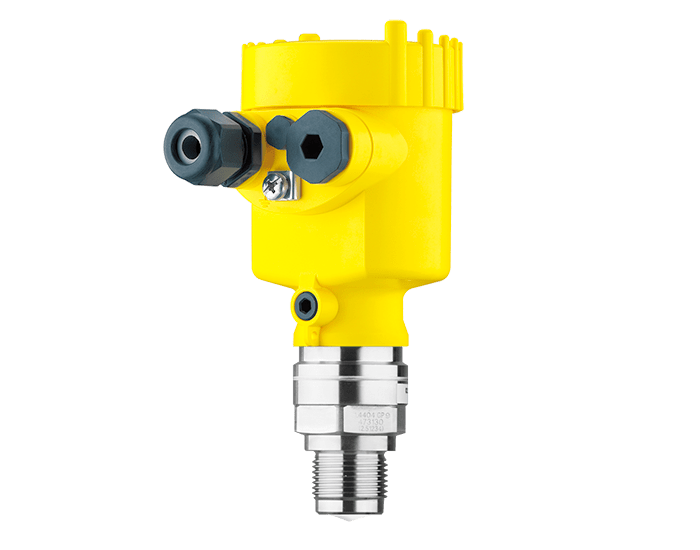
VEGA VEGAPULS 64radar level measurement sensors are used in storage tanks, dosing and process vessels with different process conditions or hygienic requirements.
VEGA VEGAPULS 64
fEATURES & BENEFITS
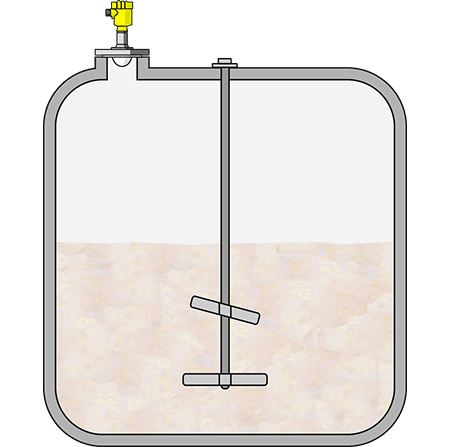
for level measurement in dissolving tanks
Non-contact level measurement with radar using VEGA VEGAPULS 64 :
Accurate measuring results independent of pressure, temperature, gas and steam
Long service life thanks to highly resistant materials
Reliable measuring results unaffected by foam and agitators
Considerably easier setup and commissioning, even with complex vessel internals
Increased measurement certainty over the entire measuring range through better focusing
High accuracy, even when the sensor is mounted close to the tank wall
LIQUID MEASUREMENT IN DISSOLVING TANKS
The precursors for the manufacture of colour pigments are dissolved in the dissolving tank – the Naptha based precursors are mainly Naphtha based, and, depending on the formulation, water and sodium hydroxide solution are added as solvents for the production of the basic pigment solution. An agitator ensures uniform mixing of substances as they are added – the level measuring system is needed to ensure reliable values that are delivered to the control system.
VEGA VEGAPULS 64
VEGA VEGAPULS 64
VEGAVEGAPULS 64, the first radar level sensor on the market for liquids that measures at a frequency of 80 GHz. This feature allows considerably better focusing of the radar beam. With this new instrument, measuring is much easier and more reliable, even under difficult conditions, such as tanks fitted with heating coils, baffles or agitators.
Thorne & Derrick are Specialist Distributors of Hazardous Area & Explosion Proof Equipment with IECEx & ATEX Certifications to the onshore and offshore oil, gas, petrochemicals and process industries.
T&D Supply Gas Detection Equipment For The Monitoring Of Toxic & Flammable Gas Levels
Gas Detectors
Gas detectors, both fixed and portable, provide life saving alerts and notice of the presence of potentially fatal gases in working areas. Typically, a fixed gas detector is used as a permanent gas monitoring solution installed in a specific location such as a process area of a control or a plant room.
The area is continuously monitored measuring the concentration of a selection of gases within the air. Fixed gas detectors are used for the detection of flammable gases, toxic gases and for monitoring oxygen depletion levels.
Fixed gas detection uses the latest technology to ensure the safety of plant and personnel at all times. In the event of a gas concentration reaching a preset high level, fixed gas detectors have alarms, lights and indicators that act as a warning signal to alert the user of the gas risk hazard in both safe and hazardous area zone locations.
Portable gas detectors are, as their name suggests, portable and easy to carry around. They can be attached to clothing or overalls for continuous gas detection and monitoring when moving between zones and sites.
selecting the correct gas detector
As both fixed and portable gas detectors are available for many gases and applications, it is vital to ensure the correct product is specified. Prior to any gas detection equipment being specified, a full risk assessment must be carried out in order to determine the exact range of potential dangers and gas risk hazards that may be present.
When identifying the most suitable fixed gas detector for your application you must consider the following:
The most suitable fixed gas detector to ensure quick and reliable operation
If the fixed gas detector has any limitations (such as being affected by temperature, humidity or other gases in the environment)
The location of the gas detector should still be accessible for maintenance and testing
The sensor technology used mustn’t be affected by other substances in the surrounding environment e.g. catalytic bead sensors should not be used in areas where lead is present
Accessories should be used so the fixed gas detector can operate suitably in the chosen environment e.g. spray deflectors should be used in wet areas
Know your site risks– Knowing the potential and existing risks can identify any potential hazards and prevent any incidents occurring. This is achieved through a risk assessment and if gas hazards are identified, gas detection is applicable as a risk reduction method.
Ask the right questions – Having identified the primary objective and the most likely gas, there are many key questions to ask which typically fall into one of 3 categories; the gases to be detected and where they come from, the location and environmental conditions and the ease of use for operators and routine servicing personnel.
Consider the environmental conditions – The performance, accuracy and reliability of any gas detector is dependent upon environmental conditions in which the gas monitor device will be operated in.
Temperature, pressure levels and humidity at the working location all have an affect on the performance of gas detection equipment and can also affect the decision of which detector should be used.
Understand product functionality – Product functionality and aspects like wiring configuration are important to consider, especially when retro-fitting into an existing application. If the gas detection equipment is to be integrated into a separate safety system, certain communication protocols may be required.
Gas monitoring of flammable gases, toxic gases & oxygen levels
Gas detectors are used in the following industries:
Oil and gas industry where harmful by-products are created when processing oil and gas – hazardous area gas detectors are available.
Offshore industry where the climate can be volatile and the fixed gas detector needs to be able to work effectively in harsh ambient conditions
LNG industry where the risk of gas leakages that could lead to explosions is very high – Zone 1 & Zone 2 explosive atmospheres
Pharmaceutical industry where monitoring oxygen depletion levels in confined spaces is crucial to the safety of the plant and personnel
Petrochemical industry where petroleum and natural gases pose serious risks during production
Facilities within the oil and gas industry including gas compressors stations and buildings are often prone to high levels of gas exposure and leaks, spills emissions which if left undetected can damage entire facilities and halt production which can be extremely costly financially and reputationally.
Gas and flame detectors minimise these risks by providing comprehensive monitoring of equipment and work areas. Detectors should be installed overlooking compressors and pumps and detection is provided by the use of air particle and ultrasonic gas leak detection.
Efficient placement of gas detection sensors
Two of the most common questions regarding gas detection systems are “How many detectors do I require?” and “Where should I locate them?”. These are also two of the most difficult questions to answer as they are dependent upon the individual application.
Detectors should be mounted where the presence of gas is most likely with typical application locations including gas boilers, around pressurised storage tanks, cylinders and areas where leaks are likely to occur such as valves, gauges, flanges and filling/draining connections.
There are many considerations that should be taken into account when determining the location of a gas detector including:
When detecting gases that are lighter or heavier than air, detectors should be mounted at either a high or lower location respectively.
Consider how escaping gas may behave due to natural or forced air currents and if required, detectors should be mounted in ventilation ducts.
When locating gas detectors, consider the potential damage that can be caused by natural events such as rain or flooding. For detectors that are installed outdoors, it is preferable to use a weather protection assembly.
Consider process conditions when installing gas detection equipment. For example, butane and ammonia a typically heavier than air however if they are released from a process line at an elevated position then the gas can bypass the detector if it is placed in a low position.
Ensure the structure to which the gas detector is installed is sturdy and not susceptible to vibration.
Detectors should be installed at the designated location upside down. This will ensure that no dust or water will collect on the front of the sensor and stop the gas from entering the device.
When installing open path infrared devices, it is important to ensure there is no permanent obscuration or blocking of the IR beam however short term blockages from vehicles, personnel or birds etc can be accommodated.
Portable & Fixed Gas Detection Solutions
Gas Detectors – Frequently Asked Questions
What types of gas detectors are available?
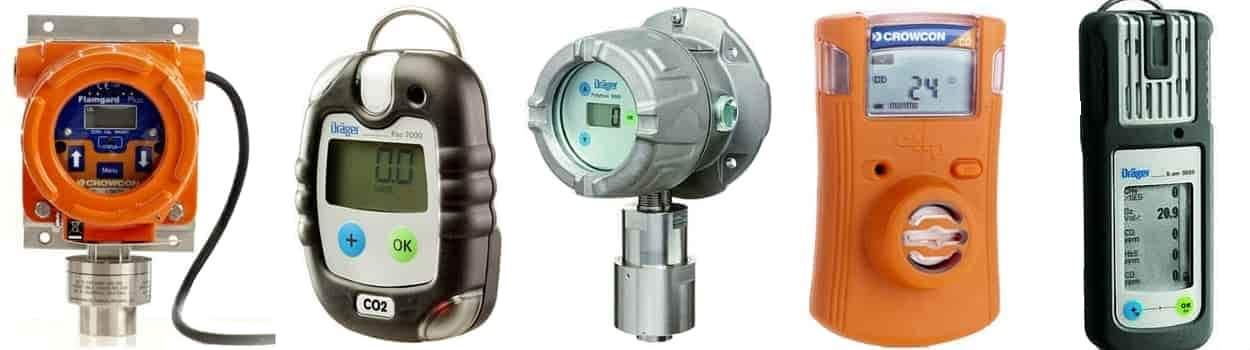
Gas detectors are typically classified as either portable or fixed. Portable gas detectors are able to monitor gases present close to the user and can be easily connected to clothing or held in the user’s hand. For instance, Drager Pac 3500 is a compact, single-gas detector suitable for monitoring hydrogen sulphide, oxygen or carbon monoxide.
Fixed gas detectors are permanently installed in a certain area e.g plant room so they can continuously monitor the concentration of gases or vapours in the air – the Drager Polytron range of detectors provide gas monitoring for industrial and explosion-proof requirements in hazardous areas.
How do gas detectors work?
Most portable and fixed gas detectors trigger lights, indicators or audible alarms to alert the user/users that the preset gas and vapour concentration has been exceeded. The user can then act quickly to rectify the problem or remove themselves from the situation potentially dangerous situation.
Which gases can be detected?
Gas detection uses a number of different technologies to help classify the gas types. Gas detectors can identify flammable, toxic and combustible gases and can also be used to monitor oxygen levels and oxygen depletion.
Both fixed and portable gas detectors can be used in a wide range of industries including the petrochemical, food and drink, manufacturing and oil and gas industry. Specific applications are dependent upon individual requirements, the level of gas present and the type of gas or gases that may present a risk.
How is product battery life affected by outside temperature?
Product batteries are tested at room temperature however if this temperature drops significantly this can reduce battery life. Excessive heat can cause damage to the whole device and battery. Each detector is supplied with standard working temperature limitations.
Can more than one gas be detected by a single detector ?
Yes, multi-gas detectors are available and can be configured to detect many gases. For instance, Drager Pac 7000 portable detector can monitor up to 14 single gases.
What is the difference between LEL and UEL?
Gas Lower Explosion Limit And Upper Explosion Limit
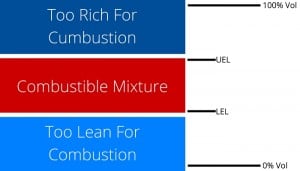
The LEL of a gas is the lower explosion limit and this refers to minimum dilution of a gas that must be present for it to be detectable by a gas detector. The UEL is the upper explosion limit.
These limits are vital to the working of a gas detector as too little of a gas and the device will not be able to detect it, too much and the gas will also not be detectable. Each gas has its own LEL and UEL and these are typically shown by percent of total volume, with the balance as normal air.
Hazardous area industries including offshore oil/gas platforms and FPSOs, onshore oil refineries, processing plants, pipelines, storage farms and LPG/LNG plants all utilise or produce a wide range of hazardous flammable liquids and gases that can be detected using correctly specified flame and gas detectors.
Detecting toxic and flammable gases requires the detectors to be classified and certified according to the specific IECEx or ATEX standard – we distribute flame and fire detectors manufactured by Spectrex to operate in the harshest environmental conditions including self-contained stand-alone devices designed for direct connection to control and alarm systems or automatic fire extinguishing systems.
Our range of Hazardous Area Fire & Gas Detection Systemproducts also includes Explosion Proof Warning Systems & Hazardous Area Lighting – comprehensive range of intrinsically safe, flameproof and explosion proof alarm sounders, sirens, bells and horns, loudspeakers and beacons.
Follow our Showcase Page on LinkedIn to receive hazardous area product innovations, industry news, whitepapers, videos, technical tips and training webinars for professionals involved in the explosive atmosphere industries.
Press Release Date: 04.07.2019 uploaded by Chris Dodds (T&D Sales + Marketing Manager)
Thorne & Derrick International announce that they have signed a Preferred Distributor Agreementwith Raytec, the world leading manufacturer of LED lighting products for hazardous areas and explosive atmosphere locations.
Thorne & Derrick’s Business Development Manager Terry McDonald comments, “our expertise and knowledge of the market will prove invaluable in developing sales of Raytec hazardous area LED lights. We are currently supporting several clients undergoing workplace lighting upgrades – we are specifying, designing and supplying their switch out of conventional fluorescent into modern technology LED.”
Why Raytec?
“Partnering with Raytec as our key supplier for hazardous area LED lighting was an easy decision to make. Their hazardous area lighting products offer a safe and reliable solution to lighting requirements in explosive atmospheres. In truth there are also many other brand options in the market place but what makes Raytec stand out from the crowd is their modular design concept which has been done with end user maintenance in mind.”
“Clients are always impressed with the concept and even more so by the cost savings achievable in operational expenditure. Taking innovative solutions to clients is a key part of our strategy and I am sure the partnership with Raytec will be a long and prosperous one.”
“Our Technical Sales Team are product trained, CompEx certificated and looking forward to introducing the complete Raytec lighting range to new and existing customers,” Terry adds.
Why Thorne & Derrick?
“We’re delighted to partner with Thorne & Derrick for the distribution of our hazardous area LED lighting products. They hold years of experience in the market and have developed a strong client base which will be important in helping to open up new opportunities for us,” comments Barry Director of Hazardous Area Division.
We’re looking forward to working closely with Thorne & Derrick and are confident this will be the start of a long and successful journey together,” Barry concludes.
About Thorne & Derrick
Thorne & Derrick International, based in the UK, are Approved Vendors to most Oil & Gas exploration and production companies and international EPC contractors including Bechtel, Petrofac, Saipem and Lamprell – our key sectors are the process, pharmaceutical, chemical, utility, food/beverage, renewable and oil/gas industries.
We are the Explosive Atmosphere Expertsto COMAH-site operators adding regional and national supply chain value: providing innovative and often customised Ex solutionsengineered to improve site safety and reliability.
Lighting Hazardous Areas
💡SPARTAN LED Lighting Is Highly Energy Efficient – Less Heat, More Light, Lower Cost
Stocking SPARTAN
SPARTAN is the complete range of LED Lighting, designed and manufactured in the UK by Raytec, approved for all ATEX and IEC Ex Zone 1 and Zone 2 hazardous area locations.
SPARTAN Floodlight, Bulkhead, High Bay and Linear Light Fittings with emergency and industrial versions are available. To combine excellent customer service with the ability to deliver from stock overnight, T&D are stocking Raytec SPARTAN bulkhead, floodlight and both standard and emergency light fittings.
Innovation In Illumination
At the HazardEx 2019 awards Raytec were awarded ‘Highly Commended’ in the Technical Innovation category – their Intelligent Emergency Luminaire with automatic self-test function significantly improves the safety and reliability of emergency lighting installations in hazardous areas.
Service & Expertise
Since 1985, Thorne & Derrick have established a solid reputation for the reliable supply of leading brands across our core product groups – we have a multi-million pound stock capacity and can supply many products next day.
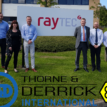
Thorne & Derrick at Raytec HQ UK | The Home of Hazardous Area Lighting
Pictured Left to Right: Callum Ryder (Marketing Manager – Raytec), Natalie Lundie (Social Media & SEO Marketing – T&D), Chris Dodds (Sales & Marketing Manager – T&D), Richard Derrick (MD – T&D), Terry McDonald (Business Development Manager – T&D) and Barry Thompson (Raytec – Director of Hazardous Area Division).
Further Reading
THORNE & DERRICK
LV HV Electrical & Process Instrumentation Equipment for Explosive Atmospheres
Specialist Distributors of Hazardous Area & Explosion Proof Equipment with IECEx & ATEX Certifications – we react with a rapid response to your enquiry to ensure downtime is minimised and reliable Power, Light & Heat is restored or provided.
Electrical Power LV HV | Heating | Lighting | Process Instrumentation | EX Specialists
uploaded by Chris Dodds - Thorne & Derrick Sales/Marketing Manager
Abtech NIMO
The Submersible Underwater LED Light for Hazardous Area Lighting
Zone 1 (Gas) & Zone 21 (Dust)
Abtech are leading manufacturers and innovators of Electrical Equipment & Hazardous Area Lighting designed and certified to the latest international (IECEx) and European (ATEX) standards.
Electrical Product Overview from Abtech
Enclosures manufactured in stainless steel, mild steel, glass reinforced polyester, aluminium and polycarbonate
Electrical enclosures for high voltage applications – with flexibility, choice of cables, entries and cable terminations
LED, HID and Fluorescent light fittings and luminaires
Cable glands manufactured in brass or stainless steel
Hazardous area adaptors, reducers, plugs and connection accessories
The NIMO is a unique new product launch from Abtech – an LED submersible luminaire with Ingress Protection to IP68 and Hazardous Area Classification to Zone 1.
NIMO provides submersible lighting for onshore and offshore hazardous area applications where flammable fuels, fluids or gases present a potential risk of explosion in Zone 1 locations according to the ATEX Directive – the light fittings manufactured from corrosion resistant 316 stainless steel provide safe and reliable submersible lighting with ingress protection to IP68 for subsea, ROV, marine and offshore renewable energy applications.
IP68 & ZOne 1
The performance requirement for IP68 in a Zone 1 hazardous area arises when there is the potential for temporary submersion of the light fitting – this could include lighting applications prone to flooding, tidal shift or unforeseen events. NIMO lights are not designed or specified to be permanently submerged – the submersible light fittings are therefore primarily installed where temporary submersion is required in a potentially explosive gas atmosphere classed as Zone 1 according to the ATEX Directive.
The IP68 Ingress Protection requirement is so that the light fitting will continue to emit light and function when the water level has receded – applications include refuelling jetties, exposed costal location or intermittent flood plain locations.
NIMO was developed to provide hazardous area lighting to FPSO turrets – depending on turret design these areas can become flooded if the FPSO is disconnected and moved away from the sub-sea connections.
Light Specification
Light Fitting Type
Zone 1 Submersible LED Luminaire
Ingress Protection
IP68 to 30m in accordance with EN60529
Material
316 stainless steel with toughened glass diffuser and stainless steel fasteners
Distribution/Output
∼1000 lm
Lamp Types
Pure white LED 5700K
LED Life
50,000 hours L70/B10 @ 25°C
Cable Entry
1 x M20 threaded entry
Terminals
Terminal block for up to 6mm²
Control Gear
HF electronic drive
Supply
110 to 250V 50/60Hz ac dc
Hazardous Area Certification
Hazardous Area Classification
Zone 1 Gas and Zone 21 Dust
Type of Explosion Protection
Ex eb ib qb op is (increased safety, intrinsic safety, quartz filled, optical radiation)
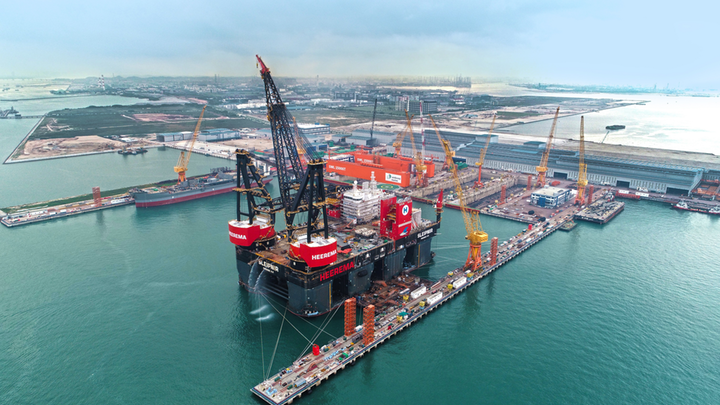
NEWS Sembcorp Marine has completed the semi-submersible crane vessel Sleipnir for Heerema Marine Contractors (HMC) – the vessel can accommodate 400 persons and will be deployed globally for installing and removing jackets, topsides, deepwater foundations, moorings, wind turbines and other offshore structures. It is also the world’s first crane vessel with dual-fuel engines running on Marine Gas Oil (MGO) and Liquefied Natural Gas (LNG). News via May 27, 2019 via Offshore Energy Today
Light Ratings
Product Reference
Lamp Type
Lamp Cap
Power (W)
Temperature Rating
Ambient Temperature
Weight (kg)
Abtech NIMO LX1NIMO
LED
N/A
6W
T4
-20°C to 55°C
8.9
Marine, Naval & Submarine Hazardous Area Lighting
Electrical & Process Instrumentation Equipment
for Explosive Atmospheres
Thorne & Derrick are Specialist Distributors of Hazardous Area & Explosion Proof Equipment with IECEx & ATEX Certifications to the onshore and offshore oil, gas, petrochemicals and process industries.
Press release date: 2 April 2020 | Originally uploaded by Chris Dodds, T&D Sales & Marketing Manager Dynaco ATEX Doors: Certified High-Speed Doors for Hazardous Areas Thorne & Derrick International announced an exclusive UK distribution agreement with Dynaco in...
Press Release Date: 04.07.2019 uploaded by Chris Dodds (T&D Sales + Marketing Manager) Category: Stockist Distributor Agreement Announcement Thorne & Derrick International announce that they have signed a Preferred Distributor Agreement with Raytec, the world leading manufacturer of LED...





























 the market will prove invaluable in developing sales of Raytec