T&D, a leading UK distributor for industrial and hazardous area Gas Detection Equipment, present a Guest Article by Debra Hall, Sales & Marketing Director of Control Instruments Corporation.
Control Instruments Corporation’s mission is to engineer and manufacture high quality solutions to gas detection problems. From simple to complex cases, Control Instruments Corporation ensure safety is a top priority.
In today’s guest post, Debra explains the top 4 reasons to heat industrial and hazardous area process gases.
Heating Industrial & Hazardous Area Process Gases
Industrial processes operate at various temperatures, using a wide variety of different gases, solvents and background constituents (i.e. tars, resins, salts, plasticisers, water vapor, etc). It is important to keep these process gases heated. Would you like to know why?
Read on to learn the top four reasons …
What are Process Gases?
Process gases consist of hazardous gases and solvents that are used in industrial processes. Industrial processes are those operations, which are typically enclosed, heated spaces that require an active sample drawing system.
These have an intentional release of process gases at all times. In fact these processes are often optimized for speed and performance by safely releasing more process gases, not less; as they often operate near legal limits for combustible gas concentrations.
These process gases are seen in production plants (chemical, automotive, painting, printing, pharmaceuticals) as well as used as non-traditional fuels for energy savings and sustainability, such as SYNGAS to turbine engines.
Some examples include,
Industrial dryers for printing, coating, or laminating that may be designed to operate at solvent concentrations above 25% LFL.
Or the measurement of process gases going into Amine Treaters for pollution control, where there are not only combustibles, but also toxic sulfides.
This means the precise concentration of process gases must be measured with a level of accuracy for safety, health and energy savings. Since the environment of the process gas stream can be a challenge, it is essential to keep them heated to a temperature above their dew point. The process stream must hence be heated from the sample pickup point all the way to the gas sensing analyzer.
Here are the Top 4 Reasons to Heat Hazardous Area Process Gases
1 – Avoid Condensation
The most common sampling problem is condensation (vapor returning to liquid during sampling). Condensation creates two problems: sample drop-out and clogging. When sample drops out due to condensation, the reading taken by the sensor is lower than actual. And clogging increases downtime and maintenance costs.
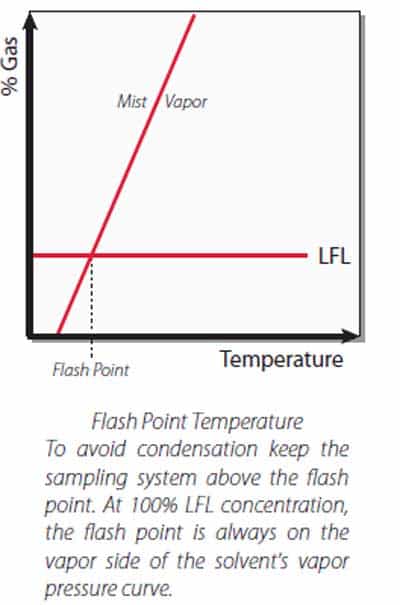
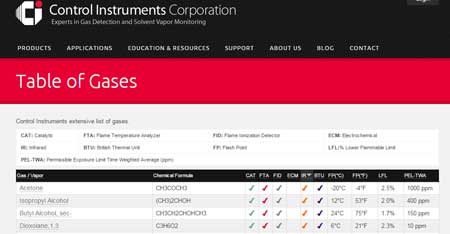
The temperature needed to avoid condensation can be found by looking up the Flash Point temperature for each compound in the sample (see table of common gases). The flash point is that temperature at which a solvent produces sufficient vapor to propagate a flame. Generally, the sample must be kept at or above the flash point temperature to remain in the vapor state during sampling.
Pictured : % Gas v Temperature : A Flash Point Temperature Graph
An essential guide for process and plant engineers concerned with gas detection and solvent vapour monitoring (including hydrocarbons and both flammable and toxic gases).
Data includes : CAT: Catalytic FTA: Flame Temperature Analyzer FID: Flame Ionization Detector ECM: ElectrochemicalFP: Flash Point LFL: % Lower Flammable Limit PEL-TWA: Permissible Exposure Limit Time Weighted Average (ppm)
2 – Ensure Accurate Readings
Keeping all sample-wetted parts of the sampling system and analyzer at the appropriate temperature will ensure that combustible vapors are properly measured with confidence.
Flammability changes as a function of temperature. Small changes in temperature can have a large effect on the flammability readings. Near the Flash Point of the combustibles, the vapor pressure tends to double for every 10°C rise in temperature. Small changes in temperature can have a large effect. There could also be sample drop out if the process sample is cooled. Alcohols are water soluble and will blend with any water condensation, giving false low LFL readings.
Calorific Value Measurements taken on partially dried samples have large errors on their heating values. At atmospheric pressure, saturated water vapor can constitute up to 20% of the mixture’s volume at 60ºC (140ºF), but only 2% at 20ºC (68ºF). If a sample saturated with water vapor is taken at 60ºC and is allowed to cool to 20ºC prior to measurement, 18% of the sample volume turns to liquid, creating false readings than in the true 60ºC mixture
3 – Minimize Unnecessary Maintenance & Downtime
Tars, resins and other sample components can become a maintenance nightmare to the process and/or analyzers if it is allowed to cool. Tars will clog sample ports making them useless. This leads to costly downtime. Resins can cool to an almost glass-like substance. In this case, analyzers may not be able to be cleaned, they must be replaced.
4 – Enjoy Longer Corrosion-Resistance Life
High moisture and humidity can promote corrosion, leading to shorter life of the gas measuring system. Keeping all parts of the sampling system and analyzer properly heated to at least 250ºF (120ºC) prevents condensation of water vapor, which is the main component in causing corrosion.
It is however, very important to consider not only water vapor but also all constituents of the sample, including solvents, poisons, salts, resins, and other high-molecular-weight compounds present in the sample, this can be as high as 250ºC.
Summary
When designing a gas measurement process, it is important to take these four (4) points into consideration, because in no way should the high temperatures of the application impede your process’ operation. Look for a heated analyzer system that:
Has a corrosion-resistant, heated sample delivery train – The heat eliminates condensation and withstands corrosive elements, leaving you with an accurate representation of your process.
What temperature is right for you? Feel free to contact Control Instruments Corporation to assist you in solving the common challenges associated with higher temperature process gas monitoring applications.
Should you require any assistance achieving accurate levels of heat to industrial or hazardous area process liquids or gases, please contact T&D to discuss our heated hoses, drum heaters orheat tracing systems.
Thorne & Derrick are inviting you to join LinkedIn’s fastest growing Discussion Group – Process & Hazardous Area Industries : Heat Tracing, Gas Detection, Fluid Control & Flow Measurement. News, projects, videos, promotions, whitepapers, jobs, webinars, press plus much more.
ABOUT US
Thorne & Derrick International are your single-source supplier of Electrical, Mechanical, Process & Instrumentation Equipment. T&D provide an outstanding service to UK and international customers – we are highly customer responsive and absolutely committed to providing a world-class service.
T&D supply utilities, power, renewable energy, construction, rail, manufacturing, food/beverage, mining, oil, gas and petrochemical industries – distributing 100,000+ products from 100+ manufacturers from multi-million pound stocks. Since 1985 we have established a solid reputation based on service, integrity and trust.
By Chris Dodds : estimated reading time 5 minutes
T&D – Crowcon Distributors. Hazardous Area Gas Detectors (ATEX) For Zone 1 & Zone 2.
ATEX Directive – the Ex logo indicates that the gas detection equipment is suitable for use in a Flammable Atmosphere, Typically Zone 1 or Zone 2 hazardous area.
We begin by generally reviewing the 3 stages of the oil and gas process and focussing on the specific gas risks.
4 types of Crowcon gas detectors often deployed in Zone 1 and Zone 2 hazardous areas (ATEX) forming their hazardous area gas detector range for the detection and monitoring of flammable or toxic gases are highlighted for each of the 3 sectors.
Upstream industry – discovers and produces crude oil and natural gas and is commonly referred to as the exploration and production (E&P) sector.
Midstream industry – processes, stores, markets and transports commodities such as crude oil, natural gas, natural gas liquids (NGLs, ethane, propane and butane) and sulphur. The midstream oil and gas sector provides the vital link between often remote petroleum producing areas and the population centres where most consumers are situated. Transmission pipeline companies are a key part of the midstream petroleum industry.
Downstream industry – oil refineries, petrochemical plants, petroleum products distributors, retail outlets and natural gas distribution companies. The downstream oil and gas industry connects consumers providing thousands of products such as gasoline, diesel, jet fuel, heating oil, asphalt, lubricants, synthetic rubber, plastics, fertilizers, antifreeze, pesticides, pharmaceuticals, natural gas and propane.
Hazardous Area Gas Detectors
Zone 1 & Zone 2 Crowcon Gas Detectors – Personal, Portable & Fixed Detectors For Toxic & Flammable Gases.
1. gas detection for Upstream OIL & GAS
The upstream sector includes exploration and drilling for potential oil and gas fields, followed by the recovery and production of crude oil and natural gas if it is viable. Gas hazards in the upstream sector are compounded by the very harshest of environments providing challenges for the reliable detection of harmful gases.
Enhanced oil recovery (EOR) technologies and unconventional methods are allowing access to new geographic areas, as well as improving the level of recoverable resources within known reservoirs.
Fixed and portable gas detectors are required to protect plant and personnel from the risks of flammable gas releases (commonly methane gas detection) as well as high levels of hydrogen sulphide particularly from sour wells. Oxygen depletion, sulphur dioxide and volatile organic compounds (VOC’s) are also among the most common gas risks.
originaldate 1/1/0001 6:00:00 AMwidth 370height 305Crowcon XgardIQ Gas Detector – intelligent fixed-point Crowcon gas detector, increases safety by minimising the time operators must spend in Zone 1 and Zone 2 hazardous areas.
originaldate 1/1/0001 6:00:00 AMwidth 5421height 4469Crowcon Triple+ Plus Gas Detector – latest generation of the respected Crowcon "Triple" family of toxic, oxygen and flammable gas detectors. Over 90,000 units sold to oil and gas, chemical, utility and manufacturing companies worldwideoriginaldate 1/1/0001 6:00:00 AMwidth 370height 305
2. GAS DETECTION FOR MIDSTREAM OIL & GAS
The main components of the midstream process are transportation and storage. Raw products are held in storage areas until ready for the next process or to be transported to a refinery.
Maintaining the integrity of storage and transportation vessels as well as protecting personnel during cleaning, purging and filling activities are a constant challenge within the midstream sector.
Fixed monitoring of flammable gases situated close to pressure relief devices, filling and emptying areas deliver early warning of localised leaks. Multigas portable monitors maintain personal safety especially during confined space work as well as supporting hot work permit area testing.
Infrared technology supports purging with the ability to operate in inert atmospheres, and delivers reliable detection in areas where pellistor type detectors would fail due to poisoning or volume level exposure.
Portable laser methane detection allows leak location at distance for hard to reach areas, reducing the need for personnel to enter potentially dangerous environments or situations while performing routine or investigative leak monitoring.
CROWCON GAS DETECTORS : MIDSTREAM OIL & GAS
3. GAS DETECTION FOR DOWNSTREAM OIL & GAS
The downstream sector refers to the refining and processing of raw natural gas and crude oil, and subsequently distribution and sale of the products derived from this. Such products can include jet fuel, diesel fuel, asphalt and petroleum coke.
The desire to reduce energy consumption, increasing operational efficiency, has driven device manufacturers to innovate both detection principals and the way in which power is used. Gas detectors employ state-of-the-art technologies to deliver industry leading power consumption per device.
The volume of personnel on plant and high number of toxic and flammable gases used and manufactured increase the potential hazards. Some risks can be mitigated by ensuring rugged and reliable portable gas detectors and monitors are used, that are well suited to individual on-site requirements. Fleet management tools such as bump test stations deliver exceptional reporting to track site compliance and calibration status.
The ongoing demand to reduce facility down-time whilst ensuring safety, especially during shutdown and turnaround operations, ensures that gas detection manufacturers must deliver solutions offering ease of use, simple training, reduced maintenance times with local service and support.
Hazardous area industries including offshore oil/gas platforms and FPSOs, onshore oil refineries, processing plants, pipelines, storage farms and LPG/LNG plants all utilise or produce a wide range of hazardous flammable liquids and gases that can be detected using correctly specified flame and gas detectors.
Detecting toxic and flammable gases requires the detectors to be classified and certified according to the specific IECEx or ATEX standard – we distribute flame and fire detectors manufactured by Spectrex to operate in the harshest environmental conditions including self-contained stand-alone devices designed for direct connection to control and alarm systems or automatic fire extinguishing systems.
Our range of Hazardous Area Fire & Gas Detection Systemproducts also includes Explosion Proof Warning Systems & Hazardous Area Lighting – comprehensive range of intrinsically safe, flameproof and explosion proof alarm sounders, sirens, bells and horns, loudspeakers and beacons.
Follow our Showcase Page on LinkedIn to receive hazardous area product innovations, industry news, whitepapers, videos, technical tips and training webinars for professionals involved in the explosive atmosphere industries.
By Chris Dodds : estimated reading time 15 minutes
Hydrogen sulphide (H2S) is a naturally occurring gas and can be found in many of the worlds crude oils. The gas is colourless and has a distinctive rotten egg odour at low levels however at high concentrations the gas will numb the human sense of smell which can be fatal.
Heavy oils such as crude oil, residual fuel and gas oil tend to have large concentrations of hydrogen sulphide and this can become a concern if the oils are to be stored over extended time periods.
This Blog looks at the dangers of hydrogen sulphide gas in the oil refining industry and the working areas that may have H2S present and the gas detection solutions available.
Image: Valero
What Are The Dangers Of H2S Gas?
Working in and around an oil refinery is naturally fraught with dangers and potentially hazardous areas. One of the most common and most underestimated problems faced by personnel is the presence of toxic gases and particularly hydrogen sulphide (H2S) gas.
H2S is a colourless gas and therefore invisible. The gas does have a distinctive rotten egg smell that can only be smelt at low concentrations as at higher and more dangerous levels, peoples sense of smell is significantly numbed and therefore without adequate fixed or portable gas detectors, they can succumb to the harmful effects of the gas.
Inhalation of hydrogen sulphide gas can lead to acute poisoning and death by suffocation occurs extremely fast. This Blog looks at where hydrogen sulphide gas can occur within refineries and which situations are particularly dangerous including hazardous areas.
H2S Gas Risks – Case Studies
Death Caused After Fainting Due To H2S Gas – St. Charles Refinery, Norco, Louisiana, U.S. A contract worker was killed after being hospitalised following an incident of exposure to hydrogen sulphide gas. The surviving worker reported to police that he smelt hydrogen sulphide and began an immediate evacuation of the area. He lost consciousness and woke up half way down the ladder he was working on to see his colleague at ground level. The fatality also had a head trauma and later died in hospital however his loss of consciousness was related directly to the presence of hydrogen sulphide.
Death Caused By H2S Gas Due To Unauthorised Maintenance – Workers at a sulphide refinery in Douglasville, Texas were busy relighting a waste boiler/heater and their task was to remove the sight glass and push the lighter into the valve and the burner. They discovered the glass was warped and replaced it without a safety permit. Meanwhile, Hydrogen Sulphide had leaked in to the area. One worker died on site from H2S poisoning where the other was hospitalised. There were also five other workers who showed symptoms of hydrogen sulphide poisoning.
H2S Gas Causes Death Due To Disregard For Safety Rules – A fatal incident at a sour water stripper unit (SWSU) occurred when a field operator was collecting stripped sour water. The operator had gone to collect a sample and H2S gas had escaped from an open manhole. The worker lost consciousness and when eventually taken to hospital he was pronounced dead on arrival from gas poisoning. The levels of hydrogen sulphide gas were found to be above 40-50 ppm.
The above case studies highlight just how dangerous this gas can be and how essential it is to install effective, working gas detection systems.
Valero St. Charles Refinery’s major process units were built or substantially reconstructed in the late 1990s, making the refinery one of the newest in the USA.
Characteristics Of Hydrogen Sulphide GAS
Hydrogen Sulphide – H2S Fact Card
Hydrogen sulphide gas is colourless and at certain low concentrations it has a distinctive rotten egg odour which is instantly recognisable and as a result of this smell, H2S is commonly know as sewer gas, digester gas or marsh gas.
However, at higher concentrations the gas numbs olfactory nerves and starting at a concentration of 100ppm. People are therefore no longer able to smell the gas – concentrations higher than 1000ppm can be instantly fatal.
in addition to the numbing of senses, H2S gas is heavier than air and therefore will often collect in low-lying areas and working sites near ground level. The gas will ignite itself at a temperature of 270°C and due to its highly inflammable properties an explosive atmosphere may occur when combined with air.
Strong reactions are possible that can trigger spontaneous combustion, explosions and detonations. In addition, H2S gas combined with air and humidity or moisture can corrode metals through the formation of sulphuric acid.
Where Can H2S gas Occur?
90% of hydrogen occurs naturally in the environment for example in hot sulphur springs and rock masses, however there are many areas within the oil and gas industry in which the presence and bi-production of H2S gas is a common occurrence.
The refining process commonly produces H2S as a bi-product however the gas also occurs at wellheads, oil and water tanks, pumps, piping systems and flare heads.
The most common locations for the presence of hydrogen sulphide within refineries are:
Storage – The crude oil is transported via either a pipeline or barge and is stored waiting to be processed. Hydrogen sulphide can be found in the head space of the tank and can corrode the tank reducing it’s product lifespan and as the tank fills the headspace concentration increases.
Distillation Columns – The crude oil is separated into various components in the distillation columns based on boiling points. The lightest components are used for gas with the heaviest elements used for asphalt. Hazards occur even though this is a closed system and the gas can be present in the heat exchanger, furnace, tower flash column, vacuum furnace and bottom exhcanger.
Hydrotreater & Hydrocracker – The hydrotreater is used to remove the sulphur and the hydro cracker breaks long hydrocarbon chains into shorter chains in order to create more efficient petroleum products. These actions are performed over a catalyst at high pressure and temperature with excess hydrogen. Hydrogen and sulphur combine and create H2S which is then sent to a recovery unit to create water and sulphur. H2S content in the feedstock must be monitored along with any leaks.
Blending – This is the physical mixing of various hydrocarbons in order to produce an end product with desired characteristics. H2S hazards can occur during sampling, inspection, maintenance and turnaround.
Solution: Safety considerations to undertake include fixed and portable gas detectors to be installed in and around maintenance equipment and on turnaround equipment.
Chemical Treatment Process – This process removes contaminants such as sulphur, nitrogen, oxygen, dissolved metals and salts. This in turn improves the odour, colour and oxidation stability. Hydrogen sulphide is commonly used during the recovery of sulphur and the hydrogen sulphur scrubbing process.
Gas hazards will occur during sampling, inspection, maintenance and turnaround.
Solution: Portable and fixed gas detector solutions should be used in and around maintenance and inspection equipment to ensure gas detection safety.
Power Generation – Oil refineries have many other operations including electric generation, steam generation, cooling towers, wastewater treatment and flaring systems. The potential for H2S hazards to occur are around cooling towers and contaminated wastewater. Caution should always be taken during sampling, inspection and maintenance.
Solution: Portable gas detectors should be used along with respirators and air purifiers.
Effects On The Human Body And Exposure Limits
Hydrogen sulphide gas is a so called ‘nitrogen’ gas and causes damage to the lungs, central nervous system and can also cause skin and mucous membrane irritation. Typical symptoms of poisoning include headaches, dizziness, fatigue, dry mouth, anxiety, confusion and lack of coordination.
Even in low concentrations and a low dose, H2S can be harmful if exposure is continuous over several hours or days. High concentrations can lead to unconsciousness almost instantly and a coma followed by death in just a few short breaths – these effects show exactly how dangerous this gas is and highlights the need for effective gas detection.
Solutions For Effective H2S Gas Detection
There are a number of gas detection solutions available from Thorne & Derrick including fixed, portable and transportable suitable for use in safe and hazardous areas. Each working area and gas hazard requires a different gas detection solution in order to provide the proper, effective protection for personnel and buildings.
Typically, smaller confined spaces require personal and portable gas detection solutions to be carried by workers.
Fixed Gas Detectors
Fixed point gas detectors provide constant, 24 hour gas monitoring 365 days a years which is important for the detection of random gas release. T&D are distributors for the Crowcon ranges of gas detection equipment. Our gas detection specialists can help you determine exactly the correct product for your requirements.
The ever-present safety protection provided by Crowcon fixed gas detectors means personnel working in areas such as distillation columns and chemical treatment plants are able to work freely – improving safety figures and increasing productivity.
Fixed gas detection systems are favoured in many oil and gas areas for their constant gas safety protection, monitoring of any gas leaks and providing both audible and visual warnings when there are no personnel on site.
Portable Gas Detectors
Portable gas detectors provide an excellent solution for the detection and monitoring of hydrogen sulphide among other hazardous gases. There are many benefits of using portable gas detection and differences compared to the use of fixed point detection systems.
The use of portable gas detection allows personnel the freedom to move between working areas safe in the knowledge that they are carrying their safety devices with them to detect and alert the presence of hazardous gases.
The difference between portable gas detectors and fixed is the length and continuity of detection – portable detection equipment must be tested, re-charged and have its own power supply whereas a fixed point detection system is hard wired and will provide constant, 24/7 detection however the flexibility and portability is compromised
Hazardous Area Gas Detection
Hazardous areas can occur when the presence of hazardous vapours, dusts or mists exist in a high enough volume. There are three categories of risk that must be identified reliably in order to protect human life and assets:
Ex – The risk of explosion by flammable gases
Ox – Oxygen; the risk of oxygen displacement or risk of increased flammability by oxygen enrichment
Tox – Risk of poisoning by toxic gases
Without the use of auxiliary tools, people are often unable to recognise these dangers early enough to take action and prevent a serious incident or accident occurring.
Any equipment to be used in hazardous areas for gas monitoring purposes must fulfill the Essential Health And Safety Requirements (EHSR). In addition, as gas detection systems are products of safety technology, it is important not to misinterpret their role within oil refinery safety.
They are not simply a handful of detectors spread across and manufacturing plant, they are and should be considered a bespoke solution developed to fulfill the requirements of individual protection objectives.
Hazardous Area Gas Detectors Certified To International Classifications
All equipment to be used in zone 1 and zone 2 hazardous areas must be explosion proof and certified for use under the relevant local hazardous areas classifications such as ATEX and IECEx.
The 4 hazard levels of hydrogen sulphide gas
Hydrogen sulphide gas is extremely corrosive and causes metals to become brittle when exposed. All oil well drilling sites and areas within oil refineries must be classified according to areas of potential or actual exposure to H2S gas.
The four hazard levels are:
No Hazard Condition – This is any well or area that will not penetrate a known hydrogen sulphide formation is a ‘no hazard’ zone. Specialist equipment is not required.
API Condition I (Low Hazard)– These are working areas where concentrations of H2S are less than 10 PPM. Recommendations for working in these areas include hydrogen sulphide warning signs, keeping all safety equipment in adequate working order and storing equipment in accessible locations.
API Condition II (Medium Hazard) – These are working conditions where atmospheric concentrations of H2S are greater than 10 PPM and less than 30 PPM. Recommendations for working in these areas include legible H2S warning signs, keeping a safe distance from dangerous working locations, pay attention to audible and visual alarms and store safety equipment in accessible locations.
API Condition III (High Hazard) – Work locations with atmospheric concentrations of H2S higher than 30 PPM. Recommendations for working in these areas are two H2S detectors must be present (one should be a metered gas detector and one should be a pump type with detector tubes. There should also be an oxygen resuscitator, two usable exits at each location and signs 500 feet from each location warning of the presence of hydrogen sulphide.
Monitoring Hydrogen Sulphide (H2S)
To Meet New Exposure Standards
In any working area where there is the potential for exposure to hydrogen sulphide, a gas monitoring strategy is recommended to ensure exposure levels are kept below acceptable levels and that the appropriate action is taken if there is ever exposure above these levels.
In order to protect workers from exposure to harmful levels of hydrogen sulphide, the American Conference Of Governmental Industrial Hygienists (ACGIH) modified the Threshold Limit Value (TLV) for H2S in 2010.
From 1976 to 2009, the 8 hour time weighted average TLV (TLV-TWA) was 10 parts per million (PPM) and the 15 minute short-term exposure limit TLV (TLV-STEL) was 15 PPM. In 2010 a TLV-TWA of 1 PPM was adopted along with a TLV-STEL of 5 PPM for H2S.
ACGIH
The ACGIH is a globally recognised authority on the establishing of exposure limits for chemical agents including toxic gases, and the changes to the H2S limits followed a five year review period during which industry experts had the chance to express any concerns they had.
The best protection would be an electronic instrument that could measure and store both the 1 PPM TWA and 5 PPM STEL H2S levels and also provide and alarm when concentrations reached 5 PPM.
A portable gas detector is ideal for users who want to accurately and reliably measure H2S levels. It provides a noticeable visual, audible and vibration alarm notification to alert the user to dangers levels of hydrogen sulphide gas that is present.
The detector features an easy-to-use intuitive interface and also features data logging which records the entire history of the monitor for complete analytical and safety uses.
Thorne & Derrick are Specialist Distributors of Hazardous Area & Explosion Proof Equipment with IECEx & ATEX Certifications to the onshore and offshore oil, gas, petrochemicals and process industries.
Follow our Showcase Page on LinkedIn to receive hazardous area product innovations, industry news, whitepapers, videos, technical tips and training webinars for professionals involved in the explosive atmosphere industries.
By Chris Dodds : estimated reading time 9 minutes
Gas Detection Systems
Gas detection systems have been used for centuries in various forms (from feathered to infrared) and today are an essential element of plant safety throughout industry – gas detectors save lives, protect workers and safeguard property.
However if they are not installed, commissioned or maintained properly they will not provide the protection against dangerous toxic and flammable gases.
The risks of not having adequate gas detection systems and procedures in place can be catastrophic resulting in serious harm or death to personnel and significant financial damage done to equipment.
How do you ensure that your gas detection system will respond as expected when you need it most? Do you know if it is working right now?
In many industries, the installation and correct placement of gas detection equipment is a key part of the safety plan for reducing risks to personnel – industries such as oil and gas are at the most risk from explosive gases due to the nature of the products they are transporting, storing and refining.
T&D look at the 5 main best practices that you should consider in the installation, commissioning and maintenance of your gas detection systems.
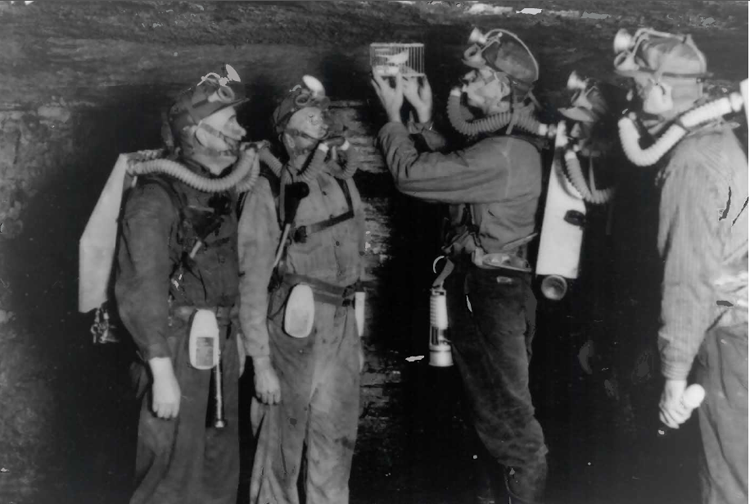
Once upon a time underground miners used canaries to test air quality in mines – today gas detection is provided by instruments manufactured by market-leaders
1. Adequate gas detection coverage
There is no legislation or specific standards governing gas detector location as there are for fire detection systems there are however general guidance documents including:
BS EN 50073:1999: Guide for selection, installation, use and maintenance of apparatus for the detection and measurement of combustible gases or oxygen – replaced by BS EN 60079-29-2:2015
IEC 60079-29-2 2015 : Explosive atmospheres – Part 29-2: Gas detectors – Selection, installation, use and maintenance of detectors for flammable gases and oxygen.
Ensuring the gas detector in use, whether it is portable or fixed, provides adequate gas detection coverage for the assets being protected. With fixed gas detectors this is often decided during the initial design and survey of the site to be monitored.
For portable gas detectors, this typically means ensuring the gas detector is located within the breathing space of the user. For retrospective installations, it is vital to ensure the gas detectors are given adequate space and will come into contact with any gas that may be present.
For the detection of heavier gases, such as hydrogen sulphide (H2S), it is essential to ensure the gas detector is placed close to ground as H2S gas is heavier than air – if the detector is located at high level then it will fail to detect gas.
Portable Gas Detection – Personal & Area Monitoring
Portable gas detectors are often subject to extremely diverse working conditions and environments – the many different applications require solutions tailored to the individual requirements and respective application conditions.
Portable gas detection can be distinguished between personal and area monitoring, confined space entry and leak detection:
Personal Monitoring – the gas detection instrument should warn the wearer in his/her immediate working area. These detectors are typically worn on work clothing and therefore typical basic requirements include a high degree of comfort, robustness and reliability. The wearer will require continuous detection for single gases or multiple gases.
Area Monitoring – area monitoring is the monitoring for gases in a specific working area with active workers present. The device is located in a central area to provide maximum gas detection coverage and monitor the whole working area. For area monitoring continuous measurement devices for multiple gases should be used.
Confined Space Entry – in many working areas where maintenance or repair work is required to, access to confined spaces is needed. With limited space, often a lack of ventilation and the presence of harmful and dangerous gases, a clearance measurement is required before entry. After a successful measurement of the confined space, the same device can then continue to be used for ongoing confined space gas detection requirements.
Gas Leak Detection – leakages can occur anywhere where gases or liquids are stored or transported. It is vital to identify these leakages immediately to reduce the risks to people and prevent as much as damage as possible. Detection instruments with corresponding pumps must have rapid response times in order to detect even slight changes in concentration.
2. Proper air flow to the gas detector
If the gas detector is being installed in a dock mount, it is vital to ensure there is adequate airflow so that it is not in a dead zone. Proper airflow to the gas detector ensures that new air that may contain harmful gas can be detected.
It also means any stagnant air that may set off the gas detector erroneously will not linger around the detector causing a false alarm. In addition, any air inlet filters should be clean to allow unrestricted air flow into the detector.
The height of the gas detector installation must be considered also as many gases are heavier than air and therefore if the gas detector is installed too high up, gases such as refrigerant or Freon gases will settle lower in the room and not be readable by the gas detector.
3. Proper device calibration
Gas detectors should be fully calibrated upon initial installation and then checked annually under a routine maintenance schedule. Some gases are sensitive to different conditions such as altitudes and therefore require calibration before use in a new environment.
Without adequate calibration, gas detector devices do not provide the protection and alert users as they should. Calibration is effectively a product reset against a known concentration of target gas, in a balance of synthetic air or nitrogen and is required for a number of reasons.
If the detector has been subjected to adverse conditions such as a change in temperature, sensor poisoning through exposure to contaminants like silicone and solvents, or exposure to high gas concentrations this can result in a change to which the detector responds to certain gases. In addition, mechanical shock or stress and sensor age can affect performance.
The calibration is a two step procedure:
The instrument is zeroed in fresh air, synthetic air or a nitrogen background so the readings equal clean air.
The second step is to expose the gas detector to calibration gas that contains known levels of the gases the detector is known to measure.
Calibration is not required as frequently as bump testing which should be carried out before each use.
4. Routine maintenance & bump testing
Routine maintenance of gas detectors can be classified as a full calibration, bump testing and a general inspection of the devices. The frequency of when each should be carried out varies.
Bump testing of gas detectors should be carried out regularly and ideally before each use. The bump test is a much shorter test than the full calibration and ensures the gas detection device is functioning as expected.
The OSHA defines the bump test as: “a qualitative function check in which a challenge gas is passed over the sensor(s) at a concentration and exposure time sufficient to activate all alarm settings.”
Put simply, this test verifies the performance of the of the gas detector and ensures the sensors are responding to their target gas as expected. The OSHA also confirms that the bump test should be carried out “before each day’s use in accordance with the manufacturer’s instructions”.
As portable gas detectors are an important part of a workers’ daily safety equipment, bump testing ensures that equipment is safe for use and performing at the standards expected. Only fully functioning gas detectors can provide detection and protection against deadly gases.
Eventually, all gas detector sensors will come to the end of their life and some can reach this point suddenly. The product longevity depends upon the application conditions and environmental influences.
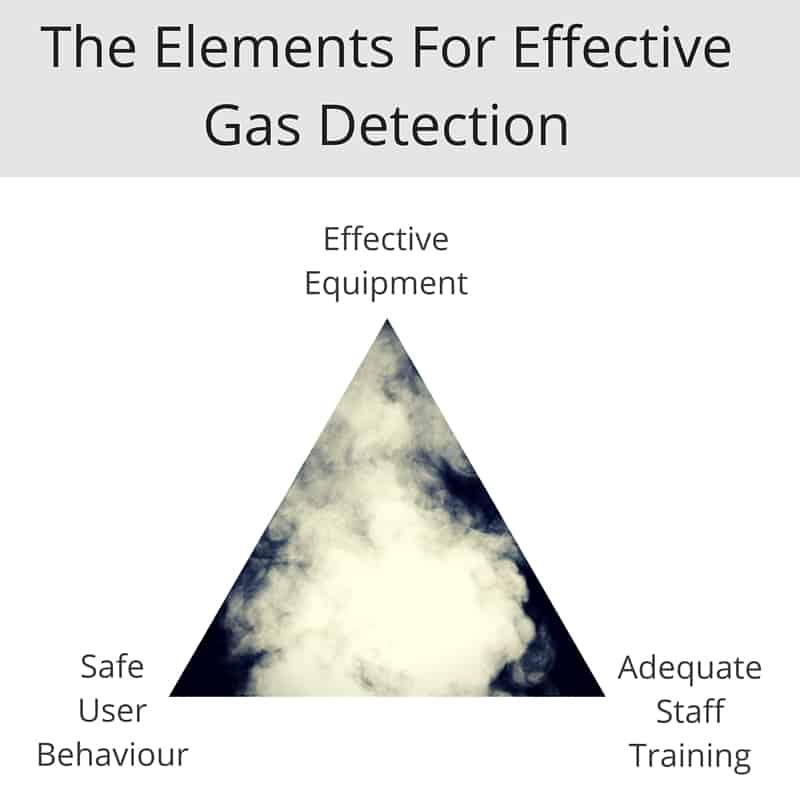
5. The Elements Of Effective Gas Detection
Reliable equipment, safe user behaviour and adequate training are the three components needed for effective gas detection. Staff training is just as important to gas detection as having the appropriate equipment. If staff are unaware of how to effectively and safely operate and calibrate their gas detection equipment then they put their own lives and colleagues well-being at risk.
Effective staff training is a key part of effective gas detector usage and maintenance which can often be overlooked. As a minimum, staff should have basic training and understanding of the nature of any likely gas hazards and how to minimise the chances of an encounter with these gases.
Gas monitors display information about the type of gas present and the levels of that gas. It is vital that personnel working around gases understand the information being shown, how to access it and what to do if a gas alert sounds.
Staff must also know the benefits of bump testing and calibration and how to carry out such servicing. Similarly, employees should be trained on how to fully service and maintain gas detectors and should always be carried out by someone who fully understands gas detection equipment and how to ensure safe operation in hazardous areas.
The effectiveness of any gas detection equipment is significantly impaired if it is not maintained properly and without adequate staff training the protection of personnel is always likely to be compromised.
The Three Elements Required For Effective Gas Detection
Hazardous Area Gas Detection
Many industrial processes and environments frequently involve flammable substances and particles including gases and vapours. For prevention purposes these areas are classified as Ex-areas or zones and are graded by the likelihood of gas being present.
ATEX European Hazardous Area Certifications
Only gas detection equipment that has been certified as suitable for use and is equipped with explosion protection in hazardous areas can be used. Explosion protection is regulated globally and the basic standards are are:
IEC (International)
CEN, CENELEC (Europe)
NEC 505 (North America)
The ATEX 95 European directive is mandatory in the European Union and has been since 2003. This directive sets out the standards that equipment and protective systems for use in potentially explosive atmospheres need to fulfil in order to meet Essential Health and Safety Requirements (EHSR).
Hazardous area industries including offshore oil/gas platforms and FPSOs, onshore oil refineries, processing plants, pipelines, storage farms and LPG/LNG plants all utilise or produce a wide range of hazardous flammable liquids and gases that can be detected using correctly specified flame and gas detectors.
Detecting toxic and flammable gases requires the detectors to be classified and certified according to the specific IECEx or ATEX standard – we distribute flame and fire detectors manufactured by Spectrex to operate in the harshest environmental conditions including self-contained stand-alone devices designed for direct connection to control and alarm systems or automatic fire extinguishing systems.
Our range of Hazardous Area Fire & Gas Detection Systemproducts also includes Explosion Proof Warning Systems & Hazardous Area Lighting – comprehensive range of intrinsically safe, flameproof and explosion proof alarm sounders, sirens, bells and horns, loudspeakers and beacons.
Follow our Showcase Page on LinkedIn to receive hazardous area product innovations, industry news, whitepapers, videos, technical tips and training webinars for professionals involved in the explosive atmosphere industries.
By Chris Dodds : estimated reading time 3 minutes
Hydrogen Sulphide Gas Detection
Hydrogen Sulphide (H2S) is a potentially lethal gas when exposure occurs, even at low levels. At dilution levels as low as 2-5 PPM, workers can experience nausea and headaches. At 20 PPM people can experience fatigues, dizziness and loss of memory. If the amount of gas reaches 1000 – 20,000 PPM this can be fatal and cause instant death.
Managing H2S gas in the workplace is key and to prevent workers coming into contact with harmful gases and preventing plant downtime.
These factors alone warrant the installation of effective gas detection and monitoring.
Gas safety is classified into three tiers:
Category 0 – Areas where gas will be present during normal working operations such as confined spaced or vessels
Category 1 – Areas in which gas may be encountered during normal working conditions. Entry is only allowed with a portable gas detector and fixed detection
Category 2 – Areas which are free from gas during normal working conditions but could be contaminated by a gas leak
Key points to remember For H2S Gas Detection:
Hydrogen Sulphide naturally occurs in crude petroleum and natural gas reservoirs
H2S is toxic at less than 20 parts per million
It becomes flammable at 4.3% of air by volume
H2S is 1.2 times heavier than air so stays low in windless conditions
Hydrogen Sulphide has a highly corrosive nature which increases the chance of a gas leak
H2S inhibits pellistors so infrared sensors may well provide a better detection option
Personal and fixed gas monitors are needed to ensure worker safety
Solutions To Monitor Hydrogen Sulphide (H2S) Levels
T&D are international distributors for a range of portable and fixed gas detectors. Gas detectors suitable for the fixed point and portable monitoring of H2S gas include;
Video: Crowcon Clip and Clip+; Maintenance Free Single Gas Monitors
Crowcon – Portable And Fixed Gas Detection Solutions
Crowcon – H2S Gas Detection
Crowcon gas detectors provide a fixed and portable solution to gas detection problems in many industries, detecting single and multiple gases dependent upon individual requirements.
Follow our Showcase Page on LinkedIn to receive hazardous area product innovations, industry news, whitepapers, videos, technical tips and training webinars for professionals involved in the explosive atmosphere industries.
Press Release Date: 02.04.2020 uploaded by Chris Dodds (T&D Sales + Marketing Manager) World’s First Fully Certified ATEX Doors Thorne & Derrick International, the Experts in Equipment for Explosive Atmospheres, today announce the signing of a Commercial Distribution Agreement...
Press Release Date: 04.07.2019 uploaded by Chris Dodds (T&D Sales + Marketing Manager) Category: Stockist Distributor Agreement Announcement Thorne & Derrick International announce that they have signed a Preferred Distributor Agreement with Raytec, the world leading manufacturer of LED...