uploaded by – Chris Dodds | Thorne & Derrick Sales Marketing Manager
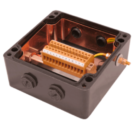
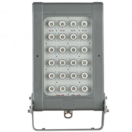
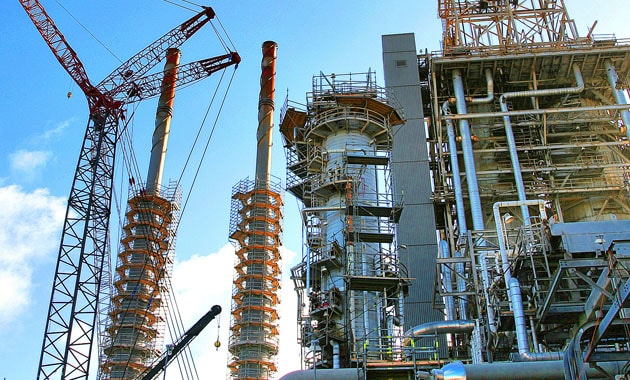
Thorne & Derrick have the competency and expertise to support clients and contractors delivering “Shutdowns and Turnarounds” to the UK and international explosive atmosphere industries – we stock and supply an extensive range of Hazardous Area (ATEX & IECEx) Equipment to provide safe Lighting, Heating & Power Distribution in Zone 1/2 (Flammable Gas) and Zone 21/22 (Combustible Dust) areas.
Making Hazardous Areas Safer
Design | Survey | Supply | Services
Thorne & Derrick, are an Award Winningworld-class business, supported by world-class manufacturers, committed to ensuring the correct installation and application of all Explosion-proof Products we supply. All our Sales Engineers hold CompEx Certificates(Hazardous Awareness Course EX F) and undertake continuous learning and advanced Explosion Protection training with our supply chain.
Wherever the Location, Whatever the Zone….
Since 1985, Thorne & Derrick Exports Division have supported international projects in accordance with numerous Hazardous Area Classifications & Explosion Protection Concepts – we are experienced at providing the competitive supply of products from extensive stocks to meet most international standards. We are expert at the administration, logistics and customer-service levels required to support projects wherever you are and whatever your product certification requirements are.
Engineered Systems & Solutions
We can assist with the Specification & Supply of certified equipment to upgrade heating, lighting and power distribution from non-hazardous to hazardous area classifications.
We are proactive problem solvers experienced in succession planningfor the replacement of obsolete, non-conformant and legacy equipment in hazardous areas – talk to us about Asset Life Extensionand how we can prolong the safety and integrity of both onshore and offshore installations.
Thorne & Derrick are reputable leaders in the development and distribution of Product Innovations that deliver significant improvements to clients plant, people and operational safety in the explosive atmosphere industries.
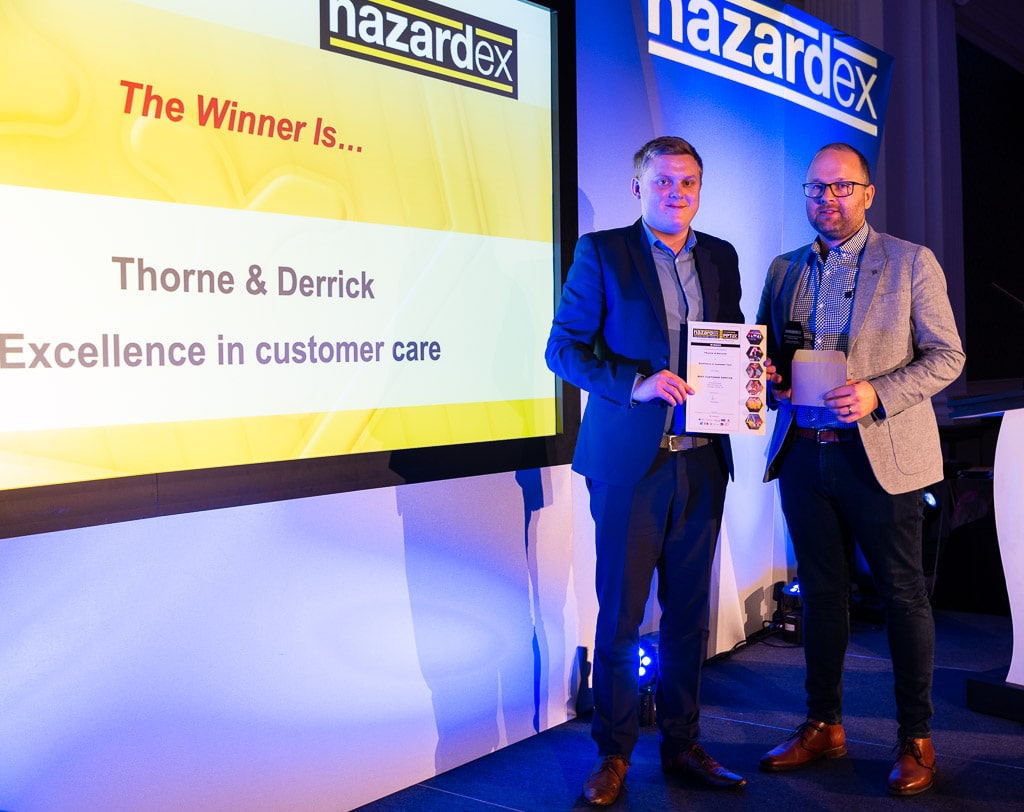
Thorne & Derrick International, based in the UK, were voted Winners of the Award for ‘Best Customer Service’ at the HazardEx Gala Dinner in 2021. The competitive Award category at the prestigious event was for providing excellent customer service over previous 2 years.
to DO
Focus on Design Support Services – T&D workload alleviation/technical authority.
Heating
Power
Lighting
The Cable Safety Hook Extreme is an advanced specification and high performance cable hook manufactured with glass reinforced PBT and is UV stabilized, Flame Retardant (Class: 94V-0, Flame Class Rating 3) and Cold Weather rated. The S-Shaped design of the cable support hooks is the industry standard control measure for the reduction in trip hazards relating to trailing electricity cables – these temporary cables are typically used to connect electrical equipment, pumps, generators and lighting in Shutdown & Turnarounds.
“Cables, plugs, sockets and fittings must be robust enough and adequately protected for the working environment. Ensure that machinery has an accessible switch or isolator to cut off the power quickly in an emergency.”
from UK HSE – Guidance Notes On Workplace Electrical Safety
Posted By Chris Dodds : Estimated reading time 5 minutes
This article explains the inherent dangers of working on or near electrical equipment under load and provides accident risk reduction advice for plant managers and safety supervisors who control the specification, selection, installation and operation of electrical equipment.
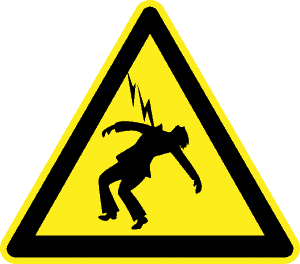
Effective safety measures can be introduced to counteract occupational electrocution, today we consider the seemingly benign plug. But firstly, the ever-present danger.
The electrical Threat
Some Shocking Facts….
Fatal electrical injuries are inflicted irrespective of voltage or current. FACT. 50 volts of electrical current applied between two parts of the human body causes a current to flow that can block the electrical signals between the brain and the muscles, some effects include:
Stopping the heart beating properly
Preventing the person from breathing
Painful muscle spasms – breaking bones and dislocating joints
During electrocution the electrical current is conducted through the victims body heating tissue along the length of the current flow. Deep skin and flesh burns often require major surgery and can be permanently disabling. Loss of muscle function prevents the electric shock victim from “letting go” – personally helpless and ensnared.
Marechal Self Ejecting Plugs
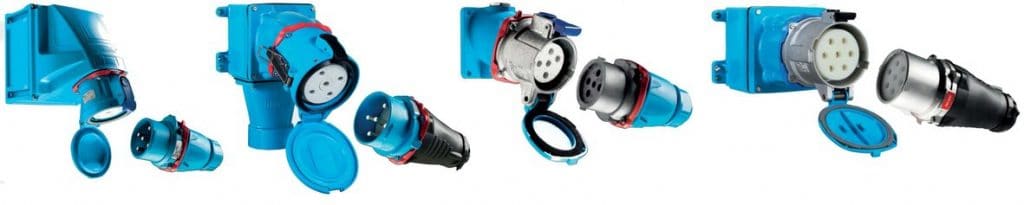
Marechal, a world leading manufacturer of Electrical Safety Plugs & Sockets have innovated self-ejecting plugs and power connector systems designed to protect people and plant from electrocution caused by accidental or intentional disconnection of power supply.
Self-ejecting plug-socket systems eliminate the need to disconnect electrical equipment, allowing a mobile device to be moved while electrically connected without unplugging it, or where equipment is located in high-risk or hazardous area locations.
Marechal Self Ejecting Plugs. B = box, Sl = sleeve, S = socket outlet, I = inlet, Me = mechanism, H = handle and C = cord.
Wherever The location
Whatever the current
Whether you require a high IP rated electrical connector to permit washing down with a high pressure hose in the food and beverage industry, ATEX certified plugs for hazardous areas or up to 37 pin plugs for complex configured power and control distribution, we’re here to help. We support safe electrical circuits across all industries:
Marechal DS7C3 – Star Delta Motor Connectors 50 Amps 500 Volts
Electrical Plug Connectors For Hazardous Areas
Marechal DXN, No Risk Connectors For High Risk Areas
Marechal DXN Decontactors certified according to ATEX ensure safe electrical power installations in hazardous areas – the explosion-proof range of compact and watertight plug and socket connectors feature a mechanical self-ejecting mechanism with Marechals unique patented Decontactor integrated load-break switch.
Marechal DXN decontactors are available in 3 different versions: standard plugs and connectors, self-ejecting plugs and self-ejecting coupler sockets.
The self-ejection plug-socket system for Zones 1/2 (gas) and Zones 21/22 (dust) is certified according to the ATEX 2014/34/EU directive and IEC Ex standards. Whether connected or disconnected, self-ejecting Marechal DXN decontactors can be operated by any authorised person under any circumstances.
Marechal DXN1 20A 550V – ATEX Certified Zones 1 & 2 (Gas), Zones 21 & 22 (Dust)
Marechal DXN3 32A 750V – ATEX Certified Zones 1 & 2 (Gas), Zones 21 & 22 (Dust)
Marechal DXN6 63A 750V – ATEX Certified Zones 1 & 2 (Gas), Zones 21 & 22 (Dust)
-40°C ≤ Ta ≤ +60°C for all Marechal DXN Plug Connectors
➡ T&D distribute the complete range of Hazardous Area Plugs for safe electrical power distribution in potentially explosive atmospheres, including Marechal self ejecting plugs for Zone 1 & Zone 2.
Marechal Supplier – contact us to improve power supply safety and reliability
Thorne & Derrick are leaders in the development and distribution of Product Innovations that deliver significant improvements to clients plant, people and operational safety in the explosive atmosphere industries.
Your proactive problem solvers experienced in succession planning for the replacement of obsolete, non-conformant and legacy equipment in hazardous areas.
Your first-choice provider of innovative and competitive solutions to ensure ATEX & IECEx Compliance for Hazardous Area Electrical, HVAC & Process Instrumentation Equipmentto UK and international projects.
You can Follow our Showcase Page on LinkedIn to receive updates about more hazardous area product innovations, industry news, whitepapers, videos, technical tips and training webinars for professionals involved in the explosive atmosphere industries.
Experts In Equipment for Explosive Atmospheres | Leaders in ATEX Innovation
Ex d Enclosures | Design | Supply | Stock | UK & Export Sales
By Chris Dodds : estimated reading time 5 minutes
Ex d Enclosures
In this article we introduce the Ex drange of electrical enclosures distributed by Thorne & Derrick and also provide an overview of the meaning and implication of the explosion protection concept referred to as Ex d, commonly called Flameproof, for the purposes of defining hazardous area equipment classification.
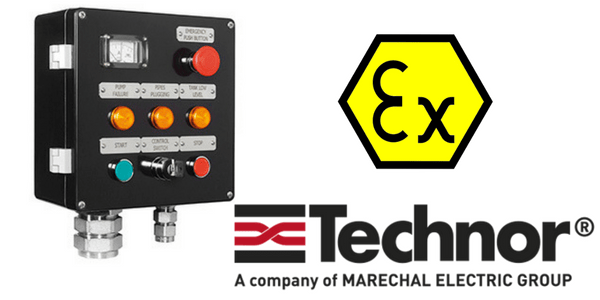
Thorne & Derrick, the Explosive Atmosphere Experts and Main UK Distributor for Marechal, are now supplying the Technor EJB range of Ex d enclosures to clients involved in the installation, maintenance and inspection of hazardous area locations.
Technor, the specialist manufacturer of Ex d flameproof and hazardous area products, joined the Marechal Electric Group in 2013 – since 1969 Technor have been a leading manufacturer of hazardous area lighting, enclosures and control panels for potentially explosive atmospheres.
Marechal are a worldwide leader for over 60 years in the manufacture of ATEX plugs and sockets utilising their innovative Decontactor products.
Contact T&D to discuss your requirements for Ex d enclosures, junction boxes, control stations and hazardous area lighting products.
Flameproof Exd
What Does Flameproof Mean?
Definition: design does not prevent flammable or explosive gases/vapours entering the apparatus, however it is a type of explosion protection in which parts that can ignite an explosive atmosphere are placed in an enclosure that can withstand the pressure developed during an internal ignition of an explosive mixture without suffering damage and which prevents the transmission of that explosion atmosphere surrounding the enclosure.
Suitable for use in Zone 1 and Zone 2 hazardous areas
Live maintenance is NOT permitted on the electrical enclosure
No unauthorised modifications to certificated enclosure are permitted
Components not to be removed from flameproof equipment
IEC 60079-1 (EN 60079-1): Explosive Atmospheres
Part 1: Equipment Protection By Flameproof Enclosure “d”
EPL/Category and Zones of Use
This part of IEC 60079 contains the specific requirements for the construction and testing of electrical apparatus with the type of protection flameproof enclosure “d”, intended for use in potentially explosive gas atmospheres.
Flameproof enclosures and electrical equipment may be used in areas requiring Explosion Protection Level (EPL) ‘Gb’ and ‘Gc’ or Category 2 and 3 only.
Use with Gas Subdivisions:Certified flameproof enclosures and electrical equipment would have been designed for use with a particular Group II gas subdivision.
The most critical part of a flameproof enclosure ‘Ex d’ is the so-called flame path.
Flameproof or Exd enclosures are strong enough to withstand the effects of an internal explosion should a gas enter the enclosure and ignite. The effects of the explosion must not be transmitted to the surrounding atmosphere where ignition of any gases surrounding the enclosure could occur due to the passage of flame from the enclosure under such conditions. Flamepaths are built into such enclosures as a means of preventing this; all points where gas could enter or leave the enclosure such as opening cover lids, joints or cable entry points have explosion protection.
Ex d Flameproof Enclosures
Thorne & Derrick can ensure the safe specification and supply of explosion-proof Ex d enclosures used to house electrical apparatus for use in explosive atmospheres, including Zone 1 and Zone 2 (Gas) and Zone 21 and 22 (Dust).
Ex d Enclosures – Technor EJB
Technor EJB enclosures are classified to international hazardous area classifications with ATEX, IECex and TRCU certification, with ingress protection IP65 to IP67 and an operational ambient temperature range of + 60°C to – 50°C.
Ex d enclosures are manufactured to provide explosion protection according to Exd 11Band Exd 11B + H2 and are suitable for installation within explosion proof areas in the the oil, gas petrochemical, pharmaceutical, food, beverage and utility industries.
Technor EJB enclosures can be equipped with the following hazardous area certified components:
T&D Sales Engineers work closely with clients to provide customised and bespoke Ex d enclosures including internal electrical equipment such as hazardous area isolators, contactors, relays, transformers, terminals, measuring instruments, electronic devices, power supplies, PLC devices and anti-condensation heaters.
Ex d enclosures are available in a wide range of dimensions and 3 material versions: galvanised carbon steel, AISI 316L stainless steel and marine grade aluminium with low copper content. Enclosures are used for instrument housing, control, check, connection, automation, interruption and/or protection use and can be equipped with pushbuttons, pilot lamps and selector switches for hazardous areas.
Thorne & Derrick are leaders in the development and distribution of Product Innovations that deliver significant improvements to clients plant, people and operational safety in the explosive atmosphere industries.
Your proactive problem solvers experienced in succession planning for the replacement of obsolete, non-conformant and legacy equipment in hazardous areas.
Your first-choice provider of innovative and competitive solutions to ensure ATEX & IECEx Compliance for Hazardous Area Electrical, HVAC & Process Instrumentation Equipmentto UK and international projects.
You can Follow our Showcase Page on LinkedIn to receive updates about more hazardous area product innovations, industry news, whitepapers, videos, technical tips and training webinars for professionals involved in the explosive atmosphere industries.
Experts In Equipment for Explosive Atmospheres | Leaders in ATEX Innovation
By Chris Dodds : estimated reading time 11 minutes
Flammable & Toxic Gas Detection In Confined Spaces
Detecting Gas
This article focuses on Gas Detection In Confined Spaces – the risks of entering and working in confined spaces and specifically those associated with oxygen depletion/enrichment and/or toxic and flammable gases. The aim is to educate people about the risks, understand the dangers and look at what measures can be taken to monitor and provide gas detection when working in confined working spaces.
Just last week another news article reported that two men had been seriously injured whilst working in a man hole. On entry, both men were exposed to toxic gas, one collapsed almost immediately and the other tried to escape but lost consciousness and fell causing serious injury.
The news article reported that one man was making a recovery but, “it did not look good for the other.”
Some people are oblivious to some of the risks as they can’t see the danger. Unlike working at height where the risk is blatantly obvious, toxic and flammable gases can be an “invisible killer.”
Guidelines and legislation are in place to help protect those exposed to the risk and it is the employers responsibility to carry out risk assessment and implement safe systems of work to protect their employees.
However, it is sometimes people’s attitudes towards safety and a lack of understanding about the gas risks which cause the majority of accidents.
There are many articles about poor working practices and poor attitudes towards the real hazards associated with the lack of gas detection in confined spaces, people who think because they have worked in the same confined space a hundred times, there is no need to carry out pre-entry checks.
People who have felt sick and dizzy so left the confined space until they felt better and then returned.
These problems exists in all countries and some may have a far better or worse approach to safety. It would be interesting to hear views from anyone else who has an interest in this topic.
What Is A Confined Space?
HSE definition: A confined space is a place which is substantially enclosed (though not always entirely), and where serious injury can occur from hazardous substances or conditions within the space or nearby (e.g. lack of oxygen). Some common and not so common examples are listed below:
Storage tanks
Silos
Reaction vessels
Enclosed drains
Sewers
Open-topped chambers
Vats
Combustion chambers in furnaces etc
Ductwork
Unventilated or poorly ventilated rooms
HSE Definition Of A Confined Working Space
A confined space does not necessarily mean a fully enclosed area. Ducts, culverts, tunnels, boreholes, bored piles, manholes, shafts and excavations can all be considered as confined spaces.
The Risks & Hazards
Flammable Gases & Oxygen Enrichment
Toxic Gases
Oxygen Deficiency
Ingress of Liquid
Ingress of Solids
Excessive Heat
Other hazards may be a concern but those listed are specific to working in confined spaces. I will now go on the explore the first three in more detail.
ATEX : Gas Detection & Ventilation In Confined Spaces
It is essential to regularly check that confined spaces are free from both toxic and flammable gas and vapours where risk assessment indicates that conditions may be subject change. The stratospheric gases to be monitored are Methane (CH4), Carbon Monoxide (CO) and Hydrogen Sulfide (H2S) each of these gases can be found at different levels due to their density.
Image Courtesy : SA Equip, Manufacturers Of The SA Flexiheat Portable ATEX Certified Heater For Zone 1 & Zone 2 Hazardous Area Heating
Flammable Gases & Oxygen Enrichment
A flammable gas is defined as a gas whose temperature and pressure make it flammable when air touches it at 12% by volume. Some common examples include Methane, Hydrogen, Propane and Butane.
Methane is particularly common in the petrochemical industry whilst Hydrogen is probably considered the most dangerous.
Flammable gases cause a serious risk of fire and/or explosion.
Flammable gases are produced in many industrial process, some examples of which include:-
Coating of articles with paint, adhesives or other
Solvent extraction processes;
Combustion of gas or oil;
Combined heat and power plants;
Battery charging.
When dealing with flammable gases it is important to understand the terminology used. LEL and UEL are both frequently referred to and mean:-
LEL: Lower Explosion Limit. This is the lowest concentration at which a gas can be ignited.
UEL: Upper Explosion Limit. The highest concentration at which a gas can be ignited.
The 3 ingredients for a fire
Flammable gases can be present but will never ignite without two other ingredients. Air (oxygen) and a spark/flame must be present to complete the triangle and create the explosion. It is sometimes the case that a gas concentration is purposely kept above its UEL.
At this point there is not enough air (oxygen) in the environment to create an explosion.
Oxygen enrichment is also very dangerous. Approximately 21% of the air that we need to breath is made up of oxygen yet even a small increase in concentration (>24%) can create a very dangerous atmosphere. Flammability of materials increases as the concentration of oxygen increases.
The following video from YouTube demonstrates the dangers very well. If clothes become soaked in oxygen you could be in serious trouble. See what happens to the stick man at the end of the video.
Oxygen Accelerated Fire Demonstrations
Toxic Gases
The Health And Safety Executive
A toxic gas is one which is poisonous and capable of causing illness, reduced quality of life or even death. They are present and can pose a risk in many industries. Some of the more common gases include carbon monoxide (CO), hydrogen sulphide (H2S) and chlorine (CI2) all of which can be very harmful even at low levels of exposure.
In confined spaces, toxic gases and fumes may be caused as a result of the previous process or previous storage. Gases can also enter from adjacent plant that has not been isolated correctly.
Contaminated ground can cause toxic fumes inside sewers and manholes. Acidic ground water acting on limestone creates carbon dioxide.
The type of work activity may also create toxic gases, for example spray painting, welding and flame cutting. Although diesel generators should never be used inside confined spaces, a recent incident occurred whereby carbon monoxide fumes from a nearby diesel generator entered a trench where men were repairing underground cables.
In the UK, the health and safety executive stipulate work place exposure limits (WEL) for a number of toxic substances. These are occupational exposure limits averaged over:-
15 minutes: Short Term Exposure Limit (STEL)
8 Hours: Long Term exposure Limit(LTEL)
The limits set are usually time weighted averages (TWA) and are usually defined in parts per million. PPM. In the USA, Occupational Safety and Health Administration use a similar system to define permissible exposure limits. (PELs)
As an example it states the LTEL for Acetone is 500PPM and the STEL is 1500PPM. In contrast, Hydrogen Sulphide is considered extremely toxic and will cause nausea and headaches to those people exposed to levels between 2-5PPM.
Exposure to 1000 – 2000PPM results in instant death.
EH40 2005 Workplace Exposure Limits
Gas Substance
CAS Number
Workplace Exposure Limit
Comments
Long term exposure limit (8 hr TWA reference period)
Short term exposure limit (15 minute reference period)
The Carc, Sen and SK notations are not exhaustive. Notations have been applied to substances identified in IOELV directives.
PPM
mg.m3
PPM
mg.m3
Acetaldahyde
75-07-0
20
37
50
92
Acetic anhydride
108-24-7
0.5
2.5
2
10
Acetone
67-64-1
500
1210
1500
3620
Acetonitrile
75-05-8
40
68
60
102
Acetylsalicylic acid
50-78-2
–
5
–
–
Acrylaldehyde (Acrolein)
107-02-08
0.1
0.23
0.3
0.7
Acrylamide
79-06-01
–
0.3
–
–
Carc, Sk
Acrylonitrile
107-13-1
2
4.4
–
–
Carc, Sk
Allyl alchohol
107-18-6
2
4.8
4
9.7
Sk
Aluminium alkyl compounds
–
2
–
–
Aluminum metal
7429-90-5
–
–
–
It must be said that the WELs are not a definitive line of what is deemed safe and unsafe levels but there to provide guidelines to be used in conjunction with COSHH.
Toxic gas detectors are used to monitor the concentration of gas in PPM and alert the worker to the danger. The STEL and LTEL can be used to determine the alarm threshold levels. (more on this later)
Oxygen Deficiency
Oxygen enrichment is indeed a hazard however the more obvious hazard is oxygen deficiency. As can be seen from the table, the “safe zone” is somewhere between 19.5% – 23%. There is some debate over the exact figures but in truth I’m not a doctor or an expert on the respiratory systems so can’t give a conclusive argument.
So what causes Oxygen depletion? Our friends at Crowcon gas detectors offer the following explanation:-
MADCOW.
Microbiological Action (bacteria)
Absorbtion (chemical processes)
Displacement by other gases (eg, Nitrogen, CO2)
Combustion (fires, generators etc)
Oxidation (rusting)
Work (respiration: people & animals)
Exposure to low levels of oxygen can cause giddiness, confusion, poor coordination, sickness, loss of consciousness and death. Without the use of correct monitoring and sampling methods, there are no warning signs of oxygen depletion. Breathing one or two breaths of air containing oxygen levels below 10% can cause immediate loss of consciousness.
Minimising The Risks
There are extensive guidelines and legislation for minimising the risk such as the HSE approved code of practice for safe working in confined spaces provides. Rule No.1 is to avoid working in confined spaces if at all possible.
However, we all know there are hundreds of work activities that must be carried out in a confined space. Monitoring the atmosphere with gas detection equipment should always be part of any safe system of work for confined spaces.
Testing The Atmosphere For The Presence Of Gas Hazards
Before workers enter a confined space, the air should be tested from the outside. This can be done by lowering a portable gas detector, such as Crowcon T4, into the work area. Alternatively, a tube can be fed into the area and a sample can be drawn using a pumped gas detector.
Some gases are lighter or heavier than air and therefore it may be necessary to take samples from different heights within the confined space.
Testing should be carried out every time the area is re-entered to check there have been no changes to the atmosphere.
Baromic pressure can effect the atmosphere within a confined space. An increase will cause gas to expand putting more pressure on surroundings and keeping gas within the confined space and a decrease in Baromic pressure has the opposite effect and will force gas out of a confined space.
Continuous monitoring should also be carried out whilst workers remain in the area.
Portable Gas Detectors – Selecting The Correct Device
Gas Detection In Confined Spaces
Portable gas detectors can be used to sample and monitor confined spaces and instruments are available to detect a single gas or multiple gases.
The Crowcon clipis a single gas detector and can be used to detect Hydrogen Sulphide, Carbon Monoxide and Oxygen. This is a simple device which will activate an alarm in the event the target gas exceeds the set point.
More sophisticated detectors such as the Crowcon Gas-Pro can be used to monitor up to 5 different gases and record various gas levels and allow for data logging which can be downloaded at a later date.
The choice of gas detector will depend on what gases/vapours have been identified as a potential risk.
When measuring flammable gases a detector usually measures the gas as a % of its lower explosion limit (LEL). When measuring toxic gases, the unit of measurement is normally PPM (parts per million).
The sensitivity of the gas detectors is normally factory set.
Regular bump testing should be carried out to ensure the detector is working correctly and the sensors have not been poisoned or contaminated. Full calibration should always be carried out as per manufacturers recommendations.
Because an increase or decrease in oxygen levels has an effect on other flammable and toxic gases, this should be the priority gas. Second would normally be flammable gases and then toxic gases. A word of caution though, some gases are both flammable and toxic.
Crowcon Gas Pro Portable Gas Detector
In this case you should detect whichever poses the greatest risk.
For example, Hydrogen Sulphide is a flammable gas in high concentrations but the toxic risk is much greater even at very small exposure levels. Testing should always be carried out by a competent person.
Hazardous area industries including offshore oil/gas platforms and FPSOs, onshore oil refineries, processing plants, pipelines, storage farms and LPG/LNG plants all utilise or produce a wide range of hazardous flammable liquids and gases that can be detected using correctly specified flame and gas detectors.
Detecting toxic and flammable gases requires the detectors to be classified and certified according to the specific IECEx or ATEX standard – we distribute flame and fire detectors manufactured by Spectrex to operate in the harshest environmental conditions including self-contained stand-alone devices designed for direct connection to control and alarm systems or automatic fire extinguishing systems.
Our range of Hazardous Area Fire & Gas Detection Systemproducts also includes Explosion Proof Warning Systems & Hazardous Area Lighting – comprehensive range of intrinsically safe, flameproof and explosion proof alarm sounders, sirens, bells and horns, loudspeakers and beacons.
Follow our Showcase Page on LinkedIn to receive hazardous area product innovations, industry news, whitepapers, videos, technical tips and training webinars for professionals involved in the explosive atmosphere industries.
Crowcon T4 Portable Gas Detector
By Chris Dodds : estimated reading time 5 minutes
Crowcon T4 Gas Detector
Personal Protection Solution Detecting 4 Most Common Gas Hazards
Crowcon T4 is the latest addition to the range of Crowcon portable gas detectors and provides protection in confined spaces against the four most common gas hazards – these hazards are carbon monoxide, hydrogen sulphide, flammable gases and oxygen depletion.
Key Features Of The Crowcon T4 Gas Detector
The many advanced features of the Crowcon T4 include rugged, IP65 and IP67-rated housing offering enhanced reliability in harsh environments, 24 hour safety, long battery life, TWA resume feature and an invertible screen.
All of the above features contribute to a low total cost of ownership and make the T4 portable gas detector the ideal choice for providing protection against hazardous gases.
The positive safety traffic light function gives the user constant assurance that the unit is compliant and operating correctly. This is done by a visual green LED light being illuminated when working correctly and flashing red when the unit needs attention.
Other key features include:
Easy one button operation
Clip on filter plates
Multi gas detection
♦ See Crowcon Detective for ATEX gas detectors to enable safe and accurate hazardous area gas detection in explosive atmospheres.
Crowcon T4 Portable Gas Detector
An Introduction
Crowcon T4 offers users a compact, portable and easy to use gas detection instrument – the one button function ensures the detector can be used when wearing gloves.
The quick view function of the Crowcon T4 enables the configuration details to be easily and quickly viewed even if the detector is not powered by quickly pressing the operator button. The gas detector will then emit an audible blip followed by the LED’s to the right of the display flashing red.
Crowcon T4 Portable Gas Detector Quick View Function
Bump testing of portable gas detectors is a vital, regular test that ensures the device is performing as intended. The OSHA defines a bump test as “a qualitative function check in which a challenge gas is passed over the sensor(s) at a concentration and exposure time sufficient to activate all alarm settings.”
It is recommended to bump test your portable gas detector daily before each use.
Hazardous area industries including offshore oil/gas platforms and FPSOs, onshore oil refineries, processing plants, pipelines, storage farms and LPG/LNG plants all utilise or produce a wide range of hazardous flammable liquids and gases that can be detected using correctly specified flame and gas detectors.
Detecting toxic and flammable gases requires the detectors to be classified and certified according to the specific IECEx or ATEX standard – we distribute flame and fire detectors manufactured by Spectrex to operate in the harshest environmental conditions including self-contained stand-alone devices designed for direct connection to control and alarm systems or automatic fire extinguishing systems.
Our range of Hazardous Area Fire & Gas Detection Systemproducts also includes Explosion Proof Warning Systems & Hazardous Area Lighting – comprehensive range of intrinsically safe, flameproof and explosion proof alarm sounders, sirens, bells and horns, loudspeakers and beacons.
Follow our Showcase Page on LinkedIn to receive hazardous area product innovations, industry news, whitepapers, videos, technical tips and training webinars for professionals involved in the explosive atmosphere industries.
Press release date: 2 April 2020 | Originally uploaded by Chris Dodds, T&D Sales & Marketing Manager Dynaco ATEX Doors: Certified High-Speed Doors for Hazardous Areas Thorne & Derrick International announced an exclusive UK distribution agreement with Dynaco in...
Press Release Date: 04.07.2019 uploaded by Chris Dodds (T&D Sales + Marketing Manager) Category: Stockist Distributor Agreement Announcement Thorne & Derrick International announce that they have signed a Preferred Distributor Agreement with Raytec, the world leading manufacturer of LED...